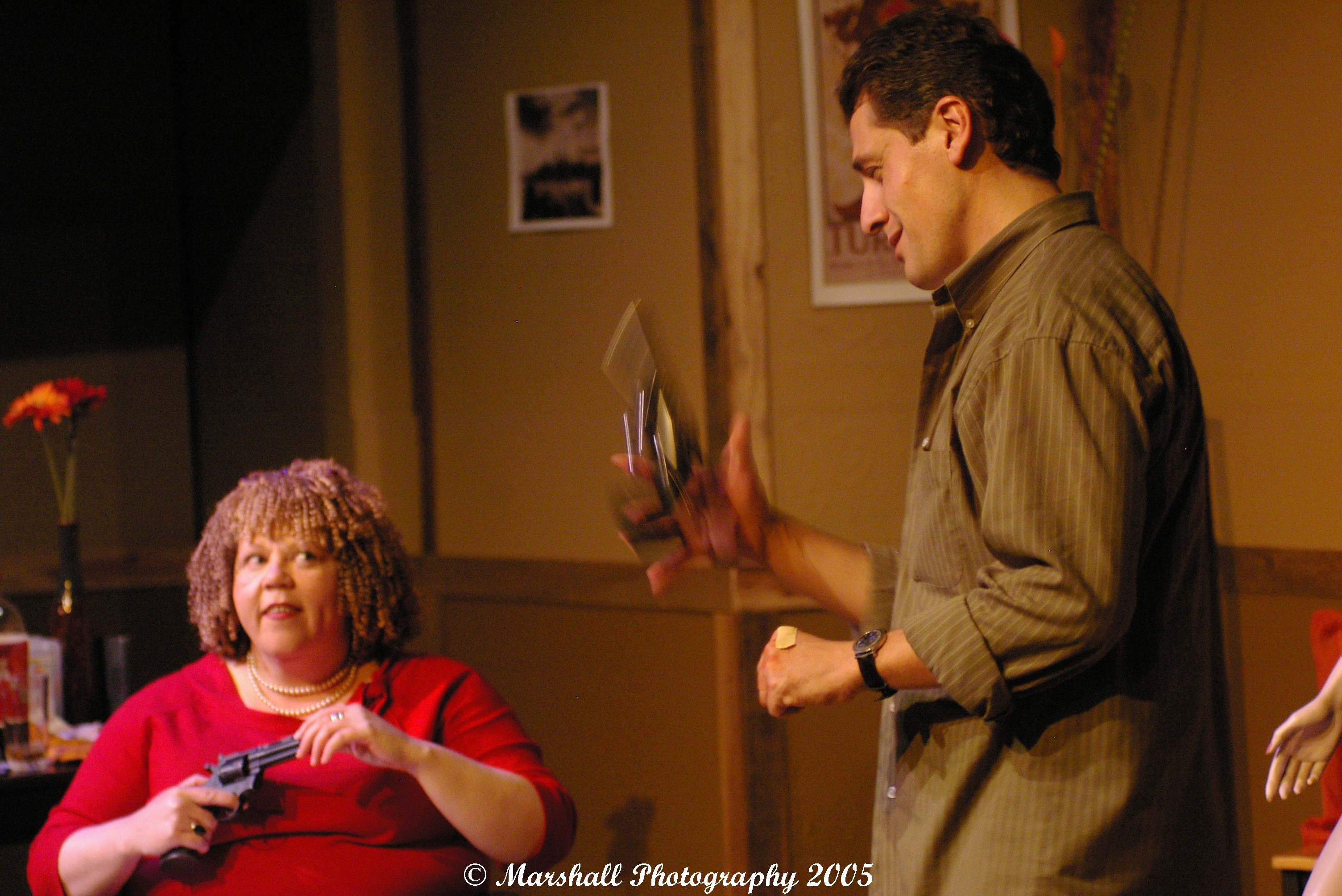
TIME TAKES ITS TOLL

By Joe Cillo

IN DEFENSE OF BIRQAS

By Lynn Ruth Miller

A woman’s face is her work of fiction.

Oscar Wilde

I have reached the age when looking in the mirror has become a nightmare.  Either I see my mother or a woman who looks ready for a plot.  If the night before has been particularly grueling, I don’t see much at all.


I find that it takes a lot of work these days to get my face ready for public viewing.  I am not talking about going to a formal dance or meeting a dignitary.  I am saying that before I dare leave the house, I have a time consuming, discouraging and ego damaging routine I must follow before I dare greet the outside world.


As soon as I wake up, I drink 12 ounces of warm water to hydrate my skin.  I use a special facial sponge to wipe the sleep from my eyes and remove the rivulets of sand that have lodged in the wrinkles on my face and dripped down the folds of my neck.


I haul out a magnifying mirror and work on the white heads, uneven bumps and enlarged pores that spring up as if by magic during the night. Then I address the lush new growth of hair in my lip, my chin and hanging from my nostrils.


I apply a light moisturizing lotion to try to plump up the sagging pouches around my eyes and under my chin.  I pat the skin dry and hope those gaping pores close.


They don’t.


I apply a mild sun screen to the entire region of flesh above my collar bone.  It is impossible to separate my jawbone from my clavicle.  They have coagulated into a soft mass of unidentifiable epidermis. I have not seen my neck in fifteen years.   I slather on moisturizer and hope it sinks into all the right places.


It doesn’t.


My skin has developed so many colors that I cannot decide if it is a plaid or a print. Both peaches and cream are but a memory.  I apply a foundation that is the color of what it once was when it glowed with the blush of youth.  This was so many years ago that I am not sure I have chosen the right shade.  The one I am using is a tad darker than bleached cotton but not so dark that I look like an immigrant.


It is now time to do my eyes.  The first challenge is locating them.  They are wedged between the folds of my eyelids and the puffed gray pillows around what is left of my eyelashes.  I rub a bit of oil on the lids and then a tad of eye shadow to match my outfit.    I need to be careful because if I am wearing a vivid combination of color, my eyes will look like Bozo’s.


I am now ready for THE BIG CHALLENGE.  I must use a pencil and draw a line right above my eye lashes and directly under my eye.  This can take anywhere from twenty minutes to several hours depending on how many times I jam the pencil into my cornea or dislodge my contact lens.


Each morning my cheeks sag a few inches closer to my collar bone. I need to redefine them with rouge.  The trick is to add just enough tint so I don’t look dead.


I look in the mirror to see if there has been any improvement.


There hasn’t.


I so envy the women of the Middle East.  They wake, drape themselves in a burqa and go out on the town.  Oh, I know they are subservient and need to shut up and take it.  But the truth is that with a face like mine, no one is going to want to give it to me anyway unless I cover it up.  There is a huge advantage to draping yourself in a filmy bit of fabric and leaving your appearance to the imagination.  I could probably pass for a real looker unless it’s a windy day.

While you’re saving your face;

You’re losing your ass.

Lyndon Johnson

Fringe of Marin Fall 2012: Program Two’s Laughs and Insights

By David Hirzel

The current crop of new one-act plays at the Fringe of Marin reflects a familiar disparity between the two programs:  one program is stronger overall, with the best individual plays and performances to be found in the other.  This is the most compelling argument for planning to see both programs in every season–to take in all of the considerable talent and surprise the Fringe has to offer.

In the case of this year’s lineups, Program Two has in my view the better run of plays.  It was light on drama and overladen with humor, but the laughs were genuine and plentiful.  The first three plays all take a broad and farcial look at senior romance.  “Get a Date Show” is a spoof on TV’s the Dating Game, with Ross Travis spot-on as the smarmy game show host.  Carol Sheldon’s “On with the Wind” mines a retirement-home viewing of Margaret Mitchell’s classic, with the irrepressible Flora Lynn Issacson a standout in her rented ante-bellum hoop-skirt.  “Arrangements” pairs Charles Grant and Terri Barker again as a funeral services director signing a “pre-need” cremation contract with an outspoken client for an as-yet unspecified date. The first of five plays following the intermission continued the pattern of broad humor with Bill Chessman’s Beasley family confronting a hat-stealing chimpanzee and a surprising turnabout “One Time at the Zoo.”

The evening took a more somber turn when an alcoholic husband discovers his self-absorbed wife has been “Supplementing” her romantic life.  Then the tone turns literary as George Bernard Shaw (Kevin Copps) meets God (Jerrund Bojeste) in the witty and well-acted “Shaw”  (written and directed by first-timer Ollie Mae Welch).  There is “Trouble at Table 23,” Charlie Lerrigo’s absurd take on a hapless diner (well-played by Manik Bahl) who came for a glass of milk and finds himself ever more deeply mired in a burgeoning murder case by the talented Jean Davis in four successive roles.  In the final play a milquetoast conspires with his therapist –“She Has a Plan”—to become more of a man for his wife, until things go awry.

Eight plays might seem like a lot for one evening, but in this lineup the time just flew by.  Fringe of Marin Fall 2012 Programs One and Two through November 18.

At Meadowlands Hall, Dominican University, 50 Acacia Ave., San Rafael CA.  Reservations and information: (415) 673-3131

Fringe of Marin Website:  www.fringeofmarin.com

Schedule:  http://fringeofmarin.com/performanceschedule.html


AN ADORABLE MUSICAL IN SAN FRANCISCO

By Joe Cillo

FOODIES! THE MUSICAL

By Morris Bobrow

Starring David Goodwin, Kim Larsen, Sara Hauter, Deborah Russo

YUM YUM 

Statistics show that of those who contract

The habit of eating, very few survive. 

George Bernard Shaw


Everybody does it….we all look forward to breakfast lunch and dinner….and unless we are anorexic, we indulge in all three, every day.  But in the Bay Area, eating and the food experience have been elevated to a pretentious and elaborate ritual. Morris Bobrow pokes fun at it all in this new, delightful and all too real spoof about what advertising, heath addicts and the medical community have managed to do to our eating habits. 


The show opens with a full cast presentation “I Like to Eat” (and who doesn’t?) and works its way through pompous waiters, falling in love with the food truck guy and trying to keep it kosher.  Who cannot see themselves and blush when the cast is so excited about a new place to eat that they simply cannot choose. “OMG” they sing, and that is exactly what we say when we find a new and different restaurant. 


We all have been put off by the pompous waiter who not only gives you dining suggestions but tells you his life story.  We have been smothered in the friendly restaurant atmosphere where you meet everyone involved in creating your meal.  Who can forget Deborah Russo ‘s brilliant smile when she announces, ”I’m your dishwasher!”?  It is almost too real to be funny.   


The hour is filled with many memorable moments, but unforgettable is the song, “Taking the Waters” that discusses the different types of water we drink these days in the same lingo that wine connoisseurs evaluate wine (and that in itself is about as affected as you can get.)  Gone the days when you could walk up to a counter and ask for a cup of coffee.  Now you have so many choices and so many decisions, it is almost easier to forget the whole thing and buy a tea bag. 


All the habits we have adopted, the hang ups that guide us, the foolishness in the name of health we read about and hear about every day are lampooned in this tuneful, energetic, beautifully paced little musical.  We smile; we tap our feet; and we love every minute of this performance because each person in the audience has experienced the frustration of worrying about what the food we are eating ate, and the humiliation of cooking a wonderful meal that no one likes.  It has happened to all of us, but in FOODIES: THE MUSICAL, we don’t throw pots and pans at one another, we laugh.


Don’t miss this opportunity for a  unique, laugh-filled hour filled with unforgettable tunes by the very talented Morris Bobrow, composer of “Shopping! The  Musical!” And “Party of 2-The Mating Musical.”  The cast work together as a team and yet each one shines in his own way. The music is hummable and never detracts from the movement on stage.  The show is as marvelous to watch as it is to hear.  It doesn’t get much better than that.     


Where: The Shelton Theater, 533 Sutter (at Powell), 433-3040
When: Preview performances Sept. 28-29, Oct. 5; show runs Fridays and Saturdays from Oct. 6-Nov. 17
Cost: $30 for previews; $34 general (purchase via Brown Paper Tickets)


To eat is a necessity, but to eat intelligently is an art.
François de La Rochefoucauld

Dance at Dominican: A great show from the LINES/BFA in Dance Program

By David Hirzel

One of the don’t-miss shows of the north Bay Fall Season has got to be Ballet Recitals by the students of  Dominican University’s BFA in Dance.    The school works with Alonzo King’s LINES Ballet and the San Francisco Dance Center.  I’m no dance critic, but I know what I like.  I really like this show, and wouldn’t miss it for the world.

There are generally eight or so recitals, some complex ensemble pieces by the combined students of the various classes, a few Senior Project, some modern pieces in urban settings, some classical performed to operatic music.  The show opener, four movements set largely to non-melodic rhythmic music through a rain-forest setting was also one of the more accessible to philistines like me.  I soon learned to put down my notes and just watch.  Each piece had its own story, and not necessarily the one I would have gotten from the liner notes, or from my own attempt at understanding.  In time I lose place altogether with the program, becoming lost in the swirl of vision, rhythm, motion, visceral stories told without words, visceral emotional contact that cannot be recast in mere words.  Each of the pieces exists for a brief moment in its own world, and we in the audience are blessed to be invited into it.

The evening performance of November 9 was followed by and informal Q+A and round-table discussion between some of the dancers and choreographers, and those few audience members who chose to stay after the show and take part.  This was a nice touch, a great way for some of us to learn more about the art of dance.  Not every piece needs to be taken literally, interpreted through the written introductions in the program.  Dance is one of the liveliest of arts, a wide range of possibilities drawing not only from music and movement, but from each dancer’s separate and ensemble interpretation interacting with each audience member’s intellect and emotion.

This show only happens twice a year in the Fall and Spring semesters so look for it and mark your calendars for 2013.  Last performance this year is 3:00 November 10, 2012

Performances at Angelico Hall, Dominican University of California, 50 Acacia Ave., San Rafael, CA 94901

415-482-3579  www.domincan.edu  

LINES Ballet School/BFA  http://bfa.linesballet.org/events/

30th Season of Fringe of Marin Showcases Local Talent

By Flora Lynn Isaacson

Last Friday, November 2, Artistic Director Dr. Annette Lust welcomed us to the 30th anniversary season of the Fringe of Marin. Program One introduced six new plays and one solo performance.

Shirley King’s Hollywood Confidential opened the program.  Stylishly directed by Robin Schild, who directed her earlier play, Scramble Time, starred the same actress, Gigi Benson.  In this play, Gigi Benson plays Gloria who works for Mission Control and is hoping to save Hollywood from extinction.  Gloria’s assignment is to thwart the evil Frost Gang.  Ralph Duckman is the only volunteer.  He is a Super Hero always up for a new adventure.  The actors move well and Gigi Benson is beautiful in her sexy red dress. Each character tries to outsmart the other.

Mysterious Ways, a solo performance written and performed by George Dykstra was next on the program.  George Dykstra is a talented playwright and director.  This is his debut performance as an actor. He is dressed in a tuxedo and starts out as a singing waiter with a beautiful voice about to celebrate a special occasion.  Next he reflects on memories in a family album. As he does this, the piece takes a different turn with a serious look at the human condition becoming a bit melodramatic.

Minerva and Melrose written and directed by Martin A. David was next. Lauren Arrow as Minerva gives an outstanding performance as a young wife concentrating on her career while she keeps her older husband imprisoned in the bathroom. Jon Zax is Melrose and gives a subdued performance as her supportive husband.  This is a delightfully clever comedy!

Rounding out the first half of the program is The Game by Don Samson and directed by Carol Eggers.  In The Game, Tom (Rick Roitinger) and Marion (Emily Soleil) have been invited to a sex party.  Tom wants to go and Marion does not. She uses her wifely knowledge and weapons to get her way.  Here we have a top notch playwright, director, actor, Rick Roitinger and a charming newcomer Emily Soleil.

Dr. Annette Lust’s delightful pantry tale, How Salt and Pepper Got Put Into Shakers, opened the second half of the program. The piece was imaginatively staged by Pamela Rand with a darling set by Ruth Grant.  Charles Grant, with a wonderful French accent, is the Cook who is also the narrator.  Salt (Cynthia Sims) and Pepper (Terri Barker) are constantly quarreling. Their costumes are so clever!  The Cook pulls them apart and puts them into their shakers and give us the following moral – “When sisters or brothers fight over which is more appreciated, little do they realize they are creating their own shaker prisons that could separate them for years to come.”

Next up was Sharp Edges written and directed by Michael Ferguson.  In this play, Daniel (David Louis Klein) and Melanie (Jennifer Cedar-Kraft) run into each other during the intermission of a performance. Daniel is a good looking middle aged man and Melanie a younger woman. Daniel seems to be a sexual predator and Melanie an innocent girl. This is well acted and directed although the story is melodramatic.

Program One concludes with Sunday Sundays written and directed by Peter Hsieh. This is an avant garde play about the game of croquet starring Jason Hurtado, Michael Lee Lund, Everado Leon and Elizabeth Curtis.

Program One continues Friday November 9 at 7:30 p.m., Saturday November 10 at 2 p.m. and November 17 at 7:30 p.m. at Meadowlands Assembly Hall, Dominican University, 50 Acacia Avenue at Grand, San Rafael. For reservations and information, call 415-673-3131 or go online at www.fringeofmarin.com.

Founded in 1990 by Dr. Annette Lust, these Fringe of Marin Festivals set a precedent for other Fringe Festivals both locally and beyond, creating a sense of excitement regarding new discoveries and community artists combined with spectator participation.

Flora Lynn Isaacson

Lots of laughs in “You Can’t Take It With You”

By Judy Richter

By Judy Richter

Revisiting the Vanderhof household is like getting together with old friends after years apart and finding them just as delightful as ever despite their eccentricities. That’s what happens in Palo Alto Players’ production of the Moss Hart and George S. Kaufman chestnut, “You Can’t Take It With You.”

It opened on Broadway in December 1936 and went on to win the Pulitzer Prize for drama. And even though that was 76 years ago, the warm comedy’s basic philosophy still rings true: Good health, happiness and family are more important than fame or fortune even in the midst of the Depression.

Hence we meet an engagingly innocent New York City family whose genial patriarch, Grandpa Vanderhof (Tom Caldecott) quit his office job some 29 years ago and never looked back. His daughter, Penny Sycamore (Debi Durst), has been blithely trying to write plays for eight years, ever since a typewriter was mistakenly delivered to the house. Her husband, Paul (John Watson), plays with an Erector Set and manufactures fireworks in the basement.

One of their daughters, Essie Carmichael) (Kim Saunders, the show’s choreographer), has been studying ballet for eight years without much success. Her husband, Ed (Keith Sullivan), plays the xylophone, delivers candy that he and Essie make, and prints just about anything from tonight’s dinner menu (almost always corn flakes and tomatoes) to communist slogans.

The Sycamores’ other daughter, Alice (Lorie Goulart), is the only seemingly normal family member. She is a secretary in a Wall Street firm where she has become romantically involved with its vice president, Tony Kirby (Adam Cotugno), the boss’s son.

Another member of the household is Mr. De Pinna (Ronald Feichtmeir), who showed up a few years ago, stayed for dinner and never left. He’s Paul’s partner in fireworks-making. The family’s cook, Rheba (Rene M. Banks), also lives there. She’s frequently joined by her boyfriend, Donald (Max Williams). Another regular visitor is Essie’s ballet teacher, Boris Kolenkhov (Brandon Silberstein), a fiery Russian who fled his country after the revolution.

Everyone gets along famously and has a lot of fun until one night when Tony, by now engaged to Alice, and his parents (Beverly Griffith and Ron Talbot), show up for dinner on the wrong night.

Mix in a drunken actress, Gay Wellington (Diane Tasca), brought home by Penny, and an imperious Russian duchess, Olga Katrina (Celia Maurice), a friend of Kolenkhov and now a waitress, and the differences between the two families become starkly clear. And then there are the federal agents (Clint Andrew Hall and Evan Michael Schumacher) who show up with their own agenda. Thus, Alice breaks the engagement, much to the consternation of everyone except the elder Kirbys.

As directed by Cornelia Burdick Thompson, it’s all a lot of fun, but it also brings home its message about the importance of doing something you love even if you don’t get rich. Running about two hours and 10 minutes with two 10-minute intermissions, the show starts slowly but soon picks up, delivering one laugh after another.

Patrick Klein’s two-level living room set, lighted by Rick Amerson, is appropriately cluttered with items reflecting the family’s varied interests. Before the show and between acts, George Mauro’s sound design features popular songs and snatches of radio programs from the ’30s. The period costumes are by Mary Cravens, but Rheba’s outfits seem too dressy for a cook.

Overall, this production serves the classic comedy well as Palo Alto Players continues its 82nd season.

“You Can’t Take It With You” will continue through Nov. 18 at the Lucie Stern Theater, 1305 Middlefield Road, Palo Alto. For ticketsand information call (650) 329-0891 or visit www.paplayers.org.

“So Nice To Come Home To”, Cinnabar Theater, Petaluma CA

By Greg & Suzanne Angeo

Michael McGurk and Elly Lichenstein

Review by Suzanne and Greg Angeo

 Photo by Eric Chazankin
 

A Sentimental Journey With Mixed Blessings

 It’s Labor Day weekend, 1944, and all over America there are stars hanging in windows where the home fires are burning bright; stars that tell the world these families have men in the Armed Forces, fighting the enemies of freedom, fighting a battle with so much at stake. But the star in the window of one home in particular is not quite what it seems. In its world premiere at Cinnabar, “So Nice To Come Home To” is an intensely sensitive drama graced with spirit-lifting anthems and bright flashes of musical comedy. It’s a tender valentine to that time and place, and to that Greatest Generation, with a surprising twist to the story that makes it truly unique entertainment.

The idea for “So Nice…” was first hatched when Cinnabar Theater founder Jan Klebe approached local composer Richard Evans with a commission to write an original musical to help celebrate Cinnabar’s 40th Anniversary this year. One condition: the material must be based on the work of JM Barrie, best known as the author of “Peter Pan”.  Barrie’s WW I-era play “The Old Lady Shows Her Medals” ultimately was chosen as the primary inspiration for this new musical.  Evans brought East coast playwright Kate Hancock on board, and together they updated Barrie’s storyline to a World War II home front setting. This is familiar territory for Evans, and one close to his heart; he grew up during the war, with family members in military service, and even played “big band” tunes with war veterans while in high school. He and Ms Hancock also partnered on the music, with Hancock penning the lyrics and Evans creating the original musical score.  Indeed, many of the songs in “So Nice…” are inspired by the period, especially those in the second half of the first act. Most of the music, however, includes song styles you might hear in more contemporary musicals.

The onstage talent in Cinnabar’s newest production is extraordinary. A special surprise is Cinnabar Artistic Director Elly Lichenstein in the lead role of lonely, middle-aged Kate, with her soaring operatic vocals and thread-the-needle emotional power. Broadway pro Michael McGurk as Ken, a young soldier home on leave, really dazzles in his performance. He embodies triple-threat stage presence by virtue of his excellence in acting, singing and dancing. Also outstanding is Stephen Walsh as everybody’s friend Al O’Donahu, who at one point finds himself as MC at the legendary Stage Door Canteen in a show “for the boys”.

Speaking of the boys, noted Bay area cabaret singer Michael Van Why is the show-stopping “Ziegfeld Man” Bill Brannigan, whose routine featuring a gaudy Carmen Miranda impression is an absolute scream. Evans told us that he wrote two numbers with Van Why specifically in mind, with a nod to his acclaimed 2009 appearance in “La Cage Aux Folles” at 6th Street Playhouse.

A murky subplot of the story is Kate’s ongoing relationship with her ex-husband Harry, a business mogul played with stiff plutocratic authority by Bill Neely. Valentina Osinsi has a dual role as Kate’s resolute gal pal Jean and Harry’s new trophy wife Eleanore.  She is thoroughly convincing in each, very different role, with a lovely light soprano voice. Michael Van Why shows his versatility in a small, hysterically funny second role as Harry and Eleanore’s ancient and absent-minded butler, Tombs.

Director Ann Woodhead makes good basic choices in moving her actors through each scene. They do everyday tasks and walk about naturally as they speak. However, at times some elements of lighting and sound do not serve the story as well as they could. Lighting is a powerful tool of stagecraft that helps designate a change of scene, with varying colors and intensity. In “So Nice…” it’s used to excellent effect in some scenes. But at other times, like when Kate and Ken are visiting certain sights of New York City, the lighting remains unchanged, as does the set. Even though suspension of disbelief is usually expected of an audience, you don’t want them to work too hard at it. Sound presents another problem – during musical numbers, those seated in the first few rows on the right-hand side of the theater may have trouble hearing the performers’ vocals. Because of the orchestra’s placement, it just drowns out anyone onstage for those unlucky enough to be seated in the wrong place. Conductor Mary Chun’s four-piece band brings great energy to the musical score. For the most part, it’s effective in presenting the songs of the period, but recorded music and radio bits are essential to fill in the blanks, and they do.

Certain elements of the story seem to need further development to be fully satisfying, like the future of Kate and Harry’s relationship, or the way Ken comes into, and leaves, their lives. It seems like more could have been done to bring the tale full circle. But even so, this is a truly unique, surprising, and touching musical journey to a time our country cannot afford to forget.

When: Now through November 11, 2012

8 p.m. Fridays and Saturdays

2 p.m. Sunday November 11

Tickets: $25 to $35

Location: Cinnabar Theater

3333 Petaluma Blvd North, Petaluma CA
Phone: 707-763-8920

Website: www.cinnabartheater.org

Moby-Dick San Francisco Opera Performance

By Joe Cillo

Moby Dick
San Francisco Opera Performance
October 26, 2012

Moby-Dick has been a source of joy and inspiration to me for many years. I often pick it up and peruse it and read sections from it. I came to this opera well disposed toward its subject hoping to like it. I knew that it would necessarily be an abbreviation; selections would have to be made, a concept and an approach would have to be developed. It is not an easy book to adapt for a staged presentation. Much of the book is reflective commentary, metaphorical descriptions, and symbolic representations. Any attempt to produce this for the stage will necessarily be an interpretation. One cannot expect the full grandeur of Melville’s sweeping prose to be reproduced in an opera that spans even several hours. I watched it suspending judgment, stifling a growing dissatisfaction until a point in the second act where Ahab and Starbuck sing a duet, and Starbuck tries to cloy Ahab into turning back from his quest to find the White Whale with sentimentalizing images of a boy waiting in a window in far off Nantucket. This nauseated me, and at that point I stopped trying to like it. The duet comes from section 132 of the book, entitled The Symphony. Starbuck and Ahab do indeed have such a conversation. Ahab recounts to Starbuck how he has been at sea for forty years, how he married a young girl when he was past fifty, and left her the day after the wedding to go back to the sea, “I see my wife and child in thine eye,” he tells him. Starbuck, seizing the chance, gives vent to his longing to flee this perilous life at sea and importunes the Captain to turn back and head for Nantucket. The operatic recreation engenders a feeling of a common bond between Starbuck and Ahab, that Ahab shares Starbuck’s homesickness and longing for the security and warmth of the hearth and home. It is not a faithful representation of that encounter and grossly misrepresents Ahab. They misunderstand Ahab’s comment to Starbuck, “I see my wife and child in thine eye.” What he meant was that he saw in Starbuck’s eye the longing to return to his home, his family in far off Nantucket. He did not mean that he felt the same longing. Ahab had long repudiated and walled himself off from any such feeling or desire for connection. Starbuck briefly reminded him of such long buried feelings, but he was not about to allow them to be rekindled. When Starbuck is making his plea, the text tells us, “Ahab’s glance was averted; like a blighted fruit tree he shook, and cast his last cindered apple to the soil. ‘What is it, what nameless, inscrutable, unearthly thing is it; what cozzening, hidden lord and master, and cruel, remorseless emperor commands me; that against all natural lovings and longings, I so keep pushing, and crowding, and jamming myself on all the time; recklessly making me ready to do what in my own proper, natural heart, I durst not so much as dare? . . ” At the end of Ahab’s reverie Starbuck has gone. “But blanched to a corpse’s hue with despair, the mate had stolen away.” (132)
This conversation is not properly represented by a duet. It is a supplication by Starbuck that was futile from the beginning. Ahab is beyond reach. These sentimental images of a boy’s face in a window will never reach Ahab. Starbuck and Ahab are not singing from the same score, and they have very different melodies in their hearts.
When the Pequod meets the Rachel, another whaling vessel they encountered at sea (128), the captain of the Rachel pleaded with Ahab to assist in the search for his son, who was lost in a small boat pursuing the White Whale on the previous day.
Meantime, now the stranger was still beseeching his poor boon of Ahab; and Ahab still stood like an anvil, receiving every shock, but without the least quivering of his own.
“I will not go,” said the stranger, “till you say aye to me. Do to me as you would have me do to you in the like case. For you too have a boy, Captain Ahab — though but a child and nestling safely at home now — a child of your old age too — Yes, yes, you relent; I see it — run, run, men, now, and stand by to square in the yards,”
“Avast,” cried Ahab — “touch not a rope-yarn;” then in a voice that prolongingly moulded every word — “Captain Gardiner, I will not do it. Even now I lose time. Good bye, good bye. God bless ye, man, and may I forgive myself, but I must go.” . . . Hurriedly turning, with averted face, he descended into his cabin, leaving the strange captain transfixed at this unconditional and utter rejection of his so earnest suit. (128)
This gave me the clue to why I found this opera unsatisfying. It took me some time to figure it out and articulate it. I almost gave up and decided not to review it, but I persisted. I felt I owed it to all those many people who will come to this opera blissfully ignorant of Melville’s magnificent original. They will sit through this opera and emerge thinking they have seen Moby-Dick. That would be a travesty. On the night I went I saw a large group of adolescents that I surmised were some sort of class on a field trip, perhaps a high school literature class that was reading Moby-Dick. I hope the teacher makes the students redouble their application to the book after this performance. It is for them that I write this.
The problem with this opera is not a matter of facts or details, although there are many alterations of the original, but of spirit. This is a voyage of death and doom by men who are practically indifferent to life, the only exception being Starbuck. The opera treats them as a group of men who all harbor this middle class longing to get the job done and get back to their families and children, perhaps akin to soldiers in Afghanistan or Iraq.
The book opens with the immortal line “Call me Ishmael.” The opera does not heed that admonition. It does not use the voice of Ishmael. Ishamel does not appear in this opera. The character closest to Ishmael is called “Greenhorn” in the opera. It was a significant departure from the tone and voice of the text that indicates that these authors intended to rewrite the story of Moby-Dick rather than faithfully recreate it. There is nothing wrong with taking inspiration from a classic work or the work of a predecessor and creating one’s own variant or take off from it. Many brilliant works of art have originated that way. Sometimes the derivative works are actually better and more successful than the original source. The risk that is run by taking a classic of the stature of Moby-Dick, reworking it and then putting the same title on it as the original, is that you invite comparisons between the classic work and your own revamped version which are unpromising. Let us consider the opening passage:
Call me Ishmael. Some years ago — never mind how long precisely — having little or no money in my purse, and nothing particular to interest me on shore, I thought I would sail about a little and see the watery part of the world. It is a way I have of driving off the spleen, and regulating the circulation. Whenever I find myself growing grim about the mouth; whenever it is a damp and drizzly November in my soul; whenever I find myself involuntarily pausing before coffin warehouses, and bringing up the rear of every funeral I meet; and especially whenever my hypos get such an upper hand of me, that it requires a strong moral principle to prevent me from deliberately stepping into the street, and methodically knocking people’s hats off — then I account it high time to get to sea as soon as I can. This is my substitute for pistol and ball. With a philosophical flourish Cato throws himself upon his sword; I quietly take to the ship. (1)
Ishmael is a man on the verge of suicide, who has no strong investment in life, who chooses the peril and adventure and loneliness of life at sea in the company of likeminded men equally absorbed within their own private dungeons of torment and regret.
Death seems the only desirable sequel for a career like this . . . therefore, to the death-longing eyes of such men who still have left in them some interior compunctions against suicide, does the all-contributed and all-receptive ocean alluringly spread forth his whole plain of unimaginable, taking terrors, and wonderful, new-life adventures; and from the hearts of infinite Pacifics, the thousand mermaids sing to them — ‘Come hither, broken hearted; here is another life without the guilt of intermediate death; here are wonders supernatural, without dying for them. Come hither! bury thyself in a life which, to your now equally abhorred and abhorring, landed world, is more oblivious than death. Come hither! put up thy grave-stone, too, within the churchyard, and come hither, till we marry thee!’ (112)
It is this spirit of despair of life and indifference to death, punctuated by moments of high excitement, that is missing from the operatic recreation. There is a gloom that pervades this story, and ineffable darkness of the soul worthy of Wagner, that this opera fails to capture.
There is a wisdom that is woe; but there is a woe that is madness. And there is a Catskill eagle in some souls that can alike dive down into the blackest gorges, and soar out of them again and become invisible in the sunny spaces. And even if he for ever flies within the gorge, that gorge is in the mountains; so that even in his lowest swoop the mountain eagle is still higher than other birds upon the plain, even though they soar. (96)
This recreation by Scheer and Heggie stays on the plain. It doesn’t reach the deep gorges and exuberant sunny spaces that would give the performance a powerful dramatic intensity. By concentrating on characters and relationships rather than the inward pathos expressed through a myriad of symbols and metaphors in Melville’s text the character of the whole enterprise is fatefully transformed. The authors of the opera assume a bias favoring human relations and human connection. That’s how they created the opera by building it upon five main characters: Greenhorn, Queequeg, Pip, Starbuck, and Ahab. Each character is also substantially reworked from the original presentation in Melville. However, the people and the world that Melville describes in Moby-Dick are men who have reduced their human connectedness to the barest minimum. It is a world and a mindset of profound alienation. Moby-Dick is not a story about relationships and their vicissitudes. It is a searching commentary on life and on the world at large from the standpoint of a man who has little stake in it and little use for conventional values and outlook. This opera is a sanitized, normalized version of Moby-Dick crafted to appeal to a contemporary white American middle class audience.
Completely absent from the opera are any sexual allusions which Melville’s book is full of. There is one scene in the opera where the sailors on the ship dance with one another, but it is done in a farcical style that trivializes itself to the point of self-mockery. It brought chuckles from some in the audience. This opera is afraid to touch the same sex attractions that were and are a major attraction of men going to sea. The erotic overtones of the relationship between Queequeg and Ishmael are completely ignored. The sailors on the Pequod tend to be men for whom the avoidance of women and family responsibilities is a salient characteristic. That doesn’t mean they don’t have sex. But this production treats the sailors as homesick to return to their wives and children in Nantucket. Clearly a fantasy of the writers, not a representation of nineteenth century sailors, and certainly not of Melville’s work.
The introduction of a religious point of view through the character of Starbuck, who acts as a kind of conscience to Ahab, is particularly foreign and distasteful. There are allusions to religion, religious figures, and religious ideas throughout Moby-Dick, but they do not take the form of a moralistic conscience that is pressing against the whole way of life of sailing as in the opera. Moby-Dick does not have a moral point of view. It presents a tale that clearly illustrates the ultimate universal destructiveness of monomaniacal vengeance, but it does not say that this is a bad thing. Ishmael is clearly steeped in the religious ideology of his day, but he has his own take on it. His point of view and his use of religious allusion is very idiosyncratic and unorthodox, but the opera takes a very conventional outlook that will be readily acceptable to mainstream American viewers.
Also missing from this opera is the whale. Except for a cameo appearance at the end, the whale is scarcely mentioned. But a high percentage of Melville’s Moby-Dick is taken up with descriptions of whales, their characteristics, behavior, and the vicissitudes of hunting them and processing their corpses. The whale has powerful symbolic significance for Ishmael who sees the whale as an almost divine spirit, whom he both respects and reveres while at the same time seeking to kill it.
Wherefore, for all these things, we account the whale immortal in his species, however perishable in his individuality. He swam the seas before the continents broke water; he once swam over the site of the Tuileries, and Windsor Castle, and the Kremlin. In Noah’s flood he despised Noah’s Ark; and if ever the world is to be again flooded, like the Netherlands, to kill off its rats, then the eternal whale will still survive, and rearing upon the topmost crest of the equatorial flood, spout his frothed defiance to the skies. (105)
Dissect him how I may, then, I but go skin deep; I know him not, and never will. But if I know not even the tail of this whale, how understand his head? much more, how comprehend his face, when face he has none? Thou shalt see my back parts, my tail, he seems to say, but my face shall not be seen. But I cannot completely make out his back parts; and hint what he will about his face, I say again, he has no face. (86)
This alludes to the biblical passage in Exodus 33 where Moses is on the mountain with God and God tells him “Thou canst not see my face: for there shall no man see me, and live. And the Lord said, Behold, there is a place by me and thou shalt stand upon a rock: And it shall come to pass, while my glory passeth by, that I will put thee in a cleft by the rock, and will cover thee with my hand while I pass by: And I will take away mine hand, and thou shalt see my back parts: by my face shall not be seen.” The whale to Ishmael is essentially isomorphic to God.
Forced into familiarity, then, with such prodigies as these; and knowing that after repeated, intrepid assaults, the White Whale had escaped alive; it cannot be much matter of surprise that some whalemen should go still further in their superstitions; declaring Moby-Dick not only ubiquitious, but immortal (for immortality is but ubiquity in time); that though groves of spears should be planted in his flanks, he would still swim away unharmed; or if indeed he should ever be made to spout thick blood, such a sight would be but a ghastly deception; for again in unensanguined billows hundreds of leagues away, his unsullied jet would once more be seen. (41)
Ahab cherished a wild vindicitiveness against the whale, all the more fell for that in his frantic morbidness he at last came to identify with him, not only all his bodily woes, but all his intellectual and spiritual exasperations. (41)
He piled upon the whale’s white hump the sum of all the general rage and hate felt by his whole race from Adam down; and then, as if his chest had been a mortar, he burst his hot heart’s shell upon it. (41)
Moby-Dick can be seen as a defiant protest against God himself for all the ills of mankind, the accumulated slings and arrows of outrageous fortune that befall people in life from the beginning of time. It is a powerful repudiation of the religious quest to seek union and reconciliation with God. This is a story of those who are at war with God and seek to destroy him. It is also, I think, a pessimistic commentary on that undertaking. It is a very modern book. However, you won’t get that out of this opera. In fact the opera bypasses these most profound issues and even alters them and makes them conventional and palatable. The more I think about it, the more offensive it becomes.
What was good in this opera was the staging. The sets and the lighting and special effects were outstanding and highly effective. An A+ to lighting designer Gavan Swift and Projection Designer Elaine McCarthy. The imaginative stage presentation creates an engaging spectacle that holds the attention of the audience and keeps it rapt in the story. If you don’t know you are being snookered, you will probably like it on the strength of quality of the presentation. I’ve been thinking about it for over a week now, and the more I think about it, the more firmly I am turning against it. But it is a dazzling spectacle, well presented and well performed. Just don’t kid yourself that it is Moby-Dick.

A “Superior” Play at Custom Made Theatre

By Linda Ayres-Frederick

Shifting gears from their previous journey into absurdism in Albee’s Play About the Baby, Custom Made Theatre has entered the world of naturalistic, poignant and probing comedy with Tracy Letts’ Superior Donuts.

Set in a donut shop that has been handed down from one generation to another on Chicago’s North Side, Tracy Lett’s (August: Osage County, Killer Joe, Bug) Superior Donuts is a gentler examination of the human dilemma than appears in his later works. In the role of Arthur, the beleaguered, first generation Polish-American born, hippie donut shop owner, is a perfectly cast Don Wood. The bold, and outspoken young African-American shop assistant Franco is played by Chris Marsol. Each of them fully embodies the challenges of their roles: Arthur, as older store owner, set in his ways, with a past he can’t share with anyone but the audience, and the youthful broom-pushing employee Franco, an undiscovered novelist with visions of a better future for himself and for America in spite of his own serious gambling debts.

The show opens the morning after the shop has been broken into. The word “Pussy” is scrawled on the wall, broken glass is on the floor from the shattered door, and chairs are turned over. Officer Randy (Ariane Owens) and Officer James (Emmanuel Lee) are assessing the damage and getting the report from the next door store owner Russian émigré Max Tarasov (Dave Sikula) who had called them. Max has always had an eye to purchase the property to expand his own business. Lady Boyle (Vicki Siegel), a local homeless woman, wanders in looking for a cup of coffee and donut, neither of which are available.

In spite of the neighboring Starbucks, Superior Donuts has survived. When owner Arthur Przbyszewski arrives he is unshaken by the damage, suspecting a former disgruntled employee of being the perpetrator but unwilling to go after him. As he cleans up the mess, it becomes obvious that Officer Randy is smitten with Arthur who appears oblivious to her affections for him.

After the officers leave, Franco enters in response to an ad for an assistant. In spite of Arthur’s reluctance to deal with the issue in the wake of the break in, Franco manages to get himself hired. The two soon discover their differences. Optimist Franco wants to improve the place, add music, even make it a coffee house for poets to perform in. Arthur, who identifies himself with hopelessness as the true root of the Polish character, likes the comforts of silence and the familiar.

What we soon learn in Arthur’s monologues are the facts of his past. How he left for Canada as a conscientious objector during the Vietnam War and that the last words his father ever spoke to him were to call Arthur a coward. We also learn how Arthur never spoke much to his wife, or to his daughter, who both left him years ago. Now his ex-wife is dead and he has no idea where his 19 year-old daughter might be. In spite of his expertise about all things “donut”, his inability to express himself has kept him alone and lonely.
There is much more to savor in this show: Franco’s attempts to get Arthur and Randy together; the back and forth of employee and employer repartee that eventually rises to more serious conflict as they each face their own personal truths; and finally the confrontation of Arthur with two underworld characters Luther Flynn (Shane Fahy) and Kevin Magee (Rob Dario) who threaten Franco’s very wellbeing.

This is a richly peopled world with well-drawn characters down to the nearly silent Kiril Ivankin (Shane Rhoades) who in uttering two or three words in Russian or English can create an entire sense of empathic loyalty to those in need of support.

While this reviewer saw the last preview of the show (where pacing could use a bit more oomph), it is obvious that Superior Donuts is a production well worth seeing. With Sound Design by Cole Ferraiuolo, Costues by Khizer Iqbal and Set by Erik LaDue, Fight Choeography by Jon Bailey, Director Marilyn Langbehn’s ensemble have created a heart-warming and intimate comedy filled with humor and humanity. Superior Donuts runs through December 2 at Gough Street Playhouse, 1622 Gough Street in San Francisco. www.custommade.org.

by Linda Ayres-Frederick November 5, 2012

BLOODY BLOODY ANDREW JACKSON

By Joe Cillo

BLOODY BLOODY ANDREW JACKSON


Reviewed by Jeffrey R Smith of the San Francisco Bay Area Theatre Critics Circle


The all new San Francisco Playhouse, at 450 Post, is presently performing BLOODY BLOODY ANDREW JACKSON by Alex Timbers and Michael Friedman.


Victims of their own success, creative genii Bill English and Susi Damilano were crowded out of their former digs at the Jean Shelton complex; now they seat audiences commensurate with the qualitative edge they enjoy within the San Francisco environs; it is worth noting that their bar has quintupled in length.


Their current performance piece is a unique hybrid of that occupies the very intersection of rock musical, dark comedy, docudrama and political satire.


But don’t be fooled; the music and the comedy are a set up; a conspiracy to lure the audience into a place of vulnerability, susceptibility and receptivity to dark historical truths of American Expansion.


The aegis of our American exceptionalism is temporarily lowered and we are led to see ourselves in the boarder, grittier, historical context.


As the title suggests, Andrew Jackson was bloody; his carnage was equal parts vengeance, political ambition, military stratagem, hatred and racism.


Jackson cleared six states of all pockets of resistance to unbridled American expansion; without Congressional approval he eradicated the Spanish and British influence in the American Southeast.


His imperialistic successes inspired America’s patriotic myth of “manifest destiny;” a myth that was brought to completion by the whole sale annexations of James Polk.


Jackson eliminated his enemies both in the territories and Washington D.C. and like most unchallenged rulers he stepped on to that slippery slope of sic semper tyrannis.


His excesses lead to the infamous Trail of Tears; a forced march impossible to morally differentiate from the Bataan Death March which was of equal scale.


Ashkon Davaran is the star and focus of this show; he commands the stage with high energy, bravado and mesmerizing charisma as he portrays a rustic, accidental leader’s accent to the White House.


The music is reminiscent of Green Day, specifically AMERICAN IDIOT, only better under the capable Musical Direction of Jonathon Fadner.


Wait until you see the cello player’s finale: simply amazing.


A set design, by Award Winning Set Designer—indeed architect—Nina Ball, presages the future of the orphaned pioneer lad in Tennessee.


Angel Burgess is absolutely stunning as she plays Jackson’s wife Rachel: a woman with a heart too big and too filled with longing, loneliness and sorrow not to break.


Director Jon Tracy has bundled a compelling script, a talented cast and rocking musical score to create what is easily the best happening in San Francisco.


It is over-the-top and should not be missed.


For tickets call 415-677-9591 or surf on over to sfplayhouse.org.


Hurry, your historical perspective might never be the same.