“Million Dollar Quartet” presented by Meadow Brook Theatre, Rochester Hills MI

By Greg & Suzanne Angeo No Comments


Reviewed by Suzanne Angeo (Member, American Theatre Critics Association)

and Greg Angeo (Member Emeritus, San Francisco Bay Area Theatre Critics Circle)


Photos courtesy of Sean Carter Photography (2026) and George Pierce, Memphis Press Scimitar (1956)

Cast-Million Dollar Quartet


A show so good, you may want to see it twice!


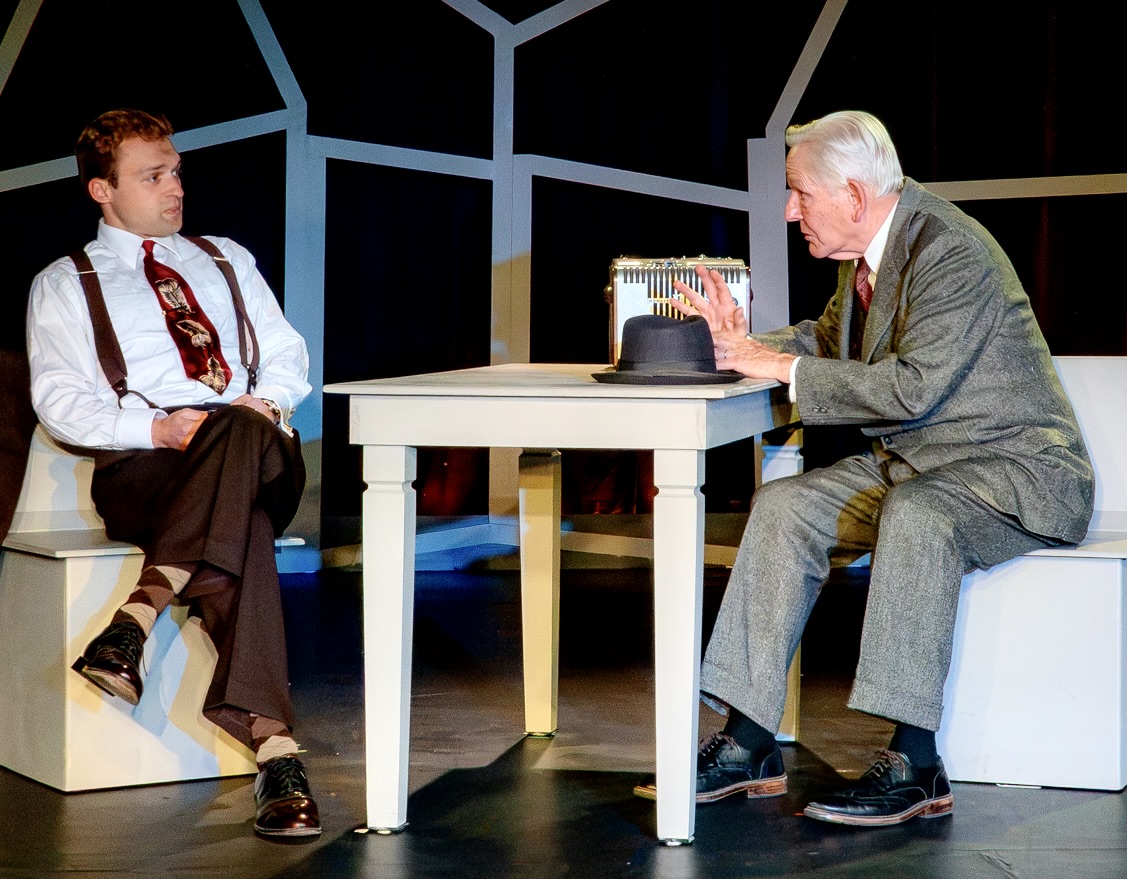
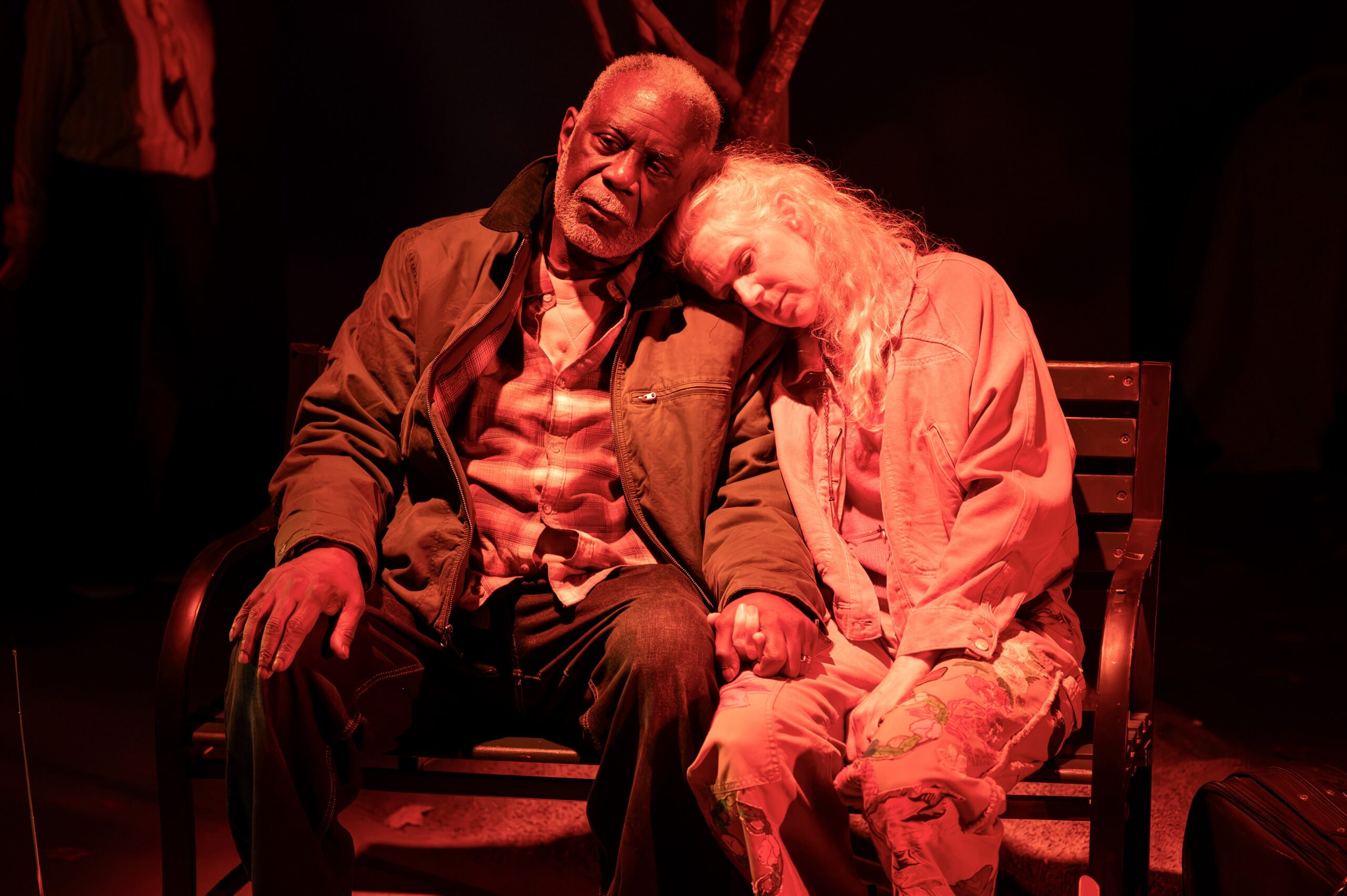
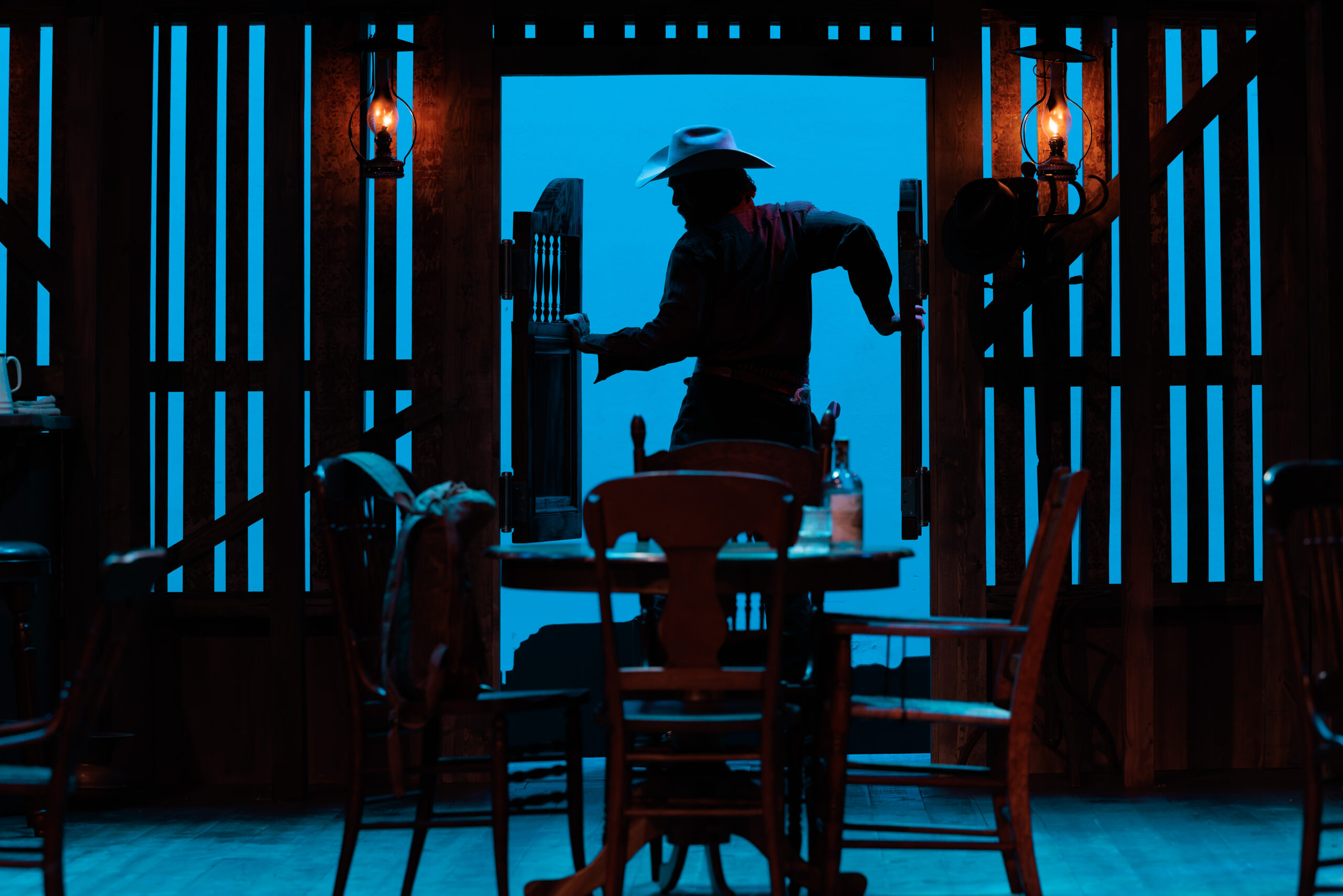
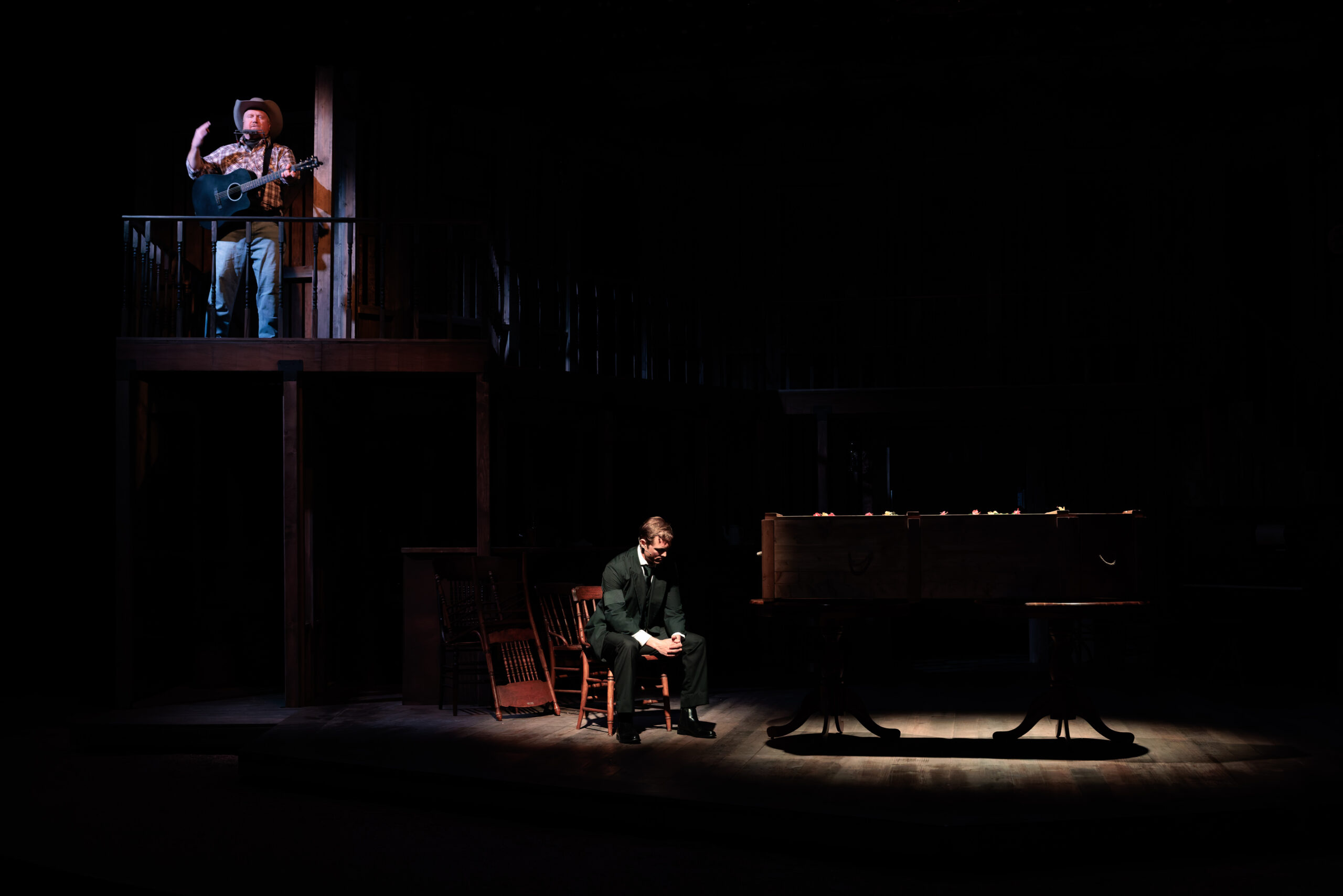
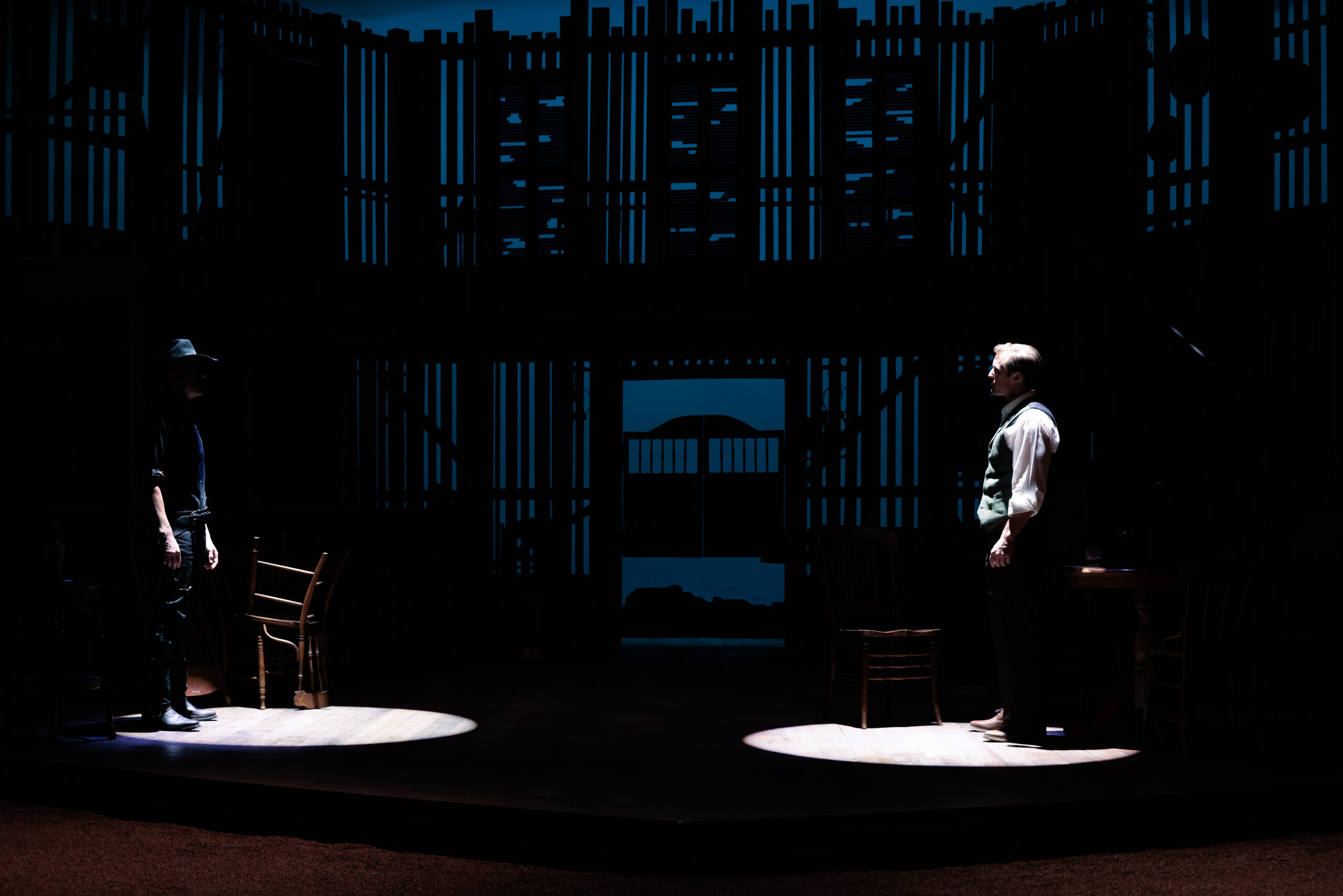
In December 1956, at the Sun Records studio in Memphis, Tennessee, four of rock and roll’s biggest stars assembled just to sit around and sing some gospel songs, making history in the process. “Million Dollar Quartet” is loosely based on this event from 70 years ago. While the show’s creators, Colin Escott and Floyd Mutrux, took artistic liberties with some of the facts, they also infuse the action onstage with genuine history. It’s all strung together with style and dynamic pacing, a great set and lighting, and of course the best rock and roll music the world has ever heard on one stage. Dance-in-the-aisles numbers include “Blue Suede Shoes”, “Who Do You Love” and “Great Balls of Fire” among many, many others. It’s a kind of theatrical alchemy, turning a simple session into musical gold.

A memorable moment: each artist strikes a pose, frozen in the spotlight with dramatic shading, in front of their microphones in the tiny studio. The whole world is before them – fame and fortune and the adoration of millions.

The actors all sing and play their own instruments with exceptional flair and are totally believable in their roles. The casting is ideal, especially Tyler Michael Breeding as Elvis. He captures Presley’s moves and charisma to perfection. Alex Burnette is all frenzied energy as Jerry Lee Lewis, showcasing his unique rock n’ roll piano playing and providing lots of laughs. Johnny Cash’s deep baritone and moody persona are embodied in Nathan Robert’s studied delivery. Sam C Jones gives a fine, multi-layered emotional performance as musical trailblazer Carl Perkins.

Session musicians Fluke (on drums) played by Brady Jacot, and Jay (on bass fiddle), played by Chris Blisset, lend an authentic studio feel along with personal interactions with the rest of the cast.

An unexpected guest that day is Elvis’s girlfriend Dyanne, who also (wouldn’t you know it) happens to be a really great singer. Kasie Buono Roberts flirts with everyone and steams up the stage from time to time with numbers like “Fever” and “I Hear You Knocking”.

Stephen Blackwell as Sam Phillips more than holds his own onstage alongside such commanding performers. In between songs, we hear him talk passionately about his studio, the music of the times, and his nurturing relationships with the four very special artists that came to his studio that day.

Near the end, in a beautiful footnote to the show, we get to hear part of the actual tape of the session recorded at Sun Records by Cash, Lewis, Perkins and Presley, along with a projection of the now-legendary photograph snapped by local newspaper Memphis Press Scimitar photographer George Pierce.

Million Dollar Quartet – photo by George Pierce

There needs to be a special shout-out to: Lighting Designer Scott Ross; Sound Designer Brendan Eaton; Music Director Chris Blisset (the guy on bass fiddle); Scenic Designer Mia Irwin and Costume Designer Karen Kangas-Preston. They truly bring this spectacular show to life, transporting us back to that December day in 1956.

Director Travis Walter has outdone himself once again, if that’s even possible. The show is so vivid, the characters so lively, and the story so riveting that the 105 minutes pass like a dream. A dream where you keep hearing “Memories Are Made of This” and “Brown-Eyed Handsome Man”, long after you awaken.


There is no intermission for this performance.


Please note new 7:30 PM evening start times for this season!

When: Now through May 17, 2026

Tickets $40 to $48    

Where: Meadow Brook Theatre at Wilson Hall

Oakland University

378 Meadow Brook Rd

Rochester Hills, MI 48309

(248) 377-3300

www.mbtheatre.com

his production is made possible through the generous support of the Fred and Barbara Erb Family Foundation, the Shubert Foundation and the Meadow Brook Theatre Guild.

Meadow Brook Theatre is a professional theatre located on the campus of Oakland University in Rochester, Michigan. MBT is a nonprofit cultural institution serving southeast Michigan for 59 years


Gods of comedy bring laugh-out-loud show to Point Richmond from Mount Olympus

By Woody Weingarten No Comments

The gods of comedy (Dionysus and Thalia), down from Mount Olympus, introduce themselves with a flair. Photo by Mike Padua.

By WOODY WEINGARTEN

Daphne Rain, a workaholic classics prof played impeccably by Anna Wesner, is mouse-like and straightforward, and early-on declares “I don’t need a boyfriend; I need tenure.” But she’s also fickle, flirtatious, and frisky.

Ralph, her male counterpart classics professor, is portrayed brilliantly, hilariously by Paul Bisesi as gawky yet lovable. But, nevertheless, he’s fickle, flirtatious, and frisky.

And Dionysus, one of two larger-than-life spirits who hustle down to Earth from Mount Olympus in The Gods of Comedy at the Masquers Playhouse, is rollickingly characterized by Jeffrey Biddle. But he, as well, is fickle, flirtatious, and frisky.

This screwball 2019 comedy by playwright Ken Ludwig, celebrated creator of Lend Me a Tenor, is crammed with sexual wordplay, sexual movements, and single entendres — with partners changing as often as those in a bad French movie that somehow never stoops to boring.

The most sex-crazed character, however, is none of the above. It’s Liddy Freeman as slithering bombshell actress Brooklyn De Wolfe, who, with apologies to Will Rogers, apparently never met a man she didn’t like.

That said, sex makes up only about 3% of The Gods of Comedy. Indeed, the farce is at once laugh-out-loud-funny, cartoonish, silly, clever, and witty. It’s filled with slapstick, mistaken identities, exaggerated mugging, buffoonery, gags coming as fast as gatling-gun bullets, and copious physical comedy.

A handful of costumed production numbers, moreover, guarantee keeping your family Grouch or Dr. Seuss’ Grinch away.

Two classics professors, Ralph and Daphne, cradle a lost Euripides play, Andromeda. Photo by  Mike Padua.

The plot itself — mainly a frantic search for a re-lost manuscript of an unearthed edition of as Euripides play, Andromeda — almost doesn’t matter.

It also makes no-never-mind ha the show features tons of champion on scenery as well as third-grade level clowning (that tickles adult funny-bones much better than red noses and floppy shoes might).

Think, too, about the impossibility of not laughing at the running gag in which costumed-to-the-nines Dionysus and the muse, Thalia (Melody Payne Alonzo), constantly re-introduce themselves as “The Gods of comedy” with a flourish, a pause, and arms thrust outward, followed by an over-the-top “Ta da!”

Theatergoers also chuckle at Ares, a narcissistic, oversexed god of war (played by Paul J. White, not Pete Hegseth) who responds when asked what he does for a living, “Rape and pillage.”

Awe is another frequent crowd reaction, especially to the most spectacular visual scene: Dionysus juggling, Thalia twirling batons, and projected fireworks going off on the backdrop.

Awe is also appropriate for most of the costume designs by Lynda Hornada, who’s done that work on Broadway and for the New York Shakespeare Festival.

The sets also deserve accolades. They range from a full-blown look at a college office to a naked curtain. It all works seamlessly.  

There are flaws in this community theater production, however, not because of any performances, not linked to the direction, the sound, or the lighting.

The two-act show is often uneven, because there are so many jokey moments the odds are, a bunch will fall flat. In addition, between sight gags that draw major giggles and squeals are a few slow moments when the dialogue is drab and audience silences are awkward.

And while there are topical references to the Marvel series of film franchises, there also are weird, outdated mentions — to an ancient television series, “I Love Lucy,” for instance.

Director Ronnie Anderson, who keeps the two-hour pace at unrelenting, breakneck speed, writes in the program, “I am thankful the Gods were smiling on me, when casting.” Clearly, they were: The entire ensemble is not only superlative but sustains as much fun on the Point Richman stage as anyone’s likely to see.

Anderson utilizes a successful device that allows the minor god-like characters to instantly change personalities. They also shift from invisible to visible and back again.

Not incidentally, each of the play’s characters consistently seeks either an adventure or “a happy ending.” They get one or the other. Or both. And, no spoiler alert here, so does the audience — despite the “pure chaos” that frequently colors the stage.

The Gods of Comedy will run at the Masquers Playhouse,  105 Park Place, Point Richmond, through May 17. Tickets: $15 to $35. Info: 510-232-3888 or info@masquers.org.

Sherwood “Woody” Weingarten, a longtime voting member of the San Francisco Bay Area Theater Critics Circle, can be contacted by email at voodee@sbcglobal.net or on his websites, https://woodyweingarten.com and https://vitalitypress.com. His books include Rollercoaster: How a man can survive his partner’s breast cancer, aimed at male caregivers; MysteryDates — How to keep the sizzle in your relationship; The Roving I, a compilation of 70 of his newspaper columns; and Grampy and His Fairyzona Playmates, a whimsical fantasy intended for 6- to 10-year-olds that he co-authored with his then 8-year-old granddaughter.

The Light in the Piazza

By Joseph Cillo No Comments


A sunlit Italian romance deepens into a tender, quietly powerful, almost operatic musical about how—and when—we let go of the people we love.

What starts as a chance meeting in an Italian piazza gradually reveals itself as something more layered—a story about a mother’s fear, a daughter’s awakening, and the fragile persistence of love.

At first, everything feels easy. Clara falls quickly, completely, and without hesitation for Fabrizio. But beneath that openness lies a complication her mother Margaret understands all too well. Clara’s past—an accident that altered her development—casts a long shadow, shaping how Margaret sees the world and how tightly she holds on.

As the relationship deepens, the real question emerges: not whether love exists, but whether it will be trusted.

Set in 1950s Italy, The Light in the Piazza follows Margaret Johnson and her daughter Clara as they travel abroad. When Clara falls in love with Fabrizio, a young Italian, Margaret must confront the limits she has quietly placed on her daughter’s future.

The story unfolds gently, guided more by emotional shifts than by action. Margaret’s internal struggle—between protection and release—becomes the engine of the piece.

Around them, the Naccarelli family brings warmth, humor, and a sense of lived-in reality that keeps the story grounded even as emotions rise.

The Score Lifts the Story
The music by Adam Guettel is lush, expressive, and closer to opera than traditional musical theater.

Rather than pushing the story forward in obvious ways, the score reveals what the characters cannot easily say. Emotions rise and resolve in waves, sometimes demanding patience, but often delivering moments of striking beauty.

More a continuous emotional current than a collection of songs.

A Notable Choice
A significant portion of the dialogue and lyrics is delivered in Italian, reflecting the cultural setting and enhancing authenticity—a mixed blessing.

For many of us in the audience, meaning must often be inferred through context and performance. Unlike opera, where surtitles guide understanding, the Italian here is left untranslated—requiring us to rely on tone, gesture, and staging to follow the meaning.

At its best, this deepens immersion; at times, it creates distance.

Performances
The production is anchored by a strong emotional core.

Clara (Emma Sutherland) is portrayed with openness and sincerity, capturing both innocence and resolve, while Margaret (Daniela Innocenti Beem) carries the greater dramatic weight, navigating the difficult space between love and control with credibility and restraint.

The cast is uniformly excellent, with rich voices and a striking combination of physicality and expressiveness.

Fabrizio (Malcolm March) brings warmth and conviction to the romantic center, while the Naccarelli family adds energy and texture, providing both humor and contrast to the more introspective moments.

Uniformly excellent—vocally assured, physically engaged, and fully expressive. 

Direction & Design
Sonoma Arts Live keeps the staging intimate and suggestive rather than elaborate. The design leans on atmosphere—lighting, costumes, and carefully chosen scenic elements—to evoke Italy without overwhelming the story.

The approach works. Nothing feels overdone, and the focus remains where it belongs—on the relationships.

Final Thoughts
The Light in the Piazza is not a conventional musical. It moves at its own pace, asking the audience to lean in rather than sit back.

In return, it offers something quieter but more lasting: a story about trust, vulnerability, and the difficult grace of letting go.

A quiet, lingering story about the courage it takes to let go.

How to See

The Light in the Piazza
Sonoma Arts Live
Andrews Hall Theatre, Sonoma Community Center
276 E Napa St, Sonoma, CA

April 24 – May 10

  • Thu–Sat at 7:30 PM
  • Sun at 2:00 PM
  • approximately 2 hours — one intermission

Tickets

  • $42 (Riser / Opening Night)
  • $37 (Floor)
  • $25 (Balcony / select performances)

Info & Tickets
sonomaartslive.org | 707-204-9990


Joe Cillo banner

Alvin Ailey dance company fans can’t wait for 10-part signature piece, ‘Revelations’

By Joe Cillo, Woody Weingarten


“Pilgrim of Sorrow” portion of Zellerbach Hall concert in Berkeley features familiar stance of Alvin Ailey dance troupe.


 By WOODY WEINGARTEN

The 2,000-seat Zellerbach Hall in Berkeley was packed for Saturday’s matinee. The crowd blended nicely with the 7 or 8 folks in the audience who’d never before seen the Alvin Ailey American Dance Theater.

For many, it’s been too long, their first reprise since the beginning of the pandemic.

Despite two Bay Area premieres being on the bill, no one apparently wanted to wait for the forever favorite, “Revelations,” the troupe’s signature piece, sometimes labeled the most-seen modern dance in the world.

When it happened, after the second intermission, the entire place seemed to go bonkers — as if a stadium of high schoolers were rooting for a local championship football team.

The final section of the 10-part gospel-based composition, “Rocka My Soul in the Bosom of Abraham,” was a presentation so rousing that the throng stood like an army in a unified, predictable standing ovation, clapping rhythmically and weaving and dancing in front of its seats.

It was awesome how so many folks were led into their happy place all at once, and no one even left “to beat the crowd” in a rush to get out of a parking lot.

“Revelations,” of course, featured the stylized, instantly recognizable hand, head, and body movements that have delineated Alvin Ailey’s choreography since the piece debuted in 1960, two years after he founded the company.

It all holds up today. Exquisitely. With grace and fervor.

Virtually every component of the composition amped up the volume and pace, forcing concertgoers’ excitement to rise accordingly until a roar shook the walls of the hall. It all fit perfectly, somehow, like a 2,000-piece jigsaw puzzle.

Early parts used no props or backdrops, allowing the audience to focus solely on the skill of the multi-racial company. Then, when the movements became as pure as the all-white costumes, “Wade in the Water” spotlighted a long fabric that transformed into lovely, nearly believable waves.

“Sinner Man” provided a hellish backdrop of flames and a trio of male dancers — Xavier Logan, Jessie Obremski, and Mason Evans — whose frenetic energy was exhausting just to witness. Without a zombie in sight.

The middle section of the concert, “Embrace,” featured five low tables that, when turned on their sides, allowed dancers to slither onto them. It also displayed exciting, emotional choreography by Frederick Earl Mosley to recorded melodies by Pink, Ed Sheeran, Stevie Wonder, and Kate Bush.

A rising and falling moon that showcased glistening craters and changing colors hung from semi-invisible wires.

The program said that “Embrace” examined “the ups and downs of human connections — messy, beautiful, and everything in between.”

In “Jazz Island,” a Caribbean folk character, Erzulie, Afro-Haitian goddess of love, takes over the stage — and the story.

True. It depicted 5 or 6 — maybe, 50 — shades of love, including an unsatisfying gay relationship whose raw emotion was best depicted when each half of the almost-couple is sitting on opposite sides of stage with his back to the audience.

“Jazz Island,” the concert’s opener, was based on a Caribbean folk tale and choreographed by Maija Garcia, a Cuban American whose history has included stage productions. The problem was that the piece’s narrative —adapted from Black Gods, Green Islands by Geoffrey Holder — was excessive, leaving nothing to the imagination, leaving little to be fascinated by.

Costuming by Carlton Jones, however, did stand out, particularly the outfit of two main characters, Erzulie, an Afro-Haitian goddess of love, and Baron Samedi, guardian of the dead.

The main plotline revolved around an arranged marriage between Bashiba, a flower girl, and a stereotypical wealthy guy despite her having fallen in love with a traveler, Jean-Claude Louis.

The Ailey troupe is now under the leadership of Alicia Graf Mack, a former star dancer with the company. She’s its fourth artistic director — and obviously has an ultra-high bar to replicate or surpass.

Highlights of what’s coming up soon at Zellerbach Hall under the auspices of Cal Performances include the Joffrey Ballet’s “Midsummer Night’s Dream” April 17-19, and a May 3 recital with soprano Renée Fleming and pianist Inon Barnatan.

Sherwood “Woody” Weingarten, a longtime voting member of the San Francisco Bay Area Theater Critics Circle and the author of four books, can be contacted by email at voodee@sbcglobal.net or on his websites,https://woodyweingarten.com and https://vitalitypress.com.

Meet the Novato ‘Wonderlady’ who turns manuscripts into books — no magic required

By Joe Cillo, Woody Weingarten


By WOODY WEINGARTEN, Bay City News

IF RUTH SCHWARTZ GETS STUCK while midwifing a client’s manuscript on its way to becoming a book, she climbs into an alternate persona — The Wonderlady.

Before long, problem solved.

Playfully.

“But the real Wonderlady persona,” notes the smiling Novato resident, isn’t some creature with superpowers or a magic wand, it’s “the power of intention.” Her intention is to always find a solution to any publishing problem.

“If there’s something really off, I sit with it until I understand it … My overall philosophy is that everything is perfect just the way it is, but subject to … new possibilities, with the idea of making it even better.”

At his Tiburin home on April 4, 2026, Eric C Wentworth enjoys dipping into “A Mindful Career,” a book co-authored by his wife, Carol Ann. Ruth Schwartz helped get it published. (Carol Ann Wentworth via Bay City News)

Her husband, Curt Kinkead, birthed the whimsical Wonderlady concept in 1992, after she’d found herself “embarrassed, frankly, to tell my parents about my not being able to pay my bills.” The next day, in the mail, she miraculously found a check from her father for the exact amount of money she was short. He, a real estate broker, had decided — apparently without knowing about her financial peril — to share a commission.

From that moment on,” she says, “Curt insisted that I had created money out of nothing, and if I could do that, I was clearly The Wonderlady. So, when ‘magical’ things happen, he says (they’re) due to The Wonderlady Effect.”

When polishing, detailing, or formatting a book that’ll be published and sell independently on Barnes & Noble, Amazon, and countless other sites, Schwartz prefers instead of magic to lean on a pair of reliable, grounded wingmen: decades-long expertise and a nose to the proverbial grindstone.

She nonetheless enjoys being mischievous. “Whenever I’ve pulled some rabbit out of a hat and clients say, ‘How did you do that?’ sometimes I tell them, sometimes I don’t.”

Working her wonders

The Wonderlady frequently smiles. In the flesh and on Zoom. Even when no one can see it. She’ll turn 81 in June. “At my age,” she says, “If it’s not fun, I don’t want to do it.”

Potential clients who check out her website are apt to soon lift her onto a book-shepherding or consulting pedestal. Susan Kirsch of Mill Valley is an example. Her new book, “Simply Go*d,” is to be the first of six. “I think Ruth is a Wonderlady,” she says, “because of her extensive knowledge of the publishing industry and because she’s a wonder for her clients. She’s a wonder for me by quickly having changed my thinking from writing one book to writing an entire series.”

All of it happens within the confines of a one-woman cottage industry with a little help from her friends, a stable of designers.

Now, because she’s so busy she’s had to turn away clients, she’s also started an advisory service, where she can “tell people how they can do things by themselves.” That, she says, will let her handle more clients simultaneously — and permanently shelve any plans to retire.

Susan Kirsch, in Ruth Schwartz’s Novato office, looks at her book, “Simply Go*d,” on April 6, 2026. (Ruth Schwartz via Bay City News)

Generally, Schwartz’s clients are seniors, drawn to her because “both sides are older.” Some of her clients are “in their 90s. The youngest is in their 50s. People who are self-published are older because they have time and money.”

Word of mouth is her best sales tool. She contends that “95% are referrals or repeats, people who come back to me with multiple books.”

The Bay Area Independent Publishers Association, where she’s vice president and the person who regularly gives the most answers to questions and shares the most information during monthly Zoom meetings, is her biggest source of clients.

Peter G. Engler, who lives in Belvedere, was one of her first clients, when he was a novice author. His praise is glowing: “She was instrumental in my completing my novel, ‘The Unselling of a President,’ and we also worked together on my short-story book, my job seekers’ manual, and several table-top legacy books. She’s terrific to work with, very energetic, very knowledgeable.”

“If there’s something really off, I sit with it until I understand it … My overall philosophy is that everything is perfect just the way it is, but subject to … new possibilities, with the idea of making it even better.”
Ruth Schwartz, The Wonderlady

Much of Schwartz’s work is done via email. Because she can. And because it’s way less stressful.

Many her clients live in Marin, but she’s also finished assignments from all over the Bay Area, Chicago, Florida, Montana, and a smattering of other places.

Hungering to help others

Shepherding manuscripts is only a part of Schwartz’s busy life. Along with Kinkead, she founded Respecting Our Elders, a rescue food service she says has delivered to seniors and others of limited means “500 pounds of quality, edible food every day since the organization began in 2005, for a total of almost four million pounds.”

A book by Ruth Schwartz, The Wonderlady, and her husband, Curt Kinkead. Photo taken in Novato Monday, April 6, 2026. (Ruth Schwartz via Bay City News)

Hoping to spread their concept, they just finished an 82-page book that details their “different kind of model from food banks or other fresh food rescue organizations” — “The Best Solution to Hunger in America: How to Set Up and Run an All-Volunteer Community Food Rescue Organization.”

Kinkead, meanwhile, has taken about a quarter of a million people out to cruise boats to watch whales, paddled a canoe around the world, and published “Secrets and Pleasures,” which Schwartz describes as “an erotic novel with lots of sensual information to help people have better sex lives.”

Schwartz’s first job in the publishing industry was with the University of California Press, from ’68 to ’74. She later worked for Design Vectors, a graphic design and marketing firm that dealt with major corporations like Bank of America, PG&E, and Pacific Telephone. She didn’t consider becoming a book midwife until print-on-demand — through which an author can have a book published one copy at a time — came onto the scene and she thought it perfect for her as a freelancer.

Clearly, she was right. She’s absolutely loved “taking a lot of words and turning them into a finished book.” The first one she shepherded, in 2014 for Robert W. Bone, was a memoir about being canned — “Fire Bone!” Her current workload covers a wide berth: a memoir, young adult fiction, nonfiction, and spy novels.

Schwartz has enjoyed having enough clients to let her reject some potentials. “I had one who came to me with a diatribe,” she recalls. “He was so angry that it came out on every page … I told him that I just couldn’t work on his book, that this was not a good fit for me.”

Usually, however, the idea of helping authors through, and educating them about, the self-publishing process is sufficient. “It fulfills a passion for me,” she says.

Still, she wouldn’t turn down a real-life magic wand if somebody handed it to her, says the book midwife, admitting there are times “when I’ve said I wish I had one.” 


This article was first published on LocalNewsMatters.org, a nonprofit site supported by Bay City News Foundation http://www.baycitynews.org/contact/


Sherwood “Woody” Weingarten, a longtime voting member of the San Francisco Bay Area Theater Critics Circle and the author of four books, can be contacted by email at voodee@sbcglobal.net or on his websites, woodyweingarten.com and vitalitypress.com.

Alvin Ailey Opening Night Dazzles!

By Jo Tomalin


Review by Jo Tomalin
ForAllEvents.com


Alvin Ailey Opening Night Dazzles!

Cal Performances presents Alvin Ailey American Dance Theater, April 2-7, 2024, in Zellerbach Hall. (credit: Dario Calmese)


The Alvin Ailey American Dance Theater presented their opening night program of four pieces including three Bay Area Premieres – and Revelations the well known Ailey favorite – on Tuesday April 7, 2026 at Zellerbach Hall, produced by Cal Performances in Berkeley. The company continues their run with four different programs until Saturday, April 8, 2026.

The program opens with Blink of an Eye, 2025, a Company premiere choreographed by Medhi Walerski, exploring the fragile boundary between presence and absence. Set to exquisite music by Johann Sebastian Bach, rapturously performed by Itzhak Perlman. Blink of an Eye is a beautiful virtuosic work for eight dancers. The approximately fifteen minute piece has everything, it is all at once muscular and sensitive, statuesque and flowing – and fleeting. Engaging trios, duos and solos intersperse with athletic motifs that melt into the inventive choreography – at times with a sense of urgency and others with a sustaining relationship to the music. A vibrant male solo of complex physicality and choreography is brief but oh so impactful! The Allemande from Johann Sebastian Bach’s Violin Partita No. 2 in D minor, V 1004; adagio and Presto from Violin Partita No. 1 in G minor, BWV1001 are a perfect pairing for this memorable piece. Blink of an Eye is an exciting new addition to the company repertoire that I look forward to seeing again.

Song of the Anchorite, 2025 Bay Area Premiere, is a meditative solo performed by Yannick Lebrun. This piece is choreographed by Jamar Roberts as a personal act of gratitude to Alvin Ailey, set to music composed by Maurice Ravel, the Adagio assai from Ravel’s Piano Concerto in G major. Yannick’s sculptural dance to beautiful, soft, melodic music with heart beat punctuations is visceral and reflective. The choreography explores the space in pensive curves,arcs of movement with outstretched arms and a surprise at the end of this short piece. A visual highlight is the dramatic large branch of a tree upstage – scenic design by Joseph Anthony Gaito.

Next, Difference Between, 2025, Bay Area Premiere choreographed by Matthew Neenan in stunning turquoise light ombre to black highlights the seven dancers as they move together as a group set to wonderfully vibrant music written and performed by Heather Christian & the Arbornauts. Sections of interesting vocalizing and plaintive song merge well with theatrical dance motifs with sounds of whispers and sudden silences. Dancers frolic with joy and changes of pace until a sinuous duo accompanied by a moody guitar merge into a glorious atmosphere of friendship. This piece is poetic, profound and uplifting!

Finally, Revelations, the most famous piece of the company, choreographed by Ailey in 1960 is set to traditional music comprising ten different dance numbers including Wade in the Water, Sinner Man, and Rocka My Soul in the Bosom of Abraham, all adapted and arranged by Howard A. Roberts. The latter is the wildly popular oft repeated coda performed during encore curtain calls! Beautiful decor and costumes by Ves Harper and costume dresses redesigned by Barbara Forbes with lighting by Nicola Cernovitch all come together to create a moving rousing performance. Outstanding rhythmic dance, theatrical flourishes and visual storytelling! Seeing Revelations is always a glorious experience when the company and audience magically become one, enjoying the outstanding visual and moving dances that resonate with everyone, no matter how many times we see this piece! Highly Recommended!

More Information and Tickets:

Cal Performances

Jo Tomalin Instagram: jotomalin

Ross Valley Players offer baseball morality dramedy about people and steroids

By Woody Weingarten

Chip Fuller (played by Woody Harper, left) and Dan Drake (David Kudler) whoop it up as sports radio talk show hosts. Photo by Robin Jackson.

By WOODY WEINGARTEN

A new play with an enigmatic title, Value Over Replacement, features sometimes confusing flashback and dream sequences. But it’s the specter of famed but un-hall of famer Barry Bonds, star homer hitter and alleged steroid user, that hovers over everything.

The dramedy by San Rafael resident Ruben Grijalva is a morality play that makes sure to sprinkle in enough laugh-guaranteeing lines to lighten the heaviness.

Many questions are posed but answers never become available — even by pondering long after the seven-member cast has taken its collective bows.

That said, Oscar “Woody” Harper is superlative as Ed “Chip” Fuller, a Triple-A minor leaguer who’s convinced he can still permanently make it to The Show, the major leagues, despite being short on talent, comparatively long in the tooth, and the long-time bearer of a bad knee.

Harper’s face projects a gamut of emotions as Chip goes through a series of introspections and causes a publicity surge by belatedly copping to injecting himself with Human Growth Hormone and other illegal substances.

The playwright — comments director Ken Sonkin in the program guide — “maps…one man’s tortured pursuit of a boyhood dream. [The play] doesn’t ask that you exonerate him, only that you hear him out.”

Sonkin’s encapsulation, not incidentally, links to Chip asking, “How many years would you be willing to trade to be exactly what you wanted to be when you were ten years old?”

David Kudler believably portrays Chronicle writer Dan Drake, Chip’s nemesis/friend/radio sports talk co-host on fictional San Francisco station KSFP, who cunningly prods him into a high-ratings moment — a confession.

By being onstage, Kudler, an Equity performer, ends a self-imposed theatrical absence of 19 years. And makes the audience hope the gap is forever closed.

Erik Forst, sitting in the bleachers, contemplates being a seasoned ballplayer. Photo by Robin Jackson.

Schoolgirl Amelia Stafford artfully switches genders as Alex, the Fuller’s son, especially agonized in a scene where he’s abused by his baseball-obsessed dad, and schoolboy Erik Forst is wordless but potent in dual bit parts as a young fan and young Chip.

Rachel Ka’iulani Kennealy (as Chip’s wife), Jennifer Reimer (as the mother of a boy who committed suicide after taking steroids), and David Schiller (as Jack Fuller, Chip’s late father, and as Mike Clawson, Chip’s drug supplier) fill out the cast. Effectively, all.

Value Over Replacement, a Ross Valley Players community theater production that’s part of its annual RVP New Works series, doesn’t depend on a deep knowledge of baseball to enjoy it — it’s a play about people, after all, not the math of statistics — but it might help if a theatergoer comes in knowing something about Bonds, the archetype for the never-seen character, Ken Hobbes.

Chip, meanwhile, is in effect a stand-in for all 27 players that allegedly received performance-enhancing drugs from the Bay Area Laboratory Co-Operative (BALCO).

The wonderfully familiar crack of a bat hitting a baseball is skillfully provided by sound designer Bruce Vieira, who never misses a beat when Chip’s father endlessly practices with his son.

Benicia Martinez merits praise for the striking, spare set that includes bleachers and a corner that serves as a fill-in-the-blank area ranging from a spot where the autistic Alex incessantly practices slamming a ball against a wall to a spot where multiple characters testify before Congress.

The title, usually shortened in real-life to VORP, stems from an obscure sports stat that supposedly can evaluate a player’s contribution when compared with a real or imagined player of the same level and position. There’s but one reference in two acts and two hours to the statistic, though, so a new title could be more informative to a potential theatergoer.

Grijalva has written a first act that drags with excessive exposition and choppiness and a second that sprints and is sprightly, a first that borders on boring and a second that’s jammed with enough emotion to fill two acts. A bald senior in the first row could be heard at the end of an opening weekend matinee suggesting, correctly, that a sharp editor might cut it down to a more compelling one-act show.

Chip Fuller (Woody Harper) consoles his wife, Emily (Rachel Ka’iulani Kennealy). Photo by Robin Jackson.

The playwright nevertheless needs to be lauded for inserting lots of Bay Area references and such thought-provoking lines as, “If heart were a thing, there would be a stat for it already” and the Death of a Salesman-like “Steroids never killed anybody — disappointment, that’s the thing that kills everybody.”

He deserves kudos, too for a lengthy, uproarious, lowbrow segment on farting, almost as funny as Mel Brooks’ notorious cinematic scene in Blazing Saddles.

Grijalva has written that his “theatrical worlds are full of abstract hopes colliding with concrete frailties. The resulting debris can be beautiful, grotesque, and often — thank God — hilarious.”

That, indeed, does sum up the best of Value Over Replacement.

Stylishly.

Value Over Replacement, part of the Ross Valley Players RVP New Works, will run at the Barn Theater at the Ross Art and Garden Center, 30 Sir Francis Drake Blvd., Ross, through April 12. Tickets: $30 to $45. Info: 415-456-9555 or www.rossvalleyplayers.com.

Sherwood “Woody” Weingarten, a longtime voting member of the San Francisco Bay Area Theater Critics Circle and the author of four books, can be contacted by email at voodee@sbcglobal.net or on his websites, https://woodyweingarten.com and https://vitalitypress.com.

Value Over Replacement

By Joseph Cillo


performance + consequence—and the stories we tell to justify both

Quiet, sharp observeations about ambition, ethics, and the uneasy realization that effort alone may not be enough.

Imagine a career spent just outside the spotlight—close enough to feel it, never close enough to own it. Now imagine the slow temptation to close that gap, not through persistence, but by bending the rules that define the game.

That’s the entry point. But this moves quickly past scandal into something more unsettling and equivocal: how we construct stories that allow us to live with our choices.

Story Line

Edward “Chip” Fuller is a former professional baseball player who never quite made it. Now a drive-time host on KSFP Sports Radio, he lives in the long shadow of what might have been.

When he learns his name will appear on a list of players linked to performance-enhancing drugs, the fallout doesn’t explode—it seeps in. Conversations with colleagues, listeners, and family begin to reshape the narrative.

As Chip revisits his past, the question shifts. It’s no longer just what happened, but how he explains it. Each version edges slightly closer to justification.

What emerges is not a confession, but a reckoning—one that stops short of resolution.

What’s in a Title?
Value over Replacement comes from a baseball metric: how much better a player is than a replaceable substitute. It’s a cold calculation—and that’s the point.
(Value Over Replacement Player is a complex baseball statistic that measures a player’s performance relative to an imagined “replacement player,” who is an average fielder and slightly below average hitter.)

Here, the idea lands beyond the field. Chip’s struggle isn’t just about performance; it’s about relevance. To fall short is to risk becoming interchangeable.

In that light, the temptation to enhance performance isn’t just about winning. It’s about proving you matter.

The Radio Booth: Performance as Identity
Particularly effective is Chip’s role on KSFP Sports Radio.

On-air, he is decisive, controlled, authoritative. The voice is confident because it has to be. Sports media doesn’t reward hesitation. Off-air, that certainty unravels.

Woody Harper as Chip Fuller makes that divide unmistakable. Behind the mic, his delivery is tight and assured; away from it, small fractures appear—hesitations, recalibrations, moments where the narrative slips. It’s a precise, controlled performance that reveals how much of Chip’s identity is constructed.

Across from him, David Kudler as Dan Drake anchors the world of the station. Practical, composed, and unshaken, he embodies the expectation of certainty. His steadiness sharpens the contrast as Chip begins to lose control of his own story.

The KSFP studio becomes a stage within the stage—where truth is shaped, repeated, and made to sound convincing. Until it isn’t.

Ambition rarely announces itself as compromise—it arrives as justification..

Ensemble Performances
This production is carried by a disciplined, well-balanced ensemble, led by a performance that understands the power of restraint.

Woody Harper as Chip Fuller anchors the play with quiet precision. Rather than pushing emotion outward, he lets it surface in fragments—pauses, hesitations, subtle shifts in tone. Confidence and doubt coexist, never fully resolving.

David Kudler as Dan Drake provides the essential counterweight. Grounded and direct, his presence gives the radio scenes their structure and tension.

Production photos from Value Over Replacement

The supporting ensemble adds depth and clarification.
Rachel Ka’iulani Kennealy (Emily Fuller) brings emotional clarity and restraint, while Amelia Stafford (Alex Fuller) introduces a generational perspective that raises the stakes without overstating them.

Meanwhile, Eric Forst, David Schiller, and Jennifer Reimer move fluidly between roles, including younger counterparts that echo and reframe Chip’s story. These transitions reinforce the idea that identity is not fixed—it is revised over time.

Direction
Director Ken Sonkin keeps the production focused and controlled.

The staging is clean, pacing deliberate. Nothing is forced — sometimes almost to a fault, as a few moments feel like they’re waiting to crest but never quite do.

Unsettling Final Thoughts
Value Over Replacement doesn’t offer easy answers, and it’s stronger for it.

Instead, it shows how compromise rarely arrives as a single decision. It builds slowly, through small adjustments, reasonable explanations, and the quiet need to make sense of ourselves.

What lingers is not judgment, but awareness of how complex life choices can be. And the heretical conclusion that sometimes the contract with the devil is worth it.

Tickets Available Now
Ross Valley Players

The Barn Theatre, Ross

March 27 – April 12

Tickets: rossvalleyplayers.com

(707) 523-4185

Includes intermission


Joe Cillo banner

‘Jagged Little Pill’ stays relevant in 21st century jukebox musical

By Woody Weingarten

L-R, Susan Zelinsky and Morgan Olson appear in Marin Theatre Company and Novato Theater’s co-production of “Jagged Little Pill: The Musical” onstage in Novato. (Katie Wickes via Bay City News)

By WOODY WEINGARTEN, Bay City News

When is a jukebox musical more than just that? When its story covers issues from the 1990s that remain problems today, like fentanyl addiction, rape and gender and racial identity.

Canadian alt-rock singer Alanis Morissette’s smash 1995 album “Jagged Little Pill” is the inspiration for the 2018 musical onstage in a Novato Theater and Marin Musical Theatre co-production through April 12. It reveals how a seemingly picture-perfect white suburban Connecticut family—mom, dad, son and adopted Black daughter with hidden plights—is truly dysfunctional. It takes place over one year, beginning with the mother writing a sanitized Christmas letter, followed by a darker one the next.

This community production, co-directed and choreographed by Katie Wickes and Jenny Boynton, is exciting from its loud start to its unexpected, haunting finish.

Susan Zelinsky, as Mary Jane Healy, the pill-popping supermom, carries much of the show on her slim shoulders. But Evvy Carlstrom-March, who portrays Jo, the lesbian lover of Frankie, the Healy daughter who’s unsure of her sexuality, has the cleanest vocal chops. Imri M. Tate as the rebellious teen Frankie, is easily the most animated.

L-R, Evvy Carlstrom-March and Imri M. Tate are among the excellent cast of Marin Theatre Company and Novato Theater’s co-production of “Jagged Little Pill: The Musical.” (Katie Wickes via Bay City News)

Sean O’Brien as Steve, the frustrated dad who’s heavily into internet porn because his addicted wife has lost her libido, also has a strong voice.

Morgan Olson doesn’t need to sing. As a symbolic dancing shadow of Mary Jane, she’s graceful and eye-catching, whether twirling or flying from one mark to another on her toes or stone-facedly caressing MJ’s face and handing her opioids.

Music director Megan Schoenbohm and top-notch musicians keep the sound at a level that mostly doesn’t drown Morissette’s lyrics, which are potent, honest, biting, coarse, caustic and humorous. Occasionally, the chorus sounds mushy and the words are hard to discern; it’s the lone sour note in the passionate 2½-hour show.

Among the show’s many high points are Morissette’s classic tunes “All I Really Want,” “Hand in My Pocket,” “Ironic” and “You Oughta Know,” as well as “So Unsexy,” “Forgiven,” “Unprodigal Daughter,” “Predator” and “No.”

This examination of female introspection and angst boasts a book by Diablo Cody, who won a Tony Award. Glen Ballard composed some of the music with Morissette.

“Jagged Little Pill: The Musical” opened on Broadway in 2019 but closed soon after during pandemic shutdowns in 2020. Happily, it came back successfully.

Marin Musical Theatre’s Wickes and Boynton follow with another winner after their electrifying “Cabaret” last year featuring Carlstrom-March as Sally Bowles. This show, too, is worth a trip to Novato. It’s likely to make an impact on theatergoers coming from myriad places, both geographically and emotionally.

“Jagged Little Pill: The Musical,” a co-production of the Marin Musical Theatre Company, runs at Novato Theater Company, 5420 Nave Drive, Novato, through April 12. Tickets are $37 to $50 at novatotheatercompany.org.

Sherwood “Woody” Weingarten, a longtime voting member of the San Francisco Bay Area Theater Critics Circle and the author of four books, can be contacted by email at voodee@sbcglobal.net or on his websites,https://woodyweingarten.com and https://vitalitypress.com.

Marjorie Prime

By Joseph Cillo


Art Imitating Life — or Life Imitating Art?

A beautifully acted and quietly haunting play about memory, love, and the emerging reality of technology shaping and preserving the stories of our lives.

Imagine a near future in which an elderly woman struggling with memory loss is introduced to a “Prime” — a digital recreation of her late husband, programmed with stories from their life together.

The premise sounds like science fiction. Yet Marjorie Prime quickly reveals itself to be something quieter and far more personal. Watching the play, I couldn’t help thinking how near that future suddenly feels.

Early on, I noticed how closely everyone was listening. The play unfolds through gentle conversation rather than dramatic action, yet the shifting memories held the room completely.

At its heart, the play explores how memory changes over time, how families remember events differently, and how love often survives through the versions of the past we choose to keep. At the same time, the story reflects something increasingly real: technology is beginning to preserve our memories alongside us.

In this thoughtful production, those ideas emerge through conversation and performance rather than spectacle.

Illusion doesn’t announce itself. It arrives dressed as comfort.

Story Told Through Conversation
The play centers on 4 characters:
   Marjorie — an 85-year-old woman beginning to lose her memory
   Walter Prime — a digital recreation of her late husband
   Tess — their daughter
   Jon — Tess’s husband

Everything unfolds through conversation. A story about a family dog changes slightly each time it is told. A vacation memory shifts depending on who remembers it. Some details quietly disappear. Gradually we see how easily memory reshapes the stories we believe about our lives.

Memory doesn’t simply fade. It quietly rewrites itself.

Ensemble Performances
The strength of this production rests squarely on its cast.

Laura Jorgensen, as Marjorie, delivers a warm and deeply affecting performance. She captures the uneven rhythm of fading memory — moments of sharp clarity followed by sudden uncertainty that leaves everyone searching for the right words.
Amir Ghazi Moradi, as Walter Prime, brings calm attentiveness to the role. Rather than emphasizing the artificial nature of the character, he presents Walter as reassuringly familiar — perhaps even a little too perfect.
Bronwen Shears, as Tess, provides the emotional tension of the play. Her performance reflects the complicated mix of love, protectiveness, and frustration that often accompanies caring for an aging parent.
Marty Pistone, as Jon, serves as the steady observer, frequently voicing the questions many of us are already thinking.

The actors handle Harrison’s conversational writing with precision and confidence. Much of the play’s emotional power emerges from pauses, corrections, and subtle shifts in tone.

Direction
Director John Browning keeps staging clean and naturalistic. The play unfolds in Marjorie’s living room. The familiar domestic setting allows conversations — and the shifting memories within them — to take center stage.

The production trusts the writing and the performances to carry the story. And they do.

Why the Play Resonates
What makes Marjorie Prime so compelling is how recognizable it feels.

We all have experienced family stories that change slightly each time they are told. Details soften. Some things are forgotten. Others take on a life of their own. The play simply asks what happens when those evolving memories are preserved by technology.

It’s a question that feels less like science fiction with each passing year.

When Art Meets Reality

A recent story highlights how closely the world of Marjorie Prime mirrors real life.

In 2023, Jan Worrell, an 85-year-old woman living alone on Washington State’s Long Beach Peninsula, received a device called ElliQ — an AI companion designed to help older adults stay socially engaged. Created by the company Intuition Robotics, the system speaks with users, reminds them about daily routines, encourages conversation, and even helps them record personal memories and stories.

According to reporting by journalist Eli Saslow in The New York Times, Worrell began speaking with the device regularly — sharing memories about her family, her life, and the experiences that shaped her. The goal was not simply assistance, but companionship.

While ElliQ is not a holographic recreation like the “Prime” in the play, the idea behind it feels strikingly familiar: technology helping preserve the stories of a life.

Seeing Marjorie Prime today, it’s hard not to recognize how quickly imagination and reality are beginning to meet.

Final Thoughts
This production succeeds because it unfolds patiently, letting characters and their memories reveal themselves piece by piece.

By evening-end, the theater grew noticeably quiet — the kind of silence that comes when we are still thinking about what we’ve just seen. Anyone who appreciates thoughtful, character-driven theater should make time to see this production.

And leaving the theater, it’s hard not to return to the question that began the evening:
Is art imitating life — or life beginning to imitate art?

How to see it / Get tickets
6th Street Playhouse

52 W 6th Street, Santa Rosa, CA

March 13 – 29

Tickets: 6thstreetplayhouse.com

Box Office: (707) 523-4185

Approximately 90 minutes (no intermission)


Joe Cillo banner