HUMOR ABUSE is 90 minutes of pleasure

By Kedar K. Adour

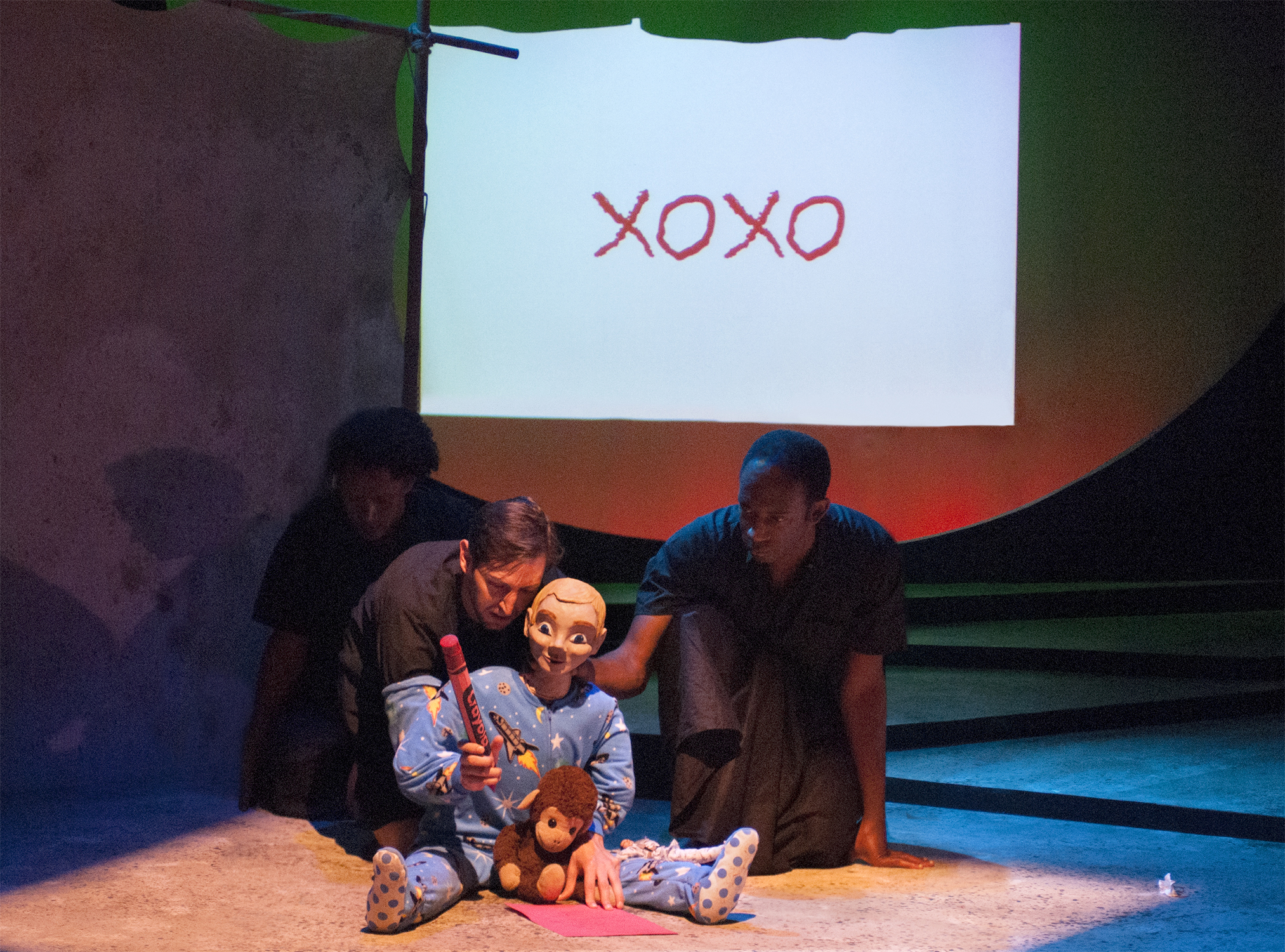
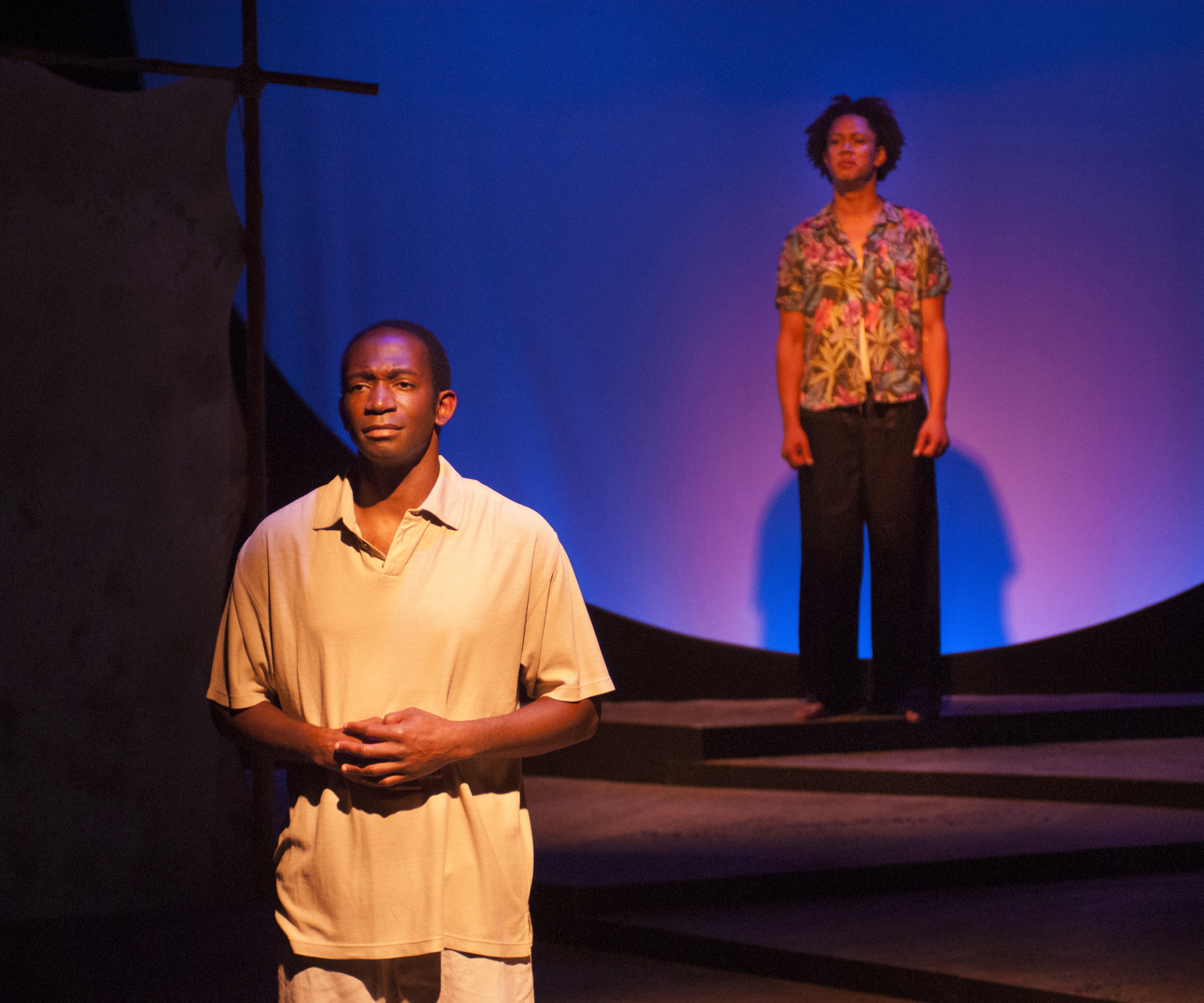
Lorenzo Pisoni with an old photo of his two-year old self. Historic photo by Terry Lorant. Production photo by Chris Bennion.

HUMOR ABUSE: Solo comedy. Written by performer Lorenzo Pisoni and director Erica Schmidt. American Conservatory Theater, 450 Geary St., S.F. (415) 749-2228. www.act-sf.org.

Augusst 3 -19, 2012

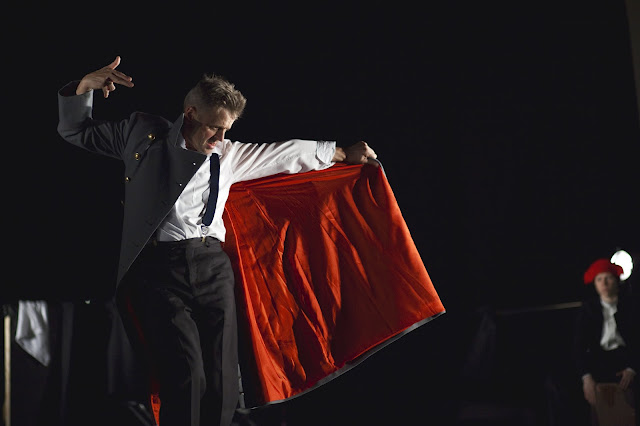
Lorenzo Pisoni begins Humor Abuse with the self-deprecating remark, “This is a show about clowning, and I’m the straight man. I’m not funny.” Do not believe him. He is absolutely superb in this gem of a solo show that is a bittersweet autobiography about growing up in a circus family. From the minute he chases an elusive spotlight that he finally staples in position on the stage floor to begin this 90 minute evening of hilarity imbedded with moments of poignancy he has the audience in his charming grasp.

That “family” is the one ring Pickle Family Circus family that was the brain child of his parents, Larry Pisoni and Peggy Snidera that became a highly praised San Francisco institution and later a national and international treasure. In between the clownish shenanigans is the story of a son’s relationship to a father he adores.

The proverbial steamer trunk takes center stage and actually sits before a gray canvas screen to emphasize that he was born and worked in a trunk. And that trunk and two others get a workout as our nimble performer dives in and out changing his personae and using balloons in many of his vignettes. The screen is used for projections of past photos as he traces growing up as the youngest member of the Pickle family beginning as a charmer at age two sporting a clown costume identical to that of his father.

Yes the love of his father and of performing was paramount to becoming the extraordinary versatile actor that is recognized in the world of theatre. But as that the road to success is chronologically developed from the apparently simple act of faking a trip over an unseen object to the developing his individual routine(s) in later life was the product of constant practice. Under the critical eye of his mentor father who insisted on perfection with a constant demand “do it again.”

You know that the 15 step two story high stairway on stage left will play an integral part in his routines and he does not disappoint. The act of carrying multiple suitcases from stage right up  to the top of those stairs with many missteps and tumbles keeps the audience pushing into the backs of their seats.

Physical comedy abounds between his autobiographical tales. Beginning with his climbing out of the trunk to create a different characters, to doing double takes (especially the ones that earn him extra ice cream at dinner), to falling through the floor and down the stairs, to juggling and late in the show avoiding only by inches heavy falling metal bags without batting an eyelash will keep you clapping.


An extended routine he devised for his shows without his father who was divorced from his mother is a weaker routine but non-the-less treacherous to perform. Have you tried climbing a ladder with over-sized swimming flippers? Lorenzo Pisoni does it hysterically but also dangerously.

No clown show is complete without juggling. Lorenzo learned from his father using pieces of carrots! With a straight face he intones “Have ever gone shopping for carrots thinking how that one would juggle?” When he goes on to juggling the dumb-bells he is a pro.

The 90 minutes ends too quickly and the appreciative audience rose en-mass with thunderous applause.

Kedar K. Adour, MD

Courtesy of www.theatreworldinternetmagazine.com

 

Spectacular puppets make epic ‘War Horse’ admirable

By Woody Weingarten

Andrew Veenstra (right foreground) portrays Albert in “War Horse,” while Christopher Mai (left), Derek Stratton and Rob Laqui (underneath the superstructure) work the huge puppet. Photo: Brinkhoff.


My memory is a trickster so I can’t swear to it. But I do recall seeing George Bernard Shaw’s “Caesar and Cleopatra” as a teenager in 1951.

It was my first Broadway show.

I had no inkling then how good Laurence Olivier and Vivien Leigh were as actors.

I recall later watching Jason Robards Jr. and Fredric March in Eugene O’Neill’s “Long Day’s Journey into Night,” Uta Hagen and Arthur Hill in Edward Albee’s “Who’s Afraid of Virginia Woolf” and Anne Bancroft and Patty Duke in William Gibson’s “The Miracle Worker.”

For me, acting was king.

And queen.

Then came the gimmickry. My first glimpse of the theatrical trend was when the chandelier crashed down in “Phantom of the Opera.”

That was followed by the helicopter landing onstage for “Miss Saigon” and, much more recently, Julie Taymor’s gloriously imaginative giant hollow puppets and people-in-animal-costumes in “The Lion King.”

Lots of musical charm was sandwiched in between, of course.

Stagecraft ruled.

Now comes “The War Horse” with its semi-mechanical “star,” Joey, a 120-pound, 10-feet-long, 8-feet-tall walking, rearing and breathing steed that takes three puppeteers to operate.

He’s impressive.

But does a gimmick, even a spectacular one, make the price of admission to this magical melodramatic epic worthwhile?

My unwavering answer is, “Yes, yes, and hell yes.”

It was impossible for me not to gaze with delight at the horse puppets (Tophorn is sort of a co-star, a black counterpart to Joey’s red bay, but also arresting are Coco and Heine and a much tinier Joey as a awkward foal).

They become decidedly more real than the human characters — endowed with life-like movements, emotions and sounds.

It’s easy to forget the steeds are moving not because of sinews and bloodstreams but rods and cables and other apparatus, so it’s no wonder when “War Horse” ended at the SHN Curran, the opening night audience gave mild applause to the actors and a standing ovation to the anatomically incorrect stallions.

Before that point, the production was enriched substantially via a white horizontal screen across the center of the backdrop.

The images projected onto it — including World War I battle scenes, rainstorms, skies and buildings — markedly helped the action come to life.

So did the period costuming of civilians and soldiers, inventive sets and props that surrealistically and nightmarishly depicted horrific killing devices such as cannon, planes and barbed wire, and dramatic musical soundbursts that contrasted with the sweet hopefulness of a strolling Irish balladeer.

Only the unmemorable acting by a large cast of cardboard characters (whose dialogue occasionally was too muffled for those in rear orchestra seats) and a trite, predictable storyline were found wanting.

The emphatically anti-war play, strewn with dead human and horse bodies, covers from 1912 through Armistice Day in 1918.

The plot’s a snap to summarize: A drunk trying to outdo his brother buys Joey at auction. The new owner’s teenage son, Albert, bonds with the animal and trains him. The horse is sold to the British Army, and later rescued by a German coward. The teen searches for his equine buddy.

Spotty moments of humor (many provided by a comic puppet goose that’s predisposed to biting) lighten the production, but mostly it’s a austere affair in which war scenes dominate even Joey’s majestic presence.

And where the first section of the 135-minute Tony award-winning show is straightforward and clear, moments in the second act can be momentarily confusing.

Nothing, however, can compete with Joey trotting up and down an aisle.

Because South Africa’s Handspring Puppet Company creations are so special, all minor criticism can be shunted aside unless you opt to stay home because, as one woman bemoaned, “You know how I hate war movies — well, this isn’t any easier to take.”

“War Horse” runs at the SHN Curran Theatre, 445 Geary St., San Francisco, through Sept. 9. Night performances Tuesdays through Saturdays, 8 p.m.; Matinees, Wednesdays, Saturdays and Sundays, 2 p.m. Tickets: $31 to $100. Information: (888) 746-1799 or shnsf.com.

A Midsummer Night in Hawaii

By Flora Lynn Isaacson

Scott Coopwood as Oberon, King of the Fairies and Cat Thompson as Titania, Queen of the Fairies in A Midsummer Night’s Dream at Marin Shakespeare.

Director Robert Currier transports the action of William Shakespeare’s A Midsummer Night’s Dream to the magical shores of mystical Hawaii under the gaze of the Tiki Gods which were created by Sculptor Antonio Echeverria.  Made out of wood and foam, these gods flank the Hawaiian set designed by Mark Robinson.  The scent of hibiscus and twang of ukuleles permeate Shakespeare’s story. The Hawaiian music is the creation of the Sound Designer and Composer, Billie Cox.  This is all to get us in the mood before the play begins.

When we enter this slightly fantastical version of contemporary Hawaii, we encounter several beautiful girls in Hawaiian costumes with leis around their necks dancing the hula.  While this is going on, an American tourist takes their picture.  This is followed by three interlocking plots, connected by a celebration of the wedding of Duke Theseus of Athens (Damien Seperi) and the Amazon Queen Hippolyta (Sylvia Burboeck) and set simultaneously in the woodland and the realm of Fairyland under the light of the moon.

In the first plot, that of the real world, we meet Helena (Luisa Frasconi) who loves Demetrius (Evan Bartz) who is infatuated and wishes to marry Hermia (Jessica Salans) who loves Lysander (Brandon Mears). Hermia’s father Egeus (Jack Halton) appeals to ruler Theseus to force Hermia to marry Demetrius.  Then the star crossed lovers run away and enter the realm of Fairyland.

In the second plot, a group of working men led by Peter Quince (Stephen Muterspaugh) have gathered to prepare a play to perform for Theseus and Hippolyta’s wedding.  Nick Bottom (Jarion Monroe), a weaver, quickly establishes himself as the star actor of the group.  Francis Flute (Alexander Lenarsky) is not excited to be cast as Bottom’s love interest.  Regardless, the group agrees to meet the next night in the wood to rehearse; the play will be the ill-fated love story of Pyramus Thisbe.

The third plot involves the King and Queen of the Fairies, Oberon (Scott Coopwood) and Titania (Cat Thompson) who are in a heated debate.  Their dispute has disturbed their fairy followers including Oberon’s henchman, the impish Puck (James Hiser), who screws everything up with a magic potion.  Oberon is costumed by Tammy Berlin as a Polynesian God of War who in times of peace becomes the God of Fine Arts; he fights when necessary and dances when the fighting is done.

Bringing fresh takes to their roles are Jessica Salans as the pushy and feisty Hermia, Luisa Frasconi as the sexy and pouty Helena and the laugh out loud antics of Jarion Monroe as Bottom.  Dressed in bright red, Cat Thompson makes a beautiful and graceful Titania and James Hiser as Puck, Oberon’s right hand man, carries the show.

Director Robert Currier has employed excessive physical action to garner laughs, and the young lovers do great justice to Currier’s use of physicality.  Speaking of laugher, special mention should be made of Alexander Lenarsky’s portrayal of Thisbe, the leading lady when the play of the workmen is actually  presented at the end of the show.

This modern adaptation of A Midsummer Night’s Dream might make the strict, Shakespeare purist squirm a little but these additions definitely help to add context to the language by keeping things interesting and adding a modern spin.

A Midsummer Night’s Dream plays at Marin Shakepeare Company, July 28-September 30, 2012.  Performances are held at Forest Meadows Amphitheatre, 890 Belle Avenue, Dominican University, San Rafael, CA.  For tickets, call the box office at 415-499-4488 or go online at www.marinshakespeare.org.

Coming up next at Marin Shakespeare will be The Liar, by David Ives, adapted from the farce by Pierre Corneille, directed by Robert Currier and opening August 25, 2012 through September 23, 2012.

Flora Lynn Isaacson

Robin Williams becomes icing on family vacation cake

By Woody Weingarten

Head of dinosaur appears to break through roof of Conservatory of Flowers. Photo: Woody Weingarten

And the winner is — drumroll, please — Robin Williams.

Three generations of my family agreed his improv at 142 Throckmorton in Mill Valley became the apex of a recent fun-crammed Bay Area vacation.

The icing on our cake, you might say.

Williams headlined a bill that included funnyman Mort Sahl, who at 85 walks haltingly but retains a keen mind.

I’d planned for us to catch a weekly Mark Pitta & Friends comedy gig so was surprised to find us watching 90 minutes of improvisation as beneficiaries of a scheduling switch.

Set List, with its catchphrase “stand-up without a net,” was being filmed for United Kingdom telecasting.

Each comedian (including Pitta) was captivating, but Williams, undoubtedly his generation’s primo comic genius, exceeded everyone’s highest expectations.

His steel-trap mind was fully transparent.

He instantly absorbed the never-before-seen phrases that flashed on a screen behind him and wove them into a web of delight.

Robin Williams as Mrs. Doubtfire, then.

Robin Williams as Robin Williams, now.

Yes, much of his humor, and that of the other verbal clowns, wasn’t for little kids — especially an uproarious rendition of a talking vagina.

But my 15-year-old grandson, Zach, roared.

So did my other grandson, who’s 24; my son, 46; and my wife, who’s been on the planet only two years less than my 74 years.

She, in fact, labeled the show “quintessential improv. Sahl was as sharp as a tack and Williams as sharp as two tacks.”

I shared all their euphoria.

I’d been in the theater many times, mostly to hear readings of plays by Writers with Attitude.

But the remodeled nonprofit theater, which dates back to 1915 when it showed Charlie Chaplin flicks for a few pennies, is also the site of concerts and jam sessions that include the likes of Joan Baez and Woody Allen (individually, not as a duet).

It’s worth supporting.

While planning the vacation for “the boys” from the East Coast, I couldn’t help but think I had 7,150,739 places to choose from — one each Bay Area resident might recommend.

At least that’s what it felt like when I invited suggestions from friends and colleagues.

The ideas poured in.

One of the best notions was the San Francisco Movie Tour, a three-hour bus ride featuring 70 clips from 60 films shot in the city, way beyond the anticipated “Bullit” and “Vertigo.”

If “Mrs. Doubtfire” star Robin Williams turned into the vacation cake’s frosting, this journey represented sparkling candles.

Wylie Herman, an actor well versed in cinematic lore, guided us. Humor and Hollywood back-lot scraps copiously trickled off his tongue.

When discussing the filming of the Mike Myers’ comedy, “So I Married an Axe Murderer,” for instance, he cited a Tinsel Town truism feared by actors and adored by Realtors: “The camera adds 10 pounds and five bedrooms.”

Zach called it “the best tour I’ve ever seen of San Francisco.”

And his father, my son Mark, gave it “two thumbs up — for a good balance between the films, the facts and the city sights.”

Academy of Science worker feeds ostrich chicks. Photo: Woody Weingarten.

Another of the family favorites was a visit to the California Academy of Sciences, which is featuring a new exhibit and planetarium show, “Earthquake.”

A couple of dubious moments resurfaced for my wife and me since we’d been downtown when the Loma Prieta tremor hit in 1989. Though I was decidedly nervous about being in the “shake house” when it started rattling, I survived the faux temblor — and my trepidation — as I had the real one.

“The boys” appreciated it more.

They also liked the permanent displays — the waddling penguins, the spiral Rainforests of the World and the always-exhilarating underwater creatures of the Steinhart Aquarium.

But all of us expressly reveled in the ostrich chicks, then 16 days old.

Noted Drew, my older grandson, “I liked the babies the best of anything. It’s amazing how they’ve learned to walk so quickly.”

Alcatraz, of course, is on or near the top of almost everyone’s list of tourist musts. It was no exception for us.

A walking tour of the site last used as a prison in 1963 was jammed with facts, facts and more facts, none more significant for me than solar panels having been installed in June to generate 80 percent of the power need.

Mark grinned broadly at being “locked” behind bars in a cell, a piece of the colorful audio tour created by Chris Hardman and his Antenna Theatre.

“It was interesting seeing things from a prisoner’s point of view,” he said, flaunting his mastery of

Zach Weingarten is imprisoned — momentarily — in Alcatraz cell. Photo: Woody Weingarten

understatement.

My wife Nancy agreed, adding that she was staggered to find “prisoners had been segregated. I’d never thought about that before.”

Hardman had also drummed up The Magic Bus, a 2-hour multimedia “time machine” tour of San Francisco that stresses the Summer of Love and the city’s Haight-Ashbury heyday — an era that, as the narration says, was “full of optimism, full of life.”

Music from the “sex, drugs and rock ‘n’ roll” decade blasted through the bus as retractable screens depicted scene after scene of local happenings, interviews about acid trips and psychedelics, and a historical context.

They transformed each of us into a Dr. Feelgood.

We also got off on wearing 3-D glasses that made the bus wallpaper and souvenir booklet photos jump out.

But I wept again when the assassinations of John and Bobby Kennedy, Martin Luther King flashed before my eyes and brain.

Nancy and I, who’d consciously experienced the ‘60s, liked the bubble-discharging ride better than my kin, one of whom had been a toddler and two who hadn’t even been conceived.

Our pleasure was even enhanced by bumper-sticker wisdom offered by the hippie-clad tour guide: “Life is to be lived, not just tolerated.”

Living it to the fullest, for us, meant additional stops at Pier 39, where we all marveled in the Mirror Maze (one of seemingly endless tourist attractions and views, restaurants and shopping opportunities there), and the Conservatory of Flowers, where we saw “Plantosaurus Rex,” an exhibit of “living fossils” (prehistoric plants), along with models of dinosaurs (with one ostensibly sticking its head through the roof).

When all was said and done, though, the biggest vacation takeaway for me was the discovery that “the boys” walked too fast for Nancy and me to keep pace.

I guess it’s appropriate that the Summer Olympics are in full swing: We definitely need to pass the foot-race torch.

Tourist info is available for 142 Throckmorton at (415) 383-9600, www.142throckmortontheatre.org; San Francisco Movie Tour, (800) 979-3370, (415) 624-4949, www.sanfranciscomovietours.com; Academy of Sciences, (415) 379-8000, www.info@calacademy.org; Alcatraz, (415) 981-7625, info@alcatrazcruises.com; Magic Bus, (415) 855-969-6244, info@MagicBusSF.com; Pier 39, (415) 705-5500, www.pier39.com; Conservatory of Flowers, (415) 831-2090, www.conservatoryofflowers.org

‘Beasts of the Southern Wild’ is best film in years

By Woody Weingarten

Quvenzhane Wallis stars as Hushpuppy in “Beasts of the Southern Wild.”


Although I did think “The King’s Speech” was a splendid movie, “Beasts of the Southern Wild” is the best film I’ve seen this century.

Stand aside, Meryl Streep. Get out of the way, Natalie Portman.

The movie’s six-year-old star, Quvenzhane Wallis, could well become the youngest ever to win an Oscar for best performance, though Shirley Temple was given a special honorary juvenile award at the same age.

The former non-actor seamlessly makes everything on this original cinematic canvas seem real, authentic despite blending elements of mythology and parable with premature coming of age and a gritty, perilous bayou life on the wrong side of a New Orleans levee.

Wallis’ character, Hushpuppy, is also six.

She’s watched over by her alcoholic, dying dad, Wink (Dwight Henry), a loving, protective father who wants his legacy to be his survival skills.

“Beasts,” a Sundance and Cannes award-winner narrated from Hushpuppy’s innocent and imaginative point of view, ultimately is about man’s uneasy coexistence with nature.

It’s about a storm as ugly as Hurricane Katrina that threatens to bury everyone and everything in its wake. Global warming runs wild, ice caps melt and the rise of the water shadows the rising temperatures.

It’s about mystical, carnivorous aurochs — prehistoric creatures that resemble giant boars and, surrealistically, the Four Horsemen of the Apocalypse — that trample all life in their path.

It’s also about Hushpuppy’s quest, while distanced from her ragtag home in the Bathtub, a swampland off the coast of southern Louisiana, for her dead mother who “swam away” and disappeared years before.

But, finally, it’s about faith in throwaway family and friends and makeshift rafts that may outlast the danger, and about faith in life itself.

The film’s components work in flawless concert to yank an audience into uncomfortable places it may not want to go — including a close-up view of government workers more concerned with regulations than humanity.

Aided by a passionate, throbbing musical backdrop, the fictional tale sometimes provides tension that may seem to override all else.

But flashes of love and bonding manage to quash that sensation.

Photography can range from blurry images of the girl to breathtakingly panoramic views of rising waters and crumbling homes constructed of detritus.

Like life, the camera, characters and story constantly shift. Regardless, it’s hard not to be magnetized to the screen through the 93-minute fantasy.

First-time director Benh Zeitlin has taken the allegorical screenplay by co-writer Lucy Alibar from her play, “Juicy and Delicious,” and knitted together diverse factors and a childlike voiceover that could make me forget the hand-held camera and think I was in a forgiving hallucination.

Some folks won’t like this film, and will label it too airy-fairy. Others will discount it as quickly as they do Terrence Malick movies.

It’s certainly not for 14-year-old boys only in need of flatulence jokes and car chases.

But for me, “Beasts of the Southern Wild” is an amazingly touching fable about a universe where everything connects, if only for a moment — a magical merger of components as polarized as the lyrical poetry of Percy Bysshe Shelley and the booze-colored harshness of Charles Bukowski.

If you even come close to being a film buff, or appreciate art or just like good, non-formulaic movies, this needs to be at the top of your must-see list.

“Beasts of the Southern Wild” is playing at the Rafael Film Center, 1118 4th St., San Rafael, and other Bay Area theaters.

Beach Blanket Babylon Still Going Strong

By Kedar K. Adour


Steve Silver’s BEACH BLANKET BABYLON: Musical Revue. Club Fugazi, 678 Beach Blanket Babylon Blvd, San Francisco. 415-421-4222 or www.beachblanketbabylon.com.

38 Years of Performances and Still Going Strong

When your editor requests a review (actually a re-review) of a show there is only one thing to do. So I grabbed my best friend and made a return trip to Club Fugazi to see the irreverent Beach Blanket Babylon (BBB) revue. Alcatraz may be the most visited venue in San Francisco but BBB cannot be far behind. On the Thursday night of our visit every seat was filled and the appreciative audience joined in the fun when cajoled from the stage by one of the actors.

BBB is a San Francisco institution that began 38 years ago and because of its success attracting visitors from all over the world, the powers that be in City Hall changed the name of the street to Blanket Babylon Blvd. There is no doubt that it will continue for another 38 or more years. Although the basic plot line has persisted for years, the skits are as topical as yesterday’s newspapers. Nothing is sacred with hysterical reference to the foibles of the famous, the peccadilloes of the politicians and even a romp with royalty.

You will not find a harder-working talented cast of 10 and marvel at their impressive quick costume changes that will keep you guessing who will come out next for their 15-30 seconds of fame (read infamy). It is a 90 minute non-stop evening of hilarity that spoofs all and everything. And the costumes are a kick-and-a-holler but are upstaged by elaborate wigs and hats along with the quality singing and acting. You will have your favorites and last night full-bodied Renee Lubin belted out memorable “Ain’t Misbehavin” and also has her stints as (alphabetically) Whoopi Goldberg, Beyonce Knowles, Michelle Obama and Oprah Winfrey.

Oh yes, the plot. It seems that transplanted San Franciscan Snow White is looking for her Prince Charming since she is hot to trot to the altar. But she knows that her chances in “Gay” San Francisco are limited so her big black, pink clad Fairy Godmother suggests she travel the world. Before that first stop in Rome we meet the Beatles in ‘Salt and Pepper’ headdresses, hippies romp in good old Frisco with the “Age of Aquarius”, “Let the Sun Shine In” and “Flowers in Hair” snippets with wacky (perverted?) lyrics.

Next stop is Roma and don’t ask who played whom because the program doesn’t give a clue. The costumes and headdresses you will remember: One shaped as a pizza, one filled with Chianti wine bottles and another as a full plate of spaghetti and meatballs.

Don’t’ ask how or why but Oprah Winfrey shows up and so does Bill and Hilary Clinton, Arnold Schwarzenegger, Barack and Michelle Obama, Nancy Pelosi, Michelle Bachman, Jerry Brown, Sarah Palin ending with a bottle of huge bottle of Viagra moving to downstage center. Are they telling us something?

No time to think because it is time to move to gay Paree. You haven’t seen ‘gay’ until you’ve seen Louie XIV in a stunning pink outfit and a pink coiffeur three feet high. Sorry, Snow White, he is not for you. The three actors dressed as black French poodles are naughty, naughty, naughty. Would you believe that Coco Channel is decked in Cocoa Chocolate hat? Yes, the humor is not subtle.

There is more and more and more but this review must be content to stop being specific since space is limited. It will be mentioned that Queen Eliazbeth, Prince William and Catherine Middleton, and neglected Prince Harry get their turn on stage.

We finally get to the finale but not before Snow White has morphed into Madonna and been lifted over the head of the audience singing her heart out because she states “I can eat the apple and still be on my feet.” Really? You will not hear it from this reviewer whom she corrals but does and gets to wear a wedding dress and wedding cake hat three feet tall. Her hat is upstage by the enormous San Francisco Skyline hat, four feet tall with a working cable car to travel to the stars as “I Left My Heart In San Francisco’ is belted out.

Kedar K Adour, MD

Courtesy of www.theatreworldinternetmagazine.com
This “Tuna” Bites Back

By Joe Cillo

620 words By ROSINE REYNOLDS

This “Tuna” Bites Back
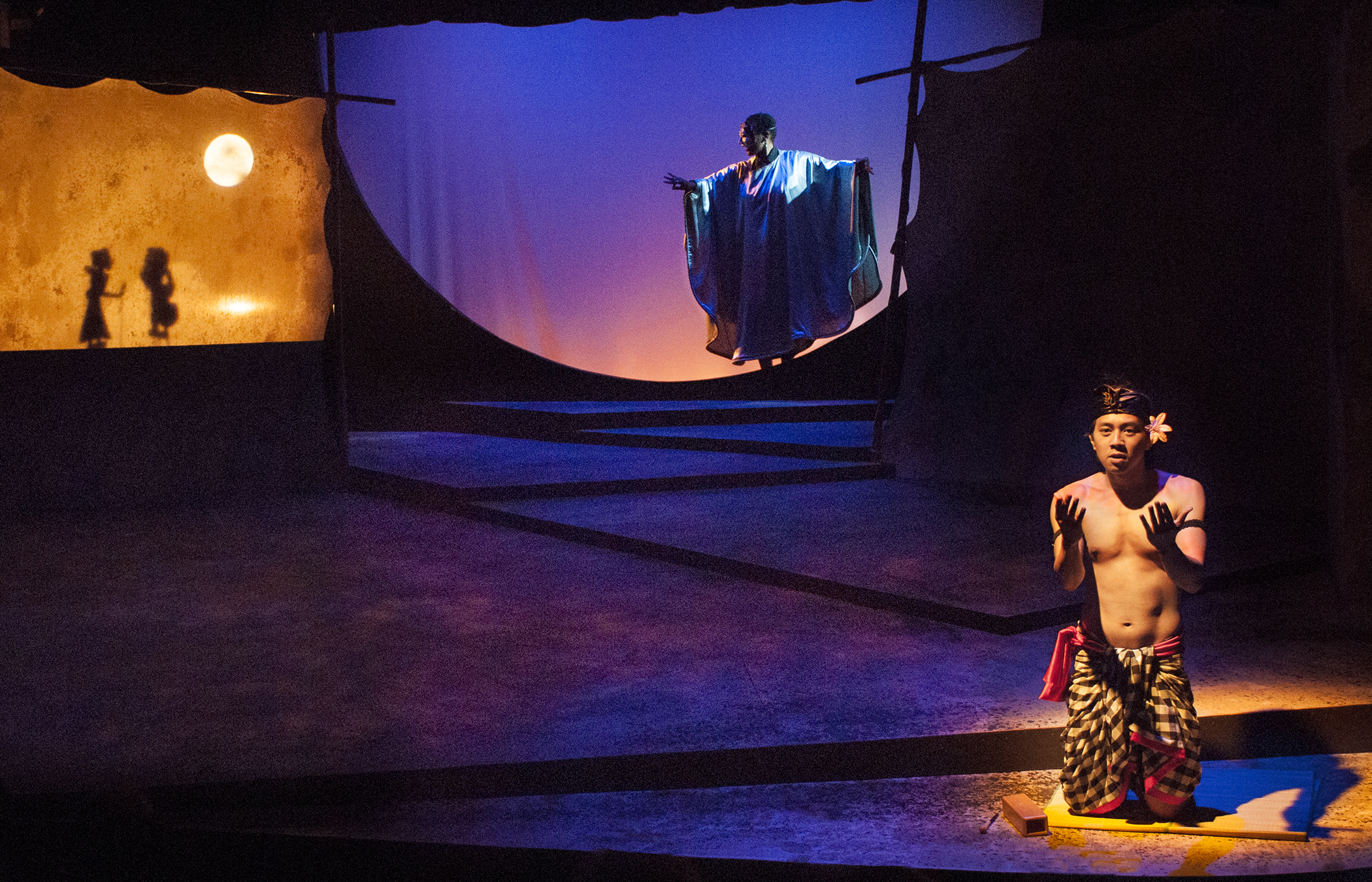
Tuna, Texas is a fictional small town with a small town’s closeness. However, this community is not the pies- and-picket fences of Andy’s Mayberry, Hank Hills’ Arlen, Keillor’s Lake Woebegone or anyplace in “Our Town.” Tuna is more tumbleweed and barbed wire.
This town starts its mornings with local news from radio OKKK, delivered by veteran newscasters Thurston Wheelis and Arles Struvie. Today’s headline concerns the death of an important citizen, Judge Bruckner, beloved for being the judge who ordered the most hangings. The judge was found wearing a women’s bikini bathing suit. (This story will be corrected later as to the kind of swim suit it was.)
There follows a commercial from Didi’s Used Weapons, which, even though used, are “absolutely guaranteed to kill.” A standard Texas weather report follows, predicting “rain from all directions,” a dust storm, locusts and Tropical Storm Luther.
We then get a close-up look into the Buford household, where Mrs. Buford is being interviewed about her work on the Censorship Committee. The Committee objects to “Roots” in the public schools, saying that it “only shows one side of the slavery issue.” “Romeo and Juliet” is also on their list because of its “rampant disregard for parental authority and teenaged sex.”
But all is not harmony in Tuna. Many townspeople are at odds with the local animal lover, Petey Fisk of the Humane Society. (Petey has nightmares all through hunting season.) Mrs. Pearl Burras loves animals too, as long as they’re chickens, which she defends with modern science. Mrs. Buford doesn’t love animals as much as she used to before her Jody began collecting dogs. But Jody’s sister Charleen is having a personal crisis because she didn’t make cheerleader, and now she’s a senior.
There is, of course, a church, and the Rev. Spikes arrives to deliver a one-size-fits-all eulogy for the Judge. The Deity is also called upon for various needs throughout the story.
A genuine Texan, Linda Dunn, directed “Greater Tuna” for the finale of Ross Valley Players’ 82nd season. Its spoofs are, she says, “all these things I grew up around.” And it was on a visit back to the Lone Star State to see her mom that Ms. Dunn saw a production of “Greater Tuna” with more than two in the cast.
Originally created by three men – Jaston Williams, Joe Sears and Ed Howard — the show’s twenty characters were played by just Williams and Sears, each taking on multiple roles. The show debuted in Austin in 1981 and went on to become first in a series of four. It has since developed a loyal audience, even having an online General Store with its own merchandise.
Ross Valley Players’ version uses a cast of seven, including a number of recognizable names. Jim Dunn plays newscaster Thurston Wheelis as well as Elmer Watkins. Wood Lockhart is his partner, Arles Struvie, but is also Didi Snavely, the weapons saleslady. News banter between Wheelis and Struvie are highlights of the show.
The versatile Steven Price carries five parts, only four of whom are human. Robyn Grahn plays all the Bumiller children. Tom Hudgens (another Texan) is both the beleaguered Petey Fisk and the very proper church lady, Vera Carp. Jeffrey Taylor portrays three townspeople, including the Sheriff, and Javier Alarcon plays four others.
Michael A. Berg costumes all these people right down to the slip showing and the ear-flap hats.
“Greater Tuna” will be at The Barn Theater in the Marin Art & Garden Center, Ross, through Aug. 12. Thursday performances are at 7:30; Friday and Saturday shows are at 8 p.m., and Sundays at 2 p.m. For complete information and ticket prices, see www.rossvalleyplayers.com, and for reservations, call 456-9555, ext. 1.

“King John” — Good Play about a Bad Guy

By Joe Cillo

“King John” – Good Play about a Bad Guy

Just as hurricane names are retired after they cause devastation, the name John
seems to be off-limits for British kings. One John was plenty. This was the same king who usurped his brother’s throne while Richard was on the Crusades and the same who harried Robin Hood. He’s also the king who was forced to sign the Magna Carta in 1215 when his over-taxed barons demanded their “ancient liberties” back.

Marin Shakespeare’s Managing Director, Lesley Currier, has revived the Bard’s seldom-seen “King John” with a dynamic blend of fine acting and history. To appreciate this production fully, be sure to read Ms. Currier’s program notes before the action begins.

John has succeeded his popular brother, Richard Lionheart — killed in France by a crossbow — and is receiving an ultimatum sent by Philip, King of France, to relinquish all English claims to French territory. John refuses, though war between the two countries is sure to result. The ambassador leaves, and a pair of brothers arrives, one of whom claims to be King Richard’s illegitimate son. John’s mother, Elinor, sees the resemblance, and the older brother is knighted Sir Richard. He’s eager for the fight.

Back in France, King Philip’s ambassador delivers the bad news that England will not negotiate, and war is imminent. The court shelters young Arthur, son of John’s older brother Geffrey, and his devoted mother Constance, Geffrey’s widow.

(Those who are keeping score can see that there are now three possible claimants to the throne. Will there be more?)

A full-scale war erupts around the amphitheatre, after which it’s agreed that John’s niece, Lady Blanch, should marry Lewis, the French Dauphin; Arthur will be given a land grant as a consolation prize. Sir Richard, who has taken a fancy to Blanch, calls this peace agreement “most base and vile.” Everyone’s taking sides. Austria switches its allegiance to England; Cardinal Pandulph, the Pope’s emissary from Rome, is turned away, but first he excommunicates John and warns that France must not become his ally. King Philip chooses to remain with the Church, and the fight continues.

Shakespeare, by all accounts, never traveled, so it’s pardonable that he might have thought France and England were closer neighbors. But here’s where the Director’s program notes are essential.

Elizabethan audiences were proudly English and disdainful of foreigners. Besides, Gloriana herself might be in the audience. So Shakespeare’s French are shown as foppish and arrogant, his Austrian’s a brute in animal skins, and his Catholic emissary is deceitful. This way, even though King John is known to be a bad guy, he’s not as bad as the others.

There are thirty-three in the cast, and the ensemble playing is seamless. Scott Coopwood is a masterful King John, chilling in his conversations with Hubert (James Hiser.) Barry Kraft plays the beleaguered French King, torn between his love of country and this duty to the Church. Steven Muterspaugh portrays the Cardinal, accurately predicting John’s end. Liz Sklar, mother to young Arthur, holds the audience with her grief when Arthur’s been spirited away to England, and Erik MacRay is the ambitious Sir Richard.

And yes, there is another heir. In a wonderful concluding scene, Sir Richard will deliver the crown, and the Plantagenets will be redeemed.

“King John” plays at the Forest Meadows Amphitheatre in Dominican University, San Rafael in repertory with “Midsummer Night’s Dream” through Aug. 12. Parking and restroom facilities have been remodeled and greatly improved since last season. The amphitheatre is still outdoors, though, so playgoers should dress for the weather.

Ticket prices range from zero (under 18 on Family Day matinees) to $22. For complete information or reservations, please see www.marinshakespeare.org or call the box office, 499-4488.

THE MERCHANT OF VENICE – “SMART -FUNNY!”

By Lee Hartgrave
Matt Gunnison, Brian Matin, Catz Forsman (on Hi-rise), Ryan Hayes and Dash Hilman. Photo: Jay Yamada

THE MERCHANT OF VENICE — “FRESH – SURPRISING”

ACUTE PLEASURE, EVEN JOY!
Let’s give The Custom Made Theatre hands together for mounting this new take on “The Merchant”. The modern dress of the actors is not the style of today, but it is the style of the 50’s where Cigarettes lit up in offices and the men were always looking to hit on one of the Sexy Women that do the slink walk. By the way – in this updated version men also hit on men. As Judy Garland might say: “Oh My!” Yes, in this newer world – you could call the play “The Merchants of Wall Street!
The Shakespeare play of course, was categorized as ‘a comedy’. Yes, it is – and it is also a tragedy. Why? – Because it’s about an arrogant and rich Jewish man who is despised, by Christian citizens of Venice. Hey, they’re just trying to up the Ante when it comes to money. After all, it’s all business. And in this flashy show – that’s all they ever think about.
Problems arise when a friend, who lacks immediate Cash, turns to Shylock (the Jew), who makes the loan. Shylock forces Antonio to agree to yield a pound of flesh if he doesn’t cough up the money. Shylock is not amused when Antonio can’t come up with the cash and he threatens Antonio.
There are many lingering images in this fine production.  ‘Shylock” (the Jew) is both wronged and overcome by his own dealings.
Here’s the bottom line of the story. It’s about men who pull sneaky and troubling tricks between the moneylender and a businessman. Comedy perhaps? – But, it also, is very heavy on the arrogant and sneaky. And Shakespeare might even say: Oh, it was ‘Much Ado about nothing.’ Well, actually – that is the title of one of his many plays. Just checking to make sure that you already knew that.
HERE IS THE EXCELLENT CAST: Brian Martin, Kim Saunders, Ryan Hayes, Claire Rice, Tonya Narvaez, Dashiell Hillman, Matt Gunnison, Megan Briggs, Molly Holcomb, Catz Forsman, Perry Aliado, Gabriel A. Ross, Stefin Collins, Jean Forsman and Perry Aliado. Great acting by all! The most applause went to CATZ FORSMAN. And, why not? To me, he was the most surprising actor so far this season.
*Superb Direction by Stuart Bousel
Sarah Phykitt – Terrific Scenic Design. Excellent Costume Design by Tim Malko Fabulous Lighting Design by Maxx Kurzunski and wonderful Sound Design by Ryan Lee Short.
Now Playing at the Custom Made Theatre on Gough Street.
RATING: THREE GLASSES OF CHAMPAGNE!!! –trademarked- 

and hosted a long-running Arts Segment on PBS-KQED)))

(((Lee Hartgrave has contributed many articles to the San Francisco Chronicle Sunday Datebook and he produced a long-running Arts Segment on PBS-KQED)))
*courtesy: beyondchron