“A Funny Thing Happened on the Way to the Forum” by Stephen Sondheim, Burt Shevelove and Larry Gelbart at Spreckels Performing Arts Center, Rohnert Park CA

By Greg & Suzanne Angeo

From left: Matthew Lindberg, Tim Setzer, Dene Harvey


Reviewed by Suzanne and Greg Angeo

Photos by Eric Chazankin

Hilarious and Entertaining “Forum” Sets New Standard for Local Theatre

The New Spreckels Theatre Company, housed in the 550-seat Codding Theater at the Spreckels Performing Arts Center, is funded by public/private partnerships to maintain excellence in programming. In addition to a full-size proscenium stage and orchestra pit, these folks have, at their disposal, state-of-the art sound and lighting systems, a 45-foot wide cyclorama and the new Paradyne projection system which allows for still images and animation to be incorporated into the action onstage. They put this impressive setting to good use in the dazzling comic spectacle “A Funny Thing Happened on the Way to the Forum”.

 “Forum” is a candy-colored musical comedy pleasure trip to ancient Rome, filled with catchy songs, lovable characters, delightful vaudeville shtick and madcap antics that are superbly done on every level. With music and lyrics by the acclaimed Stephen Sondheim, the show won several Tony Awards for its initial Broadway run in the early 1960s. Spreckels invites us to indulge in this generous and tasty dessert in a world that too often seems overloaded with organic sprouts and tofu. Their production of “Forum” is sure to satisfy even the deepest cravings of the funny bone.

From left, standing: Abbey Lee, Melissa Petty, Matthew Proschold, Michella Snider, Lauren Siler; Seated: Chelsea Smith, Sophia Grace Ferar

Director Gene Abravaya, with over forty years of television and theatre experience, is also Spreckels Theatre Company’s new Artistic and Managing Director. He’s tapped into a motherlode of talent for “Forum”, with not one weak performance in the bunch. The dancers are flawless, led by Choreographer Michella Snider who also plays Gymnasia, one of a troupe of merry courtesans. Everything from somersaults to fan-kicks are executed with energetic precision. The musical numbers are a joy to watch, and hear. The voices of the lead actors as well as the chorus give “Forum” a Broadway quality not often seen in North Bay musical productions. The casting is perfect, and just a few of the many excellent performances include Tim Setzer as the show’s endearingly silly lead character, Psuedolus the slave; Alan Kafton as his hapless sidekick Hysterium; Larry Williams as Lycus, a trader of female flesh; and Matthew Proschold as the pompously aggressive warrior captain Miles Gloriosus. The sweet young lovers, Hero and Philia, form the romantic heart of the story and are played with great charm by Matthew Lindberg and Dene Harvey.

Abravaya has plans to lead the way in Sonoma County theatre, with major shows like “Young Frankenstein”, “Peter Pan” and “Brigadoon” coming up for the 2013 season. He told us his goal is to offer touring Broadway shows a place to land, and within three years he hopes to establish Spreckels as the premier first-run theatrical venue in the county. If the quality delivered in “Forum” is any indication of things to come, he seems well-prepared to give other local theater companies a run for their money.

When: Now through February 17, 2013

7:30 p.m. Thursdays

 8:00 p.m. Fridays and Saturdays

2:00 p.m. Sundays

Tickets: $20 to $26 (reserved seating)

Location: Codding Theater at Spreckels Performing Arts Center

5409 Snyder Lane, Rohnert Park CA
Phone: 707-588-3400

Website: www.spreckelsonline.com

SF Ballet: World Premiere

By Jo Tomalin

Photo (above) Maria Kochetkova and Jaime Garcia Castilla in McGregor’s Borderlands.  © Erik Tomasson

Wayne McGregor’s New Work – Borderlands

Review by Jo Tomalin 

Sofiane Sylve and Vito Mazzeo in McGregor’s Borderlands.
© Erik Tomasson

The opening season of SF Ballet began with Program 1 January 29, to February 3, 2013 at the San Francisco War Memorial Opera House offered three different ballets, all distinct in flavor.

The headliner is undoubtedly the World Premiere of Borderlands created for SF Ballet by multi-award-winning British choreographer and director Wayne McGregor. McGregor has also created new works for La Scala, Paris Opera Ballet, the Royal Ballet, Stuttgart Ballet, Nederlands Dans Theatre and New York Ballet.

San Francisco Ballet in McGregor’s Borderlands.
© Erik Tomasson

Borderlands is a vibrant ballet inspired by the abstract paintings of German-American artist Josef Albers. In fact, McGregor and his team spent time at the Josef Albers Foundation in Connecticut immersing themselves in the way Albers worked with colors as a means to deceive the eye, which McGregor used as a starting point for this ballet.

Twelve dancers vividly perform the many fibrous, pulsing, zippy, four-minute segment dances in duos, trios, and groups starting in the huge walled white box (Scenic Design by McGregor and Lucy Carter). Slowly the white box turns shades of gray to dark gray.

Maria Kochetkova and Lonnie Weeks in McGregor’s Borderlands.
© Erik Tomasson

The dynamic lighting design (Lighting Design by Lucy Carter) becomes its own element of this ballet as it ranges from gray to electric blue and neon orange; it complements and contrasts with the electronic sonic score music composed by Joel Cadbury and Paul Stoney. This is a visceral and relevant ensemble work with stunning solos and duos, unexpected shapes of athletic lifts, and dramatic visual and challenging choreographic movement.

Sarah Van Patten in Lifar’s Suite en Blanc.
© Erik Tomasson

Suite en Blanc choreographed by Serge Lifar, Staged by the accomplished Maina Geilgud with Édouado Lalo’s rapturous music, opened the program.  This is a neoclassical ballet with a breathtaking traditional look set against a black background. As the curtains opened there were formations of dancers on two levels in long white dresses or tutus, the men in gray tights and romantic ruched-sleeved shirts filled the stage.  The Corps of twenty dancers, trios and duos were exquisite and the four soloists on January 30 (Koto Ishihara, Vanessa Zahorian, Gennadi Nedvigin and Maria Kochetkova) were elegant, precise and projected well. A wonderful ensemble piece to start the season!

Vanessa Zahorian and Rubén Martín Cintas in Robbins’ In The Night.
© Erik Tomasson

In The Night choreographed by Jerome Robbins was a passionate and lyrical ballet Re-Created by Kevin Connaughton, set to music by Frédéric Chopin, featuring pianist Roy Bogas. Three couples in beautifully ornate and richly textured costumes, designed by Anthony Dowell partner and interact in combinations. Sasha DeSola and Steven Morse danced romantically, reaching out to each other then entwining arms, Morse lifts and whisks DeSola away – beautiful. Next, Jennifer Stahl and Tiit Helimets, a couple with a compelling and strong presence, danced with quick changes of pace, swaying lifts and quivering swoops. Finally, Sarah van Patten and Luke Ingham performed flawless lifts and gentle placement in their fascinating lyrical and hot – cold relationship, which also had a playful side. In The Night is a captivating piece exploring love, under the starlit sky of Jennifer Tipton’s Lighting Design.

SF Ballet’s next program: Program 3 features Possokhov’s The Rite of Spring  (February 26 – March 10).
Don’t miss it!

For more information:
SF Ballet: http://www.sfballet.org
Wayne McGregor: http://www.randomdance.org

   Jo Tomalin Reviews Dance, Physical Theatre, Theatre & Movement Performances

Jo Tomalin, Ph.D.
More Reviews by Jo Tomalin
– Click on list to right of page
Critics World
www.forallevents.com

Bio below…

“Waiting for Godot: A Tragicomedy in Two Acts” By Samuel Beckett, Marin Theatre Company, Mill Valley CA

By Greg & Suzanne Angeo

From left: Mark Anderson Phillips, Ben Johnson, Mark Bedard

Reviewed by Suzanne and Greg Angeo

Photo by Kevin Berne
 

Send in the Clowns

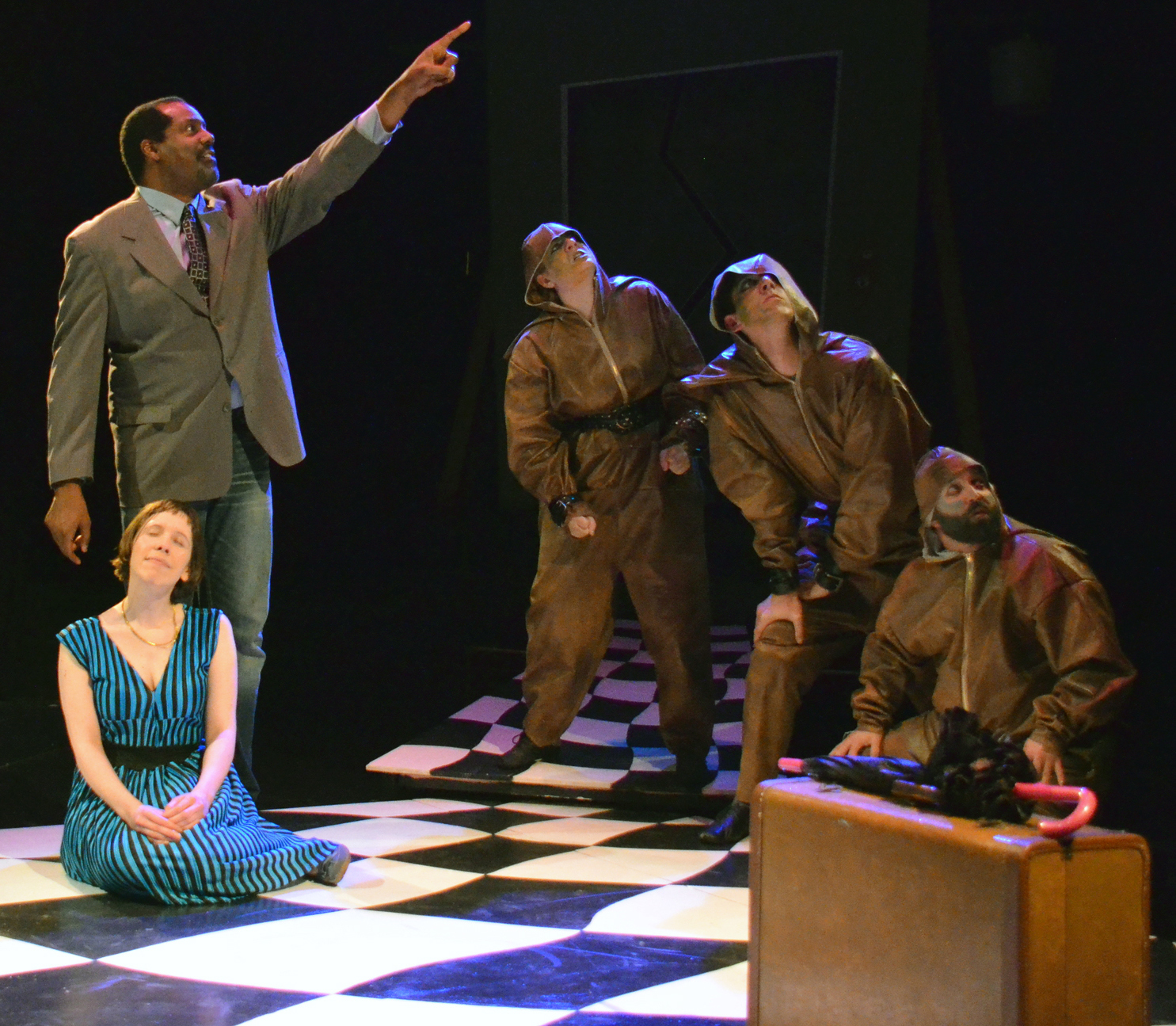
As a college student in his native Ireland, poet, novelist and playwright Samuel Beckett was inspired by Charles Chaplin and Buster Keaton. This is delightfully apparent in his seminal work “Waiting for Godot” being presented at Marin Theatre Company.  What is less apparent is a storyline or plot. This, as it turns out, was the playwright’s intent. “Godot” was so controversial during its first outing in Paris in 1953 that brawls erupted among theatergoers who had differing opinions on exactly what Beckett was trying to say. Originally written in French (Beckett’s favored language), its title “En Attendant Godot” translates literally to “While Waiting for Godot”, which is a much better description of what happens – or does not happen – onstage.

The curtain rises on Vladimir (called Didi) and Estragon (called Gogo), two clownish everymen calling up the friendly ghosts of Laurel and Hardy in their appearance and demeanor. They could be brothers, lovers or friends; it makes no difference. Both guys wear shabby ill-fitting suits and bowler hats, the uniform of silent screen comics. They linger near a barren tree by the side of a deserted road, and it’s obvious they’ve been there quite awhile, maybe for days. Who is Godot, and why do Didi and Gogo wait for him? This almost seems to be beside the point, and there are no real specifics in the dialogue. This overall vagueness, so intelligently designed by the playwright, has allowed audiences worldwide the freedom to make of it what they will, in much the same way the early silent comedies transcended language and culture. You can discover profound existential meaning, or let this comedy-of-the-absurd wash over you for pure enjoyment. It meets you where you are, whoever you are.

As Gogo and Didi pass the time, there’s much blathering on about nothing, and everything. There are farts, smelly feet, pratfalls and funny poses. There are discussions of halitosis, heaven and hell, suicide and mandrakes, memory loss and bladder problems. There are philosophical questions, songs and jokes. Mark Anderson Phillips infuses his Gogo with simple sweetness, the more earthbound of the pair. The assertive Didi is played with clumsy determination by Mark Bedard. Both actors are at the top of their game, cavorting on the razor’s edge between overt sentimentality and over-the-top silliness, where a tumble in either direction could spoil the effect. Like skilled trapeze artists, they keep their balance.

The peace is shattered suddenly, with a shout, when fearsome megalomaniac Pozzo (James Carpenter) bursts upon the scene. He is pulled along on a long, thick rope by a grim, wheezing, cadaverous-looking fellow called Lucky (Ben Johnson). This bizarre and unexpected event certainly rocks Gogo and Didi’s world, causing them much trepidation, then speculation. Carpenter lends Pozzo an air of controlled frenzy and a pathological need for attention. Johnson delivers an enormous performance as the mostly silent, dejected Lucky. His one turn to speak is like watching a great tree come to life. What at first seems to be a master-slave relationship between Pozzo and Lucky takes a strange and ironic turn between their first appearance and when they show up again near the end of the second act.

Just when we are beginning to doubt the existence of someone named Godot, a young boy who works for him (Lucas Meyers) arrives to deliver a message from his master to Gogo and Didi. It seems their wait will continue.

Instead of finding a need to fill every moment with some bit of business, director Jasson Minadakis (in his seventh season as MTC Artistic Director) carefully preserves the stillness between the lines with graceful timing and crisp, choreographic blocking of the characters’ movements. By focusing equally on the pair’s buffoonery and seemingly hopeless plight, and treating both comic and tragic elements of the play with an even hand, he reinforces the playwright’s intent in allowing the audience to identify with the characters as part of the universal human condition of interdependence.  While playing Estragon in the original 1955 London production, actor Peter Woodthrope asked Beckett what the play was really about. Beckett replied “It’s all symbiosis, Peter; it’s symbiosis,” The secret, revealed.

Beckett’s play tells us we’re all waiting, and chained to habits. It illustrates how we can be rooted to the spot by lack of imagination or fear of change, but we need each other, and there is hope if we face life together, whatever comes. This play carries deep pleasure straight to the heart, which explains why it has endured for almost 60 years, through all times and all cultures of the world.

When: now through February 17, 2012

8 p.m. Tuesdays, Thursdays, Fridays and Saturdays

7:30 p.m. Wednesdays

2 p.m. and 7 p.m. Sundays

2 p.m. Saturday, February 16

Tickets: $36 to $57

Location: Marin Theatre Company

397 Miller Avenue, Mill Valley CA 94941
Phone: 415-388-5208

Website: www.marintheatre.org

ACT’s ‘4000 Miles’ tenderly targets granny, grandson

By Woody Weingarten

Susan Blommaert portrays Vera, and Reggie Gowland becomes Leo, in ACT’s “4000 Miles” in San Francisco. Photo by Kevin Berne.

My review of “4000 Miles” requires only four words: It’s sweet. See it.

But you have to get there in a hurry — it’s only scheduled to run through tomorrow night.

Prefer a little embellishment? OK then, here goes…

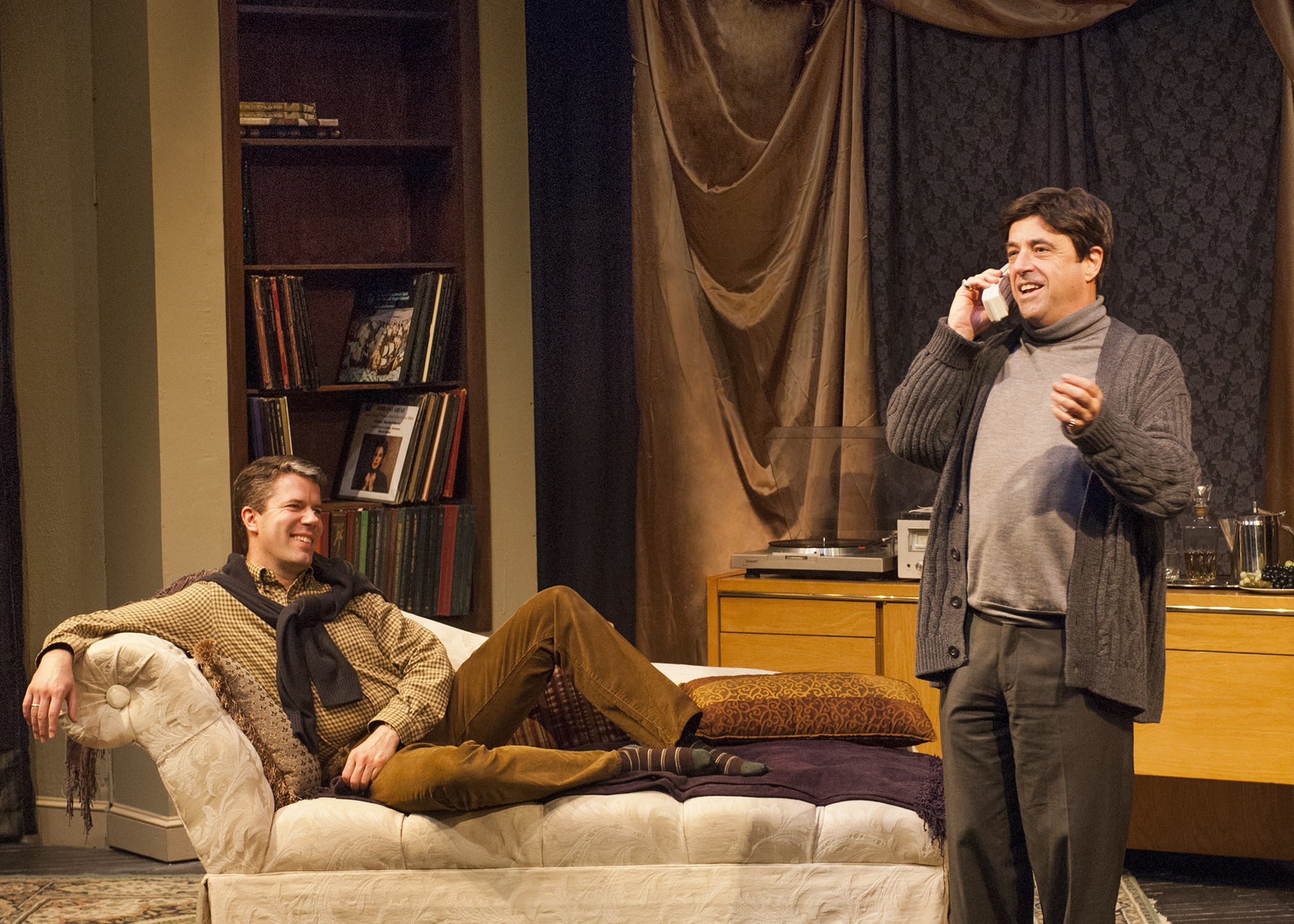
Playwright Amy Herzog, 33, has written a thoroughly charming, tender show about Vera, a 91-year-old granny who’s still a full-blooded Commie-Pinko-Fellow Traveler, and her 21-year-old neo-hippie grandson Leo, a latter-day armchair anarchist stuck in a belated coming-of-age learning curve.

He unexpectedly visits her slightly rundown, rent-controlled Greenwich Village apartment after a cross-country bike trip that’s left him smelly, broke, frazzled, confused and intensely desirous of comfort and love.

He last was there a decade ago, for the funeral of her Marxist editor-writer husband.

More often than not, he calls her Vera or “dude.”

They’re uncomfortable together, and director Mark Rucker underscores those awkward moments by using lengthy pauses that counter the crisp dialogues in the American Conservatory Theater show in San Francisco.

As any semi-astute theatergoer might predict, Vera eventually meets most of the young man’s needs, unscrambling his mind and emotions along the way. He, of course, simultaneously helps her come to grips with her current life instead of focusing on the past or the habituated behaviors that no longer serve her well.

“4000 Miles” is more than the sum of its parts, though: Herzog turns a soft, endearing, often humorous series of vignettes into a sympathetic single-act portrait of, as the old song lyric goes, people who need people.

The play’s most dramatic moments take place offstage or in conversation, yet not once did I think the piece could be improved by an explosion, stabbing or car chase.

The comic drama, which deftly contrasts leftist politics of yesteryear with those of today, is staged without frills: The characters simply talk to each another.

Their venue, Vera’s apartment, should be recognizable as one inhabited by Every American Widow.

But the main characters’ flesh-and bloodness shouldn’t surprise anybody who googled Herzog’s background — Vera was directly inspired by the playwright’s now 96-year-old grandmother (who’s not above protesting in the streets yet).

“4000 Miles” also leans on a six-month stint the writer, then a novice actor, had spent living with the old lady in The Big Apple.

It was a period in which, she has contended, “It wasn’t clear the relationship would survive.”

The playwright also lifts another page from her mental autobiography: She’d made a painful, exhausting eight-week 4,250-mile trip across the United States with Habitat for Humanity.

Plot highlights, ranging from droll to poignant, include Vera detailing her husband’s sexual affairs; the bizarre death of Leo’s best friend, Micah; a misimpression about Leo kissing his adopted sister, Lily; and a granny-grandson stoner session that celebrates the autumnal equinox.

Susan Blommaert, wholly believable as Vera (although the actor is actually much, much younger), finds a synchronistic stage partnership in Reggie Gowland as the youth.

The show, which runs only an hour and 20 minutes without intermission (and which won two Obie Awards for its 2011 Lincoln Center staging in Manhattan), is not a sequel to Herzog’s “After the Revolution” despite Vera being a continuing character.

Speaking of characters, Camille Mana gloriously renders Amanda as a high-energy art student and Leo pickup who’s an almost-one-night-stand. She appears in only one scene but nearly steals the show.

OMG. It seems I’ve written a deluge of words. I probably should have stopped at the pithier “It’s sweet. See it.”

“4000 Miles” plays at the American Conservatory Theater, 415 Geary St., San Francisco, through Feb. 10. Performances Tuesdays through Sundays, 8 p.m.; matinees, Wednesdays, Saturdays and Sundays, 2 p.m. Tickets: $20 to $105. Information: (415) 749-2228 or www.act-sf.org.

Revival of ‘Wicked’ delivers spectacular stagecraft

By Woody Weingarten

In “Wicked,” Dee Roscioli (right) plays Elphaba, and Patti Murin normally morphs into Glinda, but flu felled Murin opening night. Photo by Joan Marcus.

Has it really been 10 years since I first saw “Wicked” in its pre-Broadway run in San Francisco?

Indeed.

Back when, I thought the show was as deep as a pool that had been drained yet as light and wondrous as an exquisite soufflé.

Recently I went to opening night of its latest incarnation, at SHN’s Orpheum Theatre in San Francisco.

The show, which has grossed more than $500 million over the last decade on the Great White Way, where it’s still financially healthy, was severely restructured before it originally opened in New York.

And it’s been retailored a bit since.

Now, unless you’re in the mood for a dose of heavy Shakespeare or Kafka or perhaps an experimental John Cage-like version of “Les Miz,” you should find this a spectacular divertissement — in every sense of the word spectacular.

The glitz-laden stagecraft — including gigantic sets with their zillion lights ablaze and guaranteeing to keep PG&E in the black for a long time — will keep you, well, spellbound.

And you’re likely to find the sumptuous, ruffled costumes equally stunning.

Expect total visual and vocal candy.

That having been said, the musical comedy’s still as deep as a pool that had been drained yet as light and wondrous as an exquisite soufflé.

The lead role of Elphaba, the Wicked Witch of the West, which was padded exponentially since the show’s inception, lies now in the green makeup and extremely capable throat and of Dee Roscioli, a Broadway luminary who’s portrayed Elphaba more than 1,000 times.

The clout of her pipes is amazing to behold.

On opening night, the role of Glinda, the Good Witch of the North, was sung by Cassie Okenka, arguably the most skilled understudy since Barbra Streisand exploded onstage in “Funny Girl.”

Replacing the flu-ravaged Patti Murin, Okenka was no slouch in the comedy department, either.

Her enchanting scratchy voice is akin to that of Kristin Chenoweth (who’d blossomed here in the pre-Broadway version and then went to New York wearing full star skin), and her outrageously manic body movements kept the entertainment moving as fast and exciting as magical white river rapids.

The fantasy plotline, a prequel/sequel to “The Wizard of Oz,” hasn’t changed: Elphaba and Glinda are mismatched roommates and schoolyard best friends. They become rivals. They grow and overcome their differences.

Along the way, “Wicked,” in hit-and-run fashion, digs into the subjects of popularity, power and prejudice.

Think about it.

Think, too, about The Emerald City and Dorothy’s shiny red slippers, as well as the Tin Man and the Scarecrow and the Cowardly Lion.

Then, perhaps, think about The Odd Couple meeting The Lord of the Rings.

Opening night of the revival, Kevin McMahon’s thinking was probably elsewhere — on how to suitably step in for the flu-ish Tom McGowan as the wizard.

He needn’t have worried: He was strong.

Strong support also came via the performances of Kim Zimmer as lower-level villainess Madame Morrible; Demaree Hill as Nessarose, Elphaba’s disabled younger sister; Clifton Davis as a goat/scapegoat/professor, Dr. Dillamond; and Cliffton Hall as Fiyero, Glinda’s intended who’d rather be with Elphaba.

But the two-hour, 25-minute production did have a few weak spots.

Words sung in unison by the chorus were sometimes muffled to the point of being indecipherable. Much of the choreography seemed like works in progress, with the flying monkeys flailing wildly and the rest of the ensemble twirling and kicking with bland precision. Superficiality prevailed.


And Act I felt a trifle long at an hour and a half.


Highlights were not difficult to ascertain, though. They included the first act finale, “Defying Gravity,” which ended with breathtaking special effects; several duet riffs by the two witches; and the lone memorable Stephen Schwartz tune, “Popular.”


All in all, hilarity was almost ubiquitous in the audience. Simple lines like “Something’s wrong — I didn’t get my way” evoked big laughs.


Belted-out songs, meanwhile, drew big applause and boisterous cheers — even if no one could remember the words or melodies five minutes after leaving the theater.


You might pay no-never-mind to that, however, since “Wicked” has more pleasurable big-production numbers per square inch, more buoyance per minute, than any show in recent memory.


Versions were previously staged in San Francisco — in addition to the initial 2003 run — in 2005 and 2010. In each of them, the Glinda character came and went in an ostentatious bubble, a quick prompt to the show’s bubbly mien.


And with all that effervescence, it was — and is — virtually impossible for anyone who loves flamboyant theatricality to dislike this variation on a familiar theme.


“Wicked” runs at the Orpheum Theatre, 1192 Market St., San Francisco, through Feb. 17. Night performances Tuesdays through Saturdays, 8 p.m.; Matinees, Wednesdays, Saturdays and Sundays, 2 p.m. Tickets: $50 to $275 (subject to change). Information: (888) 746-1799 or shnsf.com.

While “Waiting for Godot” at Marin Theatre Company

By Flora Lynn Isaacson

Mark Anderson Phillips (Estragon), James Carpenter (Pozzo) and Mark Bedard (Vladimir) in Waiting for Godot.

Samuel Beckett’s French title, En Attendant Godot, sums up the essence of his 1953 play Waiting for Godot as it is really about what happens while two tramps wait.  Beckett’s masterpiece is directed by MTC’s Artistic Director, Jasson Minadakis.  Beckett calls his play “a tragi-comedy” in two acts.

The plot of Samuel Beckett’s Waiting for Godot is simple to relate. Two tramps Estragon, (Mark Anderson Phillips) and Vladimir (Mark Bedard) are waiting by the side of the road for the arrival of Godot.  They quarrel, make up, contemplate suicide, try to sleep, eat a carrot and gnaw on some chicken bones.  Later, two other characters appear, a master, Pozzo (James Carpenter) and his slave, Lucky (Ben Johnson).  They pause for a while to converse with Vladimir and Estragon.  Lucky entertains them by dancing.  After Pozzo and Lucky leave, a young boy (Lucas Meyers) arrives to say that Godot will  not come today but he will come tomorrow.  However, Godot does not come and the two tramps resume their vigil by the tree, which between the 1st and 2nd act has spring some leaves.

Beckett’s two tramps are costumed by Maggi Whitaker in tight black suits, bowler hats and tight shoes which are reminiscent of Chaplin, Buster Keaton and Laurel and Hardy.  The minimalist set by Liliana Duque Pineiro consists of a plain black background with only a bare branched tree, a rock and occasionally a moon.

Minadakis’ superb direction shows us that life is worth living when you are with someone.  His Vladimir and Estragon are tied together because they need each other. They complement one another.  Vladimir never sits down while Estragon is constantly sitting.

Minadakis has assembled a talented cast—Oregon Shakespeare Festival Company Member is Vladimir.  Mark Anderson Phillips, previously in MTC’s Tiny Alice, is Estragon.  Both actors play off each other very well.  A standout performance is given by well-known Bay Area actor James Carpenter as Pozzo.  Former Ringling Brothers and Cirque du Soleil clown, Ben Johnson makes the most of his role as Pozzo’s servant Lucky.  His long speech is strongly reminiscent of James Joyce.

Beckett’s play is universal because it pictures the journey all of us take in our daily lives.  Habit is very important as it is the pattern of our daily lives.  We are all waiting for something to make our lives better.  The act of waiting is never over and it mysteriously starts up again each day.

Waiting for Godot runs at Marin Theatre Company January 24-February 17, 2013.  Performances are held Tuesday, Thursday-Saturday at 8 p.m.; Wednesday at 7:30 p.m. and Sunday at 7 p.m. Matinees are held each Sunday at 2 p.m. and a Saturday matinee, Feb. 11 at 2 p.m. and Thursday, February 7 at 1 p.m.  All performances are held at 397 Miller Avenue, Mill Valley. For tickets, call the box office, 415-388-5208 or go to www.marintheatre.org.

Coming up next at MTC will be the Bay Area Premiere of The Whipping Man by Matthew Lopez and directed by Jasson Minadakis, March 28-April 21, 2013.

Flora Lynn Isaacson

San Francisco Ballet Performance, Program 1

By Joe Cillo

SF Ballet Performance, Program 1

February 2, 2013


There were three ballets on this performance program. The first was Suite en Blanc Composed by Eduoard Lalo, and choreographed by Serge Lifar. This is a very conservative, traditional ballet. Light on substance, but strong on aesthetics and technique. If you like pretty pictures and dainty, picturesque movements of agility and grace, then you’ll love this. Superbly performed by the SF Ballet dancers. This is visually pleasant to watch, but basically light entertainment. Nothing challenging or particularly interesting to my taste.

In the Night was the second ballet. Choreographed by Jerome Robbins, it uses four Chopin Nocturnes as a back drop to four male-female duos. Despite the fact that the four Nocturnes vary somewhat in character, the four dances were all very similar. It struck me that the dancing did not fit with the music. These Nocturnes are introspective pieces. They are narcissistic rather than romantic. The choreographer treats them as love songs with a happy ending. I don’t think so. I think the choreographer misunderstood the Chopin Nocturnes. The second one against Op. 55 No. 1 was particularly offensive in this respect. This opening section of this Nocturne is tender and delicate, but the middle section is rather distressed and contentious, in high contrast to the sweet calm of the framing segments. None of this was reflected in the dance. The dance was rather bland and had a sameness throughout. The final one, the famous E-flat Nocturne Op. 9 No. 2, is a dreamlike reverie, a lullaby almost. It is reflective and somewhat nostalgic. But the dancing didn’t come anywhere near that kind of feeling. It’s weird watching a dance performance where the dancing seems to have nothing to do with the music that is backing it. I think this one needs to be rethought.

The final segment, the World Premier of Borderlands, by composers Joel Cadbury and Paul Stoney, and Wayne McGregor as choreographer, scenic and costume designer, and Lucy Carter as lighting designer, was by far the most interesting of the three pieces. The style was very different from the first two selections. This was hyperactive, with frantic, discrete movements emphasized by strobe lights that seemed to reflect a temperament, and perhaps a lifestyle, of the modern era that is atomized, choppy, jerky, and abrupt. The soundtrack — it wasn’t exactly music — is too loud. It’s rather assaultive. Perhaps that is the object to blast the audience with harsh sounds and oppress them into a kind of unpleasant resistance. It fits with the anxious, staccato, discontinuous movements, but it draws attention away from the dancers, overwhelming the audience with obnoxious sound. Differentiation between the genders is much reduced. Distinct genders are still discernible but very much blended. Identity of gender becomes indistinct. However, the sexes are very much interactive, touching, embracing, well engaged with one another. The middle section cast in orange light is a man apparently trying to invigorate a woman who keeps falling away from him in a kind of lethargy. She doesn’t seem to have the will to keep up with him and remain connected with his interest. But in the succeeding segments she casts off the deadness within herself and becomes a much more alive and responsive partner, and they become a more involved couple with smoother, more fluid movements. The ballet ends on a positive note with the couple dancing with energy, and mutual engagement. It was by far the most interesting of the three selections of the evening, and all were superbly presented by the San Francisco Ballet dancers at their usual top level of performance.

Django Unchained

By Joe Cillo

Django Unchained, written and directed by Quentin Tarantino.

Tarantino’s latest film takes place in 1858, two years before the Civil War-  the year that William Wells Brown published the first Black drama, Leap to Freedom; John Brown held an anti-slavery convention; Abraham Lincoln said  “A house divided against itself cannot stand;”  The  Richmond Daily Dispatch reported that 90 blacks were arrested for learning.  Early that year a series of events hostile to Blacks happened in San Francisco.  The case of the escaped slave, Archy Lee, heightened conflicts between pro- and anti-slavery contingents in town.  Black children were excluded from public schools and legislation was introduced to ban black immigration into California.

Tarantino made his engaging, well-acted and directed film in the true spaghetti-western style, with Ennio Marricone adding to the soundtrack as he had  for Sergio Leone’s films which featured Clint Eastwood.  However, he tackled a more serious issue than that of the typical pulp western of revenge, show-downs, and gun-battle one-upmanship.  Django Unchained is a seriously nutty “comedy” that elicits a sober discussion on enslavement, and its portrayal over the years by slaves to Hollywood.  Put bluntly, he does not employ mushy sentimental platitudes a la Spielberg in Amistad or The Color Purple.  It is about the deadly craziness of racism and slavery’s particular horrors.

“Django” stars Jamie Foxx, Kerry Washington, Leonardo DiCaprio, and the incredible German actor, Christopher Waltz, for whom Tarantino wrote delightful, erudite, highfalutin exchanges (as he did for Waltz in Inglourious Bastards).   He also wrote a lot of inflammatory dialogue for the white guys and some “domesticated” Blacks, including generous use of the “n” word.  Tarantino’s love for Japanese samurai films is evident in lots blood splattering, gushing, and spraying.

Dr. King Shultz (Waltz), a meticulous record keeper, is a bounty hunter who tracks wanted men: Dead or Alive.  He’s masquerading as a traveling dentist, evidenced by the oversize spring-mounted molar that jounces and wiggles on top of his horse cart as it rumbles along .  During a chance meeting in the woods at night, he comes across Django, an escaped slave in a chain gang.  Shultz frees him because  he knows where the bad guys are and elicits his help.  Django agrees only if Shultz helps find his wife, Broomhilda (an obvious play on the name Brunhilda of Wagnerian lore), played by Kerry Washington.  She is a slave at Calvin Candie’s Mississippi plantation.  When they ride into a town, the townsfolk are shocked:  “Looka there!  A n- – – – – on a horse!”  and dumbstruck.   A tavern owner shouts, “Get that n – – – – outta here!”  Over beers, Shultz tells Django that bounty hunting  is “like slavery, a flesh-for-cash business.”  He convinces Django to play his valet so as to come off more a business man than bounty hunter, and sends him off to a costume shop.  Django emerges dressed as Gainsborough’s  The Blue Boy  (Tarantino does have a wicked sense of cultural reference).   To his credit, Tarantino uses flashbacks sparingly; showing them only to flesh out character, such as Django and his wife and his early days as a slave.

Many scenes are shot through with gory brutality wreaked on blacks that are difficult to stomach, one of whipping a half-naked woman for breaking a few eggs.  Shultz and Django rile up white slave owners who resort to forming a hooded posse (precursors to the Klan?) who complain about the hand-made hoods- the eye holes, especially, which is hilarious; much needed levity in this bloody, violent film.  In one scene, Shultz asks Django about Broomhilda’s name, then tells him the German myth, how the hero, Siegfried rescues Brunhilda.  He then convinces Django to act like a slaver himself, to ingratiate themselves with Candie,  outfitting him in fine, well-to-do cowboy attire and a beautiful, hi-steppin’ horse, on which he cuts quite a figure.

By now, almost half-way into the near three hour film, I was getting impatient- when would meet we Candie (Leonardo DiCaprio)?  After witnessing a gruesome contest between slaves egged on by white plantation hands, involving a slave, d’Artagnan (Eto Assando), they arrive at  Candie’s plantation, CandiLand.   Candie is handsome, rich, smooth-talking, corrupt, and evil.  He stages a bloody wrestling-to–the-death matches between slaves in a gorgeously appointed room while guests drink and dine, oohing and ahhhing as they shrink from blood spatters.   Broomhilda is there, severely punished for trying to escape.  Stephen (Samuel L. Jackson, made up like, as one critic said, Uncle Ben), is Candie’s kowtowing, simpering house slave with his own agenda, who literally hangs over Candie’s chair at the head of the table.  He bows and nods as Candie explains to his guests why slaves don’t revolt, using a skull to illustrate.  At one point, Shultz is visibly appalled; Stephen asks Django why it doesn’t bother him, being Black himself.  Django answers that Shultz is German, “I’m more used to Americans than he is.”

One scene in particular: Shultz gets Candie’s goat by mentioning the slave d’Artagnan, telling him that the man who wrote The Three Musketeers, Alexander Dumas, was Black.  Candie loses it spectacularly, in a mad rage.  It’s fair to say that Christopher Waltz carries the film.  When both Candie and Shultz  are literally no longer in the picture (Shultz had a trick up his sleeve) near the end, the film becomes predictable.  Django turns himself in to spare his wife.  But he has an out: money- lots of it.  The ending is, of course, an absolute blood-bath, no one is spared, not even Candie’s toady, incestuous sister, Lara Lee (Laura Cayouette).  Django gives Stephen his comeuppance, too.  There are horrific explosions and a happy ending.   Django impresses Broomhilda with his horse’s dressage, then the couple ride off into a Gone with the Wind-like sunset.  Django becomes a legend for Blacks, almost like Toussaint L’Ouverture.

Tarantino is known to tap “has been” actors for his films.  In Django, the TV actor Don Johnson plays a sheriff, and film star Franco Nero who was in the original Django  a decade or so ago, is seen as one of Candie’s guests at the wrestling match.  The film is up for several Academy Awards.  See it now!

This review can also be read in an abbreviated version at www.socialistaction.org

‘Our Practical Heaven’ falls short of promise

By Judy Richter

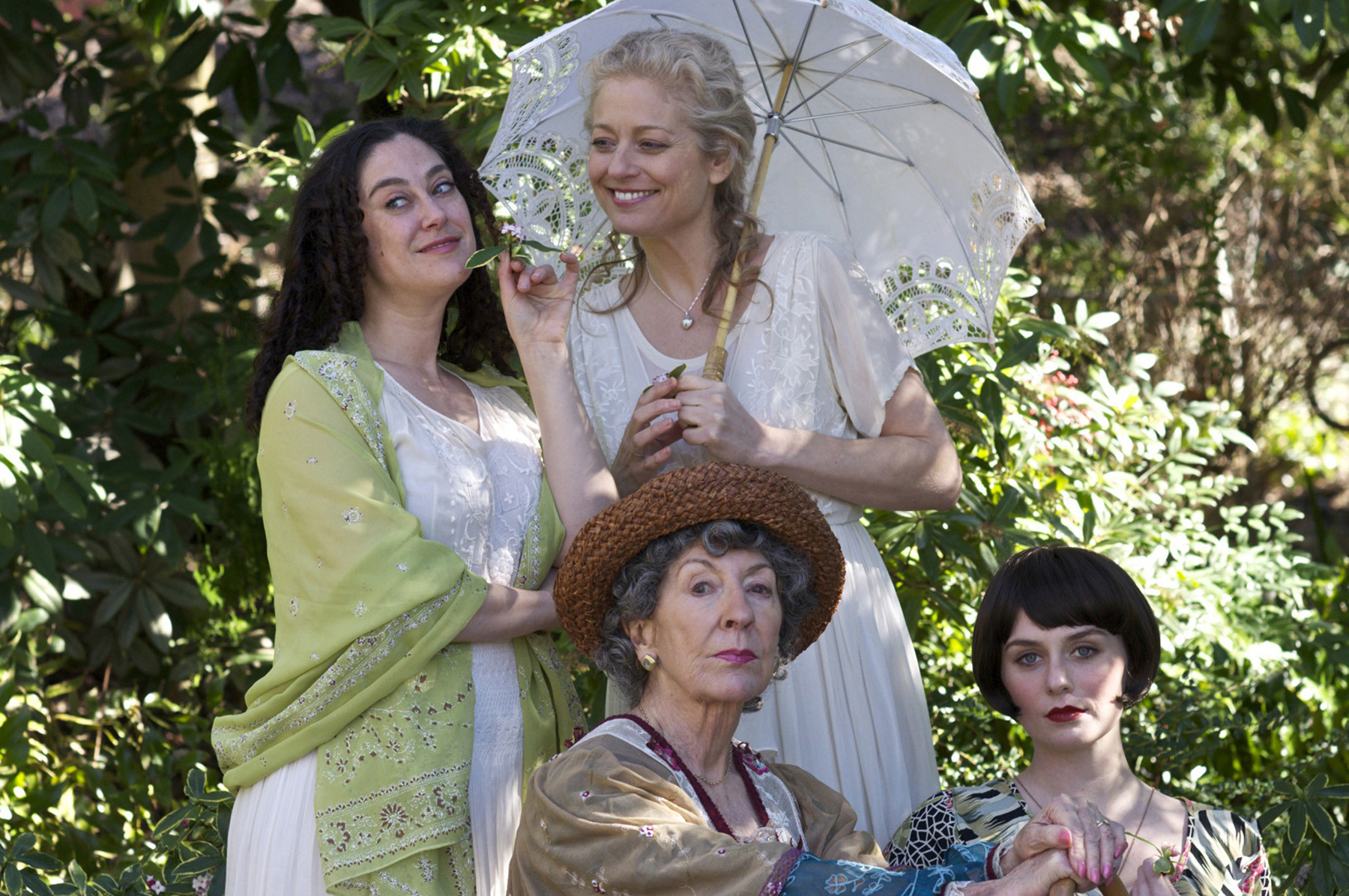
Three generations of women celebrate holidays at the family’s coastal cottage, watch birds, bicker and look ahead in Anthony Clarvoe’s “Our Practical Heaven,” being given its world premiere byBerkeley’s Aurora Theatre Company.

Clarvoe’s two-act play is the main stage anchor production ofAurora’s eighth annual Global Age Project, which fosters 21st century play development.

It features excellent acting thanks to such Bay Area treasures as Joy Carlin, who plays Vera, the family’s widowed matriarch; Anne Darragh, who plays Sasha, Vera’s daughter; and Julia Brothers, who plays Willa, whom Sasha considers an honorary sister.

With them are three young up-and-comers: Blythe Foster as Suze and Adrienne Walters as Leez, Sasha’s daughters; and Lauren Spencer as Magz, Willa’s daughter.

Perhaps because Sasha is so uptight, her daughters don’t especially like her. While sitting next to each other, they communicate their feelings about her via text messages, which are projected onto the back of Mikiko Uesugi’s set.

Willa, who overcame lowly beginnings to become a successful businesswoman, is mostly level-headed, but she’s deeply concerned about Magz, who has an autoimmune disorder that often leaves her in severe pain.

Despite the excellent acting and Allen McKelvey’s direction, the play can feel vague at times. It needs more background to help the audience understand why some of characters are the way they are. Some details seem sketchy, as do issues like the threat of global warming. Still, there are some lovely scenes, especially the one in which Carlin’s Vera talks to Leez about the specialized functions of feathers she has collected.

The production benefits from Callie Floor’s costumes, Michael Palumbo’s lighting and Clifford Caruthers’ sound. Chris Black served as dance consultant.

The play went through much work after being given a reading as part of the 2011 Global Age Project. Some more work is needed for it to reach its full promise.

“Our Practical Heaven” will continue at Aurora Theatre Company through March 3. For tickets and information, call (510) 843-4822 or visit www.auroratheatre.org.


He wants to be a she in ‘Looking for Normal’

By Judy Richter

The desire and subsequent decision to change one’s gender are fraught with emotional peril, but playwright Jane Anderson handles them with great sensitivity in “Looking forNormal,” staged by Palo Alto Players.

Director Marilyn Langbehn and her cast are equal to the delicate task of developing the complexities of each character’s emotional journey.

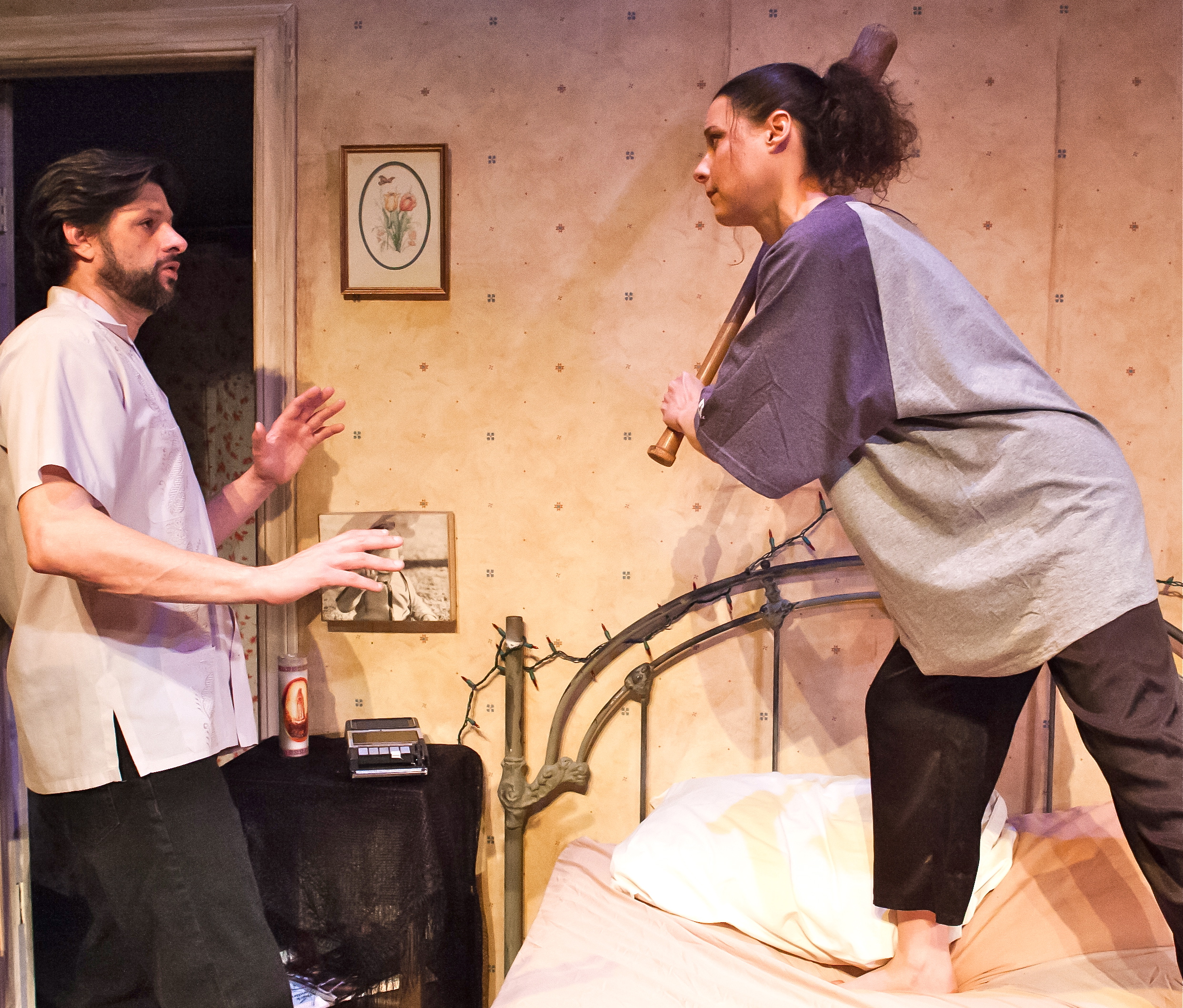
The plot focuses on Roy (Keith C. Marshall), a 45-year-old Midwesterner who has been happily married to his wife, Irma (Shannon Warrick), for 25 years. However, he has been having problems such as severe headaches. Because no physical cause has been found, he and Irma go to their pastor, Reverend Muncie (Dave Iverson), for counseling. That’s whenRoysays out loud for the first time that he was born in the wrong body. He should have been a woman, he says.

From there the action focuses on how each person in his immediate circle responds to his revelation. Irma is dumbfounded at first, wondering if she’s somehow at fault. Their 13-year-old daughter, Patty Ann (Samantha Gorjanc), seems curious about what physical changes will occur. Some of her reaction might stem from the fact that she’s a tomboy who might be questioning her sexuality. She’s also entering adolescence.

Their 22-year-old son, Wayne (Thomas Toland), who’s on the road with a rock band, is angry and disbelieving. Likewise,Roy’s mother, Em (Jackie O’Keefe), is dismayed upon readingRoy’s letter and decides not to share it with Roy Sr. (Jack Penkethman). He’s a retired farmer who was harsh onRoywhen he was growing up, but now he’s declining physically and mentally.

Frank (Vic Prosak),Roy’s boss at the John Deere plant and a longtime family friend, is mainly supportive of Irma. Reverend Muncie searches for answers in the Bible and on the Internet.

The play’s other character is Grandmother Ruth (Billie Harris), Roy’s deceased paternal grandmother who left her family and went to Europe when Roy Sr. was 4 years old. Wearing a tuxedo, she appears at various times to talk frankly and happily about all of her adventures and lovers, both male and female, throughout her life.

The set design by Patrick Klein is relatively simple with the family kitchen on one side andRoyand Irma’s bedroom on the other. Costumes are by Lisa Claybaugh with lighting by Selina Young and sound by George Mauro. Fight choreography is by Michael Daw.

After premiering in 2001, the play was made into an HBO film, “Normal,” starring Jessica Lange and Tom Wilkinson.

Speaking to thePalo Altoaudience after a recent performance, playwright Anderson said, “The play is not about transsexualism. It’s about a marriage … a meditation on what commitment really means.”

She set the play in theMidwestbecause “No matter what happens, they just get back on the plow. … People in theMidwesthave the gift for normalcy.” They just go on, she said.

In the case of Roy and Irma, they do go on because, in the long run, they love each other no matter what. Even thoughMarshallwas quite hoarse, it didn’t seem to affect his creation of a gentle, loving man who’s pained by the reactions of those around him but who’s even more pained to remain male.

Warrick’s Irma has perhaps the most difficult emotional arc. “How do you redefine a relationship in the face of staggering pressure, or do you just end it?” Langbehn asks in a series of questions in her director’s note.

“This play is a study in soul love, or marital love,”Andersonsaid after the performance. Warrick’s Irma andMarshall’s Roy shows how powerful such love can be.

“This is an extraordinary piece of theater,” Langbehn concluded. It’s well worth seeing.

It continues at the Lucie Stern Theater, 1305 Middlefield Road, Palo Alto, through Feb. 3. For tickets and information, call (650) 329-0891 or go to www.paplayers.org.