Celebrate ‘The Birthday Party’ at Dragon Theatre

By Uncategorized


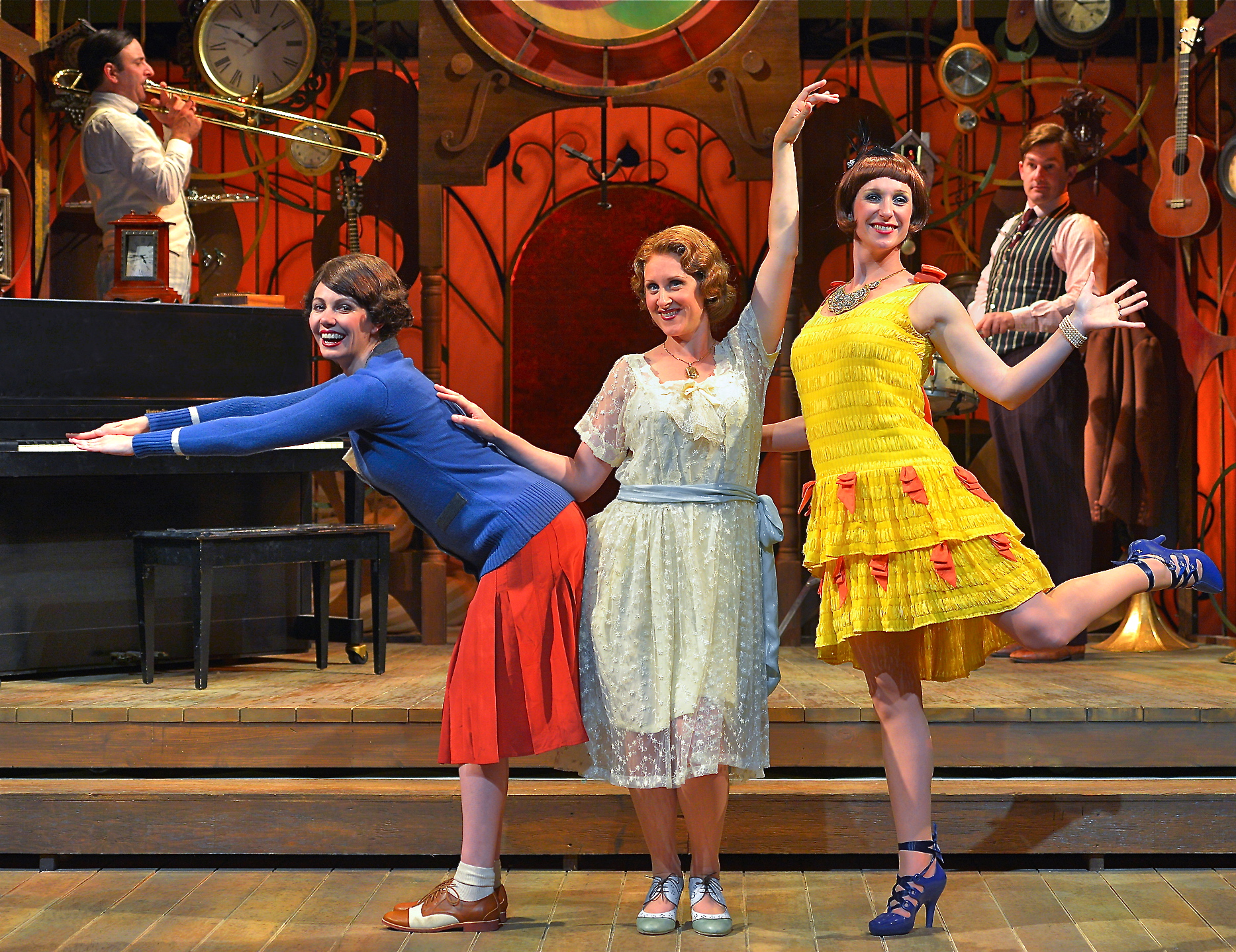
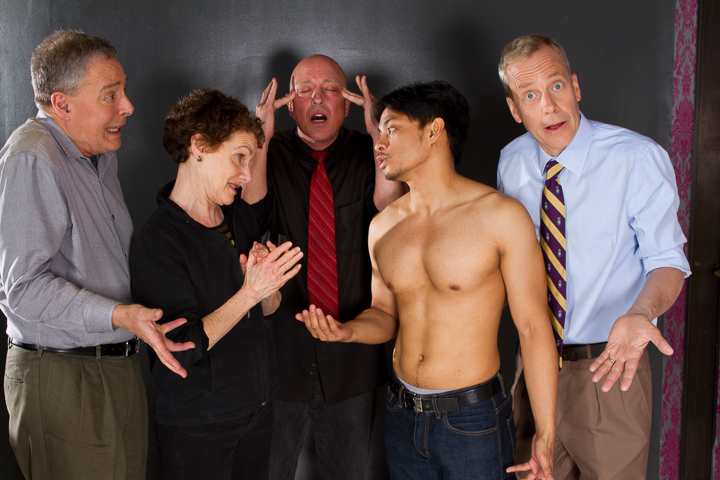
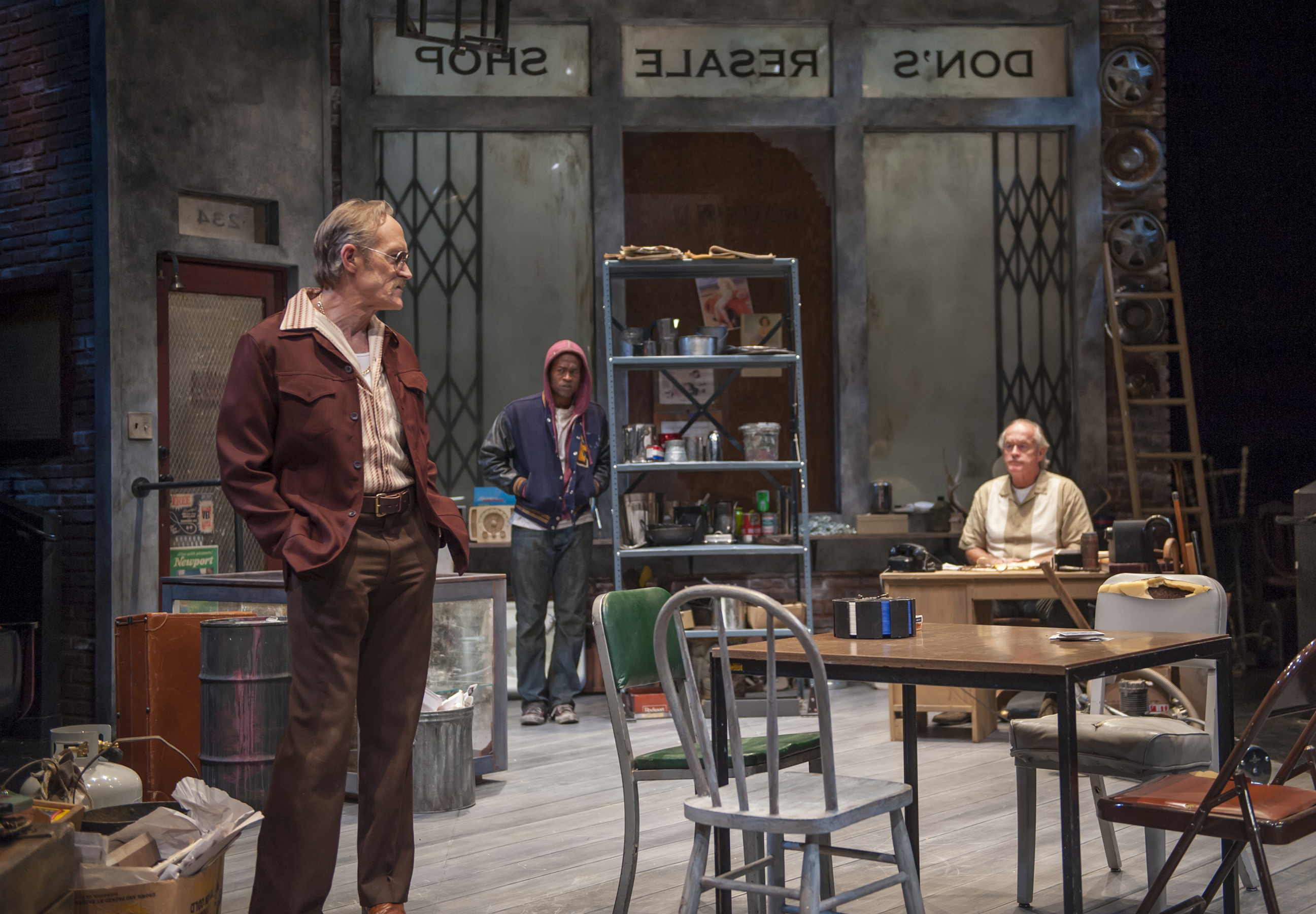
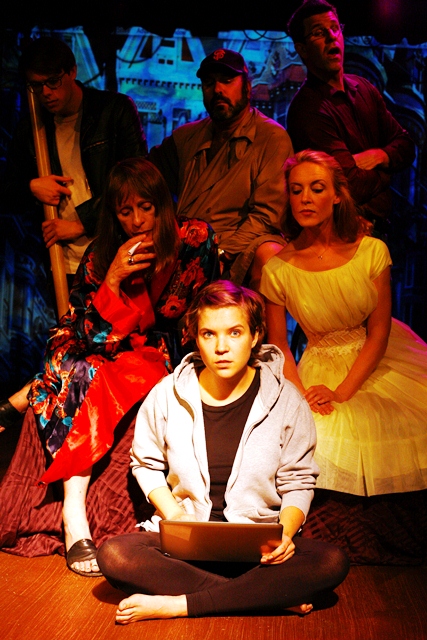
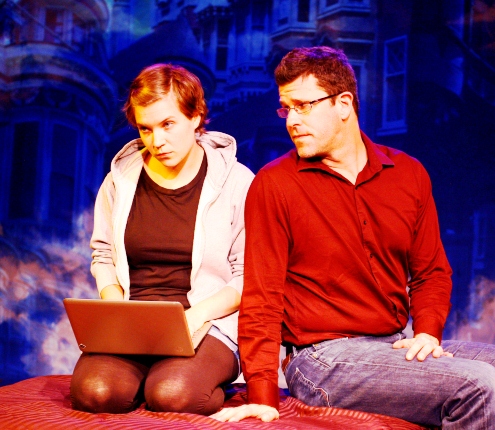
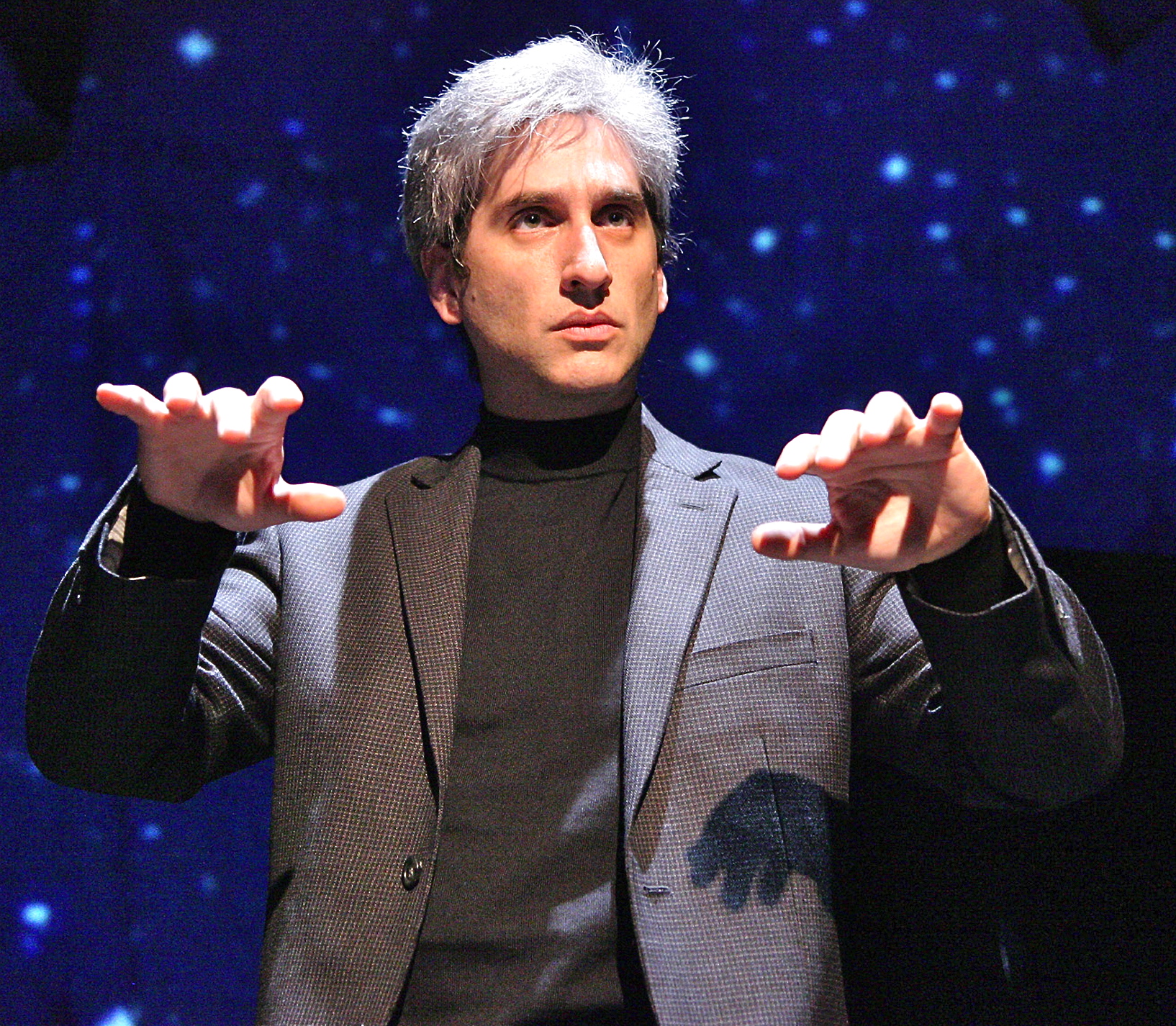
Harold Pinter’s “The Birthday Party” is still confounding and entertaining audiences some 56 years after it was written. Dragon Theatre’s production does nothing to shed more light on this three-act drama, yet it holds the audience spellbound.

Set in a boarding house on an English beach in the 1950s, the play starts quietly enough with the taciturn Petey (Tom Bleecker) coming home for breakfast with his morning paper and being served corn flakes by his ditzy but well meaning wife, Meg (Celia Maurice).

Soon they’re joined by their only boarder, the nasty, loutish Stanley (Paul Stout).

Later, two men in business suits, the smooth-talking Goldberg (Avi Jacobson) and the menacing McCann (Brian Levi), arrange for a room. When he hears about them, Stanleybecomes fearful.

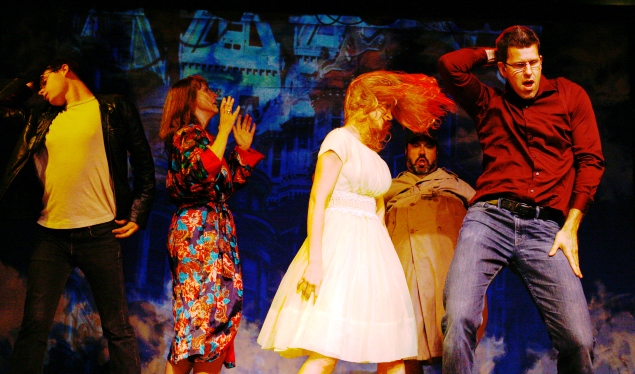
That night, there’s a birthday party for Stanley, who insists it’s not his birthday. The celebrants are Meg, Goldberg, McCann and LuLu (Monica Ammerman), a sexy young neighbor. Petey is away at his weekly chess game.

With the alcohol flowing freely, the party evolves into an intense interrogation of Stanley by Goldberg and McCann. The next morning, he has been reduced to a catatonic state as the two men take him away.

That’s the crux of the plot, but what is and isn’t said is fascinating. What do Goldberg and McCann represent? What’s their connection toStanley? Why does Goldberg change details about his life? Those are just some of the questions that arise. More come from nuances in the characters’ reactions and interactions.

Thanks to astute direction by Jenny Hollingworth and her well chosen cast, there’s always an element of tension with some relief from humor.

Running about two hours and 10 minutes with two 10-minute intermissions, this Dragon production is endlessly enjoyable and engrossing.

“The Birthday Party” will continue at Dragon Productions Theatre, 2120 Broadway St., Redwood City, through June 15. For tickets and information, call (650) 493-2006 or visit www.dragonproductions.net.


Marry Me a Little is charming recycled Sondheim at TheatreWorks

By Kedar K. Adour, Uncategorized

Sharon Rietkerk stars as “Her” and A.J. Shively stars as “Him” in the intimate Sondheim
musical MARRY ME A LITTLE, playing June 4-29 at TheatreWorks at the Mountain View Center
for the Performing Arts. Photo credit: Tracy Martin

Marry Me a Little: Musical Revue. Music & Lyrics by Stephen Sondheim
Conceived and developed by Craig Lucas & Norman René. Directed by Robert Kelley
Musical Director William Liberatore. TheatreWorks, Mountain View Center for the Performing Arts, 500 Castro Street, Mountain View.  (650) 463-1960 or visit www.theatreworks.org.

June 4—June 29, 2014

Marry Me a Little is charming recycled Sondheim at TheatreWorks [rating:3]

On opening night there were maybe half a dozen audience members who gave standing ovations at the end of TheatreWorks’ production of Marry Me a Little. They were rewarded with an encore of the title song but that was not enough to stimulate more than appreciative applause from the rest of the audience. It is a show for Sondheim aficionados.

As usual the production values of TheatreWorks were superlative with a marvelous set (Bruce McLeod), musical accompaniment by the talented on stage William Liberatore and clever directorial conceits by Robert Kelley. Those conceits were perfected by the prolific multitalented Alan Ayckbourn in his 1969 How the Other Half Loves.  In that play two separate families simultaneously perform on the same set with each story separate but related.

In the storyline of Marry Me a Little the only two characters Her (Sharon Rietkerk) and Him (A.J. Shively) live in separate walkup apartments, one above the other but do not know each other. Kelley has elected to have both characters share the same physical space being oblivious to the actions of the other even when they are singing duets. The conceit holds up very well for the entire show and allows the pair to share physical contact for two of the 19 songs without breaking the concept of two separate living spaces.

Six of the 19 songs were originally written for Follies, three for A Little Night Music and the others from lesser known shows. There is no spoken dialog but the story is embellished in the lyrics that mostly are extremely clever and typical of Sondheim’s signature style(s).

It is Saturday night and Him rides his bicycle down the right aisle and enters the set. Shortly thereafter Her walks down left aisle with an armful of packages entering the set. Their plaintive duet of “Saturday Night” sets the tone of two unattached young people lamenting being home alone and wishing for companionship. As they perform routine chores of preparing mundane food, he opening champagne and she a bottle of wine they contemplate a bit of fantasy with “Two Fairy Tales.” As they perform their routine activities Kelley moves them about adding some physicality to make the storyline flow and to keep audience interested.

Whereas the original story was set in New York City, Kelley has change the venue to the Bay Area with a silhouette of San Francisco under a full moon on the rear wall. This allows for local references that are really not necessary but do work. Pianist Liberatore has been placed in a separate apartment on stage left where he is visible behind a scrim. His presence is unobtrusive and his deft piano playing never overpowers the singing. 

The limber and buff Shively is by far the better singer to handle Sondheim’s lyrics and phrasing. Attractive Sharon Rieterk has an excellent soprano voice but her enunciations of the tricky lyrics are difficult to decipher.

All in all, it is a charming 70 minute without intermission revue that is beautifully staged and a must see for Sondheim devotees. 

 Song list: “Saturday Night” (from Saturday Night), “Two Fairy Tales” (cut from A Little Night Music), “Can That Boy Foxtrot!” (cut from Follies), “All Things Bright and Beautiful” (cut from Follies), “Bang!” (cut from A Little Night Music), “All Things Bright and Beautiful (Part 2)” (cut from Follies),  “The Girls of Summer” (from The Girls of Summer),  “Uptown, Downtown” (cut from Follies), “So Many People” (from Saturday Night), “Your Eyes Are Blue” (cut from A Funny Thing Happened on the Way to the Forum), “A Moment With You” (from Saturday Night), “Marry Me a Little” (Company), “Happily Ever After” (cut from Company), “Pour Le Sport”, (from The Last Resorts, unproduced), “Silly People” (cut from A Little Night Music), “There Won’t Be Trumpets” (cut from Anyone Can Whistle), “It Wasn’t Meant to Happen” (cut from Follies), “Who Could Be Blue?” (cut from Follies) and  “Little White House” (cut from Follies)

Cast: Sharon Rietkerk as Her and A.J. Shively as Him

Production Staff: Scenic Design by Bruce McLeod; Costume Design by Jill Bowers; Lighting Design by Steven B. Mannshardt; Sound Design by Brendan Aanes

Kedar K. Adour, MD

Courtesy of  www.theatreworldinternetmagazine.com.


“The Marriage of Figaro” by Wolfgang Amadeus Mozart, Cinnabar Theater, Petaluma CA

By Greg & Suzanne Angeo

Reviewed by Suzanne and Greg Angeo

Members, San Francisco Bay Area Theatre Critics Circle


Photos by Eric Chazankin


“Figaro” Sparkles With Joy and Jubilation

Miguel Evangelista, Bill Neely, Christiaan Smith-Kotlaret (seated), Krista Wigle

For openers, Cinnabar Theater’s staging of Wolfgang Amadeus Mozart’s iconic comic opera is a pretty show, from the costumes to the set pieces to the performers, and above all, the music. The award-winning Cinnabar is the perfect venue for this production. The theater space is intimate, so you are close enough to the singers, and the orchestra, to really see their faces and know that this is the real deal. No digital effects, no lip-syncing. This is breathing, moving, living talent. The voices and orchestra are superb. But the icing on the cake is that it’s in English, using the 1991 translation by Jeremy Sams, from the original 18th-Century libretto by Mozart’s frequent collaborator Lorenzo Da Ponte. You can fully understand and enjoy all the romantic escapades and sly saucy wit. Mozart’s ecstatic music gives the story wings.

Kelly Britt, Cary Ann Rosko, Bharati Soman

If Figaro had been a movie in the 1930s, it never would have made it past the Production Code. It nearly didn’t get presented in 1786 due to all the salacious goings-on, but thankfully it did, and this “opera buffa” was immediately declared a masterpiece. The story takes place near Seville, in the palace of a beautiful young couple, the Count and Countess Almaviva. They appear to be having servant trouble, due in no small part to the Count’s roving eye.  The Count’s faithful valet, Figaro, and the Countess’ winsome maid, Susanna, are madly in love and are to marry this very day. There are many spicy twists and turns in the romantic plot that conspire to put a halt to their plans for wedded bliss.

Kelly Britt

In the Cinnabar production, the setting is advanced to the 1920s, in that lull between the World Wars that saw the decline of the era of aristocracy and servitude, and the rise of the commoner.  During scene changes, recorded jazz-age music underscores the period. (The Metropolitan Opera in New York will open its 2014-2015 season this September with their own staging of Figaro, also set in the 1920s.) The period costumes are correct right down to the undergarments, and the gowns are downright breathtaking. Earlier, costume designer Lisa Eldredge explained the great care taken in her adventure in designing and creating a wardrobe for the entire cast, in many cases from scratch.

There is a vast difference between musical theatre and opera, which requires absolute perfection in technique from the singers and musicians. Cinnabar’s Figaro hits the mark with great beauty and honesty. Innovative staging is by Elly Lichenstein , whose own operatic background as a singer-actor gives her special insight into the unique challenges of such a demanding production.  Her direction and attention to detail is artful and inspired.

It’s not often these days that you can watch a North Bay musical performance and find the orchestra completely in tune. Even with the most beautiful musical score, if one musician or singer is off-key, it’s like having a pebble in your shoe when you’re hiking Yosemite. The scenery’s still nice, but it’s spoiled by that little distraction. Cinnabar is the one North Bay theatre company that has the chops to take on music’s greatest challenge – opera. Recent successes include Tobias Picker’s Emmaline from a few seasons back, and last season’s Carmen, both impeccably directed by Lichenstein. Figaro is destined to join her list of remarkable achievements.

Krista Wigle, Eugene Walden, Kelly Britt

Baritone Eugene Walden is extraordinary as Figaro. He’s the quintessential everyman who longs for happiness and justice, and he’s willing to challenge those in power to get it. The captivating soprano Kelly Britt plays the role of his intended Susanna, who apparently has bewitched her boss as well. Mezzo-soprano Cary Ann Rosko plays it for slapstick laughs in the traditional “trouser” role as the goofy, girl-crazy Cherubino, the Count’s page boy. Bharati Soman in the soprano role of the Countess is a tiny wonder, commanding the stage with grace despite her small stature. Christiaan Smith-Kotlarek as the scheming Count Almaviva has a sophisticated baritone and a polished, effective stage presence. Each singer, in turn, performs an aria during the course of the show that would be wonderful even if heard on its own. An example that showcases the ensemble talent is a sextet performed in Act III.  “Darling Boy, Let Me Embrace You” weaves a tapestry of notes that mesmerizes the audience. From the lead role to the smallest, the entire cast, including the chorus, is outstanding. The small orchestra is first-class, energetically and flawlessly conducted by Cinnabar Music Director Mary Chun.

His work may have been commissioned by royalty, but in his heart Mozart composed music to delight the common people. This Marriage is loaded with giddy charm and magic, and is a wonderful way to spend a very special evening.


When: Now through June 15, 2014

8 p.m. Fridays and Saturdays

2 p.m. Sundays

Added performance Wednesday, June 11 at 7:30 p.m.

Tickets: $25 to $40

Location: Cinnabar Theater

3333 Petaluma Blvd North, Petaluma CA
Phone: 707-763-8920

Website: www.cinnabartheater.org

The Homosexuals a reverse Candide type journey at NCTC

By Kedar K. Adour

The cast of The Homosexuals at NCTC: (l-r) Robert Rushin, Gabriel Ross, Alyssa Stone, Scott Cox, Daniel Redmond, Matt Weimer, Keith Marshall. Photos by Lois Tema

THE HOMOSEXUALS: COMEDY.  By Phillip Dawkins. Directed by Arturo Catricala. New Conservatory Theatre Center, 25 Van Ness Ave, San Francisco, CA. 415-864-8972 or www.nctcsf.org     May 16 – June 28, 2016

The Homosexuals a reverse Candide type journey at NCTC [rating:3]

New Conservatory Theatre Center’s (NCTC) production of Phillip Dawkins’ The Homosexuals brought to mind three previous plays that may have had more than a superficial influence on the plays structure and purpose. One of those plays is the 1934 Merrily We Roll Along by George S. Kaufman and Moss Hart and the musical of the same name with book by George Furth and lyrics and music by Stephen Sondheim. The structure of that played moves backward in time as does The Homosexuals that begins in 2010 ending the year 2000.

The other play is David Hare’s 1998 The Blue Room that was based on the French translation of La Ronde written by Arthur Schnitzler (1862–1931). Schnitzler’s play examines sexual mores and class ideology through a series of encounters between different pairs of players. Hare’s play is written in 10 scenes each with two characters with A meeting B and B meeting C etc. with A ending up in the final scene.

Phillip Dawkins has replaced the generalized “class ideology” with what may called the “homosexual ideology and mores.” He uses only six scenes, one each to introduce six gay characters and one straight female needed for completeness of the social class he is depicting.

It all begins in 2010 in New York City where semi-straight-laced Evan (Robert Rushin) is breaking up with his older lover, a flamboyant theater aficionado Peter (Matt Weimer). Evan refuses to accept the label of ‘homosexual” preferring instead to be known as “gay.” The verbal duel is quite bitchy and continues in scenes to come. The discussion of what defines “friends” outside of the sexual relationship begins here and is introduced in every scene.

In the next scene it is 2008 and Evan who is living with Peter has met British Mark (Daniel Redmond) who is Black, is in a sham marriage to obtain citizenship and is HIV positive but still engages in sex. . . only safe sex. That sexual relationship between protagonist Evan and British Mark is not to be since both are “top” men but they remain “friends.”

In Scene three it is 2006 and we meet the nerdy, insecure  Michael (Gabriel Ross) who has problems getting laid, is in love with Evan but they only are platonic friends.  This scene is not very well written, acted nor directed being a dreary uninteresting monolog by Ross ending act one on an ambiguous note. The comments at intermission were not complimentary.

Act two, with three top-notch scenes makes up for the doldrums of the first act curtain. It 2004 and we meet the most interesting female Tam(Alyssa Stone) who has given up a dull job teaching college students to take a position in an inner city High School. She is engaged to British Mark of scene two. Alyssa Stone gives a great performance as the proverbially fag-hag but in doing so shows a great deal of empathy and humor.

In 2002 Evan is working in an uptight job where being homosexual is not fully accepted and he has conformed to the heterosexual code of silence. In this terrific scene we meet macho Mark (Keith Marshall) who is living with up-and-coming theatre director Peter. Mark, a college professor of Art, is totally out of the closet and has won awards for his stance on Lesbian, Gay, Bisexual and Transgender (LGBT) issues.  His verbal confrontation with young Evan (“Heterosexuals hate you!”) leads to physical altercation after which Evan storms out.

In the final scene (the year 2000) many of the loose ends depicted earlier are pulled together with a very satisfying ending with the entire cast on stage. Throughout the play there is the mention of Collin (Scott Cox) being a friend/lover of the protagonist Evan whose life we having seeing in reverse order.  A 21 year old Evan has been picked up by Michael and brought along to a party given by the so far unseen, but oft mentioned, Collin. It is the beginning of Evan’s reverse Candide type journey.

With the one exception, the cast is excellent and convey specificity in their characterizations while at the same time projecting the generalities of the homosexual community during the 10 year span of the play from 2000 to 2010. Running time 2 hours and 30 minutes with a 15 minute intermission.

Kedar K. Adour, MD

Courtesy of www.theatreworldinternetmagazine.com

Robert Rushin, Gabriel Ross, Alyssa Stone, Scott Cox, Daniel Redmond, Matt Weimer, Keith Marshall. Photos by Lois Tema

‘Show Boat’ sails onto operatic stage

By Judy Richter

Although “Show Boat” has generally been considered a pioneering work of the American musical theater, it has an operatic scope. The San Francisco Opera makes that point in its lavish company premiere of the 1927 work that composer Jerome Kern and lyricist-author Oscar Hammerstein II based on a novel by American Edna Ferber.

Many of its songs are familiar to American audiences, but they sound better with operatic voices. As soon as sonorous bass Morris Robinson starts singing one of those songs, “Ol’ Man River,” early in the show,  it takes on a new resonance. Robinson plays Joe, a black worker on the Cotton Blossom, the titular show boat on theMississippi.

Another outstanding singer is baritone Michael Todd Simpson as Gaylord Ravenal, a debonair gambler who happens upon the boat and immediately falls in love with the owner’s daughter, Magnolia Hawks, played by soprano Heidi Stober. Their “Make Believe” upon meeting is another of the show’s many highlights. Stober also is a talented dancer and even plays guitar in one scene.

Joe’s wife, the no-nonsense Queenie, the boat’s cook, is played by soprano Angela Renée Simpson.

The final singer from operatic ranks is longtime SFO and worldwide favorite, soprano Patricia Racette, who plays Julie, leading lady of the Cotton Blossom show and a close friend of Magnolia. She enlivens the stage with “Can’t Help Lovin’ DatMan.”

Playing in two acts with a 25-minute intermission, “Show Boat” spans more than 40 years, starting in the 1880s and continuing through 1927. Paul Tazewell’s colorful costumes and Michele Lynch’s dynamic choreography for nearly everyone in the cast reflect the changing times and styles. Sets by Peter J. Davison take the action to Natchez, Miss., Chicago and New York City.

Others featured in the cast are rubber-legged comic actor Bill Irwin as Cap’n Andy Hawks, the boat’s owner; and Harriet Harris as his dour wife, Parthy Ann. Patrick Cummings plays Julie’s husband and co-star, Steve. The secondary actors in the boat’s show are Ellie May Chipley (Kirsten Wyatt) and Frank Schultz (John Bolton).

John DeMain conducts the excellent orchestra and Ian Robertson’s always wonderful chorus.

“Show Boat” not only examines a facet of American show business history but also looks at the toll taken by racism at the time. It’s also a love story for several characters through the years.

The San Francisco Opera proves that it rightfully belongs on the operatic stage and deserves this outstanding production.

It continues at the San Francisco War Memorial Opera House through July 2. For tickets and information, call (415) 864-3330 or visit www.sfopera.com.


Triassic Parq an energetic, slightly risqué fun filled show by Ray of Light Theatre

By Kedar K. Adour

 TRIASSIC PARQ: Musical.  Music by Marshall Pailet;  Book by Marshall Pailet, Bryce Norbitz and Steve Wargo. Directed by Alex Kirschner; Musical Direction by Robbie Cowan. Ray of Light Theatre, The Eureka Theatre, 215 Jackson St. (at Battery), San Francisco, CA, 9411. For tickets, visit www.rayoflighttheatre.com.   May 30 – June 28, 2014

Triassic Parq an energetic, slightly risqué fun filled show by Ray of Light Theatre [rating:5]

After accepting an invitation to Ray of Light’s  (ROL) opening night of Triassic Parq plans to were made for a gala evening. A dear friend agreed to be my guest and a call was made to the nearby “Le Olivier”, a fine French restaurant, for dinner before the theatre.  It was not to be. “Le Olivier” was booked for a private party. Then my date twisted her knee and had to decline. Those ominous premonitions were completely forgotten since Ray of Lights’ hilarious production of Triasic Parq was an unqualified success. It is 90 minutes of pure anthropomorphic fun that received a well-deserved standing ovation.

Anthropomorphic? Yes, since all the “characters” with one exception are dinosaurs living on the fictional island of Isla Nublar off the coast of Costa Rica. That island and storyline were spawned in the fertile imagination of Michael Crichton. It’s the place where a billionaire created an amusement park called Jurassic Park that was made more famous in the Spielberg movie.  In the opening number sung by a talented 6 member cast we are told that the name had to be changed to “Triasic” to avoid a law suit.

Fertility may be in the mind of Crichton but alas, all the dinosaurs created by DNA cloning (??) are female. They may be fertile but there is no fertility without males. The confines of the jungle amusement park is surrounded by high electrified fences. The inhabitants are cared for by a higher authority, “The Lab.” That higher authority showers the island with goats thus there is never a food shortage.

Within the community of raptors there is a hierarchy with Velociraptor of Faith (willowy David Naughton) in charge keeping them all in line with platitudes and philosophy. There is a lot of PR nonsense about the meaning of community, religion, gender, science and being unique humans (dinosaurs) bonding with other humans. Forget the PR stuff and just have as much fun as the opening night audience did enjoying the energetic dancing, spot on singing and the risqué behavior/shenanigans of the human-like animals. If you are lucky you may be selected to sit in one of the comfortable seats on stage right reserved for audience members.

ROL did not stint on cost, fashioning a fantastic jungle set that fills the entire stage with the fore mentioned high electric fences that are adroitly moved by the cast as needed. The have even built a separate cage on stage left to contain/protect the four member band: Pianosaurus (Robbie Cowan), Guitarydactyl (Nahuel Bronzini), Bassceratops (Eugene Theriault)  and Percussadon (Geneva Harrison) but Robbie Cowen elicits laughs when ‘escapes’ to take part in the physical stage action.

All you need to know about the plot is that a frog gene has ‘polluted’ the purity of T-Rex 2 (Chelsea  Holifield) and she grows a functioning male appendage. Then there is Velociraptor of Innocence (Lewis Rawlinson) whose curiosity takes him beyond the fence in search of the unknown where he meets the banished T-Rex 2 with her/his “appendage’ attached and you can guess what happens during that “meeting.”

The entire production team earn accolades but Wendy Ross Kaufman deserves individual praise for the fantastic costumes.

Crisis after crisis unfolds with the rest of the cast (Alex Rodriguez  as Velociraptor of Science/Morgan Freeman and Monica Turner as T Rex 1/Kaitlyn) having a riotous time singing and dancing (Dane Paul Andres, Choreographer) up a storm.  The music is always upbeat even when a love song appears and includes hip-hop (think Spring Awakening), and power ballads. The ingenious creators of this show throw in a non-speaking part of Mime-a-saurus (limber-limbed Javi Harnly) who earns his laughs even when abused by the raptors.

Every member of the cast have their star turn on the stage but Alex Rodriguez’s  powerful presence gets more than his share. Director Alex Kirschner does a magnificent job balancing his ensemble cast that are always in non-stop motion. Final Note: Triasic Parq is another winner for ROL and is a ‘do not miss’ production.

Triassic Parq Cast:  Javi Harnly (Mime-a-saurus);  Chelsea Holifield (T Rex 2);  David Naughton (Velociraptor of Faith);  Lewis Rawlinson (Velociraptor of Innocence);  Alex Rodriguez (Velociraptor of Science/Morgan Freeman);  Monica Turner (T Rex 1/Kaitlyn).

Triassic Parq Production Team: Alex Kirschner, Director;  Robbie Cowan, Music Director;  Dane Paul Andres, Choreographer;  Erik Scanlon, Assistant Director;  Annie Dauber, Set Designer;  Joe D’Emilio, Lighting Designer;  Anton Hedman, Sound Designer;  Wendy Ross Kaufman, Costume Design; Kevin Pong, Props Design;Erick Scanlon, Assistant Director;Daniel Cadigan, Technical Director and Ilona Herbert, Stage Manager.

Kedar K. Adour, MD

Courtesy of www.theatreworldinternetmagazine.com

Un-tranquil voyage in ‘pen/man/ship’

By Judy Richter

It’s 1896, and a former whaling ship is sailing from the United States to Liberia with an all-black crew in Christina Anderson’s “pen/man/ship,” being given its world premiere by Magic Theatre.

The only characters the audience meets are the three black passengers and a crew member. Chief among the passengers is Charles (Adrian Roberts), a land surveyor who has chartered the ship and hired the crew because he has a project awaiting him in the African nation. At first, he’s the only one who knows the true nature of the mission.

He is accompanied by his adult son, Jacob (Eddie Ray Jackson), who has brought along a woman friend, Ruby (Tangela Large). The crew member who befriends Charles is the accordion-playing Cecil (Tyee Tilghman).

Part of this psychological drama focuses on the love-hate relationship that Jacob has for his imperious, elitist father, who imbibes regularly in gin. The other part focuses on the astute Ruby and her increasingly contentious relationship with Charles and closer relationship to the crew, who are growing to dislike him.

The passage of time in this two-act play is depicted by the journal kept by the widowed Charles. Many scenes take place on the sabbath, which father and son have regularly observed with hymns and the study of Bible verses. Ruby is invited to join them, but she’s not terribly receptive, especially since Charles doesn’t trust her.

After the death of a crewman who supposedly attacked Charles, he refuses to tell the crew what happened. Consequently, Ruby orders the sailors to lower the sails, leaving the ship adrift on the ocean, until he agrees to talk to them.

Director Ryan Guzzo Purcell keeps the play moving fairly well despite its talkiness and relatively confined quarters (set by Angrette McCloskey). Still, it drags in spots. Likewise, the actors do well, but sometimes the characters reveal key information so off-handedly that some in the audience might not catch its implications.

The often-dark lighting is by Ray Oppenheimer with ocean sounds by Sara Huddleston. Costumes are by Antonia Gunnarson.

The play has undergone a long genesis of workshops at several venues, but it still could benefit from some tightening and clarifying.

It will continue at the Magic Theatre, Building D, FortMasonCenter, San Francisco, through June 15. For tickets and information, call (415) 441-8822 or visit www.magictheatre.org.


PEN/MAN/SHIP given a powerful world premiere at the Magic

By Kedar K. Adour

Eddie Ray Jackson*, Tangela Large, Adrian Roberts*, and Tyee Tilghman* in Christina Anderson’s world premiere of PEN/MAN/SHIP..

PEN/MAN/SHIP: Drama by Christina Anderson and directed by Ryan Guzzo Purcell. Magic Theatre, Fort Mason Center, 2 Marina Blvd., Building D, 3rd Floor, San Francisco, CA 94123. (Entrance to Fort Mason at the intersection of Marina Blvd and Buchanan St).  415-441-8822 or www.magictheatre.org. May 28 – June 15, 2014

 PEN/MAN/SHIP given a powerful world premiere at the Magic. [rating:3](3 of 5 Stars)

The Magic Theatre group has a well earned reputation for nurturing new playwrights. Amongst those who honed their skills there are (alphabetically) Luis Alfaro, Nilo Cruz, Rebecca Gilman, Taylor Mac, Michael McClure, Theresa Rebeck, Sam Shepard, Octavio Solis, Lloyd Suh,  Paula Vogel and Sharr White. Each has gone on to successful professional careers and Christina Anderson is well on her way to join that august group. That fact is supported by the powerful production being given its world premiere on Magic’s intimate thrust stage.

 However that power compressed into a one hour and 50 minute play that includes a 15 minute intermission does not translate to a completely satisfying evening. There are deficits in the construction that relies on exposition inserted late in the play to flesh out the background/motivation of the characters. The cast of four are all major to the plot with unseen characters lurking in the background conveying a dire threat of violence. That threat is magnified since all the action takes place aboard a claustrophobic former whaling ship symbolically named Turner with sounds of the sea and wind that erupts into a violent storm to end act one.

The title of the play is descriptive of the construction that requires Charles “the man” to “pen the daily actions aboard the “ship” in his log book. In doing so author Anderson uses him as her narrator speaking the words to the audience and having the others enter and participate in the action.

The time is 1896 and the US Supreme Court has upheld the doctrine of “separate but equal” law for whites and blacks. There is an American Colonization Society of Liberia movement to repatriate Blacks to Africa.  Widower Charles Boyd, a prominent black entrepreneur has organized sailing a ship with an all-black crew to make the voyage to Liberia. The reason for the voyage is hidden from the crew and when discovered creates a contentious void between Charles and his son Jacob. Charles has accepted the oversight of the voyage, including the selecting of a compliant Captain and considers the crew to be inferior to him. He hides his malevolence behind a façade of religious aphorism and insists upon honoring God through always setting aside the Sabbath for bible study and prayer.

Jacob has an ambivalent relationship with his father that is divided between filial love and desire to break free. He has brought along Ruby who is desirous of leaving America to start anew in Africa. Charles does not know what to think of Jacob and Ruby’s relationship since he has spent a fortune hiring lawyers to defend Jacob who was caught in a “brothel for faeres.”  From their first meeting Ruby and Charles are at loggerheads and Charles has a great unknown fear of her since she does not have a bible and in his mind women are inferior to men. She also perverts a passage from the Bible: “Let there be darkness in the light.”  The theme of light and dark and white and black permeates the entire play.

Tyee Tilghman* in Christina Anderson’s PEN/MAN/SHIP

The fourth character is self-deprecating Cecil, a crew member whom Charles befriends and becomes his eyes and ears on the plotting of the crew. He is addicted to his squeeze-box and provides music that is reflective of the stage action and is a bridge between scenes.

Ruby becomes the titular head of the crew when the Captain disappears and she gradually assumes leadership. Charles has an altercation with a young crewman who falls overboard and may or may not have been the instigator in the fight. The entire crew become malevolent and plan to kill Charles. Ruby’s intervention prevents the killing asking Charles to stand trial before the crew. Charles’ refusal leads to dire consequences with a cataclysmic ending to play.

Adrian Roberts is on stage for most of the play perfectly creating the dual nature of Charles moving from narrator to player, to instigator and victim.  Tyee Tilghman is at his best making you feel the insecurity of Cecil who cherishes the friendship of Charles. Eddie Ray Jackson as has the most difficult job of showing the dual personality suggested by the script. Tangela Large is the most dynamic member of the cast and gives a stunning, multifaceted performance as Ruby.

Cast: Jacob – Eddie Ray Jackson;  Ruby – Tangela Large; Charles – Adrian Roberts; Cecil – TyeeTilghman.

Creative Team: Lighting Design by Ray Oppenheimer; Scenic Design by Angrette McCloskey; Costume Design by Antonia Gunnarson; Sound Design by Sara Huddleston.  

Running time of one hour and 50 minutes with an intermission.

Kedar K. Adour, MD

Courtesy of www.theatreworldinternetmagazine.com


‘Incredibly good’ classical-jazz pianist will solo on campus

By Woody Weingarten

Pianist Kirill Gerstein literally carries a tune — and a piano music stand. Photo: Marco Borggreve.


OK, I’ll cop to it — I’ve been living in a constricted mind-tunnel of my own making.

Not that strange for a “retiree,” of course.

Many men just beyond my state of geezerhood have no time for anything fresh because they’re too busy shuffling off to a lab where some kid who can’t shave yet takes blood, or too busy sipping tea laced with aspartame with old ladies thrilled that somebody with different plumbing’s still breathing and will keep ‘em company, or too busy hoping they can dribble to an easy layup without inducing a stroke.

I have a radically different agenda, naturally, and it typically involves situating my butt in front of a computer.

Meeting deadline after deadline after deadline.

So I not frequently get overloaded writing reviews, concocting columns and desperately seeking not Susan or Madonna or Miley Cyrus but someone who’ll publish my book manuscript.

Truth is, when it comes to the entertainment world, I don’t recognize the names of three of every thousand performers anymore.

Until a week ago, to be honest, I’d never heard of pianist Kirill Gerstein.

But then I was urged to promote the pianist’s 8 p.m. June 5 concert with the San Francisco Symphony at the Green Music Center on the Sonoma State University campus — in advance.

So I am.

Why? Because I listened to some of his stuff on YouTube, and it’s incredibly good (more about that later).

The Sonoma concert will take place in the state-of-the-art Weill Hall, which, according to the symphony’s website, “boasts outstanding acoustics, artistic wood interiors, and stunning wine country views.”

Sounds good to me.

The 35-year-old Russian-born Gerstein will be the soloist for Beethoven’s “Piano Concerto No. 2,” with frequent San Francisco guest conductor Charles Dutoit, who’s the main man for the London Royal Philharmonic, leading the orchestra.

Shostakovich’s “Symphony No. 10,” composed after Stalin’s death in 1953, fills out the bill.

For those who prefer a more urban setting, three duplicative concerts will take place at Davies Symphony Hall in San Francisco at 8 p.m. June 4, 6 and 7.

Who’s this guy I’m just beginning to know?

Gerstein at 14 became the youngest student at Boston’s Berkelee College of Music, where he was a jazz prodigy. His classical interpretations, indeed, display moments when that energetic training shines through.

His newest album, “Imaginary Pictures: Mussorgsky, Schumann,” I’m told, will be released around the time of the concerts.

As for the YouTube excerpts, though he’s mostly in the background on “Summertime” as jazz stalwart Storm Large makes the tune her own, you certainly know Gerstein’s there.

And he’s utterly brilliant on “Ophelia’s Last Dance,” an introspective mash-up of classical and jazz, a nine-minute exercise composed specifically for him that blends tomorrow with yesterday and today — and adds a touch or two of humor.

Other YouTube pieces that gave me a glimpse into his excellence include the first movement of Rachmaninoff’s “3rd Piano Concert” and the original 1924 band version of George Gershwin’s “Rhapsody in Blue.”

Winners all.

Bob Dylan knew it decades before I did: The times they are a-changin’. And that’s a good thing.

Tickets to the June 4-7 San Francisco Symphony concerts with Kirill Gerstein run from $15 to $156. Information: and (866) 955-6040 and gmc.sonoma.edu, or www.sfsymphony.org and (415) 864-6000.

36 STORIES BY SAM SHEPARD brilliantly acted by Word for Word

By Kedar K. Adour

    The Writer (Rod Gnapp) has a philosophical discussion with the spirit of the severed head (Carl Lumbly).

Word for Word presents : “36 Stories by Sam Shepard” arranged for the Stage and Directed by Amy Kossow at Z Below, Z Space’s new second venue, at 470 Florida St. San Francisco. Tickets: 866.811.4111 or at www.zspace.org.  May 21-June 22, 2014.

36 STORIES BY SAM SHEPARD brilliantly acted by Word for Word. [rating:4](4 of 5 stars)

Word for Word have deviated from their usual format of bringing short stories to the stage “verbatim, assigning the narrative—he saids, she saids and descriptive text—to various characters, animals or even inanimate objects, all in the most revelatory and imaginative ways.” Under a commission from the Magic Theatre and as part of the “Sheparding America” festival celebrating the work of Sam Shepard, Amy Kossow selected snippets of prose from Shepard’s five books patching them together creating a fascinating mélange for the stage entitled 36 Stories by Sam Shepard.

The production is being staged in the intimate 88 seat Z Space Below venue and boasts a five member stellar cast of Rod Gnapp, Carl Lumbly, Delia MacDougall, JoAnne Winter, and Patrick Alparone. They are the Who’s Who of the local theatre scene and their performances could be taught as an example of what ensemble acting is all about. Four of the actors flawlessy morph into multiple characters with distinctive and memorable characteristics. The fifth character is The Writer played to perfection by Rod Gnapp who bookends the play writing on a portable typewriter and as he finishes each page tacks it to wall of the set.

That lone Writer is fashioned after Sam Shepard who traveled highways of the Great Southwest. Shepard was known to frequent Denny’s Restaurants and out of the way motels thus the scenes shift between Denny’s, the open road and motels. There are minimal changes of props allowing the story to move without interruption.

Early in the play an incongruous sign hung in one of the restaurants reads “Life is what happens when you’re making plans for doing something else.” This intrigues The Writer and he attempts without success to discover who the writer of the sign is. He continues his journey, writing as he goes along.

On that journey he comes across a severed head (Carl Lumbly) in a basket in a ditch by the side of the road. The Head wishes to be moved to a quieter place where he could rest for eternity. Along comes The Walking Man ( Patrick Alparone) who agrees to move The Head as requested but that trip is fraught with hardships and is almost abandoned.

Somewhere along his trip The Writer meets The Mercenary (Delia MacDougall) who is a bundle of sex leading to a seamy motel room scene that is intricately orchestrated but still is steamy.

 With the exception of the tale of The Head and its travels with The Walking Man there is no continuity of storyline but there are vignettes that will keep you guessing what is coming next.  The Waitress (JoAnne Winter) becomes

The Driver (JoAnne Winter) discovers an injured hawk (Carl Lumbly) on the highway

The Driver taking her mother’s ashes from the columbarium in a green bucket who encounters the remnants of a truck tire that becomes The Hawk (Lumbly) injured and stranded by the roadside. Patrick Alparone doubles as The Musician playing a guitar linking a number of the scenes.

The Writer (Rod Gnapp) is serenaded on his journey by The Musician (Patrick Alperone).


In the final scene Mac Dougal becomes The Writer’s mother and asks if all this travel is because he has writer’s block. If so:

“Now let me get this straight

You say

You’re tortured because you can’t write

Or

You can’t write because you’re tortured

Now lemme say one thing

Your despair is more boring

Than the Merv Griffin Show

Get off your tail and cook

Do time

Anything

But don’t burn mine

The ensemble actors take on the roles of inanimate objects who often speak with philosophical insight. There is a bit of Steven King in the writing but all in all the cast has complete control of the text receiving a standing ovation on opening night.

Running Time 90 minutes with no intermission.

CAST: Rod Gnapp The Writer; Delia MacDougall, The Mercenary / Dead Mother / Sally / Ensemble; JoAnne Winter, The Waitress / Driver / Writer’s Mother / Ensemble; Patrick. ALparone; The Musician / The Walking Man / Dicky / Ensemble;  Carl Lumbly, The Head / The Hawk / Ensemble.

PRODUCTION: Assistant Director Wendy Radford, Stage Manager Justin D. Schlegel, Assistant Stage Manager Allie Khori, Scenic Design Giulio Perrone, Lighting Design Jim Cave, Costume Design Christine Crook, Sound Design Drew Yerys, Properties Design Jacquelyn Scott, Movement Design Tracy Hazas, Mask Design John Daniel, Music Composition Patrick ALparone, Additional Music Paul Fiocchiaro, Peter O’Donoghue, and Spencer Evans and Technical Director Dave Gardner. Photography Mark Leialoha.

Kedar K. Adour, MD

Courtesy of www.theatreworldinternetmagazine.com