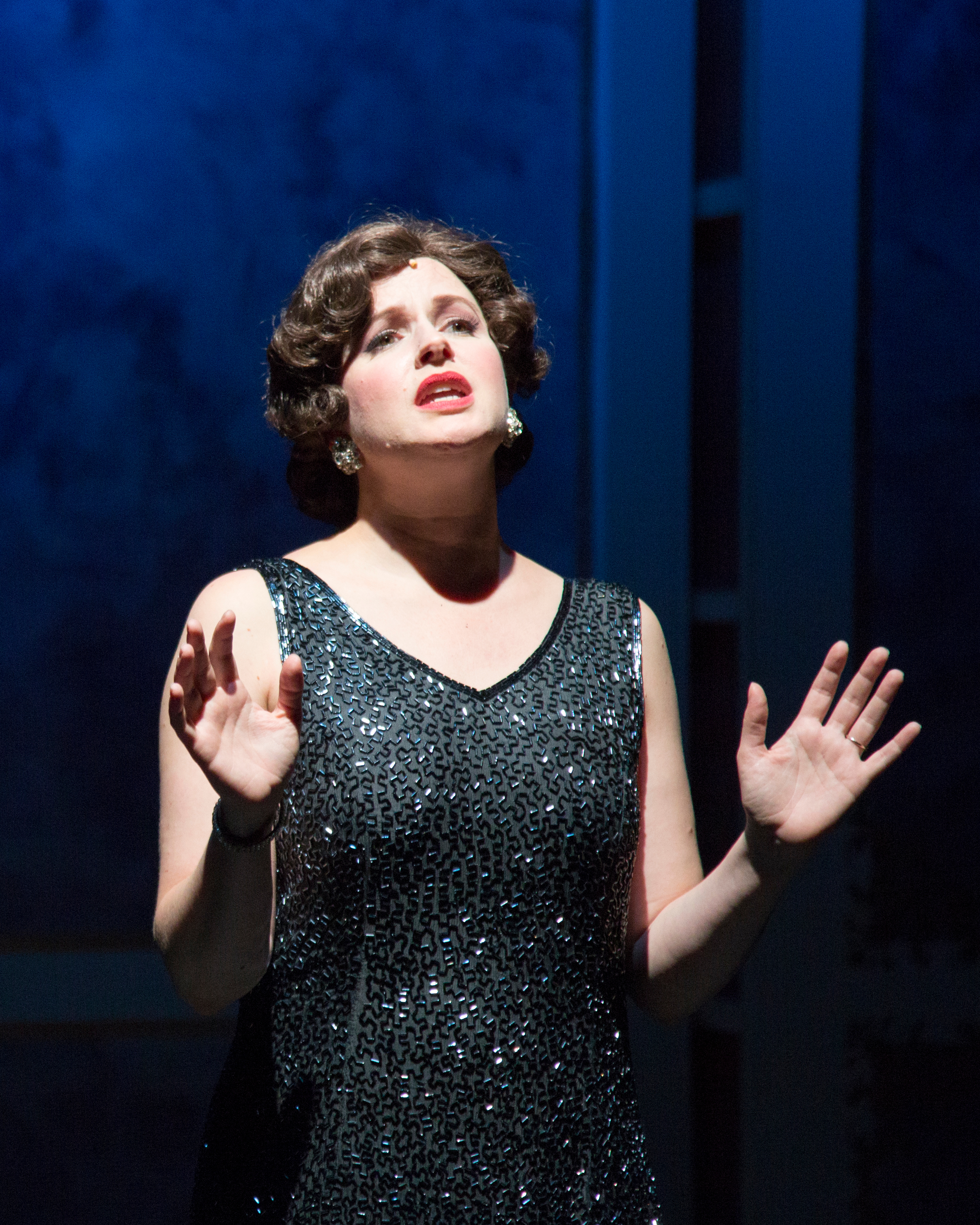
“Oliver!” by Lionel Bart, Spreckels Performing Arts Center, Rohnert Park CA

By Greg & Suzanne Angeo

Reviewed by Suzanne and Greg Angeo

Members, San Francisco Bay Area Theatre Critics Circle

Photos by Eric Chazankin


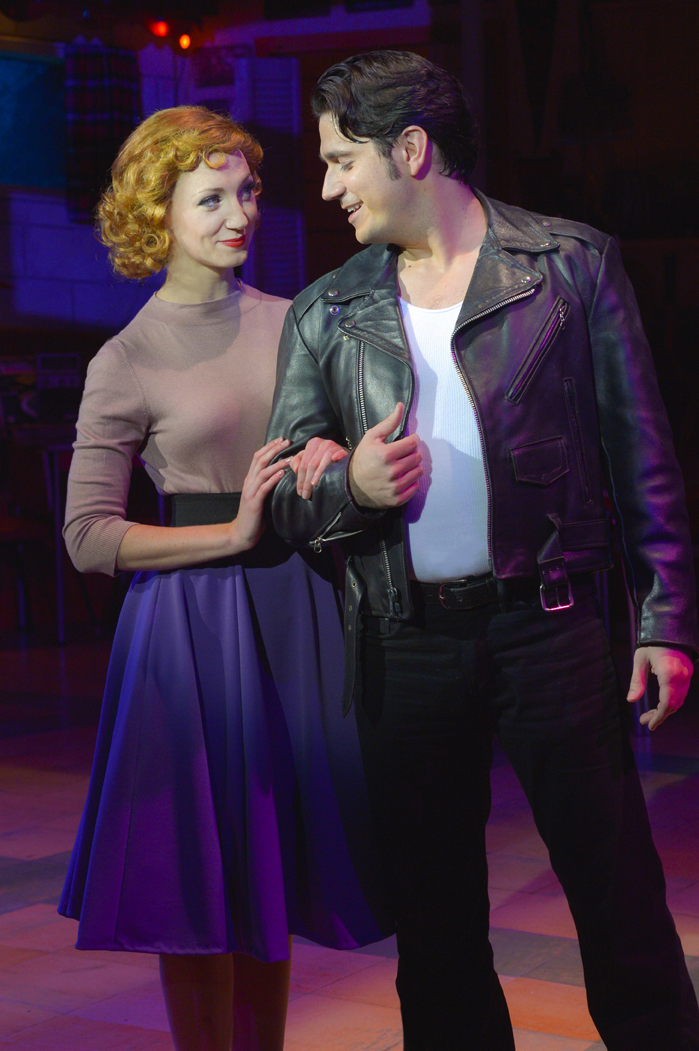
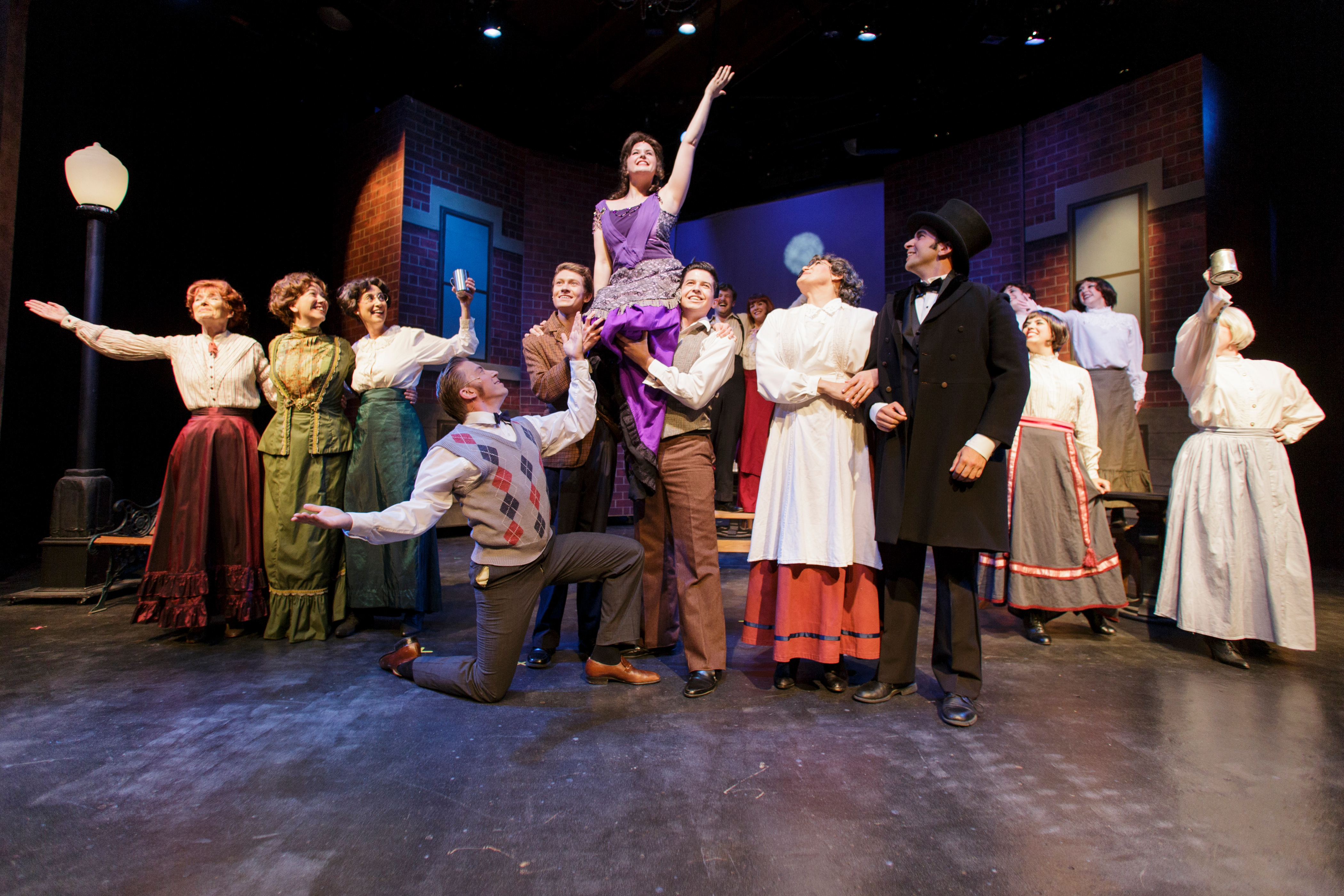
Ari Vozaitis (in top hat), Tim Setzer (center), Jordan Martin (right)

Consider Yourself in for a Treat: Moppets and Poppets Take the Stage in “Oliver!”

It’s safe to say that just about anything by Charles Dickens can be called important. “Oliver Twist” was only his second novel , but it caused a sensation by drawing attention to the dehumanizing conditions suffered by poverty-stricken children in the English workhouses of the day. And it was the first novel ever written to have a child protagonist. Over the decades, the story has been told and retold on film and onstage. The best-known of these is the rousing musical “Oliver!” by Lionel Bart. The dark humor of the novel was brightened up with cheerful tunes, the squalid roughness given a bit of polish to increase its appeal and a hit musical was born. “Oliver!” premiered to huge success in London’s West End in 1960, with an equally successful Broadway run starting in 1963. It won three Tony Awards, including one for Bart’s original musical score.

Jordan Martin

“Oliver!” first opened in London 54 years ago, and it’s finally made its way to Rohnert Park. In its presentation at Spreckels Performing Arts Center, it shines a bright light on young, emerging local talent.  Many members of the Spreckels Summer Youth Workshop are cast as poor workhouse kids. An intensive five-week theatre arts program focusing on musical theatre performance, the Workshop is guided by the sure and steady hand of theatre veteran Denise Elia-Yen. She and stage director Gene Abravaya collaborate to present a delightful and very entertaining show.

The title role is double-cast, and on a recent evening, ten-year-old Jordan Martin appears as the winsome orphan Oliver, uttering that immortal line, “Please sir, I want some more.” Young Martin is simply angelic in the role, offering a sweet voice in his solos and a gentle demeanor that offers a sharp contrast to the cruelty around him. Adding some zest to the proceedings is Ari Vozaitis as the Artful Dodger, a bit older than the innocent Oliver, and more worldly-wise. Martin and Vozaidis really sparkle together, especially in the number “Consider Yourself”. The Dodger soon brings Oliver into the underground world of child pickpockets, run by the crafty old crook Fagin, played by the amazing Tim Setzer in one of Dickens’ most controversial roles.

Ari Vozaitis

The original characterization of Fagin as an evil, greedy swindler has been called anti-Semitic stereotyping by some. For Bart’s musical version, the character was rewritten as more clownish to make him less threatening. Setzer is remarkable in the role with his formidable talent as actor, singer and comic, but his Fagin seems to be holding back just a bit. Rather than restraint, it would have been  nice to see a little more over-the-top buffoonery to completely disarm Fagin’s villainous deeds.

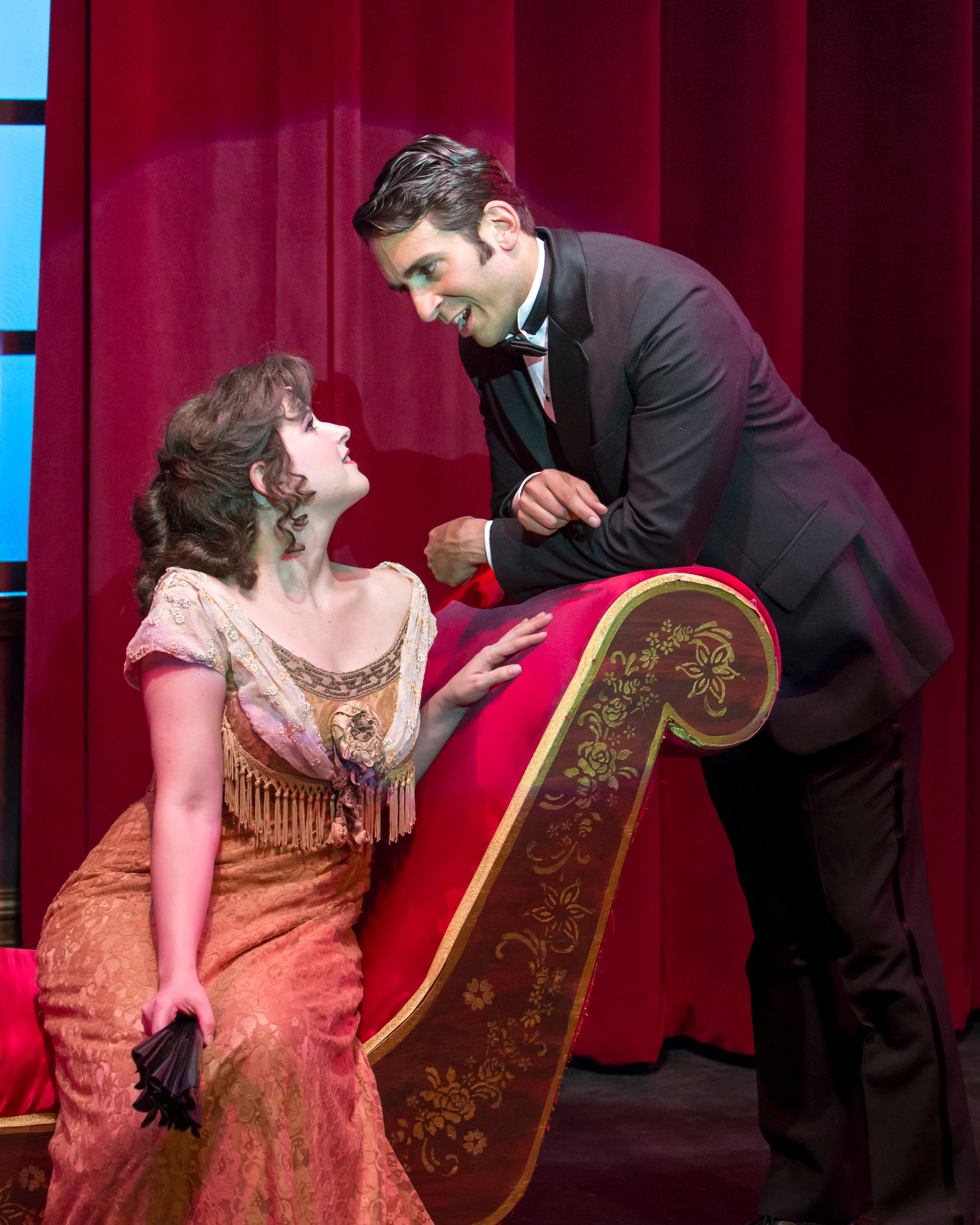
Zachary Hasbany as Fagin’s partner-in-crime Bill Sykes is a fearsome presence onstage, but his performance seems one-dimensional. Sykes should more than just a big, angry guy. A hint that Sykes may also be a bit of a psychopath would be just the thing to kick it up a notch and make the character more edgy. Kelly Brandeburg gives an outstanding performance as Bill’s long-abused but plucky girlfriend Nancy. Her commanding presence and beautiful voice give a boost to the energy level whenever she’s onstage, most notably in numbers like “Oom-Pah-Pah” and “As Long as He Needs Me”.

There are some notable performances by the ensemble cast, especially in the opening number “Food, Glorious Food”. Standouts include: Alyssa Jirrels (Bet), Peter Warden (Mr Sowerberry), Harry Duke (Dr Grimwig) and Michella Snider (Chorus/Choreographer).  Perhaps the most beautiful number in the entire show is the haunting “Who Will Buy”, which epitomizes the perfect union of the talents of cast and crew. Snider’s nimble choreography allows performers of varying talents to look great.  And of course, those Summer Youth Workshop kids are hard to resist, promising more great shows to come.

Kelly Brandeburg, Alyssa Jirrels

As for the stagecraft, lighting designer Eddy Hansen makes very good use of blackouts and spotlights to help with scene changes. Set designers (Hansen with Elizabeth Bazzano) crafted visually appealing structures and platforms. Spreckels’ exclusive Paradyne system provides lightning-fast changes in atmosphere that can’t be duplicated anywhere else.  In a show like this, music is number one, and in this regard “Oliver” doesn’t disappoint. The orchestra is first-rate, conducted with high energy and style by musical director Janis Dunson Wilson.

After all is said and done, despite some uneven performances, “Oliver!” is a pretty spectacular achievement and is a must-see show this season.

Selected Ensemble, Kelly Brandeburg (right rear)


When: Now through August 31, 2014

8:00 p.m. Fridays and Saturdays

7:30 p.m. Thursday, August 28

2:00 p.m. Saturdays and Sundays

Tickets: $22 to $26


Location: Spreckels Performing Arts Center

5409 Snyder Lane, Rohnert Park CA
Phone: 707-588-3400

Website: www.spreckelsonline.com

San Francisco’s Golden Age of Poetry Open Mics Lives On

By David Hirzel

San Francisco’s golden age of poetry open mics lives 0n behind the wide-open doors of Glen Park’s venerable Bird and Beckett Bookstore. It’s hard to believe so many literary and artistic opportunities can coexist in one small space. That space is packed with books—packed in a good way, tall shelves lined with the new and used common and uncommon selections of owner Eric Whittington. It’s very hard for any book retailer to anticipate my geeked out interests, yet on my two visits, here they were: a (used) first-hand account of sailor’s life in the U.S. Navy in 1901, and a (new) translation of Mikhail Bulgakov’s 1966 classic The White Guard. Reason enough right there to take BART down to Glen Park and trust to serendipity from time to time.

Here’s another reason: Every other Monday evening the bookshop hosts a poetry reading with featured readers followed by a well-attended open mic. Tonight’s was my first to attend, but I trust it is representative of the high level of spoken-word artistry to be expected. The featured reader was a young gentleman’s insightful commentaries on romance, city life, family life, and possums. Ayo Khensu-Ra led us through recent works of his own and a favorite poet, with a seasoned musical counterpoint on saxophone, flute, and digeridoo by his father Ra-Ta Khensu-Ra. Some of the poems were good enough to deserve a second reading.

This featured performance was followed by ten poets at the open mic. Some rhymed and some not, some witty to make you laugh—another small mammal, this time a marmot—and some poignant with painful looks into the harsher aspects of family life or the complex rewards of a nurse’s work. All of them poetry in all its many forms, the voice’s music to the ear and the word’s music to the mind.

Bird and Beckett’s nonprofit provides a minimal stipend to the featured artists, supplemented by the passed hat, but the rewards for this enterprise come not from money, but from a common love of the word shared in a space that celebrates and enlivens that word. On other days and nights the same stage is held by jazz musicians, or books, depending. In any case, you can’t go wrong.

Support your local independent bookstore, support live music! Don’t forget to bring some cash for the tip jar and the CDs, and by all means look for that unique book to bring home with you.

Bird and Beckett Books:  653 Chenery St., San Francisco CA 94131    Phone:  (415) 586-3733

Bird and Beckett calendar: http://www.birdbeckett.com/

Review by David Hirzel: www.davidhirzel.net

The Pirates of Penzance by the Lamplighters is a rollicking fun evening.

By Kedar K. Adour

Lamplighters Music Theatre presents Gilbert & Sullivan’s: The Pirates of Penzance (Musical Operetta) Lyrics by William S. Gilbert and Music by Arthur Sullivan. Stage Director Jane Erwin Hammett, Music Director/Conductor Baker Peeples. Yerba Buena Center for the Performing Arts, Moscone Center, San Francisco (August 14-17) Bankhead Theatre, Livermore (August 23-24), 2014

The Pirates of Penzance by the Lamplighters is a rollicking fun evening.

 [rating:5] (5 of 5 Stars)

It is difficult to write a specific review about a Lamplighters production since the major roles are mostly double-cast and there is no advance notification of who will play what role on any given night. Last night, with a minor caveat here and there, the chosen cast created a rollicking fun evening that will have you humming the music and lyrics for days and nights.

The stated mission of Lamplighters Music Theatre is to share their “enthusiasm and love for the works of W.S. Gilbert and Arthur Sullivan through productions of their comic operas and of other works of comparable wit, literacy and musical merit.” Their productions have lavish costumes and sets, live orchestra, excellent comic acting, and gorgeous unamplified singing.  Just so you do not possibly miss the tricky lyrics they also provide super titles.

The Bay Area is fortunate that this group rotates each show through various venues. The Yerba Buena venue is their third stop and the show has nary a hitch with an enthusiastic ensemble, humorous lines, gorgeous costumes and rich voices.

Swaggering booming voiced baritone Ben Brady as the Pirate King thoroughly controls his eclectic band of (loveable?) ruffians with authority. Young handsome Robin Vann as Frederic is an impressive tenor making him attractive to the ladies including the “aging Ruth (Sonia Gariaeff) who accidentally apprenticed him into a Pirates life. You see, she confused “pilot” for “pirate.”  

 The plot gets sillier and sillier but never fear all turns out well when the Major-General Stanley’s (F. Lawrence Ewing) daughters (all 20 of them???) turn up in the Pirates lair. The most beautiful is Mabel (Elena Galvin) and love blooms. Galvin has a marvelous contralto voice that is crystal clear with a vibrato to die for.

The one caveat is that Ewing falters in the pivotal patter song “I Am the Very Model of a Modern Major-General.” To his credit he has spot-on comic timing earning him many laughs throughout the evening. There are laughs galore from the every facet of the show. The basic choreography by ladies, pirates and Keystone Kops (I did tell you about them?) are a hoot and a holler. Recommendation: Do not miss. You still have a chance if you go to Livermore. Running time 2 hours with a 20 minute intermission.

CAST: (Cast for last night’s show are in italicized bold) SAMUEL, The pirate lieutenant, Chris Uzelac ; THE PIRATE KING Ben Brady or Charles Martin; FREDERIC, The pirate apprentice, Samuel Faustine or Robert Van; RUTH, Pirate-maid-of-all-work, Sonia Gariaeff or Deborah Rosengaus; Major-General Stanley’s daughters EDITH, Ellen Leslie or Michele Schroeder; KATE, Susanna Ketron or Talia Trozzo, ISABEL, Lindsey Rae Johnson; MABEL, Elena Galvin, Kaia Richards; MAJOR-GENERAL STANLEY, F. Lawrence Ewing; BUTLER, John Rouse; SERGEANT OF POLICE ,  Steve Goodman or Robby Stafford

CHORUS:Adeliz Araiza, George Ashworth, Amanda Renee Baines, Simon Banaag, Jeffrey Beaudoin, Kelly Brodie, Melissa Butcher, Nicholas Dahlman, Giovanni de Leon, Robert Dorsett, George Fernandez, Drew Green, Beth Guido, Andrew Gustafson, Hilary Hecht, Don Kemp, William Loney (u/s Samuel), Douglas Mandell, Daniel G. Norberg, Timothy Pickett, Rich Pryor, Alan Roberts, Corynne Scott, Bobby Singer, Pete Shoemaker, Allison Spencer, Genie Tjahjadi, Hannah Velichko, Sarah Velichko.

ARTISTIC STAFF; Production Manager: Nicolas Aliaga; Technical Director: Zach Sigman; Scenic Design: Peter Crompton; Original Costume Design: Melissa Wortman; Costume Design: Miriam Lewis; Lighting Design: Joey Postil; Make-up Design: David Kirby; Wig & Hair Design: Kerry Rider-Kuhn; Asst. Director/Props: Elizabeth Durst;Asst. Music Director: Jennifer Ashworth; Stage Managers: Jan Brown, Elisabeth Reeves; Costume Assistants: Sonia Hauser, Koledon Lambright; Costume Cutting/Construction: Melinda Hare, Koledon Lambright, Aviva Raskin; Wardrobe: Alexandra Gray; Costume Crew: Willa Anderson, Shelley Johnson, Claire Kelm, Ellen Kerrigan, Judy Macllvaine, Alan Roberts, Sally Shunsky-Hernandez, Melissa Wortman; Make-up Assistant: Joanne Kay; Supertitles Manager: Joseph Giammarco; Supertitles Operators: Judith Epstein, Nancy Benson, Sarah Vardigans; Rehearsal Accompanists: Paul McCurdy, Michael Schuler; Graphic Design: Tim Dunn, Dunn@Dunn Graphic Design, Joanne Kay; Photography: David Allen.

Kedar K. Adour, MD

www.theatreworldinternetmagazine.com.

The women shine in CAT ON A HOT TIN ROOF at Tides Theatre

By Kedar K. Adour

CAT ON A HOT TIN ROOF: Drama by Tennessee Williams. Tides Theatre Company, Tides Theatre, 533 Sutter Street 2nd Floor, (Between Powell & Mason), San

Francisco. 415-399-1322 or www.tidestheatre.org. July 10 –August 30, 2014

The women shine in CAT ON A HOT TIN ROOF at Tides Theatre.

[rating:3] (3 of 5 stars)

In Freshman English Composition at the Hamilton College (Alexander Woolcott was an alumnus) the instructor assigned an “F” to any essay beginning with “According to Webster’s dictionary. . .” However, a review of Tennessee Williams’ Pulitzer Prize and Drama Critic’s Circle Award play, CAT ON A HOT TIN ROOF almost demands such a beginning. The word is mendacity: a noun; untruthfulness, lies.

After the play opened 60 years ago, the word became very popular, often used in a jocular vein by comedians and forever associated with Big Daddy, the South and the play.  Mendacity is a major theme and the cause of fractured relationships and internal torment throughout all 3 acts. Yes, 3 Acts, three hours with two intermissions. The third act became a source of friction between original director Elia Kazan and the author. Two act plays came into vogue later. Williams has created a play in classic format honoring the three unities of time, place and characters (action). Co-directors (?) Christian Haines & James Baldock have used the powerful, final, 1974 version with Big Daddy’s explicative, the forbidden word “queer”, and the raunchy elephant joke intact. Paradoxically, Williams used a version of the “Broadway” third act advised by Kazan.

Deteriorating relationships are a distinguishing characteristic of a Tennessee Williams play. In CAT, rather than deteriorate, the relationships become excruciatingly apparent in their vindictiveness as the mendacity of the major characters is revealed.  It is a family affair, an impending death of the patriarch, Big Daddy (a one-dimensional performance by Joe Kearns replacing the injured Christian Phillips) and an inheritance to protect.

Brick (only occasionally believable Peter Townley) Big Daddy’s youngest and favorite son at age 27 has become an alcoholic after the death of his best friend Skipper. He has his right leg in a cast and uses a wooden crutch to move about. He has married Maggie (a superb Jennifer Welch) who is spurned sexually and emotionally by Brick. She describes her situation as if she is a cat on a hot tin roof and she can’t jump off. The entire first act is basically a monolog for Maggie “the cat” and Welch’s performance is riveting.

   It is Big Daddy’s 65th birthday and the family has descended on the plantation to celebrate the event. Big Mama (enthusiastic, impressive Carole Robinson) is overjoyed because she has been told (falsely) that Big Daddy’s medical problem is nothing more than a spastic colon. The remainder of the family are, Gooper (a very capable Brandon Mears) a lawyer and the ignored oldest son, with his fecund pregnant wife Mae (pitch perfect April Green) and their five “no neck children” (pared down to one for the minuscule stage).

Big Daddy and Big Mama have not been told that Big Daddy has cancer and is truly dying.  Gooper and Mae’s devious machinations and obsequious behavior are designed to gain control of the estate. This is in direct conflict with Maggie the Cat whose was born white trash poor and is going to fight for the inheritance for Brick and herself. She is not going to be poor again. This can be assured if she can conceive a son which is Big Daddy’s greatest wish. The conflict between Mae and Maggie is like two cats in a territorial struggle with no holds barred.

The first act is an extended 45 minutes of Maggie’s pleadings with Brick constantly drinking and not listening. Oddly, Brick’s presence and his perfunctory remarks seem as afterthoughts.

In the second act Joe Kearns’ Big Daddy explodes on the scene with his physical stature and booming voice without nuance. Where the confrontation between father and son should be engrossing as the long simmering secrets come to the surface, the scene, although violently physically staged, fails to capture the depth of the despair in Brick’s head. The revelations should be devastating ending with Big Daddies assertion that the difference between man and pigs, is that pigs cannot contemplate their mortality.

There is an acceptable denouement in Act III. Rounding out the cast, in small roles, are Randy Hurst as the Doctor Baugh, Francis Serpa as Reverend Tooker, Tassiana Willis  Sookie a servant and young Miles Berson as Buster. Williams is a master at creating women characters and this show shines with Jennifer Welch, Carole Robinson and April Green in pivotal roles.

Running time three hours with two intermissions.

Cast: Margaret, Jennifer Welch; Brick, Peter Townley; Mae, April Green; Big Mama, Carole Robinson; Big Daddy, Joe Kearns; Reverend Tooker, Francis Serpa; Cooper, Brandon Mears; Doctor Baugh, Randy Hurst; Sookie, Tassiana Willis; Buster, Miles Bernson.

PRODUCTION TEAM:

Co-Directors, Christian Haines & James Baldock: Sound Designer, Jon Bernson; Casting Director, Sally Dana; Scenic Design, Alicia Griffiths; Lighting Design, Andrea Schwartz; Production Manager, Deborah Cichocki; Stage Manager, Tassiana Willis; Costume Designer, James Baldock; Poster Design, Liz Pavlovic; Photographer, Greg LeBlanc; Fight Direction, Will Springhorn; Artistic & Technical Interns, Jeff Graham.

Kedar K. Adour, MD

Courtesy of www.theatreworldinternetmagazine.com.     

Edinburgh Fringe: Spectrum by Seam Theatre

By Jo Tomalin

(above) Spectrum with Maeve Bell and Samuel Lennox  Photo credit: Matthew Thomas

Review by Jo Tomalin

 Spectrum ***** (Five Stars)

image Spectrum with Samuel Lennox, Maeve Bell and Dermot Nelson Photo credit: Matthew Thomas

Spectrum with Samuel Lennox, Maeve Bell and Dermot Nelson
Photo credit: Matthew Thomas

Seam Theatre’s fascinating new devised play Spectrum is based on the life of Temple Grandin, a well-known American scholar, doctor and animal behaviour consultant, with autism. Maeve Bell plays Grandin from a three year old through to adult, and does it with sincerity and integrity.

Bell not only plays the lead character but she also wrote and directed the play. In the US Grandin is a leading spokesperson and activist for autism and a best-selling author, who is also on the autistic spectrum, and Bell is passionate about bringing her inspiring story to the UK, where Grandin is hardly known at all.

Bell’s script is humourous, poignant and enlightening. The play moves along snappily through short scenes with the cast doubling up playing several different characters each. The ensemble of actors speak with American accents very effectively, and Bell is so authentic in her performance that the accent blends in as part of the character beautifully – and never sounds out of place or inconsistent, as is often the case.

image Spectrum with Dermot Nelson and Samuel Lennox Photo credit: Matthew Thomas

Spectrum with Dermot Nelson and Samuel Lennox
Photo credit: Matthew Thomas

Actors deftly move around two tall metal shelf units that become everything and everywhere in this play.  Sound effects and music add a dimension to this show that takes us to the world of autism – with the loud zapping sounds showing Grandin’s feeling of internal sensory overload when people get near or touch her, and to the US through brief bursts of upbeat American songs during transitions, and the characters Grandin meets on her journey.

Bell has experience working with people with autism – on the spectrum – and it shows in her fine-tuned performance and in how she sensitively brought out several nuances people with autism often experience, in the play – as the actor, author, deviser and director.  When a play is moving, entertaining and enlightening it a wonderful achievement and Spectrum is all these things. Don’t miss it!

  • Location/Venue: theSpace on North Bridge (Venue 36)
  • TICKETS: https://tickets.edfringe.com/whats-on/spectrum
    BOX OFFICE: 0131 510 2386
  • Performance Time: 17:15
  • Dates: Aug 19, 21, 23
  • Length: 1 hour
  • Suitability: 14+ (Guideline)
  • Country: United Kingdom – Scotland
  • Group: New Celts Productions and Seam Theatre Company


Jo Tomalin, Ph.D. reviews Dance, Theatre & Physical Theatre Performances
More Reviews by Jo Tomalin
TWITTER @JoTomalin
www.forallevents.com  Arts & Travel Reviews

Edinburgh Fringe: L’enfant Qui…

By Jo Tomalin
L’enfant Qui…   Photo credit: Anne Baraquin

Review by Jo Tomalin
www.ForAllEvents.com

L’enfant Qui…   ***** (Five Stars)

image L'enfant Qui...   Photo by Anne Baraquin

L’enfant Qui…
Photo credit: Anne Baraquin

L’enfant Qui…  an organic and earthy theatrical circus show by Belgian company T1J is wowing audiences at the Edinburgh Fringe Festival! Live cello music sets the mood for this extraordinary visual storytelling incorporating puppetry and a fascinating form of hand balance/ acrobatics.

Built around a story based on the early life of Jephan de Villiers, a Belgian sculptor, and how he dealt with childhood illness, this may sound an unusual plot for a show, but it is beautifully told expressionistically through energetic acrobatic movement, brilliant puppetry, live music and an exciting yet poetic atmosphere.

image L'enfant Qui...   Photo by Anne Baraquin

L’enfant Qui…
Photo credit: Anne Baraquin

The cast are multi-talented and highly skilled at what they do. Entering in different combinations they perform clever versions of scenes and acts with a theatrical focus, enthralling the audience.

Wonderfully slow lighting changes add to the dramatic ambiance in this circus tent/chapiteau, which was specially made for the company.

L’enfant Qui… is a magical experience and very highly recommended.

This is one of four very interesting and entertaining shows offered by Vive le Fringe! for the Institut français d’Écosse – and it is worth seeking out this venue for these treasures of shows – plus a cosy French café, Le Bistrot which serves snacks and drinks.

Other shows at the Institut français d’Écosse:

image Colette Garrigan in Sleeping Beauty Photo credit: Cie AkselereColette Garrigan in Sleeping Beauty
Photo credit: Cie Akselere

  • Weird and Wonderful Antiquithon by Company des Femmes à Barbe (Read Review here)
  • binôme – Souris Chaos / Thibault Rossigneux & Cie les sens des mots – a witty comedy about food as catharsis.
  • Sleeping Beauty by Cie Akselere -A bold performance of a princess tale told by Artist and Puppeteer Colette Garrigan. Incorporating shadow theatre, object theatre and direct dramatic bi-lingual storytelling, Garrigan tells of an intense era in her life growing up in Liverpool.

L’enfant Qui…Performance information:
Dates | 8-24 August
Time | 6 pm
Duration | 55 minutes
Space | Chapiteau
Age Category |  14+

Location/Venue:
Institut français d’Écosse
Venue 134
13 Randolph Crescent
Edinburgh EH3 7TT

BOOK TICKETS : 0131 225 53 66

More Information:
Vive le Fringe!
http://vivelefringe.org/
Edinburgh Fringe Festival show page: https://tickets.edfringe.com/whats-on/l-enfant-qui
T1J: www.t1j.be


Jo Tomalin, Ph.D. reviews Dance, Theatre & Physical Theatre Performances
More Reviews by Jo Tomalin
TWITTER @JoTomalin
www.forallevents.com  Arts & Travel Reviews

Edinburgh Fringe: Monologue – Chef

By Jo Tomalin

Review by Jo Tomalin
www.ForAllEvents.com

Chef – is Brilliant!

***** (5/5 stars)

Chef is a theatrical monologue written by award winning poet Sabrina Mahfouz and vibrantly performed by Jade Anouka, about an haute cuisine chef who ends up as a convicted inmate running a prison kitchen. Anouka’s chef character is elegant and passionate gushing forth with stories flowing from the heart.

Staged in the curved metal dome of Underbelly’s Big Belly theatre and well directed by Kirsty Patrick Ward, the set comprises a shiny metal kitchen table, several utensils and a whiteboard. Anouka wears a chef’s jacket, a black and white scarf on her head, and grey just below the knee length trousers.

Mahfouz’s language is poetic and the layers are fascinating as she leads us through each chapter of a cook-book about the art of cooking peppered with juicy life stories. Anouka writes several intriguing headings on the whiteboard, such as…The Perfect Peach…and Coconut Curried Tofu then tells us about different eras of her life – her philosophy of the perfect peach, her loves, distrust, hopes and dreams.

The combination of Anouka’s earnest, gutsy, alive and on point physical performance as the chef and the beautifully fluid crafting by Mahfouz makes this an outstanding performance piece. Satisfying in every way, this one-hour monologue is very entertaining and moving, going deep into a raw emotional core, captivating the audience.

Information and Tickets:

Location: Underbelly, Cowgate (Venue 61)
Box Office: 0844 545 8252
More Info/Tickets: https://tickets.edfringe.com/whats-on/chef
Underbelly: http://www.underbellyedinburgh.co.uk


Jo Tomalin, Ph.D. reviews Dance, Theatre & Physical Theatre Performances
More Reviews by Jo Tomalin
TWITTER @JoTomalin
www.forallevents.com  Arts & Travel Reviews

University of the Pacific, Arthur A. Dugoni School of Dentistry — Architectural review

By Joe Cillo

This is a letter I wrote recently to Dr. Patrick J. Ferrillo Jr., Dean of the University of the Pacific, Arthur A. Dugoni School of Dentistry.  It conveys my reaction to their new clinic that opened in July at 155 5th St. in San Francisco. 


Dear Dr. Ferrillo,

Yesterday I had the privilege of being treated as a patient at your new clinic at 155 Fifth Street in San Francisco.  I have been a patient at the University of the Pacific Dental School for over twenty years, and your students and faculty have done a marvel with my teeth for which I am very grateful.

However, my reason for writing today is that I was disturbed and troubled by my experience yesterday, so much so, that I feel compelled to write and share my thoughts and observations with you.  My student dentist, (name omitted) and his assistant, (name omitted) were excellent and showed great capability and conscientiousness.  This letter, though, has nothing to do with their performance or my treatment as a dental patient.  It has, rather, to do with the ambience and character of the new space where the clinic is now located.

My initial impression as I walked through was one of sterility and impersonality.  I don’t mean sterility in the sense of the absence of bacteria, but rather the absence of human warmth and personality.  This initial impression grew and intensified throughout the afternoon.

The layout and arrangement of the new clinic has been calculated in every consideration to minimize the interaction between the student dentist and the patient.  The patient sits in a chair that is facing into the back of the cubicle, with the student’s workstation and computer directly behind the patient.  The result is that the student is constantly talking to the back of the patient and the patient is responding away from the dentist into empty space.  The student may try to lean around the back of the chair and the patient may try to twist his body on that uncomfortable seat so they can see each other a little bit, as we did, but it is a very awkward, uncomfortable, stilted way to conduct a conversation.  And the effect is that it discourages the patient and the dentist from talking to each other anymore than is absolutely necessary, reducing personal interaction to an absolute minimum.  I believe this was a deliberate, conscious choice on the part of the interior designers.  I would not say that the layout of the space was thoughtless.  On the contrary, I think it has been carefully thought out under the guidance of the most perverse and misguided values.

One positive thing I can say about the interior design is that the cubicles are spacious.  There is plenty of room in those cubicles in contrast to the ones on Sacramento Street, which were so cramped that the students could hardly move around the dental chairs.  It is too bad that you have made such poor use of that generous spatial allotment.  The student’s computer is positioned on an unmovable pavilion at the front of the cubicle that divides and partially blocks the wide entranceway creating a closed in effect.  Perhaps it was intended as a visual obstacle to make it less easy to see in or out of the cubicle.  But its immobility means that the student has to do all of his work and analysis out of sight of the patient.  The patient never sees what the student is looking at.

At one point early on, my student presented me with a small electronic tablet on which I was to sign my name to authorize charges.  But the cord was too short.  It wouldn’t reach from the computer station to the dental chair.  I had to twist awkwardly on the chair and reach around and the student did something I could not see to get a little more length out of the cord so I could sign my name.  This is one example of the ridiculous inconvenience of having the computer and related equipment on something that cannot move, and positioned so that the patient in the chair is completely excluded from it.

When the instructor comes to discuss the case with the student, the discussion takes place behind the patient with the patient facing in the opposite direction being unable to participate or comprehend what is being discussed.  The patient is effectively excluded from the deliberations on his own case.  I think this was also a conscious, considered decision in the design.

The height of the partitions between the cubicles is about shoulder high effectively preventing anyone who is not standing up (and many that are) from seeing anything else that is going on in the clinic.  This underlines the sense of isolation that the patient feels being positioned away from the dentist and his associates who are working on him.  In the Sacramento Street clinic a person sitting upright in a chair could see all around the clinic humming with activity.  I always enjoyed this and found it stimulating and interesting to watch: the people coming and going, the diverse activities, the buzz of conversations, the attractive female dental students.  It provides stimulation and a sense of inclusion and participation in a group activity.

On your website you boast that the dental school, “is renowned for its humanistic model of education.  Accentuating the positive, respecting the individual and empowering its dedicated faculty to provide the best possible learning environment for every dental student are among the school’s primary goals.”  I had to laugh when I saw that.  This new clinic makes a mockery of those values.  This new space is one of the most inhuman, depersonalized environments I have ever seen in a medical context.

This is all justified under the guise of preserving the patient’s privacy.  What does that amount to?  Is it that you imagine that people do not wish to be seen or have it known that they are being treated in your clinic, like it’s some pornographic book store?  Or do you think people might feel self conscious or embarrassed should someone see them laid back in a dental chair with their mouth open being worked on by the student dentists?  This is a very minimal inconvenience and should not drive the design of the entire clinic.  The feeling of self consciousness or embarrassment is a signal that one is not alone.  It is impossible to feel self conscious when one is alone.  In order to eliminate the feeling of self consciousness, of being vulnerable in the gaze of another person, it is necessary to eliminate all sense of connection, to create a sense of solitude, which is exactly what you have done.  It is a great price to pay to remedy a most unobtrusive problem, if it can even be called a problem.  I would just call it a phenomenon, a condition of the experience of being in a teaching clinic.  It should be seen as benign since it underlines the sense of participating in a communal activity.  It creates a sense of inclusion and mitigates whatever indignity one might feel by virtue of the fact that we are all subject to the same conditions and we all share a common experience in this place.

The elevation of “patient privacy,” to a paramount value, I don’t see as benevolent.  I see it as another instance of the dehumanization and depersonalization that is increasingly pervading society in our architecture and our public space.  “Privacy” is interpreted to mean minimizing interpersonal contact by structuring the physical environment to make it as difficult as possible.  This new dental clinic is a paradigmatic example of that trend.

However negative these effects that I have pointed out are on the patient, the most insidious and detrimental impact of this architectural misdirection is the impact it has on the students and on their relationship with their patients, and most importantly, on their attitude toward their patients.   Throughout the afternoon I pointed out to my student dentist the things that I saw wrong with the way the clinic and the cubicle space was laid out.  His attitude was “Well, that may be, but these are the conditions that are given and we have to make the best of them.”  At the end of the day, when his assistant walked me to the escalators she asked me what I thought of the new clinic.  When I explained to her exactly what I thought about it, she probably wished she hadn’t asked.  But she could understand my point of view, but again, she is reconciled to a circumstance about which she can do nothing.

So what is going to happen is that students, and faculty alike, are simply going to  accept this as the given conditions in which they must work.  And they will make the best of it, of course.  But they will fail to perceive the impact that this is going to have on their interactions with their patients and on their relationships with their patients — if there are to be any relationships.  These conditions discourage the formation of “relationships.”  The patient becomes an impersonal “object” to be worked on.  The whole atmosphere becomes depersonalized.  The students will accept this as “normal.”  They will be conditioned to expect things to be this way.  It won’t be taught.  It won’t be pointed out.  It will just be absorbed the way one breathes poisoned air.  This is the most far reaching and malignant impact that this architectural affront will have as long as this clinic exists.  It affects the many thousands of people who will be treated in this clinic in the coming years, but it will extend beyond the clinic and affect the character and practice of dentistry in the United States more broadly by virtue of the students who will be acculturated to this impersonal style of relating to their patients.  This is a public issue that goes well beyond my personal case and even beyond the clinic.

If I were in your position I would fire the people from the university who were on the design committee for this clinic, and sue the architectural firm that realized the design and layout of this clinic for creating a brutal, oppressive atmosphere for the students and faculty to work in and for the patients to be treated.

There are three things you can do to fix that place, although it would be expensive.  But I think the expense would be worth it and would create a permanent improvement in the ambience of that clinic for every single person who comes through it or works in it.

1.  The dental chairs need to be turned 180 degrees, so they are facing out toward the entrance of the cubicle rather than toward the back wall.

2.  The computer and all of the related equipment needs to be on a mobile stand that the student can move as he needs to, instead of being in a rigid, fixed location.  It should be closer to the patient and visible to the patient.

3.  The height of the partitions between the cubicles should be about half of what they are now, giving anyone sitting up in a chair a full view of the entire clinic.  This would not enable people to see patients who are prone and being worked on.  It would simply create a panorama of visual interest and a sense of inclusion, rather than isolation.

Since this issue is of public interest rather than my personal medical case, I decided to post this letter on my blog where the world can see it https://forallevents.com/reviews/.  I think it is important for people to resist the depersonalization that is taking place more and more in our public spaces and our architecture, and the first step in resistance is to point out what is happening.  So that is why I am writing to you and that is why I am posting this in a public forum that others may perceive and be inspired to speak out and voice their opposition to the creeping dehumanization that is affecting all of us, and to prompt the University of the Pacific to live up to the humanistic values that it professes.

                                                                                                                                                                                                                                         Sincerely,

Michael Ferguson

Canciones del Mar: Songs of the Sea

By Mary Buttaro

How do you create a special, interesting musical evening?

Why not:
– Start with a scenic, atmospheric water location? Say Hyde Street Pier, the historic ferry pier on San Francisco’s northern waterfront, in Fisherman’s Wharf tourist frenzy zone.
– Add an unusual performance venue? Maybe a tall ship, the Sailing Ship Balclutha, a 3-masted, steel-hulled, square-rigged ship built in 1886.
– Include a 5 person musical group? Perhaps 3 vocalists, guitar, percussion, saxophone, bass for rich sensual sound.

Well, that’s exactly what We Players did in their repeat of last year’s sold-out performance of Canciones del Mar: Songs of the Sea!

In partnership with the San Francisco Maritime National Historical Park, a special one-night music event was held aboard the tall ship Balclutha in July. The program: Canciones del Mar: Songs of the Sea, was an intimate concert, songs about the sea, boats, love, and life, drawn from folkloric and popular music traditions of Latin America and the Caribbean. Performing were:
• Diana Gameros – vocals and guitar
• Jose Roberto Hernandez – vocals and guitar
• Edgardo Cambon – vocals and percussion
• Charlie Gurke – saxophone
• David Pinto – bass

The musicians, at the top of their game and clearly enjoying themselves, gave a terrific concert: original, soulful, rhythmic. A nice mix of instrumentals and vocal renditions. Held inside a snug cabin up top on the ship, the nautical tight quarters headed to the intimacy of the event. When over, we all reluctantly left in that curious state of being very satisfied but wanting more. The 2 hour concert began at 6pm and we had to leave/make way for the 8 pm performance.


About We Players
We Players “presents site-integrated performance events that transform public spaces into realms of participatory theater. …….brings communities together, reclaiming local spaces for public discourse and civic celebration through art…….. extends the transformative powers of performance beyond the stage, ……..invites our collaborators and audience to engage fully and awaken to the spectacular world around us.”

San Francisco Magazine recently honored We Players with the “Best of the Bay” pick for their unique site-specific performance work and declared, “We Players didn’t just break the fourth wall, it toppled the whole playhouse”.


We Players has a 5 year cooperative agreement with San Francisco Maritime National Historical Park — the first partnership of its kind in the nation. As a result, they collaborate with a wide range of artists, creating work from diverse vantage points in a variety of media as an exercise in exploring the many layers of story within the park. The extended venue of the Park, including Maritime Museum building, Municipal Pier, Hyde Street Pier, historic vessels, Victorian Park, and Aquatic Park and lagoon serves as a laboratory for We Players experiments in site-integrated programming. Projects include generating new theatre works inspired by classical literature and Greek mythology, music concerts, dance, staged readings, visual art exhibits, conversations, parties, workshops.

About San Francisco Maritime National Historical Park
Located near Fisherman’s Wharf, open year-round. Visitors view exhibits at the Park’s Visitor Center at the corner of Jefferson Street and Hyde, and walk onto the pier to visit the park’s collection of floating historic ships, and for breathtaking views of the San Francisco Bay and Golden Gate Bridge. Tours, videos and demonstrations are offered daily, including ferryboat Eureka below-decks tour and Balclutha staysail demonstration.

About Balclutha
3-masted, steel-hulled, square-rigged ship built to carry variety of cargo all over the world. Launched 1886 near Glasgow, Scotland, the ship carried goods around Cape Horn (tip of South America) 17 times. It took a crew of about 26 men to handle the ship at sea with her complex rigging and 25 sails. Balclutha also had a brief career as a movie star in Mutiny on the Bounty, alongside Clark Gable and Charles Laughton; she narrowly escaped World War II scrap metal drives before being purchased by the San Francisco Maritime Museum in 1954.

Experiencing The Bay Area With We Players
As with recent performances on Alcatraz and Angel Island State Park, We Players continues its collaboration with the National Park Service and California State Parks to connect people with local Bay Area public spaces through site-integrated theatre. “An essential goal of our work is to inspire in our audience personal relationships with the places in which we play,” says Ava Roy, the company’s Artistic Director.

more info at www.weplayers.org