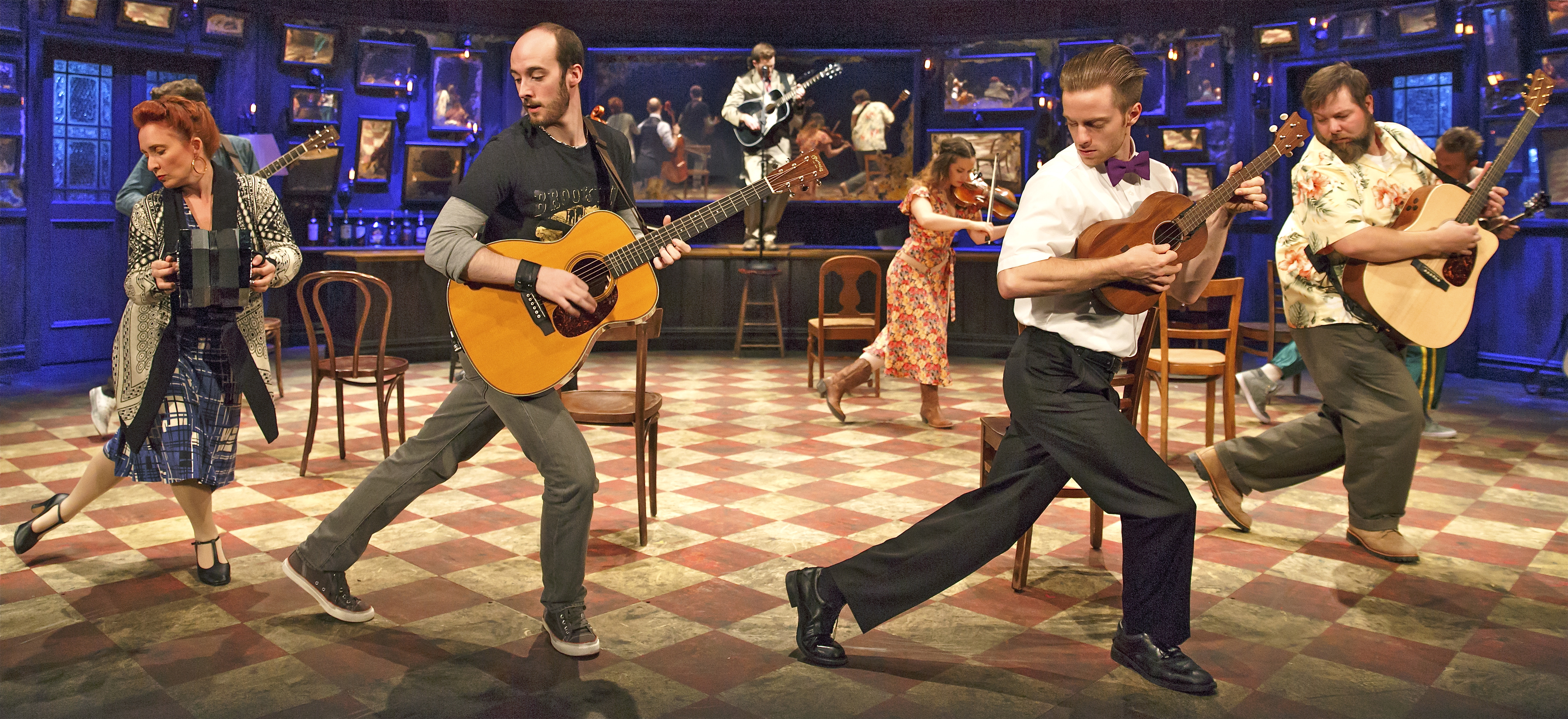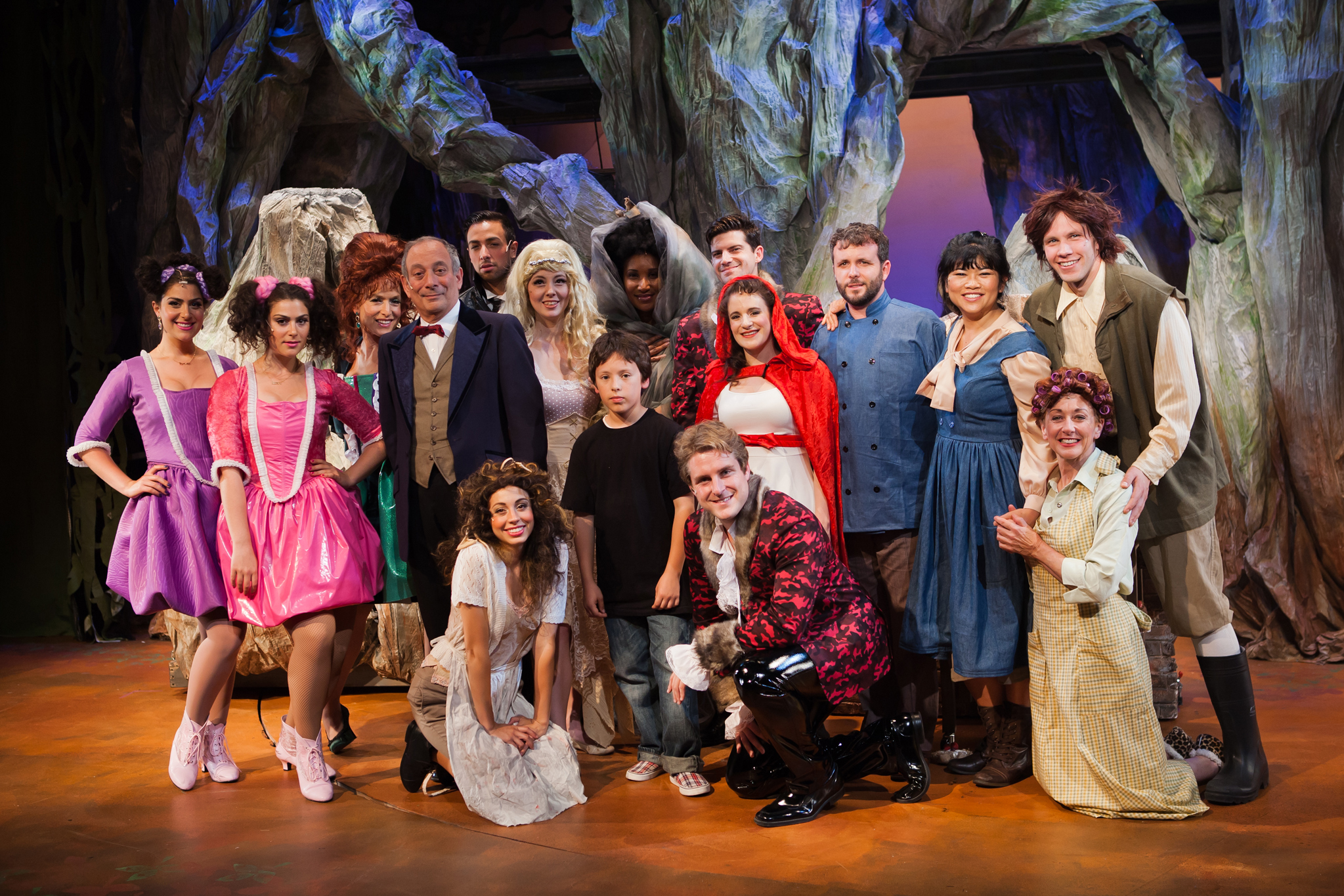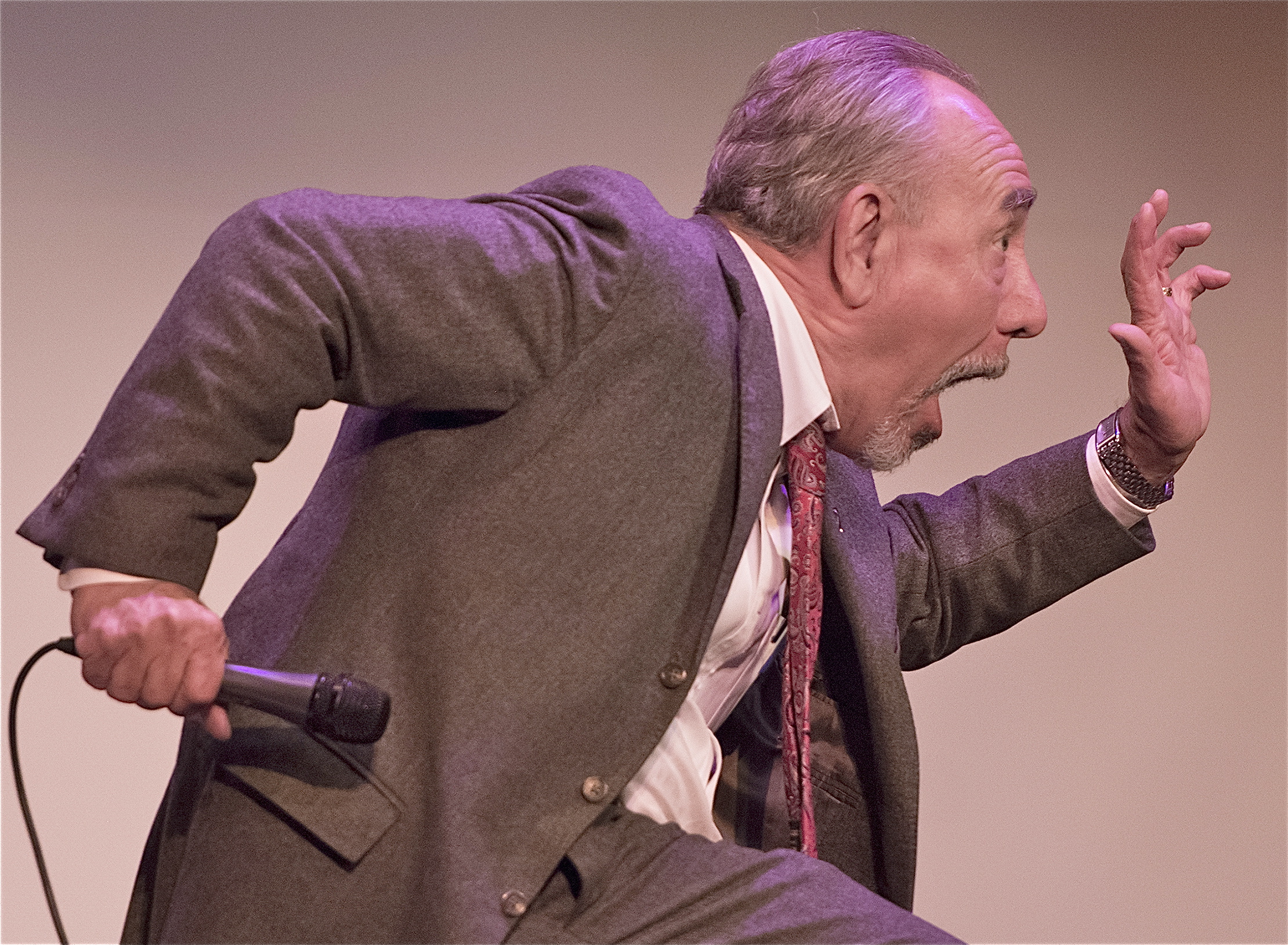
Ancient tale of revenge, ‘Orphan of Zhao,’ comes to ACT stage

By Judy Richter

“The Orphan of Zhao” is an ancient Chinese story that has undergone numerous iterations through the centuries.

American Conservatory Theater is presenting a new adaptation by James Fenton under the direction of Carey Perloff, artistic director.

Sometimes called the Chinese “Hamlet,” this tale of revenge is full of deadly sacrifices as one character after another kills himself or is killed.

It all starts in the royal court where the dissolute emperor (Paolo Montalban) and one of his top advisers, the villainous Tu’an Gu (Stan Egi), shoot arrows into the crowd below just for sport.

Three other advisers, led by Zhao Dun (Nick Gabriel), object. Realizing their lives are imperiled, two of them leave, but Zhao bravely stays. After Tu’an Gu falsely accuses him of being a traitor, he is forced to kill himself.

In the meantime, Tu’an Gu has arranged to have all 300 of Zhao’s male relatives killed so that no one can avenge Zhao’s death. Zhao’s wife, the emperor’s daughter (Marie-France Arcilla), gives birth to a son that she reluctantly entrusts to a country doctor, Cheng Ying (BD Wong). He tells Tu’an Gu that his own newborn son is Zhao’s son. Tu’an Gu cruelly kills the baby.

All that takes place in Act 1. In Act 2, 18 years have passed and Zhao’s son, Cheng Bo (Daisuke Tsuji), a.ka. the orphan of Zhao, is now a young man who believes he is the natural son of Cheng Ying and the adoptive son of Tu’an Gu. He eventually learns the truth and avenges his father’s death while restoring righteousness to the empire.

Not many characters are left alive by the final curtain, but justice has been served according to custom.

Although the story sounds complicated, it’s easy to follow in Perloff’s direction of an excellent ensemble cast on Daniel Ostling’s set with its bamboo scaffolding. The production is enriched by Byron Au Yong’s music, Linda Cho’s sumptuous costumes, Lap Chi Chu’s lighting and Jake Rodriguez’s sound.

It’s an intriguing theatrical work that continues at the Geary Theater, 415 Mason St., San Francisco, through June 29. For tickets and information, call (415) 749-2228 or visit www.act-sf.org.

Failure: A Love Story beautifully staged at Marin Theatre

By Kedar K. Adour

Jenny June Fail (Liz Sklar) trains to swim across Lake Michigan in her home with the help of Mortimer Mortimer (Brian Herndon) in the West Coast premiere of Philip Dawkins’ Failure: A Love Story at Marin Theatre Company in Mill Valley, eight shows weekly through June 29.

Failure: A Love Story: Play with music. By Philip Dawkins. Directed by Jasson Minadakis.Marin Theatre Company, 397 Miller Ave., Mill Valley.(415) 388-5208 orwww.marintheatre.org.  June 5 – June 29, 2014.

Failure: A Love Story beautifully staged at Marin Theatre  [Rating:3]

Consider it good advice to avoid seeing a play on the day after opening night since those in positions to know state that there is usually an emotional letdown by the cast. Having to miss opening night, a choice was made to attend the second day after the opening of Failure: A Love Story by the Marin Theatre Company. It was a wise decision since the 5 member cast played their hearts out on the intimate stage. However the audience response was deadly silent with only a single person responding to scenes that should elicit at least a polite laugh.

The play is written by Philip Dawkins, an up and coming Chicago playwright who has another play, The Homosexuals that opened  at the New Conservatory Theatre Center (NCTC). Dawkins seems to be fascinated with the concept of time since the play at NCTC goes backward in time starting in 2010 and ending in 2000. In Failure etc we learn early that the Fail sisters, Nelly (Kathryn Zdan), Jenny June (Liz Sklar) and Gertude (Megan Pearl Smith) are going to die. It is 1928 when the fatalities will happen and the story moves back to the turn of the 20th Century.

Before the sisters’ story begins there is a lengthy vaudevillian type sequence where the two males in the cast tell a ridiculous tale of the sisters’ parents ending up in the Chicago River when their new DeSoto car took a wrong turn. The girls inherit the Fail Clock Repair Company and live in the upstairs apartment.

Before the parents leave this world, they discover a male baby in the bulrushes (?) by side of that fateful river. The baby is adopted by the Fails and named John (Patrick Kelly Jones). He just happens to have a small snake clenched in his tiny hands. That little snake eventually grows up becoming a huge friendly Boa Constrictor called Moses.   

Dawkins encourages theatres that produce the play to be creative and one production used 30 or so actors. Marin Theatre Company decided to use five live actors using props (Seren Heldy) for the animals that become integrated into the plot. They took on composer and musician Chris Houston to put the play to music and he has added his own composition along with flapper songs of the 1920s such as “In the Good Old Summertime” and “Let Me Call You Sweetheart”.  The cast plays a number of instruments including, piano, bass fiddle, violin, ukulele, trombone and drums. I forgot to mention the marvelous Nina Ball set is adorned with clocks of all types and some of them even talk thus proving Dawkins is obsessed with time.

Although we learn early and often that the Fail sisters are going to die by “drowning, consumption, disappearance and blunt objects to the head” it is not a sad tale. They all love their brother John who speaks to animals but has a problem relating to real people and all the girls have a chance to love and be loved although being a bit late each time it happens.

For the love interest we meet Mortimer Mortimer (Brian Herdon) who is brought home by the youngest Nellie. When she meets her demise being hit on the head by a toppling statue Mortimer Mortimer moves in with the family and becomes fast friends with John.

The hyper-active Jenny June takes on Mortimer as her swimming trainer even though he can not swim. Jenny is training to be the first woman to swim across Lake Michigan.  It is pointed out that she will be the first since no man has ever undertaken the challenge. Alas, just before reaching the far shore she disappears and is never found.

Next up, through a series of improbable happenstance Gertrude professes love for Mortimer even though she is on her last breath with consumption.

The entire play is acted as high camp with many visual jokes added to inane dialog. All the actors perform brilliantly and adeptly change into the inanimate objects and handle the props for the various animals that include, a dog, the boa and two love birds that are worked into the love angle of the play.

(l to r)Nelly (The youngest), Jenny June (The Midlest) and Gertrude (The eldest)

Director Minadakis keeps the pace at full tilt and adds flourishes that are admirable. The entire production is beautifully mounted but considering Heri Bergson’s relative time the one hour and 45 minute running time without intermission seemed longer on the Thursday night this reviewer attended.

Production Staff:  Directed by Jasson Minadakis; Composer Music Director & Sound Designer Chris Houston; Choreographer Kathryn Zdan; Scenic Designer Nina Ball; Lighting Designer York Kennedy; Costume Designer Jacqueline Firkins; Stage Manager Elisa Guthertz; Properties Artisan Seren Heldy; Dramaturg Margot Melcon; Assistant Dramaturg Julianna Reese.

Cast: Brian Herndon as Mortimer Mortimer, Patrick Kelly Jones as John Fail, Liz Sklaras Jenny June Fail, Megan Pearl Smith as Gertrude Fail and Kathryn Zdan as Nelly Fail.

Kedar K. Adour, MD

Courtesy of www.theatreworldinternetmagazine.com.


‘Failure: A Love Story’ is full of delights

By Judy Richter

“Failure: A Love Story” by Philip Dawkins actually is several love stories, all charmingly told by Marin Theatre Company.

Set  in Chicago in 1928, most of the action takes place in a clock shop founded by an immigrant couple, Mr. and Mrs. Fail. After the couple’s death in an accident near the Chicago River several years earlier, their eldest daughter, Gertrude (Megan Pearl Smith), took over the shop with the assistance of her sisters, Jenny June (Liz Sklar), the middle one; and Nelly (Kathryn Zdan), the youngest. Zdan also is the show’s choreographer.

They live upstairs from the shop with their brother, John N. (Patrick Kelly Jones), whom Jenny June found as an infant along the river. Unlike his outgoing sisters, John N. is more comfortable with animals than people. He befriends animals like a snake, a dog and some birds, all represented by puppets.

The love stories start with the arrival of Mortimer Mortimer (Brian Herndon), a brash investor who courts Nelly. On their wedding day, though, she dies in a freak accident near the river.

Mortimer then turns his sights on Jenny June, an avid swimmer who hopes to become the first woman to swim across Lake Michigan. Death ends that relationship, too.

It also ends the next relationship with Gertrude, leaving Mortimer and John N. living out their final years together in the apartment above the shop.

Hence the play is about romantic love, sibling love and friendship love, all related by an engaging cast.

Running about two hours without intermission, the play is noteworthy for familiar tunes like “Let Me Call You Sweetheart” as well as songs composed by music director and sound designer Chris Houston. The versatile actors play musical instruments ranging from piano and string bass to trombone and percussion.

The set by Nina Ball could be regarded as a character itself. It’s an ornate grid hung with the instruments and clocks of all sorts. When the clocks strike the hour, the actors imitate the sounds like gongs and cuckoos. It’s great fun.

As so inventively staged by Jasson Minadakis, the show is filled with such delightful touches, thanks also to costumes by Jacqueline Firkins.

“Failure: A Love Story” will continue at Marin Theatre Company, 397 Miller Ave., MillValley, through June 29. For tickets and information, call (415) 388-5208 or visit www.marintheatre.org.

THE ORPHAN OF ZHAO is a stunning production by A.C.T

By Kedar K. Adour

                                             Ensemble Cast of The Orphan of Zhao at A.C.T. Photo by Kevin Berne

The Orphan of Zhao: Chinese Drama adapted by James Fenton. Directed by Carey Perloff. American Conservatory Theatre (A.C.T.), A.C.T.’s Geary Theater, 415 Geary Street, San Francisco, CA 94108. 415.749.2228 or www.act-sf.org.  A co-production with La Jolla Playhouse. June 4-29, 2014

THE ORPHAN OF ZHAO is a stunning production by A.C.T     [rating:5]

There are multiple ways for theatre to create a memorable evening. Amongst others there may be superb writing, brilliant acting, thoughtful intellectual stimulation, remarkable staging and inventive direction. All of these qualities are displayed in The Orphan of Zhao that received a standing ovation on opening night. This is quite a feat considering the original play is almost 900 years old. It has had hundreds of productions in China with a 2010 film version titled Sacrifice.

The script used by A.C.T. is James Fenton’s adaptation written for the Royal Shakespeare Company. He uses the device of having the characters break the fourth wall addressing the audience about what is happening and their internal emotions. Since the storyline is convoluted and the character names have Chinese pronunciations that differ from the English spelling these interludes of explanation provide clarity. The action is fortified by original music by Bryon Au Young of Stuck Elevator fame. That music is provided on stage by the ensemble with cello, violin, drum, cymbals, bamboo sticks, clay flutes and even water basins. There is also a ballad singer.  It adds an eerie patina to the storyline.

A celebration is being held for the newly finished Crimson Cloud Tower. From that Tower, the drunken Emperor (Paolo Montalban) and his wicked advisor Tu’an Gu (Stan Egi) are indiscriminately shooting arrows into the crowd gathered in the Peach Garden below killing many of them. Zhao Dun (Nick Gabriel) the Emperor’s son-in-law and General Wei Jiang (Orville Mendoza) chastise the Emperor and lose favor with the Court. Wei Jiang and elderly counselor Gongsun Chujiu (Sab Shimono) cannot tolerate such behavior and voluntarily leave the Court going to remote areas. Zhao Dun remains with his pregnant wife the Princess (Maria-France Arcilla).

Tu’an Gu considers  Zhao Dun a threat to his future rise to the throne and orders a henchman to kill Zhao. When this act is not carried out, Tu’an Gu’s trained Demon Mastiff  (Brian Rivera) to sniffs out Zhao as a traitor. Knowing of his imminent death and the massacre of his entire, Zhao implores his wife to hide the boy child when he is born.

All the local doctors have been executed and a simple country doctor named Cheng Ying (BD Wong) arrives to deliver the baby. The Princess extracts a promise from Cheng to always protect the child . . . the orphan of Zhao, the only living member of his clan. Cheng is able to secret the baby out of the Court but Tu’an Gu knows of Cheng’s trickery and threatens to have every male baby in the country killed if he does not return the Orphan of Zhao.

Cheng’s loyalty and his promise to the Princess force him into a terrible decision to give up his own son as the Orphan of Zhao who is disemboweled.  Tu’an Gu arranges to adopt Cheng’s baby and to bring him up in the Court as his adopted son unbeknownst that he is the Orphan of Zhao.   

In Act II it is 18 years later and Cheng Bo (Daisuke Tsuji) has been taught the art of herbal medicine from Cheng Ying and the art of War from Tu’an Gu. He is a true Renaissance man. He is appalled during his travels through the country where he witnesses the strong oppressing  the weak. When he learns his true identity is ready to make changes. All eventually gets resolved with the loyal being rewarded and evil being punished and bodies strew the stage.

All this is very philosophical  but it the fantastic staging, directing and acting that will blow you away.  The stylistic acting by the entire cast never misses a beat and the entrance of Cheng Bo is eye-boggling as he scampers over the frame work without missing a line. BD Wong in this homecoming is a total success but he must share accolades with every member of the cast. Special mention of Brian Riveras as the Demon Mastiff, Julyana Soelistyo as Cheng’s wife, Marie-France Arcilla as the Princess, Orville Mendoza as General Wei Jiang, Sab Shimono as the elderly Gongsun Chujiu and Nick Gabriel as Zhao Dun.

Ostling’s set of three level, three sided ‘bamboo platforms’ and huge silk screens that drop from the rafters, some with painted scenes, other stark white that become mountains and a scroll on which to write the history of the action is marvelous. Add to this the intricate fight scenes with bamboo sticks and the glorious music, especially Jessica Ivry on the cello and the evening is complete. This is a must see production.

Running time two hours and 25 minutes with an intermission.

Featuring: Marie France Arcilla; Stan Egi; Philip Estrera; Nick Gabriel; Cindy Im; Orville Mendoza; Brian Rivera; Sab Shimono; Julyana Soelistyo; Paolo Montalban; and BD Wong.

Creative team: scenic designer Daniel Ostling; costume designer Linda Cho; lighting designer Lap Chi Chu; sound designer Jake Rodriguez; original music Byron Au Yong and movement by Stephen Buescher.

Kedar K. Adour, MD

Courtesy of www.theatrewoerldinternetmagazine.com


‘Bonnie & Clyde’ takes over San Jose Stage

By Judy Richter

Two names that stand out in the annals of American crime are Bonnie Parker and Clyde Barrow, the couple who kept the nation on edge during the Great Depression.

Their story is captured in “Bonnie & Clyde,” a musical covering the years 1920 to 1934 and making its regional premiere at San Jose Stage Company.

As related in the musical’s book by Ivan Menchell, with music by Frank Wildhorn and lyrics by Don Black, “Bonnie & Clyde” is first and foremost a love story between two likable West Texans. They just happened to make their living through robbing and killing, including 14 lawmen.

Clyde (Cliff McCormick), who had admired Billy the Kid, had already done some jail time when he met Bonnie (Allison F. Rich). She was working as a waitress in a diner and dreaming of becoming a Hollywood star like Clara Bow. The attraction was mutual. Even when he went to jail again, she visited him regularly, much to the dismay of her mother,  Emma (Judith Miller).

She then helped him to escape, and they were on their way.

Throughout their criminal exploits, they remained loyal to their families, including Clyde’s parents (Bruce Carlton and Lucinda Hitchcock Cone). Clyde’s brother, Buck (Will Springhorn), got involved with them despite the objections of his wife, Blanche (Halsey Varady).

Directed by Michael Navarra with choreography by CJ Blankenship, the action takes place on a spare set created by Giulio Perrone and enhanced with projections by Garland Thompson.

Several people in the 17-member cast create multiple characters. With musical direction by Allison F. Rich, the six-member band, ensemble singing and most of the solo work are excellent. Rich’s Bonnie is especially noteworthy.

McCormick sings well as Clyde, but he doesn’t seem natural. He struts rather than walks, making his performance too large for the intimate space.

The two-act show runs more than two hours with one intermission. Overall, it’s quite well done.

“Bonnie & Clyde” will continue at San Jose Stage Company, 490 S. First St., San Jose, through July 27. For tickets and information, call (408) 283-7142 or visit www.thestage.org.


HERSHEY FELDER AS LEONARD BERNSTEIN IN MAESTRO

By Kedar K. Adour

HERSHEY FELDER AS LEONARD BERNSTEIN IN MAESTRO: Music and lyrics by Leonard Bernstein and others. Book by Hershey Felder. With Hershey Felder as Leonard Bernstein. Directed by Joel Zwick. Berkeley Repertory Theatre: Thrust, 2025 Addison Street @ Shattuck, Berkeley, CA 94704   June 6 – June 22, 2014 (EXTENDED! June 5–July 3, 2014) [rating:3]

The multitalented (pianist, actor, playwright, composer, producer, and director) Hershey Felder triumphantly returns to Berkeley Rep’s trust stage becoming the multitalented Leonard Bernstein. In the past Felder has limited his portrayals to composers including his smash hit last year as George Gershwin in George Gershwin Alone. In that performance he tacked on a 30 minute sing-a-long curtain call when the uproarious applause kept him on the stage. This time there was no curtain call but it was not from lack of appreciation from a rapt audience.

In the past he has taken on the personae of  Fryderyk Chopin, Ludwig van Beethoven and Franz Liszt. All were great composers while Bernstein was an unsuccessful classical composer and is known for his orchestral directing skills. He considered himself a failure. If one might conjecture about Felder’s motivations to create this show it may be he wished to display his own directorial skills. He certainly does that when he, through Bernstein, gives us a thorough lesson in the art of directing an orchestra that he learned studying under such great conductors including Dimitri Mitropoulos, Fritz Reiner, Serge Koussevitzky, Artur Rodzinski and composer Aaron Copland. Bernstein became the youngest conductor to have led and become the first American-born music director of the  New York Philharmonic.

Much of the evening is devoted to Bernstein’s relationship with his Jewish immigrant father who was materialistic and adamant that one cannot make a living as a musician. This allows Felder to adopt a Yiddish accent that adds humor. The accent is used throughout the evening as Felder chronologically grows from young Bernstein to a disappointed adulthood. There is only brief mention of his faithful wife and children with a “throw-away-line”  late the show about his fling with a young boy that lasted only 1 ½ years saying as he departed the stage his greatest regret was the hurt he caused those near and dear to him.  With a curtain line such as that there could be no encore.

The evening starts and ends with Felder using the words from West Side Story in the song “Somewhere” with a time and place for everything. Felder frames the evening with the lyrics from that song. As with his other productions there is a single set with props that are pertinent to the character he is creating. For this show there is an ancient TV camera reflecting the fact that Bernstein’s fame was made even more grand through the “Omibus” TV series. Many of the projected clips are taken from that program.

The black and white projections become an integral part of the 90 minute show as he effortlessly moves from his piano playing to dialog. The music selections include the “Somewhere”  mentioned above, “Carried Away” from On the Town;  his “Piano Sonata”; Aaron Copeland’s “Piano Sonata” Variation 1 and 9; “A Little Bit of Love” from Wonderful Town; “I Hate Music”; “Lamentations” from Jeremiah; “Greetings” from Arias and Barcafolles; Glitter and be Gay from Candide and“Maria” from West Side Story.

Felder’s first-person narrative as Bernstein and his smooth transitions to those individuals that have shaped his life creates a provocative but not compelling theatre piece. As mentioned in the PR data it certainly is “an illuminating look at the amazing life of American composer and conductor Leonard Bernstein.”

Kedar K. Adour, MD

Courtesy of www.theatreworldinternetmagazine.com
Palo Alto — Film Review

By Joe Cillo

Palo Alto

Directed by Gia Coppola


This film reminded me of the 1985 novel Less Than Zero, by Bret Easton Ellis.  It is a similar tale of cultural and psychological disintegration in the youth of the white American upper middle class.  I would judge it good, with some reservations.  The characters are generally well drawn and memorable.  Very distinctive personalities amid a vivid rendering of this superficial, pained, directionless, clueless, youth culture where nobody seems to be able to relate to one another in a constructive way and everyone self-medicates their loneliness and inner turmoil with alcohol and drugs.  I wonder how people who live in Palo Alto regard this film?  These are your children, Palo Alto, do you recognize them?  The film offers nothing in the way of analysis or understanding.  It just presents things the way they are — or at least as the filmmakers see them.  This probably does reflect the reality of many American young people in the white middle class.  But there are probably also many kids who are never exposed to this kind of cultural, social, psychological, moral, and spiritual  decadence.  If the film is representative, then it means things have not gotten any better since Bret Easton Ellis published Less Than Zero twenty years ago.

I would like to single out Nat Wolff for a special commendation.  He did an excellent job creating Fred, the out of control, angry teenage boy on the edge of murder and suicide.  It is not easy to create a totally unsympathetic, repulsive persona — I assume he is acting — whereas most of the actors in this film were playing roles not far removed from who they actually are.  Emma Roberts did a nice job with April, the confused, conflicted girl, groping her way through this wasteland of blasted people.  She comes the closest to being a sympathetic center of gravity in the film.

I have some serious reservations about the film.  A number of things did not work.  The most salient was the evolution of Emily (Zoe Levin), the good hearted, lonely girl who looks for love in all the wrong places by providing sex to any and all.  She seems particularly indiscriminate in taking on Fred — and she doesn’t seem to do Fred any real good.  He doesn’t improve any on account of her.  She undergoes a dramatic, inexplicable transformation from ready sexual compliance to vicious attack dog, giving Fred his comeuppance by smashing a bottle against his head.  But it doesn’t make sense.  It completely nullifies her character and turns her into something completely different without making any kind of convincing transition.  The filmmakers must have decided that we can’t just leave a likeable slut alone.  That would be too offensive to  American middle class women.  So we have to turn her into a hostile, avenging bitch that we can be more comfortable with.  Unfortunately, it turns Emily into a completely unconvincing shell of a character.

Another problem is the soccer coach, Mr. B. (James Franco).  Mutual attraction leads to an affair between the coach and April, who also works for him as a babysitter.  But then the coach two times her with another girl on the soccer team.  April finds out, gets upset, and breaks off the relationship.  It completely undermines the credibility of the character of Mr. B.

But I think the reason this was done is that the filmmakers feel a strong need to discredit this relationship and affirm officially prevailing sexual prejudices.  It is unacceptable in American society for an older man to have a sexual affair with a teenage girl, particularly if he is her teacher or soccer coach.  There is a very strong public profession of this bias in our popular culture.  It is nonsense, of course, like most of our publicly espoused sexual biases, and in fact relationships of this sort go on all the time in high schools all over America.  A certain number of them are exposed and appear fairly frequently in the news media, and people lose their jobs or go to jail on account of them.  However, the vast majority play out in anonymous secrecy.  Our legal system treats these relationships as “rape,” although in fact very few of them are actually “rapes.”  The film exposes this very clearly for the lie that it is and that is to the film’s credit, but then they have to turn around and repudiate the point that they spent a lot of time and effort to make.

The real problem here is the girl, April.  She is a willing, if not eager, participant in the sexual relationship with the coach.  This makes a mockery of conceptualizing such a relationship as “rape.”  This has to be punished.  She can’t be allowed to get away with this.  So Mr. B’s feelings for April have to be nullified and April has to be made to look like a confused, immature girl who made a foolish mistake which she herself now recognizes.  April comes around to a “right” view that is in line with prevailing disapproval.  The filmmakers must have consulted with the Catholic Church on the script.  So this makes for another degrading blemish on the film.

Finally, the film is very skittish about male-male sex, and never really deals with it head on.  Teddy (Jack Kilmer) drops in on Fred at his house when he happens to be out and comes inside to share a joint with Fred’s father.  A seduction attempt by the father on Teddy is hinted at but abruptly terminated before it gets a chance to go anywhere.  Later, near the end of the film, Fred’s inclination toward the same sex is obliquely suggested and then quickly repudiated.  But he had shown no such interest at any time earlier in the film.  I think the filmmakers introduced this in order to tar him further by implying he is gay after having Emily cut his head open with a bottle.  If they had really wanted to take this issue seriously they should have made the sexual attraction between Fred and Teddy evident from the beginning.  But the filmmakers don’t really know what to do with this subject.

So while this is a seriously flawed film, its characters and its portrayal of the disintegrating culture in which they struggle for their emotional survival are strong enough to hold a viewer’s interest and attention.  It presents the sexual preoccupations of lonely, lost teenagers in the white upper middle class, but in the end affirms the conventional moral judgments on human relations that American audiences (or censors) will insist on.  This severely limits the film and gives it an atmosphere of ordinariness when it could have been a bold challenge to our normal judgmental attitudes.  The film does a very good job of depicting the social and psychological decay and disintegration that is the outcome of our archaic, oppressive sexual culture that fails utterly to offer young people an avenue of sexual relatedness that is positive and constructive, but in the end it simply reiterates those very values and prejudices that are the root of the problem. It had the potential to be a truly great film, but fell down on account of the mediocre, conventional vision of the director and script writers.


Stunning, funny drama in Ross Valley — ‘Other Desert Cities’ — skewers hypocrites

By Woody Weingarten

Woody’s [rating:5] 

Brooke (Jennifer Gregory, left) is stunned by revelations from her parents, Lyman (Dick Martin) and Polly (Ellen Brooks) in “Other Desert Cities.” Photo: Robin Jackson.

Kristine Ann Lowry plays the flamboyant, messed up Silda Grauman in “Other Desert Cities.” Photo: Robin Jackson.

It felt like a heavyweight champ had whacked me in the solar plexus.

Without gloves.

As intended by playwright Jon Robin Baitz, the startling, climactic secret revealed in “Other Desert Cities” inverted my view of two main characters — plus another who never appears onstage.

But there’s more than one secret in motion at any given time in this complex Ross Valley Players’ production.

Raw nerves, raw feelings and hypocrites are exposed.

Christmas Eve, 2004.

Brooke (portrayed nimbly, from heaving anger to poignant stunned silence, by Jennifer Gregory) comes home shortly before publication of her tell-all memoir that skewers her parents.

Those elders (Polly, depicted in chameleon-like, regal and repugnant glory by Ellen Brooks, and Lyman, ex-movie star and ex-ambassador underplayed expertly by Dick Martin) are ex-members of the Reagan inner circle who live in yesteryear, hiding out in their staid Palm Springs home in the desert.

Also in attendance during an uncomfortable reunion are Polly’s liberal sister, Silda Grauman (with Kristine Ann Lowry excelling at being manic, bitchy and loving as a woman just out of alcohol rehab who harbors a giant secret of her own), and Brooke’s other brother, Trip (Peter Warden being exquisitely inelegant as the producer of a lowbrow Maury Povich-like reality TV show).

All five are believable.

Never theatrical cardboard figures, always fleshed out beings that could be part of your own family.

Or down-the-street neighbors.

Up close and personal, director Phoebe Moyer is an intelligent, articulate, warm human being. And she’s managed to apply all those traits to her stage-work, ensuring that the five-member cast forcefully drives the 140-minute drama while balancing laugh-aloud comedy with family torment.

Her playbill notes indicate she wanted to showcase Baitz’s desire to “find the humor and the humanity within the conflict and pain.”

She succeeded.

Despite having to rein in the prodigal daughter character who, post-hospitalization, is still fighting depression over a broken marriage and internal anguish about Henry, her suicidal anti-war brother/best friend.

Moyer’s proficient direction let me buy Brooke drawing a line in the desert sand and daring the others to cross it.

And it let Brooke, who consistently refers to her estranged parents by their first names rather than mom or dad, ignore the fact that she’s triggering a thermonuclear time bomb by airing family secrets that could blow the holiday off the Wyeth calendar and destroy her nuclear family.

The playwright, meanwhile, allows Polly to counter-attack Brooke, accusing her of having “lots of secrets in her dollhouse.”

He also sneaks in thematic tip-offs with lines such as, “Most people go through their lives pretending.”

Baitz, creator of television’s “Brothers & Sisters,” also introduces the idea that acting and reality “are hardly mutually exclusive in this family.”

Considering all the purposeful camouflage in “Other Desert Cities,” I presumed the title had multiple interpretations, not the least of which was a reference to locales and manifold deaths and the search for weapons of mass destruction in Iraq.

But it concretely refers to a sign on eastbound Interstate 10 that indicates the freeway is heading toward “other Desert Cities” — the rest of the Coachella Valley.

In the play, which debuted off-Broadway and then became a Pulitzer Prize-nominated show on the Great White Way in 2011, the environment almost becomes a character. The appropriately genteel set by Ronald Krempetz, in fact, is lighted as brightly as any I’ve ever seen — a not-so-subtle hint of the desert sun?

And everything’s precisely in place, including lined up photos of Barry Goldwater, Frank Sinatra and, of course, the Wyeth buddies, Nancy and Ronnie Reagan.

Only the costumes by Michael A. Berg expose the differences in the people we’re looking at: the elders don fashionable dress-up garb, their adult kids sport insouciant dress-downs.

Although some skeptics might find the play’s O’Henry-like denouement inconsistent with its build-up, I see it as totally in keeping with what’s gone before.

As for that blow to my solar plexus, I forgot to mention “Other Desert Cities” also left indelible marks on my heart and brain.

“Other Desert Cities” will run at The Barn, Marin Art & Garden Center, 30 Sir Francis Drake Blvd., Ross, through June 15. Night performances, Thursdays at 7:30, Fridays and Saturdays at 8; matinees, Sundays at 2. Tickets: $13-$26. Informtion: www.rossvalleyplayers.com or (415) 456-9555.

Bernstein featured in ‘Maestro’ at Berkeley Rep

By Judy Richter


Hershey Felder makes a welcome return to Berkeley Repertory Theatre with another one-man show, “Maestro,” focusing on 20th century musical genius Leonard Bernstein.

Felder previously delighted audiences with his “George Gershwin Alone.” As he did in that show, Felder talks,  sings and plays the Steinway to illustrate his story.

This time he examines the influences in Bernstein’s illustrious career, starting with his pious Jewish immigrant father. He initially discouraged his son’s musical inclinations, but unwittingly caused young Leonard to see connections between traditional Jewish songs and themes by composers like Beethoven.

Indeed, Beethoven was one of Bernstein’s compositional inspirations, starting a line that continued through later composers like Mahler, Wagner, Copland and Gershwin, whom he wanted to succeed.

Bernstein is perhaps best remembered for his musicals, especially “West Side Story” and “Candide.” Several musical highlights of the show come from “West Side Story”:  “Somewhere,” “Maria,” “Tonight” and “One Hand, One Heart.”

He also composed piano and orchestral works and was an accomplished conductor, eventually becoming leader of the esteemed New York Philharmonic. Furthermore, he was a musical educator featured on such TV series as “Omnibus” in the ’50s and ’60s. One of those broadcasts is seen on a backdrop of the score for Beethoven’s Symphony No. 5 as the audience enters the theater. (Set by François-Pierre Couture, lighting by Couture and Christopher Rynne, projections by Couture and Andrew Wilder.)

Felder speaks as if he were Bernstein at his final concert and recreates conversations with and opinions of people in his life.

During the 100-minute, intermissionless show, Felder points to conductors who influenced Bernstein. And he talks about Bernstein’s wife, Felicia, with whom he had three children. He loved her and appreciated the way she helped him with some of his writing, yet he also had affairs with men.

Because Bernstein had such a full life during his 72 years, it’s not easy to encapsulate everything, but Felder does a good job of keeping the focus on his musical career, contributions and influences. It’s an absorbing theatrical work.

“Maestro” continues through July 3 at Berkeley Repertory Theatre’s Thrust Stage, 2025 Addison St., Berkeley. For tickets and information, call (510) 647-2949 or visit www.berkeleyrep.org.


“Marry Me a Little” only mildly enjoyable

By Uncategorized

There’s no doubt that Stephen Sondheim is the reigning genius of American musical theater. With his complex melodies and intricate lyrics, he has entertained audiences for several decades.

TheatreWorks is giving its audiences a look at a relatively early Sondheim revue, the 1980 “Marry Me a Little,” which features songs written for other shows like “A Little Night Music,” “Follies,” “Company” and others. Some were kept, some discarded from those shows.  Craig Lucas and Norman René wove them into a story about two lonely young people who live in the same building but don’t know each other.

Simply called Him and Her, they sing about their feelings as they spend another Saturday night alone.

Director Robert Kelley has updated it to the present and moved it from New York to San Francisco, where Him (A.J. Shively) returns from work on a bicycle and Her (Sharon Rietkerk) returns with a Whole Foods bag of groceries.

Him lives in the apartment above Her, but Kelley has the actors sharing the same space, often side by side, but as if they were in those separate units. Musical director William Liberatore accompanies the actors on piano from a neighboring building.

Both actors are youthfully appealing and dance well. Shivelyalso sings well. However,  Rietkerk has a shrill voice and sometimes goes sharp, detracting from the show.

Lit by Steven B. Mannshardt, the set by Bruce McLeod has an authentic San Francisco feel, complete with a downtown skyline. Costumes by Jill Bowers and sound by Brendan Aanes complement the show.

Running about 70 minutes without intermission, the show feels longer, perhaps because it seems disjointed despite everyone’s best efforts.

“Marry Me a Little” continues at the Mountain ViewCenter for the Performing Arts, Castro & Mercy streets, through June 29. For tickets and information, call (650) 463-1960 or visit www.theatreworks.org.