“Cymbeline” – Marin Shakespeare Company

By Joe Cillo

Paul Abbott as Cymbeline, Rod Gnapp as Belarius, with Zack Purdy and Patrick St. John as the Princes with Jed Pirario as Pisanio.

William Shakespeare’s Cymbeline, Marin Shakespeare Company.

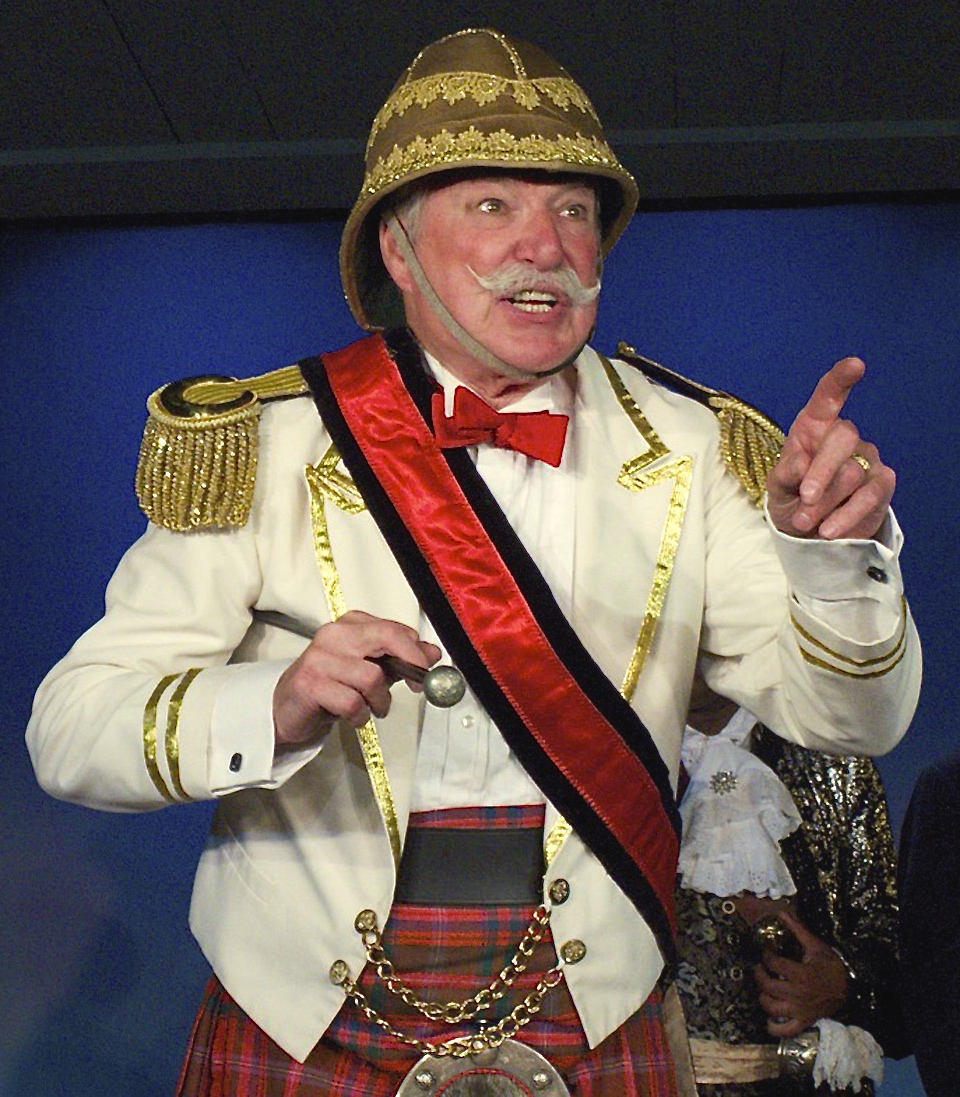
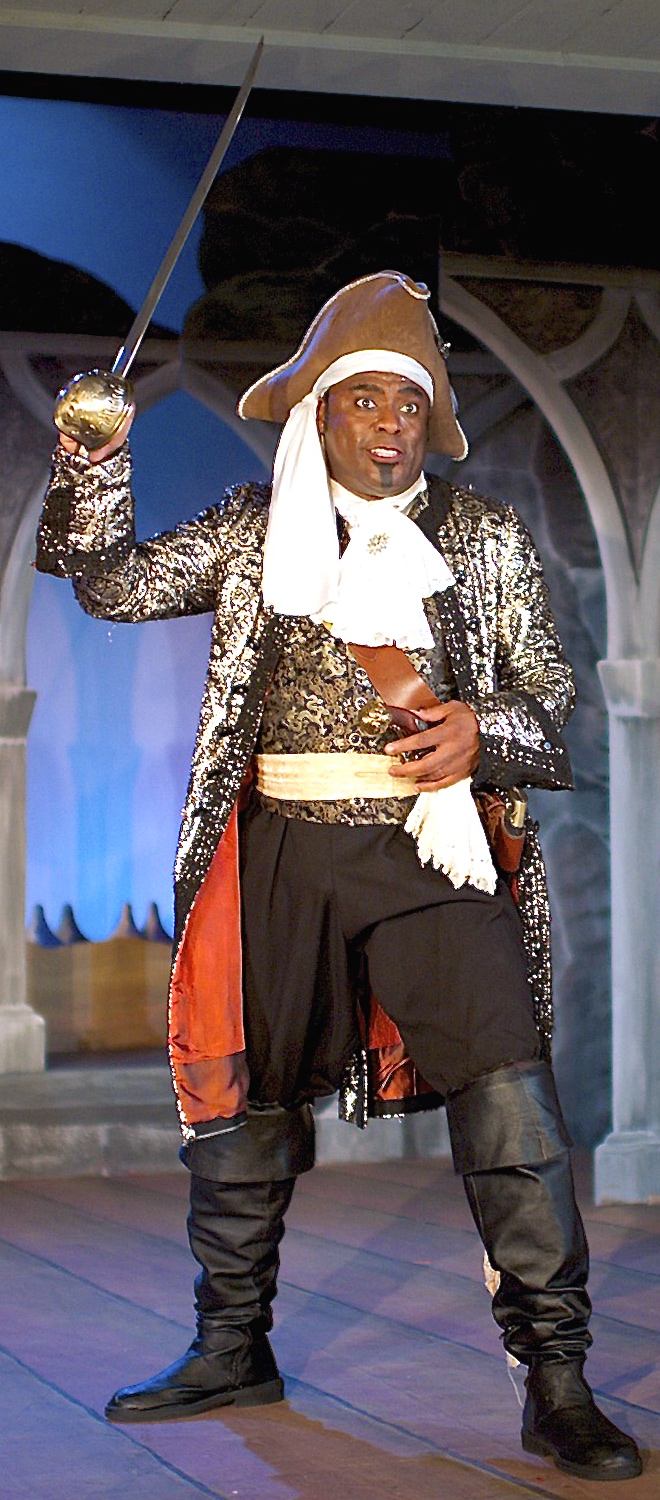
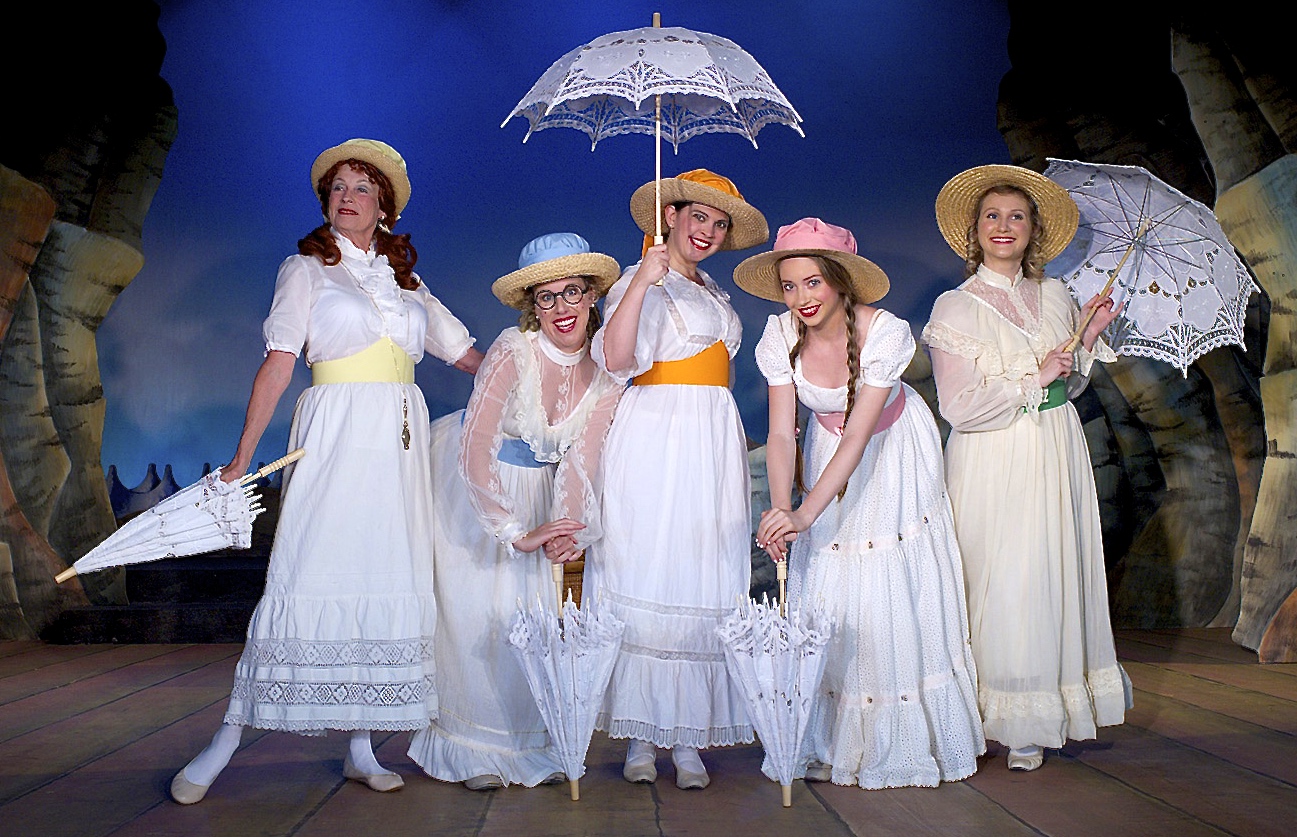
Directed and adapted by Robert Currier, with a cast of thousands- no, not really. No one really knows much about Cymbeline, Shakespearse’s convoluted rom-com (in today’s parlance), except that it’s alleged to be one of his last plays.  It is believed to have been written in 16ll and to echo the Bard’s own coming to terms with his family as he approaches his final act. Director Robert Currier has effectively trimmed the play to a manageable couple of hours and still maintain its coherence, continuity and major and minor plot twists.  To his credit as well is his clever incorporation of contemporary tropes, such as Nat Curries’ additional lyrics to Brooks’s and Warner’s “That’s Amore.” Another that elicited delightful laughter from the audience was Rod Gnapp’s (the leader of the uncouth Mountain Folk of Wales, Belarius) deliberate breaking of the fourth wall to clarify the multiple names for his “adopted” sons to help us make sense of the confusion.  The play is upbeat and never loses our interest thanks to the actors who maintain high energy throughout.  Kudos to composer Billie Cox for her musical adaptations from Shakespeare’s lyrics as well as original compositions.  She created lovely musical interludes in the style of the era, everything from romantic ballads, a rock tune played on a ukulele no less; a madrigal, a monologue mimicking Gibert and Sullivan; an Irish dirge and a jaunty woodsman tune.  Cox also designed the sound for the outdoor arena, enabling us to hear every word and song lyric.

Cymbeline is the bellicose King of the Britons, beautifully played by a believable, heavily-bearded Paul Abbott.  Cymbeline ruled when Rome occupied Briton and battles were still being fought over payment of the tribute owed Rome. His daughter and only heir is Imogen (a sweet yet strong and determined Stella Heath).   In order to ensure that she will stop at nothing to attain her goal, she at one point disguises herself as a boy.  Cymbeline’s (nameless) narcissistic and perfidious Queen (Lee Fitzpatrick) had a son (from a previous marriage?), Cloten (Thomas Gorrebeeck).   He is spoiled and self-indulgent, a dandy with shoulder-length blond locks.  He swans about on stage flipping those locks, seeing himself as the proverbial God’s gift, yet cannot understand why he’s rebuffed!

Thomas Gorrebeeck as Cloten and Lee Fitzpatrick as his mother, the Queen

The plot begins to confuse when it is revealed that Imogen had two brothers who were kidnapped as infants by Belarius, from Cymbeline and their mother.  We meet him and his charges near play’s end.  The boys, Guiderius, known as Polydore (Zack Purdy) and Arviragus, known as Cadwall (Patrick St. John) are now twenty-something strapping mountain dudes in their own right, but innocent of their rightful heritage.  They leap agiley about the mountain set created by set designer Jackson Currier.  Then there’s Posthumus, a poor orphan, raised by Cymbeline.  He’s shy thus non-assertive and hopelessly in love with Imogen. Actor Thomas Gorrebeeck plays both Cloten and Posthumus, two totally different characters.  Unless you followed the cast list, you’d never know this, which attests to the actor’s versatility. A delightful, expressive Jed Parario, who moves about the stage like a dancer, plays Posthumus’s loyal servant, Pisanio.

Imogen and Posthumus    Stella Heath as Imogen and Thomas Gorrebeeck as Posthumus

Others vie for Imogen’s hand.  Davern Wright credibly acts the part of the most aggressive suitor, Iachimo, rightly billed as “a smarmy” Italian.  His cohort played by Zack Purdy is Philario; in the mix is a Frenchman played by Rafael Sebastian.  Glenn Havlan returns to Marin Shakes for a third season after a successful run of “Taming of the Shrew,” by Theater of Others in San Francisco of which Havlan is the founder and director.   In “Cymbeline” he plays a musician as well as a rather thankless rôle as Calius Lucius, the Roman Consul; Xander Ritchey played his Captain. Caius’s soldiers are played by Carolyn Doyle and Isabelle Grimm. Shakespeare most always writes otherworldly characters into his plays.  “Cymbeline” is no exception: Debbie Durst plays Cornelius, a doctor in the ruler’s court.  She is referred to as a witch, carries a wand, and is dressed in a black cowl and flowing gown.  Ms. Durst delivers her portends with commanding, yet wry ominousness.   Lee Fitzpatrick also plays a Goddess (the dead Queen?) and Annika Gullahorn is double-cast as a court gentlewoman and an Otherworldly Mercury.

Costume designer Tammy Berlin deserves praise for her work in this production.  A costume can either make or break the believability of a character. “Cymbeline” will play at Marin Shakespeare’s Forest Meadows Amphitheatre, Dominican University of California in San Rafael, through July 26.  Go to: www.marinshakespeare.org for more information and a schedule of upcoming plays..

Fiddler on the Roof given an unique outing by Berkeley Playhouse

By Kedar K. Adour

FIDDLER ON THE ROOF: Musical Drama based on Shalem Aleichem’s stories. Book by Joseph Stein. Music by Jerry Bock. Lyrics by Sheldon Harnick. Directed by Jon Tracy. Choreographed by Matthew McCoy. Musical Direction by Rachel Robinson. Berekeley Playhouse, Julia Morgan Theater, 2640 College Avenue, Berkeley, CA. (510) 845-8542 x351 or visit www.berkeleyplayhouse.org.       June 25 – August 2, 2015

Fiddler on the Roof given an unique outing by Berkeley Playhouse [Rating: 3]

It has been over 50 years since Fiddler on the Roof made its debut on Broadway running for a record of over 3000 performances. There have been four Broadway revivals and a highly successful 1971 film adaptation. Since its release for public performance it has become a popular musical being performed by High Schools, community theaters and professional groups. It has played in many venues in the Bay area with four or more National Tours making successful stops in San Francisco. The latest showing is by the ambitious Berkeley Playhouse in the comfortable 350 seat Historic Julie Morgan Theater.

This play with the major character Tevye who talks to God (not a very good listener) is populated with believable characters brought to life with an extremely competent cast (with minor caveats) under the trademark direction of Bay Area icon Jon Tracy. It is the most innovative, physical production of Fiddler seen to date by this reviewer. The masterful score is brought to life by a seven piece band with the marvelous, unseen, Christina Owens doing the honors on the violin.

The story is well known with universal appeal even though the time is pre-revolution Russia and the place is Anatevka a poor rural Jewish town steeped in “Tradition” told by Tevye (Michael RJ Campbell) and the Company in the prolog. The always inventive director Tracy has elected to have  ALL of the Company sitting on the periphery of center stage for the entire performance. More about that later.

Tevye and wife Golde (Sarah Mitchell) have five daughters, three of marriageable ages who break with tradition to marry for love rather than to those “traditionally” chosen by the father.  The oldest Tzeitel (Abbey Lee) wishes to marry the poor tailor Motel (Kirk Johnson) rather than the butcher Lazar Wolf  (Berwick Haynes) a rich old widower.  Free spirited Hodel (Jade Shojee) falls in love with revolutionist Perchik (Joel Roster)  and Chava (Grace Ng) marries the Christian Fyedka (Luke Myers). Woven into this break with tradition is the concept of family being challenged by social values intertwined with social upheaval.

The songs are some of the finest written including “Matchmaker, Matchmaker”, “If I Were a Rich Man”, “To Life”, “Miracle of Miracles”  and the plaintive “Sunrise, Sunset.”

 Michael RJ Campbell earns most of accolades as the poor dairy farmer Tevye but his comic timing misses a beat. This is most noticeable in the scene about selling the cow with Lazar Wolf (Berwick Haynes). Sarah Mitchell handles the role of a typical Jewish mother with restraint and is marvelous in the “Do You Love Me?” duet with Campbell. Abbey Lee, Grace Ng and Jade Shojaee are charming as Tevye’s daughters and have a show stopper  with the “Matchmaker, Matchmaker” number.

Director Tracy who cut his teeth as a director in 2007 with the SF Playhouse production of First Person Shooter is much in demand in the Bay Area and has become known for the physicality and uniqueness of style. It is worth seeing this excellent production of Fiddler to catch up on his progression.

There is no “roof” for the Fiddler to mount but rather a wooden ramp placed on a diagonal on the rear wall created by floor to ceiling aged wooden planks with gaps between them. This gives Tracy the entire width of the stage to move his cast and to bring his characters and ensemble from the wings producing tableaus that burst into action. To indicate the passage of time, both weekdays and years are unobtrusively projected on the planks.

Added to this unique staging are the authentic costumes created by Liz Martin and spirited choreography by Matthew McCoy although there is too much stomping that becomes distracting.

 Recommendation: A should see production but a bit long at two hours and 50 minutes with intermission.

CAST: Tevye, Michael RJ Campbell; Golde, Sarah Mitchell; Tzeitel , Abbey Lee; Hodel, Jade Shojaee; Chava, Grace Ng; Lazar Wolf, Berwick Haynes; Yente, Jennie Brick; Motel, Kirk Johnson; Perchik, Joel Roster; Fyedka, Luke Myers; Avram, Tom Curtin; Constable, Johnny Debernard; Rabbi, John Hale; Sasha, Zach Hansen; Shaindel, Bonnie Lafer; Boris, Charles Peoples Iii; Mordcha, Jeanine Perasso; Nachum, Billy Raphael; Mendel, Salim Razawi; Yussel, Victoria Siegel. Ensemble: Bennie Brown, Sabrina Fiora, Andrew Humann, Jude Mcentee, Benjamin Nguyen, Abby Peterson, Lonnie Sears, Jessica Rose Slaght, Abe Soane, Shelby Stewart, Madeleine Wack,  Denise “Dee” Wagner.

CREATIVE TEAM:  Director JonTracy; Musical Direction by Rachel Robinson ; Scenic Design by Catalina Niño; Lighting Design by Drew Kaufman; Costume Design by Liz Martin; Sound Design by Taylor Gonzalez; Prop Design by Devon LaBelle.

Kedar K. Adour, MD

Courtesy of www.theatreworldinternetmagazine.com


Tevye (Michael RJ Campbell – Member Actors’ Equity) dances with his daughter Chava (Grace Ng) at “The Wedding”, in Berkeley Playhouse’s production of Fiddler on the Roof directed by Jon Tracy. Performed at the Julia Morgan Theater, June 25 – August 2, 2015. Photo by Ben Krantz Studio.

‘Book of Mormon’ finds its way to San Jose

By Judy Richter

Funny, obscene, energetic, sacrilegious.

These are all ways to describe “The Book of Mormon,” the wildly popular musical presented by Broadway San Jose.

Winner of nine 2011 Tony Awards, including best musical, it’s the brain child of Trey Parker (who co-directs), Robert Lopez and Matt Stone, the threesome that wrote the music, book and lyrics. Parker and Stone also are known for creating “SouthPark.” Lopez is co-creator of  “Avenue Q.”

Taking off on the requirement that pairs of young Mormon men must spend two years as missionaries trying to gather converts, the musical focuses on two opposite personalities. Handsome, egotistical Elder Kevin Price (Billy Harrigan Tighe) hopes to go to Orlando, Fla. Instead, he’s paired with dorky, insecure Elder Arnold Cunningham (A.J. Holmes) to serve in a village in Uganda.

Kevin is sure he can convert the villagers, but he and Arnold quickly learn that they’re more focused on day-to-day survival. They’re also threatened by the thuggish General (Corey Jones), who wants to circumcise all of the females.

After some traumatic experiences, Kevin decides to leave, while Arnold stays.  He’s attracted to and has established a rapport with Nabulungi (Alexandra Ncube), a young woman in the village. The villagers are bored when he tries to read the Book of Mormon to them, but they perk up when he uses his tendency to lie in order to embroider its stories with some vividly imagined improvisations.

As for the ways this show can be described, it can be quite funny, but it’s liberally laced with obscenities and religious mockery that some people might find offensive.

Perhaps the most lasting impression comes from the energetic dancing by the 36-member cast (choreography by co-director Casey Nicholaw) and fine performances by everyone, especially the principal characters, led by Holmes as the puppy-doggishArnold. Ncube as Nabulungi is a show-stopping singer, as shown in “Sal Tlay Ka Siti,” her way of pronouncing Salt Lake City.

Even though this is a road show, production values are high with sets by Scott Pask, costumes by Ann Roth, lighting by Brian MacDevitt and sound by Brian Ronan. Justin Mendoza is musical director.

Running about two and a half hours with one intermission, “The Book of Mormon” might not be to everyone’s tastes, but it garnered a loud, enthusiastic response at opening night.

It runs through July 12 at the San Jose Center for the Performing Arts. Tickets and information are available by calling (800) 982-2787 or visiting www.BroadwaySanJose.com.


Reviews and Previews of Bay Area Summer Theatre

By Linda Ayres-Frederick

Love and Information by Caryl Churchill at  ACT’s is a collection of 57 self-contained scenes on the title’s subject –each lasting from five seconds to five minutes with over 140 characters played by a talented ensemble of twelve actors. Each scene contains from one to 3 actors and the entire show runs about 90 minutes. This theatrical kaleidoscope employing video and film is staged imaginatively by Director Casey Stangl in the newly opened Strand Theater at 1127 Market Street, SF.  Continuing through August 9, 2015. Tickets $40-$100 415.749.2228/ act-sf.org.

Aurora Theatre Company’s closes its 23rd season with DETROIT by Lisa D’Amour. This Bay Area Premiere of the Obie-winning satire features Amy Resnick, Jeff Garrett, Luisa Frasconi and Patrick Kelly. Ms. Resnick is wildly funny as Mary who with her husband Ben–newly unemployed–are attempting to survive in their suburban home.  Welcoming young Sharon and Kenny who met at rehab and have just moved into the long empty house next door, the older couple’s values get threatened when the backyard barbecue turns dangerous and threatening.  Director Josh Costello keeps this dark comedy moving as we watch the social fabric of the American psyche fray strand by strand. DETROIT plays through July 19 at the Aurora Theatre in Berkeley. Tickets $32-$50 510.843.4822/ auroratheatre.org

Extended through July 5th is Custom Made Theatre’s SF Premiere of Grey Gardens, the Musical directed by Stuart Bousel with Musical Direction by David Brown. Based on a true story and the documentary, Grey Gardens  (book by Doug Wright, music by Scott Frankel, Lyrics by Michael Korie) is a fascinating exploration of Jackie Kennedy’s aunt and cousin who in 1973 she discovered living in a squalid Long Island Mansion and hanging on to reality by a thread. The stellar cast brings to life this musical exploration of the American dream gone wrong and what it means to become a social pariah by examining both the back-story of the family and the fate they couldn’t possibly have imagined. Heather Orth and Juliana Lustenader lead the cast in spot on performances. Tickets $20-$50 www.custommade.org/tickets.

Upcoming July 9th – Aug 2nd and back for the fifth time, don’t miss Custom Made’s longest running show in their 16 year history, the hilarious Book of Liz by David and Amy Sedaris about everyone’s favorite squeamish nun Elizabeth Donderstuck and her famous cheeseballs at Gough Street Theatre.

And as of  Sept 1st, Custom Made will have a new home at 533 Sutter Street, 2nd floor, between Powell and Mason. More news at www.custommade.org/tickets.

Around the corner at the Phoenix Theatre at 414 Mason Street, Off-Broadway West  just completed their run of Harold Pinter’s modern classic The Birthday Party ably directed by Richard Harder. The Birthday Party is about Stanley Webber (Adam Simpson), a one-time piano player in his 30s, who lives in a boarding house, run by Meg (Celia Maurice) and Petey Boles (Graham Cowley), in an English seaside town. Two sinister strangers, Goldberg (Keith Burkland) and McCann (James Centofanti), who arrive supposedly on his birthday and who appear to have come looking for him, turn Stanley’s apparently innocuous birthday party–organized by Meg with their saucy neighbor Lulu (Jessica Lea Risco) as a guest–into a nightmare. This is ensemble acting at its best. Sound and Lighting Design by Ian Walker create additional elements of foreboding on Bert Van Aalsburg’s believably English set. OBW’s next production will be in 2016. www.offbroadwaywest.org

For Discount tickets to many of these and other theatre events check out Goldstar.com

Linda Ayres-Frederick


Economic malaise personified in ‘Detroit’

By Judy Richter

The title of Lisa D’Amour’s play, “Detroit,” is a symbol rather than a geographic reference. In fact, that city is never mentioned, and the action takes place somewhere in suburbia.

Aurora Theatre Company is giving the four-person play its Bay Area premiere. As it opens, a middle-aged couple, Ben (Jeff Garrett) and Mary (Amy Resnick),  have invited their younger new neighbors over for a backyard barbecue.

Mary, a paralegal, and Ben are barely getting by after he’s laid off from his job as a loan officer. Meanwhile, Kenny (Patrick Kelly Jones) and Sharon (Luisa Frasconi) have next to nothing, not even furniture for his late aunt’s empty house. They’re trying to start over after meeting in rehab, they say.

As their friendship continues, cracks in Ben and Mary’s relationship are revealed.

In his program notes, artistic director Tom Ross says, “Detroit refers to the state of economic despair Americans were experiencing in 2009,” when the play was written.

Directed by Josh Costello, this production lacks a sense of ensemble because Garrett’s Ben tends to be one-dimensional. He often wears an expression of surprise, as if he doesn’t quite understand what’s happening. The other three actors create more complex characters.

Costello also allows one scene near the end to get out of control. It starts when the wives decide to go off on a camping trip, leaving the husbands to their own devices. The men are just about to enjoy a boys’ night out, when the women unexpectedly return. The scene devolves into a too loud, too long drunken dance party that’s no fun for the audience.

The backyard set is by Mikiko Uesugi with lighting by Kurt Landisman,  sound and music by Cliff Caruthers, and costumes by Christine Crook.

Running about 100 minutes without intermission, the play does have its amusing moments and interesting scenes, but, at least as presented in this production, it doesn’t seem to merit being named a Pulitzer Prize finalist for 2011.

“Detroit” will continue through July 19 at Aurora Theatre Company, 2081 Addison St., Berkeley. For tickets and information, call (510) 843-4822 or visit www.auroratheatre.org.


DETROIT (the play) goes out in flames at Aurora Theatre.

By Kedar K. Adour

Kenny, Mary, Sharon, and Ben (l-r, Patrick Kelly Jones*, Amy Resnick*, Luisa Frasconi, Jeff Garrett*) have a wild backyard barbeque in Aurora’s Bay Area Premiere of Detroit

DETROIT: Comedy/Satire. Written by Lisa D’Amour. Directed by Josh Costello. Aurora Theatre Company, 2081 Addison St., Berkeley, CA. Box office: (510) 843-4822 or www.auroratheatre.org. June 19 – July 19, 2015

DETROIT (the play) goes out in flames at Aurora Theatre.  [rating:2]

Have you ever wondered what qualities make a play an award winner and who are the judges that make those decisions? After seeing Aurora Theatre’s production of Lisa D’Amour’s play Detroit be assured that those questions may be foremost in your mind. On opening night the audience gave appreciative applause but not the usual standing ovation from their loyal subscription base.  In fact, more than one audience member took furtive glances on their wrist watches during the 100 minute, without intermission running time.

First, the title is a metaphor for implosion of the American Dream typified by the decay of the city of Detroit that was so pertinently documented in a recent issue of National Geographic Magazine. The end of jobs and loss of income leave little hope for a return of a local productive society nor a way out personal quagmires. D’Amour spends 90 of those 100 minutes semi-demonstrating these points based on the lives of two unlikeable couples. She has tacked on a 10 minute monolog for an elderly man who bemoans the “good-old-days” reemphasizing the societal destruction.

All the action takes place in the backyards of two adjacent homes. A married couple, Mary (Amy Resnick) and Ben (Jeff Garrett) are giving a barbeque for a couple who have moved into the run-down unfurnished next door home. They are Sharon (Luisa Frasconi) and Kenny (Patrick Kelly Jones). They are impecunious and recovering drug addicts trying to rebuild their lives. Ben has lost his job as a bank clerk and they are living, barely, off of Mary’s salary as a para-legal.  Ben is attempting to build a web site that will help those in financial trouble.

Not much happens until late in the play when all hell breaks loose emphasizing the old adage “in vino veritas.” Before the author gets to that point her methods of character development mainly involve monologs. Those monologs are disguised as conversational dialog usually when one of the characters is under the influence of alcohol or drugs or is having a psychiatric break. Since this a satirical comedy there is a modicum of humor but there are long lapses between laughs. Symbolism abounds but is hardly intellectual or remarkably cogent.

The ending is a stunner (not to be revealed here) and accolades are deserved by the artistic staff of set designer Mikiko Uesugi, sound Designer Cliff Caruthers and light designer Kurt Landisman even though the scene changes are a bit cumbersome.  Much of the fault of this production can be attributed to the heavy-handed approach of director Josh Costello and the physicality of the staging that could benefit with a lighter touch.

The actors give it their all with Amy Resnick giving her usual professional performance ably supported by Luisa Frasconi and Patrick Kelly Jones. Jeff Garret gives a confusing performance as Ben but it may be director Costello’s interpretation of the part.

CAST: Luisa Frasconi as Sharon; Jeff Garrett as Ben; Patrick Kelly Jones as  Kenny & Frank; Amy Resnick as Mary.

ARTISTIC STAFF: Director, Josh Costello; Wesley Apfel, Stage Manager; Daniel Banato, Props Artisan; Cliff Caruthers, Sound Designer; Christine Crook, Costume Designer; Kurt Landisman, Light Designer; Mikiko Uesugi, Set Designer; Lias D’Amour, Playwright

RUNTIME: 1 hour and 40 minutes with no intermission. Recommendation: Pass on the content but a should see for the staging.

Kedar K. Adour, MD

Courtesy of www.theatreworldinternetmagazie.com.

Kenny, Mary, Sharon, and Ben (l-r, Patrick Kelly Jones*, Amy Resnick*, Luisa Frasconi, Jeff Garrett*) have a wild backyard barbeque in Aurora’s Bay Area Premiere of Detroit

Rogers & Hammerstein’s “South Pacific”, SRT at Santa Rosa Junior College, Santa Rosa CA

By Greg & Suzanne Angeo

Reviewed by Suzanne and Greg Angeo

Members, San Francisco Bay Area Theatre Critics Circle

AnnEliza Canning Skinner, Riley McFarland

Fresh and Lively “South Pacific” a Highly Watchable Kickoff to SRT’s 44th

The Summer Repertory Theatre Festival has been celebrated at Santa Rosa JC for 44 years now. For the uninitiated, the SRT festival features scores of theatre students, including locals and those from various universities and colleges across the country. It’s remarkable, but this is one of the few remaining repertory theatre companies in the United States. The company consists of stock actors, each having a role in multiple shows. This way, they are exposed to playing vastly different characters in different plays over the course of a season, a real learning experience and trial by fire for many. One of the most beloved musicals by Rogers and Hammerstein, “South Pacific”, is one of three festival shows being presented in the 75year-old 400-seat Burbank Auditorium on the JC campus.

First presented on Broadway in 1949, “South Pacific” was a smash hit, loosely based upon an anthology of short stories called “Tales of the South Pacific”, about island life during World War II, written by noted author James Michener. The story, released as a classic musical film in 1958, has become a long-time favorite that transcends the decades. Its sweet, gentle humor and social consciousness (unusual for the day) seems more timely than ever. And then there’s that music…gorgeous and highly singable, the kind of stuff you just can’t get out of your head, or your heart.

Emily Kristen Morris, Noah Weisbart

The production team under director James Newman really does justice to this wonderful piece. There are the usual suspects in local theatre – during the overture, the trumpets were a bit off-key – but overall, this is a remarkable achievement by triple-threat performers who hopefully will stay in the game and go on to even bigger successes.

The true standout and incandescent star of the show is Emily Kristen Morris as Ensign Nellie Forbush, the happy-go-lucky “Cockeyed Optimist” who finds herself in a risky romance. Morris is in fine voice, and has the acting and dancing chops to match. Nellie’s unfortunate love interest is Emile, a French expatriate who appears to be hiding something. Noah Weisbart’s portrayal often comes off a bit stiff, and while he possesses a quality baritone he may be singing below his range at times. Some awkward staging also obscures the chemistry between Emile and Nellie in their first scenes together, but they recover.

Noteworthy performances include a winsome Michaela Jose as Bloody Mary, who delivers a fresh, sincere interpretation of the role with songs like “Bali Hai” and “Happy Talk”; Riley McFarland plays Lieutenant Joseph Cable, whose romance with an island native girl Liat (played by talented dance captain AnnEliza Canning Skinner) underscores the racial tensions at the heart of the story. McFarland gets off to a slow start but grows into his role.

Snappy choreography by Anne McAlexander combines with orchestration by music director Nancy Hayashibara and ensemble vocals by the cast on some really memorable numbers: “There is Nothin’ Like a Dame”, the rousing, enthusiastic tribute to the female sex, is performed with great harmony by those Navy boys; “I’m Gonna Wash That Man Right Out’a My Hair” is simply adorable, performed with klutzy, clownish delight by Morris and ladies of the chorus, joined by some of the guys for a laugh. But the high point of the show comes with the opening of Act II. It’s then that we are able to witness a true rarity on local stages – a tap dance number, done really, really well. Its high-energy stomping percussion is exciting to see and over much too quickly. More, please!

Of course, it’s always nice to watch attractive young people romping about onstage. But when their boundless energy and budding talent is this laser-focused on their performances, it becomes a joyful experience. Their lively spirit carries the show, rolling right over any opening-night jitters or stumbles of inexperience.

If you’ve only seen the film, you are in for a surprise, because there are striking differences from the stage production in the way the story unfolds. But with lots of great music performed by this kind of talent, there’s no way you can go wrong. SRT’s production of “South Pacific” is the perfect summer confection, presented with heart and soul.

Ensemble Cast – Men

When: Now through August 8, 2015

Performances: Weekdays (except Mondays) and weekends

2:00 p.m. matinees, 7:30 p.m. or 8:00 p.m. evenings

(See www.SummerRep.com for details)


Tickets: $18 to $25

Where: Burbank Auditorium at SRJC

1501 Mendocino Avenue

Santa Rosa, CA 95401

(707) 527-4307


Other shows being presented by SRT Festival at SRJC:

Emma” by Jane Austen (Newman Auditorium)

Peter and the Starcatcher” (Burbank Auditorium)

Tartuffe” (Newman Auditorium)

Little Shop of Horrors” (Burbank Auditorium)


Festival runs through August 8, 2015


www.SummerRep.com

Comedy-drama probes how to cope with fiscal snags

By Woody Weingarten

 [Woody’s [rating: 3]

Kenny, Mary, Sharon and Ben (from left, Patrick Kelly Jones, Amy Resnick, Luisa Frasconi and Jeff Garrett) cavort at wild barbecue in “Detroit.” Photo by David Allen.

Ben (Jeff Garrett) and Sharon (Luisa Frasconi) discuss their dreams in “Detroit.” Photo by David Allen.

Instead of “Detroit,” playwright Lisa D’Amour might have named her Pulitzer Prize finalist play “Metaphor, California.”

Or “Metaphor, New York.”

Or, for that matter, “Metaphor, Anywhere.”

The title surely doesn’t signify the real Motor City. It’s  — dare I say it? — just a metaphoric label for a play that’s a comedic depiction of the fiscal scars the Great Recession left on the suburban middle class American psyche.

D’Amour says she used Detroit because it had become “a symbol to so many people of the American dream drying up.”

That resonates with me.

Seeing a revival of the Obie winner at the Aurora Theatre in Berkeley could seem like witnessing a 100-minute intermission-less dream left too long on a backyard barbecue.

But with more levity than most comedies I’ve watched in several years.

I do have one caveat: None of it sounds funny in print.

And “Detroit” does rank high on my Squirmometer, a personal indicator of how uncomfortable dialogue or characters make me.

Ben (a wide-eyed, slack-jawed Jeff Garrett) has lost his bank loan officer’s job and appears to be toiling feverishly on a website that will launch a startup. Mary (an ultra-solemn, fuming Amy Resnick), his wife, drinks too heavily (to the point of upchucking on a new neighbor) and hobbles because of a painful planters wart on her foot and an even more agonizing burr on her being.

He bemoans accurately that they “don’t have any friends.”

To say their home and lives are broken is to state the obvious.

A big table umbrella unexpectedly shuts on folks beneath it. A sliding screen door won’t open or close properly. A patio chair falls apart.

Financial woes have pushed them way out of their comfort zone.

Still they want to be neighborly so they invite to dinner a pair of rootless recovering addicts who might never have had a comfort zone.

Kenny (Patrick Kelly Jones), who shamelessly admits they have only one towel too dirty to use, and Sharon Luisa Frasconi), who wants “to own up to what I am” — white trash, are a problematic mirror of the older couple’s unease.

As they unveil each other’s secrets, Kenny and Sharon flip the invitation, welcoming Ben and Mary to their digs despite having zero furniture and an equal amount of food (unless you count chips and Velveeta).

Though all four actors do bang-up jobs delineating their characters, Resnick and Garrett radiate, perhaps because their verbiage-laden roles are meatier.

Director Josh Costello effectively stages both antics and melodrama, sharply pulling into focus the question of how we cope with our insecurities when we can’t pay our bills.

The comedy-drama returned my memory to the first home I purchased, a suburban Philadelphia prototype in southern New Jersey created by William Levitt, a man renowned for developing instant all-white ticky-tacky communities out of whole cloth, identical blueprints and tiny plots.

I recalled, too, all the trappings that came with the tract houses.

Which included white picket fences, green lawns, good schools and clothes washed in 99 and 44/100ths percent pure Ivory soap.

But the play impacted my opening night companion more.

Although he viewed it as a flimsy farce and melodrama “rather than something to be considered seriously,” revolving around “unreal characters” he never grew to care about, he somehow let two BART trains pass him by while pondering the significance of “Detroit.”

A lingering, disturbing query: Have we all been living out the Rise and Fall of the American Empire?

Could be.

“Detroit” runs at the Aurora Theatre, 2081 Addison St., Berkeley, through July 26. Night performances, Tuesdays, 7 p.m.; Wednesdays through Saturdays, 8 p.m. Matinees, Sundays, 2 p.m. Tickets: $16-$50. Information: 1-510-843-4822 or www.auroratheatre.org.

Contact Woody Weingarten at voodee@sbcglobal.net or at www.vitalitypress.com

Fanciful art envisions bank windows as a fish tank

By Woody Weingarten

Whimsical watercolor by Dan Thomas illustrates how he’d change the look of the U.S. Bank branch in San Anselmo. Photo by Woody Weingarten.

The real U.S. Bank building in San Anselmo — inspiration for Dan Thomas’ whimsy. Photo by Woody Weingarten.

Dan Thomas holds one of his fanciful ideas on how to re-face U.S. Bank branch. Photo by Woody Weingarten.

Watercolor sketches represent Dan Thomas’ fanciful look at U.S. Bank branch. Photo by Woody Weingarten.

Can you imagine the front of the four-story U.S. Bank building in downtown San Anselmo as an oversized fish tank?

Dan Thomas can.

And he’s done something about it.

But it’s taken him 40 years to scratch his inner itch about the structure, to shrink his edifice complex.

His weaponry? Watercolors.

And whimsy.

It happened last month, when Dan, my longtime next-door neighbor in San Anselmo, painted “a series of fantasies conceptualizing how the bank branch might improve its look.”

Until then, the high-rise — by town standards, at least — merely aggravated Dan every time he passed it.

His problem?

“The building, which was constructed in 1962, didn’t fit the surrounding environment.”

Dan sits at my dining room table displaying his watercolor sketches. And jabbering like he’s stumbled onto a second childhood.

“Just before I drew the first parody, the fish tank,” he says, “I thought, ‘Let’s see if I can have some fun.’

“Then, for a second I thought maybe I and the bank could be playful. Maybe the bank would let me decorate it for a couple of months. But then I decided the bankers, a serious lot, would be unlikely to see the humor in it.

“All of this, of course, is strictly in my head — it’s all make-believe.  I haven’t approached U.S. Bank at all. I have no real plan to ask the bank to change anything.”

The sketches, Dan tells me with mischievous twinkles in both blue eyes, involve “humor, what-if’s and a play of colors.”

The bank’s window treatment, explains the retired architect, “is six-inch thick concrete, 16 feet wide, 32 feet high, two feet deep. The top and bottom segments form a complete circle. There are eight circles over all. I used to visualize that the only thing that would [help] would be to make window treatments with fish tanks with live fish. The idea stayed with me. So I finally sketched it, to scale, as if it were an architectural rendering.”

His initial plan was only to do that one concept, but he became so motivated he concocted a dozen fanciful sketches in only two weeks.

“My idea was to give the Town Council a humorous view of the building — as a cautionary tale — to remind them you can’t turn back once you’ve made a decision. Had the council gone ahead with its original General Plan, the town would have had 10-story buildings.”

I almost choke on the thought.

I like San Anselmo for what it is, a quaint, little town despite being a refuge for coffee buffs, boutique shoppers and upscale bicyclists.

Noticing my discomfort, Dan placates me — grinning.

“Again, remember this is make-believe, even though a real fish tank actually could be built with Plexiglas and a little bit of cork.”

Once he’d retired, Dan returned to an early love — painting. He worked mainly on landscapes, but now again dabbles in abstracts. He’s good enough to have won prizes, including firsts, at Marin and Napa county fairs — as well as Marin Society of Artists juried shows in Ross.

Now 79, he remembers once painting “full time, mostly allegorical paintings, working my way through my religious upbringing as a strict Pentecostal.”

That, of course, is miles from imagining fish in windows at the 46-feet, 6-inch high site, where for years I’ve banked in the tallest building in town.

One of Dan’s watercolors is tied to “the good economic times” we’re experiencing anew, featuring “drinks on the house — cocktail glasses filled to the brim.”

In another, a series of sunglasses symbolize “warm periods — sunny days.”

Soup cans also became a happy construct. Although the Andy Warhol tribute might allude to soup lines, the artist says he intended to evoke “a ‘Happy Days Are Here Again’ feeling.”

One striking piece is a light-hearted plea for egalitarianism. Faces become a commercial for both bank and tolerance.

“It means, ‘We serve all nationalities,’” Dan says.

Taken as a whole, the sketches comprise his “first attempt at humor in art — I’m a pretty serious character in a lot of ways — although these may have loosened me up a bit.

“I’m working on one right now where I’m putting a hand-painted silk tie right in the middle of an abstract painting that looks like a vest.”

I postulate he’s now in-vested in projecting a less-serious attitude.

Contact Woody Weingarten at voodee@sbcglobal.net or http://vitalitypress.com

Puzzle-like 57-scene play in restored San Francisco theater enthralls

By Woody Weingarten

[Woody’s [rating: 2.5]

Shona Tucker (left) and Sharon Lockwood turn their faces into communicative canvases in “Love and Information.” Photo by Kevin Berne.5]

Cindy Goldfield (left) and Dominique Salerno enjoy Chinese food and dialogue in “Love and Information.” Photo by Kevin Berne.

Dan Hiatt (left) and Anthony Fusco portray forgetful ex-lovers in “Love and Information.” Photo by Kevin Berne.

Leo Marks (left) and Joe Holt relish video game in “Love and Information.” Photo by Kevin Berne.

Sharon Lockwood and Dan Hiatt catch a bit of sun in “Love and Information.” Photo by Kevin Berne.

I couldn’t help fantasizing at A.C.T.’s experimental “Love and Information.”

English playwright Caryl Churchill’s plot-less, 57-scene scattergun technique goaded me into it.

I had the distinct impression she’d dreamed — before writing this play — that Samuel Beckett, spouting weighty sentence fragments, was pitted against Harpo Marx’s deadpan and wide-eyed comedic facial exaggerations while Ingmar Bergman flashed myriad disparate images on a split-screen behind them.

“Love and Information,” playing at the refurbished Strand Theater, introduced me to some 140 mostly unnamed characters in 100 minutes.

Through a stellar 12-member cast that magically spun many of the vignettes into gold.

Enthralling.

Yet, finally, a touch frustrating.

As if someone had stolen more than a few pieces of a new jigsaw puzzle I was being asked to put together.

Because so many of the pieces were mere fragments (ranging from a few seconds to a few minutes), audience members got to plug the holes from our personal histories and baggage — though we had to think fast because the next scene always tested our minds instantly after the last, much like one Henny Youngman gagline following another without a breath.

My favorite moments included two men humorously and poignantly misremembering yesterday’s love affair, two teens freaked out because they didn’t know a personal detail about a crush on a guy they both had, two dudes discussing an apparent direct message from God, and a woman reflecting about life and death after being gifted with a red rose.

Not exactly light subjects.

But being inundated with technology was the main target of Churchill’s stylized shorthand, with lust and longing (as opposed to love) finishing a distant second.

By not writing stage directions or character descriptions into the text, and by suggesting vignettes could move from any of the seven segments to another, she gave directors and their whims plenty of latitude.

“Love and Information,” therefore, has varied radically from city to city.

Here, director Casey Stangl did astonishingly well — especially since I occasionally felt as though a carnival mirror had been shattered and I was left to reassemble endless shards.

Introducing the first show produced at the refurbished Strand, Carrie Perloff, the American Conservatory Theater’s longtime artistic director, cited Stangl’s having successfully built the production while the house was “being built around her.”

Perloff also referenced the old Strand, where she teasingly suggested theatergoers might have caught films like “The Rocky Horror Show” or “Deep Throat.”

“Love and Information,” which opened in London in 2012, felt a gadzillion miles from such classic movies — in both tone and concept.

It had no overall arc or linear storyline. Its scenes left the sensation of being almost randomized.

Perhaps because of those elements, the rebuilt 283-seat theater, which cost almost $35 million (and includes an even more intimate stage, The Rueff, which seats only 140), seemed like an ideal venue.

The huge onstage screen in effect became the set. Movable, unattached doors were basically the only addition (except for various tables and chairs used as props).

Before the show on opening night, actors mingled with the lobby crowd and performed shtick such as dancing wildly to plugged-in music, burying oneself almost catatonically in an iPhone, coughing and sneezing loudly and frequently. A huge LED screen flashed brief previews of what was to come inside — plus other glimpses of items relating to communication (such as binary numbers, Pig Latin and a tagger spraying graffiti with gaudy paint).

Inside, the screen at the rear of the stage — which later would feature eclectic images that incorporated photos of Market Street — showed a live feed of the audience itself.

Besides the quasi-trauma of seeing myself projected, I was subjected to a surreal moment:

Early in the play, a patron’s cell phone went off, adding a bouncy pop tune to the ambience. Had I not been sitting next to the guy, I undoubtedly would have thought it was yet another disconnected part of the play.

Unlike Churchill’s “Cloud Nine,” “Top Girls” or “Serious Money,” “Love and Information” might be a perfect fit for anyone with a short attention span.

And maybe — in today’s exhaustingly frenetic fast-everything world in which “USA Today” and “TMZ” head the most-read, most-watched lists — that could apply to all of us.

“Love and Information” plays at the American Conservatory Theater’s Strand Theater, 1127 Market St., San Francisco, through Aug. 9. Night performances, 7 p.m. Sundays, 7:30 p.m. Tuesdays through Saturdays, Matinees, 2 p.m. Wednesdays and Saturdays. Tickets: $40 to $100. Information: (415) 749-2228 or www.act-sf.org.

Contact Woody Weingarten at www.vitalitypress.com/ or voodee@sbcglobal.net