Yogi Bear’s Yellowstone Park Camp

By Cathy Valentine

Campers welcome –  Yogi Bear’s Yellowstone Park Camp will be opening in Groesbeck Tx – just 36 miles east of Waco Tx in the spring of 2022.

A seven acre lake, white sand beach,  Wilbit obstacle course, pool , 150 RV sites, nine cabins,  two Conestoga wagons, and pavilion for activities, camp store and dog park are planned.

Just a short drive is Waco Tx,  a vibrant town with great jewels.  The Fixer-Uppers homestead.

“Our Town” at the CCCT theater in El Cerrito echoes the stories of your town and mine”

By Charles Jarrett

On of my favorite community theaters whose work is quite professional and yet very reasonable in cost to attend, always becomes enjoyable under the capable direction of Executive Artistic Director Marilyn Langbehn. Located at 951 Pomona Ave. in El Cerrito, CA, the Contra Costa Civic Theater may seem a bit of a journey, but certainly not so far as required in attending many premium theaters in San Francisco.

This past week my wife and I enjoyed the opening performance of Thornton Wilder’s 1938 masterpiece, a three-time Pulitzer prize-winning play, Our Town. At first, an introduction to Grover’s Corners by the stage manager/narrator, who speaks to the audience about a small imaginary community town in New Hampshire, its townspeople, its values and simplistic history seems almost mundane.

Throughout the play, we are guided through introductions to members of this community, including two of its families (the Gibbs and the Webb family), their children, their choir leader, Joe Crowell delivers the daily newspaper, and Howie Newsom in the act of delivering the morning milk. Each act thereafter takes us forward through the years, demonstrating how the lives of this town’s families a hundred years ago, rings so familiar to our lives today. The play does not bother with fancy props, costumes or elaborate scenery, but it focuses on the concept that we often life without really appreciating what life has to offer. Once we die, (according to Wilder’s plot), and are able to look back on our life and see what we had, discovering that it is really too late to have any regrets. Major themes of the play include morality, appreciating life, companionship, marriage, and love, and of course the inevitability death, all aspects in the circle of life.

According to an article by writer Bud Kliment “Our Town’s encompassing significance was not immediately obvious, nor did it have an easy birth. The play’s long journey to its first performance in Princeton, and the genesis of Wilder’s mythical town, began in 1920 in Rome. Wilder, at 23, was a student at the American Academy, studying Italian, Latin, and notably, archaeology. He quickly realized that, although separated by thousands of years, ancient and present-day people were perhaps not very different from each other at all. That realization, his idea that human lives across centuries are universally conjoined by certain personal moments and milestone events, became a foundation of Our Town.”

The eight-member cast’s selection should be lauded not just for the outstanding talent of the actors themselves, but for the ethnic diversity as well. More specific information as to the casts performance history, the remaining production dates, Covid requirements, and a link to purchase tickets ahead of time are clearly disseminated at the company’s website, cccc@ccct.org/our-town. Tickets are quite reasonable at $35 each for adults, and youth (ages 13-16) at $15 each. Children 12 years of age or under and unvaccinated adults, are not allowed in the theater at this time. Evidence that you have had your Covid vaccinations is required and masks are required in the theater. No food or drinks are allowed or served inside the theater, masts are allowed to be removed while drinking or eating outside of the theater at intermissions only. The show runs approximately two hours and 50 minutes, including two intermissions. Performances on Fridays and Saturdays are at 7:30 PM (NOTE: THE EARLY START/TIME), and with Sunday performances at 2 PM occurring every weekend now through October 31.

Author Wilder is quoted as describing his effort in writing this story, “an attempt to find a value above all price for the smallest events of our daily life.” My wife and I found it once again as enjoyable as we did many years ago.


Attached photo is of: Justin P. Lopez as George Gibbs and Grace Dolezal-Ng as Emily Webb at the soda fountain in Contra Costa Civic Theatre’s production of OUR TOWN; photo by Ben Krantz.

“Night of January 16th“ by Ayn Rand, Avon Players, Rochester Hills MI

By Greg & Suzanne Angeo

Reviewed by Suzanne Angeo (member, American Theatre Critics Association; Member Emeritus, San Francisco Bay Area Theatre Critics Circle), and Greg Angeo (Member Emeritus, San Francisco Bay Area Theatre Critics Circle)

Scott Welborn, Rachelle Rodriguez, David Reynolds, Joe Munem, Ann Sweet


Photos courtesy of Bryan Clifford

Murder Mystery Welcomes You Back To Avon Playhouse


After more than a year-and-a-half, Avon Players welcomes theatregoers back home with a unique play by a controversial author and plenty of food for thought. Players president JD Deierlein and company have presented many remarkable shows over the years that showcase our amazing local talent. Now, to kick off their 75th season, they offer “Night of January 16th by Ayn Rand, the Russian-American writer and philosopher, best known for her groundbreaking novel “The Fountainhead”.

“Night of January 16th”, a courtroom drama about a sensational murder trial, introduced the novel concept of asking members of the audience to serve as the jury. There are two possible endings, depending on what the jury decides. The story is crafted as a classic whodunit, with red herrings and plot twists galore, especially near the end.

Rand’s original play was called “Penthouse Legend” and revolves around the alleged murder of Swedish businessman Bjorn Faulkner, a giant of ruthless capitalism who faced bankruptcy. His secretary and paramour, Karen Andre, stands accused. Rand has said she designed the play to illustrate the conflict between individualism and collectivism (much like “The Fountainhead”). This is not clear in its modern-day presentation, which could be due to numerous rewrites over the years. It premiered at Hollywood Playhouse in 1934 as “Woman on Trial” and ran for a month with generally positive reviews. After a major rewrite that Rand objected to, it went on to Broadway the following year and was a moderate hit (especially when celebrities in the audience served as jurors). Since then it has had more rewrites, regional productions and revivals, a film in 1941 and a final, “definitive” rewrite by Rand in 1968.

Tara Makar

The action takes place entirely in a New York City courtroom. There is only the testimony of witnesses to tell the story and from which the audience/jury must decide the verdict. A question arises: did Faulkner fake his death?

The opening scene gets off to a good start and is pretty engrossing, but soon the starchy dialogue and inert staging take their toll well into the first act. Without emotional outbursts, a courtroom doesn’t offer much chance for excitement.

A strong performance by Scott Welborn as District Attorney Flint moves the story forward as he compels testimony and grills the witnesses. Hosanna Phillips, as Faulkner’s accused murderer and mistress Karen Andre, spends most of the first act in a silent and sphinxlike pose, showing no emotion, except perhaps distain. When she finally does speak, it’s with one-dimensional anger. Later, on the witness stand, she gets the chance to demonstrate some passion, although she seems to underplay the role more often than not.

Faulkner’s widow, the platinum-blonde Nancy Lee (played for comic relief by Tara Makar), arrives to liven things up. Makar has a good stage presence, with the perfect little-girl voice and tough-girl attitude to take potshots at Karen, her haughty rival.

And at the end of act one, when Avon Players veteran Richard Marcil shows up as wiseguy gangster “Guts” Regan, it really gets interesting. He has some of the best lines, and mugs shamelessly whenever he gets the chance. The act ends with an amazing cliffhanger, and suddenly you can’t wait to find out what happens next. The second act builds on the momentum that carries the show to a lively conclusion. How does it end? The audience decides, and it’s different every night.

Hosanna Phillips, Aaron Barnes, Scott Welborn

This play marks Lia DiFonzo’s directorial debut, and it shows. Dry performances from many of the cast and an initial lack of energy don’t help. In the hands of a more experienced cast and director, with more imaginative stage business, better blocking choices and stronger reactions from the characters, it may be more engaging.

Even with the slow first act, the audience really seems to enjoy being in the theatre again after so long, even while wearing a mask, and most of the seats were occupied. Great period music before the show and during intermission helps set the mood.


Now through October 9, 2021

Tickets $21

Avon Playhouse

1185 Washington Rd

Rochester, MI 48306

(248) 608-9077

 www.avonplayers.org

“RIPCORD” by Playwright David Lindsay-Abaire

By Flora Lynn Isaacson

The sub-title of this review might well be “RVP Versus the Pandemic” inasmuch as the show goes on in spite of Covid-19 mask mandates and social-distancing requirements…offstage. That said, this production is a worthy diversion from the restrictions we are enduring because of the pandemic. There is plenty of comic relief during the pandemic in this crazy/slapstick-comedy by Playwright David Lindsay-Abaire — thanks to its script, casting, directing, and acting.

Kudos to Co-Producer Heather Shepardson; Director, Chloe Bronzan; and to the Cast for stellar performances: “Abby” (absolutely outstanding by Tori Truss); “Scotty” (Beau Tran); “Marilyn” (Pamela Hollings); “Colleen” (Rebekah Kouy-Ghadosh); “the Clown” (Nate Currier); and (Peter Warden) masterfully performing multi-characters: “Derek,” “Zombie Butler,” and “Masked Man.”

Kudos to the Crew for creating our escape into the “safe space” of the living facility: Tom O’Brien (Scenic Design) with Scenic Artistry by Dhyanis Carniglia; Michael Walraven (Set Construction). Stage Manager Dianne Harrison’s talents and those of her assistants, Ben Vasquez and Raysheina de-Leon-Ruhs, were shown by the flawless property design choices and their use. Kudos to Bruce Viera (perfect Sound Design); also, to Michael A. Berg for his tasteful costuming; also, kudos to Richard Squeri for the excellent coaching of the sky-diving skit, combat and intimacy choreography, as well as practical effects; and to Tina Johnson for excellent Lighting Design.

Kudos to the Ross Valley Players Board of Directors Officers and At-Large Members:
President Carol Winograd
Vice-President/Exec. Producer Steve Price
Vice-President/Treasurer Allan Casalou
Vice-President/Business Manager Alex Ross
Secretary Ellen Goldman
At Large:  Stephanie Ahlberg, Michael Cohen, Mark Friedlander, Maureen Kalbus, Dee Kordek,
Maureen Scheuenstuhl,
and Vic Revenko

Kudos also to Robin Jackson for the Program Photography and to Graphic Designer Mark Shepard; to Karen Topakian for the all-important Show Publicity; to Suzie Hughes as Program Consultant; and last but equally important: to Volunteer Coordinator, Eleanor Prugh, and to Webmaster, Andrew Wilson.

For sheer enjoyment this Ross Valley Players production is not to be missed. For performances at The Barn (30 Sir Francis Drake Blvd., Ross) on the grounds of the Marin Art and Garden Center to and including October 10, 2021, tickets are available online at RossValleyPlayers.com or by telephone: 415/456-9555, Ext. 1.

By Elle Alexa Simon
on behalf of Flora Lynn Isaacson, Critic San Francisco Bay Area Critics Circle

Shout! The Mod Musical: a review by Victor Cordell

By Victor Cordell

Jamie Gussman as “Yellow Girl,” Heather Mae Steffen as “Blue Girl,” Christina Bolognini as “Orange Girl,” Melissa Momboisse as “Red Girl” and Amanda Le Nguyen as “Green Girl.” All photos by Steve Stubbs.

The ‘60s were a memorable decade of change.  But years ending in zeros are rarely true inflection points.  Many political historians point to President John F. Kennedy’s assassination on November 22, 1963 as the inception of that decade.  President Lyndon Johnson was able to enact his and Kennedy’s agendas for civil rights and poverty into law; political parties were realigned with Southern Democrats shifting to Republican in rejection of civil rights advances; and the U.S. commitment to the Vietnam War swelled irreparably.  Social historians note the impact that the Beatles had starting several weeks later.  The ensuing British Invasion brought with it new music, lingo, hair styles, mores, and more.  And the youth culture that began with Elvis Presley and Rock and Roll in the mid ‘50s exploded to become a dominant social and economic power.

“Shout! The Mod Musical” is a musical revue of the ‘60s shown through the experiences of five young adult women living in London, as conceived and curated by three American men (of course)!  The songbook draws from tunes of the era, predominantly those popularized by English songbirds, especially Dusty Springfield and Petula Clark (“Wishin’ and Hopin’” and “Downtown” for starters.)   The South Bay Musical Theatre cast brings strong voices, deft comedic skills, and great enthusiasm, resulting in a fine entertaining evening.  Don’t expect the significance or sophistication of Sondheim or Hammerstein, but for those old enough to remember, it’s a frothy retreat into nostalgia.  Younger people will get a slice of life snapshot of what it was like back in the day.

The show lacks a story arc.  Whatever narrative glue is largely provided by the women writing letters to an advice columnist at “Shout” magazine, with spoken replies coming from the unseen columnist.  The characters lack names but are identified by a particular color, which is dominant in the various outfits that each wears and relates to their behaviors.  Orange, performed by Christina Bolognini, is domestic; Red, played by Melissa Momboisse, is a mess of youthful contradiction; Blue, portrayed by Heather Mae Steffen, is poised and beautiful – and she knows it; Green, rendered by Amanda Le Nguyen, is slutty; and Yellow, characterized by Jamie Gussman, is loud – and therefore, probably American!

Heather Mae Steffen as “Blue Girl,” Christina Bolognini as “Orange Girl,” Amanda Le Nguyen as “Green Girl,” Jamie Gussman as “Yellow Girl” and Melissa Momboisse as “Red Girl.”

Essentially, the show is an amalgam of skits full of the expected tropes, with music that often ties to each mini-drama.  Not all work, but most produce the desired laughter.  In one, a Paul McCartney groupie, Gussman, repeatedly stalks her prey, and even combs his trash, coming away with – you guessed it – his broken comb.  In another favorite, characters are silhouetted against a back screen with Le Nguyen appearing as James Bond in “Coldfinger,” a takeoff on – well, you get it.  One recurring pastiche is several scenes that borrow directly from “Rowan & Martin’s Laugh In,” with music, action, and lights coming to a stop except for one spotlighted character who delivers a funny bit.

Several pantomimes, also spotlighted against an otherwise dark stage, work nicely.  My favorite is Steffen’s reacting with increasing dejection to a disembodied man’s deep voice telling her how her skin is being ravaged by age.  But in the end, she blossoms with hope and glee when the speaker offers the solution of purchasing his skin cream product.  Of course, much of the advice given is tongue-in-cheek.  An example is the reply to Momboisse’s sad but funny letter in which she declares herself ugly.  The response is that there are things that are worse than being ugly – like being French.

The performers are quite convincing with their English accents, and overall have strong mid-range singing voices.  As the performance proceeded, I found myself changing my mind on which artist had the best voice, which is a good thing.  I might go with Bolognini.  While the songs were well sung, raising the keys on some of them would have created more brightness and urgency in their voices, but perhaps the tradeoff would be a loss of power.  Otherwise, they do a pretty resolute job within the limits of the material.

The creatives play a large role in the success of the production.  Lee Ann Payne not only directs with a lively touch but choreographs a ton of movement and the dances of the day like the twist and the frug.  Debra Lambert’s masterly musical and vocal direction includes harmony arrangements of the many ensembles as well as conducting and playing keyboards.  Also, Y. Sharon Peng captures the period look of hair, makeup, and costumes, though more of the daring signature looks of Carnaby Street and Vidal Sassoon would work nicely.

“Shout! The Mod Musical,” created by Phillip George, David Lowenstein, and Peter Charles Morris with music written by numerous composers and produced by South Bay Musical Theatre, plays at Saratoga Civic Center, 13777 Fruitvale Ave., Saratoga, CA through October 16, 2021.

Threats and Rewards

By Joe Cillo

I hadn’t been to a live performance in a theater in over a year.  Since I am totally vaxed and masked and meet the guidelines set by The Marsh, I decided to attend Marga Gomez’s Spanking Machine last night. Everyone obeyed the safety protocols throughout the performance.

Gomez is the perfect act to open at the Marsh to a live audience in over 18 months.


I’ve been following Ms. Gomez’ performances for decades.  I believe I saw one of her earliest performances at Theater Rhinoceros.  Even then, I thought she was unique and very funny.  Also poignant and very physical in portraying various characters.  Last time I saw her was at the Central Works theater in Berkeley.  She was acting in King of Cuba by Cristina García, a full-length play in which she appeared as Fidel Castro.  Since I hadn’t seen her in years, I wondered if I would recognize her.  However, as soon as she came on stage in typical Castro military garb, I knew it was her.  She has said that Spanking Machine would be her last solo performance.  She wants to write for other actors.  Hopefully she will appear in other people’s plays.  Whatever she does, I’m sure she’ll be a huge success.


In Spanking Machine, Gomez as Gomez talks about friendship with Scotty the boy in the third grade of her Catholic school who became her best friend and the first boy she ever kissed which made them realize that they were both gay even at that young age.  She knew it, but he didn’t- then.  She relates their friendship as being very sweet, poignant and devilish in that they were bent on pranking big people.  Spitting on them. Shooting them with water guns in subways, and doing other mean things children cook up to harass adults.  They, of course, as kids, think they’re hysterically funny.  However, if you misbehaved in class, you were threatened to be sent to the principal’s office to face the spanking machine.  The children didn’t exactly know what this machine did but all feared it.  Anyone who came back from suffering its effects did not want to talk about it for fear they would be sent back to face it again.  It was a threat that hung over them all through their school years.  Upstage on the set is a cardboard box with a black block letters on it that read: Spanking Machine.  We think that we are going to actually see this device.  But, of course, we don’t; however not seeing it, we can only imagine it as the traumatized children can.

She and Scotty lost contact with each other for 40 years until one day, she gets an email from him.  Gomez, as Scotty, types out his email, verbalizing the text in the raspy asthmatic Cuban-accented voice she gives him.

Gomez creates her characters not so much physically- well, that too- but relies more on voice.  He tells her he lives in Miami and invites her down for a visit.  She somehow gets the impression that he’s very wealthy.  Turns out differently as we find out during her stay in Miami.   He now lives with his wife and mother-in-law- a Cuban thing- who do not appear in the piece.  However, Margo gives us glimpses of their characters through her vocal delivery.  To indicate different situations and physical locations, she announces a costume change and will change to a tropical blouse for her Miami visit, a bomber jacket when she becomes truly comfortable as- what she comes to realize- a dyke.

Gomez doesn’t shy away from speaking about the sexual abuse that she suffered not only from men but from women as well.  She gives anecdotes about responding to an interesting man’s invitation and visits him in his apartment to see his collection of tropical fish only to hear him lock all the doors in his apartment. After managing to escape, she came away with a water-filled plastic bag of guppies when she was promised exotic tropical fish- one of the reason she agreed to visit him.  One of her male abusers has an extensive ceramic collection which in a wonderful depiction she doesn’t hesitate to destroy in order to get him to release her.  At one point she relates graphically how she was sexually abused. Thankfully, the necessary revelations about other bad stuff- sadistic treatment of brown kids by Irish nuns: Sister Kevin McGillicuddy (?) for one, for instance, are scattered among humorous anecdotes.  Her only props are a table, a tall stool,a chair and a shopping bag containing a few items. Through her verbal delivery alone she allows us to magically see the scene.

Spanking Machine does not run smoothly.  It has stops and starts. It as though she takes time to gather herself to talk about the trauma she has undergone throughout her life as a gay, dark-skinned Cuban, Catholic girl growing up in New York, whose only friend in the third grade was Scotty the first boy she ever kissed.

Marga Gomez’s one woman show Spanking Machine, is at The Marsh in San Francisco on Valencia Street between 21st and 22nd through October 23.  Tickets and information can be found at the Marsh web site: TheMarsh.org


Working: a Musical: a review by Victor Cordell

By Victor Cordell

The cast – Linda Piccone, Jomar Martinez, Ray D’Ambrosio, Eiko Yamamoto, Izetta Fang Klein, Jason Mooney, Mai Abe in “Something To Point To.” All photos by Henry Wilen.

Few authors or media personalities from the last half of the 20th century are more associated with the common people in America than Studs Terkel.  So broad were his credentials that he was inducted both into the Chicago Gay and Lesbian Hall of Fame and the African American Writers Hall of Fame, despite being the heterosexual son of Russian Jewish immigrants.  Terkel’s hometown beat was a great laboring town, Chicago, the City of Broad Shoulders.  From a lifetime of communing in his community and across the country, he produced powerful oral histories based on interviews, particularly “Working” (1974) and the Pulitzer Prize winning “The Good War” (1985).

Waitress Linda Piccone, customers Mai Abe, Ray D’Ambrosio in “It’s an Art.”

Though the 1978 Broadway run by the musical based on “Working” was brief, a 2012 revision has enhanced its appeal to regional theater.  Just imagine some of the changes in the workplace in those 34 years, such as the role of computer-based technology, outsourcing, employee mobility, evolving expectations for performance, and growing gap between haves and have-nots.

Although the music in “Working” isn’t memorable, it works.  Lyrics are poignant and collectively build a balanced view of working life that hits the mark. With an ensemble cast of seven enthusiastic and convincing performers, Palo Alto Players offers a production that touches on all the right emotions – expressing and eliciting joy, sadness, pride, anger, and reflection on what our country is all about.

No plot line drives “Working,” rather it is episodic – a thematic musical revue with songs from several composers and limited dialog to enhance the vignettes.  These are stories of people prosperous and poor that paint a picture of American society through the occupations of its denizens.  Working people are honored, especially essential workers.  Unmentioned in the musical, but evident to lovers of the arts, is that the performers and creative people behind these artistic endeavors are the essential workers of our national culture.

Eiko Yamamoto, Linda Piccone, Izetta Fang Klein, Mai Abe in “Cleanin’ Women.”

Typically, the first criteria in assessing a person is what work they do, which sadly leads an observer in the song “Millwork” who sees a book in a laborer’s pocket to ask with surprise “Oh, do you read?”  One motif of work that is emphasized is the need for recognition and pride.  This is often depicted as doing something that everyone can’t do or having results to show from your effort.  You feel the self-esteem in “The Mason,” a song in which a stone worker boasts that what he builds will last forever.  You understand the skyscraper structural steel worker taking pride and being known for the courage to work in high places and producing tangible results.  You know that the firefighter possesses bravery and has tales to tell of saving people from fiery death.

At the other extreme are those who work in those “just” jobs like just a laborer.  One number that will tug at the heartstrings is “Just a Housewife,” a lament about how boring the work is and about always being defined by relation to others – someone’s mother, someone’s wife.  Worse yet is the denigration in the media that makes housewives feel small.  But the script flips for being just a waitress in the funny, bouncy “It’s an Art.”  This hash slinger has an attitude like Flo from “Alice Doesn’t Live Here Anymore.”  She views herself as a down-home philosopher and table-top artist who educates diners, considering her diners as spectators.  So maybe it’s not such a bad occupation if you have the right skills and approach it in the right manner.

Jomar Martinez as a caregiver, Eiko Yamamoto as a nanny in “A Very Good Day.”

There are too many interesting stories to tell them all.  But two countervailing themes can be sensed throughout.  The sad side of opportunities lost is expressly addressed in the song “If I Could’ve Been.”  But many workers who suffer menial jobs possess dignity and accept fate believing that the payoff from their labor will come in future generations as revealed in “Fathers and Sons.”  A philosophical coda concerns the notion that workers deserve acknowledgement and that contributions to success come from many, not few.  Wouldn’t it be fitting if every building publicly listed every person involved in its construction and every person who ever worked in it?

“Working” moves quickly and holds the attention from beginning to end.  It contains great insights into the conditions of work and the psyches of workers.  The production is well directed by Patrick Klein, and the visual elements from varied costumes (R. Dutch Fritz) to industrial set (Scott Ludwig) and dramatic lighting (Abby May) work well.  One weakness is the sound system.  On opening night, sound clarity suffered considerably in songs with multiple singers.  In addition, artists lost sound in their microphones briefly several times.  Acting is effective throughout, as the actors understand their roles and interact well with one another.  Singing sometimes stands out but other times is a bit wanting.

“Working,” adapted by Stephen Schwartz and Nina Faso from Studs Terkel’s non-fiction book “Working” with songs by Craig Carnelia, Micki Grant, Lin-Manuel Miranda, Mary Rodgers and Susan Birkenhead, Stephen Schwartz, and James Taylor, is produced by Palo Alto Players and plays at Lucie Stern Theater, 1305 Middlefield Road, Palo Alto, CA through October 3, 2021.

“Fancy, a Country Jukebox Musical”, Meadow Brook Theater, Rochester Hills MI

By Greg & Suzanne Angeo

Reviewed by Suzanne Angeo (member, American Theatre Critics Association; Member Emeritus, San Francisco Bay Area Theatre Critics Circle), and Greg Angeo (Member Emeritus, San Francisco Bay Area Theatre Critics Circle)

Photos courtesy of Meadow Brook Theatre

Larissa Klinger


        At Long Last, Live Theatre! Brand-New “Fancy” Strikes a Welcome-Back Note

                                                   **A World Premiere**

The story of “Fancy” has its origins in the 1969 hit song of the same name by Bobbie Gentry (of “Ode to Billie Jo” fame). The stage musical, in turn, draws from Reba McEntire’s 1990 music video of her chart-topping cover of the song, which provides extra visual and narrative details to flesh out the fictional title character’s life. It’s a classic “rags to riches” tale, in a similar vein as “Coal Miner’s Daughter”.  And because this is Country, there’s plenty of cheatin’, drinkin’, line dancin’ and down-home charm laced with just the right amount of pathos.

Co-librettists Susan DiLallo, a noted theatrical lyricist and writer, and Dan Wackerman, artistic director of Peccadillo Theatre Company in New York, created the book for their new jukebox musical “Fancy” several years ago. It had a two-day developmental lab presentation in March 2017 in New York City. It was never produced, however, until now, at Meadow Brook, under the skilled and watchful eye of director Travis W Walter and company. It’s the jubilant season kickoff marking MBT’s eagerly-awaited return to live theatre.

Eighteen-year-old Fancy lives with her dying mother and baby brother in a tiny, run-down shack. Knowing they are starving, with nothing else to do, Mama turns Fancy out of the house.

Ron Williams, Jacqueline Petroccia, Larissa Klinger and cast

Mama’s parting words to her confused and frightened daughter? “Be nice to the gentlemen, Fancy, and they’ll be nice to you.” Thus begins her journey from streetwalker to country music icon. As her star ascends, her life heads downhill: her son in prison, her marriage in shambles, she begins to draw closer to her sleazy manager for solace. The real question is, can Fancy ever forgive her mother?

We hear a parade of familiar classic and crossover country hits, made famous by the likes of Hank Williams, Johnny Cash, Merle Haggard and Bonnie Raitt: “Take This Job and Shove It”, “Friends in Low Places” and “He Stopped Loving Her Today”.

Larissa Klinger, Jacqueline Petroccia and cast

Larissa Klinger (“Spitfire Grill”) in the title role has a fine, strong voice well-suited for the wide range of songs, from “Mama He’s Crazy” to “I Never Promised You a Rose Garden”. She has an aura of directness and sincerity that makes her likeable no matter what she does. Her bold and brassy gal-pal Sally, with an eye for the gents, is played by the equally bold and brassy Jacqueline Petroccia (“Always…Patsy Kline”), delivering powerhouse vocals every time. She’s especially good in the lively toe-tapper “Redneck Woman” and “If You’re Going Through Hell”, a rowdy duet with Klinger.

In his MBT debut, lanky Max Falls is convincing as Ned, Fancy’s moody, boozy husband. Besides his strong performance, Falls offers good vocals and moves in some really excellent ensemble dance numbers (choreographer Debbie Williams) like “Long Neck Bottle”, and moving solos like “I Can’t Make You Love Me”. Newcomer Wyatt Cleaveland as rebellious son Travis and MBT veteran Ron Williams (“The It Girl”), memorable as manager Charley, round out the cast.

Max Falls (center) and cast

The first act is slow-paced, but over all, “Fancy” has some nice staging by director Walter, and Phillip Hall’s lighting effects range from mellow to creative. There’s a fine five-piece band directed by Zachary Ryan that accompanies the action. The flexible, bare-bones, rustic set by Kristen Gribben consists of panels on wheels that transform into barrooms, apartments, abandoned shacks, fancy hotels, and the Grand Ole Opry.

There’s a need to better connect the dots, which could be due to holes in the script, like hazy transitions that can make it hard to follow what’s happening. One scene moves from Fancy living on the street to working in a glass factory in the blink of an eye; another scene changes suddenly from a nightclub to her apartment with no explanation; in the absence of a better script, these could have been more clearly defined with lighting or set changes.

The Covid-19 pandemic has had a brutal effect on live theatre (and everything else). The ensemble cast may have been pared down from when the show was first scheduled to be presented last year. In some scenes where Fancy is performing in a concert venue, there are only a few in the cast playing audience members, where three or four times that number would have been more appropriate to simulate a large crowd.

“Fancy”, as it is, is a diamond in the rough. The potential of this show remains unfulfilled, despite the impressive talents of the Meadow Brook cast and crew. Perhaps another developmental lab is in order. But it’s still well worth seeing: Fancy’s compelling story, and the music, linger in the mind long after the show is over. You want to know more, and hear more, about this lady.

When: Now through October 3, 2021

Tickets $36 to $46

Where: Meadow Brook Theatre at Wilson Hall

Oakland University

378 Meadow Brook Rd

Rochester Hills, MI 48309

(248) 377-3300

 www.mbtheatre.com

A special note: As Covid-19 is a constantly changing situation, MBT will be monitoring and adhering to the guidance given by the CDC, the State of Michigan, the Actor’s Equity Association, and Oakland University. Check the Meadow Brook Theatre website at www.mbtheatre.com for the latest information on efforts to keep everyone safe.

Meadow Brook Theatre is a nonprofit, cultural institution serving southeast Michigan for 55 years, supported in part by the Michigan Council for Arts and Cultural Affairs, the National Endowment for the Arts, the Kresge Foundation, the Fred and Barbara Erb Family Foundation, the Shubert Foundation and the Meadow Brook Theatre Guild.

Stories by Starlight

By Charles Jarrett

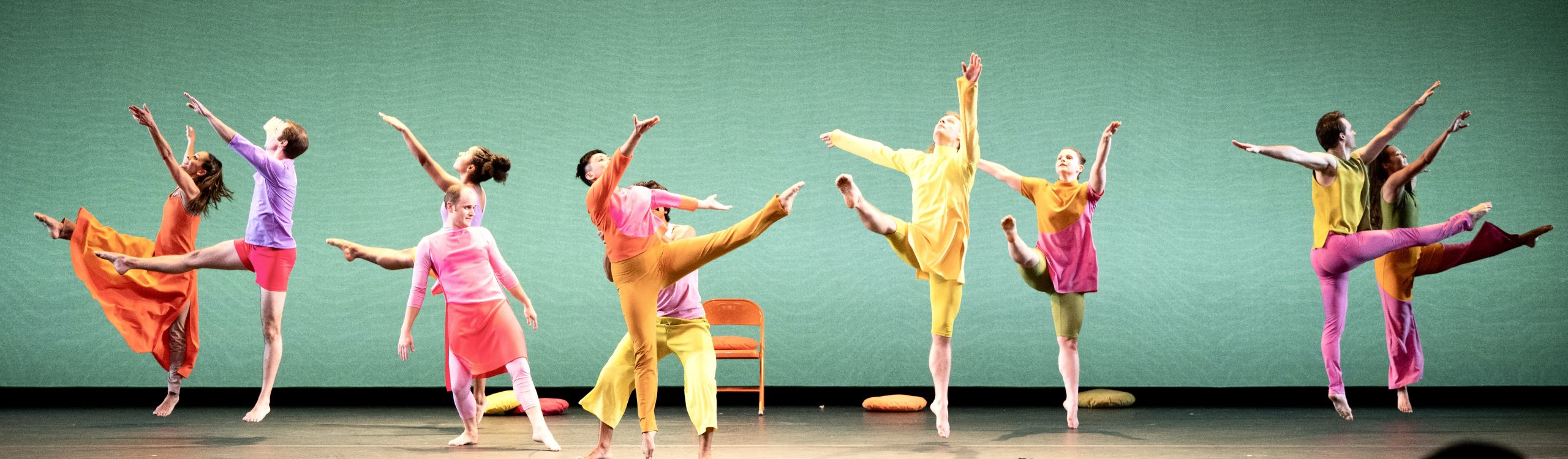
“Stories by Starlight” is a series of readership theater minimalist plays that will reawaken your theatrical senses with something different every week between now and October 3rd in the Orinda Starlight Village Theater (OrSVP). The theater company has decided to do something different from the ordinary in case the county and or medical prognosticators revise plans again to close open venues. Their clever alternative is a theatrical presentation style that can be performed live almost at will. The actors have read and rehearsed their lines and will go on stage still reading (in part) from scripts and act out the story as if it were a “dress” rehearsal, instead of an actual fully staged production. This way the theater can continue presenting the shows to keep community theater alive in Orinda.

In addition, the theater can temporarily survive financially more easily without the cost of full stage rental fees, building sets, and fabricating full costumes to create the feel of typical live theater. The company has come up with a special workable “deal” that the Orinda Park system feels more comfortable with. Basically, it means, play and pay as you go!

This weekend, “Seven Keys to Baldpate”, a mystery thriller and one of the most innovative and successful plays written  by George M. Cohan (and based on the play by Earl Derr Biggers), seared into success via seven very successful theatrical plays, in which five were filmed, including the silent one in 1917 performed by Cohan himself, with Douglas MacLean in 1925, with Richard Dix in 1929, with Gene Raymond in 1935, more easily with, again in 1947 with Phillip Terry and finally filmed as rewritten with a slightly different plot in 1983 as The House of Long Shadows. Two Television adaptations appeared, one in 1946 and again 1961. It even spawned a series of radio shows. It must have been provocative to generate this many renewals.

In this production, novelist Billy Magee (Ken Sollazzo) makes a bet with a very wealthy friend that he can write a 10,000 word novel within 24 hours. In order to provide the solitude necessary to accomplish such a feat, he retires in the dead of winter to a remote abandoned inn called the Baldpate Inn. He locks himself in, believing he has the SOLE KEY to the premises! However, during the night, he is surprised to find his efforts to create this 10,000 word novel by an invasion of unexpected visitors; a corrupt mayor; a crooked cop; a feisty feminine reporter; a gang of criminals and even a hermit named Peter. Surprise after surprise startles our novelist as a single key now becomes “seven separate keys to the Baldpate mystery!”

A quick trip to the theater’s website at www.orsvp.org will reveal in greater detail the story content of the three remaining shows in this series, the admission fees, and themes presented in this voyage into innovative theatrical presentation style. You can experience theater in its basic form as this company will entertain you for a very minimal cost. Look under the heading “Stories by Starlight” for more information. This outdoor amphitheater is located at 28 Orinda Way (in the park next to the library). Free parking is just an easy walk to the theater. Regular admission is $20 each, and only $10 each for seniors and children (cash or check at the park please).

In that this theater is an open-air amphitheater in a park, Covid requirements are simply that masks are required regardless of vaccination status and patrons are encouraged to maintain respectful and sensible distance from others attending who are not in your group AT ALL TIMES. And finally, please do not visit the amphitheater if you at all feel ill! Finally, dress warmly for an outdoor environment, as it may cool significantly after the sun goes down. This is a fun-filled, rough-hewn theater environment that I have attended and enjoyed for over 30 years.

Starting Here, Starting Now: a review by Victor Cordell

By Victor Cordell

Wilson Jermaine Heredia, Rinabeth Apostol, Keith Pinto, Melissa WolfKlain. All photos by Jessica Palopoli.

Love is all around in “Starting Here, Starting Now,” a musical revue of over 20 songs, each one an independent vignette about life.  San Francisco Playhouse offers Susi Damilano’s well-directed, high-energy rendering of this 1976 compilation of Maltby and Shire songs.  The winsome foursome of Rinabeth Apostol, Wilson Jermaine Heredia, Keith Pinto, and Melissa WolfKlain warble and hoof their way through the evening with verve and enthusiasm in a concept and score with both strengths and weaknesses.

Rinabeth Apostol, Keith Pinto, Wilson Jermaine Heredia.

The musical revue is an odd hybrid appealing mostly to lovers of theatrical musicals and of music in general.  Its history dates to the late 19th century with the typical characteristics in contemporary times being a series of songs by the same composer(s); dance and other movement to add theatricality; and the absence of dialogue and overarching storyline.

Most successful musical revues ride on the coattails of at least a smattering of beloved songs.  The music sometimes derives from theatrical musicals as with “Side by Side by Sondheim,” but more often, successful ones come from the world of popular music, like “Smokey Joe’s Café,” “Ain’t Misbehavin’” (conceived by Maltby in 1978),” and “Jacques Brel is Alive and Well and Living in Paris.”

What may surprise about “Starting Here, Starting Now” is that the whole roster of songs predates the later Broadway successes of the composers.  They are salvage from musicals that folded “out of town” or that never made it to any stage!  Though they are professionally crafted, only a couple have had an independent life outside of the stage and soundtrack recordings, so warm and fuzzy ah-ha moments of familiarity are lacking in the whole show.

Melissa WolfKlain, Keith Pinto.

At its outset, the show had modest success in Manhattan dinner theaters, but over the years, it has benefitted from revivals, demonstrating its draw.  One attraction to producers is that with a cast of three performers and an orchestra of three, it can be put on almost in a piano bar setting. Since characters are unnamed anyway, SF Playhouse expanded the cast to four, an excellent decision that adds balance, diversity, and heft.  An audience appeal of the score is that each song is a mini-drama – often poignant, sometimes emotional, and all sharing truths about relationships.  The stories are told with literate thoughts and lyrics, and the music is pleasant.  Perhaps true to life, more episodes concern the pain than the joy.

The songs weren’t written with the idea of being compiled, so they don’t act as a pure life cycle of love and loss (or everlasting bliss).  There is however a general flow from the excitement of first meeting with “I’m a Little Bit Off,” in which a person tries to control emotions but can’t resist the feeling of love, to breakup, with the lament “What About Today?” when the person is consoled that things will be better tomorrow, but the hurt is today.  A few numbers fail to connect well with the theme.

Ensembles that work well include the cynical “I Don’t Believe It” when listeners doubt the veracity of couples who publicly promote their loving bliss, and “One Step,” a tap dance number. Each performer has showcases as well.  Apostol is Charo-like sassy as a cosmetics girl in “I’m Going to Make You Beautiful,” and WolfKlain is quizzical and distracted by thoughts of love in the clue-driven “Crossword Puzzle.”  Pinto takes a humorous turn as a clown, while Heredia is reflective as a girl!  Each artist has a sweet spot in their range, but they are all a bit uneven, and sometimes the vocals seem that they could be stronger if the key were transposed.  Unlike most revues, this one also demands acting out the songs, and on this count, the artists excel, making the drama work.

Rinabeth Apostol, Wilson Jermaine Heredia, Melissa WolfKlain

Dance and blocking choreographed by Nicole Helfer provide visual dynamics.  Heather Kenyon’s set design is simple, nightclub handsome with Music Director Dave Dobrusky center-stage rear at the grand piano flanked by a percussionist and a bass.  It should also be noted that in deference to changing times, the gender associations have changed significantly from the original, to include gay couples and songs sung by the opposite gender intended.

Many preferences in life are a matter of taste.  Lovers of musical revues who like the cerebral and the discovery of unfamiliar music and lyrics will appreciate this production.

“Starting Here, Starting Now,” a musical revue with lyrics by Roger Maltby, Jr. and music by David Shire is produced by San Francisco Playhouse and appears on their stage at 450 Post St., San Francisco, CA through October 2, 2021.