WILDER TIMES is five-star ensemble acting at Aurora

By Kedar K. Adour

WILDER TIMES: Four one act plays by Thornton Wilder. Directed by Barbara Oliver. Aurora Theatre Company, 2081 Addison Street, Berkeley, CA. 510- 843-4822 or www.auroratheatre.org.  November 2 – December 9, 2012
WILDER TIMES is five-star ensemble acting at Aurora
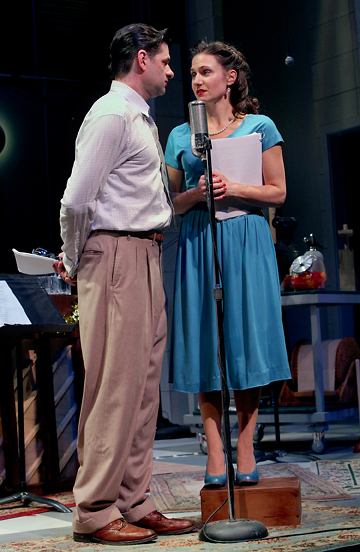
Thornton Wilder entered this reviewer’s domain when our senior High School class performed the one act play The Happy Journey to Trenton and Camden and he became my icon with his Pulitzer Prize winning full length plays Our Town and The Skin of Our Teeth. His luster remained intact with the oft produced short play The Long Christmas Dinner. Both short plays, written in 1931, retain their universality in Aurora Theatre’s productions thanks to exceptional ensemble acting and inventive direction by Barbara Oliver. Yet the full evening was not satisfying because the two curtain raisers, Infancy and Childhood raised the question, “What was Wilder thinking about when he wrote these two plays?”
The answer to the question was found in Arthur Gleb’s November 6, 1961 New York Times article describing his interview with Wilder who was writing a series of 14 short plays that included Infancy and Childhood ,  entitled “Plays for Bleeker Street” produced at the Circle in the Square theater in New York City in 1962. In that interview he is quoted as saying “The theatre . . . can be restored to its commanding position as a critic of society and as a factor by which a nation recognizes its mission and its greatness.” That seems rather pretentious.
Never-the-less, from a historical perspective, both plays are of interest since they were two of the last that Wilder was to write and maintain his insistence that the intimate three sided stage with a minimum of scenery is the way to go and “We have to kick the proscenium down.” Aurora is the perfect venue described by Wilder.
Infancy takes place in New York Central Park where nannies bring their young infants in oversized perambulators. One nanny (Heather Gordon) is addicted to romance novels and has an eye on the Keystone Kop (Søren Oliver) who patrols the park. Although that potential relationship garners the most laughs with marvelous emoting by Oliver and Gordon, apparently it is the two man-babies ( Patrick Russell and Brian Trybom’s) attempts to understand the adult world that is paramount to Wilder.  There is some fabulous shtick that the director Oliver (yes Søren is her son) interjects and to this reviewer dilutes Wilder’s philosophical viewpoint.

Ensemble:The driver (l, Brian Trybom) welcomes passengers (l-r, Marcia Pizzo*, Heather Gordon, Patrick Russell*, Stacy Ross*) aboard the bus in Childhood, in Childhood

 Childhood has much more meaning that is bitter-sweet and also frightening. Have you ever wondered what meaning there is in children’s games?  Three children (played by Gordon, Russell and Marcia Pizzo) play morbid lets-pretend games that frustrate the mother (Stacy Ross) and her golf playing husband (Trybom). The parents become allegorically and inextricably involved and are taken on bus ride, with all three children and Husband driving, to end all bus rides but return to reality as Wilder throws in the caveat that it is all make-believe.  Marcia Pizzo steals this play without upsetting ensemble concept.

The Happy Journey to Trenton and Camden is the first play where Wilder uses a Stage Manager (Trybom) that is expanded upon in Our Town.  A New Jersey city dwelling family consisting of father (Oliver), mother (Ross) and their two children (Gordon and Russell) pantomime their way through the countryside, delightfully observing the sights on their way to visit the Mother’s daughtee who has not been well after her baby is stillborn. In all the intervening years since it was first seen as a High School play, it still as the ability to create a sense of awe at Wilder’s power to capture human nature. The Happy Journey to Trenton and Camden alone is worth the visit to Aurora.

Journey must share to accolades with the intricately directed The Long Christmas Dinner that ends the evening. Wilder’s plays are immersed with the concept of life and death as natural progressions. It is fully explored in this play that covers 90 years of Christmas dinners from the 1800s on. The ensemble switches characters and progress from youth to old age with top-notch acting and timing creating a satisfying ending to the evening. Running time about two hours and 15 minutes.

Kedar K. Adour, MD
Courtesy of www.theatreworldinternetmagazine.com

Brilliant “White Snake” arrives in Berkeley

By Judy Richter

By Judy Richter

“Brilliant” is the only word for “The White Snake,” written and directed by the gifted Mary Zimmerman. After proving to be a hit at the Oregon Shakespeare Festival in Ashland earlier this year, “The White Snake” has come to Berkeley Repertory Theatre, its co-producer, with nearly all of the Ashland cast intact plus all of the designers and musicians.

Based on a classic Chinese fable that has undergone many permutations through the centuries, this theatrically inventive work has become a love story in Zimmerman’s hands. White Snake (Amy Kim Waschke) assumes the form of a beautiful woman so that she can thank the man, Xu Xian (Christopher Livingston), who saved her life when she was very young. She’s accompanied by her outspoken, impetuous friend, Green Snake (Tanya Thai McBride). White Snake and Xu Xian fall in love and marry, despite some of his doubts.

He’s a pharmacist’s assistant, but she sets him up in his own shop. It becomes quite successful because of White Snake’s skill in devising effective remedies and healing people. They’re happy until the villainous Fa Hai (Jack Willis), a Buddhist monk, arrives and tells Xu Xian that he’s married to a snake. “It’s just not natural,” Fa Hai says, as the 100-minute, intermissionless tale nears its mythical end.

Zimmerman’s staging employs some seemingly simple techniques, such as a billowing blue cloth to simulate a river, that aren’t necessarily original but that are nevertheless effective. Descending strips of blue cloth symbolize a rain storm.

Besides her writing and direction, the play attains its magical qualities through imaginative design elements, especially Mara Blumenfeld’s colorful costumes. Daniel Ostling’s uncluttered set design is augmented by Shawn Sagady’s projections and complemented by T.J. Gerckens’ lighting. Sound designer Andre Pluess also wrote the music, which is played by three costumed musicians below the stage.

Besides the four principals, the cast features seven other actors who play various roles and serve in the ensemble: Cristofer Jean, Lisa Tejero, Keiko Shimosato Carreiro, Gina Daniels, Richard Howard, Emily Sophia Knapp and Vin Kridakorn.

Berkeley Rep’s production is a great chance for those who saw “The White Snake” in Ashland to savor it all over again. Those who are seeing it for the first time are sure to be delighted and thrilled at its inventive theatricality.

“The White Snake” will continue at Berkeley Rep’s Roda Theatre through Dec. 23. For tickets and information, call (510) 647-2949 or visit www.berkeleyrep.org.

Troubled family seeks “Another Way Home”

By Judy Richter

By Judy Richter

An upper middle class couple go to visit their son at Canp Kickapoo in Maine and return to their New York City home with their family dynamics drastically altered. That’s basically what happens in Anna Ziegler’s “Another Way Home,” receiving its world premiere at the Magic Theatre in San Francisco.

The action starts in the present, when Lillian (Kim Martin-Cotten) and Philip (Mark Pinter) Nadelman describe that fateful visit to their 17-year-old, Joey (Daniel Petzold ). It smoothly moves to the past when the events unfolded, but often returns to the present.

To say that Joey is a difficult boy would be an understatement. Having been variously diagnosed with conditions like ADD, ADHD and other problems, he’s sullen, rude, disrespectful — all manifestations of anger and depression. His behavior arouses his parents’ anger, leading him to disappear for many hours. In turn, his distraught parents become angry and upset with each other, causing them to question their marriage.

Also figuring into the action are the Nadelmans’ other child, 16-year-old Nora (Riley Krull), who has stayed home, and Mike T. (Jeremy Kahn), Joey’s camp counselor. Unlike Joey, Nora is bright and outgoing, causing no problems. Mike T. is a quiet young man who provides some valuable insight for the Nadelmans.

Running about 90 minutes without intermission, the play is well cast with each of the talented actors creating believable characters under Meredith McDonough’s sharp direction. The standout is Martin-Cotten as Lillian, the loving, concerned mother who is forced to re-examine her own life as well as her marriage and family.

The minimal set design is by Annie Smart, who also designed the character-specific costumes. Lighting by Paul Toben helps define moods, while Sara Huddleston’s sound design is subtle yet specific, such as the sound of waves lapping against a lake shore.

Despite the play’s serious themes, it has some lighter moments. For example, Nora, a huge fan of Taylor Swift, belts out parts of the country singer’s hits to explain her feelings. In keeping with the play’s overall tone, though, the ending is ambiguous as both Philip and Lillian express some regrets but seem determined to forge ahead.

“Another Way Home” will continue at the Magic Theatre, Building D, third floor, Fort Mason Center, San Francisco, through Dec. 2.. For tickets and information call (415) 441-8822 or visit www.magictheatre.org.

image of Keon Saghari, Yuko Hata, Regan Fairfield in Chysalis photo by Weidong Yang

Labayen Dance/SF: TAKE 5

By Jo Tomalin
image of Jaidah Terry + Yuko Hata in Love Songs Photo by Weidong Yang

Jaidah Terry + Yuko Hata in Songs of Love  Photo by Weidong Yang

image of Victpr Talledos + Leda Pennell in Love Songs Photo by Weidong Yang
Victor Talledos + Leda Pennell in Songs of Love,  Photo by Weidong Yang

(Above) Keon Saghari, Yuko Hata, Regan Fairfield in Chysalis (photo by Weidong Yang)

Wonderful Evening of New Dance Works in San Francisco

The Labayen Dance/SF company’s latest show TAKE 5 at The Garage in San Francisco November 1-3, showcased four prolific choreographers working with this company, and culminated with a compelling piece choreographed by award winning choreographer Enrico Labayen himself.

Labayen’s premiere of his memory dance Awit ng Pag-Ibig (translated from Tagalog:  Songs of Love) is based on his family life growing up in the Philippines, exploring themes of love, domestic violence and poverty, set to melodic Violin and Piano music by Gilopez Kabayao & Corazon Pineda. The four sections: silent witnesses, mother & daughter, children in fear, despair & abandonment, were danced sensitively in changing combinations by five excellent dancers: Leda Pennell, Regan Fairfield, Jaidah Terry, Yuko Hata and Victor Talledos. Pennell and Talledos were outstanding in the last duo, playing the parents expressing a range of emotions through intricate choreography, ending with Talledos alone in an innovative section intertwining on a bench, with a dramatic ending – very powerful and moving. Labayen’s dancers do not only dance with commitment but they also act the characters believably, which is impressive.

image of Anna Rehr in Such Great Heights Photo by Robert Baranyal

Anna Rehr in Such Great Heights
Photo by Robert Baranyal


Such Great Heights, a new work choreographed by Frederick Gaudette is set to dynamic dance music by The Temper Trap and The Postal Service. Three accomplished dancers (Anna Rehr, Lauren McCarthy & Regan Fairfield) danced athletically and joyfully in black shorts and tops in this fun piece. These very flexible dancers came and went doing short solos and duos with fluid movement, expressive arms, and perfect timing. They made it look so easy and almost made you want to get up and dance!

Another premiere, Call to Prayer choreographed by Laura Bernasconi is a fascinating piece based on “the realization that anatomical configuration is secondary to the love between two spirits of human beings.” This mise en scène was accompanied mainly by the continuous rhythmic sound of a Halo, a round resonant steel instrument played on stage by Gabriel Goldberg. Five dancers featured in this piece – Samantha Beach, Ana Robles, Katherine Disenhof, Victor Talledos & Kevin Hockenberry. In the first section the Asian influenced hands and arm movements were striking.  Beach, Robles and Disenhof next became a type of Chorus setting up the final male duo beautifully performed by Talledos and Hockenberry with sustained balances, precision, fluid movement and excellent phrasing.

Walls within Walls choreographed and performed by Frederick Gaudette to Samuel Barber’s wonderfully mournful music was an appropriately inward dance yet had leaps and tension as the dancer was searching for freedom from self-limitation. Dramatic lighting supported the mood very well.

image of Rachel Elliot in Chrysalis Photo by Weidong Yang

Rachael Elliot in Chrysalis Photo by Weidong Yang

Chrysalis, with concept and choreography by Daiane Lopes da Silva, investigates “the connection between the primitive state of mind and bodily sensations.” This is an innovative piece danced by Michelle Kinny, Rachael Elliot, Keon Saghari, Reagan Fairfield and Yuko Hata. All five dancers are wonderful and perform in duos and trios.  The highlight is an outstanding beguiling solo near the end, as the dancer, Rachael Elliot, in a white shirt is covered with the colorful abstract projections by Weidong Yang & Wolfram Arnold. While the projections were intriguing they were also a slight distraction at times, depending on the placement of the dancer. However, this is a very creative piece, which surprised us with its unpredictability, entertained us with moments like the toy dog, and moved us – therefore, it is well worth developing further.

Desde lo mas Profundo del Corazon al Limite de la Razon (from the depths of the heart to the limit of reason) choreographed by Victor Talledos, danced by Leda Pennell. On a diagonal in a narrow line of light, Pennell movingly danced this emotional piece, with dramatic movement as she stretched out towards the light.

image of Ana Robles and Ismael Acosta in Desolation Photo by Richard Baranyai

Ana Robles and Ismael Acosta in Desolation
Photo by Richard Baranyai


Desolation is a moving piece choreographed by Victor Talledos, which tells the story of two strangers who have both given up on life, set to music by Singur Ros. Ana Robles and Ismael Acosta make a tall, dramatic, sultry duo, very well matched in grace, precision and athleticism. Their adagio style lifts and swoons with superb lines are outstanding.  This choreography is complex and Robles and Acosta deliver – even when knotting themselves around each other flexibly one minute and seemingly defy gravity by flying the next.

Labayen Dance/SF is a small but mighty celebrated contemporary ballet company founded in 1994 which has toured nationally and internationally – and always offers thought provoking work. Check out this company’s upcoming shows.


For more information:

Labayen Dance/SF
http://www.labayendancesf.org

Jo Tomalin
Critics World
San Francisco
www.forallevents.com

THE WHITE SNAKE at Berkeley Rep is stunning.

By Kedar K. Adour


Tony Award-winning director Mary Zimmerman returns to Berkeley Rep for the world-premiere production of The White Snake, which stars (l to r) Amy Kim Waschke and Emily Sophia Knapp. Photographer: Jenny Graham

THE WHITE SNAKE: Mystical Chinese Folktale. Adapted and directed by Mary Zimmerman. Berkeley Repertory Theatre, Roda Theatre, 2015 Addison Street @ Shattuck, Berkeley, CA 94704. (510) 647-2949 or www.berkeleyrep.org.

November 9 – December 23, 2012. EXTENDED UNTIL DECEMBER 30

THE WHITE SNAKE at Berkeley Rep is stunning.

The love affair of Berkeley Rep with Mary Zimmerman continues with their latest world premiere production of The White Snake that saw the light of day at this year’s Oregon Shakespeare Festival (OSF) and was installed here with that cast minus only member. According to one reviewer who saw the OSF staging, Berkeley Rep’s staging is much more opulent. Before even reviewing the acting there must be three cheers for the production staff  of designer Daniel Ostling (sets), Mara Blumenfeld (costumes), T.J. Gerckens (lighting), Andre Pluess (sound), and Shawn Sagady (projections). They create fantastic effects on a simple bare bamboo stage that comes alive with the performers handling puppets amidst light, sound, music and visuals to keep you entranced for one hour and forty minutes without intermission.

Zimmerman wrote the show for specific OSF actors and continued rewrites up to the opening weekend. It was the overwhelming hit of their season. Not only is she the author but also the director and deserves awards in both categories. Her fertile mind resurrects an ancient Chinese folktale and creates a charming humorous storyline introduced by  Oriental Stage Managers in the style of Thornton Wilders’s OurTown with distinctive twists. They inform us that like the forked tongue of the snake the story line is also forked and we the audience can decide which to believe. This is typical of Zimmerman who is noted for not filling all the gaps allowing the audience to use their imagination. It works.

We meet our protagonist, the white snake living in the mountains where through diligent study the Tao, occupying seventeen hundred years of her time, to develop her shape shifting supernatural skills. She appears as a small snake puppet manipulated by the lovely Amy Kim Waschke and even as a line of white parasols creating sinuous movements as the story progressed.  She is curious about human world and with the urging of the inept but trusted friend, the Green Snake (Tanya Thai McBride) transform themselves into humans for a brief visit to the West Lake. White Snake becomes Lady White and Green Snake becomes her loyal servant Greenie.

They meet an impoverished kind young man, Xu Xain (Christopher Livingston) and true love blossoms with a bit of trickery by Greenie. Xu Xain presents Lady White with his umbrella to protect her from the rain creating by a plethora of white silk streamers falling from the heavens. It is one of the first gorgeous special effects to fill the stage.

With more than a little larceny in her heart, Greenie raids the tax collectors safe to get enough money to set up

Love Blossoms: Christopher Livingston & Amy Kim Waschke

apprentice pharmacist Xu in his own apothecary shop where Lady White concocts miraculous potions to cure one and all. Happiness and love flourish along with the good life and Lady White becomes pregnant.

All goes well until the treacherous Buddhist Monk Fa Hai (Jack Willis) notes that Lady Whites healing powers are of the supernatural and she is really the white snake of the mountain in a human body.  Good begins to battle Evil and the stage is filled with projections, sound and light that are spectacular and dazzling.

Although Amy Kim Waschke is the star and is perfect in the part, it is Tanya Thai McBride who steals the show with fantastic body movements, voice intonations and energy that cascades across the footlights. Our own Jack Willis, formerly from ACT, and now a OSF regular is the

Tanya Thai McBride as the Green Snake

meanest Buddhist monk you will ever see and will forcefully convince you to be a vegetarian . . . even if you do not wish to do so.You will have to go and see this must see production to find out the rest of that story. Highly recommended.

Kedar K. Adour, MD

Courtesy of www.theatreworldinternetmagazine.com


What to See, Hear, Read, Watch and Eat

By Lee Hartgrave
DAILY TATTLER  
By Lee Hartgrave
What to See, Hear, Read, Watch and Eat
MOVIE: BROOKLYN CASTLE
This movie is about young people. It is all about having little money and extracurricular activities that are essential to a teaching principal called “the whole child.” One way to open the door is to come up with a program like a chess team. For kids, chess is more than a game – it is where they can transcend from reality and become kings and queens themselves. Learning Chess makes dreams come true for children that don’t have a lot of money. They are determined to master the world’s most difficult game. If they can manage that – imagine what other mountains they can climb. The movie is Directed and produced by Katie Dellamaggiore in her feature film directorial debut. It’s a little repetious – but keeps you in your seat.
Opens November 16, 2012 in San Francisco at Landmark’s Opera Plaza.
RATING: THREE GLASSES OF CHAMPAGNE!!! –trademarked-
EAT: an evening with Anthony Bourdain & Eric Ripert LIVE at the SHN Orpheum Theatre Friday, April 12
This stage play is about unlikely friends. They are two Chefs, who are pursuing different careers and philosophies. And it gets a little crowded sharing one stage.
You’ll love Anthony Bourdain and his good friend Eric Ripert (internationally renowned chefs), and they may or may not love each other. They call it their “Good vs. Evil Tour.” Their one night only in San Francisco will brighten the Orpheum Theatre stage with this engaging evening of storytelling and frank and provocative insights about what goes on behind kitchen doors. You’ll really enjoy the intrigue and delight. Tix go on sale to the general public on Friday, Nov. 16 at 10:00am. Ticket prices range from $70 T0 $90. Check it out by phone at 888-746-1700, online at shnsf.com, or of course, get your tix in person at the Orpheum Theatre Box Office. More info: https/www.shnsf.com/online/bourdain.
MUSIC: IT’S ALWAYS GOING ON
HE WON NINE TONY AWARDS. He is a World Famous performer, choreographer and director and his name is TOMMY TUNE
He bursts onto the Venetian Room stage in the Gorgeous Fairmont Hotel. There he is, in a hot Red Suit with longish hair. He grins at the audience and sez: “I’m leaving Texas!” Tune knows all the great music. God knows he sang most of them around the world. Tune asked his friend Carol Burnett one day, how she became a big star. She said: “I had to become a star – I wasn’t good enough for the Chorus!” Tune is 6’foot 8 – and when he climbs a ladder (which he did on the stage) it made him look like a giant. In the audience was Carol Channing – and that gave even more excitement to the night. Imagine – two famous people close enough for you to touch. One woman was enjoying the evening sitting in her chair as she knitted a sweater and listened to the tap dancing, which is famously fantastic. I’ve never been able to knit and watch a show. But Tune did say: “Phyllis Diller could drink me under the table.” The evening music was magical. I especially liked his brilliant taps and this lyric: – “Every time I Die a Little!” Yep – Tommy Tune is a smart, wise talent that can Dance, Tap, Act and his singing will blow you away. It was a glittering evening.
RATING: FOUR GLASSES OF CHAMPAGNE!!!! (highest Rating) –trademarked-
LISTEN: — TO NEW MUSIC AT THE ALCOVE THEATRE ON MASON STREET (Union Square)
ROUND ONE CABARET – TAKING CHARGE IN A CRAZY WORLD AT THE ALCOVE THEATRE
There is a small Theatre in the downtown Theatre district where you can see and hear some very interesting and memorable songs, written by the following Composer/Lyricists: They are: Peter Alexander, Billie Cox, Paul Frantz, Richard Jennings, Sandy Kasten and Bill Johnson, Allison Lovejoy, Michael Lunsford and Peter Master. They did everything on this small stage. They danced, they sang some great tunes, and they sure as hell will have you on the edge of your seat. This is a FUN Musical that is perfectly cast and entertaining in every way. “See it with other people – see it with a crowd!”
(Lee Hartgrave has contributed many articles to the San Francisco Chronicle Sunday Datebook and he produced a long-running Arts Segment on PBS KQED)))

EAT: ONE NIGHT ONLY AT SHN. AN EVENING WITH FAMOUS CHEFS

By Lee Hartgrave

EAT: an evening with Anthony Bourdain & Eric Ripert LIVE at the SHN Orpheum Theatre Friday, April 12

This stage play is about unlikely friends. They are two Chefs, who are chasing and pursuing different careers and philosophies. It sure  gets a little crowded sharing one stage with these excited guys. Its I can do better time.

You’ll love Anthony Bourdain and his good friend Eric Ripert (internationally renowned chefs). They may, or may not love each other. They call it the “Good vs. Evil Tour.” Their one night only in San Francisco, will brighten the Orpheum Theatre with hilarious storytelling. We get to see provocative insights about what goes on behind kitchen doors. You’ll really enjoy the intrigue and delight. Tix go on sale to the general public on Friday, Nov. 16 at 10:00am. Ticket prices range from $70 T0 $90. Check it out b phone at 888-746-1700, online at shnsf.com, or of course, get your tix in person at the Orpheum Theatre Box Office. More info: https/www.shnsf.com/online/bourdain.


ANOTHER WAY HOME is tightly constructed at the Magic

By Kedar K. Adour

ANOTHER WAY HOME: Comedy/Drama by Anna Ziegler and directed by Meredith McDonough. Magic Theatre, Fort Mason Center, Building D, 3rd Floor (Theatre), San Francisco, California 94123. (415) 441-8822 or www.magictheatre.org. November 13- December 2, 2012

ANOTHER WAY HOME is tightly constructed at the Magic

During a partial summer spent at the O’Neill Playwrights Conference with the American Theatre Critics Association (ATCA) our critics group reviewed and took part in discussions of the plays being work shopped there.  The authors must have resilience to continue work on their new plays after a barrage of criticisms, suggestions and even accolades made by all involved (other authors, stage designers, technical personnel etc.).  Author Anna Ziegler’s Another Way Home has gone through that rigorous process and was also work shopped at the Marin Theater Company with the marvelous Julie Brothers in the matriarchal role.  In its present form the play has the feeling of being put together by the numbers. It is perfectly constructed but it did not receive the standing ovation of previous world premieres staged at the Magic.

The opening paragraph is more an observation rather than a critical comment. The total production is finely acted, tightly staged and a rewarding 80 minute evening.  The play is semi-linear with the Nadelmans, a Jewish couple, narrating the story that is intermingled with present time action, past narrated letters, emails and multiple asides to the audience. The PR notes refer to it as a memory play and that is somewhat appropriate. Although the location is a summer sleep-over camp in Maine, the production staff has elected to use an attractive but non-committal Annie Smart set possibly to suggest universality to the proceedings.

Phillip (Mike Pinter) and Lillian (Kim Martin-Cotton) Nadleman  are in their mid-fifties and have some to visit their 17 year old son Joseph (he prefers to be called Joey) at the Camp  Kickapoo (don’t you love that name) in rural Maine.  Joey is described by Lillian as having ‘Lots of social “ issues”. . . first ADD, then ADHD, autism, mood disorder, anxiety disorder, oppositional defiant disorder and most recently depression.”   He probably does not take his Ritalin.  There is also a daughter Nora (Riley Krull) who is bright with none of the above disorders.  She is at home and communicates with Joey by email and her parents by cell phone.

The final character is Mike T. (Jeremy Kahn) a 20 year old camp counselor who has befriended Joey. You do not discover his inner demons until, right on schedule,  late in the play when it is appropriate to inject some explanatory relationship with Joey and the family that is critical to the dénouement allowing an almost happy ending.

The fine acting of Pinter and Martin-Cotton rarely leave the stage, creating physical interaction and words that sharply define the problems of parenthood, marital relationships and the true meaning of love.  Although their characters are intricately directed by Meredith McDonough and are praise worthy, it is Daniel Petzold as Joey who steals your heart with his petulant mood swings, round shoulders, head bent forward and

Daniel Petzold as Joey

spontaneous verbal outbursts that grab the brass ring. You may remember Jeremy Kahn’s brilliant performance in SF Playhouse production of Tigers Be Still and he continues to show his ability in the underwritten part of Mike T.  Ziegler has not fully defined the role of Nora but Riley Krull makes the most of that unenviable part.

Kedar K. Adour, MD

Courtesy of www.theatreworldinternetmagazine.com 


“Wilder Times” saves best for last

By Judy Richter

By Judy Richter

Versatile acting and inventive staging are the hallmarks of Aurora Theatre Company’s production of “Wilder Times,” a collection of four short plays by Thornton Wilder. Aurora chose the plays and titled the show as a tribute to one of the nation’s greatest playwrights. According to artistic director Tom Ross, the title reflects “the concept of time and how we human beings move through it (as) major themes in Wilder’s work.”

The show is divided into two acts, starting with the first two plays from a series, “Seven Ages of Man,” that Wilder never finished. These two, “Infancy” and “Childhood” premiered in 1962. “The Happy Journey to Trenton and Camden” and “The Long Christmas Dinner,” which comprise the second half, were written in 1931, but both are considered Wilder’s best known short works.

The cast features six actors — Heather Gordon, Soren Oliver, Marcia Pizzo, Stacy Ross, Patrick Russell and Brian Trybom. Focused direction by Barbara Oliver, Aurora’s co-founder and retired artistic director, lends unity. Before each act, for example, the actors sing simple songs like “Row, Row, Row Your Boat” as they move set pieces into place. Eric Sinkkonen’s mostly unadorned set, Maggi Yule’s color-coordinated costumes and Jim Cave’s lighting also unify the show.

In terms of writing, the first half is the weaker. “Infancy” is set in an urban park where a nanny (Gordon) and mother (Ross) tend to infants (Russell and Trybom) in baby carriages. While the women talk, the babies alternate between napping and being frustrated that they can’t understand the adults. Oliver (son of the director) adds some comic moments as a cop. Only good acting and directing keep the show moving.

The next part, “Childhood,” is more interesting. Ross and Trybom portray parents who are trying to figure out what their children do when they’re not around. The children are played by Pizzo as the eldest and leader, Gordon as the middle child and Russell as the youngest.

In “The Happy Journey to Trenton and Camden,” a family is on it way to visit the eldest daughter, who is married. Again Pizzo plays that daughter, while Gordon and Russell are the other two kids. Ross is the mother again, while Oliver is the father. In a technique developed more fully in Wilder’s “Our Town,” Trybom is the stage manager.

By far the most satisfying and intriguing work is the last, “The Long Christmas Dinner,” which depicts a family gathered for Christmas dinner over the course of several generations. It starts with Oliver and Pizzo as a newlywed couple joined by her mother (Ross), who recalls Christmases past. From there the action smoothly segues to births and deaths (signified as some musical notes in musical director Chris Houston’s sound design) as family dynamics change and one generation gives way to the next. It’s a touching depiction of the importance of family and family rituals.

Playing roles that vary in age and personality, the actors are outstanding. Except for the last act, however, the show doesn’t have the heft of Wilder’s most successful plays, “Our Town” and “The Skin of Our Teeth.”

“Wilder Times” will continue at the Aurora Theatre, 2081 Addison St., Berkeley, though Dec. 9. For tickets and information, call (510) 843-4822 or visit www.auroratheatre.org.

Fall 2012 Fringe of Marin

By Joe Cillo

The weekend beginning Friday, November 16 through Sunday the 18th , the Fall Fringe of Marin presents its final weekend of two programs of new, original one act plays under the auspices of the Dominican University Players  in Meadowlands Hall on its San Rafael campus.

Program One plays on Saturday, November 17.   It opens with Shirley King’s Hollywood Confidential, directed by Robin Schild. It is a stylized spy spoof, complete with dark glasses and trench coats.   Set to a James Bond soundtrack, Gloria (Gigi Benson), and Duckman (Monty Paulson) enter, guns drawn.  The timing, especially in the opening choreography is spot on. Things get rocky when Duckman, believing he is a superhero out to save the day, reveals his outfit beneath his coat, dons headgear and flippers.  His partner is not amused.

Mysterious Ways , a solo performance, follows.  It was written by George Dykstra, who also plays a bereaved widower who cannot let his wife go.  He celebrates their anniversary the same way every year.  He speaks to her as though she’s in the other room, and goes into long expository remembrances of things past until, tragically, he realizes, again, she’s gone forever.  A phone call from his grown daughter brings him back to reality.  Dykstra gives a well-shaded, deep, but clichéd, insight into this common life passage.

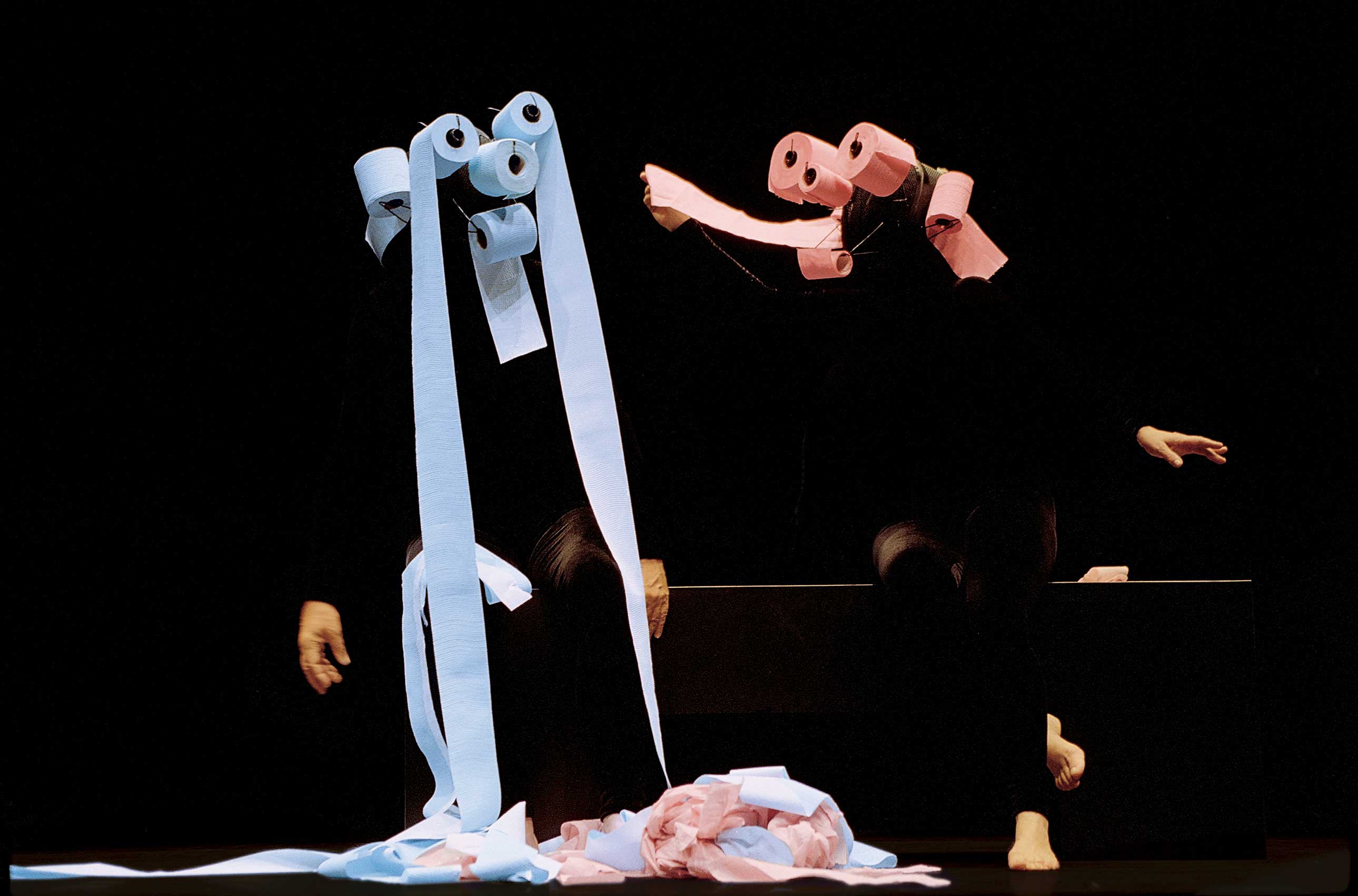
A brief scene change and we are surprised to see a man locked in a bathroom, sitting on a toilet.  He watches through the glass pane and listens to his deluded wife in the next room rehearsing her TV meteorologist audition routine.  This is Martin A. David’s self-directed absurdist comedy, Minerva and Melrose.  Throughout the play,  Minerva (Lauren Arrow),  an adroit malapropist, spouts them constantly (“Pinochle” for “pinnicle”, etc.)  as she ponders her career options, deciding on this one then that, each time believing she will be a instant star.  Melrose , played by Jon Zax, exuding a kindof Harpo Marx vibe, encourages her, but utters snide comic asides as he fiddles with toilet paper.   She has an accident; Melrose unlocks himself from the bathroom, finally freeing himself from his indulgent, demanding wife.  Arrow, a beautiful, big woman who moves with grace, has been seen in several Fringe plays over the years.

Don Samson’s The Game, follows.  Directed by Carol Eggers, it features a young married couple.  Tom, played by Fringe favorite Rick Roitinger, with impeccable timing, and Marion (a believable Emily Soleil) have been invited by friends to join them at a Swingers party.   Tom seems willing to try it, do something different, but Emily hesitates.  They banter, argue, and speculate about it and its eventual outcome.    Emily turns the tables on him which changes Tom’s mind.

How Salt & Pepper Got Put into Shaker is a delightful, costumed, animated bit from playwright Annette Lust’s Pantry Tales series. Directed and choreographed by Pamela Rand the play is an informative piece, narrated by the French Cook (Charles Grant in a perfect French accent).   Originally, salt and pepper were served in small bowls with silver spoons.  But Salt (Terri Barker), in white, and Pepper (Cynthia Sims ), in black, argue and fight about which of them is the most important to enhance foods and please diners, scattering their grains all over the place, making a mess.  This upsets Cook, who decides, in order to avoid this, they must be put into separate shakers.  A nice touch was the court-jester-like jingly hats.

Writer and director, Michael Ferguson’s thoughtful, though didactic at times, Sharp Edges tells the story of a budding relationship between a subdued Melanie (Jennifer Cedar-Kraft ) and an insistent Daniel (David Louis Klein).  Though they seemed to have a lot in common, they’ve parted ways.  When they run into each other during an intermission at a symphony concert, they discuss their differences.   Daniel is honest about his sexual needs and how he sees women, while Melanie, who’s had a troubled life and suffered rape, wants understanding and companionship.

Program One ends with the fast-paced, funny, Sunday Sundays written and skillfully directed by Peter Hsieh, about a group of friends who play croquet together every Sunday.   But, this time, someone forgot to bring the balls.  The piece opens with the four Archie (Jason Hurtado), Nate (Michael Lee Lund), Wade (Everado Leon), and Krista (Elizabeth Curtis), frozen in various croquet playing positions, mallets raised at odd angles.  Angry over the missing balls, they begin to fight, advancing downstage swinging mallets, arguing and blaming, in Shakespearean English.  The scene is rewound, back to frozen statues, starting over.  This happens several times, each time the players advance and speak various dialects: Southern, then hyper-tragic drama.  The funniest were the robot and zombie croquet player zombies.  Excellent choreography.

Some Mime Troupe and Clown Conservatory regulars opened Program Two with the slap-stick, clown piece, Get a Date Show, written by Stacy Lapin & Pamela Rand, with the collaboration of Joan Mankin, and directed by Clown Conservatory founder Paoli Lacy.  Based on popular TV date shows of the ‘70s,- except that this one appears intended for single seniors-  it features an Emcee, Johnny J. Johnson (an acrobatic Ross Travis); contestants, Joan “The Champ” Longjump (Joan Mankin), Gladys Ruffelshire (Pamela Rand); and the lucky date Arthur  (Pickle Family Circus alum Randy Craig).  White-haired Arthur is wheelchair-bound, assisted by his comely attendant, Kay (Tristan Cunningham).  Background music is provided by the Ukulele Musician, Myron Seth Isaacs.  Contestant questions trended towards elder-sex, and contestants judged by physical prowess.  Who won a date with Arthur?  The play was enhanced with a slide show by Rachel Cohen.

Second on the program is On With the Wind in which seniors at a elder facility gather to watch a video of “Gone With the Wind” (the “G” on the cover was missing, hence the reference to “On-“).  It was written and directed by Carol Sheldon, with a lively cast: Loreen (Kathy Holly), Twyla (Roberta Maloy), Lawrence (Michael Collins), Beverly (Donna Andrews); and Floramae (Floralynn Isaacson), dressed as a character in the film.  As they watch, they  talk about the film, its characters, plot, and quote from it; they discuss each others’ outfits, past relationships, embarrassing issues of growing older, and elder sex.  However it never gets maudlin and is quite funny.   Twlya’s droll remarks keeps the repartee from getting smarmy and piteous.

Arrangements  by Clare J. Baker, directed by Gina Pandiani is a comedy about making after-death arrangements.  It takes place in the funeral director Mr. Ashley’s office (reliable Charles Grant).  He can’t decide if his saucy, exotic client,  Reddi Witherspoon, played by  spunky Terri Barker, is flirting with him or what.  She appears to be rolling in dough and wants to be cremated.  There are many allusions to ashes- including  his name- and puns throughout.

One Time at the Zoo, a lively romp, written & directed by William O. Chessman III with choreography by Susan Amacker, is the perfect apré-intermission play.  The Beasleys- Pamela (Susan Amacker), and Gerald ( Michael A. O’Brien),  and daughter Victoria (wonderful 7th grade actor Melissa Schepers)- visit the zoo.   Victoria teases and taunts the chimp (Ken Sollazzo, thankfully not in a gorilla suit).   Mom and Dad try to give her a lesson in evolution; how close a relation chimps are to humans.  She isn’t listening.  When Dad gets too close to the cage, the chimp goes to work on him and somehow they change places.   Amacker’s choreography works to both Sollazzo’s and O’Brien’s advantage.  To see Dad’s melt-down from a staid, composed man is priceless.

G. Randy Kasten wrote and directed Supplementing, a drama dealing with infidelity.   Husband and wife actors Diane and David Rodrigues play married couple Mindy and Pete.  When Mindy keeps arriving home from work later and later each night, Pete has his suspicions.  Mindy is concerned with her looks, and aging, afraid she’s losing her attractiveness.  The short play is seen in several separate scenes.  In each, the actors wear different clothes to depict the passage of time.  And Pete is always on the couch drinking.   It is difficult to portray a drunk. Even tippler Richard Burton said he had to get sober before he could play one.  In the final scene, Pete delivers a believable drunken monologue to himself in the mirror.

Shaw, written and directed by Ollie Mae Trost Welch, has Shaw (Kevin Copps as G.B Shaw) walking haltingly with a cane, talking to himself about  God.  This is a well-known Shavian trope.  Shaw was an admitted and proud atheist.  However, after his death at 93, people specfulated about what he would say if he met God, and plays have been written about it.  In this one,  Shaw and God (played by Jerrund Bojeste) debate His existence and, where, exactly is Shaw now? Heaven?  Hell? Purgatory? Shaw asks God to prove his existence by making him (Shaw), the age he felt happiest.  It’s difficult for anyone to emulate G.B. Shaw, but Copps pulls it off, even with a slight Irish accent.  How does one play God? He could be anything, or anyone, even a she.  With his matter-of-fact delivery, Bojeste in his pony-tail, beard, embroidered vest, slacks, and loafers?  Sure he could be God.  Why not?

This thought-provoking play is followed by the hilarious mystery farce, The Trouble at Table 23, written by Charley Lerrigo and directed by Amy Crumpacker.   Bill (Manik Bahl) wants milk for his coffee.  He’s staying in a hotel, visits the dining room and asks the receptionist, known only as “Actor” played dead-pan by Jean Davis, who gives him trouble, but no milk; then a waitress, again played by Actor, this time in an ill-fitting wig, also gives him a hard time, but no milk.  She disappears.  A body turns up.   It’s discovered he’s a thief (John Ferreira).  Then, of course, a trench-coated detective, again played by Actor, who pins the murder on Bill.  Man!  All the dude wanted was milk for his coffee!  The audience laughed throughout at the absurdity of it all.  Poor Bill.

She Has a Plan, by George Freek, directed by Jim Colgan, ends Program Two.  A married couple played by Ayelette Robinson as Martina Hoople, and George Doerr as Henry Hoople, visit a marriage counselor, Ms. Pennyworth (Cynthia Sims).   Martina wants Henry, who really appears to be a weak, ineffectual man- much credit to Doerr’s acting- to be more manly, stand up for himself, and not be such a wimp.   Marina and Pennyworth have devised a plan, unknown to Henry, which involves Bert, Martina’s big, beefy ex-,  perfectly rendered by Simon Patton.

Visit www.Fringofmarin for directions and information.