Football’s heavy toll examined in ‘X’s and O’s’

By Judy Richter

Baseball may be America’s favorite pastime, but football runs a close second or maybe comes up in a tie.

Playwright KJ Sanchez with Jenny Mercein explores part of the lure of football in “X’s and O’s (A Football Love Story)”. Berkeley Repertory Theatre is presenting its world premiere under the astute direction of artistic director Tony Taccone.

Much of the play focuses on the sport’s risks, especially brain injuries, specifically chronic traumatic encephalopathy, or CTE. “CTE is a progressive degenerative disease of the brain found in people with a history of repetitive brain trauma, including symptomatic concussions as well as sub-concussive hits to the head that do not cause symptoms,” according to Wikipedia.

Football players are susceptible to it because the sport involves so many hard falls and violent collisions between players. The problem has been in the news with a suit by former players against the National Football League as well as other incidents, including the suicide of Junior Seau, a retired player, in 2012.

The play touches on other aspects of football, such as its history and evolution of equipment, but barely mentions other issues such as domestic violence and other criminal behavior, racism, commercialism and big business. “There are certain issues that are really hot topics … that we felt just couldn’t fit in one play. A lot of these subjects deserve their own plays,” the playwrights say in the program.

They also say that most of the dialogue comes directly from people they interviewed for the play, but they changed the names.

An excellent ensemble cast of four men and two women portrays a range of characters. Bill Geisslinger first appears as Frank, a retired running back, while Dwight Hicks is first seen as George Coleman, a former defensive back. Hicks may be most familiar to local audiences as a former standout member of the San Francisco49ers.

Among others, Anthony Holiday plays Addicott, a former defensive end, while Eddie Ray Jackson is a young fan and player. Marilee Talkington is authoritative as a team physician who talks about the physical and psychological aspects of CTE. Co-creator Jenny Mercein (daughter of former pro player Chuck Mercein) completes the cast in several female roles.

Although all of the play is fascinating, one of the most effective scenes comes near the end when three family members — played by the two women and Jackson — talk about how their loved ones, who were former football players, declined mentally and then died at tragically young ages.

Scenes that might need some tweaking occur in a sports bar where three fans, played by Holiday, Jackson and Mercein, talk about their attitudes toward football while watching a game.

Production values are strong with Todd Rosenthal’s flexible set enhanced by lighting and videos designed by Alexander V. Nichols. Meg Neville’s costumes suit the characters (such as Geisslinger as a rabid Raiders fan). The sound is by Jake Rodriguez, while John Sipes served as movement director.

Adding to the atmosphere on opening night, the Cal band played in the courtyard before the game, and the ushers and other workers wore striped referee shirts.

This is a play that deserves a wide audience as it explores a serious issue regarding the role of football in our culture and the toll it takes on its players and their families. As one character says, NFL actually stands for “not for long.”

“X’s and O’s (A Football Love Story” will continue through March 1 on Berkeley Repertory Theatre’s Thrust Stage, 2025 Addison Ave., Berkeley. For tickets and information, call (510) 647-2949 or visit www.berkeleyrep.org.


Hillbarn Theatre stages ‘Amadeus’

By Judy Richter

Although the title implies that Peter Shaffer’s “Amadeus” is about Wolfgang Amadeus Mozart, the central character actually is Antonio Salieri, a fellow composer inVienna.

After the tragically untimely death of Mozart (1756-1791), it was rumored that Salieri (1750-1825) had poisoned him. It’s more likely that kidney failure was to blame.

Hillbarn Theatre’s production, directed by Leslie Lloyd, features Jerry Lloyd (the director’s husband) as Salieri and Ross Neuenfeldt as Mozart.

Shaffer’s fictionalized take on their relationship focuses not on Salieri’s having poisoned Mozart but on the elder composer’s doing everything in his power to thwart Mozart’s career. In the process, Mozart is reduced to abject poverty while most audiences at the time fail to appreciate his genius.

Salieri, however, recognizes it immediately and realizes that Mozart’s music is far superior to his. He regards it as a gift from God. Thus, Salieri is rankled to his soul, for as a young man he had promised God that he would live an upright and virtuous life if only he could become a great composer.

This approach works for quite some time as Salieri achieves fame and fortune, earning a lucrative position in the court of Emperor Joseph II (Ray D’Ambrosio).

Hearing Mozart’s music and meeting the young man causes Salieri to renounce his vow to God and instead to undermine Mozart. In the meantime, Salieri pretends to be Mozart’s friend and ally. When Mozart advances despite Salieri’s efforts, the hypocritical Salieri takes credit.

Making Salieri’s hatred for Mozart even greater is that while his music appears to come straight from God, the man himself is callow, shallow and uncouth. Salieri privately calls him an obscene child.

As the play opens, Salieri is an old, feeble, guilt-wracked man in November 1823. He then recounts the events from 1781 to Mozart’s death in 1791.

Hillbarn’s production runs three hours and 15 minutes with one intermission. Part of that length comes from the script, which could use some judicious cutting. For example, the opening scene with Salieri in his wheelchair goes on too long.

Perhaps the other part of the length comes from the direction and the differing levels of acting ability. Lloyd, the only Equity (professional) actor in the production, is superlative. Likewise, Neuenfeldt as Mozart is excellent, making him a more sympathetic character than seen in some productions and believably navigating his physical and mental decline. Also noteworthy in the cast is Lauren Rhodes as Constanze Weber, who becomes Mozart’s wife.

The set by Kuo-Hao Lo is flexible but unattractive, and some missed cues in Matthew Johns’ lighting design don’t help. Lisa Claybaugh’s costumes and the wig and hair designs by Aviva Raskin evoke the era. Sound by Jon Hayward features tantalizing snippets from great Mozart works like “Cosi Fan Tutte,” “The Marriage of Figaro,” “The Magic Flute,” “Don Giovanni” and others.

The play holds some fascination not only for its music but also for its exploration of the man-God relationship, something that Shaffer also examined in his more successful “Equus.”

“Amadeus” will continue through Feb. 8 at Hillbarn Theatre, 1285 E. Hillsdale Blvd., Foster City. For tickets and information, call (650) 349-6411 or visit www.hillbarntheatre.org.


Strong Cast and Direction Steers “Impressionism” at RVP

By Flora Lynn Isaacson

The New Year gets off to a great start at RVP with the romantic comedy Impressionism by Michael Jacobs and directed by Billie Cox.  Impressionism raises the question: Does art imitate life, or does life imitate art? 

The playwright, Michael Jacobs has written for Broadway and television.  For many years, Director Billie Cox has been a director, playwright, composer, lyricist, and sound designer.  

The setting by Malcolm Rodgers is a small art gallery of Katharine Keenan (Mary Ann Rodgers) where Thomas Buckle (Tom Reilly) has been employed for the past two years.  Thomas brings Katharine coffee each morning and tells her his stories.  These stories lead to flashbacks that have led to the present state as well as a relationship to the art that hangs in the gallery.  Both people use the gallery as a “hiding place” to separate themselves from a world which has wounded them – Thomas, by his time as a world-traveling photojournalist, and Katharine, by many failed relationships. 

In Impressionism, we’re informed by artwork wonderfully projected onto the gallery’s rear wall.  Katharine can’t bring herself to sell her merchandise, and Thomas is a photographer who seems to be suffering from the photographer’s version of “writer’s block.” 

In the end, the audience is taken on a journey through which a love story shows Katharine and Thomas, that, just like the impressionist art on the walls, the more they step away from the canvas of their lives up to now, the more they realize their future together might hold more depth than the past that has led them to each other. 

The two lead actors – Tom Reilly and Mary Ann Rodgers – give professional performances.  They’re supported by an outstanding cast, including Ellen Brooks, as Julia Davidson; Phillip Percy Williams as Chiambuane, and also as Mr. Linder;  Dale Camden as Douglas Finch; James Montellato as Ben Joplin; Alana Samuels as Nicole Halladay; and Elena Gnatek (Juliana Postrel and also alternating as young Katharine).

Impressionism is a gentle romantic comedy which weaves a spell that will remain with you long after you’ve seen the show.

Impressionism runs January 16 through February 15, 2015, with performances on Thursdays at 7:30pm; Fridays and Saturdays at 8:00pm; and Sundays at 2:00pm.

 Please note there will be no matinee performance on Super Bowl Sunday, February 1st, and there will be two performances on February 14th: at 2:00pm and 8:00pm.

All performances take place at the Barn Theatre, home of the Ross Valley Players, 30 Sir Francis Drake Blvd. in Ross CA.  To order tickets, telephone 415-456-9555 ext. 1, or visit www.rossvalleyplayers.com

Coming up next at Ross Valley Players is A Month in the Country, a tragi-comedy adapted by Brian Friel from Turgenev, from March 13 through April 12, 2015.

Flora Lynn Isaacson

TREE is a “should see” at SF Playhouse

By Kedar K. Adour

Didi Marcantel (Susi Damilano) looks on as Mrs. Jessalyn Price (Cathleen Riddley) and her son Leo (Carl Lumbly) argue.

TREE: Drama by Julie Hébert.  Directed by Jon Tracy.  San Francisco Playhouse, 490 Post Street (2nd Floor of Kensington Park Hotel,  San Francisco. (415) 677-9596. www.sfplayhouse.org.  January 20 – March 7, 2015

 TREE is a “should see” at SF Playhouse [rating:4]

In the past 4 days two plays have opened in San Francisco just a few blocks apart in which letters written in the past are integral to plot, shrouded in mystery, and define character. The first was A.C.T’s staging of Tom Stoppard’s Indian Ink and the other is Julie Hebert’s Tree unfolding on the San Francisco Playhouse stage. Both deal with inter-racial love but there the similarity ends.

Tree had its world premiere in 2009 at the Ensemble Studio Theatre-Los Angeles and since has played in only in two other major venues (Chicago and Atlanta) in 2011even though it is a prize winning play (Pen Award) and requires only four characters. However those characters represent three generations and the author suggests a two level set that may be too much of a challenge for most small theatres. That challenge is well met by the San Francisco Playhouse that is noted for producing problematic plays.

The opening scene introduces a black man, Leo Price (Carl Lumbly) caring for Jessalyn Price (Cathleen Riddley) his aging mother who has dementia living in a past world of her confused mind. Into this setting arrives Didi (Susi Damilano) a white woman with packet of love letters written by Jessalyn to Didi’s recently deceased white father.  Those letters indicate that Leo and Didi had the same father and are half-brother and sister. Didi desires to be part of Leo’s family but he is resistant.  Didi’s persistence is intrusive and Leo’s rejection becomes volatile allowing author Hebert to inject an “in vino veritas” scene with the stimulus being beer rather than wine.

As the stand-off between Leo and Didi continues there are intriguing scenes where Mrs. Price has poetic flights of fancy intermingled with child-like rants that eventually make sense. On one of her trips down the staircase from the upstairs bedroom out to the porch she semi-bonds with Didi creating a thought provoking situation that softens Leo reticence.

That reticence is further eroded when Leo’s college age daughter JJ (Tristan Cunningham) hesitantly accepts Didi as her aunt and helps search for the “other side of the story” represented by letters written by Didi’s father to Jessalyn. The readings of those letters define a beautiful love that persisted years after inter-racial animosity caused a physical separation.

Cathleen Riddley delivers a tour-de-force performance as Jessalyn giving substance and credibility to her shifts from reality to confused mental recollections.  Carl Lumbly’s understated acting is a joy to observe and his one burst of physicality is a classic Jon Tracy directorial conceit. Susi Damilano gives substance and veracity to the character of Didi and demonstrates great comic timing in the few scenes that add a bit of humor to the evening filled with tension.

This play does not demonstrate Jon Tracy’s directorial skill that may be the fault of the script. It is performed without intermission lasting (on opening night) about 2 hours even though there is a natural break in the action. He is not aided by Nina Ball’s fantastic multi-area set surrounded by boxes giving a surrealistic patina to what might benefit from a more realistic setting.

The last paragraph is not a criticism but an observation. The total production is best described    as a “should see” evening.

CAST: Carl Lumbly as Leo Price;  Cathleen Riddley as Mrs. Jessalyn Price;  Susi Damilano as Didi Marcantel; Tristan Cunningham as  JJ Price.

CREATIVE CAST: Nina Ball (Set design); Michael Oesch/Kurt Landisman (Light design); Theodore J.H. Hulsker (Sound design) and Abra Berman (Costume design).

Kedar K. Adour, MD.

Courtesy of www.theatreworldinternetmagazine.com


Didi Marcantel (Susi Damilano) looks on as Mrs. Jessalyn Price (Cathleen Riddley) and her son Leo (Carl Lumbly) argue.

Berkeley Rep docudrama probes whether NFL can outlive head injuries

By Woody Weingarten

[Woody’s [rating: 4]

Ensemble cast of “X’s and O’s (A Football Love Story)” features (from left) Marilee Talkington, Anthony Holiday, Eddie Ray Jackson, ex-49er Dwight Hicks, Bill Geisslinger and Jenny Mercein. Photo courtesy of kevinberne.com.

Dwight Hicks (left) is spotlighted in “X’s and O’s (A Football Love Story)” as Marilee Talkington tapes up Eddie Ray. Photo courtesy of kevinberne.com.

Did the National Football League mutate into a life-threatening disease?

Is the sport too lethal to survive?

An ensemble cast tackles such questions head-on in “X’s and O’s (A Football Love Story),” a world premiere play at the Berkeley Rep.

And not unlike 320-pound offensive linemen relentlessly pounding the weakest links of a defense, it repeatedly bellows that if the NFL doesn’t radically change, it will become extinct.

Soon.

If I hadn’t previously agreed with that conclusion, the docudrama wouldn’t have convinced me — because its Gatling gun approach, covering every angle while targeting the league, blunts its punch.

The play focuses on head trauma.

On CTE, chronic traumatic encephalopathy, a degenerative disease of the brain that can only be diagnosed post-mortem, actually.

But it also probes other life-altering injuries, ever-changing rules, fans’ mindset, financial inducements, segregation, class warfare.

All serious topics.

Director Tony Taccone makes sure, however, to inject humor that mitigates the heaviness.

Using clever slo-mo pantomime.

A bevy of one-liners.

And sight gags — with the funniest, in my eyes, being a foul-mouthed caricature of an Oakland Raiders-type fanatic cloaked in football gear (accented by a skull on his chest).

“X’s and O’s” was written by super-fan K.J. Sanchez with Jenny Mercein, one-sixth of the acting ensemble and daughter of NFL running back Chuck Mercein, best recalled for his Green Bay Packers’ stint in the 1967 “Ice Bowl” championship game when the wind-chill factor registered minus-48.

They based their piece on interviews.

With players and their kin, parents of young hopefuls, fans, physicians and academics.

While nurturing the commissioned play in The Ground Floor, the repertory theater’s arm that develops new work, the playwrights changed names to protect the innocent.

And, I’d suggest, the guilty.

The ironic title titillates me, considering that the play boldfaces the negative. But the “love story” is distinctly a torrid affair between fans and a league that generates $10 billion a year while maintaining its status as a nonprofit.

Dwight Hicks, 58-year-old ex-San Francisco 49er safety who earned two Super Bowl rings and played in four Pro Bowls, is the show’s box-office draw.

The athlete-actor faltered several times opening night as if struggling to remember dialogue. But he, like the others, portrayed multiple characters and otherwise acquitted himself well.

Acting wasn’t the show’s decisive factor, though.

The mood was.

The docudrama’s imaginative high-tech set helped. It featured a canopy and walls with, first, a diagram of a football play (with its traditional X’s and O’s), then myriad projections of the game’s history, violence and popularity.

Despite its core being prickly, the show sometimes felt tedious (though only 80 minutes long).

Aficionados knew the facts.

A program article by Madeleine Oldham, dramaturg and director of The Ground Floor, referenced the 1990s when ex-players “seemed to be exhibiting things like memory loss at relatively young ages, mood swings, or personality changes.”

Evidence “of a link between football and brain injury reached a tipping point” in 2005, she wrote, after an autopsy on 50-year-old Pittsburgh Steeler ‘Iron Mike’ Webster showed “the inside of his brain mirrored that of a much older man.”

Many NFL alumni, Oldham added, “were often dealing with headaches, depression, the inability to remember simple things, lack of focus, substance abuse, or thoughts of suicide.”

“X’s and O’s,” like football itself, doted on statistics.

My online search verified them: More than 5,000 player-plaintiffs quickly signed onto 250 concussion-related lawsuits against the league. Add 1,000 if you count spouses.

Numbers aren’t at risk, though.

Human beings are.

That, of course, is the point of the play, in which I found numerous memorable lines.

Such as, “I love watching someone suffer” and “How do you go from superman to man to nobody?”

Sportscasts have recently been riddled with endless speculation about “Deflategate” and which New England Patriots player or employee let air out of the championship game balls.

Somehow I believe questions raised by “X’s and O’s” are more imperative.

 “X’s and O’s (A Football Love Story)” will run at the Berkeley Rep’s Thrust Stage, 2025 Addison St. (off Shattuck), through March 1. Night performances, Tuesdays, Thursdays, Fridays and Saturdays, 8 p.m.; Wednesdays and Sundays, 7 p.m. Matinees, Thursdays, Saturdays and Sundays, 2 p.m. Tickets: $14.50-$79 (subject to change). Information: www.berkeleyrep.org or (510) 647-2949

Contact Woody Weingarten at voodee@sbcglobal.net or check out his blog at www.vitalitypress.com

Dead playwright, old actress, antique play still delightful

By Woody Weingarten

[Woody’s [rating: 4]

Appearing in touring company of “Blithe Spirit” are (from left) Sandra Shipley, Charles Edwards, Susan Louise O’Connor, star Angela Lansbury as Madame Arcati, Charlotte Parry and Simon Jones. Photo by Joan Marcus.

Susan Louise O’Connor (left) shines in small role alongside Charles Edwards and Charlotte Parry in “Blithe Spirit.” Photo by Joan Marcus.

I thought deceased playwright Noël Coward was so yesterday.

And I feared 89-year-old Angela Lansbury might fit into that pigeonhole, too.

But “Blithe Spirit,” which originally debuted on Broadway in 1941, proves my pre-show presumptions were way off.

All three are charming — despite their antiquity.

In the small but crucial role of second-generation medium Madame Arcati (at the Golden Gate Theatre), Lansbury is an absolute rib-tickling marvel.

It’s a part that earned her a Tony Award for the 2009 Broadway revival.

Opening night in San Francisco, I found the character actor’s physical comedy — as well as her ability to zoom her vocal elevator from squeaky to bass and back again — delightful.

But major kudos also are due Susan Louise O’Connor, whose comic antics in a secondary part are honed so finely they virtually steal the show.

As maid Edith, she manages to transform her earliest lines of  “Yes, mum,” “Yes, mum” and “Yes, mum” into comedic diamonds.

Laugh-aloud gems.

She’s so good at it, and in becoming a mousey creature stuck alternately in fifth and slo-mo gears, she almost outshines Lansbury in the slapstick-with-pinpoint-timing department.

Almost.

Lansbury had the opening night audience in her palm before the curtain went up.

Director Michael Blakemore deserves recognition, though, for acutely and cutely layering the manifold moments of shtick — and for making at least the first half of a protracted 115-minute two-act play move swiftly.

I can offer shout-outs, too, to Charles Edwards as an ultra-correct, ultra-British Charles Condomine, who asks the medium to conduct a séance in his living room so he can use it in his novel, and Jemima Rooper as Elvira, the churlish, lethal dead wife he summons despite remembering “how morally untidy she was.”

Such phraseology may seem archaic in print, but when used on stage it holds up.

Astonishingly well.

“Blithe Spirit,” which followed otherworldly films such as “Topper” and “The Ghost Goes West” into the public’s imagination and favor, allegedly was written in a week.

But Coward’s velocity doesn’t show through.

His wit does.

Adding to the onstage fun are old-fashioned projections of scene names and action, accompanied by screechy sounds from vintage recordings.

As well as ectoplasmic special effects that peak just before the final curtain.

On a personal note, repeated use of Irving Berlin’s “Always,” ancient enough to have been my parent’s favorite song, hit me right in the labonza.

Angela Lansbury’s 70-year career includes harvesting five Tonys, six Golden Globes and an honorary Oscar for lifetime achievement. She starred on Broadway in “Mame,” “Gypsy” and “Sweeney Todd.”

She’s best known, of course, for playing Jessica Fletcher in “Murder, She Wrote.”

Which I never saw.

In spite of the original series being on TV for 12 years (and the cable re-runs still going strong).

She first awed me, rather, in a 1962 Cold War film thriller, “The Manchurian Candidate,” while playing the conniving mother of a potential political assassin.

Her “Blithe Spirit” characterization couldn’t be more dissimilar.

She portrayed Madame Arcati as a bent, cantankerous, peculiar old lady with a distinctive shuffle. But when it came time to take her bows, the nearly nonagenarian’s body was suddenly erect, and she was smiling and sprightly.

Why’d I like her and this play so much?

Maybe because too many shows nowadays are heavy, heavy, heavy.

In contrast, “Blithe Spirit,” which Coward appropriately subtitled “An Improbable Farce,” didn’t require` me to think about it, chew on it, discuss it, worry about it or dissect it.

All I needed to do was sit back and enjoy it.

It and Lansbury, that is.

Last year, the living legend made headlines when Queen Elizabeth aptly made her a dame.

She’d earned the honor.

And clearly, to steal a line from a hit Broadway show she didn’t star in, she’s still up there in the footlights proving “there is nothing like a dame.”

Especially a spry old one.

“Blithe Spirit” will play at the SHN Golden Gate Theatre, 1 Taylor St., San Francisco, through Feb. 1. Night performances Tuesdays through Saturdays, 8 p.m. Matinees, Wednesdays, Saturdays and Sundays, 2 p.m. Tickets: $45 to $175 (subject to change). Information: (888) 746-1799 or shnsf.com.

Contact Woody Weingarten at voodee@sbcglobal.net or check out his blog at www.vitalitypress.com/

A powerful Xs and Os at Berkeley Rep

By Kedar K. Adour


(l to r) Marilee Talkington, Anthony Holiday, Eddie Ray Jackson, Dwight Hicks, Bill Geisslinger, and Jenny Mercein make up the ensemble cast in the world premiere of X’s and O’s (A Football Love Story), a hard-hitting docudrama at Berkeley Rep that examines our country’s passion for a game that is life-giving yet lethal.

X’s and O’s (A Football Love Story): Docudrama by KJ Sanchez, along with Jenny Mercein. Directed by Tony Taccone.  Berkeley. Repertory Theatre: Thrust Stage, 2025 Addison Street @ Shattuck, Berkeley, CA.  (510) 647-2949. www.berkeleyrep.org.     January 23- March 1, 2015

A powerful Xs and Os at Berkeley Rep [rating:5]

To add a bit of authenticity to the football play that opened last night on Berkeley Rep’s Thrust Stage, the ushers were dressed in black and white vertically stripped referees’ shirts and the University of California marching band played snippets of rousing classic stadium music for 15 minutes before curtain time. It was a nice touch but unnecessary since the powerful staging and acting of this 85 minute docudrama creates its own authenticity in words, action and spectacular visual/sound projections. It received a well-earned standing ovation.

Football injuries, especially brain injuries associated with the violence of the sport has been examined through the actual words of those who were involved. It is appropriate that the creators of the show were intimately attached to the sport. Writer KJ Sanchez is a die-hard fan and Jenny Mercein is the daughter of former pro player Chuck Mercein.  After interviewing former National Football players, their families and fans their loyalty to the sport has been thoroughly shaken but remains partially/ (mostly?) intact.

Originally co-commissioned by Berkeley Rep and Center Stage in Baltimore, the play was developed in The Ground Floor: Berkeley Rep’s Center for the Creation and Development of New Work. Sanchez is known for ReEntry a docudrama based on interviews with Marines returning from Iraq and Afghanistan.  Like that show most (95%) of the words used in Xs and Os come from their interviews that included sports medicine experts needed to clarify the term Chronic Traumatic Encephalopathy (CTE) that results from hard to detect repetitive small injuries to the brain by concussions. The phenomenon is explicitly demonstrated by word and x-rays by Marilee Talkington playing a neurologist.

The entire cast is well suited to playing their multiple roles and becoming members of the chorus without missing a beat. An authentic touch includes Dwight Hicks, a former NFL player with the 49ers, in the cast. Bill Geisslinger a 25 year member at the Oregon Shakespeare represents the ‘white’ player faction of NFL football that has become a minority as most teams are now composed of mostly black players. Hicks, Anthony Holiday and Eddie Ray Jackson fill out the multiple roles of black players and fans with each turning in superlative performances. Mecein and Talkington are never overshadowed by the male contingent and share a touching scene as the wives of brain damaged players.  

It is Eddie Ray Jackson who played Mohammed Ali in Marin Theater Company’s production of Fetch Clay, Make Man who almost steals the show as a young player performing physical exercises to build up his body to become even better on the football field. His versatility is demonstrated in the fore mention scene with Mecein and Talkington playing a young boy bemoaning, and not understanding the physical and mental change of his father wrought by CTE.

And then there are the spectacular visual/sound appearing on the multiple screens situated above the stage in a half circle where the historical and pertinent vignettes are projected often to the musical interlude of Monday Night Football ending with “Are you ready for some football?” Berkeley Rep under the brilliant direction of Tony Taccone certainly is. Running time about 85 minutes without an intermission. Advise: A must see production.

CAST: Bill Geisslinger, Frank, Rocky, Tough Guy & Chorus; Dwight Hicks (George Coleman, Ramon & Chorus); Anthony Holiday (Addicott, Ben & Chorus); Eddie Ray Jackson (Eric, BJ, Anthony & Chorus); Jenny Mercein (Kelli, Martha, Roberta & Chorus); Marilee Talkington (Caroline, Team Physician, Laura & Chorus).

CREATIVE TEAM: Todd Rosenthal (scenic designer);, Meg Neville (costume designer); Alexander V. Nichols (lighting and projection designer); Jake Rodriguez (sound designer); Kimberly Mark Webb (stage manager).

Kedar K. Adour, MD

Courtesy of www.theatreworldinternetmagazine.com

Photo by Kevin Berne

INDIAN INK is beautifully staged at A.C.T.

By Kedar K. Adour

Free-spirited English poet Flora Crewe (Brenda Meaney) reflects on a painting by Nirad Das (Firdous Bamji), an Indian artist who is fascinated with London in Indian Ink, Tom Stoppard’s epic romance that weaves decades, continents, and cultures. Photo by Kevin Berne.

Indian Ink by Tom Stoppard. Directed by Carey Perloff. American Conservatory Theater (ACT), 415 Geary St., San Francisco, CA. (415) 749-2228 or www.act-sf.org.

January 14 – February 8, 2015

INDIAN INK is beautifully staged at A.C.T. [RATING:4]

American Conservatory Theater’s (A.C.T.) artistic director Carey Perloff continues her unabashed love affair with Tom Stoppard with the production of Indian Ink in association with Roundabout Theatre Company. Like the fictional poet Flora Crew (Brenda Meany), the major character in the play, she has found an intellectual soul mate in Stoppard. The theatrical love affair between Stoppard and Perloff is abundantly apparent in Perloff’s brilliant direction of the play. Such intricate direction is absolutely necessary to make the always verbose Stoppard palatable to diverse audiences.  However three hours of a Stoppard play can and does wear thin.

Like Stoppard’s Tony Award winning Arcadia the action of the play shifts between two time frames, often with scenes from both eras intercutting each other. Initially it is the 1980s England where Flora’s sister Nell (Danielle Frimer) is sharing Floras letters with Eldon Pike (Anthony Fusco) an American biographer. Pike’s fascination with the unfinished portrait and its unknown painter piques his inquisitive nature allowing Stoppard to move the action back and forth in time filling in the background with nary a sentence of exposition.

The play originated as a 1991 radio play In the Native State for BBC with the stage version opening in 1995 in London. It had its American premiere (where else?) at A.C.T. in 1999. Since that time Stoppard and Perloff  have re-worked the script and it received a sold out production in New York by the Roundabout Theatre.

Flora is a free-spirited British poet who arrives in Jummapur, India controlled by a Rajah (Rajeev Varma) with the tacit consent of the British Colonial office. She is here to give a lecture to the Theosophical Society and to recuperate from an unexplained illness. During that lecture Das has created a pencil sketch of Flora and upon presenting it to her he expresses his great interest in London and desire to have a British personality. This allows Stoppard to insert references to the Bloomsbury Group and other well-known 1930s luminaries. Flora then consents to allow Das to paint her portrait, not in the manner of a British artist but as an Indian painter.

As the play progresses other characters are introduced and references to Indian inequities under British rule are expertly inserted in the dialog as love blossoms between Flora and Das. Mystery concerning the portrait and an ancient priceless miniature painting of a nude given to Flora by a Raja play a pivotal role in story line. However the storyline is just a vehicle for Stoppard to demonstrate his intellectualism.

The play is handsomely staged, acted and directed. I quote and fully agree: “Neil Patel’s pristine scenery, subtly lit by Robert Wiertzel, enables the large cast to fluidly negotiate the play’s two worlds with minimal props. Candice Donnelly’s gowns for ‘ Brenda Meaney’ are breathtaking, but she has also dressed the other actors to period perfection.” However, to this reviewer and guest the running time of three hours, including the intermission, detracted from a beautiful love story unfolding at a time of cataclysmal upheaval in India.

CAST:  Flora Crewe, Brenda Meaney; Coomaraswami, Ajay Naidu; Nazrul, Vandit Bhatt; Eleanor Swan, Roberta Maxwell; Eldon Pike, Anthony Fusco; Amish Das, Pej Vandat; Nirad Das, Firdous Bamji; David Durance, Philip Mills; Rajah/Politician, Rajeev Varma; Dilip, Kenneth De Abrew; Resident, Mike Ryan; Englishwoman, Mary Baird; Englishman, Dan Hiatt; Nell, Danielle Frimer; Eric, Glenn Stott.

CREATIVE TEAM: Tom Stoppard, Playwright; Carey Perloff, Director; John Carrafa, Choreographer; Neil Patel, Scenic Designer; Robert Wierzel, Lighting Designer; Candice Donnelly, Costume Designer; Dan Moses Schreier, Composer and Sound Designer; Janet Foster, CSA, Casting; Dick Daley, Stage Manager; Megan McClintock, Assistant Stage Manager

Kedar K. Adour, MD

Courtesy of www.theatreworldinternetmagazine.com

Free-spirited English poet Flora Crewe (Brenda Meaney) reflects on a painting by Nirad Das (Firdous Bamji), an Indian artist who is fascinated with London in Indian Ink, Tom Stoppard’s epic romance that weaves decades, continents, and cultures. Photo by Kevin Berne.

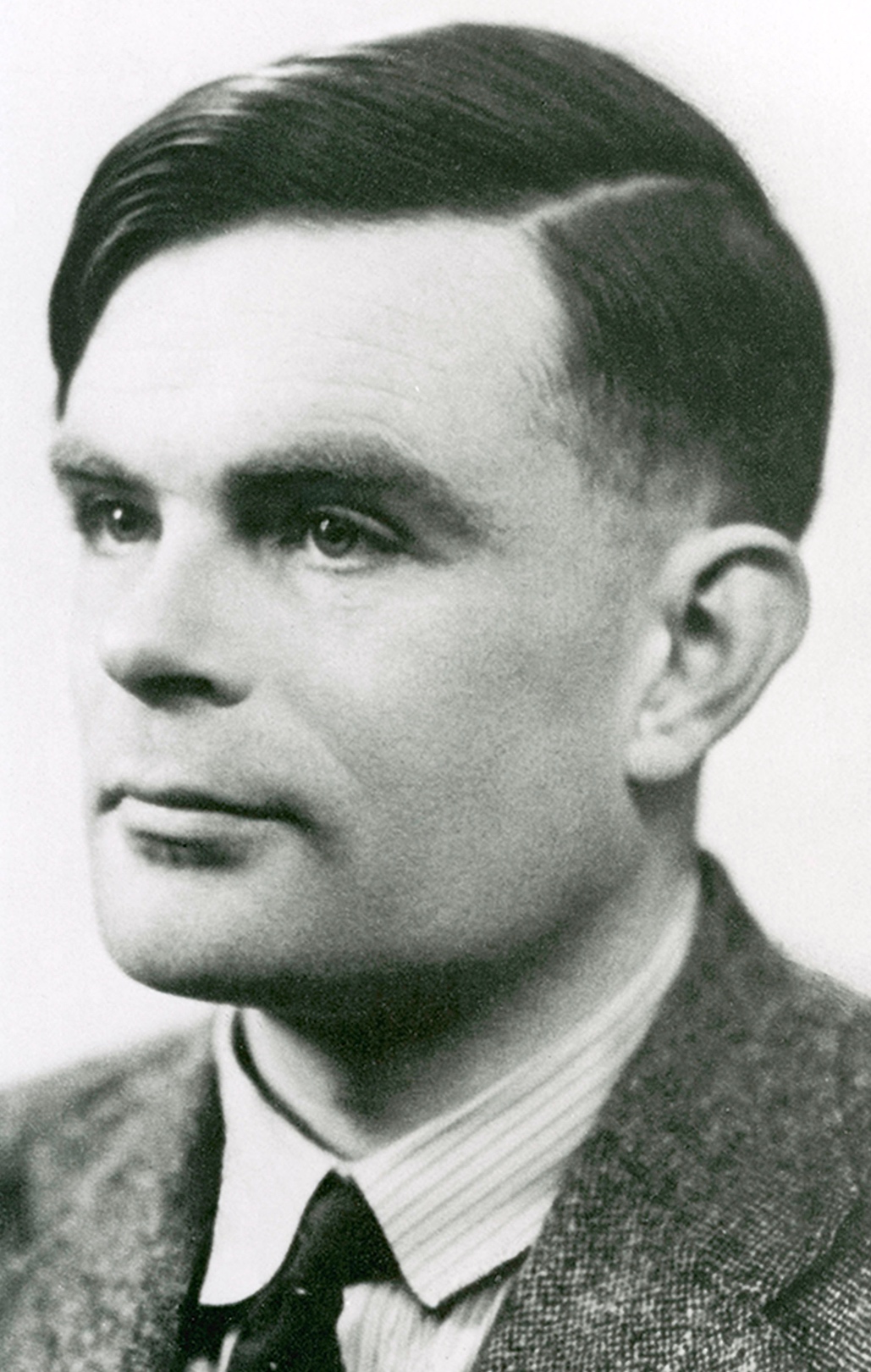
The Man Who Knew Too Much: Alan Turing and the Invention of the Computer – Book Review

By Joe Cillo

Summary/Abstract

Michael Ferguson, in reviewing two recent biographies of Alan Turing’s life, concludes that to answer the enigma at the heart of Alan Turing’s death, you have to get inside the complex head of the great mathematician.

His book review entitled ”The Man Who Knew Too Much: Alan Turing and the Invention of the Computer’, by David Leavitt and ‘Alan Turing, the Enigma’, by Alan Hodges”, recently published in the, ‘Journal of Homosexuality’, considers the circumstances of Turing’s death on June 7, 1954.

An apple was found near Turing’s deathbed, out of which several bites had been taken. Froth around his mouth was consistent with cyanide poisoning, but according to sources cited by Michael Ferguson, the apple was never analysed. It has therefore never been definitively confirmed that it had been laced with poison, although there was both potassium cyanide and cyanide solution in Alan Turing’s house.

………………………………..

Read complete article here as PDF:

Alan Turing December 2009

ACT stages new version of ‘Indian Ink’

By Judy Richter

At the heart of Tom Stoppard’s “Indian Ink”  is a cross-cultural relationship between an English poet and an Indian artist.

Presented by American Conservatory Theater under the direction of artistic director Carey Perloff, it’s an often fascinating story told in both the 1930s and the 1980s.

The poet is Flora Crewe (Brenda Meaney), who is visiting India in 1930. The artist is Nirad Das (Firdous Bamji), who meets her at a social event and shyly presents her with a quick sketch that he has made of her. Before long, he is painting her portrait while she writes a poem on the veranda of her lodgings.

She relates her most of her experiences through letters to her sister, Eleanor Swan (Roberta Maxwell), in England. Fifty years later, Eleanor is sharing those letters with Flora’s biographer, Eldon Pike (Anthony Fusco). Later, Eleanor shares more information with Nirad’s son, Anish Das (Pej Vahdat), who in turn shares other information with her.

An undercurrent to Flora’s experiences in India is British control of the country. Hence, she meets other English people, such as a minor official, David Durance (Philip Mills), whose attraction to her is not mutual except for friendship.

The action seamlessly moves between time periods thanks to Perloff’s fluid staging and the all-purpose set by Neil Patel. Sometimes exquisite lighting by Robert Wierzel helps to establish time, place and mood. Costumes by Candice Donnelly, along with music and sound by Dan Moses Schreier, also enhance the production.

Running almost three hours, the intriguing two-act play offers plenty of food for thought. The political aspects of how Indians relate to the British colonialists may be somewhat unfamiliar to American audiences, but the program offers helpful background on both the politics and Indian culture.

The production features almost consistently excellent acting, especially by Meaney as Flora and Maxwell as Eleanor, but the accents of many of the Indian characters are often difficult to understand. Bamji as the artist has a distracting habit of shifting from foot to foot.

ACT staged the American premiere of “Indian Ink” in 1999. Playwright Stoppard has since revised it in collaboration with Perloff, who recently directed it inNew York City.

I didn’t see the 1999 production, so I can’t make comparisons. However, the play bears some structural similarities to Stoppard’s “Arcadia,” which ACT successfully staged in 1995 and 2013. “Arcadia” works better if only because the dialogue is more understandable and the through-line smoother.

Still, the overall play and production of  “Indian Ink” are well done.