WWI phone operators light up Ross Valley Players’ ‘Hello Girls’

By Woody Weingarten

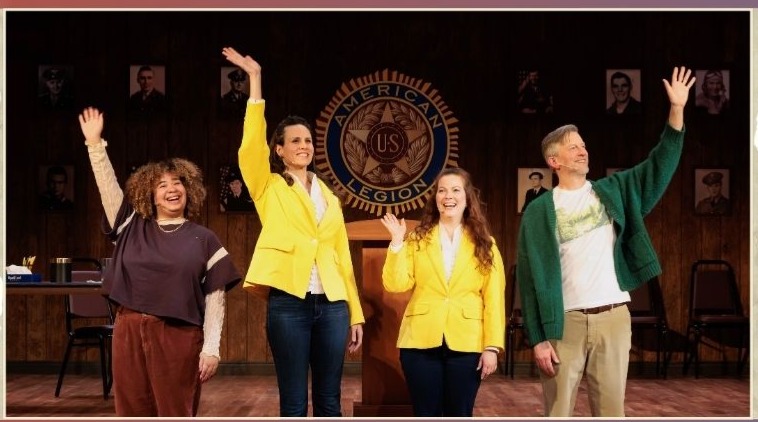
Ross Valley Players production of “The Hello Girls” features, L-R, Monica Rose Slater, Jacqueline Lee, Abigail Wissink, Grace Margaret Craig and Malia Abayon. (Robin Jackson/Ross Valley Players via Bay City News)

By WOODY WEINGARTEN

Women’s roles in wartime rarely have been so smartly and poignantly portrayed as in “The Hello Girls.”

Ross Valley Players are staging the 2018 musical drama co-written by Peter C. Mills and Cara Reichel, which starts in World War I as U.S. servicemen are fighting in France. Dispatches were being screwed up because male American telephone switchboard operators couldn’t speak French, and their French counterparts lacked English.

Enter the Signal Corps Female Telephone Operators Unit.

“The Hello Girls” tracks the misogyny French-speaking females suffered at the hands of their peers and superiors, all the way “up the chain” to stalwart Gen. John “Blackjack” Pershing, played by Joseph Walters with appropriate gruffness.

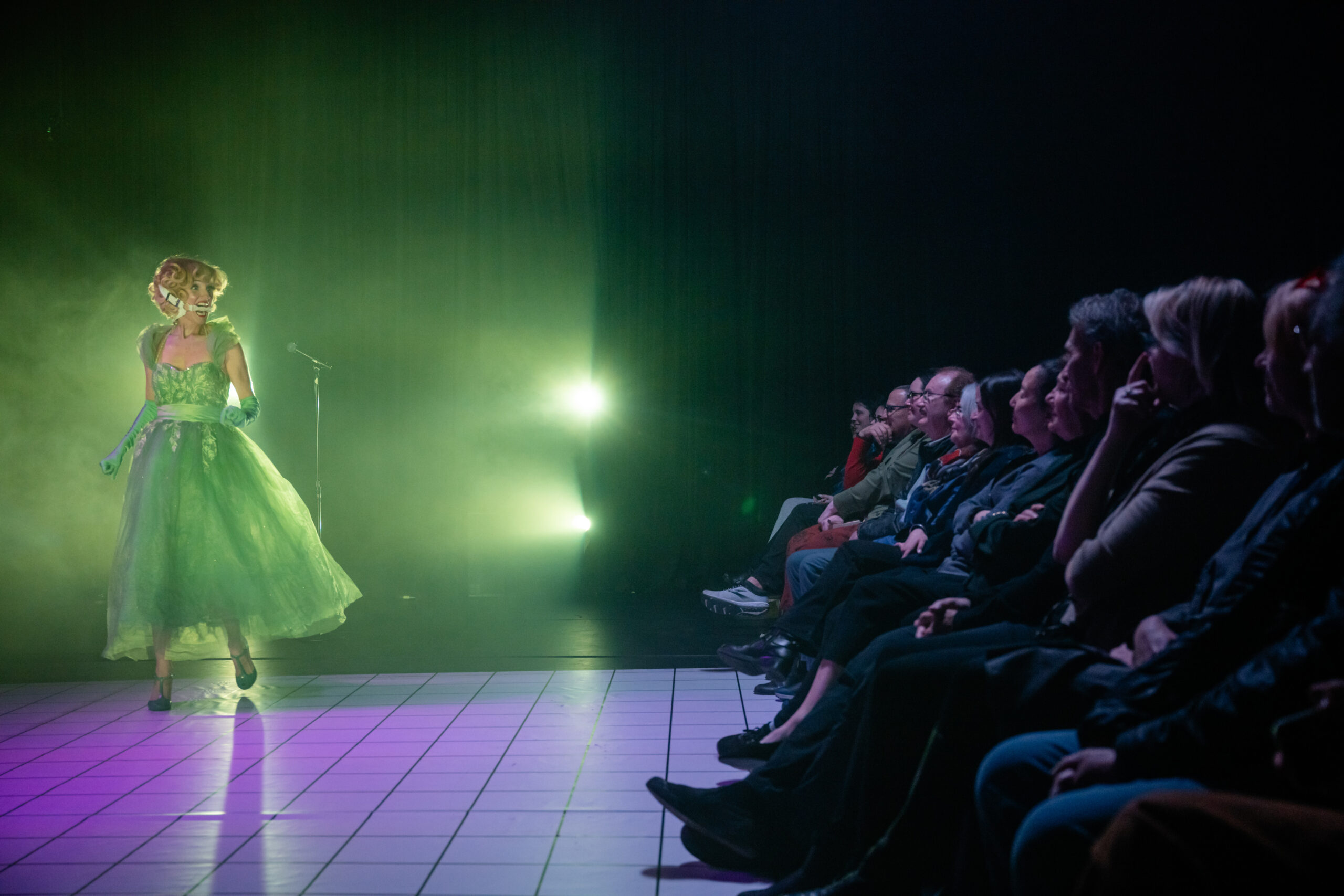
The feel-good story focuses on Grace Banker, the women’s leader, and four other bilingual operators. Monica Rose Slater adroitly portrays Banker, who is often stone-faced, a countenance befitting keeping her underlings in line—until she starts singing and smiling, often with wide-eyed mugging. She clearly has the most resonant voice of the 10-member cast. Grace Margaret Craig displays comic chops as sharp mouthed operator Suzanne Prevot.

Monica Rose Slater plays Grace Banker, leader of the telephone operator corps in Ross Valley Players’ “The Hello Girls.” (Robin Jackson/Ross Valley Players via Bay City News)

Mills composed the sometimes-similar jazz and ragtime songs in the two-act, two-and-half-hour show. The dense lyrics are geared to move the story along, but the tunes lack memorable riffs. However, some numbers are pleasant: the opener “Answer the Call”; the bouncy title tune “Hello Girls”; the first-act finale “Lives on the Line”; the second-act opener “The Front” and “Making History,” which details what happened after the time period of the show, as the “girls” fought to be recognized as soldiers for decades.

Only a few numbers near the schmaltzy ending—such as “The Lost Battalion,” a solo by promoted Capt. Riser (Nelson Brown) that’s a study in poignancy—deal with the horrors of war.

None of Mills’ melodies are as exciting as snippets of standards such as “Alexander’s Ragtime Band” that are included. And those morsels aren’t nearly as good as the upbeat choruses of signature tunes from each U.S. military branch, belted by the full cast in a patriotic medley.

The actors playfully display their abilities on myriad instruments — keyboard, drums, double-bass, cello, violin, flute and accordion. While they’re probably not either Juilliard or San Francisco Symphony material, they play well enough to create an illusion of mastery.

Director Maeve Smith ensures that the performers’ singing and dancing are in sync, and that their facial expressions and body language convey precisely the right mood.

Ron Krempetz’s set is marvelous and eye-catching; cross-hatched wires and bright lights reveal how critical phone messages were to the war effort.

Grace Margaret Craig displays comic chops and proficiency on accordion in “The Hello Girls.” (Robin Jackson/Ross Valley Players via Bay City News)

Costumes by Valera Coble providing an accurate sense of the era range from blue military outfits with high necklines, puffy sleeves and long skirts, and contrasting colorful civilian garb, for the women, and olive drab uniforms and army helmets and ammo belts for the men. All that, plus heavy boots!

Jonathan Blue’s choreography, predominantly cutesy, can’t help but evoke smiles.

Props are few, and the switchboard is invisible. However, the actors make it real by simulating plug-in motions and serving up perfect harmony, musically and in demeanor.

While it was difficult to watch how the women were rebuffed in their efforts to be in the middle of the action “at the front,” the show’s comedy goes down easier, such as the scene where the women are learning ever-changing secret phone system codes that force them to be trilingual, to know French, English and gibberish.

Ross Valley Players’ “The Hello Girls” runs through March 1 in the Barn Theatre, Marin Art & Garden Center, 30 Sir Francis Blvd., Ross. Tickets are $30-$45 at rossvalleyplayers.com.

This article was first published on LocalNewsMatters.org, a nonprofit site supported by Bay City News Foundation http://www.baycitynews.org/contact/


Find Sherwood “Woody” Weingarten, a member of the San Francisco Bay Area Theater Critics Circle and the author of four books at voodee@sbcglobal.net, woodyweingarten.com or vitalitypress.com.

The Cherry Orchard

By Joseph Cillo


Chekhov in Many Fine Suits

Some productions wear their professionalism like a good suit. This one wears all the suits in the closet at once — and somehow moves comfortably in them.

From the opening moments, this play makes a decision: nothing stays unused. If theater has ever done it, this show does it. Pratfalls happen. Magic appears. Ventriloquism enters the room. Puppets join the action. There is dancing — with people and stick figures. Actors speak directly to the audience, move through the aisles, disappear, reappear, and treat the stage less like a boundary than a suggestion.

At times, the action veers toward vaudeville, flirting with the feeling of a one-ring circus that decides to stay put. And yet nothing feels sloppy or indulgent.

Every element lands cleanly.

Each moment arrives with precision. Timing holds. Execution stays exact. The production operates at full capacity and never loses control. Admiration becomes unavoidable, even when it doesn’t seem to be the point.

Plot
The story follows Liubóv Ranyévskaya, a landowner who returns to her family estate after years away to find it on the brink of financial collapse. The house and its surrounding cherry orchard are burdened by debt and scheduled for auction unless money can be raised quickly.

Lopákhin, the son of a former peasant who now holds the practical power in the situation, proposes a direct solution: cut down the orchard and develop the land. His plan would save the estate and secure everyone’s future — but only by destroying the place that defines their past.

Ranyévskaya, her brother Gáyev, her daughters, and the household staff resist. They reminisce, argue, delay, and distract themselves with conversations that circle the problem without confronting it. Hope persists without a plan. Time continues without mercy.

When the auction arrives, the decision is no longer theirs to make. The estate changes hands. The orchard’s fate is sealed. What ends is not only ownership of land, but a way of living that depends on avoiding hard choices.

Production
What the production makes unmistakable is how long people can keep talking while nothing changes. Scenes move briskly. Conversations cycle back on themselves in slightly altered forms. Plans are discussed again and again without being acted on. The energy stays high. The jokes keep coming. The situation remains unresolved.

Forward motion belongs to the play itself, not to the characters inside it.

The ensemble works as a single, responsive unit. Performances feel coordinated without feeling mechanical. As Lopákhin, Lance Gardner brings calm authority and emotional clarity. He understands exactly what needs to happen — and exactly why no one wants to do it. Liz Sklar’s Ranyévskaya radiates charm edged with unease. Anthony Fusco, Rosie Hallett, Anna Takayo, and the rest of the cast handle physical comedy, direct address, and tonal shifts with assurance. Nothing looks accidental, even when it appears spontaneous.

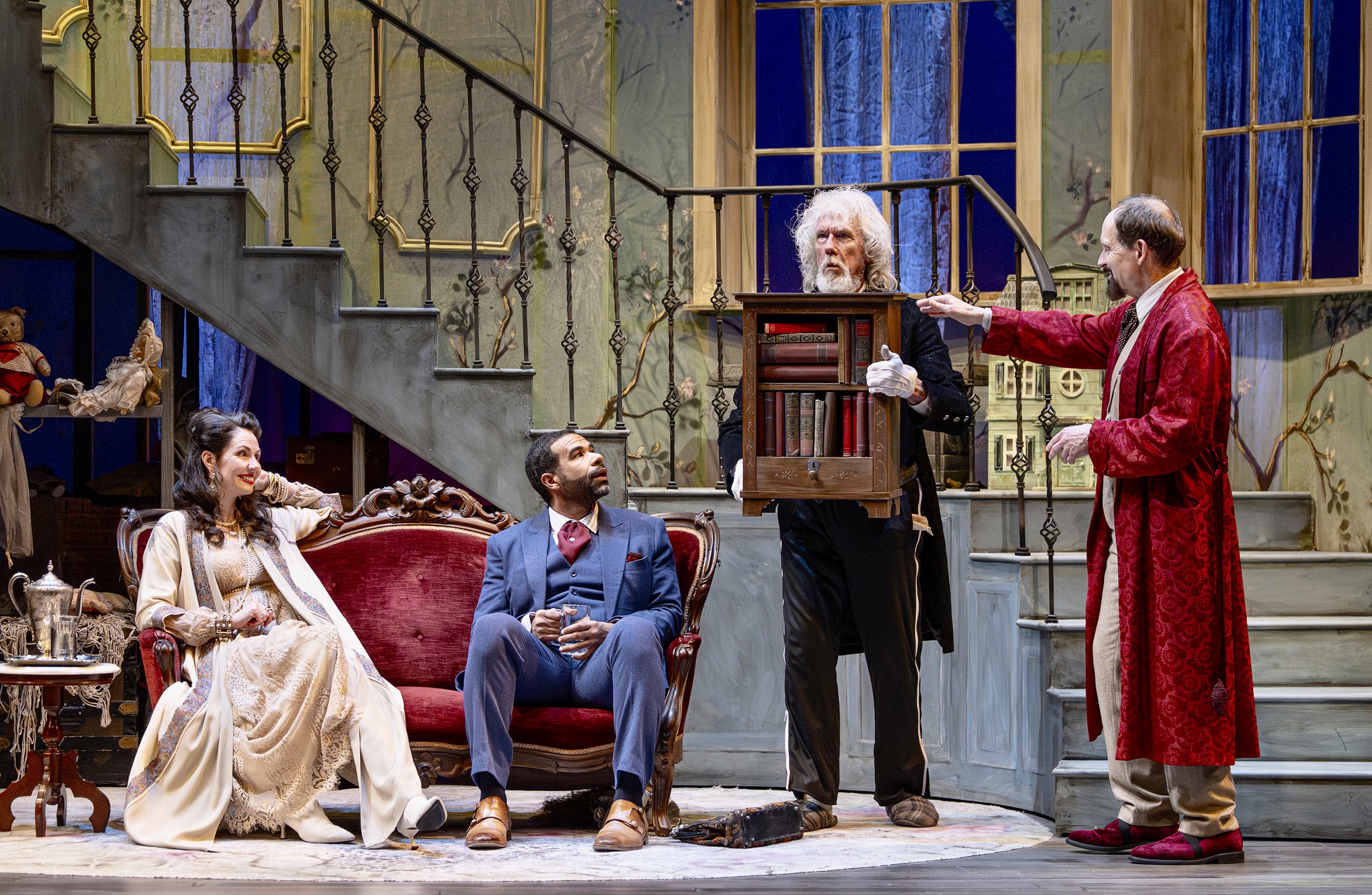
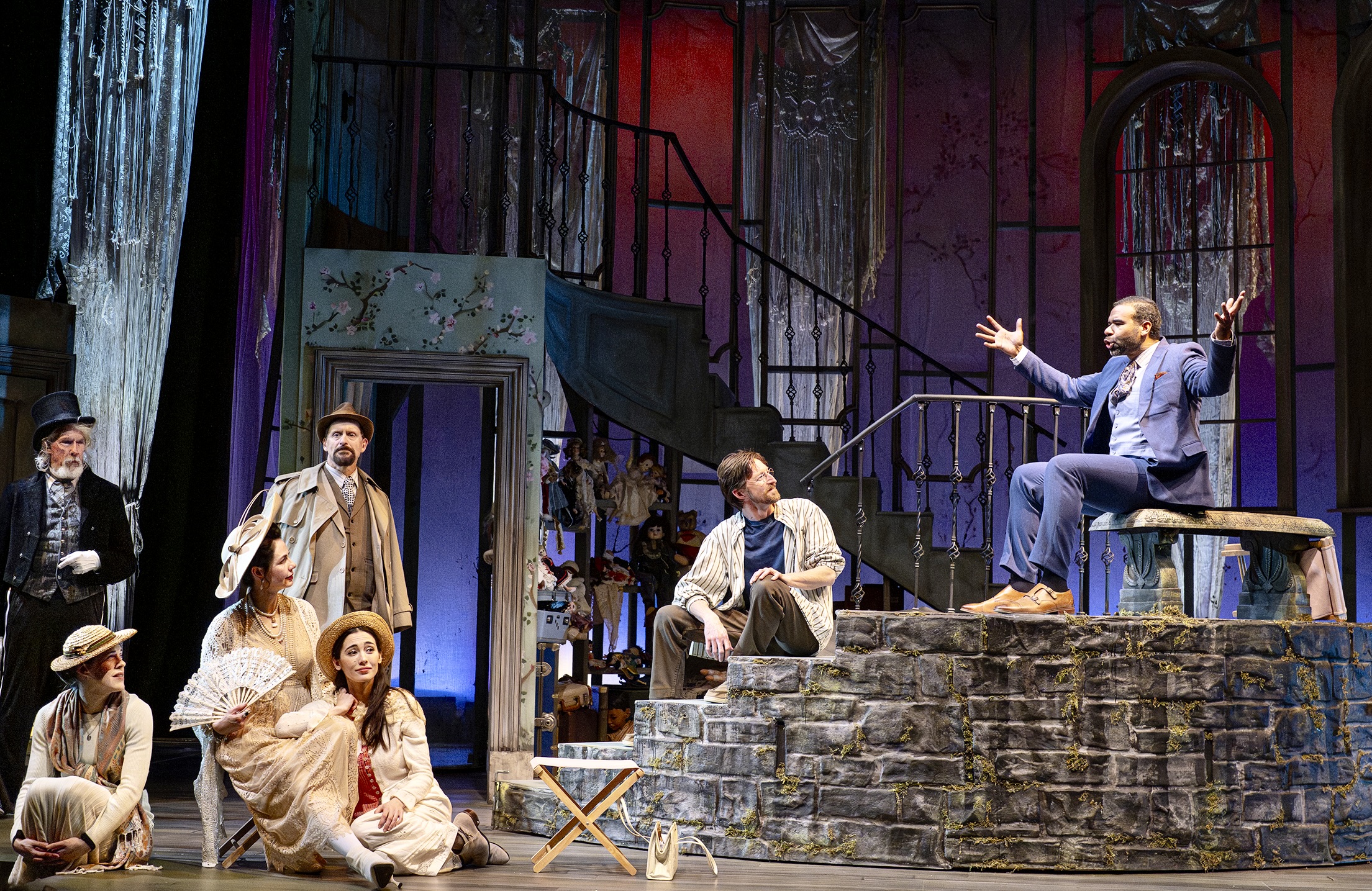
Technically, the production runs seamlessly. The scenery is terrific — elegant, flexible, and quietly expressive — giving the action room to sprawl without losing focus. The costumes are wonderful: sharply observed, character-specific, and visually rich without tipping into excess. Together, they allow the production to be as busy as it wants to be while remaining grounded in a coherent world. The overall effect is one of confident mastery.

Final Reflection
This Cherry Orchard entertains, impresses and surprises. It stays bold, busy and alert. It keeps us engaged and constantly aware of the machinery of theater — all of it operating at full speed.

Here is Chekhov dressed in many fine suits — impeccably tailored — worn with confidence.

To See
Marin Theatre

397 Miller Avenue, Mill Valley, CA

January 29 – February 22

Approximately 2 hours, including one intermission

Tickets: $38–$89
Tickets and information: MarinTheatre.org
Box Office: 415-388-5208


Joe Cillo banner

Authorship & Creative Statement

Each review is created through my proprietary FocusLens℠ method—an original editorial process shaped by firsthand experience, critical insight, and structured narrative design. Original photography, graphics, director quotes, and animated elements are incorporated to enhance reader engagement and visual impact. State-of-the-art scaffolding systems support organization and phrasing, but every sentence and decision reflects my own voice and judgment. These are not AI-generated reviews—they are authored, shaped, and published by me.

Mark Morris dancers play second fiddle to sound, projections, and astronaut figurines

By Woody Weingarten

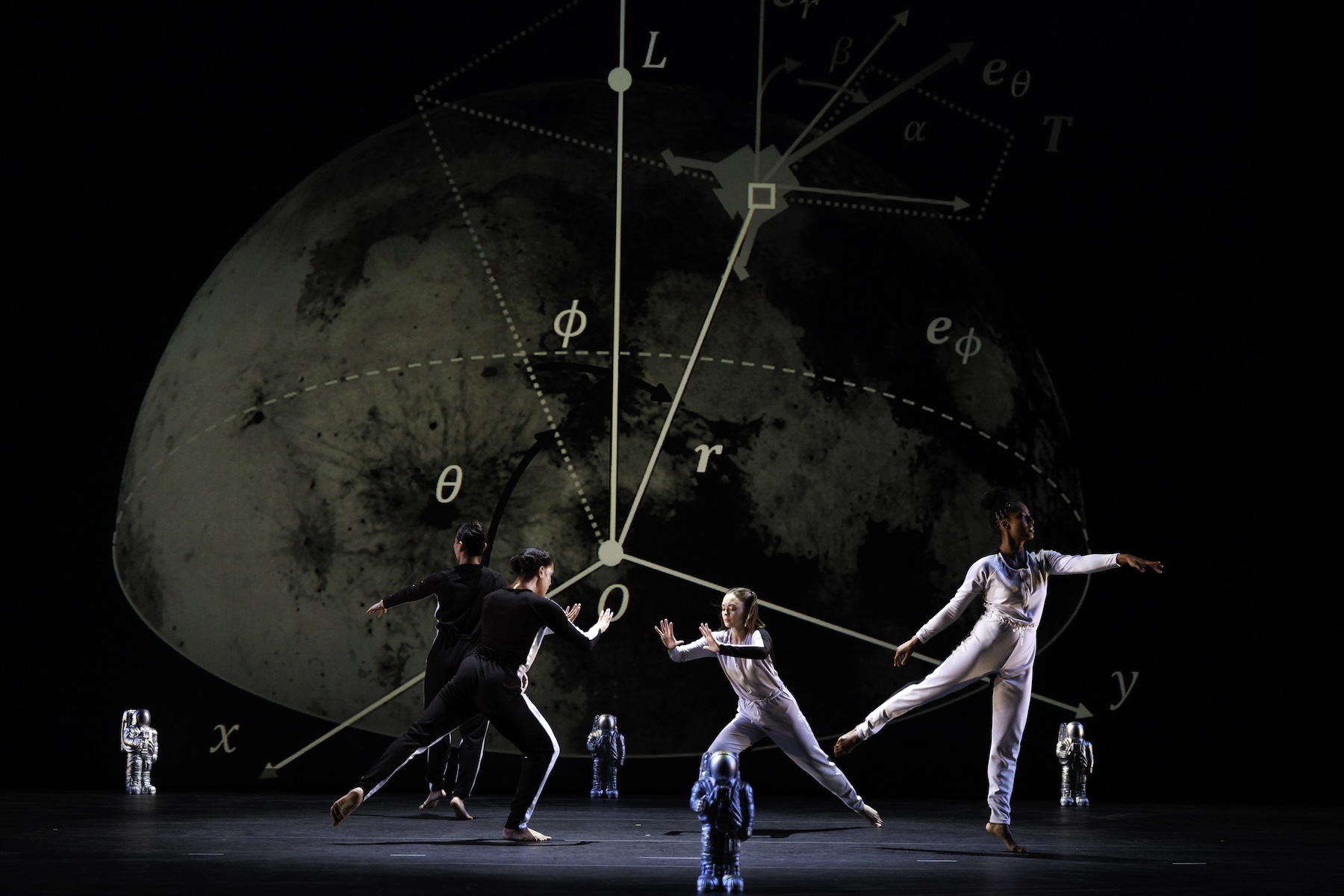
Mark Morris dancers perform in front of projection of the moon and a geometric design, ringed by miniature astronaut figurines. Photo by Xmbphotography.

By WOODY WEINGARTEN

It was a rarity for sure — a sound tsunami, rear-screen projections, and pint-sized astronaut figurines, the totality of which often became more compelling than Mark Morris Dance Group movements.

But true to form, the group’s Moon still provided an overall offbeat, entertaining, jam-packed 60-minute program at Zellerbach Hall in Berkeley. And amusing, even though some segments were significantly befuddling or weird.

The music began with percussive single notes that quickly morphed into jazzy phrases that foreshadowed a lot of what was coming. Astoundingly, the loud, rich tones were provided live in the pit by only two instrumentalists — music director Colin Fowler on piano and organ, Michel Taddei on double bass — on melodies as diverse as Clair de lune, Debussy’s ubiquitous classic, and the obscure Blue Moon of Kentucky by Bill Monroe and His Blue Grass Boys. Plus excerpts from Carl Sagan and NASA’s Golden Record, which was placed aboard two 1977 Voyager spaceships in hopes of communicating with extraterrestrials.

The first of countless projections impeccably designed by Wendall K. Harrington simultaneously highlighted György Ligeti’s Musica ricercata and attempted to supersede the growing jingoism that was spotting our nation in April, when Morris premiered his creation in D.C. in conjunction with Cal Performances and several other musical organizations that co-commissioned it.

Moon saluted old-style American patriotism, initially showing a moving circle of stars that transformed into the U.S. seal. Following images illustrated the John F. Kennedy Center for the Performing Arts in D.C. and the assassinated president at a podium. Both the world premiere in the nation’s capital and the three-day Zellerbach booking that marked the Bay Area premiere ignored Donald J. Trump, the current, living president — obviously on purpose.

Other projections included full and crescent moons, closeups of craters, moons overlayed with geometric lines and circles, moons linked with pretty much anything you’ve ever associated with that sphere. They perfectly embellished the overriding theme of man’s consistent infatuation with the satellite.

Mark Morris dancers perform in front of projection of the moon and a geometric design, ringed by miniature astronaut figurines. Photo by Xmbphotography.

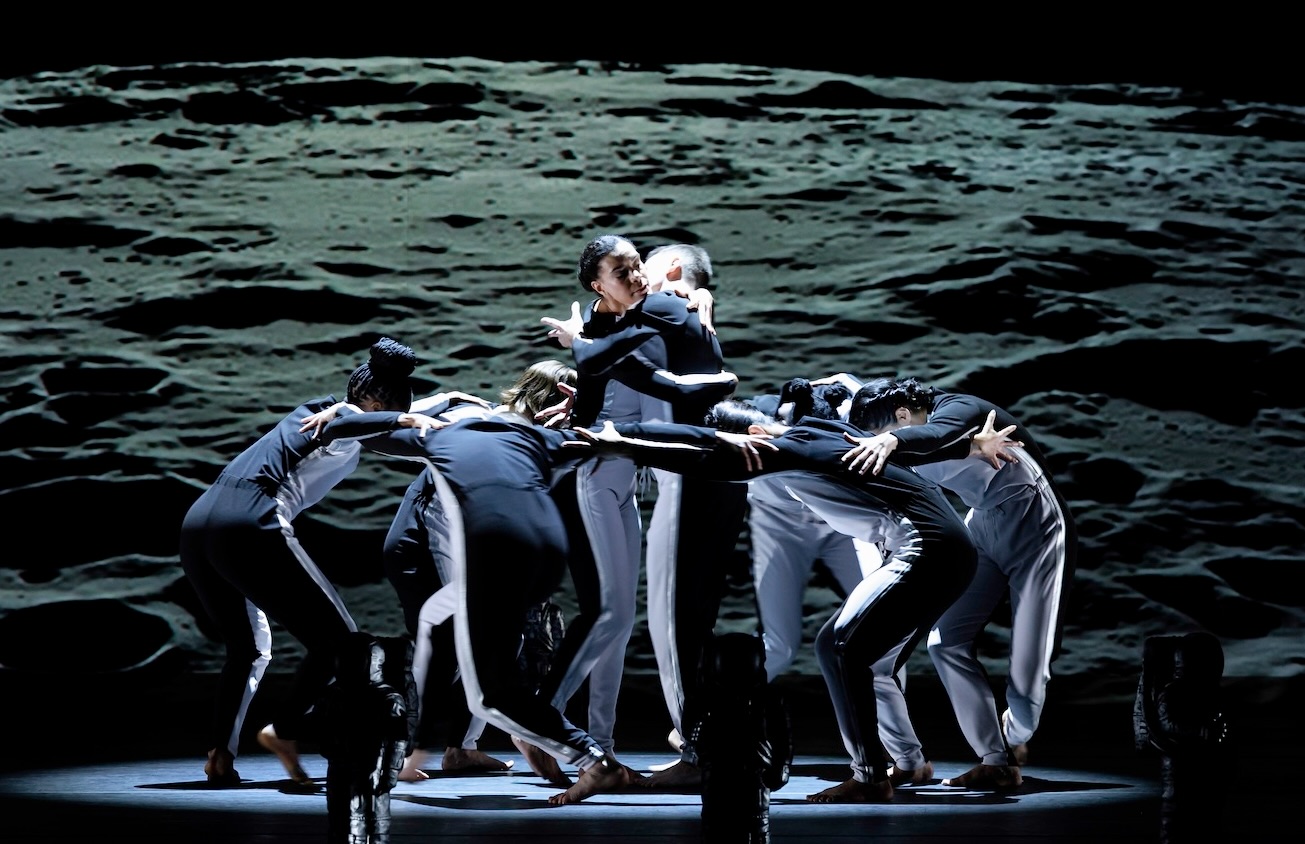
Costumes by famed designer Isaac Mizrahi, which vaguely resembled jumpsuits used by astronauts, were surprisingly dissatisfying. The contrast of light fronts and dark backs worked well enough, but at least several audience members commented that the outfits lacked excitement and were distracting because they flapped loosely, particularly in the stomach and crotch areas.

Even more bedeviling, however, were segments of the program that were as short as any dance material ever professionally staged, lasting but a few seconds, certainly insufficient time to figure out its purpose.

Perplexing, too, was what seemed an excessive use of the nine featured dancers as, in effect, stagehands who constantly moved around the one-and-a-half-foot high astronaut statuettes, to the point of even simulating robots as they carried them offstage.

It also became difficult to discern why the many foreign-language insertions of greetings to aliens were inserted at the places they were, and it was sometimes tough on the ears to absorb the scratchy static from recordings of 80 or 90 years ago.

Oh, yeah, as for the dancing itself, it generally lacked inspiration. Redundancy throughout — with couples repeatedly hugging and twirling, with dancers reaching out as if to touch a projected moonscape, with dancers swirling across the stage — silhouetted behind a scrim — as they spread out on stools with wheels. Chunks of that was memorable, but some was less than wonderful (especially a sequence that supposedly emulated the movements of monkeys).

The audience for the most part clapped tepidly after each segment but found the energy to applaud vigorously when the short intermission-less piece was done. It also had the grace to give choreographer Mark Morris a standing ovation in honor of the outstanding modern ballets he’s created since founding his troupe in 1980.

Morris’ most popular works are his masterpiece, L’Allegro, il Penseroso ed il Moderato, which uses Handel and Milton’s sung poetry as a base; his witty The Hard Nut, which toys with The Nutcracker as if were turned sideways; and the sexy Dido and Aeneas, an adaptation of a Purcell opera.

Upcoming dance performances at Zellerbach Hall include the Martha Graham Dance Company Feb. 14 and 15, celebrating the company’s 100th anniversary; A.I.M. by Kyle Abraham Feb. 21 and 22; the Alvin Ailey American Dance Theater April 7-12; and The Joffrey Ballet performing the West Coast premiere of Midsummer Night’s Dream.

Sherwood “Woody” Weingarten, a longtime voting member of the San Francisco Bay Area Theater Critics Circle and the author of four books, can be contacted by email at voodee@sbcglobal.net or on his websites, https://woodyweingarten.com and https://vitalitypress.com. His books include Rollercoaster: How a man can survive his partner’s breast cancer, aimed at male caregivers; MysteryDates — How to keep the sizzle in your relationship; The Roving I, a compilation of 70 of his newspaper columns; and Grampy and His Fairyzona Playmates, a whimsical fantasy intended for 6- to 10-year-olds that he co-authored with his then 8-year-old granddaughter.

The Skin of Our Teeth

By Joseph Cillo


A Successful Bafflement

Some plays explain themselves. The Skin of Our Teeth does not.

Instead, it invites us into a state of purposeful uncertainty — and this production understands that invitation fully.

I left the theater amused, impressed and unmistakably baffled. That reaction turns out not to be a shortcoming, but a measure of success. The play doesn’t ask to be solved. It asks to be experienced. This staging leans into that distinction with confidence, coordination, and care.

Confusing, yet compelling — exactly as intended.

About the play: historical & Critical Context

Written in 1942, in the midst of World War II, The Skin of Our Teeth emerged at a moment when the survival of civilization itself felt anything but assured. Rather than respond with realism or straightforward allegory, Wilder broke theatrical rules outright — collapsing time, mixing eras, and allowing characters to step outside the action.

The play’s originality was immediately apparent. Critics were divided, sometimes sharply, but few denied its ambition. In 1943, the play received the Pulitzer Prize for Drama, affirming its importance even as it confounded expectations. That tension — admiration paired with bewilderment — has followed the play ever since.

Confusion here is not accidental. Wilder suggests that humanity endures not through clarity or order, but through persistence, memory, and the stubborn willingness to begin again.

The Plot
At the center is the Antrobus family — George and Maggie, their children, and household help — not meant as realistic individuals so much as stand-ins for humanity itself. Over three acts, they survive an Ice Age, catastrophic flood, and the aftermath of a devastating war.

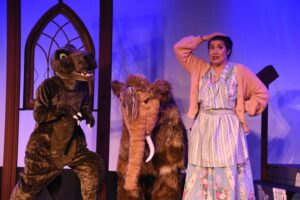
Realism is deliberately ignored. Dinosaurs and mammoths share space with modern conveniences. Characters address us directly. Scenes collapse, restart and loop back on themselves. Time doesn’t progress so much as repeat. What remains constant is the question Wilder keeps returning to: after each disaster, do we rebuild — and why?

Photo credit: Marilyn Izdebski

The Experience
This production embraces Wilder’s controlled chaos with assurance. Rather than apologizing for the play’s strangeness, it trusts us to stay alert and engaged. The fourth wall is porous, the tone shifts quickly, and humor arrives in both broad gestures and quiet asides.

Notably, the play itself anticipates audience confusion. Characters openly question the action, complain about the play they are in, and force scenes to restart, making bafflement part of the design rather than a byproduct of it.

What makes this staging especially effective is how well it handles scale. With a large cast, the production remains well coordinated and clear, even as the play ricochets between eras and theatrical modes. Group scenes are disciplined, allowing disorder to read as intentional rather than cluttered.

A large, confident production that embraces deliberate disorder.

The Production
Technical elements support storytelling throughout. Projections are used effectively, helping orient us as time and place shift, reinforcing the play’s collision of eras without overwhelming the action.

Costuming and props are strong, clearly defining character and tone while grounding the production visually. These elements give us something solid to hold onto in a play that resists narrative stability.

Pacing and transitions are handled with care. Even at its most unruly, the production maintains momentum, striking a difficult balance between freedom and control.

The production keeps a steady visual and emotional hand. Staging is clean and purposeful, giving the actors room to work and the story space to breathe. Scenes move along with easy confidence. The lighting knows exactly what it’s there to do — handled with care and restraint, shaping mood and momentum, then stepping aside before anyone feels the need to notice.

What It Adds Up To
Ultimately, this production succeeds because it refuses to tidy itself up. It leaves questions unanswered. Meaning accumulates rather than resolves. History falters, resets and continues.

Wilder even allows the play to argue with itself — and with us — before choosing, once again, to go on.

That lingering bafflement isn’t a flaw. It’s the point. Civilization wobbles. Language fails. History repeats. And yet — somehow — we persist.

NTC delivers a Skin of Our Teeth that earns its disorientation honestly. It is lively, well executed, and quietly affirming — a reminder that humanity doesn’t endure because it understands everything, but because it keeps going, by the skin of its teeth.

Something very different — you’ve been warned.

TO SEE

Novato Theater Company
5420 Nave Drive, Novato, CA 94949

Dates:
January 22 – February 15, 2026

Performance Times:
Fridays at 7:30 pm
Saturdays January 24, 31 & February 14 at 7:30 pm
Saturday February 7 at 2:00 pm
Sundays at 2:00 pm

Tickets:
www.novatotheatercompany.org

Box Office:
(415) 883-4498


Joe Cillo banner

Authorship & Creative Statement

Each review is created through my proprietary FocusLens℠ method—an original editorial process shaped by firsthand experience, critical insight, and structured narrative design. Original photography, graphics, director quotes, and animated elements are incorporated to enhance reader engagement and visual impact. State-of-the-art scaffolding systems support organization and phrasing, but every sentence and decision reflects my own voice and judgment. These are not AI-generated reviews—they are authored, shaped, and published by me.

Hershey Felder: The Piano and Me

By Joseph Cillo


Master Music Storyteller in Full Flow

The Piano and Me is built around storytelling — intelligent, personal, and absorbing — that flows naturally into music of the highest order.

Hershey Felder guides us through a life shaped by composers, history, and memory, letting stories lead and allowing the piano to arrive exactly when it matters. The result is a salon elevated to the concert hall: ideas, insight, and world-class music woven into a single, seamless experience that rewards close attention.

Felder arrives at this piece after decades of inhabiting great composers onstage, a journey that has made him a familiar and trusted figure for audiences at TheatreWorks Silicon Valley. In this world premiere, that accumulated experience turns inward. The result offers context for the artistry audiences already know, revealing how music, memory, identity and history move together across a life.

Hershey Felder has the room — and keeps it.

Here, Felder emerges as a master raconteur — a modern salonier — guiding the room through stories about composers, Jewish identity, inheritance and survival. The storytelling is conversational yet deliberate, shaped by wit, insight, and a respect for our attention. Ideas arrive clearly, connect naturally and continue to resonate as the evening unfolds.

At key moments, Felder turns to the piano and the narrative continues in sound. Bach, Mozart, Beethoven, Chopin, Liszt, Rachmaninoff, Bartók, and others appear as companions rather than set pieces. The playing is fluent, expressive, and grounded in long familiarity.

Storytelling sets the course — the piano carries it forward.

What gives The Piano and Me its distinctive power is the way these elements are interwoven. Spoken word and music move seamlessly together, creating a steady rhythm of listening and reflection. We remain fully engaged, following the thread as it unfolds with ease and confidence.

Background projected visuals contribute with equal care. Images of a young Hershey, his mother, and the shadowed presence of Auschwitz arrive precisely, deepen the emotional register, then step aside. Each image adds resonance and allows space for reflection, strengthening the experience without drawing focus away from it.

A master raconteur and modern salonier — guides the evening through music, memory and meaning.

Humor threads throughout — dry, knowing, lightly worn — balancing the weight of the themes with warmth and humanity. The tone remains open and generous, guided by curiosity and trust in our shared attention.

Staging supports the evening beautifully. Lighting, sound, and projections frame the performance with restraint and clarity. The Mountain View Center for the Performing Arts provides an ideal setting for this kind of listening theatre — intimate enough to feel personal, expansive enough for the piano to breathe.

By the end, our lasting impression comes from time spent inside a focused and alert mind. The Piano and Me leaves us engaged, enriched, and glad to have followed where the evening led.

Very highly recommended.


How to Get Tickets

Hershey Felder: The Piano and Me
📍 Mountain View Center for the Performing Arts, 500 Castro Street, Mountain View
📅 January 17 – February 8, 2026
🎟️ Tickets: $34–$115
🌐 theatreworks.org
📞 877-662-8978


Joe Cillo banner

Authorship & Creative Statement

Each review is created through my proprietary FocusLens℠ method—an original editorial process shaped by firsthand experience, critical insight, and structured narrative design. Original photography, graphics, director quotes, and animated elements are incorporated to enhance reader engagement and visual impact. State-of-the-art scaffolding systems support organization and phrasing, but every sentence and decision reflects my own voice and judgment. These are not AI-generated reviews—they are authored, shaped, and published by me.

The sound of wildflowers: Photographers’ audiobook lets visually impaired ‘see’ nature

By Woody Weingarten
Desert Candles in the Caliente Mountain Range, Carrizo Plain National Monument in California, in 2017 is one of the audio-described photos in “Voices for the Splendor of California Wildflowers: A Descriptive Journey for the Visually ImpairedShown here. The forthcoming work is the creation of Marin County nature photographers Rob Badger and Nita Winter, who wanted to create a descriptive coffee table audiobook. (Rob Badger and Nita Winter via Bay City News)


by WOODY WEINGARTEN, Bay City News


AWARD-WINNING CONSERVATION PHOTOGRAPHERS Rob Badger and Nita Winter lived together lovingly for “one month short of 38 years” before getting married under a huge oak tree in a friend’s back yard in the hills of Mill Valley.

“We had to make sure it was going to work out,” explains Winter mischievously.

The Mojave Desert’s Poppy Preserve in 2003 on the cover of the coffee table wildflower illustration book “Beauty and the Beast: California Wildflowers and Climate Change” by Rob Badger and Nita Winter, co-published by the California Native Plant Society. (Rob Badger and Nita Winter via Bay City News)

Badger and Winter had for three decades photographed flora in natural environments for their passion project, Beauty and the Beast: California Wildflowers and Climate Change, a 2020 coffee-table book that includes 190 color shots captured by natural light.

A companion exhibit of 52 framed photos, which preceded publication of the book and has been touring for seven years, has already been seen by 100,000 people.

Now they’re wrapping up the components of an innovative spinoff, Voices for the Splendor of California Wildflowers: A Descriptive Journey for the Visually Impaired, a labor-of-love audiobook that “will allow the visually impaired to see and connect with nature in their mind’s eye,” says Badger.

“We believe that no one has published an audio-described, beautiful coffee-table book where people can feel what it was like to be invited into our world and feel what kind of day it was when the images were shot,” he adds. “The poetically described photos can link directly with a listener’s imagination.”

The project, which highlights essays by scientists, environmental leaders, and nature writers, was inspired by the desire of a legally blind friend to “see” the striking images.

As part of the final stages before publication, which Badger and Winter hope to happen in the first quarter of 2026, they’re writing in-depth audio descriptions of their multi-colored, floral images, and they’ve gathered professionals in the world of sound to embellish those images and their stories. Becky Parker, founder and CEO of Pro Audio Voices, the company that will produce the audiobook, will voice those audio-descriptions.

Braille and Talking Books Libraries plans to reformat the book so it can be accessible to its 10,000 subscribers.

Peter Coyote lends his ‘iconic voice’

Actor Peter Coyote, famed for his roles in such classic movies as “E.T. the Extra-Terrestrial” and “Erin Brockovich” and for his narration on Ken Burns’ multi-part television documentaries, has narrated — from a studio in Sebastopol, near his home — “the personal short stories of seven male authors, the foreword, and ‘behind the scenes’ Badger-Winter text,” Winter reports.

Annie Obermeyer, Coyote’s actress friend, protégée, and what he labels “a force of nature,” reads 13 stories by female writers.

Actor and environmentalist Peter Coyote, in Threshold Studios on Aug. 13, 2025, records part of audio-described photos in “Voices for the Splendor of California Wildflowers: A Descriptive Journey for the Visually Impaired.” (Rob Badger and Nita Winter via Bay City News)

Winter and Badger sometimes echo each other’s thoughts. Case in point: “It was surreal for us to be sitting in a control room listening to Peter with his iconic voice reading our words.”

Coyote, who says he’s “been an environmentalist since I was about 6,” alludes in a phone interview to his “Buddhist philosophy about everything being interconnected.” He enjoys focusing on “the magical feelings I have about living creatures,” but maintains that human beings “are not different from water, from insects in the soil. You’ve never been free of the sun, of oxygen, of birds that are pollinating.”

Regarding his approach to narration, he admits, “I go into the studio naked to the text. If I’m open, the text itself will engender the appropriate emotions. I never prepare. My technique is no technique.”

Winter and Badger spent a lot of time fundraising for their exhibit, their coffee-table book, and for their audiobook, which Winter says is aimed in the final analysis “at the visually impaired, the blind, the dyslexic, non-English speakers, the sighted community, and, well, everyone.” Specifics are available on a crowdfunding page for the project.

The original idea for their coffee-table book, co-published by the California Native Plant Society, was birthed in 1992 after Liz Hyman, another outdoors photographer, invited Badger to join her in the Mojave Desert’s Poppy Reserve for a shoot. It started out too windy to photograph anything, but, soon thereafter, Badger watched “waves of intense warm wind blow across the poppies, (and) witnessed this amazing spectacle of color and beauty.”

Their work is crucial, he says, “because we’ve spent so many hours outdoors looking at beauty and environmental destruction, and it’s become important to us to promote the beauty and public land, whether it’s a national park or a local city park.”

Winter gently interrupts: “It’s always been about how can we make positive changes with our images — through visual storytelling.”

Relationship blossoms for Team Sweetie

Their own story is as compelling as their quest for California wildflowers. Their unconventional, humorous wedding ceremony, for instance, was pulled off without a hitch at a total cost of $610 by soliciting tables and chairs, plates and silverware, and flowers for each table. “It was a real community event in the sense that people contributed to our wedding,” explains Winter.

Rob and Nita backpacking on Sept. 12, 2006, at Lake Winnemucca near Carson Pass, Mokelumne Wilderness, El Dorado National Forest in Alpine County. (Rob Badger and Nita Winter via Bay City News)

The two haven’t limited their interest in nature to distant sites. Winter says that “we’ve been “re-wilding our property, with 42 native plants, on a quarter of an acre on a hillside in Marin City, where there’s a steep slope with a lot of clay soil and where we have a really incredible view of the bay.”

Since they moved in 25½ years ago,” she says, “we’ve taken down five or six big Monterey Pine Trees, which are fire hazards, when they got sick, and juniper. When we bought the place, there was one Coastal Live Oak tree in the corner of the property. Birds carried seeds and we now have 20.”

Badger gently interrupts — and smiles impishly as he reveals how they jointly perceive their personal/creative relationship: “We are Team Sweetie.”

Soweto Gospel Choir’s energy compels Berkeley audience to participate

By Joe Cillo, Woody Weingarten

Energy is the operative word at Peace, a concert at Zellerbach Hall on Sunday. Photo by Stefan Meekers.

By WOODY WEINGARTEN

It was hard to believe that 16 singers from South Africa could sustain the amount of energy they expended Sunday.

Their arms kept flailing, their legs kept pumping, and their butts kept shaking in the first half of a concert titled Peace at Zellerbach Hall in Berkeley. Solo voices reverberated with gusto as the rest of the all-black, three-time Grammy-winning Soweto Gospel Choir harmonized behind them, their bright, colorful costumes undulating and rolling to rhythms so complex and fast they sometimes impeded audience toe-tapping.=

The packed crowd was nevertheless drawn into the songs, clapping and singing along and shouting approval, as well as offering an almost universal standing ovation at the end of the 95-minute concert. Support seemed loudest when freedom songs became political and angry and reminiscent of anti-apartheid struggles and rallies — and the choreography was highlighted by outstretched arms with fists.=

It was amazing that just two men — a keyboard artist and a percussionist — could supply sufficient musical sound to be a booming but flawless foundation for the vocals, which ranged from the melancholy sweetness of “You’ll Never Walk Alone” to screeching like birds and animals.

Colorful backdrop complements costumes of Soweto Gospel Choir. Photo by Stefan Meekers.

The second half of the pre-Christmas concert was a contrast — soft, spiritual, and spunky — featuring gospel standards, snippets of four carols, and then ending with the rousing Leonard Cohen classic, “Hallelujah.”

Being present for the 23 musical numbers, which are sung in six African languages plus English, meant having a vibrant experience that dragged a listener emotionally back to the heyday of Nelson Mandela and Dr. Martin Luther King. It also became impossible to ignore the fact that Donald J. Trump is currently allowing only whites to emigrate from South Africa.

Members of Soweto Gospel Choir are in sync. Photo by Stefan Meekers.

The choir, which was formed in 2002 “to celebrate the unique and inspirational power of African gospel music,” stands, in effect, as a tribute, to Soweto township, a suburb of the city of Johannesburg. The area became world famous in June of 1976 with the Soweto rebellion, when up to 20,000 school children protested the government’s policy supporting education in Afrikaans, “the language of the oppressor,” rather than the native tongue. Police opened fire on the students.

In a sense, the Soweto Gospel Choir is a living monument to those who were killed.

Upcoming vocal performances at Zellerbach Hall in Berkeley include the San Francisco Gay Men’s Chorus in a holiday spectacular Saturday, Dec. 20 and An Evening with Kelli O’Hara on Saturday, Jan. 31. 

Sherwood “Woody” Weingarten, a longtime voting member of the San Francisco Bay Area Theater Critics Circle and the author of four books, can be contacted by email at voodee@sbcglobal.net or on his websites, https://woodyweingarten.com and https://vitalitypress.com.

Masquers’ ‘Catch Me If You Can: The Musical’ is funny, bittersweet 

By Woody Weingarten

In many shows, a director’s work is invisible. Here in Point Richmond, it is visible to theater buffs because director Enrico Banson, along with choreographer Katherine Cooper and costume designer Tammara Noleen, have superbly reinvented what was a too-long tale. Now it’s a fast-paced, bouncy musical-comedy that well might keep a smile on your face throughout its 18 musical numbers and two acts.

After tapping your toes, though, you also may leave the theater with a serious aftertaste from some bittersweet themes: father-son relationships, identity, crime and punishment, and redemption.

Banson is also responsible for the projections seamlessly inserted as a backdrop; unlike those in shows trying too hard to be artsy, these images are simple and appropriate to the storyline. A few snippets are real TV clips from the 1960s, the show’s setting. Better yet, some gems are cinematic scenes that were shot beforehand.

“Catch Me If You Can: The Musical,” with score by Marc Shaiman and Scott Wittman and book by Terrence McNally, steals the best lines and scenes from the movie and leaves much of the sluggish stuff behind.

Danila Burshteyn, who has a strong, resounding voice and a perfect countenance, plays Frank Abagnale Jr. in a leading role nearly as captivating and demanding as the Emcee in “Cabaret.”

Burshteyn is the complete singer-actor combo. But, like DiCaprio, being years older than his character, he doesn’t quite impeccably replicate a brash 16-year-old runaway and forger with dreams of stealing millions of dollars before he’s 21.

Abagnale, a comic book reader who struggles with loneliness and a futile yearning to bond with his father, a dapper con man who hands down criminal skills to his son, starts his life of crime by improvising the role of a substitute teacher. Then, pretending, he successfully becomes an airline pilot, doctor, lawyer, everything but an Indian chief. Interestingly, the story stems from a memoir written by the real-life Abagnale.

The framework for the show has Junior spilling his checkered story in a television studio with a flashing applause sign that pulls the Masquers audience into the action. Instead of remorse, he arrogantly claims that he “did it in style.”

Nicole Stanley, who charmingly portrays the momentary love of his life, Brenda Strong, stops the show with her amazingly powerful voice.

Nelson Brown plays FBI agent Carl Hanratty in Masquers Playhouse’s ‘Catch Me If You Can: The Musical.” (Mike Padua via Bay City News)

Nelson Brown as FBI agent Carl Hanratty, who’s frustratingly chasing master counterfeiter Abagnale Jr., fills out the top-billing slate. Brown has exquisite comic timing but is fittingly detached; the character admits that he’s “never been cool.”

Brown occasionally spews dialogue so quickly; it’s a little hard to hear every word. And the show’s sound is difficult at times, muffling some performers. Also, the seven-piece band at the side of the stage led by music director Camden Daly on keyboards now and then gets so loud, it drowns out the often-sardonic lyrics. Mostly, though, the band provides jazzy, upbeat rhythms that ultimately may be forgettable but in the moment are ear-candy.

At nearly 150 minutes (plus intermission), this version of “Catch Me If You Can: The Musical” may play havoc with your bottom. But despite its drawbacks, it would be a shame for anyone who likes upbeat song-and-dance shows to miss it.

Catch Me If You Can: The Musical” runs through Dec. 7 at Masquers Playhouse, 105 Park Place, Point Richmond. Tickets are $30- $35 at masquers.org.


This article was first published on LocalNewsMatters.org, a nonprofit site supported by Bay City News Foundation http://www.baycitynews.org/contact/.


Contact Sherwood “Woody” Weingarten, a member of the San Francisco Bay Area Theater Critics Circle and author, at voodee@sbcglobal.net, https://woodyweingarten.com or https://vitalitypress.com

Dancer-illusionists are spectacular, magical, and mind-blowing at Zellerbach in Berkeley

By Woody Weingarten

Costumes in Momix show are extraordinary. Photo by Sharen Bradford.


By WOODY WEINGARTEN

Momix, a troupe of dancer-illusionists, simply can’t be reviewed like one would an ordinary company of hoofers, or, for that matter, even some exceptionally first-rate ones.

This group was so much better — perhaps because it was so different, so fresh.

At times, the eight celestial, acrobatic performers became movable pawns in artistic director Moses Pendleton’s absurdist Alice, their newest traveling show at Zellerbach Hall in Berkeley. They could disappear and reappear into and out of lighting effects and projections. They could slyly, whimsically exaggerate dance moves as avant garde recorded jazz, rock, and choral music also captured the audience’s toe-tapping attention. And they could get embedded in mind-blowing, quirky choreography and costumes.

The performance was salted with somewhat subtle humor, via odd arm and leg movements and imaginative heads of critters and babies, via hidden wires that shot performers into the air, and via costumes that rapidly changed characters from this to that to the next thing.

The show also contained understated sexuality.

It’s unlikely most of the crowd had ever seen anything like the 105-minute, two-act Cal Performances Bay Area premiere, even from Momix, which has matured in its sophistication and its ability to create illusions over the years. The performance had a plethora of slick smoke-and-mirrors, minus the smoke.

Pick a descriptive word; these all fit — spectacular, amazing, magical, unique.Come to think of it, fantastic, with its multiple meanings, might be the most on the nose moniker.

The book Alice’s Adventures in Wonderland was the inspiration for the 23-number wonderment, with Act 1 carrying a “Down the Rabbit Hole” label and Act II being tagged “Through the Looking Glass.”

The spectacle was too superb to have only one show-stopper — it had three, the best of which spotlighted male performers toying athletically with extra-large mirrors that marvelously distorted reality.

Even if the last time you’d read Lewis Carroll’s stories was 20 or 30 years ago, you would immediately remember and recognize references to such classic figures as the Mad Hatter and the Cheshire Cat (even though their identities here were somewhat fluid).

Exercise balls become dance props in Momix. Photo by Sharen Bradford.

One don’t-miss moment, another of the show-stoppers, was a synchronized bit that proved massive exercise balls could become extraordinary props.

Missing the red aerial silks of “The Mad Queen of Hearts” would have been a shame. The segment might have reminded you of a Cirque du Soleil act but with even more striking beauty and pizzazz.

Also, “Advice from a Blue Caterpiller” provided some charming, light-hearted moves that you most likely haven’t witnessed before.

So, with all those visual vignettes in mind, this sentence becomes incredibly easy to write: Next time Momix appears in the Bay Area, go!

Other dance performances coming up at Zellerbach that are certainly worth checking out are the Mark Morris Dance Group’s “Moon” from Jan. 23 to Jan. 25 and “Graham 100,” the Martha Graham Dance Company’s anniversary year celebration on Feb. 14 and 15.  

Sherwood “Woody” Weingarten, a longtime voting member of the San Francisco Bay Area Theater Critics Circle and the author of four books, can be contacted by email at voodee@sbcglobal.net or on his websites, https://woodyweingarten.com and https://vitalitypress.com.


Manual Cinema’s The 4th Witch at Cal Performances!

By Jo Tomalin

Review by Jo Tomalin
For All Events 


image of set

Cal Performances: Manual Cinema’s The 4th Witch
Photo: Courtesy of Manual Cinema /artists


Manual Cinema, an Emmy Award-winning performance collective, design studio, and film production company from Chicago, performed their latest show, The 4th Witch on November 22nd 2025 at Zellerbach Hall presented by Cal Performances, Berkeley, USA.

The 4th Witch is an immediately immersive experience that incorporates, shadow play, shadow puppets, actors in silhouette, live music and sound. Told without words, the story is about a young girl whose home and family are taken away from her during wartime by General Macbeth and she needs to fend for herself. Running to a forest she finds refuge and sanctuary for a while – and discovers through her dreams that she is the newest apprentice to the three witches from Shakespeare’s Macbeth.

Manual Cinema’s shows are always fascinating and The 4th Witch is highly accomplished in its visual storytelling with the integration of shadow puppets and actors in silhouette. Using a row of several old school overhead projectors and hundreds of flat page size hand made shadow puppets, the puppeteers transition into silhouette characters on the large screen above in a flash! This makes it possible for the finely crafted paper shadow play characters to suddenly move realistically in short scenes, to take the story forward in an almost animated way. The live blending of these techniques is astoundingly precise, imaginative and breathtaking!

Image of actor in silhouetteCal Performances: Manual Cinema
Photo Credit: Katie Doyle

Music and sound effects underscore the show throughout and are a vital element of the storytelling, composed by Ben Kauffman who is also co-artistic director of Manual Cinema. Three musicians play live throughout the show: Erica Kremer: cello and vocals; Lucy Little: violin and vocals; Alicia Walter: keys, guitar and vocals. These bold music and sound effect choices complete the story by adding to the atmosphere, drama and intrigue. The sophisticated music score and outstanding musicians are a perfect match for the wondrous concept, puppet design and direction by co-deviser and co-artistic director Drew Dir, and the impressive cast: Leah Casey: Witch, puppeteer; Kara Davidson: Witch, puppeteer; Sarah Fornace: Girl, puppeteer, co-deviser, co-artistic director; Julia Miller: Lead Witch, puppeteer, co-deviser, silhouette masks, co-artistic director; Jeffrey Paschal: Macbeth, puppeteer.

In concert with shadow play techniques in other parts of the world, puppeteers and musicians are all in full view of the audience throughout the show. Therefore, we can not only watch the shadow play story above the stage on a huge screen – but also see the many shadow puppets creating evocative imagery carefully placed on projectors by the puppeteers on the stage. It’s so fascinating when actors quickly move into place donning a hint of a costume or mask that evokes each live character through their silhouette! The movement quality of the paper characters and silhouetted actor characters is finely tuned and realistic, with great attention to detail to create both human and shadow puppet gestures, posture and angles of the head to communicate the wordless story. The color palette of The 4th Witch is very interesting – in black and white and in between tones, plus a few strategic choices of red and green, all appropriate to the story and its setting.

With lead commissioning support from Spoleto Festival, USA and co-commissioning support from Cal Performances, ArtsEmerson (Boston MA). The 4th Witch is also part of Cal Performances’Illuminations: “Exile & Sanctuaryprogramming for the 2025–26 season.

The 4th Witch is a sixty five minute show without intermission that is a richly visual, intense, sensory feast of inspired artistry and vibrant storytelling from Manual Cinema. 5 Stars! Do not miss it!


More Information:
Cal Performances
https://calperformances.org/

Manual Cinema
https://manualcinema.com/