Print Publications

By Joe Cillo

My print publications going back to 1981 can now be accessed online at the following link.

http://michaelfergusonpublications.blogspot.com/


Topics include:


J.D. Salinger, The Catcher in the Rye

Alan Turing

Was Abraham Lincoln Gay?

Janusz Szuber, They Carry a Promise

William Carlos Williams

Jeffery Beam

John Rechy, City of Night

Kobo Abe, The Face of Another

Heinz Kohut, The Two Analyses of Mr. Z

Yves Saint Laurent

Poetry

Portraiture and Art

Photography as cultural history

Psychoanalysis as a Scientific Discipline

Adolph Grünbaum

Psychoanalytic Theory of Male Homosexuality

Multiple Personality and Hypnosis

History of sex laws in the United States

Gays in the U.S. military

Religion and sexual culture

Christianity and sexuality

The concept of sexual orientation

Lesbianism

Masculinity

Gender identity, cross dressing, and transsexuals or intersex

Japanese sexual culture

Arab sexual culture

Sexual culture of American Indian tribes

Gun control


The Bat – Elaborately staged at NTC by Clay David

By Flora Lynn Isaacson

THE BAT
Elaborately staged at NTC by Clay David

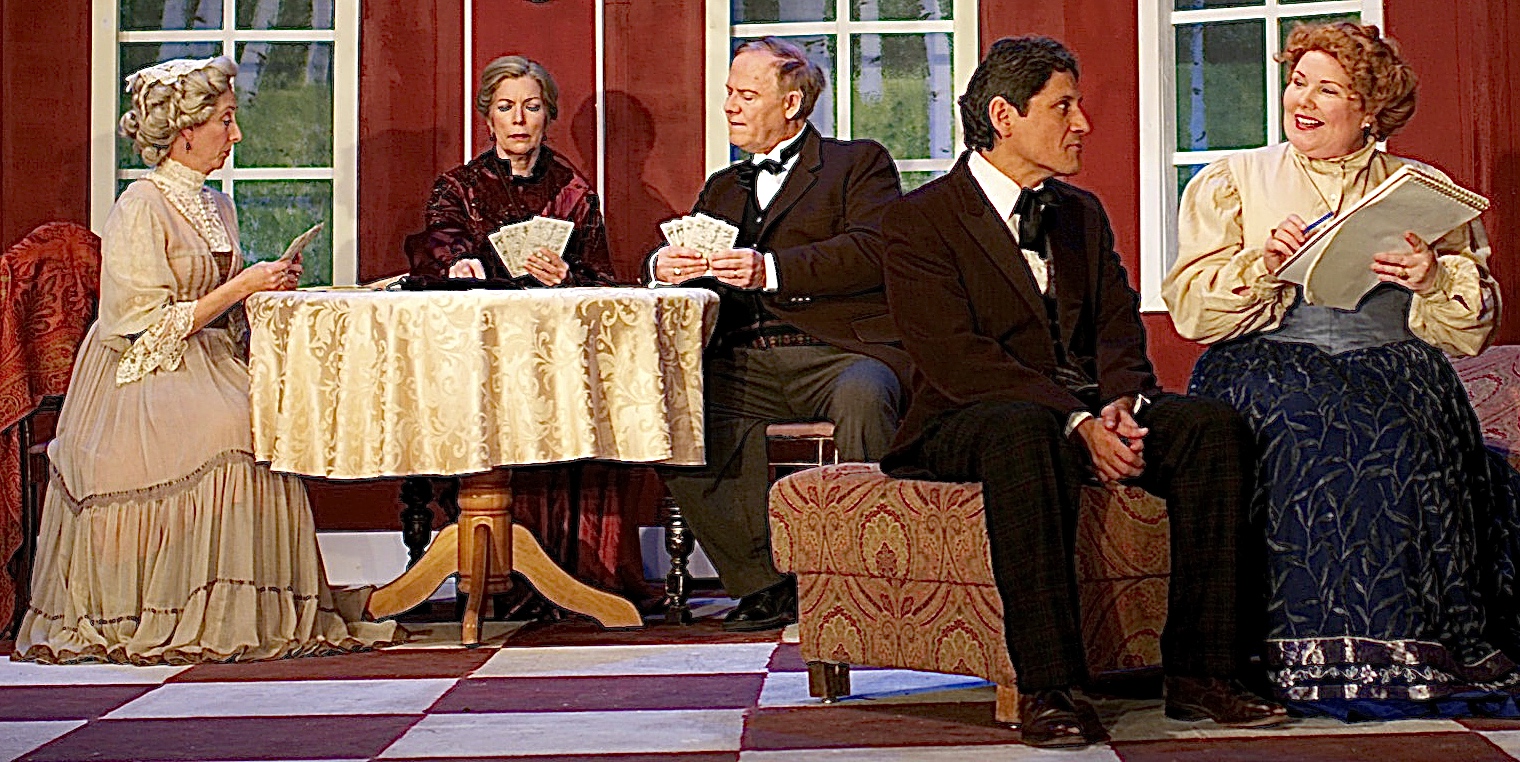
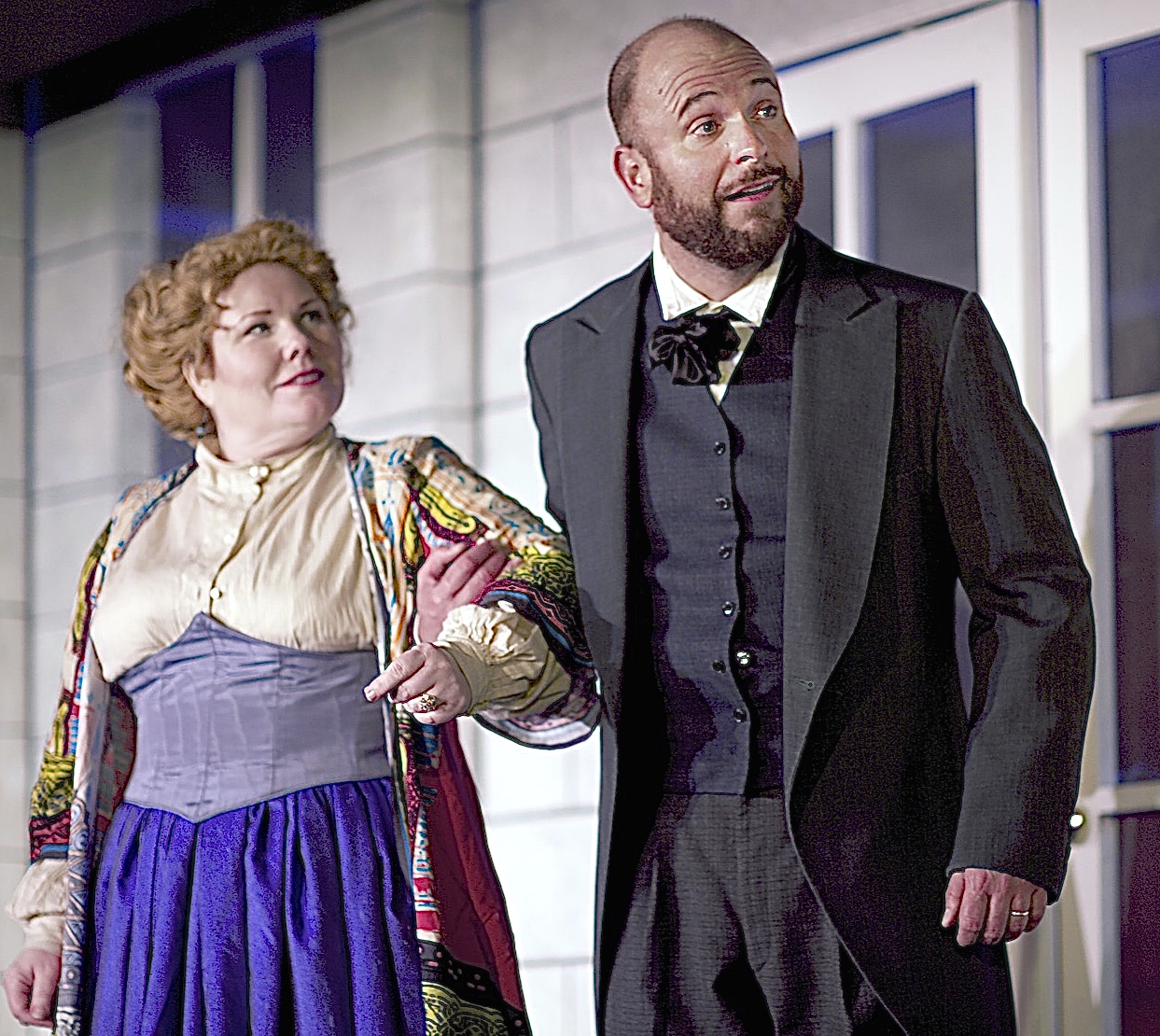
Novato Theater Company is currently presenting The Bat by Mary Roberts Rinehart and Avery Hopwood from February 8 through March 1, 2015.  It is directed by award-winning Director Clay David and produced by Sandi RubayThe Bat is a murder-mystery-thriller, originally set in 1927, but for this production it is 1954.

When wealthy Cornelia Von Gorder (Leslie Klor), along with her ditsy secretary Lizzy (Marilyn Hughes), rents an isolated mansion called Cedar Crest, having belonged to the Fleming family, she finds herself terrorized by mysterious circumstances.  Lizzy is sure it’s a ghost or the criminal “The Bat,” and the house mistress Willa (Siobhan O’Brien) agrees with them.

The audience and houseful of suspects (who all have reasons to lie), soon learn that only Jack Brooks (played by Director Clay David on the spot) is suspected of stealing money in the house and being secretly engaged to Dale (Arden Kilzer), Cornelia’s niece.  Then there is discovered the body of Ashley Fleming (Alison Sacha-Ross), the founder and owner of the bank and Cedar Crest.  Ashley had presumably been declared dead by Dr. Wells (Michael Walraven).

Everyone, including Fleming’s friend Reginald Beresford (Sumi Narendran) is trying to find the secret room where Cornelia is sure the stolen money is hidden.  Detective Anderson (John Conway) seems determined to disregard Cornelia’s amateur instincts and put down poor Lizzy.  Red herrings and wrong turns abound – though if you look for the not-so-obvious, you’ll have the answer.

Director Clay David was able to generate great acting performances from his talented cast.  This should certainly be a feather in his cap.  NTC is so lucky to have engaged such a talented Director.

The Set Designer, Michael Walraven, did a fabulous job of recreating the time-period, as did the Costume Designers Paula Aiello and Clay DavidBruce Vieira’s Sound Design enhanced the performance, as did Ellen Brooks’ Lighting Design.  Adrianne Goff managed the stage.

Performances are at the NTC Playhouse, 5420 Nave Drive, Suite C, Novato, and are held Fridays and Saturdays at 8 p.m. and Sundays at 2 p.m. through March 1st.  For tickets, call 415-883-4498 or go online at www.novatotheatercompany.org.

Coming up next at NTC will be Fiddler on the Roof, music by Jerry Bock, lyrics by Sheldon Harnick, and book by Joseph Stein, from March 26 through April 26, 2015.

Flora Lynn Isaacson

Photo by Wendell H. Wilson

Heroines at Sonoma State University’s Evert B Person Theater, Rohnert Park CA

By Greg & Suzanne Angeo, Uncategorized

Reviewed by Suzanne and Greg Angeo

Members, San Francisco Bay Area Theatre Critics Circle

Photos by David Papas

Death to the Invaders!

World Premiere of Intriguing, Uneven Heroines

Presented in its world premiere by the Sonoma State University Departments of Music, Theatre Arts and Dance, Heroines was conceived by instructors Lynn Morrow, who is the show’s Music Director, and Jane Erwin Hammett, who wrote the original script and provides new lyrics, stage direction and choreography. It features 20 selected pieces from classic operettas of the late 1800s and early 1900s that highlight the eternal battle of the sexes and the steady evolution of the role of women, perceived or real, in society.

Jenny, a character taken from Bertolt Brecht and Kurt Weill’s The Threepenny Opera, who as a prostitute has been abused countless times by men, serves as the pivot around which the other performers revolve. Some fictional, some mythical, some legendary (but none actual), these ladies are all seeking a way to empower themselves as individuals. The program draws heavily on numbers from Threepenny Opera, the likes of Gilbert and Sullivan, and Noel Coward.

Sarah Maxon as Mad Margaret

There are moments of brilliance courtesy of Sarah Maxon as Margaret, a mezzo-soprano with magnetic stage presence and light operatic skills, and soprano Allison Spencer as Eurydice, with amazing vocal control and range, possibly the best voice in the entire cast of 14. Both display formidable acting chops to boot. Also noteworthy is Nora Griffin in the role of Anna and Rodrigo Castillo as Man 1, with great voices and stage presence, talents that deserve to be nurtured. Anna Leach as Jenny delivers a sturdy performance but seems too restrained in her movements given the shady-lady character she’s playing.

SSU has a truly wonderful music program, and students make up the professional-caliber 11-piece orchestra. What gives the show credence is the music department’s efforts. The musicians are right on key, better than much of the music at other local theaters.

At times you want to dance in the aisles and clap your hands, especially during the rousing closing number “Women! Women! Women!” from The Merry Widow, sporting jaunty new lyrics by Hammett. The use of supertitles projected above the stage really helps in understanding the lyrics, but the storytelling is unfocused, and the choice of songs, while in places very entertaining, is not entirely effective. Perhaps some real-life heroines from times past and present could have been worked in somehow?

The overall idea is promising, but there are times when it lacks in presentation. The bare-boned sets, choreography and staging are serviceable but uninspiring. The ensemble, when collected onstage, can often lack a certain energy. Too frequently the cast is standing around stiffly with nothing to do (with the exception of Maxon’s Mad Margaret).

Allison Spencer as Eurydice

We have to be the heroines of our own stories. And madness can be a form of survival. These are powerful messages that Heroines seeks to convey. All in all, a premise that has been mined from such rich material and has such potential only goes part of the way on its journey.

When: Now through February 15, 2015

7:30 p.m. Thursdays, Fridays and Saturdays

2:00 p.m. Sunday

Tickets: $10 to $17, free to SSU students

Location: Evert B. Person Theatre at Sonoma State University

1801 E. Cotati Ave.
Rohnert Park, CA 94928
Phone:
707-664-4246

Website: www.sonoma.edu/theatreanddance/productions/heroines.html

Erotic ‘Venus in Fur’ at San Jose Stage

By Judy Richter, Uncategorized

Erotic sparks fly in San Jose Stage Company’s production of  “Venus in Fur” by David Ives.

It starts late one stormy afternoon (sound by Cliff Caruthers) after Thomas (Johnny Moreno) has unsuccessfully auditioned dozens of actresses for the lead in a play, “Venus in Fur,” that he’s directing. He has adapted it from “Venus in Furs,” an 1870 novel by Leopold von Sacher-Masoch. The term “masochism” evolved from the author’s name.

Thomas is just about to go home to his fiancee when another actress, Vanda (Allison F. Rich), stumbles in on stiletto heels. Flustered from a trying day, she says she had an appointment several hours ago, but she’s not on Thomas’s list.

Still, she convinces Thomas to give her a chance, saying she’s just right for the part because the play’s lead character is called Vanda. She comes across as an airhead who seems to know almost nothing about the play or its source.

However, when she takes off her raincoat, she’s in all black — leather miniskirt, bustier, stockings and garters — because, she says, the character is a prostitute (costumes by Jean Cardinale). Then, as she and Thomas, playing Severin, the lead male, read through the script, it appears she has memorized most of the lines.

And, from the large bag she lugged into the sparsely furnished rehearsal space (set by Richard C. Ortenblad with lighting by Maurice Vercoutere), she pulls a dress suitable for the time period of the play. As if that weren’t enough, she also has brought in a frock coat and jacket that both fit Thomas perfectly.

The play within the play concerns the dominant-submissive sexual relationship between Vanda as the dominant one and Severin as the submissive one.

Paralleling Thomas’s script, the balance of power between him and actress Vanda shifts from him as the director to her as herself and her character.

American Conservatory Theater successfully staged “Venus in Fur” last year, but this current production is more erotically charged in part because it’s in a far more intimate space.

Another reason might be that Moreno and Rich have acted together before and apparently have developed a sense of trust that creates the necessary chemistry between their characters.

Director Kimberly Mohne Hill also deserves credit for careful pacing of this 90-minute, intermissionless play. She allows laugh lines to relieve some of the tension while adding to the audience’s questions about Vanda. Just who is she? How does she know so much about Thomas, his fiancee and even their dog? Why is she there?

The playwright provides no concrete answers to those questions, but he gives the audience for this fine production plenty to think about.

“Venus in Fur” will continue through March 1 at The Stage, 490 S. First St., San Jose. For tickets and information, call (498) 283-7142 or visit www.thestage.org.


Magic Theatre stages Shepard’s ‘A Lie of the Mind’

By Judy Richter


Domestic violence is the catalyst for Sam Shepard‘s “A Lie of the Mind,” staged by the Magic Theatre.

The perpetrator is the volatile, paranoid Jake (Sean San Jose), who believes he has killed his wife, Beth (Jessi Campbell). No, she hasn’t died, but she’s been badly brain damaged.

Both wind up in the care of their brothers and then their families, where the seeds of their combative relationship were sown. Beth’s brother, Mike (James Wagner), is initially solicitous of Beth as he tries to help her recover, but he has his unsympathetic side, too. In that respect, he takes after their father, Baylor (Robert Parsons), who disregards the feelings of others and treats his wife, the sweet-tempered Meg (Julia McNeal), like a servant.

Jake’s brother, Frankie (Juan Amador), is a basically good guy though none too bright. Their mother, Lorraine (Catherine Castellanos), is protective of Jake, essentially denying that he could have done anything wrong. However, their sister, Sally (Elaina Garrity), sees things clearly.

Running about three hours with one intermission, the play explores family relationships and the way that people often don’t listen to one another. However, it would be a mistake for the audience not to listen, because each scene is loaded with emotional information about the characters and their motivations as well as their relationships with the others.

The program notes say that this is one of Shepard’s more feminist plays. It certainly seems so because each of the four women eventually forges some kind of new future for herself.

As directed by artistic director Loretta Greco, some scenes might benefit from different pacing, but overall the play moves inevitably along. Except for Amador as Frankie, who tends to overact, the acting is outstanding. San Jose is downright scary as Jake, while Campbell skillfully portrays Beth’s frailties as well as the insights she articulates despite and because of her brain injury.

Robert Brill‘s raked, wood plank set is sparsely furnished, allowing quick transitions between scenes. Seated off to one side are Nicholas Aives and Jason Cirimele, who composed and play mood-setting music.

Lighting by Burke Brown, sound by Sara Huddleston and costumes by Alex Jaeger enhance the production.

Shepard was the Magic’s resident playwright for more than 10 years and premiered seven of his plays there. However, this is the first time that it has staged the 1985 “A Lie of the Mind.” American Conservatory Theater presented it in 1987.

It’s a challenging play for both actors and audiences, but it has its intellectual and emotional rewards.

Secrets and surprises in ‘The Lyons’ at Aurora

By Judy Richter

Long-held resentments along with secrets and surprises trickle upward and sometimes spew forth in Nicky Silver’s “The Lyons,” presented by Aurora Theatre Company.

The catalyst for this play about a dysfunctional family is the pending death of the father, Ben Lyon (Will Marchetti).  Although he and his wife, Rita (Ellen Ratner), have known for several months that his cancer will be fatal, she doesn’t inform their two adult children until death could come within a few days.

Naturally both Lisa (Jessica Bates) and Curtis (Nicholas Pelczar) are shocked at the news and angry that they haven’t been told sooner. As the family gathers in Ben’s hospital room, known information emerges first: Curtis is gay, and Lisa, a recently divorced mom raising two young sons, is a recovering alcoholic.

There’s much more than that, however, as playwright Silver reveals in the family’s often scathing, often hilarious conversations. One thing is clear: There hasn’t been much love to go around. However, there’s lots of bitterness, and everyone is scared in some way, mostly of being alone.

The play’s other two characters are a nurse (Edris Cooper-Anifowoshe) and a real estate agent, Brian (Joe Estlack). Brian appears in only one scene, when he shows a vacant New York City studio apartment to Curtis, who’s supposedly interested in buying it. Nevertheless, Brian plays a pivotal role in the play’s outcome.

Director Barbara Damashek paces this two-act, two-hour work well, allowing time for the laughs and carefully pacing speeches that leave the audience raptly quiet. One such scene comes as Ratner’s Rita tells about the time many years ago when she bought a gun, presumably to kill Ben.

In fact, Rita carries some of the play’s heaviest loads, especially in one of the final scenes, when she acts on her intention to snare whatever happiness she can.

Marchetti is marvelously grumpy as the dying Ben, while Bates and Pelczar embody all of the anxieties felt by his two offspring.

Except for the apartment scene, the rest of the action takes place in a hospital room (set by Eric Sinkkonen with lighting by Kurt Landisman and sound by Chris Houston). Costumes are by Callie Floor with fight direction by Dave Maier.

This Bay Area premiere production is a highly entertaining, thought-provoking evening of theater.

“The Lyons” will continue through March 1 at Aurora Theatre Company, 2081 Addison St., Berkeley, through March 1. For tickets and information, call (510) 843-4822 or visit www.auroratheatre.org.


“Landless” by Larissa FastHorse, AlterTheater Ensemble in San Rafael and San Francisco CA

By Greg & Suzanne Angeo

A WORLD PREMIERE IN SAN RAFAEL


Playwright Larissa FastHorse

Reviewed by Suzanne and Greg Angeo

Members, San Francisco Bay Area Theatre Critics Circle


Photos by David Allen Studio


Landless” Is Cynical, Inspiring

“Landless” is a unique bit of pop-up theater being presented by the AlterTheater Ensemble in two Bay Area locations. The first production, at an empty storefront in San Rafael (unusual for the North Bay), is the world premiere. It continues its run in San Francisco at the ACT Costume Shop Theater. “Landless” explores the meaning of interdependence, community, home, friendship and family, with touches of romance and villainy. Through each character we experience what it means to be landless, in different ways, and witness the demise of the middle class.

Commissioned by AlterTheater, the award-winning Larissa FastHorse, a Lakota tribe playwright and choreographer, wrote “Landless” based on conversations with business owners and residents of San Rafael. Using the flashback narrative device, she tells the poignant story of Matthew’s Mercantile, a venerable Main Street shop in Anytown USA, which has been run by four generations of the same family. But after 120 years, it has reached the end of the road, losing business for years to big-box stores. Elise, the aging shop owner, is forced to liquidate, losing both her business and her home. The longtime relationship between Elise (Patricia Silver) and Josiah (Nick Garcia) has become like family. Josiah came to work at the shop as a lonely ten-year-old right after Elise’s father died, and stayed for more than 20 years, helping run the shop. Elise has been helping a homeless man, Mr Harrison (Michael Asberry), to find work and shelter at her store. He is able to retain his dignity and sense of self-worth because of her kindness. Every item in the shop has a backstory, triggering flashback-time travel.

Patricia Silver, Nick Garcia

Josiah and his family are prominent local members of a “landless” Native American tribe (Josiah: “It’s like being born royalty”). The tribe has just regained Federal standing and now has access to funds to build a casino and hotel. Josiah dreams of great riches and hopes to be able to help his beleaguered friend Elise keep her shop. Complications arise when the tribe runs into roadblocks courtesy of the ruthless owner of a neighboring business (Emilie Talbot). Josiah loses his new-found identity, Elise loses her business and her home, but in the end they both accept their new realities with joy and a profound sense of renewal.

Asberry (acclaimed for his recent work in “Fences” at Marin Theatre Company) has a chameleon-like talent and convincingly plays a number of vividly-drawn characters, including a goofy teenager in love, Josiah’s disillusioned father and Elise’s gentle and caring homeless companion Mr Harrison. Talbot as Natalie, excellent in this and other small roles, offers an honest interpretation. You can feel Natalie’s frustration and raw survival instinct, compelling her to hurt others to protect herself and her family. Garcia delivers a fine performance for the most part, but his technique falls short when he plays Josiah at age ten – it’s a stretch to see the bearded actor as a child. Silver as Elise is a good enough actress, but does not convincingly give the illusion of youth in her flashback scenes. Capturing youth is a difficult task for any mature actor.

Emilie-Talbot

Capably directed by Ann Brebner and Jeannette Harrison, the San Rafael location is an imaginative, ambitious production. It’s presented on a shoestring in an intimate and bare-bones venue that seems especially suited to the story. Props are donated hand-me-downs from local thrift stores and fit the setting perfectly. However, issues with the lighting and sound system make it seem inadequate to the task. There’s a grating noise and flashes of light to indicate flashbacks in time, effects that seem ineffective and irritating at the same time. Sometimes the flashbacks, which may be a bit too frequent and confusing to the story, can challenge the audience’s imagination. Transitions are a little abrupt and sometimes it’s hard to tell if we’re in the present or the past. Overall, this is a very risky yet thoughtful production that addresses with brutal honesty how people feel about becoming “Landless”, with a strangely uplifting and surprising ending.

Michael J Asberry, Patricia Silver


In San Rafael Through February 1, 2015

8:00 p.m. Fridays and Saturdays

2:30 p.m. Sundays

Tickets: $25

Location: 1619 Fourth Street (at G Street, next to Johnny Doughnuts)

San Rafael, CA
Phone: 
415-454-2787

Website: www.altertheater.org


In San Francisco

When: February 12 through February 22, 2015

8:00 p.m. Fridays and Saturdays

2:30 p.m. Sundays

Tickets: $25

Location: ACT Costume Shop Theater

1117 Market Street

San Francisco, CA
Phone: 
415-454-2787

Website: www.altertheater.org


The Revenge of the Dead Indians: In Memoriam, John Cage (1993)

By Joe Cillo

The Revenge of the Dead Indians

Directed by Henning Lohner

Reflections on Beethoven, John Cage, Music, and Human Connection


On the first page of his manuscript to Missa Solemnis, Beethoven wrote: “Music is communication, from the heart to the heart.”  By extension we might say in general that art is communication from the heart to the heart.  It is a very deep seated assumption of western cultures for millennia.

The Revenge of the Dead Indians (1993) is an excellent documentary introduction to the music and ideas of John Cage.  At the very end of the film John Cage was asked three simple questions interspersed among the credits as they rolled by.  The first was, “What is music?”  To which he responded, “Music is paying attention to sound.”   The second, “What is art?”  His reply, “Art is being attentive to everything that is there.”  And finally, “What is love?”  To this he answered, “We don’t know.”  These three answers to these simple questions are very telling and key to understanding John Cage’s music and what sets it apart from more traditional western music, represented par excellence, by Beethoven.   The film delivers a sympathetic and enjoyable presentation of his music and his ideas.   He was a charming, interesting, thoughtful man.  The crux of it, interestingly, came at the very end during the credits when these three basic questions about the philosophical foundations of his art were put to him.

The contrast between Beethoven’s concept of music as communication and Cage’s concept of music as attention to sound represents two different continents upon which music and art find themselves.  Beethoven’s view that music is communication, music is a language, means that music is a way to connect people to one another at the deep level of the heart, the emotional and personal center of each person.  There is one who creates the music in order to convey something of his inner self to an assumed audience who is receptive and capable of receiving its message.  By immersing oneself in a musical experience one merges one’s consciousness through sound and emotive resonance with that of others sharing the same experience.   Music is a social experience which creates positive bonds between people, inner resonances of emotion and psychic orientation.

Cage’s concept is entirely asocial, or I would say, narcissistic, in that music is the private experience, or we might say, the condition, of being attentive to all of the sound in one’s environment.  It is an attitude of openness and acceptance to all the experiences of sound that are available in the world rather than a communicative relationship to other people.  We might say that music is an attitude of the self as subject, rather than a bridge between the self and other selves.  Therefore music has nothing to do with the meaning of the sound or whether the sound originates in some human intention.

Not all sound communicates.  There are huge telescopes scanning the heavens right now listening for communications from other civilizations in far off depths of space.  These telescopes are picking up all manner of radio signals.  But they are not communication, at least not yet.  John Cage may call this music because it is attentive listening, but there is no meaningful connection being made to the origins of the sounds and therefore it is not music as far as Beethoven is concerned.  It is just sound.

Sound may have a meaning or it may not, but that is not important for John Cage.  Music is not about meaning or interpretation or connection.  Music is a way of being, that is, a way of experiencing the world of sound.  To try to “understand” it is already mistaken.  “Understanding” implies that there is some intention behind the sound.  In traditional classical music one attempts to grasp the composer’s intentions as conveyed by the printed score and then render those intentions to an audience in a musical performance.  This is how classical musicians are brought up and how they approach their art all their lives.  John Cage is a radical departure from this.  The composer’s intentions become irrelevant.   The sound created can be completely random.

He talks a lot in the film about chance and how important it is to be open to chance and to allow chance sounds to become music.  How do chance sounds become music?  Through our being attentive to them and accepting them, as opposed to filtering them out in order to hear something else.  It implies a calm acceptance of whatever is.  The sound of rain tapping on a window may create a feeling of warmth, soothing, calmness, anxiety, distress, or somnolence.  But it is not communication because there is no communicator originating the sound we perceive.  If a sound should give rise to an emotional response in us, it will be due to unconscious associations we make based on our past experience.  If someone recorded such a sound and played it for someone else hoping to signify something or elicit a response in them, then it would be music in Beethoven’s sense:  a chance sound could become music through selection and presentation by a human subject.

For John Cage the sound of the rain is a musical experience just by virtue of our listening to it, allowing it to occupy our attention.  Such openness and calm acceptance can be very liberating.  It disposes of the need to filter sounds in accordance with our likes and dislikes.   Being disposed to accept whatever may come does indeed reduce stress.  But it substitutes juxtaposition for meaningful connection.  It is very much a Zen Buddhist idea.  Yoko Ono immediately grasped the relationship between John Cage’s approach to music and Zen Buddhism as she stated during her interview in the film.

Beethoven, on the other hand, is nobody’s Buddhist.  Beethoven is about connection, striving, and struggle.  In the music of Beethoven we see life in all of its many incarnations of passion and struggle: the turmoil, the suffering, the longing, the triumphs, the moments of profound peace.  Music has intentionality.  Music can and must be understood, or it can be misunderstood.  In any case it must always be “interpreted.”  There can be disagreements over meanings and interpretations.

In John Cage’s music there can be no such thing.  There is no “interpretaton.”  There is only one’s openness to sound and to chance.  It can never be the same twice.  Whatever is, is ‘right,’ but the concept of right and wrong do not really apply here.   It is the state of being open that is paramount.  The act of selecting is already mistaken.

On a deeper level it is a repudiation of human intention and even of the human self. By selecting some sounds over others and imbuing them with meaning we assert ourselves and our personal needs and desires.  This is contrary to the Buddhist philosophy of simply being, without intention, without desire, without asserting oneself in the world, or toward other people.    This is really what John Cage’s music reflects.  It invites you to just be, to simply receive, to expand your awareness and acceptance of all ambient sound.  With John Cage each listener becomes a receptacle rather than an active interpreter.  The consequence of this is that one loses one’s grasp of music as a communicative language.

It is not an accident that John Cage answered “We don’t know” to the question “What is love?”  He doesn’t have a clue what love is, because love is about connecting with other people through need and desire.  But Zen Buddhism repudiates need and desire.  It embraces only being.  Love is a different world, a world of intensity, of need and hunger and longing and dreaming and desiring.   For Buddhism love is a world of futility and ultimate disappointment.  Most music in the western tradition is about expressing the nuances and varieties of this world of experience as an attempt to connect and resonate with others.  This was Beethoven’s understanding, which he took for granted.  Beethoven lived in a world of human connection intensely felt.  John Cage lived in a world of random sounds acutely observed but devoid of “meaning,” and indifferent to human connection.

Beethoven’s definition is the greater, I think, because it encompasses the human experience of connectedness, which has been crucial to our survival since humanity emerged as a species hundreds of thousands of years ago.  Cage’s music is severely limited by its indifference to the needs of human beings who create sound for their own purposes.  This is why Cage’s music will never be as popular or as great as Beethoven’s, because ultimately human beings need and seek connection.  It is our destiny from birth and throughout our lives.

Buddhism cannot be refuted in the sense that there is nothing to tell us a priori whether life is a good thing or it isn’t.  There was a time when we did not exist, but we came into existence, more or less by chance.  But how should we regard this condition?  Is it better to exist or not to exist?   This question cannot be answered except to say that everything that is alive strives to grow, increase itself, continue its life, and reproduce.  This seems to be hard wired into all living things.  We are thus accustomed to making the assumption that life is “good,” because we all struggle to maintain ourselves and continue living.  Buddhism calls this assumption into question.  It does not assert that life is a bad thing, that we should not exist, but it tells us that life is problematic and that the fundamental problems of life cannot be solved — in principle.  Therefore all the struggle and tumult of striving to improve our lives and create more of ourselves is fundamentally futile and will actually increase the suffering that is inherent in all of life.  John Cage made a series of oral recordings called, “Diary:  How to improve the world ( you will only make matters worse),” which is very consistent with this Buddhist idea of futility and passivity.

Buddhism is based on several observations that I believe are distortions and profoundly mistaken:  that all life is suffering, that suffering stems from desire, and that all of our striving to reduce or eliminate suffering only increases it.  These are some of the basic falsehoods that are the foundation of the Buddhist outlook.  While it is true that all things are transitory, this is not a reason to disengage oneself from life or relinquish all desire for things that must ultimately pass.  Transitoriness does not imply futility.  What Buddhism fails to recognize is that there is profound satisfaction in the transitory pleasures of life that give us a deep sense of fulfillment within ourselves as well as a sense of meaningful connection to our fellow human beings.  This enhances our sense of wellness in life and enables us to impart that sense of well being to others to whom we are connected.  We are naturally predisposed to experience life in this way.  And while it is true that all such satisfactions are transitory, it is also true that a life filled with those small satisfactions is better than one lived in deficiency and deprivation.  One must learn the indifference of Buddhism through long years of self discipline.  It does not come naturally.  Buddhism is contrary to everything that is natural in life, and it is very hard to learn this mode of experiencing oneself.

Throughout the film we can see the very powerful impact of Buddhism on John Cage and his music.  His use of chance elements in his musical compositions “to free his music from his likes and dislikes,” is totally contrary to Beethoven’s approach to music, which is echoes Nietsche’s maxim in Twilight of the Idols : “the formula for my happiness: a Yes, a No, a straight line, a goal.”  Yoko Ono saw John Cage as a bridge between western and oriental cultures.  But how can there be a bridge between engagement in life and the repudiation of life as a fundamental value, which is what Buddhism does?  It is existence without “living.”  And the art that it gives rise to is limited and minimalistic and repudiates of all the reasons people create music with their voices, with instruments, and through the incorporation of random sounds.  Most people who embrace Cage’s music as a curiosity do not grasp its radical and profound rejection of the very foundations of human existence.  This is why it will never have more than a limited following and why Beethoven will continue to inspire and be embraced by people as long as they are able to play and hear him.


VIEW FROM ACROSS THE POND: SLOGANS

By Joe Cillo

SLOGANS

Our major obligation is not to
mistake slogans for solutions.
Edward R. Murrow

David Cameron made the headlines not long ago because he refused to wear a t-shirt proclaiming: THIS IS WHAT A FEMINST LOOKS LIKE.  I have no problem with his refusing to wear a slogan like that, because it is just a bunch of words that are meaningless until you act on them.


I wonder if people realize that a statement means nothing unless is indicates an action.   Wearing a sentence doesn’t make it happen.  I think we should pass a law that forces you to stand by what you say.  For example, if you are wearing a t shirt that says WELL BEHAVED WOMEN RARELY MAKE HISTORY you better get naughty or no one will believe in you anymore.

I have always loved: THE EASIEST WAY TO GET A HEALTHY BODY IS TO MARRY ONE because it gives me an excuse to have flabby arms and a sagging bum. If anyone sees me in that t-shirt, I always say, “That’s why I’m single.”

I am being an honest woman just like my mother said I should be.

Now you take the slogan: IF WOMEN WERE REALLY LIBERATED, WHO WOULD DO THE DISHES?  The only women that should wear that one are female executives who get up at 6 in the morning to pack the kids’ lunches and make a hearty breakfast for the family, rush off to the office to do important things and then, at five o’clock, slip off the high heels, don the sensible oxfords and drive to the supermarket to buy dinner.  They hurry home, run the vacuum as they rush upstairs to change into something comfortable and loose enough to handle pots and pans, dash downstairs, create a gourmet feast for everyone, light the candles rearrange the flowers on the table and call “Dinner’s ready.”  Yes sir. That is THE t- shirt for them.

Their husbands and children should bow down to these heroines of the modern world and present them with shirts that say MOTHERS ARE MIRACLE WORKERS.

If you wear a t-shirt that says: I DON’T NEED YOUR ATTITUDE, I HAVE MY OWN you better have a smart mouth on you.  Someone dressed in a shirt like that is telling everyone, “Watch out!  I don’t take garbage from anyone.”   Yet invariably, the person sporting that kind of slogan will be a skinny five-foot failed football player.  Doesn’t he realize he is wearing a lie?

I am a woman of a certain age and I am sick of people giving me t-shirts that shout things like I AM ONE HOT COOKIE because I am not, anymore (if I ever was..but that is another  story.)  And what about AGE IS JUST A NUMBER. No, it isn’t .  It is an accomplishment.

I have been shopping for a t-shirt that tells all you youngsters why I stay out late at night and don’t take good care of my liver and I finally found the perfect one: YOU CAN LIVE TO BE 100 IF YOU GIVE UP ALL THE THINGS THAT MAKE YOU WANT TO LIVE TO BE 100.

I bought it without even looking at the price.  I wear it when I go to the pub and I admit I flaunt it when I pass the gym and see those wild-eyed, determined people sweating it out on their stationary bikes.  “See this?”  I say as I stick out my chest and lap up my chocolate ice-cream cone. “I have discovered truth.”


“Better Never than Late”–Contra Dance in Sebastopol

By David Hirzel

If you’re not familiar with Contra Dance (and bear in mind that I am only just barely so), think square dancing-mingled with line-dancing spun to the old-timey tunes of a three-piece acoustic band. On Saturday night last, the band Ruby Mt. String Band consisted of fiddle, banjo, and guitar, the tunes were long-winded reels and waltzes.

The outward-reaching contra dance community welcomes newcomers to the art, and so novices like me and Alice and Sharab are provided with a short introductory lesson 1/24/15 at Wischemann Hall in Sebastopol CA, in the very basics of the dance before the fun begins.

The dance is made up of squares of four, interweaving with each other as they move in opposite directions, so that every sixty-four beats or so, you have a new partner with whom to run through the same figures. The figures include “balances” and “do-si-do’s” and “hays” and “swings” two or three or four times during the course of each reel. Since you might have six or eight squares constantly moving through each other, caller Celia Ramsay‘s admonition “better never than late” is particularly apt.

The music is fast-moving, as are the twenty-four or so dancers. If the newcomer gets behind in the beat (we always do), there is no chance that by moving faster he will recover and be in place when his new partner is reaching out, balancing, or getting ready to swing. Don’t even try. “Better never. . .”

Now, in my view the best thing about contra-dance, indeed all the social dances of a bygone era, is this: every two minutes you get a new partner. And two minutes after that another. And you get to interact with each in a prescriptively chaste manner, with the “swing” a closed box with only two occupants, each holding the other around the waist or at the shoulder. “Swing” is a vigorously rhythmic spin to the music. The key to not getting dizzy is to look into your partner’s eyes.

Now, picture this. You are spinning across the dance floor and looking deeply into the eyes (is there another way?) of a complete stranger. Behind that stranger’s face the whole world is spinning. To your own new eyes it appears as though you are the lead actor in a romantic movie, and your partner is, well, your partner. And, from sheer joy, you are both laughing like hell. There is no other way you will become so intimate with a total stranger in under two minutes. And in another two minutes, you will have another with whom to become so engaged.

And everything about this moment is so completely chaste.

And you won’t get to have this moment, if you don’t make it happen. So, in this case it’s “better late than never.” But when you’re the newcomer on the Contra Dance floor, it’s the other way around. You could say that’s the magic of it. . . . And if you’re lucky like me, you get to leave the dancehall with the one you came in with.

Info and calendar:  North Bay Contra Dance Society

Review by David Hirzel