Mephistopheles — San Francisco Opera Performance Review

By Joe Cillo

Mephistopheles

San Francisco Opera Performance

September 14, 2013


The title of this opera is Mephistopheles.  Mephistopheles is supposed to be the Devil.   But this is not about Mephistopheles or the nature of evil.   Mephistopheles becomes little more than a tour guide in this opera.  It seems to be about Faust more than it is about anything, the aging scholar who trades his soul to the Devil.  But it is not clear what he traded it for or what either of them got in the bargain.  This opera is a series of disconnected, incomplete vignettes that do not form a coherent narrative or portray any characters with clarity, or depth.     

It is a mediocre work by a mediocre mind.  I don’t understand why they even staged this.   The person who wrote this, Arrigo Bioto, does not understand evil.  This opera reflects a typical religious ascetic mentality that associates evil with the body, sex, and especially women, who are the inspirers and the objects of lust.  It is a celebration of conservatism, pessimism, asceticism, and archaic religious nonsense.   This man is not a deep thinker, not insightful, has no interesting ideas or perspective, and no psychological sophistication.  I have an extremely low opinion of him as an intellect. 

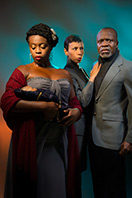
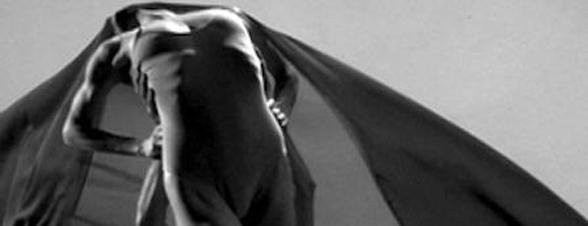
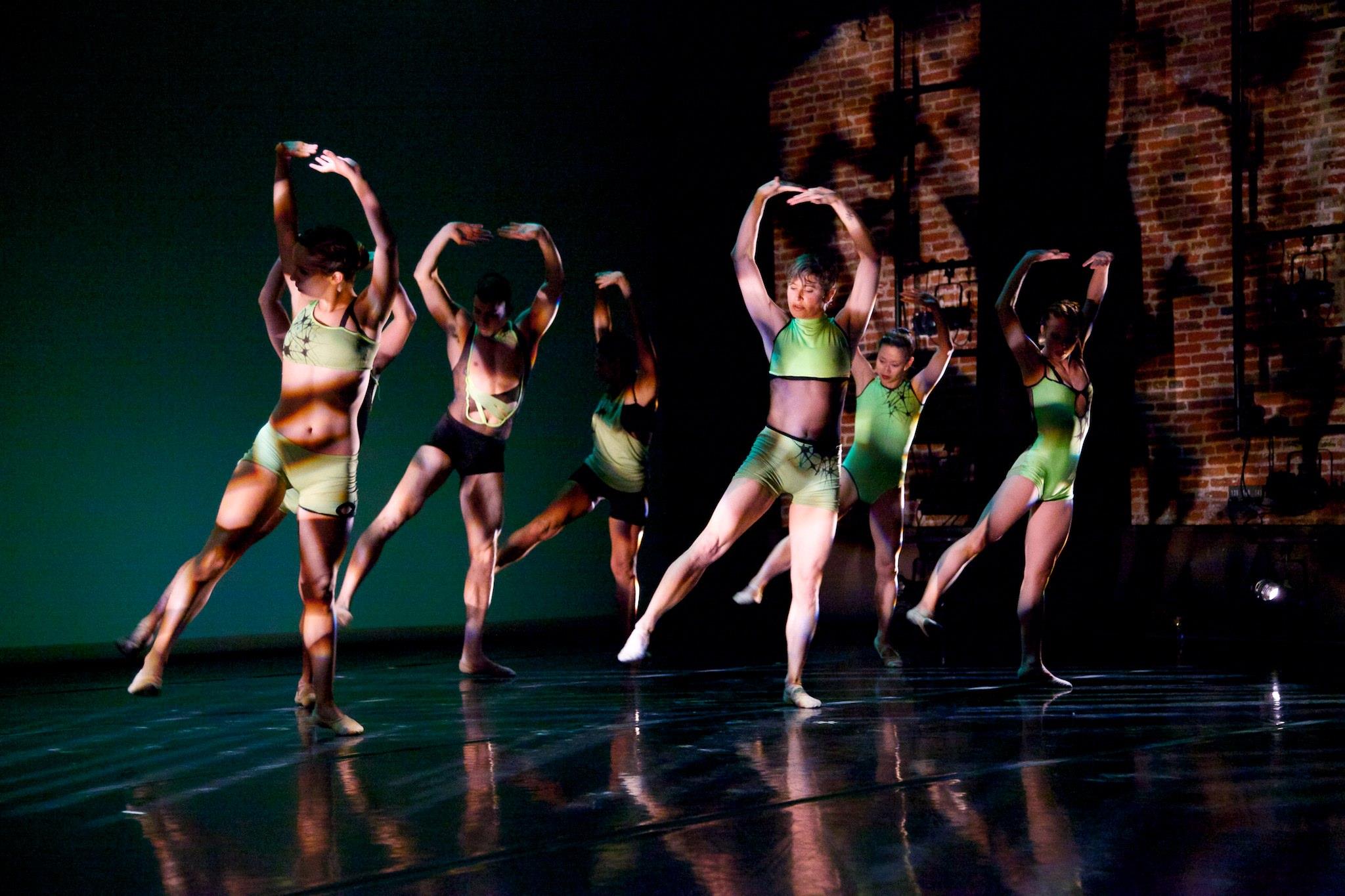
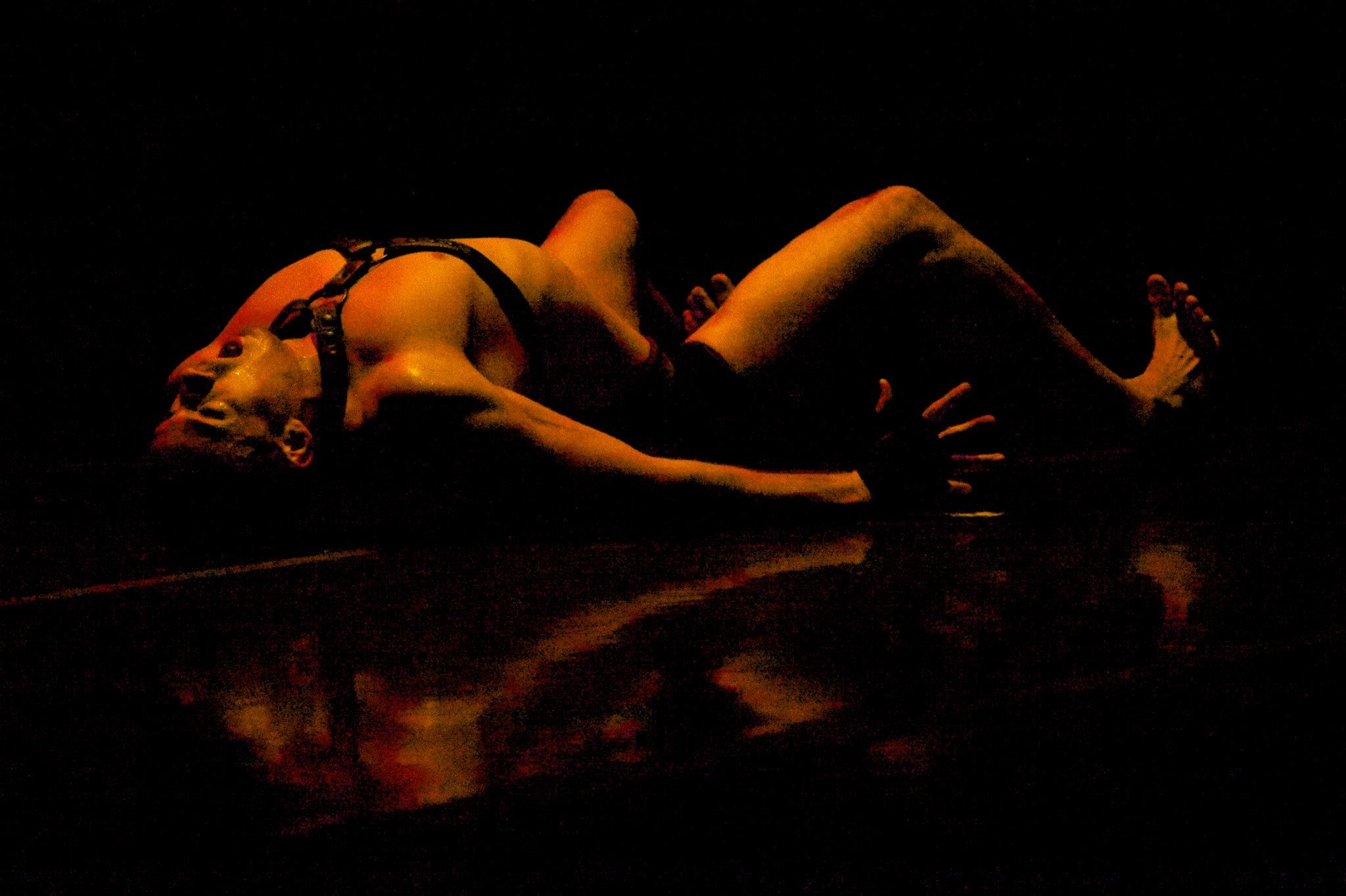
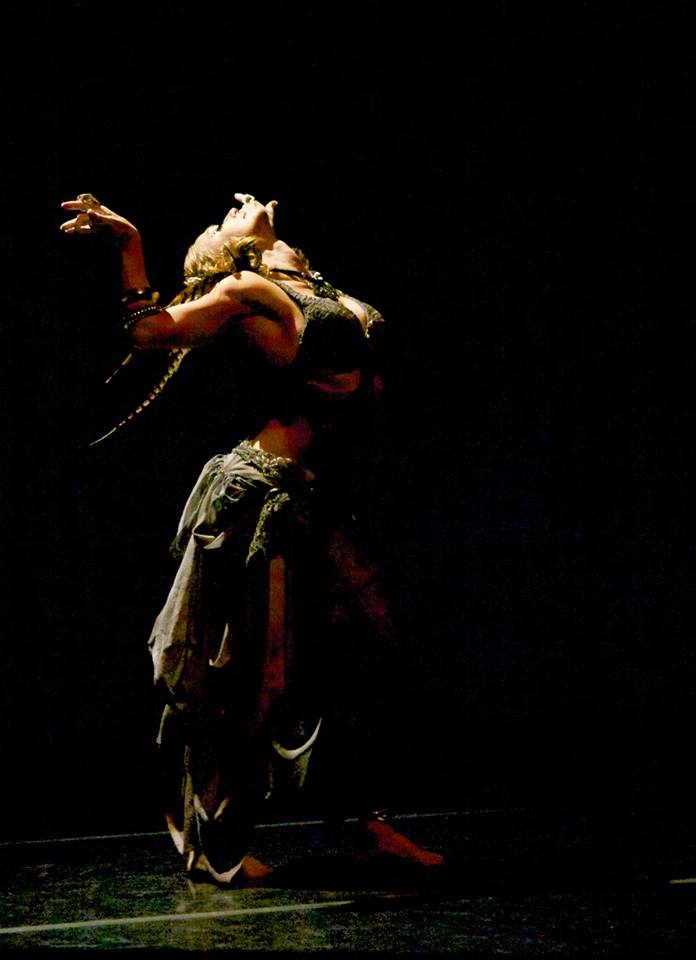
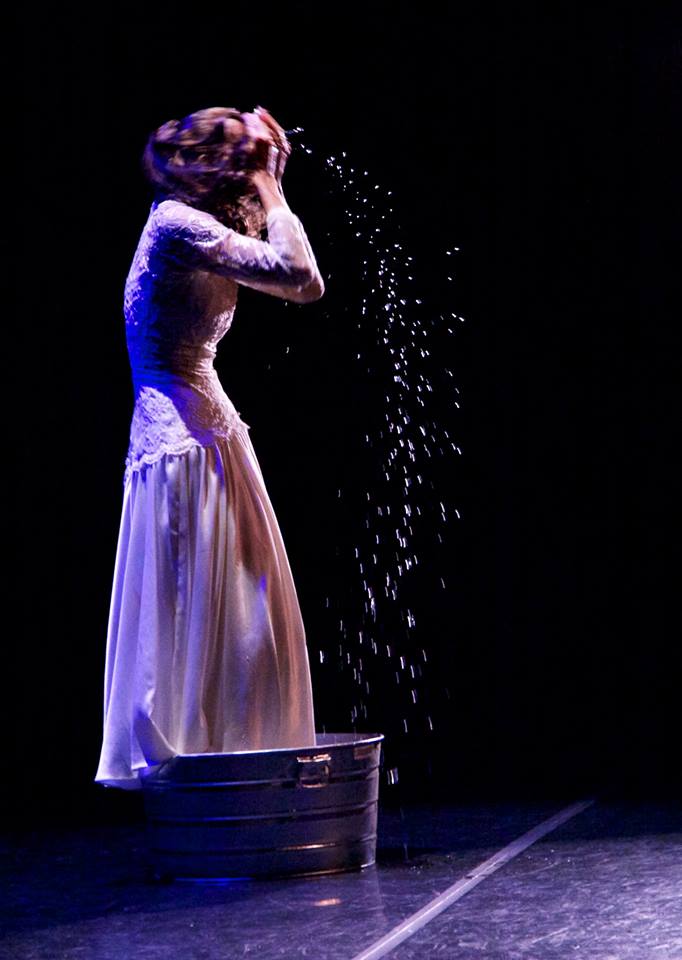
I wouldn’t say a word against the performance, however.  The imaginative staging, the singers, the chorus, the dancers, the costumes, the lighting and sets, create a brilliant spectacle that saves this lumbering monstrosity from becoming a total quagmire.  Unfortunately, all of this splendid display is in the service of an insipid concept.  If you can just sit there and watch it for its visual brilliance, without thinking too much about what it means or asking yourself what it is all about, you might like it.  The nudity, the strip tease, the simulated sex, the dangling penises, are all interesting to watch.  If you don’t get much chance to see naked human bodies you might be titillated, but this lurid sensuality does not save the story line, and it is done with a lightheartedness that underlines the shallowness of the whole performance.  It is cartoonish.  These are caricatures rather than characters.  It is not interesting, and it becomes increasingly ridiculous and repulsive as it goes along. 

The ending is extremely confusing and idiotic.  Faust, after making a bargain to sell his soul to the Devil, ends up going to heaven.  Margherita, his lover, whose mother he poisons and whose child is drowned in the ocean is executed (ascetics always blame women for sexual misadventures and punish them severely).   Mephistopheles is just a footnote to all of this.  He is a kind of master of ceremonies, but is never a principal in the action. 

The nature of evil could be an interesting subject and the Devil could be a fascinating character for dramatic portrayal.   This opera does not do justice to either of these topics.  Someone should write a different opera on this subject.  This one should fall into deserved oblivion.  It is quite long and slow moving.  There are two long intermissions.  There is not enough substance to make it worth sitting through.  This art form needs an upgrade.    

AROUSAL and THE LOVER

By Joe Cillo

AROUSAL and THE LOVER

Reviewed by Jeffrey R Smith of the San Francisco Bay Area Theatre Critics Circle

What? Bohemians living in Alameda? And, Thespians? Right here in River City?

Alameda’s own Laura Lundy-Paine is currently starring in a double-header at the Phoenix Theatre on Mason Street in San Francisco.

MS Lundy-Paine, a first class actress, has formally studied acting at Pomona College and has classically trained at the Royal Academy of Dramatic Art in London.

She has graced west coast stages from the Portland Shakespeare Festival, to the Oregon Stage Company, Stinson Shakespeare and our own Rhythmix Cultural Works.

Presently at the Phoenix, the accomplished MS Lundy-Paine shares the Klieg Lights with John Steen; they open with George Pfirrmann’s AROUSAL followed by Harold Pinter’s THE LOVER.

In AROUSAL MS Lundy-Paine plays the sintering Albena: an exotic therapist of sorts; she is severed from her native Ukraine and for a small fee, she is willing to help Clifford, via very unconventional therapies, to overcome the isolating social handicaps associated Asperger’s Syndrome.

Albena proves that you don’t have be handicapped, to have a handicap; a turbulent history in a ruthless, lawless, post-Soviet wasteland and a family swine circus is more than sufficient.

At the end of her rope—okay extension cord—Albena finds that a human connection, rather than on-line Scrabble, might provide her a reason to go on living.

In THE LOVER, Lundy-Paine ratchets up her intensity, nearly setting off the smoke alarm with sangfroid sensuality.

She plays Sarah: a married woman trying to infuse a ten-year marriage with the brio, élan and endocrinal rush that it had back in the early days.

Sarah and Richard, mired in the doldrums of middleclass suburban London, fantasize the way most people do, only they share their fantasies to spool up marital intimacies and save on their heating bills.

This is high-intensity theatre in an intimate setting; no one is more than three rows from the end of the stage; you can almost smell Albena’s rot-gut vodka and cheap perfume.

MS Lundy-Paine is a resident member of the award winning Virago Theatre; the company includes Robert Lundy-Paine and Eileen Meredith, also from Alameda.

For a tantalizing and provocative evening visit www.ViragoTheatre.ORG.

The Phoenix Theater is on the 6th floor of 414 Mason Street in San Francisc

Random Acts of Love a “should see” at SF Fringe Festival

By Kedar K. Adour

RANDOM ACTS of LOVE: 3 Dark Comedies by Lee Brady. Directed by Scott Boswell. Company Players at the SF Fringe Festival. Exit Theatre on Eddy, EXIT Stage Left, 156 Eddy Street, San Francisco. Tickets online www.sffringe.org.  

SEPT 7th@1:00, 11th@7:00, 14th@7:30, 15th@4:00
Random Acts of Love a “should see” at SF Fringe Festival
Getting a play or performance piece into the 22nd San Francisco Fringe Festival is completely the luck of the draw. The submissions are not scrutinized in any manner and the result is a mélange, thus selection of what to see is daunting. Luckily for this years audiences local auteur (playwright, songwriter, actor and director) Lee Brady has had her submission Random Acts of Love selected.
Brady’s virtues as a playwright and songwriter are  on display and her selection of a director and actors are equally virtuous. These selections are essential since most of the productions use  minimal props on black box bare bone stages. Director Boswell is a film maker by trade and is adept at keeping a tight rein on the actors and the acting.
The total evening is only 50 minutes long but are diverse and tied together by failings of love. The curtain raiser, Sunday Lovers,  is without plot but a series of verbal vignettes with the five male actors sitting on high stools sharing their thoughts with the audience without reference to each other. Brady’s use of dialog allows each to be distinctive even as they inter cut each other. Boswell adroitly  keeps a sharp tempo and at the same time allows the audience to form a complete picture of the tribulations of each character. It is a bittersweet experience and true ensemble acting by Nathan Brown, Paul Gerrior,  George Duryea,  Austin Nation and Steve Johnson.
Next up is Too Old To Ride a musical interlude about a man and his bike sweetly performed by Tom Shaw with book in hand and an off stage piano accompaniment. San Francisco is probably the city most  populated bicycles. There is a “love affair” between the bicyclists and the city. That is not the only tie in with love. The poor performer sings that he has love problems in the mid west and hops on his bike to San Francisco. All does not go well but his love persists.
The final show is the darkest of the evening and uses violence and strong language to make its point. Although BART (Bay Area Rapid Transit) and Antioch exist in the Bay Area, Brady’s play is metaphorical with realistic touches to whet the appetite. The train will never reach Antioch , the ancient city on the Mediterranean, that was torn asunder by battles. Brady throws in the “battle” actors have auditioning for parts. But it is the love (again) of the stage that keeps the actor always striving. So it is with Actor (George Duryea) who thinks he has nailed a part. A macho man called Cowboy (Austin Nation) gets on the train with the oversexed Solange (Danielle O’Dea) and conflict arises as it usually does when there is one woman and two men.  The tension builds slowly and erupts in violence. O’Dea has choreographed the violence and one would hope the actors have medical insurance.
Random Acts of Love most probably one of the better to be “selected” for the Fringe. Try not to miss it. 

Kedar K. Adour, MD
Courtesy of  www.theatreworldinternetmagazine.com

Visual aspects mar ‘One Night With Janis Joplin’

By Judy Richter

By Judy Richter

Colorful boas, tie dye and peace symbols are back in vogue as San Jose Repertory Theatre opens its new season with “One Night With Janis Joplin,” a tribute to the ’60s musical legend and the black women singers who influenced her.

Kacee Clanton as Joplin, joined by four other women singers and an eight-man band, sings an array of Joplin’s greatest hits. In addition, Tiffany Mann as the Blues Singer recreates Joplin’s inspirations such as Bessie Smith, Etta James, Nina Simone, Odetta and Aretha Franklin.

In between songs, Clanton’s Joplin talks about growing up in Port Arthur, Texas. Her mother, a big fan of Broadway musicals, would buy one cast album per week and play it so much that Joplin and her two siblings knew every song by heart. She also gave the three kids singing lessons.

Eventually Joplin made her way to San Francisco, where she sang with Big Brother and the Holding Company and other bands. She quickly became an icon of rock ‘n’ roll with her raw, passionate interpretations of her own and others’ songs. No one had ever sung quite the same way before, and no one has sung exactly that way since. However, Clanton does a great job in this demanding, high-energy role.

Likewise, Mann is terrific in songs like “Nobody Knows You When You’re Down and Out,” which she sings by herself. She’s also joined by Clanton in other songs like “Spirit in the Dark” and “Little Girl Blue.”

They’re backed vocally by the three Joplinaires: Cari Hutson (the alternate for Joplin), Shinnerrie Jackson and Tricky Jones. The instrumentalists sometimes chime in vocally.

Created, written and directed by Randy Johnson, this show is opening simultaneously on Broadway with a different cast but the same director.

Rick Lombardo, San Jose Rep artistic director, announced on opening night that the show was proving to be the biggest seller in the company’s history, resulting in a week’s extension.

While the show has an abundance of gems forJoplin fans, it’s not content with highlighting the music. Instead it’s greatly overproduced, especially the lighting and projections. Matthew Webb’s lighting design often sends blindingly bright lights into the audience. Some of the almost nonstop projections by Colin Lowry are interesting, especially the psychedelic posters from the period and examples of Joplin’s artwork, but other images amount to visual overkill.

Cliff Simon’s workable set features stacks of the huge (though nonworking) amplifiers used in rock concerts. Bottles of Southern Comfort whiskey, which became a Joplin trademark, are placed around the stage, but the script makes scant mention of her excessive drinking. Nor does it touch on the drug usage that led to her untimely death in 1970 at the age of 27.

Steve Schoenbeck’s sound design is expectedly loud. Susan Branch Towne has designed some eye-catching costumes for the women.

Because the show is so visually overdone, it’s not as effective as the earlier “Love, Janis,” which played atSan Francisco’s Marines Memorial Theatre in 2006. Still, many people in San Jose’s opening night audience seemed to love the show, especially when it showcased hits like “Piece of My Heart,” “Down on Me,” “Me & Bobby McGee,” “Ball and Chain” and “Mercedes Benz”.

“One Night With Janis Joplin” will continue at San Jose Repertory Theatre, 101 Paseo de San Antonio, San Jose, through Oct. 6. For tickets and information, call (408) 367-7255 or visit www.sjrep.com.


ELLA, The Musical is backed up by a top-notch jazz quartet

By Kedar K. Adour

Yvette Cason* with Kelly Park, Mark Wright, Joe McKinley and Mark Lee  in Ella the Musical at Center Rep (Photo by Kevin Burn)

Ella, the Musical. Book by Jeffrey Hatcher. Conceived by Rob Ruggiero & Dyke Garrison. Musical Arrangements by Danny Holgate. Directed by Robert Barry Fleming. Starring Yvette Cason. Center REPertory Company, 1601 Civic Drive in downtown Walnut Creek. 925.943.SHOW (7469).  Or www.centerrep.org.

Through October 12, 2013

ELLA, The Musical is backed up by a top-notch jazz quartet

The PR notes suggest “. . . this swinging celebration is a must-see dazzling musical event for anyone who wants to fall in love with the magic and soul of Ella Fitzgerald all over again.” There is no suggestion for those of us who are not familiar with nor were in love with Ella and her music. This reviewer is one of the latter and is unable to comment on the ability of Yvette Carson to emulate Ella “The Queen of Jazz, the first Lady of Song.”

The show, under previous sponsorship has been around for about ten years with various revisions along the way. Center Rep’s version has a book by a talented triumvirate and is backed up by a jazz quartet of Mark Lee (Drummer), Joe McKinley (Bassist), Kelly Park (The Piano) and Mark Wright (Trumpet). They are by far the best of the evening even though their stints as actors taking part in the storyline will not earn them Equity Status,

The time and place is 1966 in a Concert Hall in Nice, France.  Ella’s manager Norman Granz (Cassidy Brown in the underwritten part) suggests that jazz is passé, “scat” is in and she needs to add patter to her routine. She insists to that she doesn’t do patter but the remainder of the show is patter about her life interspersed with song. Some of those songs are the best of best written in her era by Duke Ellington, Hoagie Carmichael, George and Ira Gershwin, Benny Goodman, Johnny Mercer, George Shearing and Gus Kahn. An audience favorite is one written by Ella with Van Alexander, “A-Tisket, A-Tasket” (I lost my yellow basket) that became her signature song.

Born in dire surroundings she ended up at the age of 17 living alone on the streets of New York. This was 1934 when she entered and won an Apollo theater amateur contest singing “Judy” (Hoagie Carmichael) and caught the attention of band leader  Chuck Webb. They end up playing in Harlem hot spots. When Webb died she took on the management of the band and hooked up with Norman Granz and the rest is history. She became the Queen of Jazz and on Granz’s suggestion added “scat” to her style.

According to Wikipedia “In vocal jazz, scat singing is vocal improvisation with wordless vocables, nonsense syllables or without words at all. Scat singing gives singers the ability to sing improvised melodies and rhythms, to create the equivalent of an instrumental solo using their voice.” Ella Fitzgerald is considered to be the greatest scat singers in jazz history.

Yvette Carson as Ella

Without making any comparison to the great Ella Fitzgerald, Yvette Carson has an expressive voice and to this untrained ear is a marvel at singing scat. One of best comes late in the evening with a smash rendition of “That Old Back Magic.” She has a fun duet with The Man (Anthony-Rollins Mullins) imitating Louis Armstrong with “Cheek to Cheek” (Irving Berlin) and “Let’s Call the Whole Thing Off” (George and Ira Gershwin).

For the second act she comes out dressed in a fancy sequined dress and the band in tuxedos to add a bit of class to the evening that has down moments when her patter involves dramatic and depressing periods in Ella’s life. Everything ends on a up note with six smash songs including: My Buddy (Gus Kahn and Walter Donaldson), A-Tisket, A-Tasket, (Ella Fitzgerald and Van Alexander), The Man I Love, (George Gershwin and Ira Gershwin), Something To Live For (Edward Kennedy Ellington and Billy Strayhorn), Blue Skies (Irving Berlin) and How High The Moon (Nancy Hamilton and Morgan Lewis). 

At the curtain number of “Lady Be Good” (George and Ira Gershwin) the joint was rocking as Yvette Carson and the on-stage quartet received a partial standing ovation. Running time 2 hours and 20 minutes including the intermission.

Kedar K. Adour, MD

Courtesy of www.theatreworldinternetmagazine.com


Yvette Cason* with Kelly Park, Mark Wright, Joe McKinley and Mark Lee

THE PAVILION at Cinnabar is an audience pleaser.

By Kedar K. Adour

Jeff Cote as The Narrator (others) and Sami Granberg as Kari on the set of The Pavilion playing at the Cinnabar Theatre in Petaluma. All photos by Eric Chazankin

THE PAVILION:Romantic Comedy. Written by Craig Wright and directed by Tara Blau. Cinnabar Theatre, 3333 Petaluma Blvd North, Petaluma, CA 94952. 707-763-8920 or www.cinnabartheater.org.     September 6-22, 2013

THE PAVILION at Cinnabar is an audience pleaser.

For the opening of their 41st Season Cinnabar Theatre has resurrected a play written in 2000 and produced in community theatres around the country before making it to Off-Off Broadway at the Rattlestick Theatre in 2005. It now graces the stage at Cinnabar in Petaluma where an appreciative audience gave it a partial standing ovation.

Opening nights at Cinnabar often receive standing ovations since they have a very loyal following who appreciate the professional productions. So it is with The Pavilion where a cast of three keeps the audience amused for the better part of two hours including an intermission. It is well worth a visit to see this particular show and plan to see the remainder of the 2013-2014 season. Upcoming are La Cage aux Folles, Jacques Berl is Alive and Well and Living in Paris, Of Mice and Men and The Marriage of Figaro.

Because Author Wright uses a narrator (Jeff Cote) and the action takes place in a small town where everyone knows everyone else the play has been described as a modern day Our Town.  That is insufficient to justify it as such since the narrator is also a metaphysical conjuror who creates the universe ‘drop by drop’ and morphs into multiple inhabitants whereas Thornton Wilder’s Stage Manager only comments on the lives of the characters.  Time and its inevitability is a major theme of the play. There is more than a touch of pretention as we are inundated with ancient Greek philosophy of Diogenes (There is nothing permanent except change) and Heraclitus (Change is central to the universe. You could not step twice into the same river; for other waters are ever flowing on to you.).

With that observation out of the way one can appreciate the story line and the acting.  The local is the mythical Pine City, Minnesota where the 20th High School reunion is taking place in the venerable rundown Pavilion that will be razed by fire allowing the local fire department to hone their abilities. 

Twenty years ago Peter (Nathan Cummings) and Kari (Sami Granberg) were High School lovers. When Kari became pregnant Peter abandoned her going off to college. We learn that Kari has had an abortion and later married unhappily a financially secure local man. Peter who is a successful psychologists with a checkered past of failed relationships arrives for the reunion hoping for forgiveness and rekindling of their romance.  He has written a song specifically for Kari that he hope will due the trick. He most likely he is unaware of the truism of Thomas Wolff’ s first and last novels, “Look Homeward Angel” and “You  Can’t Go Home Again.”

Kari (Sami Granberger) rejects Peter’s (Nathan Cummings) request for forgiveness.

Kari’s initial reactions are predictable and volatile. Beautiful Sami Granberg’s adroit shift of personalities from the angry personae to possible forgiveness smacks of reality. This after she receives advice from her former classmates such as “In two words: Never Forgive!” Peter’s gentle persistence and Kari’s weakening under the influence of champagne (in vino veritas?) seems contrived but maybe it was the prophetic shooting stars influencing the universe.

The narrator Jeff Cote dominates the entire first act with his ingenious, facial movements, body language and voice patterns becoming a myriad of local denizens both male and female as they interact with Kari, Peter and the audience. The second act belongs to Kari and Peter with rather saccharine dialog becoming a bit maudlin but seemingly appropriate since it is an unresolved love story.

Nathan Cummings adroitly underplays his role as Peter and has his turn upon the stage when he frantically and unsuccessfully attempts to set back time using the identical words used by the narrator in the opening scenes. He has an excellent singing voice for the charming original song “Down in the Ruined World.”

Recommendations: Well worth seeing. Make an evening of it with dinner in historic Down Town Petaluma at Cucina Paradiso a short distance from the theatre.

Kedar K. Adour, MD

Courtesy of www.theatreworldinternetmagazine.com


SF Shakespeare in the Park: MacBeth’s Nightmare in Broad Daylight

By David Hirzel

Picture this: The dark and bloody secrets of Shakespeare’s MacBeth, played out on SF Shakes’ black and bloody mobile stage (as mobile as the trees of Birnam Wood), on a brilliant sunny day on the green lawn of the Presidio’s Parade Ground. It takes some impassioned acting to make this nightmarish tragedy come to life. Emily Jordan’s (Lady MacBeth) and Michael Ray Wisely (MacBeth) pull it off.

The play is built upon the descent these two main characters into the deep well of guilt from which there is no escape. The other characters, well played , provide the scaffolding on which the plot is built: the wars of the Scottish thanes, the eerie prophecies of the three witches MacBeth’s murder of the old king Duncan, his betrayal and murder of Banquo. One horror builds on another, at Lady MacBeth’s instigation as she browbeats her weaker husband into fulfilling her own lust for power.

Jordan’s performance is really quite remarkable. She paces the stage, enticing the audience (seated on the sunny lawn) into her own peculiar world-view, how the murder of the old king is just and necessary. Once we are convinced, she wheedles and cajoles her spineless husband until he breaks and does the dreadful deed. From the moment he emerges with bloodstained hands, the three witches watching silently from above, the stage is ever more awash. Ghosts walk among them, and among us.

She is very well matched by Michael Ray Wisely’s powerful performance as the warlord MacBeth, who gradually comes to realize that it is his wife who has betrayed him into this meaningless act of violence, and the ever-deepening pit into which it has led him. Most of the blood is shed offstage, but the (simulated) murder of an infant on the stage in front of us made me shudder and jump.

These two powerful characters rely on the yeoman performances of the rest of the cast, to flesh out the rest of the story, and to give meaning to it all. The stage is simple and spare, black and red, with sliding doors that open and close like the gates to a prison. A fleet of plain black chairs make banquet halls and bedrooms. To the right, a forest of blood-red columns hint at forests and dungeons.

The tragedy, and the nightmare, bloom in the tortured minds of the Lord and Lady, but they will stay with you a long time.   Free outdoor performances, through September 22, now at Presidio Main Post and last performances at McLaren Park (see SF Shakespeare website for details)

Website:  SF Shakes MacBeth

Telephone:  (415) 558-0888

David Hirzel’s Website:  www.davidhirzel.net

Blue Jasmine — Film Review

By Joe Cillo

Blue Jasmine

Directed by Woody Allen


This film is outstanding.  It is the best Woody Allen film since Annie Hall.  In fact, it may be his best ever.  These are iconic characters whose struggles and disintegration capture the spirit of our own time.  This will become an American classic in the tradition of Death of a Salesman, A Streetcar Named Desire, The Godfather, The Great Gatsby, Long Day’s Journey into Night.  The story is complex with many strands and subplots.  But it does not become a jungle.  Like a well written symphony, it is balanced, properly paced, and modulated.  The focus is maintained on the two lead characters, Jasmine (Cate Blanchett) and her adopted sister, Ginger (Sally Hawkins).  Jasmine recalls Blanch in A Streetcar Named Desire, an extremely vulnerable woman whose comfortable affluent life is disintegrating and taking her down with it.

But the film goes beyond being a psychological study of one woman, however representative of her time and class she may be.  This film makes a statement about the vacuousness and bankruptcy of the American money culture, which has come to dominate our increasingly beleaguered middle classes, who anxiously strive for success and status as defined by the accumulation of wealth and its accoutrements.  Jasmine’s husband, Hal, (Alec Baldwin) serves as an allusion to Bernie Madoff and the rapaciousness of the Wall Street bankers and executives that brought about the recent financial malaise that is still afflicting much of the country.  His crimes and dishonesty destroyed not only himself and his wife, Jasmine, but also took away the hopes and dreams and opportunities of numerous of lower class people with whom he came in contact, such as, Ginger and Augie (Andrew Dice Clay).  This illustrates the impact that the crimes of the banks and finance world have had on everyday working people across America: dimming their prospects and creating difficulties and obstacles and burdens on their lives that will weigh them down for many years.

The central theme of the film is the arduousness of the descent that many Americans are now experiencing in their lifestyle, standard of living, and sense of well being: the emotional toll this is taking on individuals, personal relationships, and families.  A wide swath of the American population knows that life used to be better in America — much better — not only as a statistical abstraction, but in their own particular circumstances.  And there is a connection between that general degradation in the quality of life in America and the unfettered pursuit of wealth without bound by this class of voracious, unscrupulous hustlers in the finance world who effect a superficial garb of legitimacy.

The film does offer a ray of hope in the straightforward honesty and simple workaday lifestyle of Ginger and Chili (Bobby Cannavale).  Although they are both flawed people, their flaws turn out not to be fatal to their human bonds and their psychological balance.  There is a vibrance and vitality in their sharing of simple pleasures and daily concerns that leaves one with a feeling that they might be able to go on and create a workable life together.  But they are clearly vulnerable and the stability and the hopes that they share today could easily be derailed by the intrusion of the collapsing lives of those in the upper tiers of society represented by Jasmine.  The film is a dismal tragedy, but there are many comic aspects to it that provide a lighthearted feel that allays the overall grimness and prevents it from becoming dreary or oppressive to watch.  It ends on a note of ambiguity in a minor key.   Go see it.  It is a classic portrayal of key trends in contemporary American life.

AFTER THE REVOLUTION a thought provoking political family drama.

By Kedar K. Adour

The Joseph family (l. Rolf Saxon*, center l-r, Pamela Gaye Walker*, Ellen Ratner*, Victor Talmadge*) gather to celebrate Emma’s (c. Jessica Bates*) graduation from law school

Now through October 6 (added performances: Tuesday, October 1, 7pm; Wednesday, October 2, 8pm; Thursday, October 3, 8pm; Friday, October 4, 8pm; Saturday, October 5, 8pm; Sunday, October 6, 2pm).

AFTER THE REVOLUTION: Drama by Amy Herzog and directed by Joy Carlin. Aurora Theater, 2081 Addison St., Berkeley. (510) 843-4822. www.auroratheatre.org.

Through September 29, 2013

AFTER THE REVOLUTION a thought provoking political family drama.

Amy Herzog is one of the bright young women playwrights who have rightfully gained fame in the theatrical world and are seeing a surge in the production of their plays. Not only are their plays being produced but they are being inundated with honors. In Herzog’s particular case some of those honors were rightfully heaped on After the Revolution that is the opening salvo of Aurora Theatre’s 22nd season.

The salvo resurrects the explosive time becoming  known as the “McCarthy Era” and was the inspiration for the word McCarthyism referring to the practice of making unsubstantiated accusations of treason for political purposes. However there were men who committed act(s) of treason who went undetected. In Herzog’s remarkable play Joe Joseph was one of those men.

The long dead Joe Joseph was the patriarch of a Marxists clan that included his second wife Vera (Ellen Ratner), two sons, Ben (Rolf Saxon) and Leo (Victor Talmadge).  Emma, (Jessica Bates) Ben’s youngest daughter, a brilliant lawyer, has set up a non-profit fund to free a former Black Panther journalist convicted of murdering a Philadelphia policeman. The fund has been named the “Joe Joseph Fund” in honor of her blacklisted grandfather.  She has hired her bright young Mexican lawyer/ boyfriend Miguel (Adrian Anchondo) to work with her.

Rounding out the family relationships are Emma’s step-mother Mel (Pamela Gaye Walker) and older sister Jess (Sarah Mitchell) who is in rehabilitation for drug dependency. The final character is Morty (Peter Kybart) a wealthy donor to the fund. These three characters become integral to the denouement.

Altruistic Emma becomes emotionally and physically depressed when she learns that her revered Grandfather was not only a spy for the Soviet Union but a liar as well. This sets into motion tangled conflicts within herself , her extended family and Miguel. As written into the script  her response to the devastating fall of her idol is overly dramatic. However Jessica Bates’ portrayal of Emma’s altruistic enthusiasm is electric as is her descent into depression. It is an absolutely superb totally believable  performance.

Herzog has constructed a convoluted, yet brilliant, play that builds scene by scene (11scenes in act one), layer by layer creating well rounded characters and mostly plausible plot shifts.  Herzog’s dialog is an actor’s dream and Rolf Saxon’s shift from a bombastic Marxist teacher to a parent in conflict with his family is stirring. Victor Talmadge does not have the emotional dialog of the others as he portrays the pillar of family stability and disappointed father with professional equanimity.

Adrian Anchondo makes you feel Miguel’s conflict as his relationship with Emma unravels. It is Ellen Ratner, Peter Kybart and Sarah Mitchell who add the much needed interludes of humor with each making the most of their limited time upon the stage.

This must be a difficult play for a director to mount but Joy Carlin’s staging of the multiple scenes set in multiple locations could not be better. The two hour and 10 minute running time (includes an intermission) is filled with memorable directorial conceits that augment the dialog and acting.

An added note: Set design by J.B. Wilson with the back wall of actual telephone poles and electrical wires is reminiscent of the ‘ash can’ school of painting prominent in the 30s and 40s and of a James Penny work in particular. (The title escapes me. It is in the Munson-Proctor Institute in Utica, New York)

Kedar K. Adour, MD

Courtesy of www.theatreworldinternetmagazine.com


Idol has feet of clay in ‘After the Revolution’ at Aurora

By Judy Richter

By Judy Richter

Playwright Amy Herzog looks at what happens when an idolized ancestor turns out to have been human in “After the Revolution,” staged by Aurora Theatre Company to open its 22nd season in Berkeley.

This two-act play focuses on three generations of the Joseph family, who proudly call themselves Marxists. Their venerated ancestor is the late Joe Joseph, a Marxist who worked for the Office of Strategic Services, a World War II forerunner of the Central Intelligence Agency. When he testified at a congressional hearing during the infamous communist witch hunts during the early 1950s, he denied passing U.S.secrets to Russia and refused to name possible communists, thus being blacklisted.

Now his 26-year-old granddaughter, Emma (Jessica Bates), a freshly minted law school graduate in 1999, has started the Joe Joseph Foundation dedicated to fighting injustice. When she learns that what she had been told about her grandfather isn’t entirely true, she triggers a major family crisis aimed mostly at her father, Ben Joseph (Rolf Saxon), for having withheld the information from her.

His partner, Mel (Pamela Gaye Walker); his brother, Leo (Victor Talmadge); Emma’s sister, Jess (Sarah Mitchell); their step grandmother, Vera (Ellen Ratner); and Emma’s boyfriend, Miguel (Adrian Anchondo); all get involved in the father-daughter rift. The person who seems to be the most helpful is an outsider, 77-year-old Morty (Peter Kybart), a major donor to Emma’s foundation.

Director Joy Carlin keeps the action moving briskly and has a solid cast. Bates as Emma is onstage through most of the two-act play and carries the heaviest load in a role that temporarily devolves into depression that can seem self-indulgent.

Saxon is convincing as the caring father who has to admit that he made mistakes. Talmadge as Leo and Walker as Mel come across as reasonable and caring as they try to serve as peacemakers. Mitchell’s Jess is refreshingly blunt as a young woman trying to get through rehab. Ratner as Vera is feisty as she portrays an aging woman beset by difficulties hearing, walking and remembering words. Kybart embodies Morty’s generosity, wisdom and sense of  humor, while Anchondo is caring and then conflicted as Miguel.

Because the plot tends to be detailed, one must listen carefully. This is especially true in Aurora’s intimate space, where the audience sits on three sides of the stage. If an actor is turned away from one side, he or she might be difficult to hear.

The play makes extensive use of telephone calls, especially in the second act when Ben is trying to get through to Emma. J.B. Wilson’s set design plays up this device with telephone poles and wires upstage.

Sound designer Chris Houston helps to prepare the audience with protest songs from the likes of Woody Guthrie heard in the lobby and theater beforehand. The lighting is by Kurt Landisman with costumes by Callie Floor.

For the most part, “After the Revolution” is an involving drama with believable characters and circumstances.

It will continue at Aurora Theatre, 2081 Addison St., Berkeley, through Sept. 29. For tickets and information, call (510) 843-4822 or visit www.auroratheatre.org.