Edith Piaf: Beneath Paris Skies, World Premiere at Cinnabar Theater, Petaluma CA

By Greg & Suzanne Angeo

Reviewed by Suzanne and Greg Angeo

Members, San Francisco Bay Area Theatre Critics Circle

Photos by Eric Chazankin


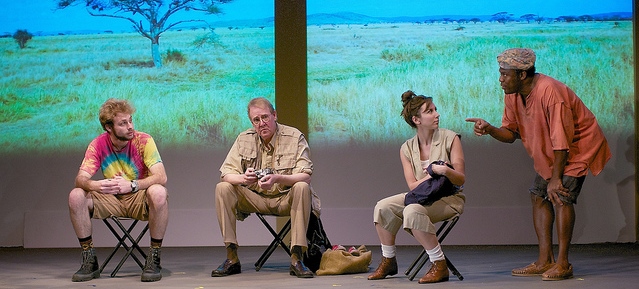
Melissa Weaver, Valentina Osinski, Michael Van Why

Triumph of a Sparrow

It’s the ultimate rags-to-riches story, from the streets of Paris to Carnegie Hall and beyond, the urchin who became a legend in her own time, a delicate sparrow-girl with a roaring, passionate voice. ”Edith Piaf: Beneath Paris Skies” in its world premiere at Cinnabar, is a stunning, beautifully realized cabaret-style production. Created by Valentina Osinski and Michael Van Why, it’s a truly unique revelation of la Piaf’s stormy soul. 

Piaf wrote many of her own lyrics to songs that became classics, the result of a lifelong collaboration with songwriter and composer Marguerite Monnot. Born Edith Gassion, she soon picked up the nickname “piaf”, French slang for sparrow, due to her tiny frame and jaunty spirit. She soared to fame during and after World War II. Raw and sensitive, vulgar and elegant, she was a study in contrasts and adored by millions the world over.

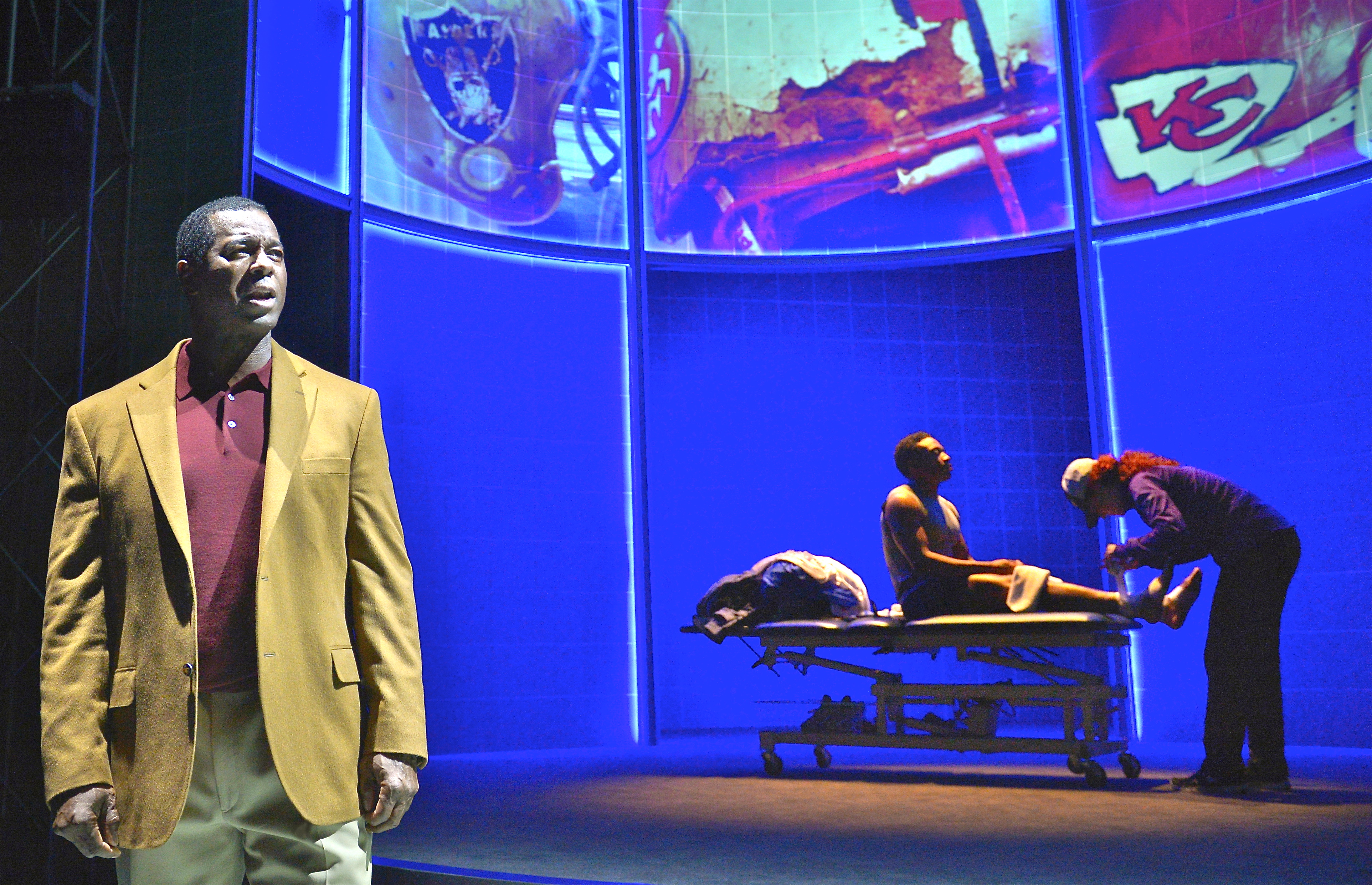
Melissa Weaver, Julia Hathaway

“Beneath Paris Skies” captures Piaf’s short, tempest-tossed life through distinct personas performed by four talented singers: Julia Hathaway displays Piaf’s Romantic aspect, Kevin Singer offers her Traditional side, Osinski as the Reckless Piaf, and Van Why as her Jaded self. Rounding out the cast in a non-singing role is Melissa Weaver as Simone, Piaf’s devoted half-sister. It’s interesting that men were chosen to reveal certain parts of Piaf’s character, showing that her struggles and joys transcend gender. Each of the vocalists, and Weaver, is nothing less than sublime. Together, as an ensemble, they forge an emotional connection with the audience that remains unbroken long after the music is done. 

The inspiring, lively show unfolds in a series of musical vignettes. French lyrics to 20 of her best-loved songs have been adapted by Lauren Lundgren, who sought to reveal more of the truth behind the songs than previous translations. A band of five top-notch musicians (Al Haas, Robert Lunceford, Daniel Gianola-Norris, Jan Martinelli and John Shebalin) are on hand to provide quality accompaniment.  A pink rose turns up in nearly every scene, a metaphor for Piaf’s undying hope in love amid the ruins of her life. 

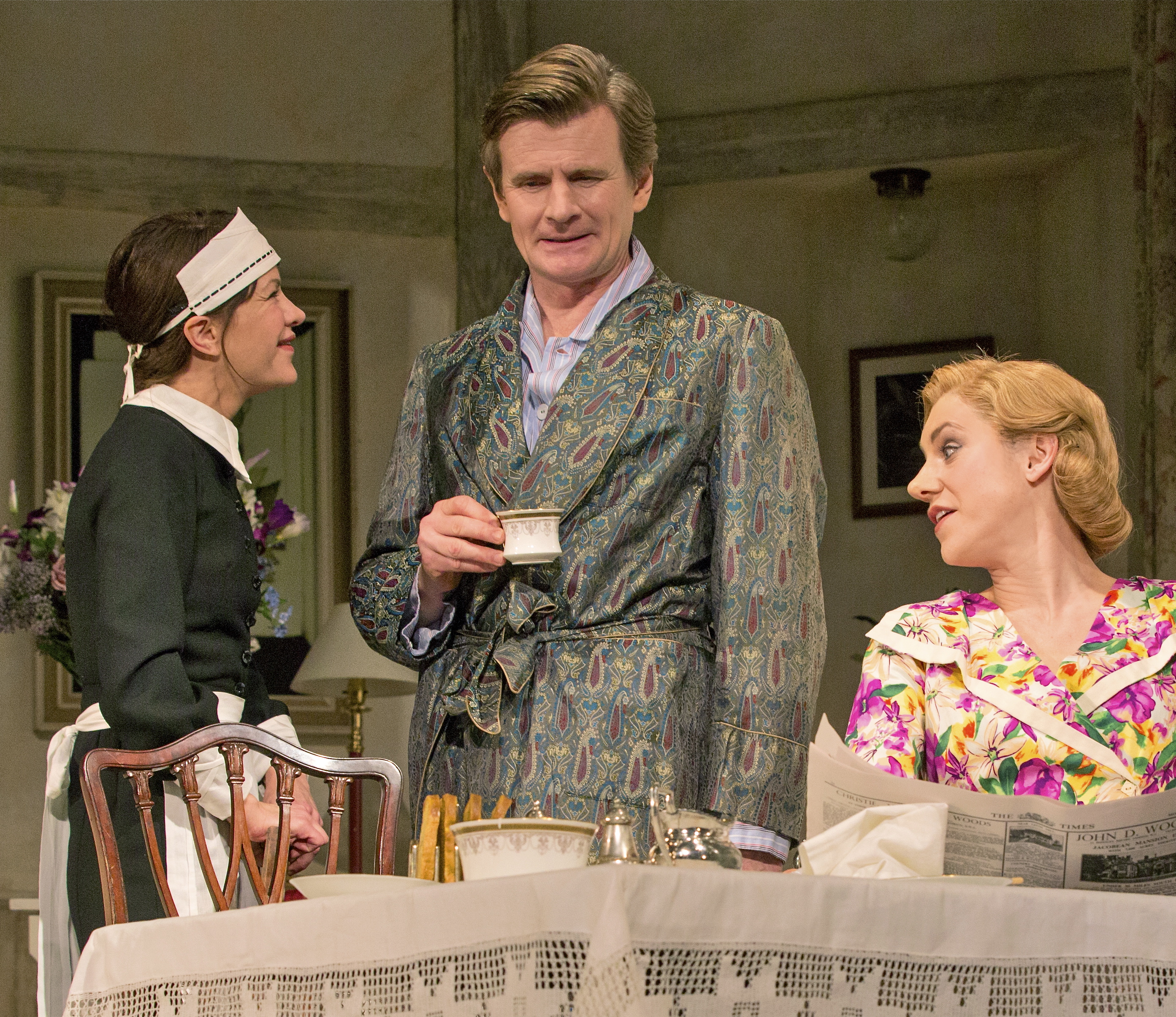
Julia Hathaway, Kevin Singer

Stage direction by Weaver is a brilliant, magical mix of high and low-tech, where a section of a stage platform can become a bed, and projected images can provide vivid illustration to the stories behind the songs. And what songs they are! Many are instantly recognizable: “Non, Je Ne Regrette Rien (No, I Regret Nothing)”, “Mon Manege a Moi (My Own Carousel)”, and the eternal standards “La Vie en Rose (Life in Pink)” and “Sous le Ciel de Paris (Beneath Paris Skies)”. 

A woman whose life was ruled by her never-ending quest for love never quite found what she was looking for. But what she did find was worldwide acclaim, and a place in history and in the hearts of romantics everywhere. “Beneath Paris Skies” offers a rare glimpse into Piaf’s world, and into her heart.  


When: Now through January 25, 2015  (Just extended due to sell-out shows – hurry, tickets are going fast!)

8 p.m. Fridays and Saturdays

2 p.m. Sundays

2:00 p.m. Saturday, January 17

Tickets: $25 to $35

Location: Cinnabar Theater

3333 Petaluma Blvd North, PetalumaCA
Phone: 707-763-8920

Website: www.cinnabartheater.org

Two powerful performers salvage a murky The Anarchist by The Rhino

By Kedar K. Adour

The Anarchist: Psychological Drama by David Mamet.  Directed by John Fisher. Theatre Rhinoceros, Eureka Theatre, 215 Jackson Street, between Front & Battery, SF, CA Box office: www.TheRhino.org or 1-800-838-3006 (24-hour ticket Hotline).

January 2 – 17, 2015 – Limited Engagement – 15 Performances Only!

Two powerful performers salvage a murky The Anarchist by The Rhino. [rating:3]

David Mamet is an accepted master as a playwright and has received, nay earned, all the prizes heaped on his body of work. His star ascended in 1975 with the premiere of Sexual Perversity in Chicago, continued in 1975 with American Buffalo. Other well-known titles of his voluminous body of work include Glengarry Glen Ross, Speed the Plow, Oleanna and Race, all of which have been produced in the Bay Area. He has not always been given accolades and his Faustus that had its world premiere at the Magic in 2004 was a colossal bomb and apparently never seeing another production.

The latest Mamet play to reach San Francisco is The Anarchist now in a limited engagement at the Eureka Theatre under the auspices of The Rhino Theatre organization.  The decision for The Rhino and their noted Artistic Director John Fisher to stage this two-hander play raises questions even though it is extremely well performed by Velina Brown and Tamar Cohn and thoughtfully directed by Fisher. If Patti Lapone and Debra Winger could not garner favorable reviews on Broadway in 2012 where the play lasted only 17 performances what convinced Fisher to mount it here?

Like Oleanna it is a verbal battle between two discordant characters that lasts bout 80 minutes and has a gut-kicker ending. Whereas Oleanna involved a university professor and his graduate student, The Anarchist involves a lesbian prison inmate Cathy (Cohn) and the warden Ann (Brown). Cathy has been incarcerated for 35 years with consecutive indefinite sentences that is really a life sentence for terrorists’ acts that killed two police guards. The play is based on true acts committed by groups similar to the Weather Underground and the Brinks robbery of 1981 that involved Patty Hearst.

Although parole hearings involve a board with the family of the deceased allowed to speak for or against release, Mamet reduced the board to one with a member of the family off stage with the warden making references to her desires. To make up for the lack of a parole board, Fisher has placed six chairs on each side of stage with audience members sitting there. The central area of the fine stark set by Jon Wai-keung Lowe is uncluttered allowing Fisher to move his two characters around like boxers in a ring with each actor circling for advantage. The advantage is in the language. Mamet puts forth his ideas about crime against the State, the State’s response to those crimes and the damage inflicted on humanity/individuals and rehabilitation.

Both Velina Brown and Tamar Cohn give bravura performances adding verisimilitude to their   characters and doing justice to Mamet’s intellectual dialog with nary a swear word.

Theatre Rhinoceros is proud that they are “America’s longest running and most adventurous queer theatre that explore both the ordinary and the extraordinary aspects of our queer community. .” The fact that Cathy has a lesbian lover who has not been caught is integral to the plot and is most likely the major reason the play is receiving its West Coast Premiere.

CREATIVE CREW: Director, John Fisher; Stage Manager/Assistant Director, Sarah Young; Scenic/Lighting Designer, Jon Wai-keung Lowe; Costume Designer, Christine U’Ren; Assistant Lighting Designer, Sean Keehan; Sound Designers,        Gene Mocsy, Sarah Young; Graphics/Ads/Photography, David Wilson; Prop Design , John Fisher.

Kedar K. Adour, MD

Courtesy of www.theatreworldinternetmagazine.com

New San Anselmo shop delights used book fanatics

By Woody Weingarten

Kristy Thompson cradles her dog, Jasmine Sage, in front of Town Books’ pets section. Photo: Nancy Fox.

Nine-year-old Daedan Cutter reads in children’s corner of Town Books. Photo: Nancy Fox.

Cinnie Barrows helped create Town Books, new Friends of the San Anselmo Library shop. Photo: Nancy Fox.

Almost all the buyers are incurable addicts.

So are the sellers, who occasionally purchase items when not volunteering.

But don’t be misled: There are no drugs. No booze. No butts.

Used books are their preferred vice.

Some are addicted to romance novels, bodice-rippers and the like. Some are drawn to true murder stories. Some favor volumes about sports or politics or scientific expeditions to the outskirts of civilization.

And some — like my wife — lean toward lighter fare, such as the humor of David Sedaris.

The buyer-fanatics would make the register in San Anselmo’s 20- by 40-foot Town Books ca-ching, ca-ching, ca-ching if the spanking new store had a machine instead of a cash box.

Me? I’ve bought nothing yet.

A voracious book reader into midlife, I’ve since turned to alternate worlds provided by newspapers, magazines, websites and, if you believe my spouse (who insists I’ll read anything), the backs of cereal boxes.

Cinnie Barrows — Friends of the Library stalwart who’s been as responsible as anyone for the shop’s birth — is much more typical.

She got hooked on books when her parents read to her “at a very early age. Then, still pre-school, I started using the library in my small West Virginia hometown. It was above the jail.”

She’s still addicted.

But others involved with the library, she insists, are even more so: “Some of the Friends read all the time.”

Cinnie’s worked her way down to wearing only two hats — “volunteer coordinator, which means I’m in charge of recruiting, and being the Tuesday manager.”

And she’s quick to cite two other Friends instrumental in the store’s gestation, Sue Neil and Shelagh Smith.

Sue, with her daughter Julie, helmed the shop’s design, including racks in the center of the room that clear away for special events.

She’s particularly proud of the shelves.

They were hand-picked, one by one, she says: “They’re all old bleacher benches from St. Louis that were re-purposed — some red, some black, some that had chewing gum on the bottom that had to get scraped off.”

Shelagh, who oversees Friends’ finances, co-wrote the volunteers’ handbook with Joan Boodrookas, the organization’s president.

Unpaid regular Sharon Bluhm commends it.

And says, “Fiction sells well — because it’s what we have most. So do children’s books and cookbooks.”

Early revenues hit between $500 and $600 a week, but they were based on being open only Tuesdays, Thursdays and Saturdays from 10 to 4.

“When you consider most books sell for under $5,” says Sue, “even at $500, that’s a lot of books.”

Sales are expected to rise now because Fridays have been added.

Proceeds will help the library with what Debbie Stutsman, tow n manager, calls “a myriad of…things not covered by the general fund or parcel tax budgets.”

At least two volunteers staff the store at 411 San Anselmo Ave. each morning, two more each afternoon. Each day has a designated manager.

Though Town Books opened mid-September, the official launch wasn’t until last month, when 150 book lovers jammed what once housed Riccardo’s Italian restaurant and its endless empty bottles hanging from the ceiling.

Down San Anselmo Avenue, Michael Whyte, owner of Whyte’s Booksmith, rejects my question about competition. “I feel it’s more collegial,” he says. “The more bookstores in San Anselmo, the better.”

Whyte’s been supporting library projects for 30-plus years — “generously,” comments Cinnie.

Most of Town Books’ stock comes from individuals cleaning out their homes — folks like Lisa Mackey. “My mom is ill, in a nursing home,” she tells me, “and I’m bringing her books here.”

“Here” is the single room, but down the hallway is a 16×22 office where Eli Welber scans non-fiction barcodes to see if they can be marketed on Amazon.

His current online inventory is about 500 tomes. He expects the number to go up exponentially.

The afternoon I visit, a San Anselmo newbie who prefers anonymity scours the place for books dealing with the history of American poetry, while Oliver Kaufmann of Ross surfs the shelves (he’d earlier bought a novel and two nonfiction volumes).

They voice delight.

Some — like Kat Hench, who lived in San Anselmo but now resides in Novato — come to Town Books seeking something specific but don’t find it.

Few leave empty-handed.

But almost all, addicts or not, somehow leave with a smile on their faces.

Check out Woody Weingarten’s new blog at www.vitalitypress.com/ or contact him at voodee@sbcglobal.net.

Impressive but uneven OUR TOWN by Shotgun Players

By Kedar K. Adour

OUR TOWN by Thornton Wilder. Directed by Susannah Martin. Shotgun Players, Ashby Stage, 1901 Ashby Ave., Berkeley. (510) 841-6500. www.shotgunplayers.org.

EXTENDED TO JANUARY 25, 2015

Impressive but uneven OUR TOWN by Shotgun Players [rating:4]

Thornton Wilder is best known for his full length play Our Town, but he was also an accomplished master of the short play form, specifically creating shorter works to be staged in spaces such as Shotgun’s Ashby Theatre, with the action taking place with the audience seated on either side of the performing area. Lifelong friends with Gertrude Stein and a mentor to Edward Albee, Thornton Wilder tirelessly experimented with theatrical forms and conventions. In the early 1930s he wrote The Happy Journey to Trenton and Camden (1931), which features the first appearance of Wilder’s narrating Stage Manager character (seven years before Our Town was produced). Later he wrote The Long Christmas Dinner” in which he breaks the boundaries of time as we measure it, following 90 years of an extended family’s holiday dinners. Those two conventions foreshadow his magnum opus Our Town that won a Pulitzer Prize and is probably the most popular play still being produced around the world.

The Shotgun Players has put together a fine production of the play adhering to the Wilder’s tenants of bare bones staging with the cast miming the actions, breaking the fourth wall and taking the characters through a 14 year journey. It all takes place in a specific time and place. The Stage Manager tells us that the place is “Grover Corners, New Hampshire – just across the Massachusetts line-   and the day is May 7, 1901.”

Written in three acts, Act 1 introduces “Daily Life”, Act 2 is “Love and Marriage” and Act 3 is “Death and Dying.” The Stage Manager (Madeline H. D. Brown) describes the town and introduces the major and minor characters who have cogent remarks or observations that create a ‘real town’ of the fictional Grover’s Corners. The major characters are the Webbs (Mrs. Webb [Michelle Talgarow], Mr. Webb [Don Wood] and Emily [El Beh]) and Gibbs families (Mrs. Gibbs [Molly Noble], Doc Gibbs [Tim Kniffin] and George Gibbs [Josh Schell]). The denizens of the town are introduced by the Stage Manager who has cogent remarks about each as they enter the acting area. Their entrance and exits are through the audience and up and down the raked seating area, often sitting with the audience.

Director Susannah Martin has grasped Wilder’s intent and inventively moves the actors about drawing the audience into the play. Accolades are earned by (alphabetically) Tim Kniffin, Molly Noble, Josh Schell, Michelle Talgarow, Don Wood and Christine Macomber.  This  reviewer has ambivalent feelings about depicting an androgynous Stage Manager.  This may be to emphasize the universality of Wilder’s play but is not necessary since both males and females have effectively played the role. Madeline H. D. Brown beautifully under-plays the role and does not miss a line but just misses giving superb performance.

One should see this staging since it does justice to Wilder’s concepts of theatre. Running time is 2 hours and 20 minutes with two intermissions.

CAST: MADELINE H.D. BROWN (Stage Manager); EL BEH (Emily Webb); WILEY NAMAN STRASSER (Howie Newsome, Ensemble); MICHELLE TALGAROW (Mrs. Myrtle Webb); MOLLY NOBLE (Mrs. Gibbs); SAM JACKSON(Mrs. Soames, Ensemble); KAREN OFFEREINS (Rebecca Gibbs, Ensemble);TIM KNIFFIN (Dr. Gibbs); VALERIE FACHMAN (Constable Warren, Ensemble); CHRISTINE MACOMBER (Professor Willard, Ensemble); JOSH SCHELL (George Gibbs); CHRISTOPHER W. WHITE (Simon Stimson, Ensemble); ELI WIRTSCHAFTER (Joe/Si Crowell, Sam Craig); DON WOOD (Mr. Webb);

ARTISTIC CREW: SUSANNAH MARTIN (Director);  (NINA BALL (Set Design); HEATHER BASARAB (Lighting Design); ABIGAIL NESSEN BENGSON & SHAUN BENGSON (Music Directon); THEODORE J. H. HULSKER (Sound Designer); KATHERINE BICKFORD (Production Assistant); ANNE KENDALL (Technical Director); KATJA RIVERA (Assistant Director); DEVON LABELLE (Props Designer;) ASHLEY ROGERS (Wardrobe); CHRISTINE CROOK (Costume Designer); ELIZABETH HITCHCOCK-LISLE (Production Manager); HANAH ZAHNER-ISENBERG (Stage Manager & Acting Production Manager; PATRICK DOOLEY (Founding Artistic Director)

Kedar K. Adour, MD

Courtesy of www.theatreworldinternetmagazine.com

Mr. Turner — Film Review

By Joe Cillo

Mr. Turner

Directed by Mike Leigh


I read one blurb that called this film an “epic biography” of British painter William Turner.  Well, that’s hype of the most grandiose favor.  This film is not a biography at all.  It would be stretching it to call it even a portrait.  It is more of a sketch, and a rather superficial one at that.  William Turner is the dominant figure in the film and he is played superbly by Timothy Spall.  It is his rendering of Turner’s character that holds this rather disconnected, aimless film together and prevents it from falling apart into an amorphous nothing.  He is almost always on screen.  There is hardly a time when he isn’t.  Because he is such an imposing presence, you do get a feel for Turner’s personality, at least in this conception (whether it has anything to do with reality, I do not know.  I take the film at face value).  I suppose the way I should say it is that it is a supremely convincing portrayal.  The cinematography is exquisite.  Every scene is perfectly composed, perfectly lit.  England in the nineteenth century must have been a wonderful clean, neat, orderly place with everything properly arranged, minimal clutter, and people wearing clean clothes all the time and smelling so good.

The problem with this film is that it lacks depth and insight.  We don’t see what is driving Turner in any aspect of his life, whether it is his painting, or his relations with his women, or within himself.   He has an ex-wife or mistress with whom he had two grown daughters, who hate him bitterly — a feeling he reciprocates.  What’s that about?  He has an apparently long established relationship with his housekeeper.  But he leaves her for a new woman who rented a room to him on a painting excursion.  Why did he do this?   He does seem to have a positive, supportive relationship with his father, with whom he was living until his father’s death.  He belonged to some sort of society of fellow painters among whom he was highly regarded.  His life overlapped the early days of photography, and he had a portrait taken of himself with his last mistress, the landlady.  He seemed to think photography boded ill for him as a painter, but neither his interest in photography nor his attitude toward it are explored in any great detail.

This is about all you find out about William Turner from this film.  It is not a lot for a two hour and forty minute session.  It is slow moving with an absolute minimum of “action.”  It avoids becoming tedious or boring, at least for me, strictly on the strength of Timothy Spall’s riveting performance.  He makes this character come to life enough that you don’t mind staying with it for over two hours even though nothing is happening and you are not getting a very full or satisfying treatment of the subject.  It’s not all bad, but I can’t recommend it unless you have an exceptional interest in nineteenth century painting.  But if you are that type of person, you probably won’t learn very much from this film.  

VIEW FROM ACROSS THE : POWER

By Joe Cillo

ANIMALS GET US

An animal’s eyes have the power
To speak a great language.
Martin Buber

A.R. Gurney created a debutante in his comedy “The Cocktail Hour” who cries, “No one understands me but my horse.”  The line got a big laugh but it wasn’t a joke. Our horses, dogs and cats catch on to our moods a lot faster than our partners or our relatives do.

Mothers, of course, are an exception. One glance from you tells them everything.  My own mother insisted she could read my entire days activities on my forehead.  It turns out that my puppy could do the same thing.

A new study confirms that animals gather information and transmit it through their eyes. This can be very unsettling….especially when sitting down to a holiday meal. There you are digging into your roast turkey and gobbling up your roast potatoes when you feel a forceful presence watching you lift your fork to your mouth and chew those brussel sprouts.  You look down at Fido, his mouth open and saliva dripping down his fuzzy little chin.  He is watching you so intently he doesn’t even blink.   You would have to have a heart of iron to ignore the longing, the unbridled desire on your puppy’s face.

Guilt overwhelms you and you slip him a bit of dark meat and then a bit more.  How can you resist?

Fluffy is even more insistent.  The minute you put your napkin in your lap, there she is, her whiskers quivering with desire. What can you do?  You were the one who rescued her from the shelter.  The other guests at the table try to ignore the fact that your cat is sitting ON the holiday table lapping up your cranberry sauce as if it were catnip.

Horses are even more capable of transmitting their needs to you with their unblinking eyes.  Last year, I had Christmas dinner in the country and as I dug into my mince pie, I froze.  There was Dobbin staring through the window with such intensity that the glass melted.  It was no use.  I picked up my plate and handed it over.

This year, I have decided to fast for the holiday.  It is a lot easier on my conscience.


Crispy Green Crispy Fruit Snacks

By Mary Buttaro

Crispy Green Wholesome, Delicious Freeze-Dried Fruit Snacks with Less than 40 Calories per Serving

Crispy Green Crispy Fruit products are a fun and delicious way to increase your daily fruit intake. These light, crisp, all-natural freeze-dried fruit slices with explosive fresh fruit taste will put you into a state of bliss – you’ll never feel this good about snacking.

Crispy Fruit snacks are made of high-quality freeze-dried fruit with no additives or preservatives. With 40 or less calories per serving, they’re a healthy alternative to sugary snacks. Available in convenient single-serving packages, Crispy Fruit is prefect for children’s lunch boxes or keeping them in your briefcase, purse or in a school locker or office as an “emergency snack.” Healthy, natural fruit at your fingertips anytime!

Crispy Green Crispy Apples, Crispy Apricots and Crispy Peaches are available in selected retail stores. They are also available at Crispy Green’s online store. For a complete list of retailers or to purchase Crispy Green Crispy Fruit online, visit crispygreen

Look for new additions such as Crispy Mangoes, Crispy Pears and Crispy Pineapples coming later this year.

Crispy Green Crispy Fruit …real fruit, real taste and nothing else!

‘Elf’ adaptation is funny, musical, almost impossible not to like

By Woody Weingarten

[Woody’s [rating: 3.5]

Eric Williams (right, as Buddy) surprises Tyler Altomari (as Michael) by pouring maple syrup on his food in “Elf the Musical.” Photo by Amy Boyle Photography.

Santa (Ken Clement), Buddy (Eric Williams) and the chorus (with elf-actors on their knees) have a merry time in “Elf the Musical.” Photo by Amy Boyle Photography.

When you come right down to it, I’m generally a non-believer.

I haven’t believed in the Tooth Fairy for a long time. Ditto the Easter Bunny and the Energizer Bunny. Double-ditto unicorns and centaurs.

Santa Claus? You must be kidding.

But ask me about a bumbling bozo brought up by elves at the North Pole who reunites in Manhattan with his human birth father and I’ll tell you, with a giant smile, that I wanna believe, brother, I wanna believe.

That’s because Buddy, hero of the gag-filled “Elf the Musical,” is so bouncy, so entertaining, so goofy.

Eric Williams, who plays Buddy in the touring company production at the SHN Curran Theatre in San Francisco, makes it virtually impossible not to like the character or believe in his good-natured, innocent spirit.

But to make sure my senior reaction paralleled those of theatergoers a few decades younger, I checked with the three kids I chaperoned to opening night.

Hannah, my 7-year-old granddaughter, was concise: “I liked the play better than the movie.”

She was referring, of course, to the 2003 comedy-fantasy Jon Favreau directed (starring Will Ferrell as Buddy).

She found the main character in the show “really funny,” but questioned the tale’s modernity. “I don’t believe that Santa has an iPad!” she exclaimed afterwards.

At least one urbane allusion had flown over her head.

Santa supposedly had stopped using reindeer after complaints from PETA, People for the Ethical Treatment of Animals.

Questioned Hannah, “What’s a PETA? I know what a pita chip is, but what’s a PETA?”

Hudson, son of Hannah’s mom’s partner, was astute enough at 13 to discern minor blips. “Buddy forgot to button his vest,” he said about one of the many quick costume changes, “and it was obvious when he fixed it.”

He liked the show over all, though, especially its colorful costumes and multiple painting-like sets — despite finding the Buddy character “a little too dumb.”

But he also thought “some of the language might be a little harsh for little kids.”

Hudson’s younger brother, Kota, 11, clearly was the most sanguine of the trio. He appreciated 100 percent “how they integrated the musical numbers with the story,”

I loved watching my young companions’ reactions as much as I seeing the prime performers — all of whom were first-rate (most outstanding, besides Williams, were Harper S. Brady, who played Buddy’s half-brother, Michael, and Lexie Dorsett Sharp as Buddy’s stepmother, Emily).

Brady, who alternates with Tyler Altomari in the role, and Sharp were marvelous in two potent duets — “I’ll Believe in You” and “There Is a Santa Claus.”

Also superb was Maggie Anderson as Jovie, Buddy’s love interest. Her comic solo, “Never Fall in Love (with an Elf),” was brilliant.

A show-stopper.

The two-hour Christmasy musical will end its short local run Dec. 28, although it could easily become a perennial.

Because it oozes with charm.

Its 14-person chorus is as perpetually energetic as the aforementioned bunny, palpable in a scene of multiple dancing Santas and another when the elf-actors dance on their knees and create a Rockettes-like sequence.

Thanks to the combined imaginations of choreographer Connor Gallagher and director Sam Scalamonai.

Upbeat music by Matthew Sklar, lyrics by Chad Beguelin and a nine-piece orchestra conducted by Roberto Sinha help keep things blissful, with drummer/percussionist Aaron Drescher offering up the most perfectly timed, dramatic instrumentation.

For adults such as me, the show — which debuted on Broadway in 2010 — contains just the right amount of clever cynicism.

Such as when one department store Santa complains that today’s kids seem compelled to text while sitting on his lap.

Some adults, however, might prefer to take the family brood to “Nutcracker” again. Or re-read David Sedaris’ tale of his being a Macy’s elf, “Santaland Diaries.”

Some undoubtedly will pay attention to the youngsters.

The 15-minute intermission, Kota gushed, “felt so long — I couldn’t wait for it to end so the show could start again. ‘Elf’ made it onto the charts of my favorite plays. It was quite delightful. I’d see it again in a heartbeat.”

“Elf the Musical” plays at the SHN Curran Theatre, 445 Geary St., San Francisco, through Dec. 28. Evening performances, Sundays, 5:30 p.m.; Tuesdays through Saturdays, 7:30 p.m. Matinees, Sundays, noon; Mondays through Wednesdays, Fridays, Saturdays, 2 p.m. Tickets: $45 to $160 (subject to change). Information: (888) 746-1799 or shnsf.com.

VIEW FROM ACROSS THE POND: REASON

By Joe Cillo

REASON

The heart has its reasons
Of which reason knows nothing.
Blaise Pascal

A member of the Taliban scrawled “Throw reason to the dogs” on the walls of the Ministry of Justice in Kabul. I get that.

All too often, reason keeps us from listening to our hearts.  I think the beauty of life lies in the myths we create.  Take Santa Claus.  Everyone KNOWS he is a fictional character we created in the nineteenth century to whip children into shape and convince them that obeying us would give them marvelous rewards.

It doesn’t take huge intelligence to figure out that if Santa were as big, fat and jolly as everyone says he is, he couldn’t possibly fit into a chimney much less a standard front door what with that sleigh he drags behind him and all those reindeer defecating in the snow. (And you KNOW that’s what they must do if they nibble on the cakes and cookies Mrs. Santa gives them)  A child of four could figure out that Santa could not possibly read all the letters children send him and actually decide who gets what on Christmas morning.

And what about all those clones we see on the street, at parties and ringing bells to make us give them money?  How did Santa manage that?  Did he form some kind of club with admission requirements (weight, girth, long white beard; jolly laugh required).

The truth is that reason would erase Santa Claus and I think that would constitute a criminal offense against childhood.  Way back in 1897, Virginia O’Hanlon wrote the editor of the New York Sun because her common sense told her that St Nicholas was a fraud…a tool to force a little girl like her toe the line.  This is what the editor said: “Yes, Virginia, there is a Santa Claus. He exists as certainly as love and generosity and devotion exist, and you know that they abound and give to your life its highest beauty and joy.”

I don’t know about you, but I would hate to think my world was governed by logic and common sense.  I would not like a reality without the certainty that there is good karma, the power of love and the faith that life has a noble purpose.

Besides, where would I send my Christmas want list?


The Complete History of Comedy (abridged), Marin Theatre Company, Mill Valley CA

By Greg & Suzanne Angeo

Reviewed by Suzanne and Greg Angeo

Members, San Francisco Bay Area Theatre Critics Circle

Photos courtesy of Marin Theatre Company

From left: Reed Martin, Dominic Conti, Austin Tichenor

Nouveau Vaudeville Meets Rambozo the Clown

Written, directed and performed by The Reduced Shakespeare Company (Austin Tichenor and Reed Martin, with able-bodied help from Dominic Conti), “The Complete History of Comedy (abridged)” is comedy for grown-ups – part primer, part clownfest, part tribute – clever, smart and funny, slyly deceptive and irreverent. First released on an unsuspecting Cincinnati audience in November 2013, it’s a series of loosely connected sketches built on the premise that Sun Tzu (pronounced Choo), author of “The Art of War”, had a brother named Ah Tzu who secretly wrote his own book, “The Art of Comedy”. The books’ parallels to theatre are clear: War is tragedy, after all, and comedy the eternal opposite. If war can destroy the world, comedy can save it.

The Reduced Shakespeare Company certainly knows how to make an impression. They’ve appeared at the Kennedy Center, the Edinburgh Fringe Festival and theaters in Sonoma, New York City and London, garnering nominations for the Olivier Award, Helen Hayes Award and San Francisco Bay Area Theatre Critics CircleAwards. And they know how to get all the right kind of attention, too. Case in point: An earlier show, “The Bible: The Complete Word of God (abridged)” was all set to perform in January 2014 in Northern Ireland when local public officials objected to the show’s “blasphemous” subject matter and voted to cancel it. The public demanded the show must go on, and go on it did. The uproar and publicity resulted in an even more successful run than any had imagined. The show was a smash hit in its UK tour.

Austin Tichenor

These merry pranksters of the stage take their comedy very, very seriously, invoking the spirit of vaudeville and Saturday Night Live, with snippets of Commedia dell’Arte, Firesign Theatre, Chaplin, Seinfeld, Second City and Monty Python gleefully tossed into the mix. And the show includes a real slapstick (if you’ve never seen one in use, now’s your chance).

Occasionally brilliant, relentlessly intense, fast and furious pacing; the troupe makes good use of the entire stage. The three work as one unit, ricocheting lines – and cream pies – off of each other.  No one is spared, and nearly every sacred cow is butchered. Audience participation and improv add to the fun. And if you don’t watch out, you just might learn something along the way, in between the belly laughs.

From left: Reed Martin, Dominic Conti, Austin Tichenor

When: now through December 21, 2014

8 p.m. Tuesdays, Thursdays, Fridays and Saturdays

7:30 p.m. Wednesdays

2 p.m. and 7 p.m. Sundays

2 p.m. Saturday, December 20

Tickets: $37 to $58

Location: Marin Theatre Company

397 Miller Avenue, Mill Valley CA 94941
Phone: 415-388-5208

Website: www.marintheatre.org