Faith unites community in ‘This Golden State — Part One: Delano’

By Judy Richter

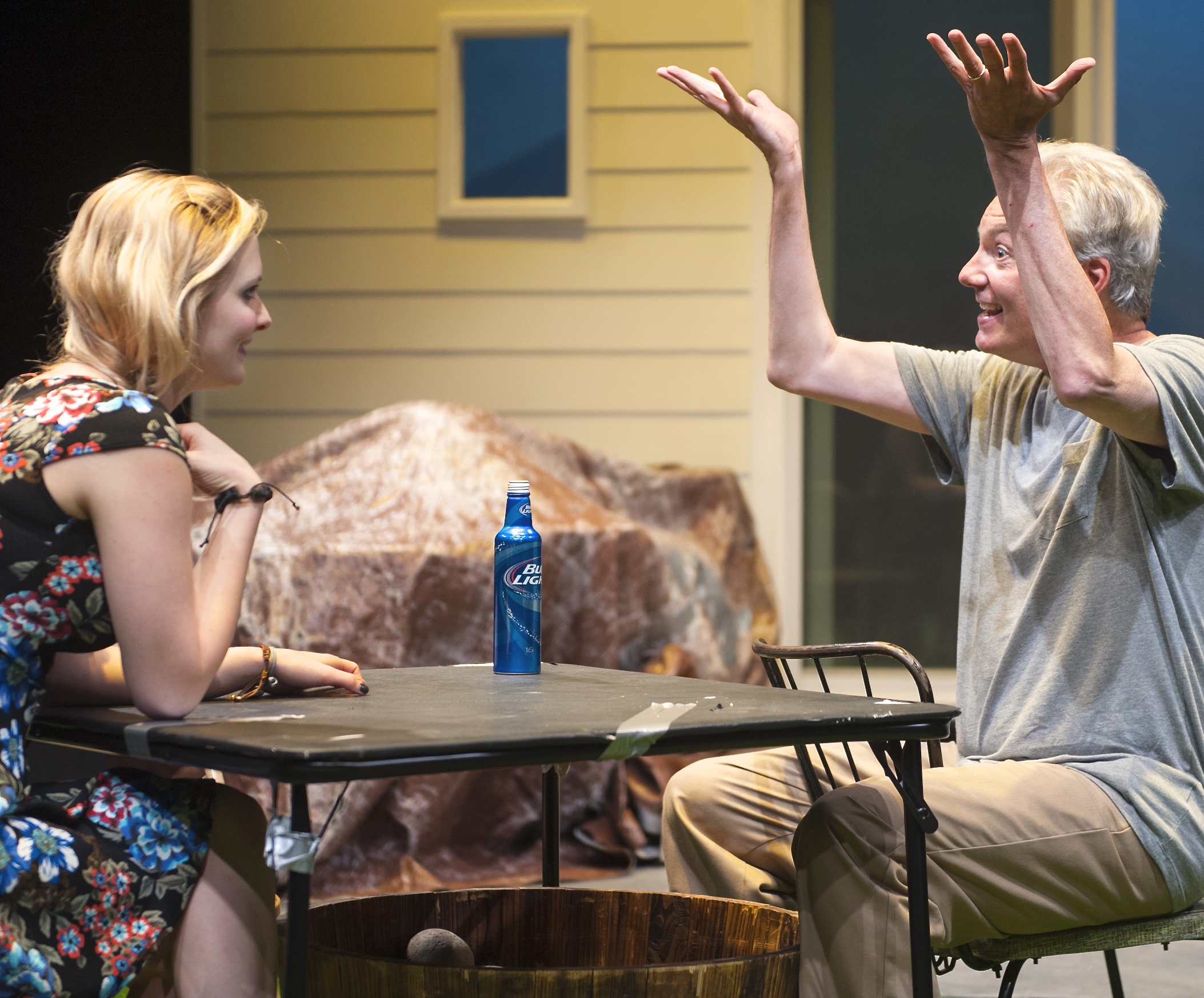
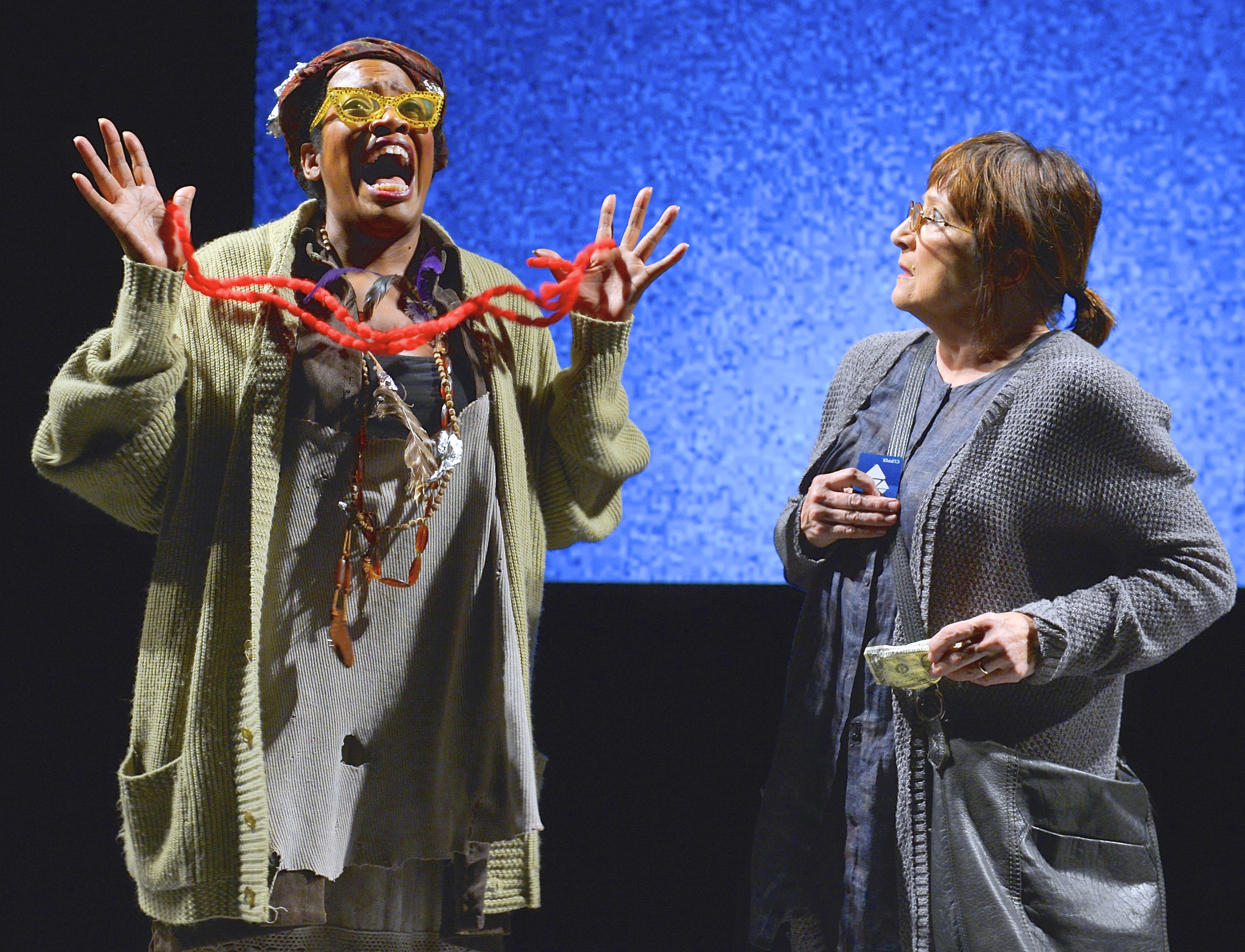
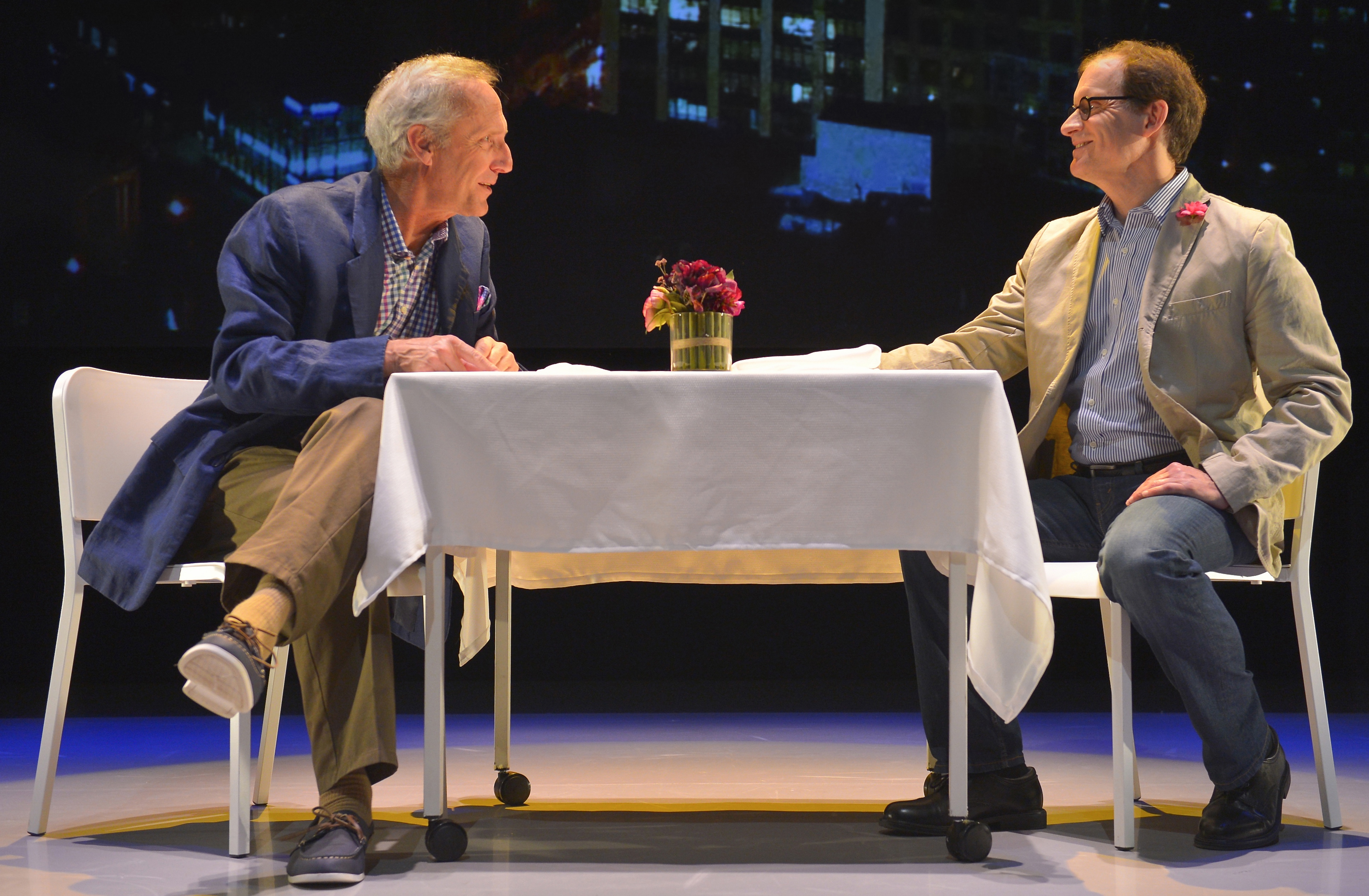
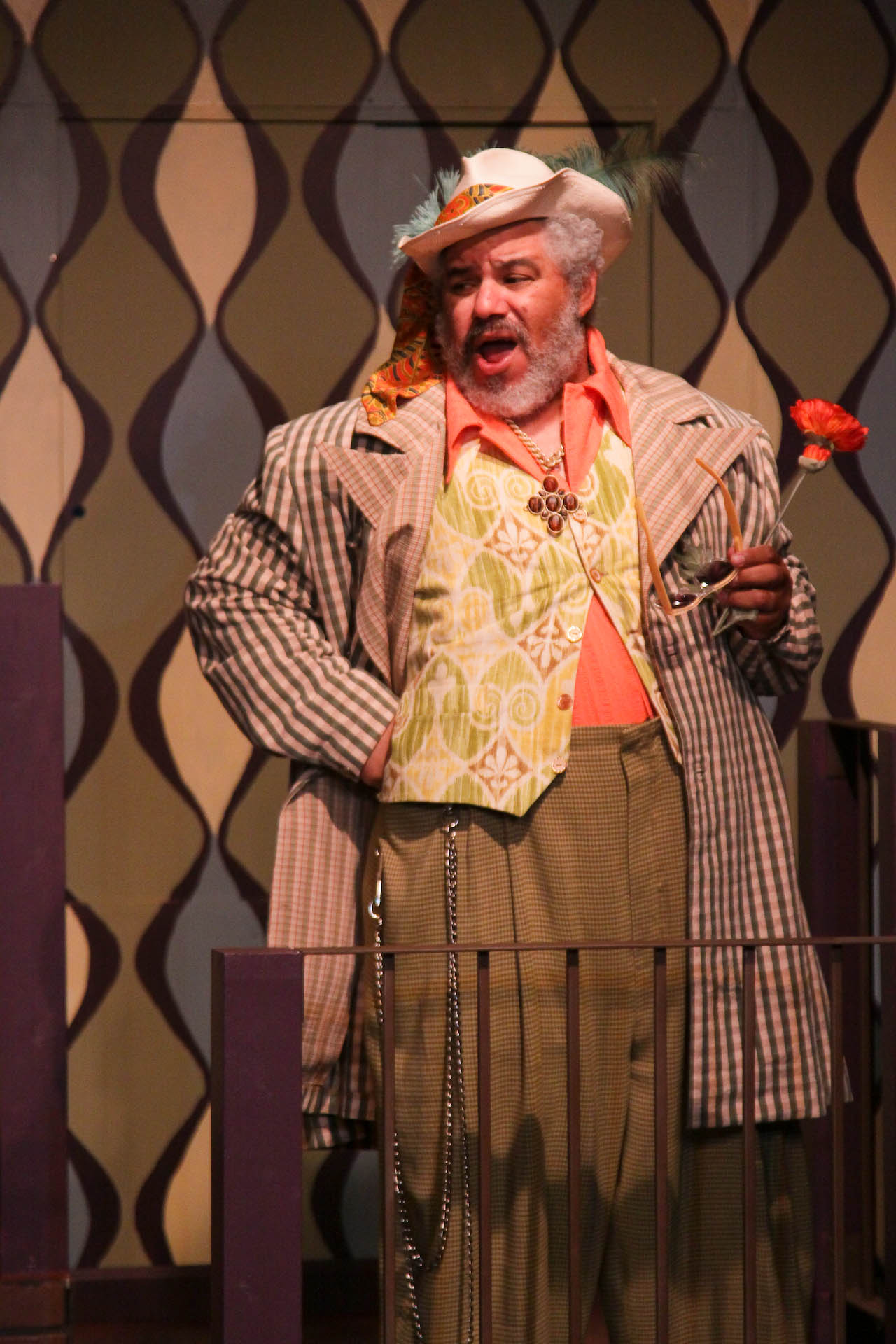
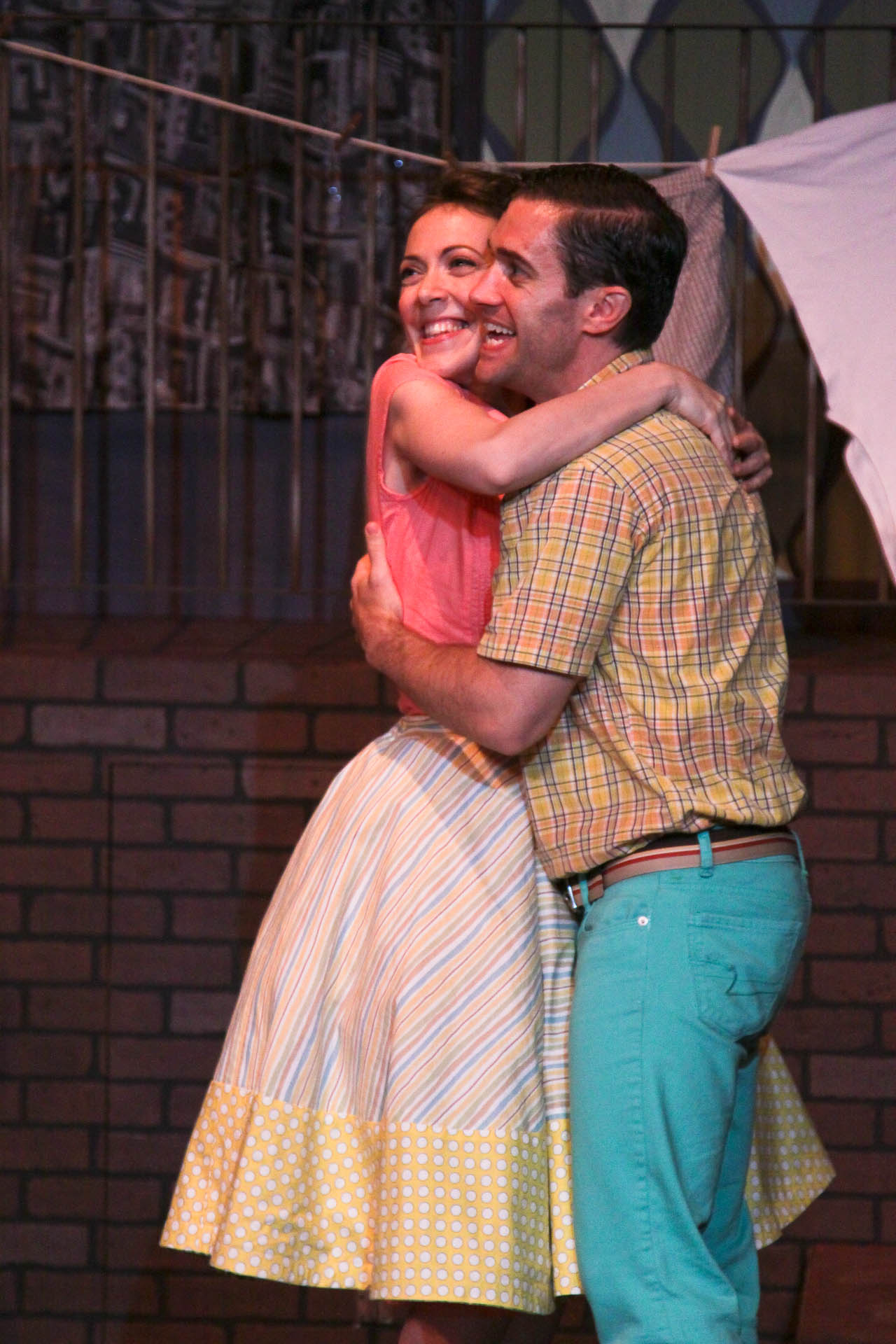
Playwright Luis Alfaro honors a community of hard-working people in “This Golden State, Part One: Delano,” being given its world premiere by Magic Theatre.

This Kern County agricultural community has a largely Hispanic population, many of them field workers. The people that Alfaro honors are members of a Pentecostal Church whose longtime pastor has died.

Another pastor, Elias (Sean San José), from a San Diego church has returned to his hometown after seven years to preside over the pastor’s funeral and to help the church with the inevitable changes. With him is his new wife, Esther (Sarah Nina Hayon), who has never been to Delano and has no intention of staying.

During the course of the 90-minute play (no intermission), all of the main characters undergo transformations rooted in their faith, not just religious faith but a larger sense of caring for and helping one another.

Besides Elias and Esther, those characters include Hermana Cantu (Wilma Bonet), the late pastor’s widow; Moises (Armando Rodriguez), a young man whose marriage is dissolving; and Brother Abel (Rod Gnapp), the only outsider and non-Hispanic.

The Oregon resident has been sent by the Association of Pentecostal/Apostolic Churches to help with its transition. The fear is that he might recommend merging this Delano church with some neighboring churches.

One other character, Romie (Carla Gallardo),  is seen in flashbacks with Elias before he left Delano.

The play opens with a memorial service presided over by Elias, who tells how the late pastor saved his soul and treated him like son after his parents had died. It’s a scene with Elias in his preacher mode along with shouts of  “Amen” and “Praise the Lord.” It also introduces the other main characters, seated in the audience, as they give testimony.

One recurring reference in the play is California’s drought, now in its fourth year. The people’s reaction to it is one reason why the hard-boiled Brother Abel decides the church can remain independent.

In a speech that summarizes the play’s theme,  he says to Esther that the people “are loyal to a fault. … This town is drying up … but they’ve all stayed.  A real community. Four years of drought that is going to make the Joads look like a bunch of crybabies and no one leaves. They are going to endure this hell together. That’s California — in the face of adversity they grow a garden … They band together and hold on, which is why this church doesn’t waver.”

Artistic director Loretta Greco directs with a sure hand. Although everyone in this ensemble cast does well, Hayon deserves special mention as Esther undergoes one of the more interesting transformations in the play.

The church set by Andrew Boyce includes pews in the front rows and allows for easy transition between scenes. Lighting by Solomon Weisbard helps to differentiate between present scenes and Elias’s memories. Costumes are by Alex Jaeger with sound by Jake Rodriguez.

Adding to the sense of church are two songs for the audience (congregation), with music and words provided in the program for the late pastor’s service. Christopher Winslow serves as musical director.

“This Golden State, Part One: Delano” is the first installment of a trilogy co-commissioned by the Magic and the Oregon Shakespeare Festival, where Alfaro is playwright in residence.

At first the play ran nearly two hours, but Alfaro cut about 30 minutes. There might be spots for a few more cuts, especially in the opening scene and in the tamale-making scenes with Esther, Hermana and Moises.

Nevertheless, it’s an engrossing, uplifting play because of the humanity and resilience of its characters.

It will run through June 14 at Magic Theatre, Building D, Fort Mason Center, San Francisco. For tickets and information, call (415) 441-8822 or visit www.magictheatre.org.


One man beats a full house of ladies in Twelfth Night at CalShakes

By Kedar K. Adour

Catherine Castellanos as Sir Toby Belch, Domenique Lozano as Maria and Margo Hall as Sir Andrew Aguecheek in Twelfth Night at Cal Shakes. Photo by Kevin Berne

Twelfth Night: Comedy by William Shakespeare. Directed by Christopher Liam Moore. California Shakespeare Theater (CalShakes), Bruns Amphitheater 100 California Shakespeare Theater Way, Orinda, CA. 510-548-9666 or www.calshakes.org May 30 – June 21, 2015

One man beats a full house of ladies in Twelfth Night at CalShakes [rating:3]

There is an (un)written dictum that 2015 will be the “year of the women” in Bay Area theatre. Shotgun Theatre is performing only plays written by woman and CalShakes enters the arena with women actors playing the major male roles in Shakespeare’s perfect comedy Twelfth Night.  The casting director has imported the multitalented Ted Deasy to play the jester Feste and other male roles as needed. He is a sort ringmaster for this three ring circus of misplaced love.

But we are getting ahead of the story. After shipwrecked twins Viola and Sebastian end up in Illyria each believe the other dead. Viola disguises herself as a boy/man eventually becoming Cesario the page to Count Orsino. Orsino is in love with Olivia who rejects him even when Cesario/Viola pleads Orsino’s suit.  Viola/Cesario falls in love with the Count and Olivia falls in love with Cesario/Viola. When Sebastian shows up the plot thickens further.

A secondary plot involves Olivia’s cousin, the drunkard Sir Toby Belch who brings along the rich Sir Andrew Aguecheek into Olivia’s home to court Olivia and to fund his revels. Olivia’s puritanical steward Malvolio puts a kybosh on Toby and Andrew’s  revels. Maria, Olivia’s handmaiden has the ‘hots’ for Toby and she devises a plot to punish Malvolio.

That’s more than enough of the story. It is the staging, direction and acting that carry the evening.  Director Moore does more with less and is aided and abetted by Deasy. The stage is a simple high curved stone background (set by Nina Ball) with a large black casket on casters out of which Feste appears and the fun begins.

As you will remember the opening lines are: “If music be the food of love, play on; Give me excess of it. . .” and they do with apple I-tunes and fine singing by Deasy. Cell phones, including ‘selfie photos’ are used along with many other bits of modern shtick. The casket holds many of the props to be used and plays an integral part in Malvolio’s punishment. The pace is appropriately hectic with over the top emoting by most members of the cast who are fashionably dressed in outrageous/attractive costumes befitting an Elizabethan play.

Lisa Anne Porter switches from Viola to Sebastian with a simple rotation of the cap she/he is wearing and a change in demeanor.  It is a bit clumsy but it works. Catherine Castellanos as Sir Toby outshines Margo Hall as Sir Andrew Aguecheek and Rami Margron as Count Orsino. Stacy Ross as the much put upon Malvolio is perfect and has the audience’s attention as she/he is put through a very rough manhandling by the miscreants.

Beautiful Julie Eccles handles the ‘love scenes’ with Cesario/Viola with grace and dignity while Viola/Cesario seems embarrassed with her love scene with the Count. Dominque Lozano is a charming schemer has great comic timing not to be outmatched by the emoting of Castellanos or Hall.

It is a fun evening made even better when the fog and wind did not materialize during the 2 hour and 40 minute performance. Recommendation: A should see with a ‘must see’ to watch Ted Deasy. ( If they have not done so already, they should sign him up to play opposite the inimitable Danny Scheie in the upcoming Mystery of Irma Vep).

ARTISTIC STAFF: Directed by Christopher Liam Moore; Designed by Nina Ball (set designer), Meg Neville (costume designer), Burke Brown (lighting designer), and Andre J. Pluess (sound designer).

CAST; Catherine Castellanos (Sir Toby Belch, Ensemble); Ted Deasy (Feste, Ensemble); Julie Eccles (Olivia, Ensemble); Margo Hall (Sir Andrew Aguecheek, Ensemble), Domenique Lozano (Maria, Ensemble); Rami Margron (Duke Orsino, Ensemble); Lisa Anne Porter (Viola, Sebastian, Ensemble); and Stacy Ross (Malvolio, Ensemble)

Kedar K. Adour, MD

Courtesy of www.theatreworldinternetmagazine.com

Mostly female cast enlivens ‘Twelfth Night’ at Cal Shakes

By Judy Richter

Director Christopher Liam Moore has chosen a nearly all-female cast to portray the pranksters and mixed-up lovers in William Shakespeare’s “Twelfth Night” at California Shakespeare Theater.

Except for Ted Deasy, who plays Feste the fool and some minor men, the rest of the eight-member cast is all women, most of them longtime favorites of Bay Area audiences.

Set in Illyria, the story goes like this:  Olivia (Julie Eccles) is mourning the recent deaths of her father and brother and wants nothing to do with men such as Duke Orsino (Rami Margron), who ardently pursues her.

About that time, Viola (Lisa Anne Porter) washes ashore after surviving a shipwreck that she believes killed her twin brother, Sebastian (also Porter). Until she can get the lay of the land, she disguises herself as a eunuch named Cesario and offers to serve the duke. She’s strongly attracted to him, but he sends his new aide off to woo Olivia for him.

Olivia finds herself attracted to Cesario. Thus the mismatching begins.

In the meantime, Olivia’s roisterous uncle, Sir Toby Belch (Catherine Castellanos), drunkenly cavorts with his cohort, the foppish Sir Andrew Aguecheek (Margo Hall), and Olivia’s maid, Maria (Domenique Lozano). They plot to make a fool of Olivia’s pompous steward, Malvolio (Stacy Ross), by making him think Olivia loves him and wants him to act and dress in a certain way.

And, unknown to  Viola, her twin, Sebastian, arrives safely from the shipwreck. Soon there are hilarious mistaken identities as one twin is taken for the other.

All turns out well with lovers properly matched, but the trickery against Malvolio goes too far, leaving him bereft.

Since men and boys played all roles in Shakespeare’s day, using a mostly female cast here works well today, especially with such accomplished performers in an ensemble cast.

Costume designer Meg Neville outfits everyone in traditional Elizabethan garb. However, there are some anachronistic props, mainly the smart phone used by Feste to cue in music (sound by Andre Pluess) and by Maria to take pictures of Malvolio when he’s ridiculously garbed.

Symbolizing the mourning that sets the initial mood, a coffin remains onstage in Nina Ball’s stark but striking set design (lit by Burke Brown). Feste rises from it at first, but later it’s used to store props like beer bottles and to imprison Malvolio.

Although all of the actors deserve praise, special mention goes to Ross as Malvolio in the comical gulling scene that ends the first act.

Moore’s direction keeps the action flowing crisply and allows for plenty of laughs. Credit goes to movement consultant Erika Chong Shuch for some brief dance scenes and to fight director Dave Maier for the fight scenes.

Taken as a whole, this 2 1/2-hour (one intermission) production is a great way to open Cal Shakes’ 2015 season with its often chilly temperatures that require warm clothing and blankets.

“Twelfth Night” will continue through June 21 at Bruns Memorial Amphitheater, 100 California Shakespeare Theater Way(off Hwy. 24), Orinda. For tickets and information, call (510) 548-9666 or visit www.calshakes.org.


‘The Columnist’ focuses on Joseph Alsop

By Judy Richter

Joseph Alsop was perhaps the most influential political columnist in the country for many years, but his power gradually declined.

David Auburn’s 2012 “The Columnist,”presented by Dragon Theatre in its Bay Area premiere, chronicles that decline in a fascinating glimpse at recent American history.

While he was professionally well known, Joseph, called Joe, had a secret life that’s revealed to the audience in the opening scene,  set in 1954.  Joe (Randy Hurst) has just had an afternoon tryst in a Moscow hotel room with Andrei (Casey Robbins), who was working for the KGB — unknown to Joe at the time.

Before that decline, which came more than a decade later, the aristocratic Joe moved in the nation’s most powerful political circles. For example, President John F. Kennedy went to his house after his inauguration in 1961.

Joe, whose column was widely syndicated, admired JFK and ardently supported the war in Vietnam as a way to halt the spread of communism. He was so convinced that the U.S. was winning that war that he tried to get younger reporters like David Halberstam (Drew Reitz) removed from their Vietnam posts because they were reporting otherwise.

After JFK’s assassination in 1963, Joe continued to support the war and its leaders like President Lyndon B. Johnson and Secretary of Defense Robert McNamara. However, Joe failed to recognize the social upheaval wrought by the war as protestors and hippies took to the streets.

Although these events serve as backdrops to the play, the focus is more personal, stressing Joe’s family life. He was close to his younger brother, Stewart (Gary Mosher), with whom he co-wrote his column from 1945 to 1958.

He was married to Susan Mary Jay (Mary Price Moore) for several years. Even though she knew he was gay, they were good friends, so she agreed to the marriage. He also was fond of her teenage daughter, Abigail (Camille Brown).

Running about two hours with one intermission, the play ends in Washington in 1968 when Joe and Andrei happen to meet again while watching a demonstration on the Washington Mall.

Director Brandon Jackson paces the episodic action well.  Scene changes are punctuated by songs of the time in the sound design by Michael St. Clair.

It’s generally well acted, especially by Moore as Susan,  Mosher as Stewart and Brown as Abigail. Hurst as Joe holds the stage well and conveys his growing egotism and social unawareness well, but he frequently muffed his lines on opening night.

Set designer/technical director Rory Strahan-Mauk has created a utilitarian set with lighting by Jeff  Swan. Katherine Halcrow’s costumes, especially for Abigail, reflect the changing times.

It’s an interesting play offering insights to and bringing up memories of turbulent times as seen through one man’s experiences.

“The Columnist” will continue through June 21 at Dragon Productions Theatre, 2120 Broadway St., Redwood City. For tickets and information, call (650) 493-2006 or visit www.dragonproductions.net.


ACT waltzes gracefully through ‘A Little Night Music’

By Judy Richter

The genius of composer-lyricist Stephen Sondheim is on display in American Conservatory Theater’s production of  “A Little Night Music.”

Based on an Ingmar Bergman film, “Smiles of a Summer Night,” this 1973 Tony Award-winning musical is set during a Swedish summer at the turn of the 20th century.

During this time when the sun rarely sets,  love is arranged and rearranged among lovers young and older.

Sondheim wrote virtually the entire musical in 3/4 time, but the best known song is “Send in the Clowns,” which has been sung by the likes of Judy Collins, Barbra Streisand and others.

In the context of the show, however, it takes on deep poignancy as one of the older lovers, Desiree Armfeldt (Karen Ziemba), an actress, sings it to her former lover, Fredrik Egerman (Patrick Cassidy), to express their dilemma:  She’s ready to settle down after years of touring and of taking on various lovers, while he’s married.

And even though his 18-year-old wife, Anne (Laurie Veldheer), is still a virgin after 11 months of marriage, he’s reluctant to leave this woman who’s young enough to be his daughter. In fact, she’s close in age to his son, Henrik (Justin Scott Brown), a gloomy seminary student who’s worried about sin and who’s secretly in love with her.

Another of the older lovers is Count Carl-Magnus Malcolm (Paolo Montalban), a handsome but egotistical and pea-brained dragoon who has been involved with Desiree despite being married to Charlotte (Emily Skinner).

Everything comes together one weekend when everyone gathers at the country home of Desiree’s mother, Madame Armfeldt (Dana Ivey), who’s known her share of lovers. They’re joined by Desiree’s teenage daughter, Fredrika (Brigid O’Brien); the Egermans’ maid,  Petra (Marissa McGowan); and Frid (Michael McIntire), Madame Armfeldt’s servant.

There’s lots of foolish behavior, but various triangles are resolved to everyone’s satisfaction.

Director Mark Lamos weaves everything together thanks to a fine cast, especially among the older characters. Ziemba as the bemused Desiree and Skinner as the wronged Charlotte have impeccable timing as they react to the goings-on, and both sing well.

Except for Veldheer’s piercing upper notes as Anne, all of the principals sing well.

The show has five other named characters who serve more as a Greek chorus. They aren’t seen by the other characters, but they introduce scenes and, in Lamos’s staging, move set pieces on Riccardo Hernandez’s set. Traditionally the three women and two men are older, but Lamos has chosen to make them younger and far more sensual, as indicated by their behavior and the underclothing they wear in the opening scene. It’s not an entirely effective approach. Moreover, they don’t blend well vocally.

The elegant period costumes for the main characters are by Candice Donnelly. Lighting by Robert Wierzel captures the almost perpetual twilight of that time in Sweden.

Orchestrations and musical direction are by Wayne Barker, while the sound is by Kevin Kennedy. Choreography, mostly waltzes, is by Val Caniparoli.

Taken as a whole, this ACT production is first rate, thanks in large part to Sondheim’s intricate music and lyrics and some outstanding performances, especially by Ziemba and Skinner.

“A Little Night Music” will continue through June 24 at ACT’s Geary Theater, 415 Geary St., San Francisco. For tickets and information, call (415) 749-2228 or visit www.act-sf.org.


The 18th Annual Dionysian Festival: San Francisco

By Jo Tomalin
 above: Mary Sano (ctr) Koko de la Isla (r) and Ricardo Diaz – Flamenco Guitar (l) Photo by Natalia Vyalykhy

Celebrating the 138th Anniversary
of Isadora Duncan’s Birth

Mary Sano Duncan Dancers – Photo by Natalia Vyalykhy

Review by Jo Tomalin

Saturday, May 30 at 8:00 p.m. & Sunday, May 31 at 5:00 p.m at The Mary Sano Studio of Duncan Dancing, South of Market, San Francisco.

Mary Sano and her Duncan Dancers presented a feast of historic and fusion dances for the 18thAnnual Dionysian Festival to celebrate Isadora Duncan’s birthday. Duncan was born in San Francisco at the end of May – and a small SF street is now named after her – Isadora Duncan Lane – as a fond memory of her legacy as the creator of modern dance.

Over the years several of Duncan’s disciples recreated Duncan’s works which helped preserve Isadora’s free spirited dance form, inspired by Greek , folk dance, art and natural movement. Isadora’s dances are rarely performed these days, but San Francisco is lucky to have Mary Sano who trained with later generation Duncan dancers and is passionate about keeping this style alive and developing new works based on Duncan movement through her Studio.

The two hour program started with eleven very short dances of Traditional Duncan Choreography (circa 1900-1912).  Danced in small groups by seven Duncan Dancers (Monique Goldwater, Tomoko Ide, Yukiko Nakazato, Elaine Santos and Isabel Dow, Sophia Fuller, Kanchan Armstrong) with Mary Sano, the dances were so spring like and airy, beautifully accompanied on the piano by Benjamin Akeala Below playing Schubert, Chopin, Satie, Grieg, Brahms and Gluck. Barefoot, and wearing silk Isadora Duncan tunics in pastels of lime, pink, lavender, lemon and apricot, the flowing natural movement of the dancers was refreshing.

Two original modern Duncan-based style works accompanied by live piano followed.

Belew’s lively Neo Classical Piano suite comprised a small group of dancers dressed dramatically in black, red, blue and green tunics, some with masks – performing sculptural, lyrical, sensuous and dramatic movement, including Amour, an amazingly transporting solo dance. Fascinating and unpredictable, too. Belew’s last two piano solos aptly called Memories and Feelings from the Past were warm and induced reflection on one’s own memories.

Next, Pianist Tony Chapman played his Contemporary Piano piece in three sections. After a short strident and melodic piano solo, the next two sections were danced by seven Duncan Dancers, including Sano in pensive, languid dances with brief emotive solos, ending with dynamic sustained movement.

The second act completely changed gear. Classical Guitarist Adriana Ratsch-Rivera played Prelude by Villa-Lobos then Chôros No.1, also by Villa-Lobos and danced with precision and lyricism by the majestic Flamenco dancer Koko de la Isla in a long white layered flamenco dress.

Sano’s Collaboration Project, Aeon, dedicated to Isadora Duncan for her 138th birthday (a work in progress) completed the evening. Chants, bamboo flute, hollow earthy sounds, as Koko de la Isla appears in a beautiful long red Japanese inspired skirt and fragile white coat. The vocal chanting, Santour and Tombak (middle eastern instruments), and Flamenco Guitar sounds swell as Sano enters in a long lacy mossy green middle eastern dress with rhinestones and headdress. Both dancers move slowly, Sano with interesting eclectic movements of flamenco wrists turning and middle eastern movement motifs with the Duncan influence of freedom – then Sano merged with De la Isla’s flamenco which became an international fusion of genres. Mary Sano performed several dances in the program, she is truly an extraordinary dancer, statuesque, graceful, muscular, and emotive.

This was a fascinating opportunity to see Isadora Duncan Dances and new ways to approach Duncan movement with other genres. The more than sold out audience was enraptured at the dance and live music, later appreciating the wine – being set up onstage – as all participants joined in with a spontaneous Flamenco Jam. If you missed it, look out for the 19th Dionysian Festival next year!

More Information:


Jo Tomalin, Ph.D. reviews Dance, Theatre & Physical Theatre Performances
More Reviews by Jo Tomalin
TWITTER @JoTomalin
www.forallevents.com  Arts & Travel Reviews

Sondheim’s A Little Night Music a terrific show at A.C.T.

By Kedar K. Adour

(L-R): Mrs. Anderssen (Annemaria Rajala), Mr. Erlanson (Andres Ramirez), Mrs. Nordstrom (Christine Capsuto), Mr. Lindquist (Brandon Dahlquist), and Mrs. Segstrom (Caitlan Taylor) in Stephen Sondheim and Hugh Wheeler’s A Little Night Music performing at A.C.T.’s Geary Theater May 20-June 14. Photo by Kevin Berne.

A Little Night Music: Musical by Stephen Sondheim & Hugh Wheeler. Directed by Mark Lamos. American Conservatory Theater (ACT), 415 Geary St., San Francisco, CA. (415) 749-2228 or www.act-sf.org. May 20–June 14, 2015. (Extended to June 21, 2015)

Sondheim’s A Little Night Music a terrific show at A.C.T. [rating:5]

We in the Bay Area are fortunate to have three major theatrical companies within the immediate Bay Area. Each of those groups has closed their 2014-2015 seasons with five star productions as different from the other as night and day. Berkeley Rep was first up a week ago with an English imported farce One Man, Two Guvnors, (based on Carlo Goldini’s A Servant of Two Masters). One night ago Center Rep mounted the rewrite of the 1936 Musical Anything Goes and last night A.C.T. produced Sondheim’s A Little Night Music (Based on the Ingmar Bergman movie Smiles of a Summer Night). All three received well deserved standing ovations.

Actually, Sondheim’s Night Music is a musical comedy but it is much more than that. It is a modern musical classic with distinctive music elevating the waltz to new heights. The creative team has interwoven divergent themes of young, middle aged (foolish) and old love into a memorable whole with ingenious direction and staging with uplifting acting worthy of Sondheim and Wheeler’s music and words.

The setting is Sweden and the time is the turn of the century. The pivotal character is Desiree Armfeldt (a superb Karen Ziemba) is a glamorous actress who is constantly on tour. Her aging mother, living in the country, Madame Armfeldt (Dana Ivey) has taken over the care of Fredrika ( Brigid O’Brien) Desiree’s 14 year old daughter.

Successful Lawyer Fredrik Egerman (Patrick Cassidy), a former lover of Desiree, has remarried virginal 18 year old Anne (Laurie Veldheer) but they have not consummated the marriage even after being married eleven years. Henrik (Justin Scott Brown), Fredrik’s living at home young son, a year older than Anne, is a confused divinity student secretly in love with Anne. Anne has a saucy maid Petra (Marissa McGowen).

Fredrik has an unexpected liaison with Desiree rekindling old love but she has taken a new lover the gauche Count Carl-Magnus (Paolo Montalban) who is married to unhappy Charlotte (Emily Skinner).  With all the major characters in place it is time to spend “A Weekend in the Country.” What a weekends it is to be but you have to wait until Act 2 where all is somewhat resolved.

Integral to the staging are five (two males and three females) ancillary characters that flawlessly move about the stage acting as a Greek chorus while seamlessly moving the minimal props. Their opening number is a gem as they sexily cavort on the stage floor and join in with the cast for the opening “Night Waltz.”

Ricardo Hernadez’s inventive attractive minimal set allows director Mark Lamos to move his characters in an effortless waltz throughout the evening. Although it is Sondheim’s music that captures the evening Lamos adds many elegant touches to the evening including costuming (Candice Donnelly) for the chorus that create harlequins and memories of Edward Degas’s paintings.

First and foremost are the music and lyrics including the haunting “Send in the Clowns” that is memorably sung by Karen Ziemba. In the first act alone we are treated to “The Glamorous Life”, “Remember?”, “You Must Meet My Wife”, “Liaisons”, “In Praise of Women”, “Every Day a Little Death” and “Weekend in the Country.”

The accolades continue throughout the evening with a true show stopper of “The Miller’s Son” sung to perfection by Marissa McGowan.  Ziemba is the best Desiree this reviewer has seen. Dana Ivey gives an excellent performance as  Madame Armfeldt.  Emily Skinner and Laurie Veldheer have a powerful turn on the stage with “Every Day a Little Death.”

The show runs 2 hours and 30 minutes with an intermission. Reccommendation: Amust see show.

CAST:  Patrick Cassidy as Fredrick  Egerman ; Emily Skinner as Charlotte Malcolm; Karen Ziemba as Desiree Armfeldt; Dana Ivey as Madame Armfeldt; Paolo Montalban as Count Carl-Magnus Malcolm; Justin Scott Brown as Henrick Egerman; Marissa McGowan as Petra; Laurie Veldheer as Anne Edgerman; Christine Capsuto as Mrs. Nordstrom; Brandon Dahlquist as Mr. Lindquist; Michael McIntire as Frid; Brigid O’Brien as Fredrika Armfeldt; Annemaria Rajala as Mrs. Anderssen; Andres Ramirez as Mr. Erlanson; Caitlan Taylor as Mrs. Segstrom.

CREATIVE TEAM: Directed by Riccardo Hernandez (set design); Robert Wiertzel (lighting design); Candice Donnelly (costume design); Kevin Kennedy (sound design); Val Caniparoli (choreography); Wayne Barker (music direction).

Kedar K. Adour, MD

Courtesy of www.theatreworldinternetmagazine.com

(L-R): Mrs. Anderssen (Annemaria Rajala), Mr. Erlanson (Andres Ramirez), Mrs. Nordstrom (Christine Capsuto), Mr. Lindquist (Brandon Dahlquist), and Mrs. Segstrom (Caitlan Taylor) in Stephen Sondheim and Hugh Wheeler’s A Little Night Music performing at A.C.T.’s Geary Theater May 20-June 14. Photo by Kevin Berne.

You can’t top ‘Anything Goes’ at Center REP

By Judy Richter

Audiences for Center REPertory Company’s production of Cole Porter’s “Anything Goes” are in for a real treat.

Artistic director Michael Butler, who directs, has assembled a stellar group of performers and designers, resulting in a thoroughly entertaining show from start to finish.

The indisputable star is Molly Bell as Reno Sweeney, a role originated by Ethel Merman in the 1934 Broadway production. While Merman put her own inimitable stamp on the role, Bell has a different style that’s equally effective. She’s a triple-threat dynamo who can sing, dance and act with equal ease.

Reno is a brash nightclub “evangelist” who’s the featured entertainer on a passenger ship sailing from New York City to London.  She’s romantically interested in Billy Crocker (Joshua Hollister), who works for a Wall Street investor. Billy, though, has his heart set on Hope Harcourt (Brittany Danielle).

However, she’s engaged to a wealthy English nobleman, Sir Evelyn Oakley (Jeffrey Draper), a good-natured but naive sort who’s fascinated by American expressions.

With Billy as a stowaway, they all wind up on the S.S. American along with an assortment of other passengers and crew. Complications arise, but all get sorted out.

Porter’s music and lyrics have made this show a classic of the American musical theater. The long list of memorable songs includes such treasures as “I Get a Kick Out of You,” “You’re the Top,” “Friendship” “It’s De-Lovely,” “Blow, Gabriel, Blow” and of course the title song. Closing the first act, it showcases the versatile choreography of Amanda Folena, artistic director ofRedwood City’s Broadway By the Bay, with a tap extravaganza.

As Billy, Hollister sings the show’s most difficult song, “All Through the Night,” better than almost everyone else I’ve heard in the role.

In addition to great singing and dancing, this production provides ample laughs, many of them triggered by Colin Thomson as Moonface Martin, a gangster of sorts, and by Lizzie O’Hara as Erma, his gal pal. She can sing and dance, too.

The show is a visual feast thanks to costumes by Victoria Livingston-Hall, who has given the women one delectable outfit after another.

The serviceable set by Michael Locher (lit by Kurt Landisman) places the 11-member orchestra (including musical director Brandon Adams on piano) on the top deck. If there’s one drawback in the show, it’s that the sound design by Jeff Mockus sometimes can’t compete with the orchestra.

Everyone in the 23-member cast does an outstanding job no matter how small the role. However, the one who makes this production especially memorable is Bell. She’s the top.

Running about two and a half hours with one intermission, “Anything Goes” will continue through June 27 at Center REPertory Company, 1601 Civic Drive, Walnut Creek. For tickets and information, call (925) 943-7469 or visit www.centerREP.org.


Fear and Loathing on the English Coast in THE BIRTHDAY PARTY

By Test Review

A dirty joke, a poignant insight, an absurdist yawp, an unexpected reversal, a shocking confession and a stream of ironic badinage erupt one after another—and sometimes all at once. Full of loaded banter, veering from nail-biting confrontation to wildly cathartic caricature, Pinter’s controversial play, The Birthday Party, remains a text of unique and overwhelming power. Its unique and overwhelming power lies in this rapid oscillation; this sudden shift of mood; the abrupt embrace of tranquility and nonsense, the pleasant familiarity of cliche and the horror of senseless brutality. “Dark comedy” does not even begin to describe it.

Stanley (Adam Simpson) and Meg (Celia Maurice)

Off Broadway West Theatre Company’s performance of The Birthday Party summons this grimly ridiculous and genuinely terrifying world, a world cleverly disguised as a routine morning at a rundown boarding house in the least fashionable quarter of an English seaside town in the 1950’s, where we find British-born Graham Cowley, as Petey, munching his cornflakes in a fog, aloof.

Petey’s wife, Meg, dotes on him with unwelcome playfulness. As Meg, Celia Maurice embodies dotty sentimentality and loneliness. Ms. Maurice trained at Stanford University, with the A.C.T. Young Conservatory. In New York, she worked at the Lincoln Center with the New York City Opera, and The Birthday Party marks her debut performance with OBWTC. In this, she is magnetic: One moment, Meg is soaring away on a fantasy of escape, and, in the next, she is a dowdy husk of a human being. Humdrum chit-chat suddenly becomes brisk and riveting. This ordinary breakfast conversation, like one of our own, is now electrified—an everyday relationship catastrophically, irrationally infused with epic power struggles, violent upheavals, and dizzying bouts of confusion and regret.

At the breakfast table, still wearing his dressing gown and pajamas, the insanely demanding lodger, Stanley (Adam Simpson), heaps contempt on Meg. Later, the next-door neighbor, Lulu (played with smoldering sultriness by Jessica Lea Risco), asks Stanley, “You want to go for a walk?”
“I can’t.”
“You’re a bit of a wash-out,” she says.

Words are weapons, and, in time, they rip Stanley apart. The main drama here is his complete disintegration, from the youthful piano-playing phenom to the older and bitterly obscure lodger to… Something else entirely, something that must be seen to be believed.

Into this world drop the dapper Goldberg, and his Irish henchman, McCann. With their double-breasted suits, their black broad-brimmed hats, and smooth urban cynicism, McCann and Goldberg might as well be Martians. Keith Burkland, an OBWTC veteran, plays Goldberg. His sidekick, McCann, is played by James Centofanti, who appeared alongside Mr. Burkland last year in OBWTC’s Betrayal—another Pinter play. In this performance, their powerful chemistry crackles mercilessly, and spits sparks.
With oily, machine-like relentlessness, they advance on Stanley—and drive him to madness. McCann rips up a newspaper meticulously. For no apparent purpose. With a dead-eyed gaze, McCann regards Stanley coolly. He takes in this bizarre, overgrown boy, and says, “You’re in a bad state man.” Lulu is nothing but a “big, bouncy girl” to Goldberg. Goldberg is, himself, a London Jew, and a preachy raconteur (“You’ve always been a true Christian to me,” says McCann). Their neatly choreographed interrogations make a picture of menace.

Meg has no idea she is being ridiculed by Goldberg. Stanley’s face contorts in vexation and fury. He paces erratically, and beats his birthday drum like a maniac. The audience wonders: Is it OK to laugh at this? At the climax, in a scene like the cartoon version of the nightmare of a paranoiac, a game of “blind man’s bluff” unleashes a sinister, grasping golem; a stupid bacchanal spirals into oblivion with all the desolation of a drunken black-out; and Goldberg and McCann, once dapper sharks, are reduced to mere lecherous buffoons. Stanley is reduced to twitchy catatonia. Meg and Lulu are each reduced to a “walk of shame”. And Petey suffers more than he ever knew that he could suffer.

Goldberg (Keith Burkland) at center, with his henchman, McCann (James Centofanti)

A richly evocative sea-worn set—scarves and jackets and curtains pegged up like damp rags—renders an off-beat and dilapidated “boutique hotel” from the Fawlty Towers era. Anglophile fans of television shows like Doc Martin and QI will love the wittily suggestive back-and-forth repartee.

OBWTC’s The Birthday Party plays at San Francisco’s “The Phoenix Theatre” at 414 Mason St. (6th floor) until June 27th, 2015, with performances Thursday, Friday, and Saturday at 8pm, as well as a pair of Sunday matinees (at 3pm) on May 31st and June 14. The Birthday Party is an all-out assault — a true tour de force — and it is not to be missed!

About Elly — Movie Review

By Joe Cillo

About Elly

Directed by Asghar Farhadi

This is a contrived, manipulative, ridiculous piece of melodramatic fluff that provides a very uncomplimentary depiction of Iranian culture.  If you think American culture is bad — and I do — this is much worse.  No wonder a simple weekend outing turns into a grotesque nightmare.  These people are intolerable.  They can’t do anything right.  Everything they do is stupid from beginning to end.  Part of the problem is that the filmmaker seems to be improvising the story line as he goes along.  He’s got a boring subject with boring people and he keeps looking for ways to jazz it up and keep the audience from falling asleep or getting up and leaving.  Nothing is convincing, though, and the outcome does not make sense and is so unconvincing that I would argue that Elly is not really dead and the idiot that looked at her body in the morgue misidentified her.

The film is Iranian.  It is in Persian with subtitles.  One of the features of Iranian culture that I discerned from this film is that it is a group culture, where one’s participation in the group is more important than one’s individuality.  It is a busybody culture where the group knows everyone’s personal business and is very much involved in regulating and directing the personal life of each member.  I wouldn’t be able to stand it, and in fact, it is exactly that feature of this group culture that gives rise to all the conflicts that make up the substance of the film, if you want to call it that.

Another difficulty, from a western observer’s point of view, is that this group culture makes it difficult to get to know the members of the group as individuals.  You come away from this film not really knowing who the characters are, with one exception that I will mention later.  Everything is done in a group and even conversations are group conversations.  The conversation goes on with all members of the group participating at once.  So when you read the subtitles, it is hard to connect the subtitles to the particular individuals making the utterances, because they are coming so fast and almost at once.  As the film goes on, individual personalities begin to emerge, but “character” in the usual sense that we understand in a western film is decidedly downplayed.

The subtitles must have been done by someone who is not a native speaker of English.  What gives this away is a discussion they had about someone “ululating” during some horseplay the night before.  How many Americans know what “ululating” is?  It suggests that somebody found the word in the dictionary, but didn’t really understand how (rarely) it is used.

The film is marred by a number of arbitrary turns whose only purpose seems to be to create melodrama, like leaving young children unattended on a hazardous beach when there are about eight adults present who could watch them.  This is what I mean about these people being dumb.  They’re careless, shortsighted and irresponsible — not to mention manipulative and deceitful.  They have all kinds of hang-ups about women and personal relationships.  They get into these huge squabbles over small interpersonal trifles.  It’s very tiresome.  They’re uncivilized.  If you want to watch a bunch of morons argue and bicker and fight amongst themselves about a bunch of nothing, then this is the movie for you.

There is one beautiful woman who has potential as an actress in this film.  Golshifteh Farahani who played Sepideh in the film is a gorgeous woman with beautiful captivating eyes.  It is unfortunate that she had to play this badly written role in this lousy movie, but she has the magnetism and the physical presence as well as the skill to be a heavyweight in a really good film.  But she is not enough to make this film worth sitting through.  I hope she will get a better chance in something else.