Monthly Archives

August 2015

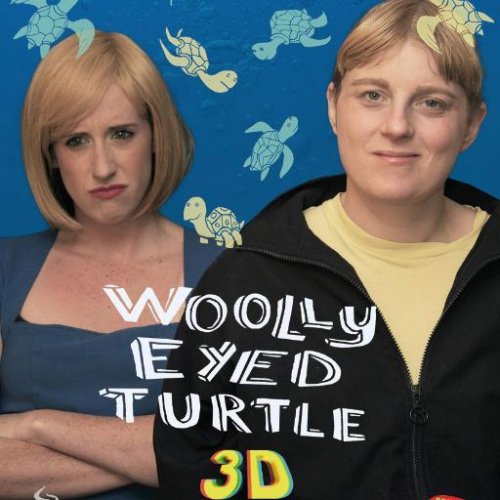
Woolley Eyed Turtle 3D

By Jo Tomalin
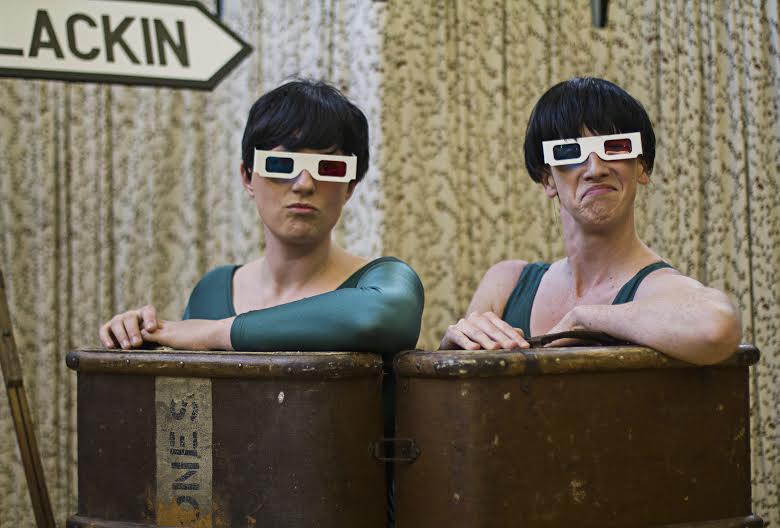
above: Woolley Eyed Turtle 3D – Photo Permission: Cantankerous Theatre

 Two zany women – Wildly dynamic physical storytelling!

Review by Jo Tomalin

Maeve Bell (l) Emily Johnson (r)

Edinburgh Fringe Festival 2015
Highly Recommended

These two zany women perform a creatively devised show full of characters set in a community care home in Ireland. You will meet Liam and Noreen, Grace and others as the exuberant Maeve Bell and Emily Johnson take you on this journey. It’s comedic and fun, for sure, but also witty and heartfelt.

The Saint Mary Magdelene Mother of Hope Care Home’s motto is “What fills your day, prolongs your stay” so we first learn about the activities that will keep everyone not cantankerous. As the carers go about their work they discover the patrons’ life stories and take on the characters themselves, which is very entertaining – it is then that we are invited to put on our 3D glasses.

Although Bell and Johnson are nowhere near the ages of the characters they portray, they do a great job switching between several characters. Wearing dark green unitards and the same short black hair style, they become male and female characters of all ages moving easily between various accents. This is quite a feat because they don’t even add costumes – there’s no time – but their strength is in the physical aspects of telling the story, so they simply adjust their posture and facial expressions. Maeve Bell has some particularly exaggerated expressions – sometimes her eyes seem to pop out of her head, while her mouth contorts – it’s hilarious!

There’s music and movement too – Contemporary / Irish dance mash up, which add to the playful absurdist nature of Cantankerous Theatre. Both performers take turns narrating and it’s very effective, even to the back row. They also integrate objects into their storytelling such as the bit with a toy plane, which is fun.

What sets this show apart is how the performers relate to each other – they are Yin and Yang, complementing each other well. There is mischief, charm and warmth in the show coming from how Bell and Johnson interact, really listening and reacting to each other and the audience. They enjoy what they are doing and therefore, this ripples out to the audience. The story, packed full of fascinating intergenerational observations is well developed, and although some moments are probably improvised the structure is solid and they stay on track – women on a mission! Oh, the woolley eyed turtle? Well you’ll have to go and discover that for yourself – it will be worthwhile.

The PBH Free Fringe 2015 is producing a lot of theatre shows this year. Therefore, this show – Woolley Eyed Turtle 3D – is free, no tickets or reservations required!

Free     7:30pm at Cafe Camino (55 minutes), to August 29, 2015 – No Mondays at Venue 65, Little King Street, Edinburgh


Jo Tomalin, Ph.D. reviews Dance, Theatre & Physical Theatre Performances
More Reviews by Jo Tomalin
TWITTER @JoTomalin
www.forallevents.com  Arts & Travel Reviews

This review originally published in www.FringeReview.co.uk

Don Quixote: a review by Victor Cordell

By Victor Cordell

A Most Satisfying Quest

Who would want to try a new take on Miguel de Cervantes “Don Quixote” when the “Man from La Mancha” is one of the most successful musicals in theater history?  Playwrights who could craft a script that is a continual source of laughs would if they could find actors who could inhabit the lead parts with the highest professionalism.  Those conditions are fulfilled in Marin Shakespeare’s production of Peter Anderson and Colin Heath’s “Don Quixote”.

The premise of the play is that an old gentleman, Alonso Quijana, becomes so steeped in the literature of chivalry that he fancies himself a knight-errant.  As the self-appointed Don Quixote, The Knight of the Woeful Countenance, he sets out to conquer wrongdoers and to pursue to damsel of his dreams, Dulcinea.  In need of a squire, Quixote drafts the gullible peasant Sancho Panza with the promise of a governorship.  The pair embark on Quixote’s quest, and one misadventure after another ensues.

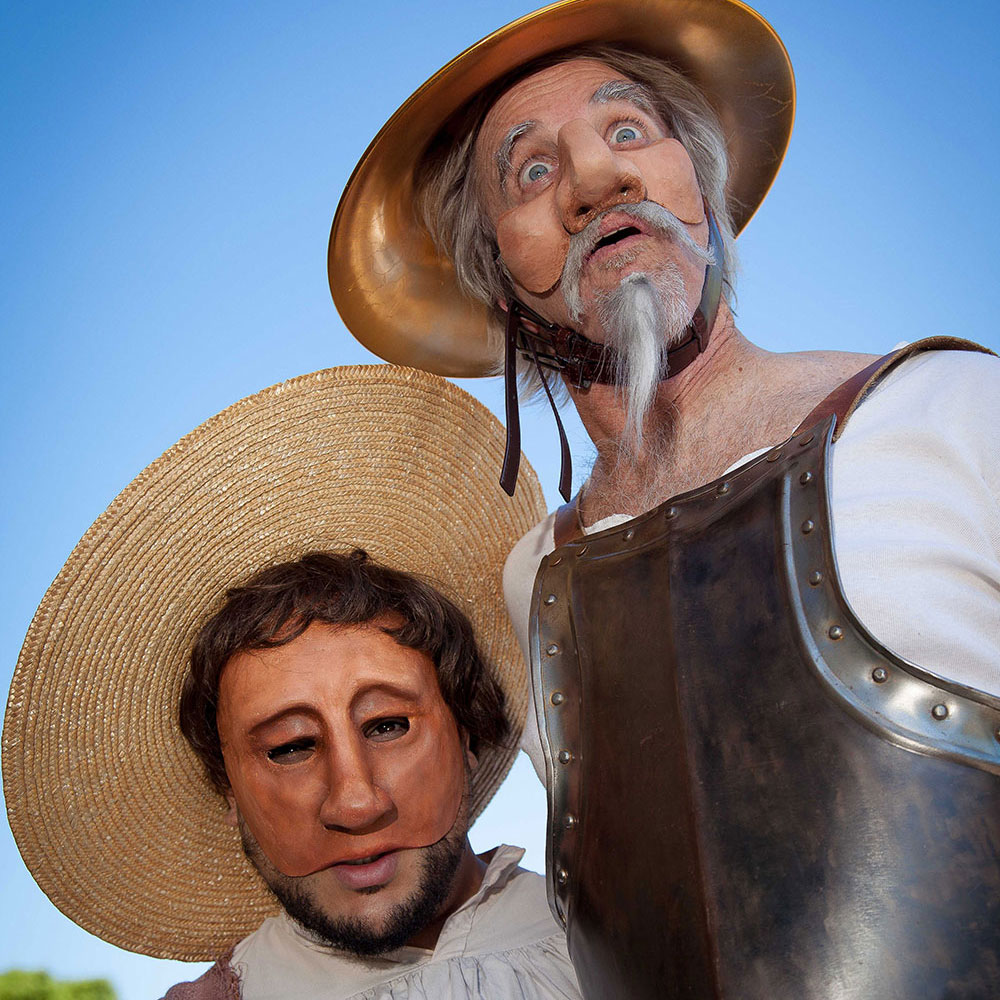
Ron Campbell as Don Quixote and John R. Lewis as Sancho Panza provide truly masterful depictions that would satisfy audiences on any stage.  Campbell, a master clown, creates a delusional but resolute Quixote that evokes audience empathy.  Miraculously, he maintains a deer-in-the-headlight visage throughout, whether in bluster or in reflection.  Yes, he has beady blue eyes, not large brown eyes, but if you see them, you’ll see it.  Lewis also maintains a wide-eyed countenance, conveying innocence and hope.  He’s a perfect complement to Campbell and pretty well matches his acting chops.

The acting ensemble of Cassidy Brown, Rick Eldridge, Lee Fitzpatrick, Monica Ho, and Jed Pesario perform too many roles to count.  They are the loving support system and the many antagonists along Quixote and Panza’s journey.  All five flip characterizations as fast and adeptly as a magician flips cards.

Sometimes, especially early on, it is hard to tell which ensemble actor is playing a role.  That brings us to the other star of the production, David Poznanter, who designed and hand-crafted over 25 unique commedia dell’arte masks for the actors.  The use of masks is specified by the playwrights.

Each mask creates strong characterization, whether through a bulbous nose or a grimly arched brow.  But actors’ mouths and jawlines are exposed, and the precision contouring of the masks allows full expression of the eyes.  The use of masks largely counters annoyance the audience may have in seeing multiple characters who are so obviously played by the same actor.   Masks further symbolize one of the play’s overarching themes of the thin divide between fantasy and reality.

Yet, in one of the most touching scenes, a duet with Campbell set to guitar music, Fitzpatrick appears without a mask.  But she sustains the fantasy/reality duality in a speechless scene as she artfully transforms herself from a shrouded and hunched old lady to the beautiful Dulcinea and back.

Other production values are unspectacular, but effective.  The central feature of the set is an adobe-like wall having ramps that zig and zag from top down to stage.  It serves well as a trail for Quixote’s prancing, astride his broomstick and oil can steed, Rocinante.  Props are often simple but clever.  Pillows act as sheep, so we are spared the blood letting from Quixote’s belief the sheep are soldiers.  The four windmill sails are in the form of a large cross made of pipe that actors spin like batons – or windmills.

The script of “Don Quixote” is strong overall, but the snappiness of the second act doesn’t quite meet the first.  Also, there may be too many “wink-wink” jokes.  Yet, it is a fine script with warmth and sorrow as well as humor.  Director Lesley Shisgall Currier and her artistic team and actors have taken that script and turned it into a worthy entertainment.

Twisted Cabaret: Edinburgh Fringe

By Jo Tomalin


Highly Recommended   

Weird, Wonderful Midnight Show at Gilded Balloon!

Cabaret and Variety  (comedy, music)
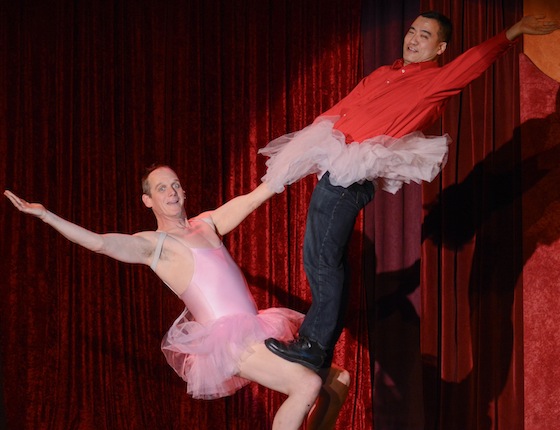
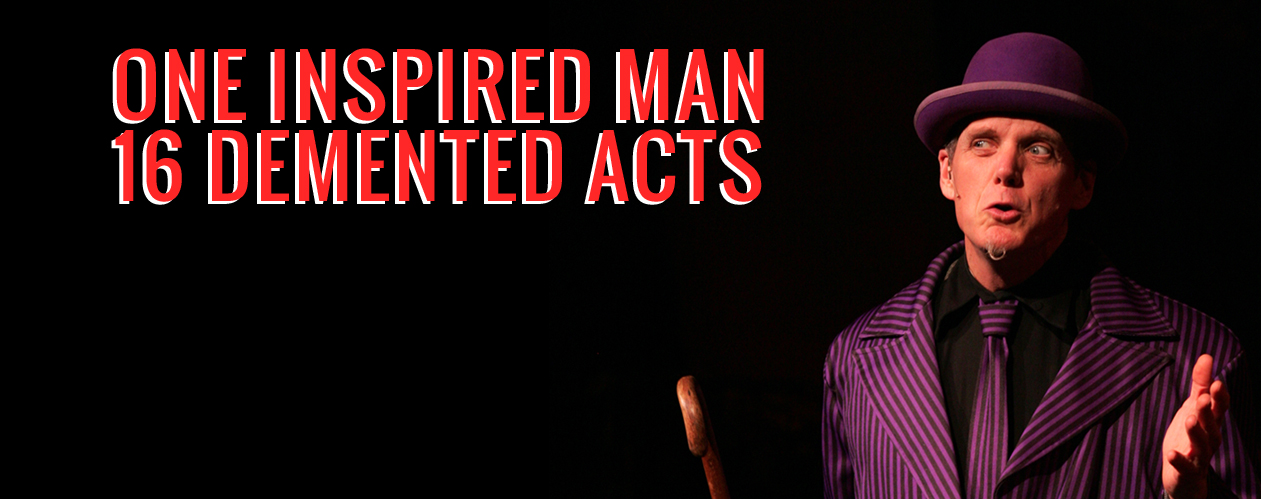
Frank Olivier gathers the best and weirdest variety artists from around the globe. A clumsy juggler, a pervy magician, and a narcissistic mime, along with ballerinas, sword swallowers and more. On the night of the big show all the artists get stopped at the border. Aided only by his hunchbacked assistant, and the shadow of a woman, Olivier must do the show of his life; playing all the roles to save the cabaret. The funniest show at the fringe and the most bizarre as well. ‘The grace of a stoned rhinoceros’ (Boston Herald). ‘Wickedly funny’ (New York Times).

Review by Jo Tomalin

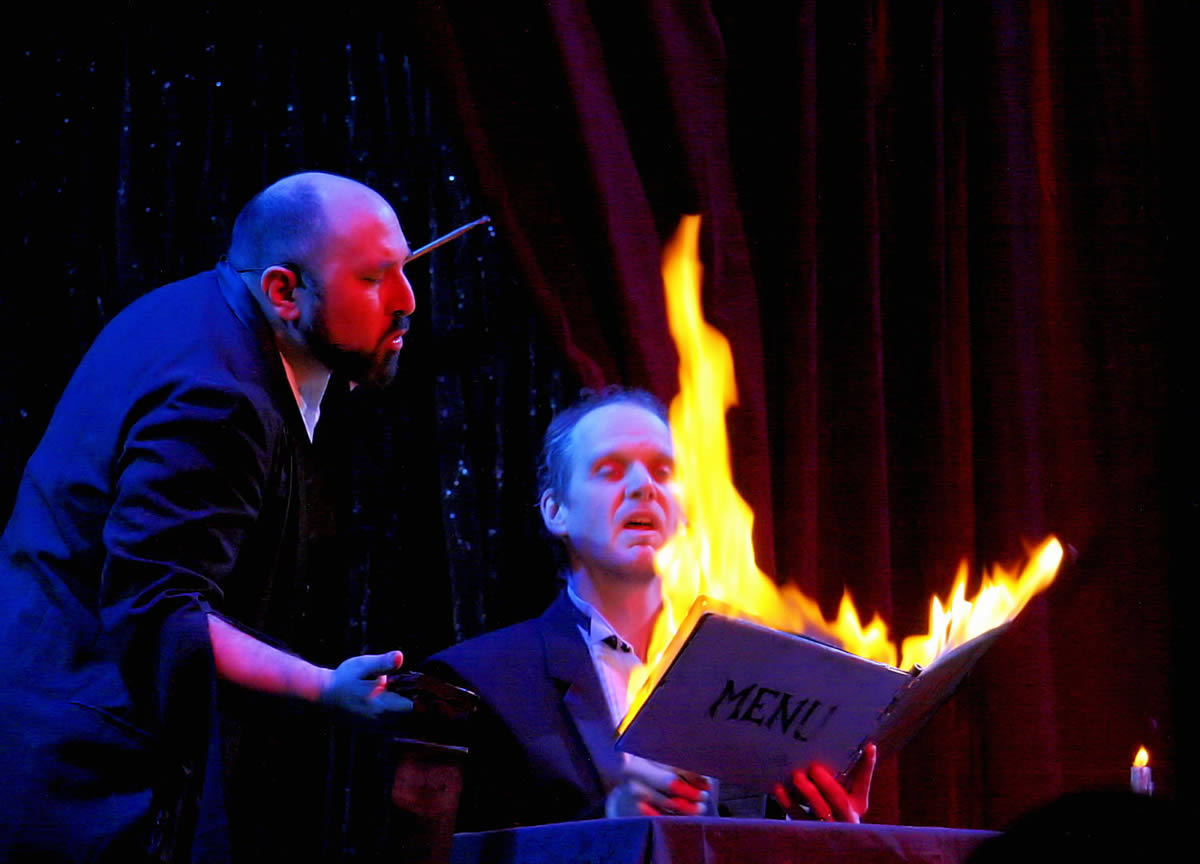
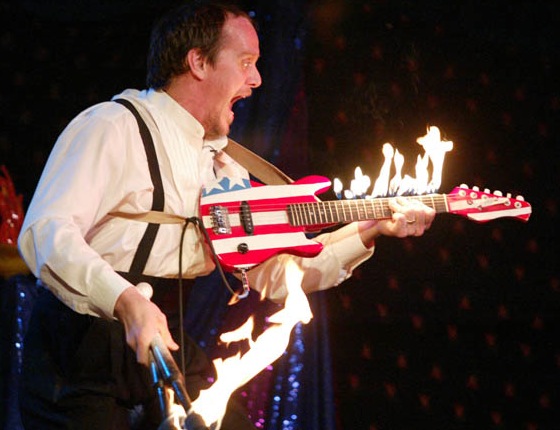
Frank Olivier is the ultimate show man and in Twisted Cabaret he will do pretty much anything – and everything he can do to entertain you – juggle, sword swallowing, magic, unicycling, risky stuff with fire, risqué comedy…

His fascinating, strange assistant and manager, played by Paul Nathan, has a delicious Rocky Horror Show attitude, but is helpful nonetheless. Together they make a great team. Their contrasting personalities work well together and add to the drama and comedy. Yes, there’s lots of physical comedy, often from the situations Frank gets himself (and others) in to and out of – plus  music, and maybe a song if you’re lucky. Both performers are highly skilled and perform in the USA as well as world-wide.

So if you are up for a riotous end to your day at the Fringe, go to the Twisted Cabaret at the amazing Gilded Balloon venue, right in the centre of the Edinburgh Fringe Festival 2015.


More Information:

Tickets + Show Info for Edinburgh Fringe 2015 
Twisted Cabaret Website

  • Gilded Balloon (Venue 14)
  • Performance Time: 23:59
  • Dates: Aug 13-16, 19-23, 25-30
  • Length: 1 hour 5 minutes
  • Company from United States
  • Location: Gilded Balloon, Edinburgh Fringe Festival 2015
  • Venue map


Jo Tomalin, Ph.D. reviews Dance, Theatre & Physical Theatre Performances
More Reviews by Jo Tomalin
TWITTER @JoTomalin
www.forallevents.com  Arts & Travel Reviews

“Long Day’s Journey Into Night” highlights Ashland offerings

By Judy Richter

Visitors to the Oregon Shakespeare Festival in Ashland can see up to 10 plays in the festival’s three theaters during the summer. The festival presents a total of 11 plays during its season, which runs from Feb. 20 to Nov.1.

Running in the outdoor Allen Elizabethan Theatre are William Shakespeare’s “Antony and Cleopatra”; the world premiere of “Head Over Heels,” with music and lyrics by the Go-Go’s; and Alexandre Dumas’ “The Count of Monte Cristo.”

The indoor Angus Bowmer Theatre offers Shakespeare’s “Much Ado About Nothing”; a Broadway musical, “Guys and Dolls”;  Lynn Nottage’s “Sweat”;  and Stan Lai’s “Secret Love in Peach Blossom Land.”

Playing in the intimate Thomas Theatre are Shakespeare’s “Pericles,” Eugene O’Neill’s “Long Day’s Journey Into Night,” and Quiara Alegría Hudes’ “The Happiest Song Plays Last.”

On my recent visit, I saw five shows and was to have seen a sixth. However, “The Count of Monte Cristo” was canceled the night I was scheduled because of unhealthy air quality caused by heavy smoke from a forest fire north ofAshland.

Smoke has been an issue for OSF in recent days, leading to several cancellations for the Elizabethan as well as the popular, free outdoor Green Show that precedes evening performances. A performance of “Head Over Heels” was stopped during the first act because of smoke.

OSF monitors the air quality each day and announces by 6:30 p.m. whether the show will go on. Patrons then have four options for their tickets: exchange, donate, refund or voucher. The latter is good through Oct. 31, 2016.

Although it’s disappointing when a show is canceled, the health of the actors, crew, ushers and patrons is paramount.

To provide the most accurate, timely readings possible, a temporary air quality monitoring station has been installed on a festival building. Otherwise, the closest station is in Medford, several miles north.

Following are overviews of the five reviewed shows:

A LONG DAY’S JOURNEY INTO NIGHT

This is Eugene O’Neill’s most autobiographical play and reportedly the most painful for him to write.

It focuses on the Tyrone family staying in their summer house on the coast of Connecticut in 1912. The patriarch, 65-year-old James (Michael Winters) is an actor who has spent many seasons on the road. His wife, Mary (Judith Marie Bergan), loyally followed him year after year. She has recently returned home after a stint in rehab for her addiction to morphine.

Visiting are their two adult sons, James Jr., called Jamie (Jonathan Haugen), and Edmund (Danforth Comins).

Initial scenes show much love within the family, but major concerns soon are revealed. Edmund is ill with what he learns is consumption, or tuberculosis. Jamie has led a dissolute life of alcohol and whores. James spends his money on shaky real estate deals but is a skinflint otherwise. Mary, who says she has almost always been unhappy and lonely, relapses into her fog of addiction.

Although it runs about three hours and 45 minutes with one intermission, this production is riveting throughout because of O’Neill’s often poetic writing and the cast’s brilliant acting, especially by Bergan. She embodies Mary’s sense of walking on eggshells, poignantly recalls her youth and then descends into her own tragic world. It’s a tour de force.

The three men also are outstanding as each character deals with his own issues and with the family dynamics. Completing the cast is Autumn Buck as Cathleen, a servant.

The actors have the benefit of direction by Christopher Liam Moore, who orchestrates each scene like a maestro and allows occasional moments of humor to come through. The set by Christopher Acebo features a long stairway that figures prominently in the drama.

Music by Andre J. Pluess underscores the mood, as does the sound design by him and Matt Callahan. Also contributing to the ambience are lighting by James F. Ingalls and costumes by Meg Neville.

This production ranks at the top of my list.

GUYS AND DOLLS

Ranking with “A Long Day’s Journey Into Night” for overall quality is its polar opposite in mood, “Guys and Dolls.” The book by Jo Swerling and Abe Burrows is based on the writing of Damon Runyon and is set in New York City.

With music and lyrics by Frank Loesser, its song list includes hit after hit, such as “I’ll Know,” “A Bushel and a Peck,” the title song, “Luck Be a Lady” and “Sit Down, You’re Rockin’ the Boat.”

Populated by gamblers, show girls and street missionaries, it features two love stories. The first involves Nathan Detroit (Rodney Gardiner), who runs “the oldest established floating crap game in New York.” He has been engaged to Miss Adelaide (Robin Goodrin Nordli), the lead singer at the Hot Box nightclub, for 14 years. She wants him to quit gambling and get married.

The other couple is Sky Masterson (Jeremy Peter Johnson), another gambler, who falls in love with Sarah Brown (Kate Hurster), prim leader of the Save a Soul Mission. Their relationship is fueled by bets, some of them unknown to Sarah.

Surrounding them is a host of memorable characters such as Nicely-Nicely Johnson (Daniel T. Parker), Harry the Horse (Tony DeBruno), Benny Southstreet (David Kelley) and Big Julie (Richard Elmore), among the gamblers. All are outstanding.

Also noteworthy is Richard Howard as Arvide Abernathy, Sarah’s kindly grandfather, who sings the touching “More I Cannot Wish You.”

Even though the cast is terrific throughout, the unquestioned star is Goodrin Nordli as Miss Adelaide. A longtime OSF actor who has played widely varied roles, she displays her singing and dancing abilities as well as unsurpassed comic timing. It’s hard to take one’s eyes off her.

Well directed by Mary Zimmerman, the show is enlivened by Daniel Pelzig’s choreography. The set by Daniel Ostling is minimal, allowing for swift scene changes, often using the actors to move set pieces. Musical direction is by Doug Peck. Pianist Matt Goodrich conducts seven other instrumentalists in the orchestra pit.

The colorful costumes are by Mara Blumenfeld with lighting by T.J. Gerckens and sound by Ray Nardelli.

The show runs about two and a half hours with one intermission.

SWEAT

Playwright Lynn Nottage tackles an important national issue in ‘Sweat.’ This world premiere takes place in 2000 and 2008 in Reading, Pa., a factory town that once provided good jobs for its union employees.

In one situation, new owners took over a factory, removed some machines and asked the union to accept major concessions in pay and benefits. When union members rejected the contract, they were locked out.

“Sweat” focuses on the human costs of those moves mostly through two worker families. One is the white Tracey (Terri McMahon) and her young adult son, Jason (Stephen Michael Spencer). The other is the black Cynthia (Kimberly Scott); her young adult son, Chris (Tramell Tillman); and her ex-husband, Brucie (Kevin Kenerly). Tracey and Cynthia are best friends, as are their sons.

Everyone interacts mainly in a local bar presided over by bartender Stan (Jack Willis), a former factory worker who retired on disability after an on-the-job injury. The other bar denizen is Jessie (K.T. Vogt), another factory worker. Stan is assisted by busboy Oscar (Carlo Albán), who wants to work at the factory.

The play opens in 2008 as a parole officer, Evan (Tyrone Wilson), separately interviews Jason and Chris after the two have been imprisoned. Jason is sullenly defiant, while Chris talks of wanting to become a teacher.

Action then reverts to 2000 when all is apparently well. While things worsen at the factory, Cynthia is promoted to a management job. Her friends become resentful, accusing her of abandoning them, but she insists she’s doing all she can on their behalf.

The tension reaches a boiling point when Oscar turns scab and goes to work at the factory. That’s when the audience learns why Jason and Chris went to prison.

Directed by Kate Whoriskey, the production is well-cast, with each actor creating a believable character. Special mention goes to Willis, whose Stan provides a patient, calming voice when the bar patrons drink too much or become too angry.

“Sweat” was co-commissioned by the festival, along with Arena Stage, as part of its American history cycle. It rightly focuses a spotlight on what happens when people lose their jobs. However, it could use some pruning to eliminate some seemingly repetitious scenes, and the rough language, although probably appropriate to the characters, seems overdone.

A revolving set by John Lee Beatty, with lighting by Peter Kaczorowski, allows for easy scene changes. The production also features costumes by Jennifer Moeller, sound by Michael Bodeen and Rob Milburn, and videos by Jeff Sugg.

It runs about two hours and 30 minutes with one intermission.

MUCH ADO ABOUT NOTHING

Lileana Blain-Cruz directs a mostly workmanlike production of Shakespeare’s “Much Ado About Nothing” with its two pairs of lovers and some schemers. The best known lovers are Beatrice (Christiana Clark) and Benedick (Danforth Comins). Their relationship seems more like enmity as they exchange barbs until other characters gull them into thinking each is in love with the other.

The secondary lovers are the younger Claudio (Carlo Albán) and Hero (Leah Anderson). Hero is the daughter of Leonato (Jack Willis), the governor of Messina, and Beatrice is her cousin.

There are no obstacles to their love until the scheming Don John (Regan Linton) makes Claudio believe that Hero is unchaste. Things get complicated after that, but all turns out well.

Once again Willis provides a solid anchor to the production. The rest of the cast does well, but there’s little chemistry apparent between Albán as Claudio and Anderson as Hero. It’s better between Comins as Benedick and Clark as Beatrice, but it’s still not enough.

Director Blain-Cruz sets the action in the present. Hence she inserts modern touches such as having the malaprop-prone Dogberry (Rex Young), leader of the watch, ride a Segway. She also overdoes some comic scenes, and the party scene is annoying with its strobe lights (lighting by Yi Zhao).

Choreographer Jaclyn Miller and composer-sound designer Chad Raines seem to borrow from “Evita” with the music and soldiers’ entrance for the tomb scene reminiscent of  “Peron’s Latest Flame” in the Andrew Lloyd Webber musical.

It would seem that the director wanted to appeal to young audiences. She apparently succeeds there, judging by the enthusiastic reception from the large group attending the festival’s 12-day Summer Seminar for High School Juniors.

“Much Ado” runs about two hours and 40 minutes with one intermission.

SECRET LOVE IN PEACH BLOSSOM LAND

The low point among the five reviewed shows is “Secret Love in Peach Blossom Land” by Chinese American playwright Stan Lai, who also directs. It would seem that he, too, aimed his direction toward young audiences. The seminar students gave the show a standing ovation, but many adults delivered only polite applause. A few left during intermission of the two-hour, 30-minute performance.

Lai translated his play from the Chinese for this American premiere and, in this case, set it in the festival’s Bowmer Theatre. In it, two theater companies are mistakenly scheduled to rehearse two different plays at the same time.

The first play, “Secret Love,” is set in Shanghai in 1948 and Taipei in the late 1980s. It focuses on the love between Jiang (Cristofer Jean) and Yun (Kate Hurster), who are separated during upheaval in China. During the intervening years, Jiang takes a wife (Vilma Silva). Jiang and Yun meet again many years later when he is gravely ill. It’s a touching story.

The second play is  “In Peach Blossom Land,” set in a fictional Chinese fishing village and an unknown upstream village in the fifth century. In this play, Tao (Eugene Ma) is a fisherman married to Blossom (Leah Anderson), who is having an affair with Master Yuan (Paul Juhn), a fish merchant. When Tao learns of the deception, he goes upstream and discovers the idyllic Peach Blossom Land.

“Secret Love” is the more successful of the two plays within a play because the characters and situation are believable and are played seriously.

On the other hand, “In Peach Blossom Land” overreaches for comic effects, often resorting to silly slapstick and portraying the cuckolded Tao as nothing more than a buffoon.

The set is by Michael Locher with costumes by Helen Q. Huang, lighting by Alexander V. Nichols and sound by Valerie Lawrence.

For tickets and information about the Oregon Shakespeare Festival, call (800) 219-8161 or visit www.osfashland.org.


 

Sylvie Guillem – Life in Progress

By Jo Tomalin

Sylvie Guillem – Life in Progress
Edinburgh International Festival 2015
A Sadler’s Wells Production, co-produced with Les Nuits de Fourvière and Sylvie Guillem
Sat 8 – Mon 10 Aug 7.30pm
Festival Theatre

Review by Jo Tomalin

Outstanding

Sylvie Guillem’s final tour as a dancer was met at the end of the evening on August 9th 2015 by a standing ovation and multiple curtain calls. One of the greatest dancers of her generation, Guillem started her career at the Paris Opéra and rose very quickly to Étoile at the age of 19. Since then she has performed in every major ballet company internationally.

Guillem’s tour comprises four pieces of modern choreography – new works by Akram Khan and Russell Maliphant and existing creations by Mats Ek and William Forsythe.

In the first piece, technê, by Akram Khan, Sylvie Guillem enters crouched and scurrying around quickly as in Japanese Suzuki movement. Centre stage is a tall metal mesh tree which takes on a life of its own as the dance progresses. Live musicians onstage are slowly revealed producing an atmospheric soundscape of shells blowing in the wind and echoed vocalising.

Guillem performs mystical insect like movements, dynamic and frenzied at times. Time passes in this deserted landscape until Guillem responds to other forces such as rhythmic percussion and drums to a mournful violin. She is strident in her fluid movement with outstretched then angular arms and exquisite leg extensions – then glides around the tree so smoothly.

Composer: Alies Sluiter. Musicians: Prathap Ramachandra, Grace Savage and Emma Smith. Costume designer: Kimie Nakano. Lighting designers: Adam Carrée, Lucy Carter.

DUO2015 choreographed by William Forsyth, danced by Brigel Gjoka and Riley Watts is inspired by a clock and it’s intricate hands and movement. In the dance the choreography brings the two closer and into each other’s space then pulls further away. In silence, swingy stretched arms interrelate symmetrically and asymmetrically. Sometimes they almost fall on each other. As the sound begins fading in and out Gjoka and Watts fold and unfold around their torsos as they turn, jump, and slap their bodies – then suavely walk together. There is torsion and counter torsion as they each push and pull back in fast angular movement in competition.

Composer: Thom Willems. Lighting designer: Tanya Rühl.

Here and After choreographed by Russll Maliphant is a duo with Sylvie Guillem and Emanuela Montanari. A beautifully soft, warm spot light fades up centre stage on Guillem and Montanari – intertwined – as a violin note gets louder then softer. They move in slow adagio like graceful stretches melting in and around each other’s space. Piano is added and the movement builds from fluid to more pointed with extended arms and leg extensions and pirouettes. Cat like stretches and jaunty turns and whirls follow until heavy explosive metal sound arrives. Guillem and Montanari play and do contact dance to the industrial sound and techno drums all around the stage. Running, leaning, supporting until they leave the space.

Composer: Andy Cowton. Lighting designer: Michael Hulls. Costumes designer: Stevie Stewart.

The finale of the evening was the complex and utterly wonderful and appropriate Bye choreographed by Mats Ek set to Beethoven’s Piano Sonata in C minor Op 111. Ek’s premise is that a woman enters a room and leaves when she is ready to join others. Integrating video and astonishing timing on Guillem’s part, she enters a space through a doorway wearing a moss green cardigan, yellow skirt, red ankle socks and black shoes, wearing a wig of red hair with a long plait down her back. She looks child-like and commences to dance intricate footwork with humor and stops to look back at the door several times. To classical piano Guillem jumps with precise footwork then goes into wild, quirky movement, playful and unpredictable, soulful with abandon – as if inner feelings are pushed and expressed until she leaves the room.

Several times she goes behind the doorway when the video shows part of her body – yet Guillem enters the room through the door again perfectly coordinating the video camera image to her own so the transitions are seamless. After standing on her head twice with stunning extensions she goes through the doorway and becomes part of a crowd, disappearing. This is a unique and outstanding creative work.

Set and Costume designer: Katrin Brännström. Lighting designer: Erik Berglund. Filmographer: Elias Benxon.

Sylvie Guillem performed superbly as ever – athletic and graceful – at the top of her game, as she said goodbye to Edinburgh, the ovation and curtain calls showed that she is greatly respected and appreciated by the knowledgeable audience. We wish her well in the next chapter in her life.

More Information:


Jo Tomalin, Ph.D. reviews Dance, Theatre & Physical Theatre Performances
More Reviews by Jo Tomalin
TWITTER @JoTomalin
www.forallevents.com  Arts & Travel Reviews

CAMELOT rides into San Francisco on Harley motorcycles!

By Go See

Kedar [rating:5] (5/5 stars)

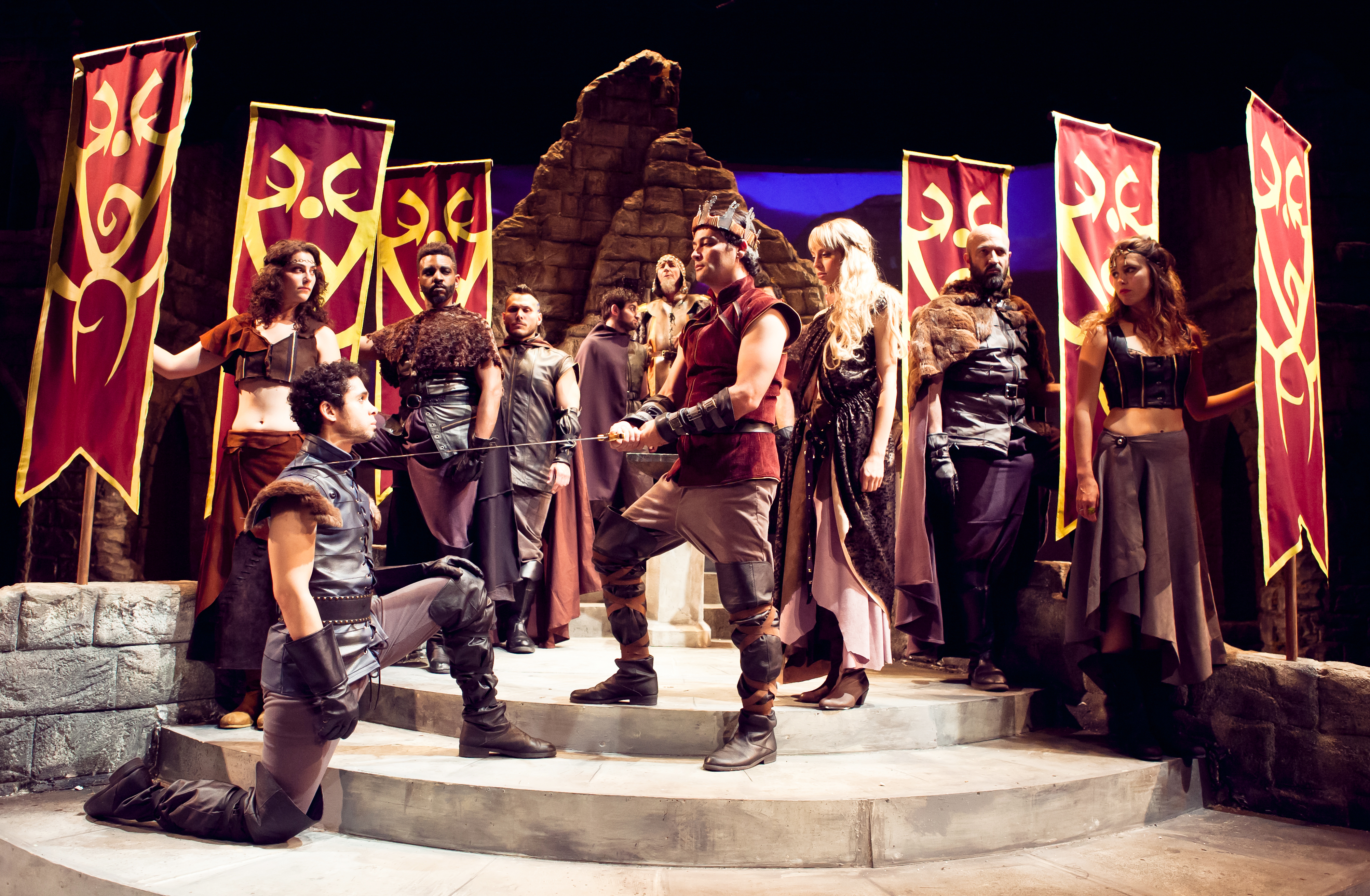
Lancelot (Wilson Jermaine Heredia*), King Arthur (Johnny Moreno*) and Guenevere (Monique Hafen*) at Knighting Ceremony Photos by Jessica Palopoli.

CAMELOT: Musical. Book and lyrics by Alan Jay Lerner.Music by Frederick Loewe. Based on “Once and Future King” by T.H. White. Directed by Bill English. Music director Dave Dobrusky. July 16 – September 14, 2013.

CAMELOT rides into San Francisco on Harley motorcycles!

We aficionados (with synonyms of connoisseurs, devotees, enthusiasts, fanatics) of the SF Playhouse are mostly inured to seeing volatile productions of the under-belly of society parade the boards of their theatre. They have done it again with an ‘in your face’ staging of the musical Camelot. If any of their productions can be summarized with Harold Ross’s 1925 quote from “The New Yorker”, “It has announced that it is not edited [produced] for the old lady in Dubuque” , this staging of the once (and hopefully future) uplifting King Arthur/Round Table/Camelot story is it.

Last year Bill English’s re-imagination of My Fair Lady at their former intimate Sutter Street Theatre was a success and played to substantial crowds throughout the summer. It seems that the “summer musical” has become a standard for SF Playhouse to catch the vacation crowds that swarm San Francisco. This year they are in the substantially larger venue (up from 99 to 265 seats) that has a huge stage with a plethora of technical equipment. For Camelot Nina Ball has created a massive set using two or three turntables, an integrated rear stage screen for impressive projects and to hide the (count them) eight piece orchestra under SF favorite Dave Dobrusky. The well-known and acclaimed title of Camelot will surely attract crowds.

Those crowds will be overwhelmed with the colossal staging but they will not be humming the charming tunes associated with the musical but rather be shaking their heads as many were on opening night. Although there was appreciative applause at the curtain, the usual spontaneous standing ovation was absent.

Wilson Jermaine Heredia* as Lancelot prepares to battle knights

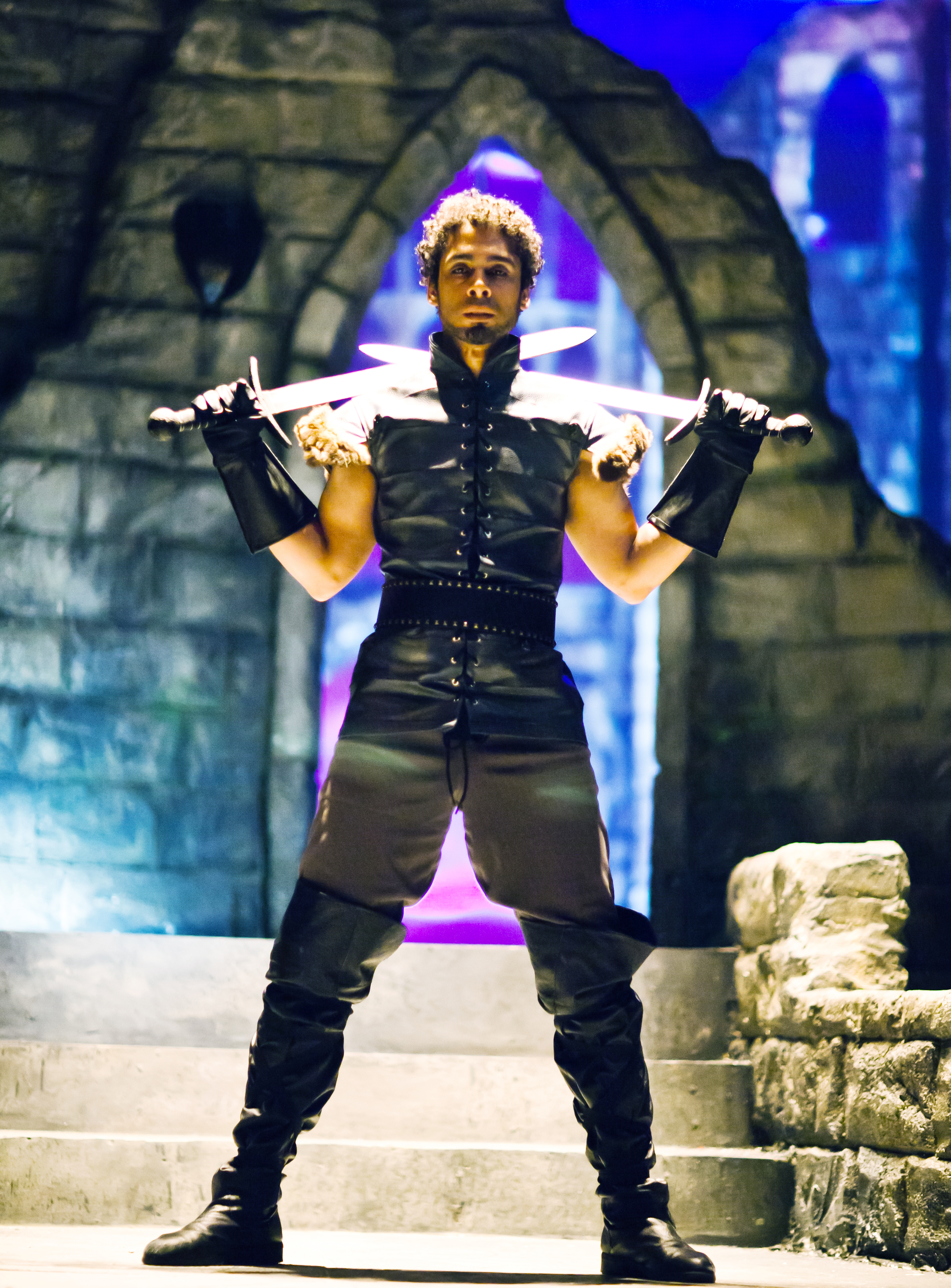
It was absent for good reason despite a spectacular performance by Wilson Jermaine Heredia as Lancelot. Heredia is a Tony and Oliver Award winner for his role as Angel in the Broadway and London productions of Rent.  Director English, using some of  his own words, has created knights in the mold of grungy (costumes by Abra Berman) bikers (Ken Brill, Rudy Guerrero, Robert Moreno, George P. Scott), Guenevere (Monique Hafen) as an angry Goth princess, King Arthur (Johnny Moreno) as a day-dreaming dolt and Mordred as a potential to play Richard III. Charles Dean a Bay Area favorite who brought the house down with his role as Doolittle in My Fair Lady is cast as both the magician Merlyn and Arthur’s confidant Pelinore.  Sadly, the only distinction in those characterizations is a change of costume.

There is much to like about this twisted version of what should be a romantic escapist evening that includes excellent singing voices (with exception of Johnny Moreno’s limited range), eye-catching projections, energetic acting and exuberant fight scenes staged by Heredia. The marvelous score and lyrics are still enchanting and include “Camelot”, “Follow Me”, “The lusty Month of May”, “How to Handle a Woman”, “Before I gaze at You Again”, “If Ever I Should Leave You”,  and “I loved You Once In Silence.”

Running time 2 hours and 40 minutes including the intermission.

Kedar K. Adour, MD

Courtesy of  www.theatreworldinternetmagaine.com    


As One: a review by Victor Cordell

By Victor Cordell

A Change Like No Other

“As One” is aptly depicted as a chamber opera for two voices.  The instrumental foundation of the opera is carried by a traditional string quartet, which suits the intimacy of the story.  Uniquely, only one person is represented by the two vocalists.

The poignancy of this new piece, recently premiered at Brooklyn Academy of Music, is its concurrence with the recent media frenzy over the gender transition of Bruce Jenner to Caitlyn Jenner.  “As One” deals with the before, during, and after transition of Hannah on one of life’s smaller stages – and three decades earlier, an eternity before the more accepting era we are in now.

“As One” is one of the three operas produced for the West Edge Festival, which takes place over three short but glorious weekends in Oakland at three different site-specific locations.  This production is at the Oakland Metro, a warehouse-like performing arts venue near Jack London Square that is usually home to high energy rock and related concerts.

The concept and music come from Laura Kaminsky, a versatile composer who writes in the modern, post-minimalist dissonant idiom.  She partnered with Mark Campbell, an accomplished librettist, and co-librettist Kimberly Reed, a transgender woman, whose life experience is the basis for the narrative.

The live action takes place on a spare, elevated stage, with the two singers always present, even through long musical monologues by one or the other.  They are occasionally joined by up to ten supernumeraries, who act as witnesses or silent participants to the action.  The visual simplicity of the staging is matched by the costuming, in which the singers are both in white t-shirtish tops and blue bottoms, and the supers are in white.  The effect of the simplicity on stage works well in contrast with the five video screens behind the stage that run film associated with the character’s life.  The films are designed by Reed, whose career is in that medium, notably, the documentary “Prodigal Son”, which is also autobiographical.

The story arc is almost necessarily non-linear.  Otherwise, the early section of the opera would be exclusively in the male voice and the latter in the female.  Appropriately, the voices align with the apparent gender at the respective time of each vignette, but several duets reflect the inner conflicts and transition.  Although there are light moments, Hannah’s stress during her youth as a boy predominate – from learning to write like a boy, when it is natural to write like a girl, to the confusion in watching circa ’50s-’60s sex education films.  And the violence that is disproportionately felled upon transgender people is addressed when Hannah begins to face the world as a young woman.

Both singers have rich, round voices.  Though each would seem well suited to the melodious world of 19th Century opera, mezzo Brenda Patterson specializes in new vocal music, while Baritone Dan Kempson is the more traditional.  Whatever acoustic deficiencies the site may have are overcome by the power of the vocalists.  Their portrayals are both so sensitively drawn and so in concert with one another, that it seems right to address their performances as one – as ethereal aspects of the same underlying character they represent.

“As One” opens a new page in the opera catalogue.  Dramatically, it is a sensitive depiction concerning a corner of humanity that has undeservedly been misunderstood, bullied, and deprived human rights.  The music is often harsh, as is appropriate to circumstances, but with softer edges as needed.  It is a very well spent 80 minutes.

The final performance of West Edge Opera’s “As One” is at the Oakland Metro, 522 2nd Street, Oakland, on Saturday, August 8 at 2 PM.  www.westedgeopera.org

Earthquake Storms — Book Review

By Joe Cillo

Earthquake Storms:  The Fascinating History and Volatile Future of the San Andreas Fault.  By John Dvorak.  New York:  Pegasus Books.  2014.


Earthquake Storms is indeed a fascinating history, not only of the San Andreas Fault that runs along the western edge of California, but also of the State of California itself, the cities of San Francisco and Los Angeles, the building of the Golden Gate Bridge, the California Gold Rush, the development of the oil industry in California, the growth of the science of geology, the increasing understanding of earthquakes, the development of the Richter scale, the Trojan War, paleoseismology, as well as the future of the San Andreas Fault and the prospects of predicting earthquakes, in addition to many other interesting side roads.  The book is well written, well researched and has depth as well as breadth.  It is a stimulating panorama that includes colorful depictions of the personalities whose curiosity and dogged persistence made the breakthroughs that moved our understanding of earthquakes forward.   Dvorak makes interesting connections between personal peculiarities and psychological needs of individuals and the influence it had on their work as a researchers and scientists.

Until the latter half of the twentieth century earthquakes were mysterious, apparently random events, that could be enormously destructive.  But people had no clue why they occurred when and where they did and what caused them.  The destructive potential of earthquakes has grown with the growth of civilization and the construction of large cities on or near the faults in the earth where earthquakes occur, and this in turn has stimulated the study of earthquakes and their causes.  Earthquake Storms documents this growing interest and understanding of earthquakes beginning in the nineteenth century with dramatic strides forward in the twentieth.  However, this understanding has not reached a point where earthquakes can be foreseen with the kind of accuracy that has come to forecasting the weather.  Dvorak cites a 2008 report by the Working Group on California Earthquake Probabilities that asserts a 31% probability of a magnitude 6.8 or stronger quake along the Hayward Fault, which runs along the eastern side of San Francisco Bay from Richmond, through Berkeley, Oakland, Hayward and Fremont, within the next thirty years. (p. 235)  Not exactly something you can make plans around, but it does emphasize the need to strengthen buildings and infrastructure for the inevitable traumas that will be visited upon them.

While this book is well thought out, well organized, and coherently written, it does have one major drawback, and that is a dearth of maps, drawings, diagrams, and illustrations that would make some of these concepts and descriptions a lot easier to grasp.  Dvorak does include eight pages of black and white photographs that are very interesting and helpful, but the book needs a lot more.  I would recommend another fifty pages of maps and illustrations.  I’ll give you an example.

When the North American plate began to drift over the Farallon-Pacific’s spreading central region, a transform fault formed, and then a peculiar feature developed at either end of that fault.  The feature, known as a triple junction, is a place where the boundaries of three tectonic plates meet.  In this case, two of the plates are the North American and Pacific plates; the third, which is actually what remains of the Farallon plate, has been given a different name depending on whether it is north or south of the transform fault.  At the north end, the surviving part of the Farallon plate is now known as the Gorda plate and the point where the three plates meet is the Mendocino triple junction, because the point is currently located near Cape Mendocino.  At the south end is the Cocos plate — a remnant of the Farallon plate — and the Rivera triple junction.  What is important here is that, because of the directions in which the various plates are moving, neither the Mendocino nor the Rivera triple junction is stationary; both migrate.  And they migrate in opposite directions, the Mendocino triple junction to the north and the Rivera to the south.  As time progresses, the transform boundary between the Pacific and North American plates lengthens.  And that brings us back to the San Francisquito-Fenner-Clemens Well Fault.  (p. 211)

Can you visualize that all right?  Maybe you don’t really need a map.  It should be no problem to anyone who is steeped in the geology and geography of California.   But how many people would that be?  This book is written, supposedly, for a wide audience.   But doesn’t Dvorak know that Americans are among the most geographically illiterate people in the developed world?  According to National Geographic and Roper surveys:

About 11 percent of young citizens of the U.S. couldn’t even locate the U.S. on a map.  The Pacific Ocean’s location was a mystery to 29 percent; Japan, to 58 percent; France, to 65 percent; and the United Kingdom, to 69 percent.1

If people cannot even find the Pacific Ocean on a map, how are they going to visualize the Mendocino and Rivera triple junctions that are moving in opposite directions?   Dvorak does this all through the book.  He is very good at verbal descriptions, but he expects his reader to have encyclopedic knowledge of geography and a vivid imagination for the movements of large objects, how they interact, the stresses they create, and the outcome of these colliding forces that would be worthy of an experienced civil engineer.  It may be bad news to the publisher, but his book needs illustrations and photographs on nearly every other page, perhaps another hundred.  There are so many things that Dvorak describes very well in words, but they cry out for a picture that would simplify the cumbersome description.

Another example would be his descriptions of rocks and mineral specimens.

I draw attention to this particular component of the conglomerate because it is easy to identify.  About one out of every ten boulders, cobbles, or pebbles in the conglomerate is this purple rock peppered with pink flecks of feldspar crystals, which adds to its attractiveness and ease of identification.  (p. 205)

A picture would do a much better job of fixing the image of this mineral in the mind, and I think it would also make the point he is trying to get across more accessible as well.  In this subject material, which is very visual to begin with, descriptions of the movements of land masses and geographical features almost require pictures and illustrations.  He really needs to do a second edition, updated and improved with lots of visual imagery.

One lesson that you can’t help but take away from this book is that earthquakes are inevitable and the San Andreas fault, as well as many other faults all throughout California, are ticking time bombs that will certainly go off as major seismic events in the foreseeable future, with powerful and terrible effect.  The title of the book, Earthquake Storms, refers to another realization, first argued for by Amos Nur in the 1990s, that earthquakes tend to occur in clusters, or as Dvorak calls them, storms.  Once you have a major earthquake, the chance of having another one of equal or stronger magnitude is actually greater  than it was before the first event.   He likened a fault’s slippage to the opening of a zipper that catches on successive teeth as it slides down the chain.  Amos Nur has suggested that such a series of successive earthquakes over a period of decades may have contributed to the end of the Bronze Age 3300 years ago. (pp. 226-28)  Dvorak points out several examples of successive major quakes along fault lines within relatively short spans of time, including along the San Andreas.

It is also worth mentioning, Kathryn Schulz’s recent, excellent article in the New Yorker  that describes a much more monumental disaster waiting to happen on the Cascadia fault off the Pacific Northwest.  The Cascadia Fault, has been quiet for over three hundred years, in contrast to the San Andreas, which has been quite active in recent times.  In other words, the Cascadia Fault, while not considered overdue in a statistical sense, has been ominously quiet for a very long time, and when it does give way, could prove cataclysmic for the Pacific Northwest.  Schulz points out that faults have a maximum magnitude in the strength of earthquake they can produce that is based on the length and width of the fault and the amount that the fault can slip.  She does not discuss the science of this in any detail and Dvorak does not mention the earthquake magnitude potential of faults at all.  But for the San Andreas Fault, Schulz claims that 8.2 is the maximum magnitude it can generate — which is a pretty good shake that will wreak a lot of havoc.  But it pales in comparison to the potential awaiting in the Cascadia Fault off the Pacific Northwest coast.   If the Cascadia gives way in a really big way the result could be anywhere from 8.0 to 9.2, which would leave much of the Pacific Northwest, which is profoundly unprepared for such an event, in rubble.

Generally, I would heartily recommend this book, especially to well educated people who live in California.  But it could be equally relevant and illuminating for people all around the world who live in earthquake zones were it to be revised and expanded to include illustrations that would make the text much easier to follow and the conceptual arguments easier to visualize.


Notes


1.  National Geographic News, October 28, 2010.   http://news.nationalgeographic.com/news/2002/11/1120_021120_GeoRoperSurvey.html

See also the National Geographic/ Roper study from 2006 on Geographic Literacy.

http://www.nationalgeographic.com/roper2006/pdf/FINALReport2006GeogLitsurvey.pdf

2.  The Really Big One.  By Kathryn Schulz.  The New Yorker, July 20, 2015, pp. 52-59.