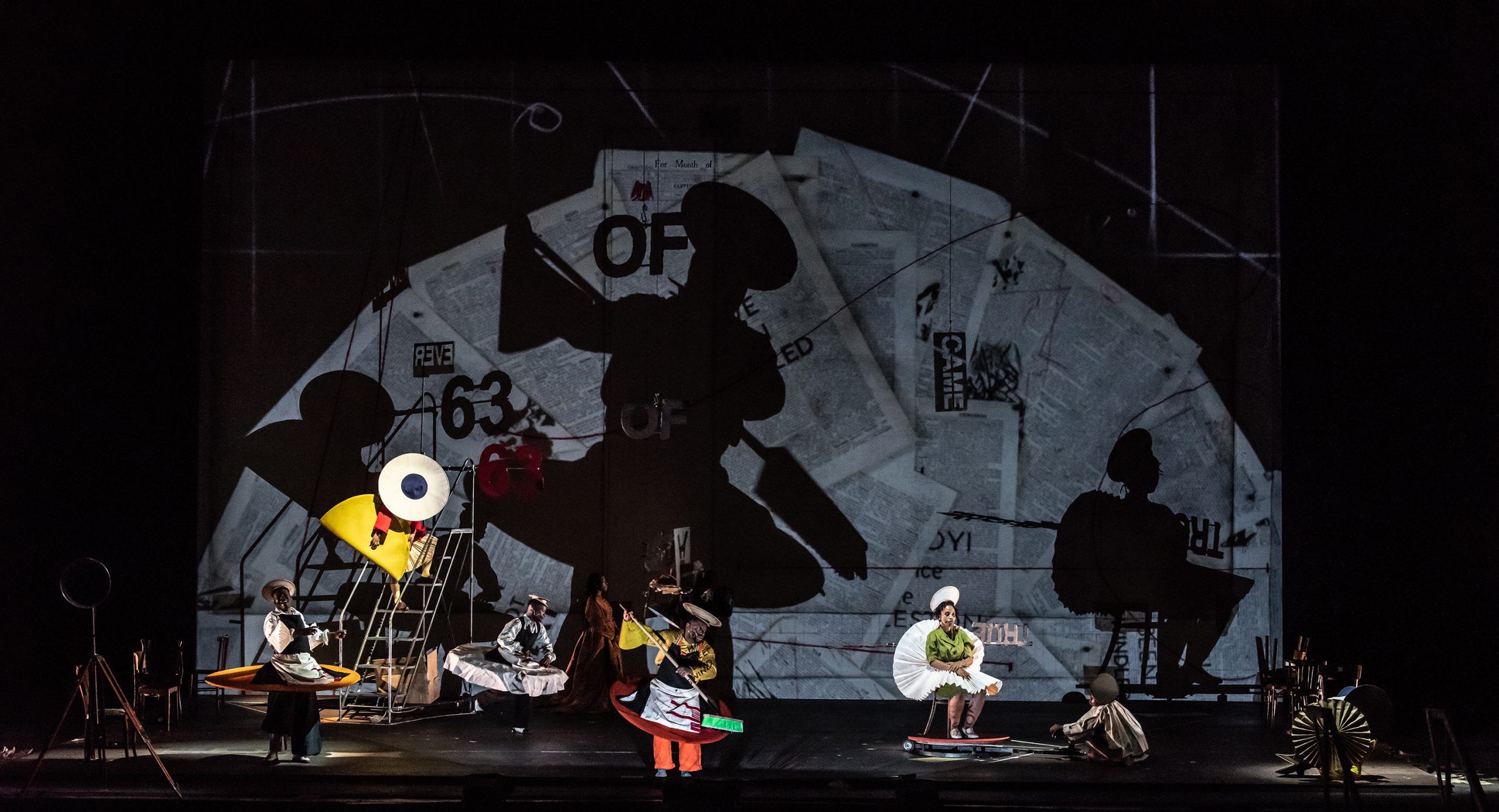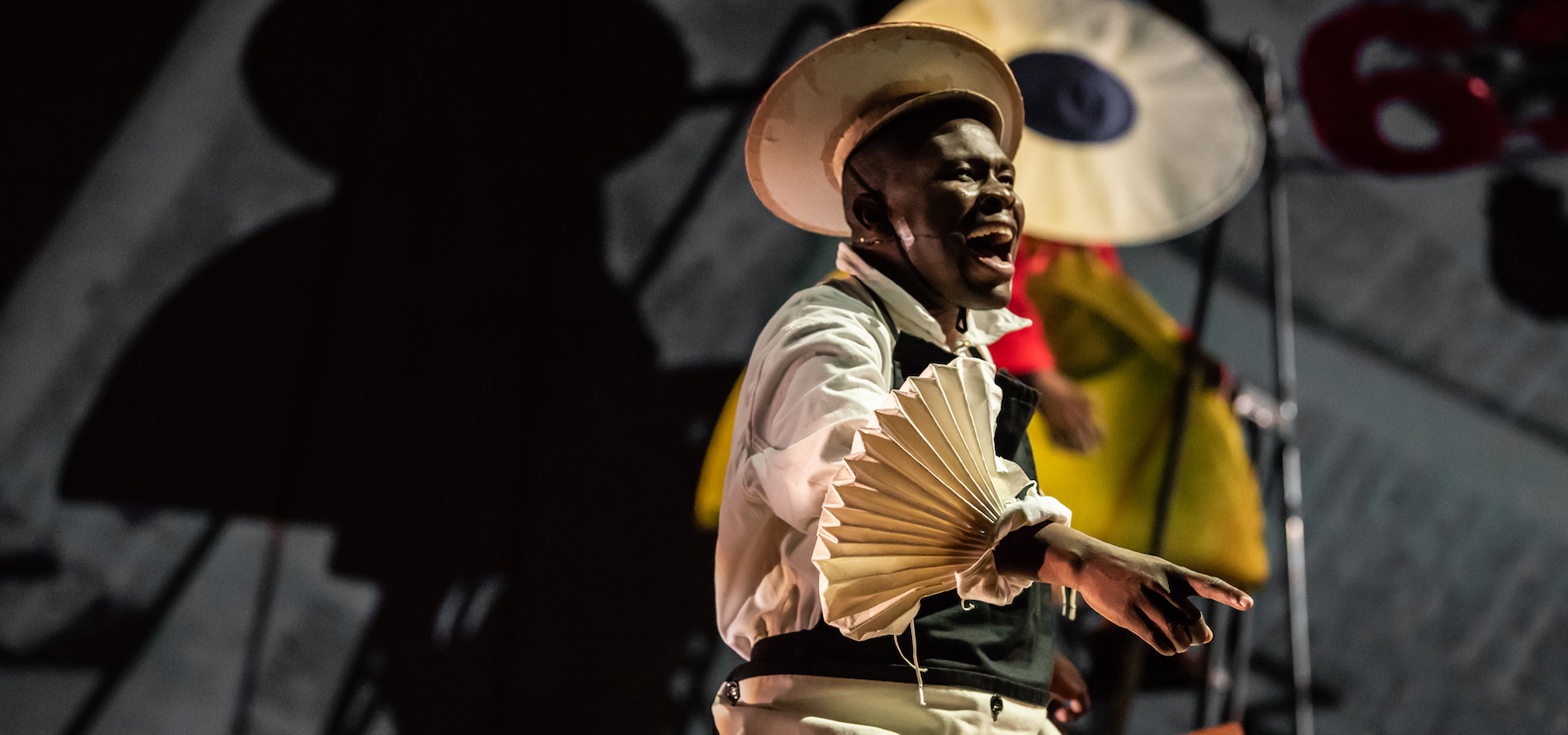
Ronnie Burkett, world renowned award-winning Canadian puppeteer performs his Daisy Theatre show, Little Willy, produced by Stanford Live, March 1 – 4, 2023, at the Bing Studio, Palo Alto, California.
Known internationally for his original devised shows told through exquisite marionette puppets, Burkett is the ultimate storyteller and master puppeteer. He skillfully manipulates and voices his marionette characters with quick changes in vocal tone and pitch then brings life to the complex and beautifully carved and costumed characters – always sharing their individual quirks and foibles!
Burkett designs and creates the thirty or more intricate string puppets for every show he devises, performs and tours internationally. Other shows include Forget Me Not, Penny Plain, Billy Twinkle, 10 Days on Earth, Provenance, Happy, Street of Blood, and the arrestingly moving tour de force, Tinka’s New Dress.
Little Willy is a show that includes several characters from prior shows and this time they decide to perform their version of William Shakespeare’s Romeo and Juliet. Led by the transformative burlesque star Dolly Wiggler, characters such as the take charge actor Esme Massengill, have their sights on playing the young ingenue, Juliet.
Burkett’s shows are mainly for adult audiences because of their length and depth of storytelling and irreverent bawdy mayhem. Little Willy is an interactive fast paced show – that Burkett announces at the beginning, is improvised – therefore the two hour show with no intermission changes somewhat at each performance. Knowing his carefully crafted and thought out characters as well as he does, Burkett, in view of the audience, ad libs and acts through his puppets with a variety of fascinating observations, quips, double entendres, songs and lines from Shakespeare!
The vibrant excitement flow of the show also includes two particularly memorable characters for their immense heart and humility – Mrs Edna Rural who sits in her comfy armchair regaling us with upbeat stories about her friends in a moving monologue about her husband; and then there is Schnitzel, who will melt your heart!
Little Willy is a very entertaining, well-crafted, witty, humorous show, with Burkett’s brilliant puppetry and multi dimensional performance told through a unique story. Do not miss this show… it’s Highly Recommended!!!
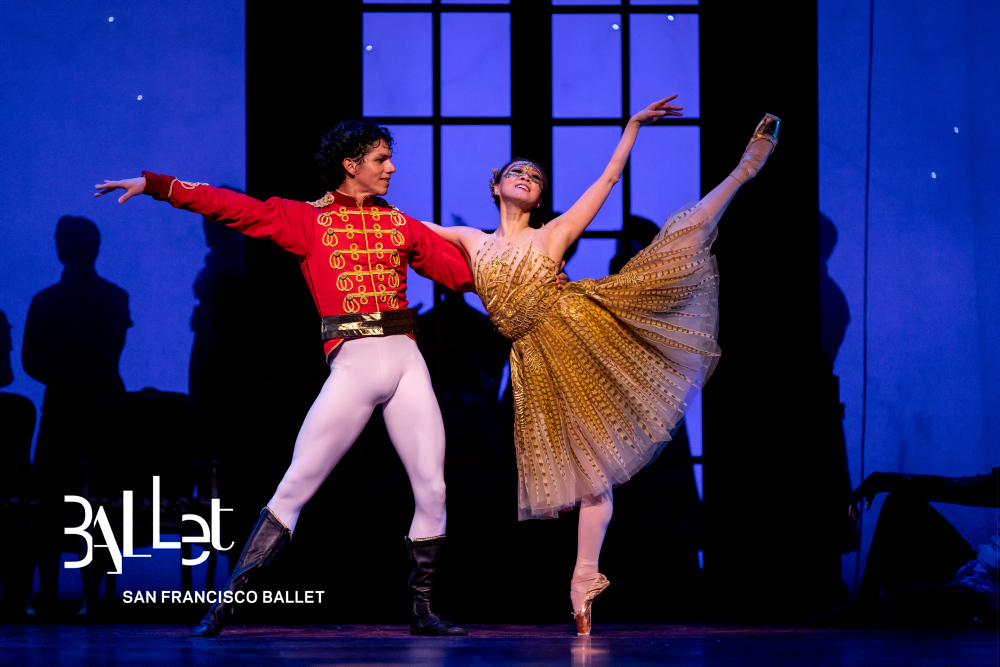
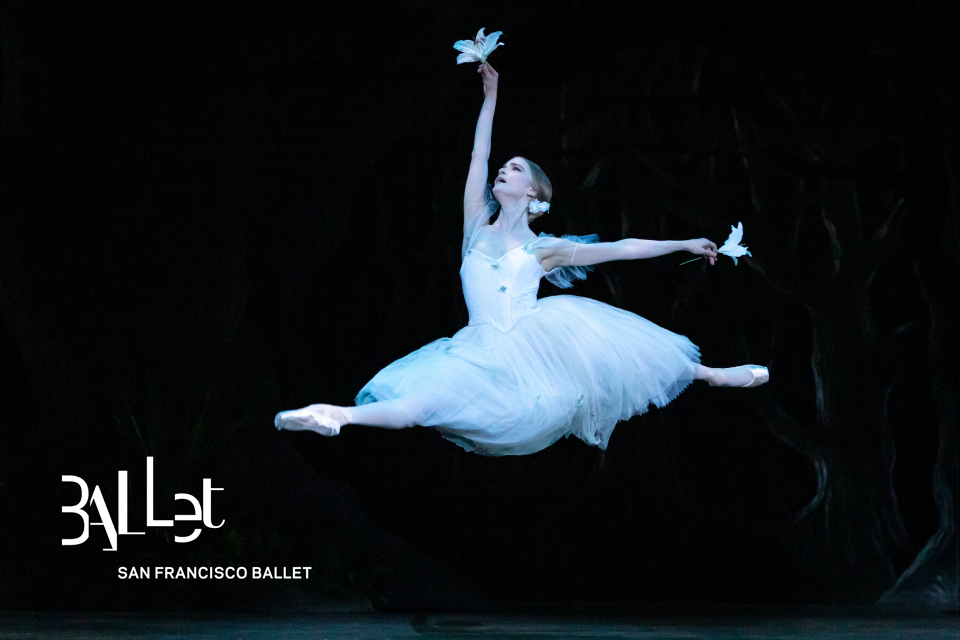
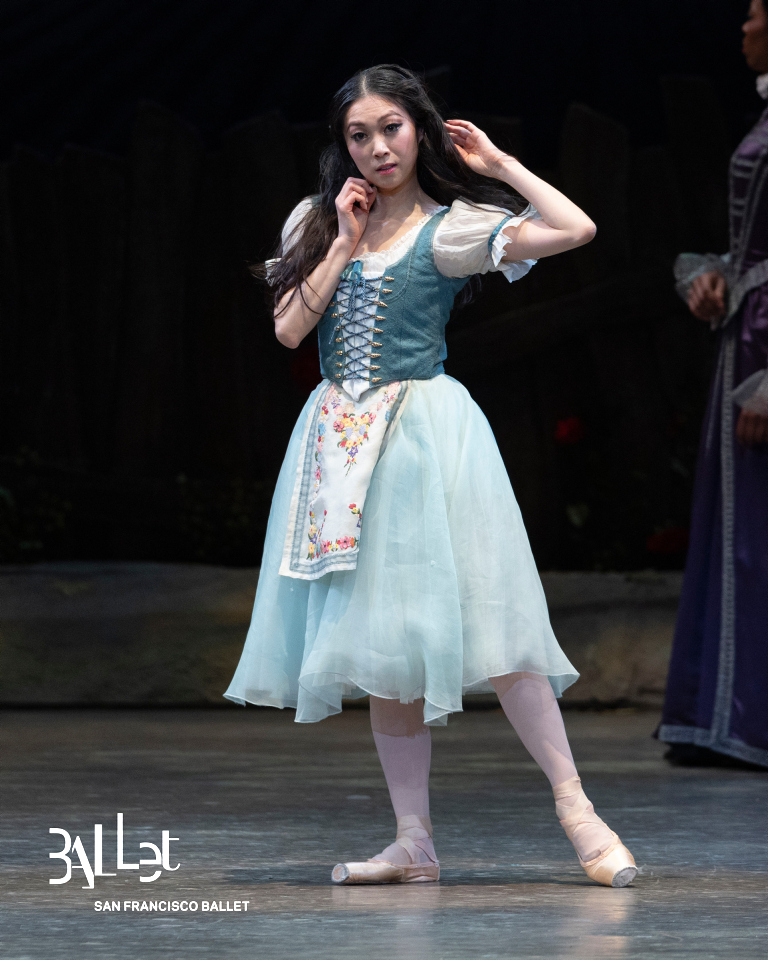
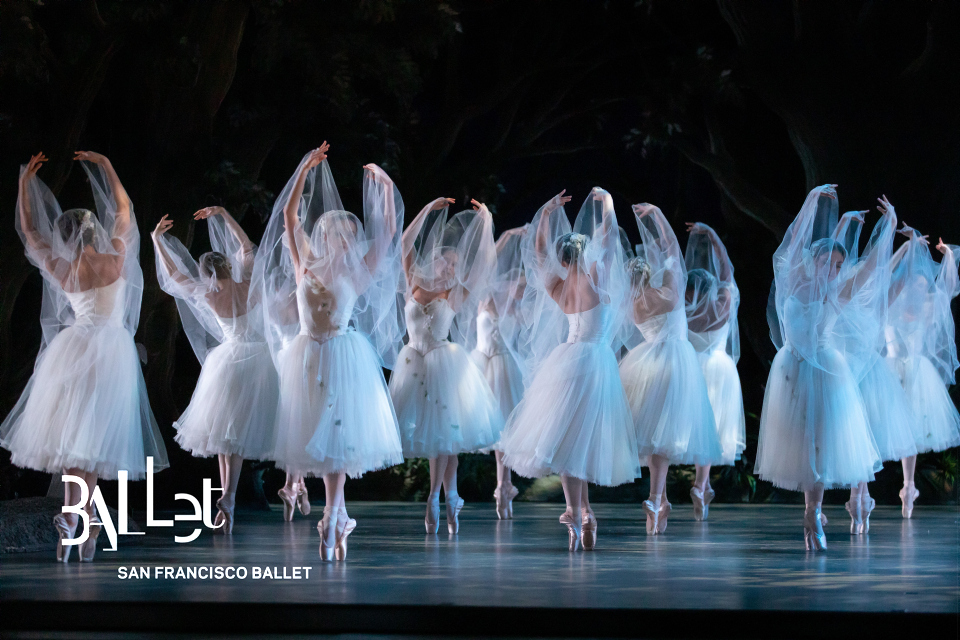
San Francisco Ballet presents Giselle at the War Memorial Opera House, San Francisco as part of their 2023 season led by Artistic Director, Tamara Rojo.
Choreographed by Helgi Tomasson after Marius Petipa, Jules Perrot, and Jean Coralli, Giselle runs from February 24th until March 5th.. Tomasson’s production is set to music by Adolphe Adam, with additional music, orchestrations, and arrangements by Friedrich Burgmüller, Ludwig Minkus, and Emil de Cou, conducted by Martin West.
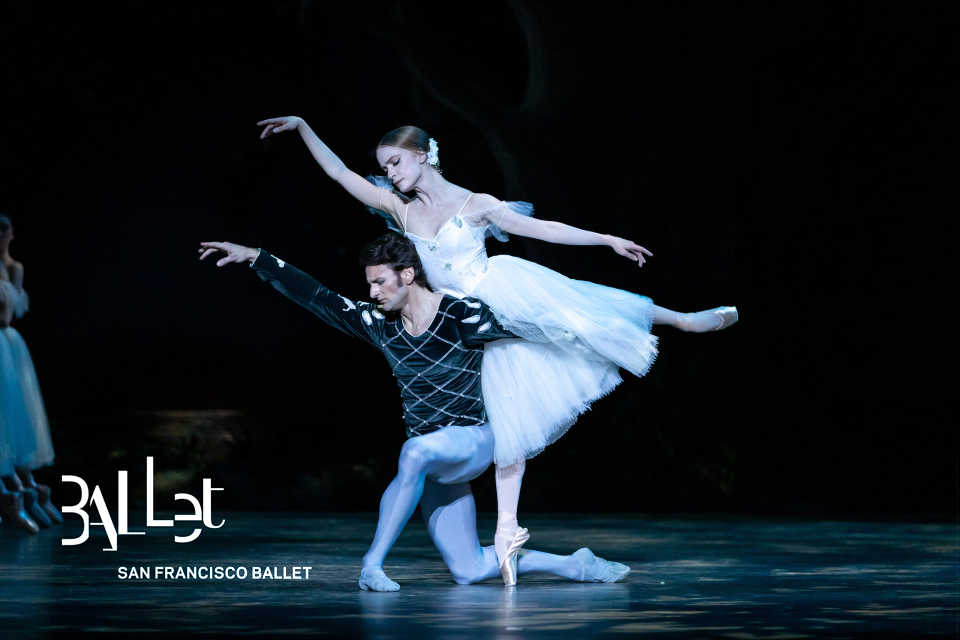
On opening night, February 24th 2023,the cast featured principal dancersSasha De Sola as Giselle, Aaron Robinson as Count Albrecht and Nikisha Fogo as Myrtha.
The story takes place in a beautifulbucolic setting surrounded by a gathering of friends where Giselle lives with her mother in a Rhineland village. When noblemen visit – an elegant and distinguished Ricardo Bustamante as the Duke of Courtland and his entourage – there is great excitement and Giselle meets the Count Albrecht, who is disguised as Loys, a peasant…and so the romantic and mysterious journey begins.
De Sola is fast, light and fluid as the peasant girl with a passion for dance, Giselle dances everywhere only to be curbed by her caring mother, Anita Paciotti as Berthe. Robinson is dynamic as Albrecht/Loys when he meets Giselle. Their partnering is charming, joyous and harmonious with intricate footwork as they weave their way around the many villagers, friends and children.
The Pas de Cinq with Isabella DeVivo, Norika Matsuyama, Carmela Mayo, Max Cauthorn, Hansuke Yamamoto is notable and engaging in Tomasson’s production.
While there is a lot of traditional style mimed expression in this production from several characters, and especially between Robinson’s Loys and Nathaniel Remez as Hilarion, a court game keeper, this ballet demands substantial acting skills from its main characters – and they all manage very successfully.
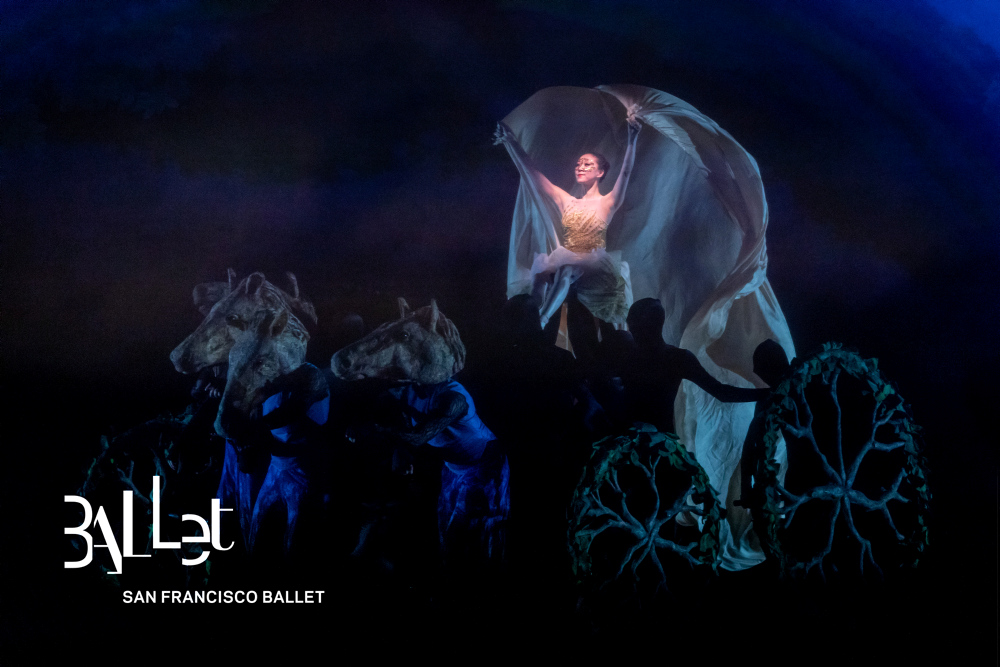
The scene changes to another time and place – to the haunting glade of the Wilis, who are ethereal creatures, maidens who died before they wed and live their fragile lives at night. Fogo is a wonderful and commanding Myrtha, the Queen of the Wilis with pure technique and the vision of the corps of Wilis is spectacular. The Wilis are wearing white calf length dresses covered with gossamer tulle and are outstanding as they perform Tomasson’s tricky choreography, ranging from lyrical or en pointe to the ensemble delicately balancing while turning in perfect unison, set amongst a forest of tall dark trees with intricate branches that open and delicately settle into place, inviting the Wilis to inhabit the night, this scene is utterly beguiling.
Beautiful period costumes (with special attention to fascinating hats) in Act I with the striking Wilis costumes in Act II, and the scenic and lighting design are all by Mikael Melbye.
De Sola’s mad scene and the quality of her strength and graceful precision performing sequence after sequence of intricate virtuosic footwork together with her range of character depth in this rigorous multi faceted Giselle in both act I and act II are truly exceptional. Robinson conveys a range of emotions with vibrant muscular expression and a strong presence in his solos and tender partnering with De Sola. They are an exciting match! Throughout the run the casts change, showcasing the quality and depth of SF Ballet dancers. There is much to enjoy and admire about this production – and the final flourishes of this ballet are simply breathtaking! Highly recommended!!!
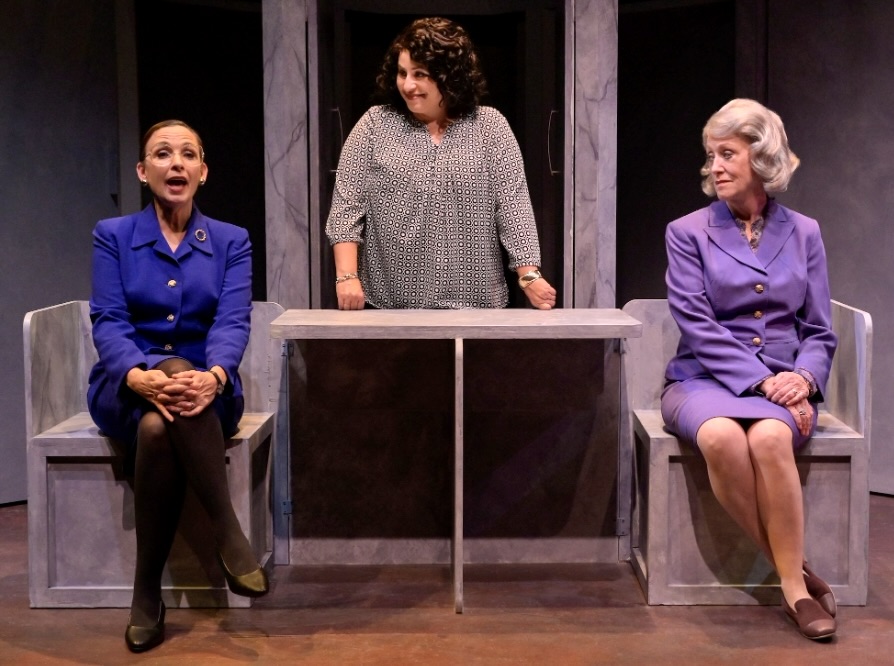
Marin Theatre Company’s Justice portrays first three female judges of U.S. Supreme Court (from left), Ruth Bader Ginsburg, Sonia Maria Sotomayor, and Sandra Day O’Connor. Photo by Kevin Berne.
The three Justice singers portraying top-court judges can’t compare to The Supremes, but they’re powerful anyway — if you believe the message can be the massage.
That message, of course, translates into a feminist anthem for equality, with undertones of kumbaya and patriotism.
Justice: A New Musical, which runs at the Marin Theatre Company through March 12, dips into the public and private lives of the first three female U.S. Supreme Court jurists, Sandra Day O’Connor, Ruth Bader Ginsburg, and Sonia Maria Sotomayor.
The three sing and talk of being “an unlikely sisterhood,” but also of crossing the aisle politically. Emphasized, as might be expected, is sexism — on the court as well as in the country — and the notion of “we the people,” which is stressed in both opening and closing numbers.
Outstanding is Lynda DiVito, a Walnut Creek resident with off-Broadway credits who depicts RBG in a voice that reverberates throughout the theater, with facial expressions that instantly convey the feelings her words may or may not say.
Karen Murphy, a veteran of multiple Broadway, off-Broadway and touring company shows, plays O’Connor, the trailblazing first female associate justice, and displays her well-earned pride helping repeal Arizona laws that violated the Equal Rights Amendment.
Stephanie Prentice, who outlines Sotomayor, the first Latina justice, is a Bay Area native who’s appeared withy 42nd Street Moon, San Francisco Playhouse, Shotgun Players, and Hillbarn. In character, she’s particularly poignant when delineating the Puerto Rican’s difficult childhood: a father who drank oo much and agued too much with her mom.
Justice contains 17 musical numbers, mostly trios and duets. It’s basically a sung-through, operetta-like presentation. Its one truly melodic song is “Notorious,” an upbeat, humorous entry performed perfectly by DiVito.
When the three together sing the music by Bree Lowdermilk and lyrics by Kait Kerrigan, they’re tight, clearly well-rehearsed. Direction by Ashley Rodbro is likewise tight.
Karen Murphy (left) plays Sandra Day O’Connor while Lynda DiVito depicts RBG. Photo by Kevin Berne.
What’s absent throughout, however, is tension, except when the musical’s book showcases Episcopalian and staunch Republican O’Connor’s deciding vote in the December 2000 Bush v. Gore was that tilted the presidential election, a choice that caused Jewish leftist Ginsburg pronounced anguish. Here O’Conn cops to wanting a Republican president to replace her; in rebuttal, RBG claims the decision means or entire system will suffer a loss in “confidence in the rule of law.”
The book, not incidentally, is by super-prolific Lauren M. Gunderson, the Marin Theatre Company’s longtime artist-in-residence and a playwright with a rep for pushing a feminist agenda. Justice is the fifth play of hers the MTC has mounted.
Most touching moments in it are when Ginsburg and O’Connor deal with their husbands’ dementia — and then when O’Connor, now still alive at 92, must cope with her own. In “When the Mind Goes,” she sings sadly, “You’re inside a china shop and time is a bull.”
Humor is sporadic, but playful. The RBG character draws chuckles, for instance, when she invites Sotomayor to join her twice-weekly gym workouts at 7 a.m. Sotomayor simply scowls at the notion.
Personal moments, for the most part, connect better with the audience than the recitation of key court cases — such as when Justice spotlights RBG andO’Connor’s cancers.
One of the biggest positive outbursts from the crowd comes, however, when, near the end, confirmation of Black female Justice Ketanji Brown Jackson is cited.
References to male justices, meanwhile, are skimpy, including that RBG has been “best buddies” with her philosophical antithesis, Antonin Scalia. Merrick Garland’s blocked nomination is referred to only obliquely, namelessly, and there are no hints whatsoever that Amy Coney Barrett or Elena Kagan even exist.
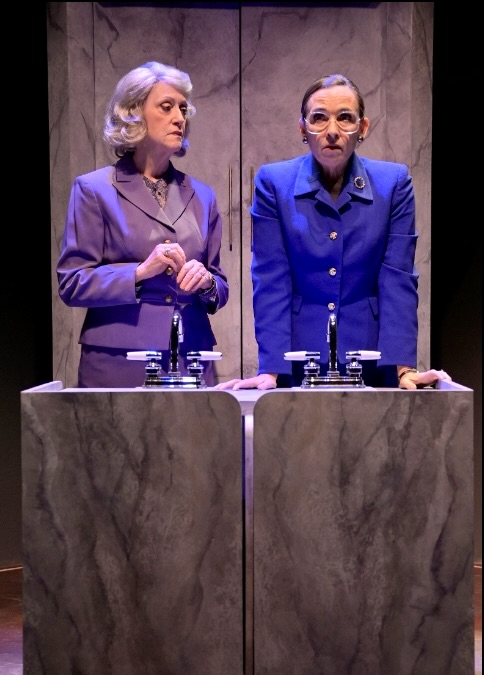
Justice’s two-story-high set is wonderfully creative. Minimalist. Still, it can turn from a bathroom sink (where RBG and O’Connell are humanized as they wash their hands next to each other), into a desk, into a place where justices are confirmed, to another where they render decisions. The backdrop features massive columns and a high space where the names of major legal cases are projected.
Regarding recent cases, Sotomayor laments about being in the minority, about court life being filled with “rejections and rollbacks.”
Every day is disheartening, she bemoans, “when you’re on the losing side.” But the tone decidedly changes when the court affirms gay marriage.
Even though the regional Arizona Theatre Company premiered an earlier incarnation of Justice in 2022, this 90-minute, intermission-less show is still a bit choppy, bouncing from this or that subject and timeframe, and from the legal to the personal and back again.
But it definitely affirms the history of three feminist icons — and underscores the refrain, “When will there be enough women on the court? When there are nine!”
Justice runs at the Marin Theatre Company, 397 Miller Ave., Mill Valley, through March 12. Tickets: $25 to $65. Info: 415-388-5200 or info@marintheatre.org.
The North American touring company of Six, now playing at the Orpheum Theatre in San Francisco. Photo by Joan Marcus.
Six wives? Holy history, that’s three more than my total.
I didn’t behead any, of course.
Six the Musical tackles that number (of Henry VIII wives) and turns the 500-year-old sorry saga into extraordinary entertainment — replete with fantastic vocal cords and rock chords, fantastic layered metallic costumes, and a fantastic light show.
Henry, we’re told, cut off two of his Tudor queens’ heads and divorced two others. One died of natural causes. One survived.
Despite that bleak-scape, Six the Musical is pure escapism, feminist-style (since its point of view flips from the king to the women). And it gives attendees at the Orpheum Theatre in San Francisco a chance to steer clear of the reality of their own lives while it distorts the reality of what the show labels “her-tory.”
Like Hamilton, this is revisionist stuff. Big Time.
Yesterday’s opening night audience couldn’t care less, however, about evaluations, academic references, or the possibility that the presentation is in a sense a #metoo-ish reaction to Henry’s abuses. The crowd was too busy screaming with glee and clapping wildly after each of the nine tunes — leaping, in fact, to a standing “o” for the finale and the “encore” that followed it with scads of glitter falling from the rafters.
Didi Romero (center) plays Katherine Howard in Six. Photo by Joan Marcus.
It’s clear that the glitzy sextet morphs from being villainous or invisible — and supporting players in royal history — to being 21st Century females who can attain distaff empowerment. Accompanied by lots of clever sexual innuendos and mentions of being “un-friended” and TikTok and other digital entities.
Featured characters are Catherine of Aragon, Anne Boleyn, Jane Seymour, Anna of Cleves, Katherine Howard, and Catherine Parr. Each gets to hog the spotlight for a soliloquy in song. Each is modeled on modern pop artists that in a sense reflect her personal story (Rihanna, Beyonce, and Alicia Keys, for example).
The gimmick is that they’re competing — even to the point of nasty cat-fighting — to be lead singer of their girl band, ultimately a sisterhood of sassy, joking divas. The supposed test? Who had the worst time being Henry’s wife?
The theme of the plotless, intermission-less, concert-style, 80-minute, touring BroadwaySF presentation is “divorced, beheaded, died; divorced, beheaded, survived,” a couplet based on a sing-song melody long favored by British kids.
Lyrics more than once lean on forced rhymes, as when Anna of Cleves contends, “You said that I tricked ya/’Cause I, I didn’t look like my profile pictcha.”
And laugh-lines in Six the Musical aren’t subtle. Consider this interchange: Jane Seymour asks what hurts more than a broken heart? Anne Boleyn responds, “A severed head.” Still, the show shows that beheadings can be funny or entertaining — especially when they’re merely conversational and not as lurid and in-your-face as scenes in Sweeney Todd or Little Shop of Horrors.
On occasion, the subject matter here is cringeworthy. Such as Katherine Howard explaining her molestation at age 13 and desire to be loved — including her attraction to Henry when she was 16 and he was 49, a geezer in those days.
Olivia Donalson (center) portrays Anna of Cleves in Six. Photo by Joan Marcus.
All that considered, the musical is much better than one might expect since it evolved from a concept-album concocted by two Cambridge University seniors, Lucy Moss and Toby Marlow, both triple-threats as playwrights, composers, and lyricists.
Feminists should love that the four musicians on stage behind the six — the “ladies in waiting” — are all women. They’ll probably love as well that Catherine Parr details in “I Don’t Need Your Love” that she managed to fight for female education and wrote books without the king.
The musical, which won 23 awards during the 2021-22 Broadway season, including a Tony Award for best original score (music and lyrics), can’t be taken too seriously. But seriously, you should head down to the theatre — although I strongly urge you check out the lyrics online before going so that they won’t miss a lot of the wordplay that zips by.
Six the Musical will play at the Orpheum Theatre, 1182 Market St., San Francisco, through March 19. Tickets start at $56. Info: 888-746-1799 or tickets@broadwaysf.com.
Reviewed by Suzanne Angeo (member, American Theatre Critics Association; Member Emeritus, San Francisco Bay Area Theatre Critics Circle), and Greg Angeo (Member Emeritus, San Francisco Bay Area Theatre Critics Circle)
Continuing their 56th season, Meadow Brook Theatre offers a sizzling musical revue that should appeal to just about anybody that likes music. While “Blues in the Night” doesn’t have much dialogue, it more than makes up for it in spirit and feeling, expressed through 27 classic songs delivered by four talented performers. Chosen from among the best of the Great American Songbook, this music represents the genesis of popular music today. Director Tyrick Wiltez Jones says: “…if it weren’t for Blues, the music we listen to today wouldn’t exist. Pop, country, jazz, gospel, hip hop, rock and the list goes on.”
Conceived by American theatre director Sheldon Epps, with vocal arrangements, musical direction and orchestration by Chapman Roberts and Sy Johnson, “Blues in the Night” was first presented off-Broadway in 1980, then on Broadway in 1982. It went on to nods for a number of awards, including a Tony for Best Musical, and a Lawrence Olivier Award for Best New Musical on London’s West End.
(clockwise from front left) Jameelah Leaundra, Jackey Good, Parnell Damone Marcano, Angela Birchett
The setting: It’s 1938 Chicago, birthplace of the blues. There’s a depression on, President Roosevelt is in office, and war looms in Europe. Three lonely ladies, all in separate rooms, and a lone gent, hanging out in the bar, are at a cheap hotel reminiscing about past lives and loves, good and bad. Songs tell the story, from “Blue Blues” (by Bessie Smith) to “Taking a Chance on Love” (from the iconic musical “Cabin in the Sky”) to “Lover Man” (made famous by Billie Holiday) to “Nobody Knows You When You’re Down and Out” (also by Bessie Smith).
The characters are presented as archetypes: The Woman (Jameela Leaundra), with lots of experience and bitter memories; The Girl (Jackey Good), very young, very hopeful, very disillusioned; The Lady (Angela Birchett), world-weary and wise-cracking, with fond memories of her life onstage and the men in her life; The Man (Parnell Damone Marcano) all smooth moves and a good line, looking for his next conquest.
Angela Birchett
While the cast is excellent both as an ensemble and as individual performers, the real standout is Birchett, through her stage presence, body language and powerful voice. She is funny, sophisticated and raunchy. Plus she has some of the best lines – and songs! When she sings “Kitchen Man” you sure know what’s cookin’.
The band, led by Musical Director Brian E. Buckner on piano, is worth the price of admission, more than just an accompaniment or backup. With Russ Macklem on trumpet, Don Platter on sax, Jackson Stone on bass and Louis Jones III on drums, they could have a regular gig in any of the best clubs in town. A special shout-out to costume designer Karen Kangas-Preston who provided some of the most gorgeous dresses ever for the lucky ladies in the show.
Nicely staged and choreographed by Director/Choreographer Tyrick Wiltez Jones, with great lighting (Neil Koivu) and set design (Kristen Gribben), “Blues in the Night” is thoroughly entertaining, pleasing in sight and sound. You can just sit back, relax, and enjoy some of the best music of the past 150 years.
Now through March 12, 2023
Tickets $37 to $46
Meadow Brook Theatre at Wilson Hall
Oakland University
378 Meadow Brook Rd
Rochester Hills, MI 48309
(248) 377-3300
www.mbtheatre.com
A special note: As Covid-19 is a constantly changing situation, MBT will be monitoring and adhering to the guidance given by the CDC, the State of Michigan, the Actor’s Equity Association, and Oakland University. Check the Meadow Brook Theatre website at www.mbtheatre.com for the latest information on efforts to keep everyone safe.
This theater operates under an agreement between the League of Resident Theatres and Actors’ Equity Association, the Union of Professional Actors and Stage Managers of the United States. The theater operates under the agreement with the International Alliance of Theatre Stage employees, Local 38.
Meadow Brook Theatre’s season is supported in part by the Michigan Council for Arts and Cultural Affairs, the National Endowment for the Arts, the Kresge Foundation, the Fred and Barbara Erb Family Foundation, the Shubert Foundation and the Meadow Brook Theatre Guild.
The Mark Morris Dance Group performs The Look of Love, Burt Bacharach’s music. Photo by Molly Bartels.
The Look of Love: An Evening of Dance to the Music of Burt Bacharach, The Mark Morris Dance Group’s latest, can be appreciated even if the pop composer’s melodies aren’t your fave.
You might end up, in fact, tickled pink (or orange or yellow).
The audience at the weekend’s Zellerbach Hall presentation in Berkeley clearly was thrilled. It not only jumped to a standing ovation but clapped enough to encourage choreographer Morris and his performers to take multiple bows.
Mary Harriell (left), lead singer in The Look of Love; choreographer Mark Morris (center); and arranger Ethan Iverson. Photo by Trevor Izzo.
The music of Bacharach, whose Feb. 8 death at age 94 unexpectedly turned the Feb. 17-19 outing into a bittersweet memorial, was introduced via a melancholy solo-piano opener by Ethan Iverson — Morris’ musical collaborator and arranger — on “Alfie,” whose questioning lyric set the tone, “What’s it all about?”
Surprisingly, the most innovative moments in The Look of Love came in the form of a little-known, 1958 sci-fi/horror flick charmer, “The Blob.” Dancers ended up in a jammed cluster, moving in slow motion and using colored bridge chairs as props and a barricade while singers simulated Mark David lyrics like a deejay intentionally decelerating an LP for effect. The sequence drew both giggles and guffaws.
Wit and whimsy, of course, have long been Morris staples, along with huge helpings of passion. Indeed, Morris’ most enduring creation, arguably, is 1991’s “The Hard Nut,” a parody of the classic “Nutcracker.”
The Mark Morris Dance Group performs The Look of Love, Burt Bacharach’s music. Photo by Skye Schmidt.
Although some pundits wince at the choreographer’s winks to audiences, such as an evergreen in which dancers pat their heart to indicate love, it can nevertheless be fun to see hoofers sneeze at the word pneumonia in “I’ll Never Fall in Love Again.”
Some crowd members appeared slightly befuddled, however, by Morris’ gender-bending, identity changes in “Message to Michael,” where the lead character becomes a “they” instead of a “he” — in a song already laden with heaviness.
Still, most tunes were presented straightforward and unadorned yet showing off the mixed-meter complexity of the music, always with spare sets limited to chairs and cushions, and yet they evoked the imprint of six-time Grammy award vocalist Dionne Warwick, who’s still touring at age 82. “Raindrops Keep Fallin’ on My Head” was an exception, with the dancers repeatedly looking skyward while the voices staccatoed the word “Rain” about 71 times before segueing into the rhythms virtually everyone knew.
The dancing often shone, in sync with Bacharach’s music (which smoothly dips into Brazilian rhythms, jazz and rock) but occasionally becoming more compelling than the repetitiousness of the dancers’ hand and body movements. Meanwhile, Iverson’s arrangements built an exquisite showcase for lead vocalist Mary Harriell, who can alternately be sultry, soulful, a belter, or a jazz singer scat-riffing, a thrush whose voice is amazingly larger than even her massive Afro; backup singers Clinton Curtis and Blaire Reinhard, consistently impeccable in the pit behind Harriell; and Jonathan Finlayson, whose trumpet sometimes punctuated the songs with spurts exuding joy.
Burt Bacharach. Photo, courtesy Cal Performances.
Once in a while, though, Hal David’s unsentimental and sometimes pessimistic words clashed with Morris’ upbeat brainstorms.
Domingo Estrada Jr.’s mini-solos stood out among the dancers, not unlike toddlers in a playground glided, twirled, pranced, stretched, skipped, ran, jumped, rolled on the floor, and stiff-armed the air like a running back on a football field.
Never to be ignored is fashionista Isaac Mizrahi, whose costume designs justified a gush or two. Primary colors blended with slightly less prominent hues, all in subtle collage patterns. Tunics and skirts and dresses, shorts and long pants, long sleeves and sleeveless, no two dancers dressed alike. Overall, a rainbow kaleidoscope — similar to the varied skin tones of the performers.
The 66-year-old Morris, a Seattle native, has been immersed in music since he was 8 and, after seeing a performance by the José Greco flamenco company, decided to become a Spanish dancer. Three years later, having taken classes, he started performing professionally. His entrance into choreography was delayed, however — until age 14. He launched this troupe in 1980, and quickly developed a reputation for experimentation and out-of-the-box humor that gave him the label “bad boy of modern dance.”
This presentation is basically a juke-box musical without book. Underscoring that notion was Morris’ injecting “What the World Needs Now,” the 65-minute, intermission-less program’s second number that featured a circle dance, the most prevalent motif in the Cal Performances concert; “Do You Know the Way to San Jose?” in which dancers repeatedly turn into jacks-in-a-box sans box, “Walk on By” (which had the audience toe-tapping in unison), “Always Something There to Remind Me,” “I Say a Little Prayer” (the finale), and the title tune.
Iverson, who’d previously teamed up with the choreographer for 2017’s Pepperland, a tribute to the Beatles, got over-the-top gushy when talking to a scribe for The New York Times last year. “I would put Bacharach up there with Gershwin, Cole Porter, and Irving Berlin as part of The American Songbook,” he was quoted as saying. “These are songs you hear once and never forget.”
The arranger’s opinion about Bacharach being in the composing firmament could be debated, surely, without demeaning the songwriter’s talent.
During the pandemic, Morris was forced to cancel after a lone Zellerbach show because of a Covid outbreak. His company has been performing in Berkeley for more than 30 years, though. And this new outing indicates, with apologies to poet Robert Frost, that he has miles to go before he sleeps.
Upcoming dance concerts at Zellerbach Hall in Berkeley include Step Afrika! on Feb. 25 and the Alvin Ailey American Dance Theater from April 11 to 16. Info: 510-642-9988 or https://calperformances.org.
Archived items from “This Is Not a Gun,” a collaborative work in which Cara Levine and community participants created wood sculptures of objects that police mistook for weapons being carried by civilians whom they shot, are shown. (Courtesy Cara Levine)
Injustice. Guns. Mourning.
Climate change. COVID-19.
Healing.Los Angeles artist Cara Levine ties them together at San Francisco’s Contemporary Jewish Museum in a solo exhibit apt to touch — and disturb — many people.“
Cara Levine: To Survive I Need You to Survive,” on view Feb. 16 through July 30, is intended “to deepen awareness of injustice and inequity, create space for communal grief and mourning, and encourage informed action.”
Using video, sculpture and installations, Levine, 39, explores systemic racism, anti-Semitism, climate change and the ongoing trauma of the pandemic.
The exhibition is trifurcated.
The most prominent part is “This Is Not a Gun,” an ongoing work created in 2016 in collaboration with activists “to grieve victims of police violence and share their stories.”
It consists of wood carvings that Levine made, and ceramic objects community members made, of items civilians carried that police claimed to mistake for guns.
The work stemmed from a list of 23 items mentioned in a Harper’s Magazine article called “Trigger Warning.”
The CJM issued a statement in connection with the work: “While this exhibit has been long planned, we recognize that it is opening against the backdrop of the recent acts of egregious police brutality and gun violence, the most recent in a long line of tragic and horrific instances of senseless violence in our country.”
Grief is a crucial component, too, of “Carve: The Mystic Is Nourished from This Sphere,” a kindred segment of the exhibit curated by Qianjin Montoya, CJM assistant curator. The site-specific installation created for the museum takes the form of a hole carved into the gallery space.
In the week before the exhibit’s opening, Levine has been etching into the hole notes of grief submitted by the public. Throughout the run, she’ll do more. The hole serves as a starting point for a symbolic adaptation of the practice of shiva, the seven-day mourning period in Judaism following the death of a loved one.
“To Survive I Need You to Survive” was inspired by communal grieving in an interfaith service following mass shootings. (Courtesy Cara Levine)
The title part of the exhibit is a large-scale sculpture created in response to mass 2018 shootings at the Tree of Life Synagogue in Pittsburgh, Pennsylvania, and the Marshall County High School in Benton, Kentucky.
It was inspired by communal grieving in an interfaith service that featured collective singing of Hezekiah Walker’s gospel melody “I Need You to Survive.”
Lyrics included:
“I need you, you need me
“We’re all a part of God’s body…
“You are important to me, I need you to survive.”
Cara Levine, whose exhibit “To Survive I Need You to Survive” is on view at San Francisco’s Jewish Contemporary Museum, is pictured in her L.A. workshop. (Photo by Ashley Randall, courtesy Cara Levine)
Regarding “This Is Not a Gun,” the artist — who earned a bachelor of fine arts degree from the University of Michigan and a master of fine arts degree from the California College of the Arts in San Francisco — said the list of objects in the magazine story gave no context for the killings, leaving her feeling empty, powerless and angry. “So, I set out to meticulously carve each object from wood as an act of prayer, respect and remembrance,” she said.
She partnered with local people of color, artists, activists and healers focused on race equity, and began holding collaborative workshops.
Levine, whose work has been presented in solo and group exhibitions and participatory events in San Francisco, Los Angeles, New York, Anchorage, Tel Aviv and Kyoto, received pushback after previous incarnations of “This Is Not a Gun.” That, she said, was “about being a white woman and what do I know about police brutality, and that’s a fair criticism.”
However, she added, “Though I’m the founder, it’s been a vastly collaborative project…[TINAG] is about … something you can take away and share with your loved ones. … investigate your own biases. We begin with a conversation around a table, and bring it further outward and further outward and further outward.”
Levine, an adjunct associate professor at the Otis College of Art and Design in Los Angeles, also links chronic pain and disability with her artistic endeavors. In part, it’s because she suffered for more than a decade after tearing a tendon in her left ankle and spending four years trying everything but an operation. “By the time I had my first surgery [of two],” she laments, “the tendon had completely shredded.”
A portion of her pain has also been debilitating migraines. She laments that her “pain is not only physical, but part of my life-path — a constant opponent.”
But a nine-month internship with Nurturing Independence Through Artistic Development (NIAD) art center in Richmond more than a decade ago helped her cope. She remembers her first day, when a blind artist walked by her and proclaimed, “Oh yeah, I used to be a butterfly.”
That opened her up. She said, “I felt a kinship with her. I’d felt like an outsider as a child, having had a mother who was sick a lot and brothers with whom I fought a lot, so I spent a lot of time making up games and stories. I felt a familiarity. You are expressing things I’ve been told not to express but that are in me too.”
In considering how Jewishness informs her work, she said, “I’ve been fortunate to be raised by parents who exposed me to the privilege I was raised in and how that contrasted to the inequities in our society. [I also was taught that being] part of a people who have escaped from slavery and who have spent generations being persecuted meant an interest in social justice with a priority, a focus on caring for the whole world.”
A high school teacher jumpstarted an interest in art for Levine, who said she identifies as queer.
She fell in love with clay. Now, she said, “It’s important for me to make things as a sculptor. The handmade process gives me a connection to the work that’s important to the subject matter.”
In 2021, in an interview on the ThisIsColossal website, she said, “When Trump was elected, it compounded a lot of the fears I had. … I was having nightmares all the time. …I felt like [marginalized people were] going to be exterminated in a really disgusting way—immigrants, disabled people, women, trans folks, people of color, like everybody now was having to protect themselves like their lives were on the line.”
Then came the Harper’s article. And she was motivated.
Levine said she hopes the CJM exhibit “can transcend the woke mentality. I think everybody experiences the blahs. This exhibit hones in on shared suffering.”
“Cara Levine: To Survive I Need You to Survive” opens with a free reception from 5 to 8 p.m. Feb. 16 at the Contemporary Jewish Museum, 738 Mission St., San Francisco. Registration is required; visit rsvp@thecjm.org or call (415) 655-7824. Tickets to the exhibition, which runs through July 30, are $14-$16; free for ages 18 and under. Go to thecjm.org or call (415) 655-7800.
A free “This Is Not a Gun” workshop at 2 p.m. April 22 at the CJM features Levine and Angela Hennessy, an Oakland artist and a survivor of gun violence. Participants will create replicas in clay of objects mistaken for guns that will be added to an archive of more than 300 objects.
It’s easy to see Dan Hoyle in Talk to Your People. It’s easy to hear him. But it’s virtually impossible to absorb everything he says.
The one-man, multiple-character show, which runs at The Marsh Berkeley through March 11, is incredibly deep and dense — so dense, in fact, that it could take a second (or third) viewing to get it all.
It’s certainly more opaque than his last show, Border People, which focused on tribes different from his own liberal Caucasian cultural backdrop.
Hoyle, Talk to Your People
Hoyle, a consummate performer, here in his seventh show continues his documentary-style outings that stem from interviewing countless people, a methodology he calls “the journalism of hanging out.” In this case, those people were mainly in Oakland, where he lives, and its hills.
But also, apparently, as far away as West Marin.
And, like the protesters on the street and the young girl splashing in the beach water or scootering on the concrete, all of whom appear in videos on a screen before and behind Hoyle, his agenda is straightforward: He wants the audience to deep-dive with him into complicated concepts such as systemic racism, culture-canceling, and White privilege — especially that last item.
His well-honed tools are his way with words (which ranges from simple and coarse to complex and eloquent), his skill with physical comedy and exaggeration, and, unlike his previous outings, a talent for utilizing rap and other genres of music to sneak-ease the viewer into digesting his messages.
Hoyle’s updated work is masterful, as are his playwriting abilities. The only thing missing, just like in previous creations, is a close-up depiction of females. They’re a second-hand presence, materializing only through the lips of the males.
Hoyle,Talk to Your People
To its credit, Talk to Your People, which had a mid-pandemic run in San Francisco a year ago, explores not only how society got to the current apparent low point it’s at but how it can move forward, using heart instead of brains.
The performance, developed and directed by Charlie Varon, an exquisite one-man show artist himself, spotlights Hoyle’s mash-up that spotlights, among others, a still-arrogant White corporate burn-out who in a former life was a combo hippie jock, a guy with “the soul of an activist” who isn’t anymore, an Argentine Marxist techie fidgeting because he’s discovered he’s an elite, and a Jewish PhD who’d been forced to read Dante’s Inferno when he was seven, who’d spent years as a White jazz musician, and who proclaims he’s “as neurotic and sensitive as anyone.”
Hoyle mouth-meanders in heartfelt, often poignant ways about filling in application boxes for ethnicity, “crypto versus cash,” defunding the police, unemployment, Black Lives Matter, Airbnbs, and being bi-racial.
He sprinkles Talk to Your People with descriptions of a guy bemoaning another who only has “one type of wine glass,” the idea that “people are beginning to live in their emotion,” and the notion that we all “should go back to middle school” to re-learn how to get along with each other.
It’s not all introspection, polemic, or talk about re-segregation, though. The show contains extraordinary moments of tenderness — for instance, when Hoyle portrays a father who often interrupts his conversation with a compadre to help his toddler take an invisible rocket to the moon.
Yes, there is some blurring that happens in Hoyle’s panoramic, 75-minute delivery, and an audience member needs to be forgiven if he or she or they doesn’t immediate grok who’s who onstage (even with the simple, effective costume changes that instantly change him from bare-chested beachgoer with beer in hand to, let’s say, a character whose shiny white sneakers distract).
If theatergoers want him to tie everything up with a neat multi-racial ribbon, they’ll be disappointed. Some may be put off, too, by lots of run-on sentences or casual swearing.
On the other hand, those who seek out tour de force solo performances and aren’t nettled by a smattering of flaws will be grateful he and his muses finished the piece.
Talk to Your People runs at the Marsh Berkeley, 2120 Allston Way through March 11. Tickets, $25 to $100. Info: https://themarsh.org or (425) 641-0235.
Each season, Ross Alternative Works (RAW) presents an original play by a local playwright. This year’s show, Reservations by Joe Barison is superb! Director Michael Cohen says Barison’s play “hilariously captures the absurdity of artistic aspirations including the highs, lows, the insecurity and lack of acceptance…I am honored Joe has trusted me with his art…I hope we can make you laugh and give you something to think about!”
The play delves into the lives of creative individuals unable to make a living through their artistic pursuits. The story is set in the present, at a hotel in Manhattan. Melissa (Kara S. Poon), the hotel bellhop who is also a documentary filmmaker, shows Alan (an aspiring writer played by Evan Held) to his room. He discovers the hotel is sold-out and since no other hotels have space, the second bed in his room has been mistakenly reserved for someone he has never met–a painter named Gail (TinaTraboulsi). Alan and Gail agree to share the space and as the story progresses, the artists are forced to come to terms with their shared hopes, dreams, pain and despair. Humor carries them and the show through.
Actor Evan Held (last seen in RVP’s fall production of Picnic), Poon and Traboulsi are all a delight to watch. Held’s portrayal is truthful and emotional, while Poon and Traboulsi beautifully capture the essence and nuance of their characters. Michael-Paul Thomsett, Helen Kim, Maxine Sattizahn and David Noll round out this fine cast of actors. Bravo to Michael Cohen for his outstanding direction and kudos to the production team including Lyra Smith (Stage Manager), Michele Samuels (Lighting Design), Michael Berg (Costumes) and Isaiah Tweed (Set Builder).
Reservations runs through February 12 at the Barn Theater, Marin Art & Garden Center, Ross.
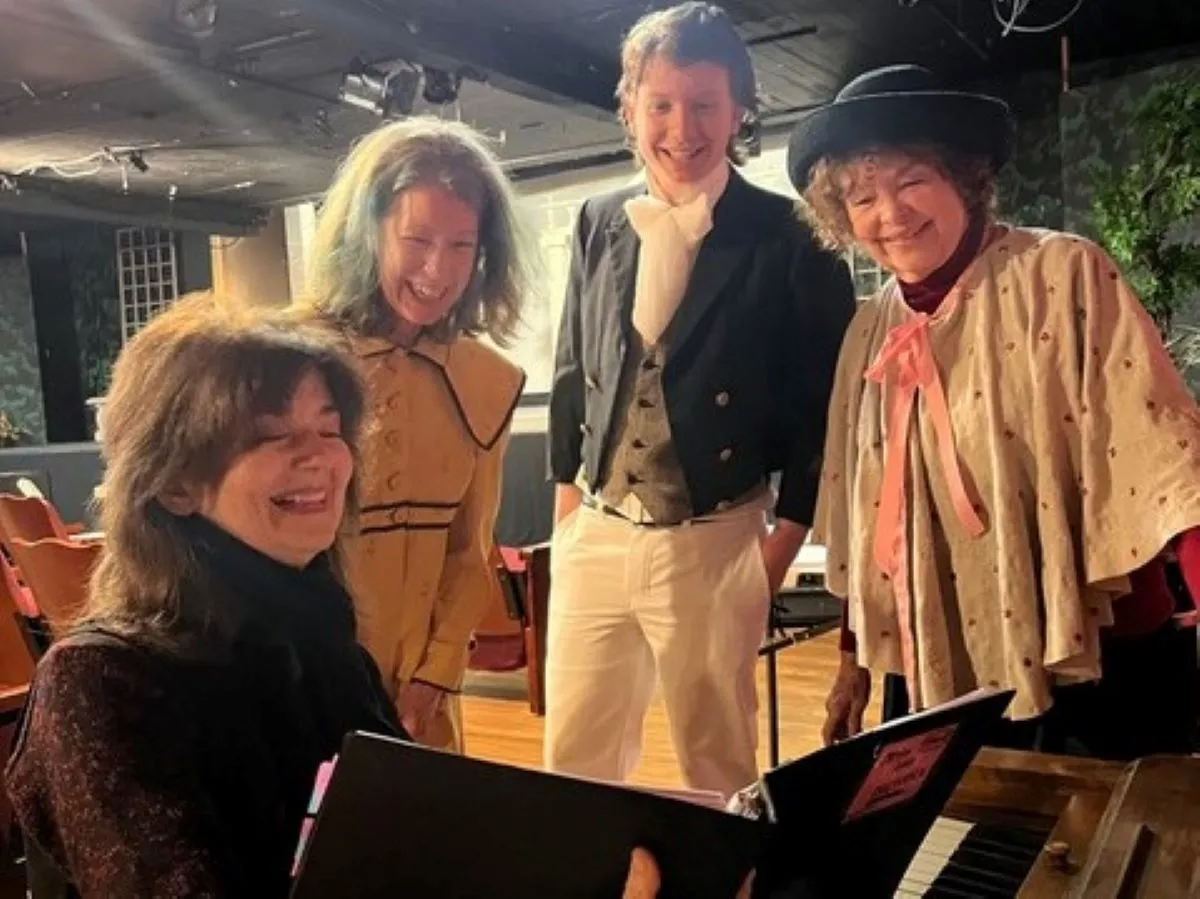
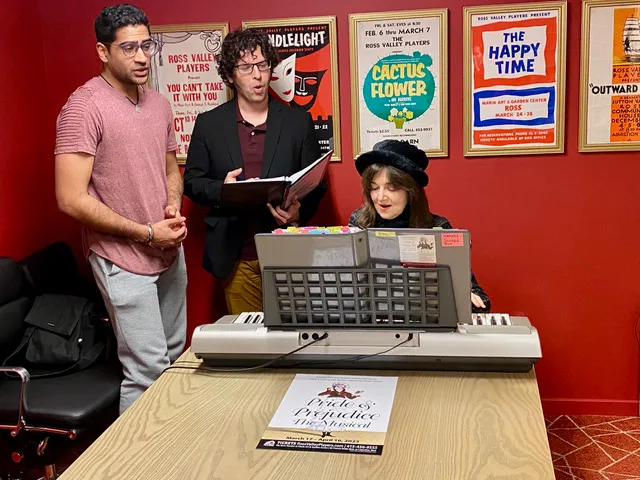
Coming up next at Ross Valley Players is Pride and Prejudice, the Musical adapted from Jane Austen’s novel by Josie Brown featuring music and lyrics by Rita Abrams and directed by Phoebe Moyer, March 17-April 16.
Cinnabar Theater’s recent two-person show, Daddy Long Legs, featured married actors Brittany Law Hasbany (Jerusha Abbott) and Zachary Hasbany (Jervis Pendleton aka Daddy Long Legs) in starring roles. They carried the show with a great sense of timing and energetic performance. They broke into song as the story, set in 1908, progresses into a letter exchange and finally romance. The music and lyrics by Paul Gordon are charming.
The imaginative set (Designer Wayne Hovey) was divided into two sides—one the orphanage where a young woman, Jerusha lives and later the college she attends; the other side is the office of Jervis Pendleton, Jerusha’s “secret” benefactor.
The live orchestra featuring Brett Strader, Issac Carter and Gwyneth Davis accompanied the players wonderfully and made the show worthwile.
Coming up next at Cinnabar is Tiger Style opening April 27, 2023.