“The Price” by Arthur Miller, Cinnabar Theater, Petaluma CA

By Greg & Suzanne Angeo

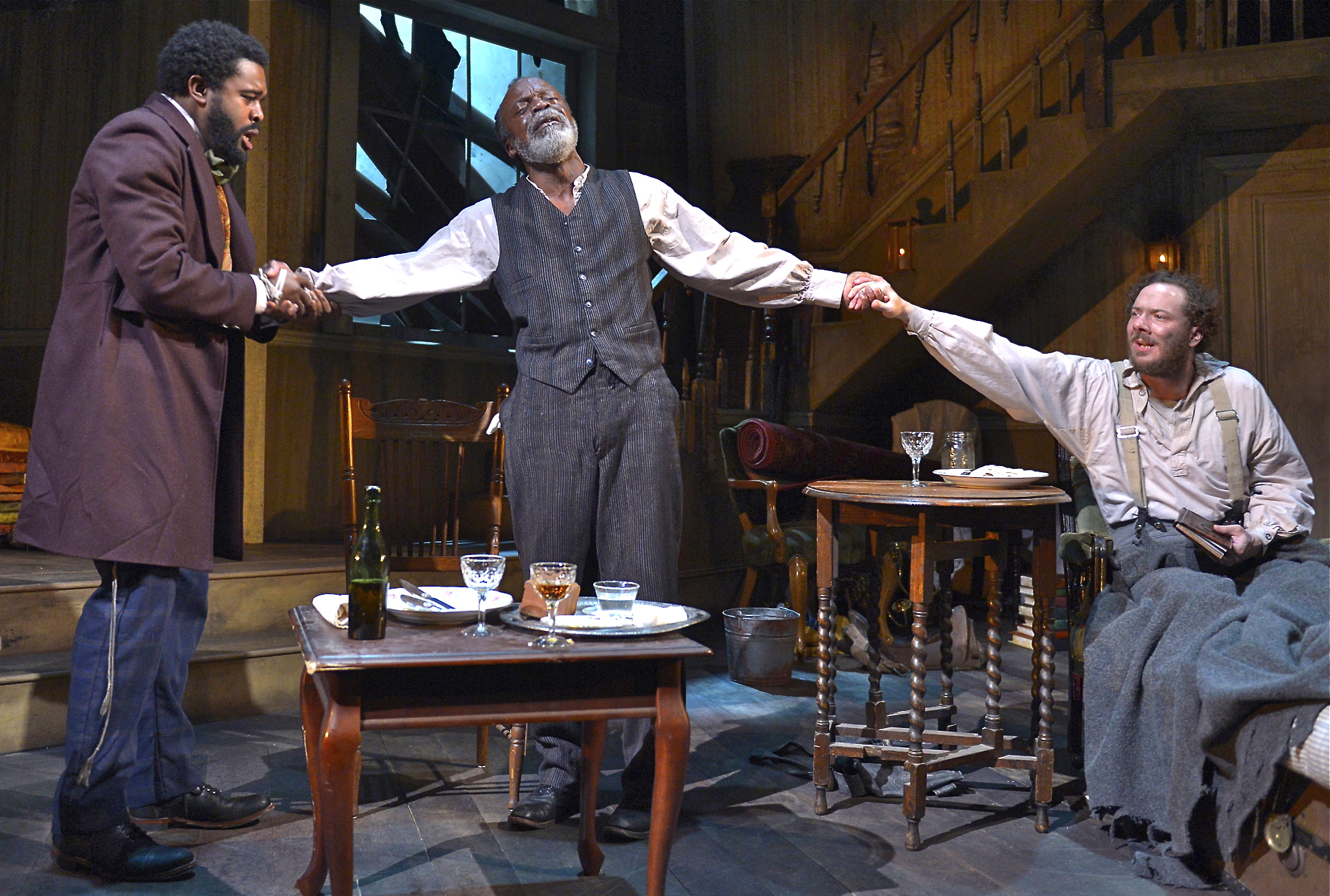
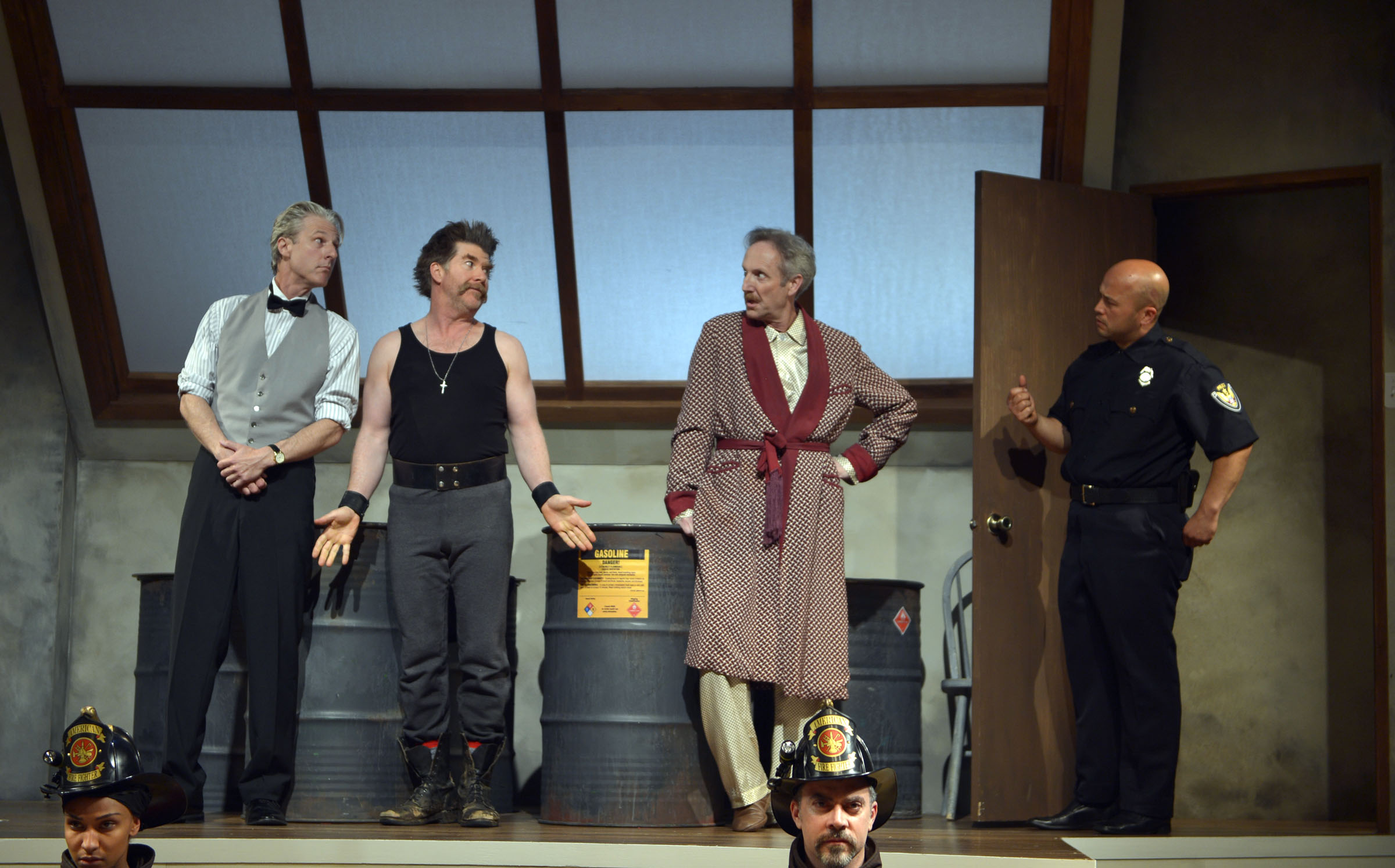
From left: John Shillington, Madeleine Ashe, Sam Hood

Reviewed by Suzanne and Greg Angeo

Photos by Eric Chazankin

Good Casting Makes for Powerful, Engrossing “Price”
 

Legendary American playwright Arthur Miller tells stories of everyday life and expectations, with the American Dream as his backdrop. Deceptively simple dialogue is used to build his characters’ pasts, and colloquial language contains profound reflections on life and its meaning.  “The Price”, one of Miller’s lesser-known plays, has an autobiographical basis. It deals with the loss of a family fortune in the crash of 1929 that leads to dysfunction, misunderstandings and estrangement. Miller’s own father lost his business in the Great Depression, and he based the lead character in the play on a childhood friend.

First performed in 1968, “The Price” is a contemporary play rich with the Miller hallmarks of intense emotional interplay and subverted feelings. The title refers not only to the price of a family’s heirlooms, but also to the price of family harmony – a price that seems too high for them to pay. Vik (Sam Hood) is a dedicated cop who for years has denied himself true happiness and fulfillment while caring for his destitute father. Meanwhile, his brother Walter (John Shillington) has become a successful doctor, leaving his family behind in pursuit of his all-consuming career. After their father’s death, Vik’s world begins to crumble as he tries to connect with his long-estranged brother so they can deal with what remains of the family’s estate. Vik’s strong and devoted wife Esther (Madeleine Ashe) tries to give emotional support, even as masquerades begin to fall with the arrival of the feisty estate appraiser, Mr Solomon (Charles Siebert).

Charles Siebert

The wisdom of this Solomon is laced with wit. A noted Broadway, TV and film veteran, Siebert effectively makes Solomon the story’s catalyst and center of gravity, bringing his considerable experience to this, his first outing on the Cinnabar stage. Siebert presents Solomon as a multi-dimensional but reassuring and steady presence: richly endearing, comedic and dramatic.

Shillington as the success-driven Walter lends a deeply moving humanity to what could have been a cold, unsympathetic character. Through excellent use of his voice and gestures, Shillington expresses Walter’s deep longing to reach out to his brother.

Ashe as Esther allows us to see those inner wheels turning in her head. Through her reactions and interplay with the brothers’ characters – where at times Esther almost seems to be serving as referee – she fully expresses the confusion, frustration and love that permeate the performance.

Hood’s interpretation of Viktor reaches near- Shakespearean heights, although towards the end of the play he seems to lose some of the internal reflection behind his reactions. Even so, his ability to build from a simple fellow to finally reveal a very complex individual is extraordinary. In the end, Vik learns that his self-created identity as a victim is based on ignorance of the truth. Yet he clings to this identity, even after he learns it’s a false one.

In “The Price”, director Sheri Lee Miller had only a single set to work with, and a claustrophobic one at that, since the entire play takes place in a cluttered attic caught in a 1929 time warp. She brings all those powerful, hidden emotions sweeping to the surface like a whirlwind, clearing away all the dust and clutter in that family attic. According to Miller, this attic “serves as a metaphor for the relationship of the two brothers, and in fact, for their lives in general.” She gives the play a particularly strong closing, ironic and moving, but leaves it open-ended, suggesting the promise of hope and understanding. The audience had a powerful response to the excellent chemistry and performance of the cast – a standing ovation.


When: Now through April 7, 2013

8 p.m. Fridays and Saturdays

2 p.m. Sunday April 7

Tickets: $15 to $25

Location: Cinnabar Theater

3333 Petaluma Blvd North, Petaluma CA
Phone: 707-763-8920

Website: www.cinnabartheater.org

reasons to be pretty at SF PLAYHOUSE IS A STUNNER

By Kedar K. Adour

reasons to be pretty. Written by Neil Labute. Directed by Susi Damilano. SF Playhouse, 450 Post Street (2nd Floor of Kensington Park Hotel) between Powell/Mason, SF 94102 in downtown San Francisco. 415.677.9596 or www.sfplayhouse.org.

March 26 to May 11, 2013

reasons to be pretty at SF PLAYHOUSE IS A STUNNER

The conceit of using lower case letters for the title of reasons to be pretty is not made clear by the author, press material or the storyline of the play that is the final cog of Neil Labute’s trilogy dealing with America, and the world’s obsession with physical appearance. The other two plays are The Shape of Things and Fat Pig, all in capital letters.  Regardless of the lower case title, the play mounted at SF Playhouse’s new theatre is a capital production that should not be missed.

Yes, the play has a misogynistic bent with the F word abounding but it is a slice of blue collar life and perfectly appropriate for the dialog. LaBute creates universality to his thesis by being non-specific about the time and place of the action except that three of the characters are in low end jobs working the night shifts without much chance for advancement. There is a touch of Tom from Tennessee Williams’ The Glass Menagerie in the protagonist Greg (Craig Marker) who spends is off duty time reading and is passive in his relationships with best friend and macho fellow worker Kent (Patrick Russell).

Greg has been living with Stephanie (Lauren English) for four years when he has made an off-hand remark to Kent that triggers a violent tirade from Stephanie.  During an innocuous man-to-man bull session Greg had remarked that, compared to the sexy new co-worker, Stephanie has a “regular face.”  Stephanie’s indignant outburst gives Lauren English a chance to emote and she nails the part in spades with Craig Marker a perfect foil for her histrionics.  It ends with Stephanie storming out and the relationship is over.

Bill English’s marvelous set is mounted on a revolving stage allowing the action to flow without interruptions. The excruciating first scene is tempered in the second when we meet dominant alpha male Kent and his very attractive wife Carly (Jennifer Stucker) who as a best friend to Stephanie has spilled beans about “the” remark.  Labute’s ability to define character through conversation is legion and he is at his best in this play as he telegraphs impending action layer on layer.  When Kent engages in a sexual liaison with the unseen Crystal (don’t you love the choice of name), the sexy new co-worker that has been compared to Stephanie he takes Greg into his confidence binding him to secrecy. That secrecy becomes a major source of conflict within Greg.

As well as being a denunciation of our obsession with personal appearance that the author has emphasized in his previous two plays, reasons to be pretty is also a coming-of-age story as Greg breaks the male bond with Kent with more than a suggestion that he will move on with his life dumping the stifling job as a warehouse worker. Whereas the breakup scene with Stephanie is a shocker the brutal confrontation of the two men who are still acting like boys is eye-popping.

Each actor invests their roles with verisimilitude that this reviewer can attest to having been brought up in a dying mill town in upstate New York. Occasionally the spectacular set interferes with the candor and dynamics of the story but one can never complain about the crackerjack production values of the SF Playhouse. Susi Damilano directs with complete understanding of human relationships doing honor to LaBute’s words and philosophy. Running time is about 2 hours including the intermission.

Kedar K. Adour, MD

Courtesy of www.theatreworldinternetmagazine.com

Full Cast: Patrick Russell (Kent), Jennifer Stuckert*(Carly), Craig Marker* (Greg), Lauren English* (Steph)

DISCONNECT AT SAN JOSE REP VIVID ACTING & DIRECTING

By Kedar K. Adour

(l to r) Ross (Imran Sheikh) celebrates closing a sale while colleagues Vidya (Sharone Sayegh) and Giri (Ray Singh) continue to call in San Jose Rep’s West Coast premiere of Disconnect.

DISCONNECT: Comic-Drama by Anupama Chandrasekhar and directed by Rick Lombardo. San Jose Repertory Theatre (SJR), 101 Paseo de San Antonio, San Jose (Between South 2nd & 3rd Streets). 408.367.7255 or www.sjrep.com. March 27 – April 14, 2013

DISCONNECT AT SAN JOSE REP VIVID ACTING & DIRECTING

Have you ever wondered what is happening at the other end of the telephone line when you are talking to a company web site that has out-sourced its staff to India? My only exposure to Business Process Outsourcing (BPO)has been requests for technical help and the experience has been a mixture of elation and frustration. In Anupama Chandrasekhar’s depiction of the India end of the telephone line emphasizes the frustration that invades the lives of the workers. That frustration also invades the audience with the cacophony of overlapping dialog causing the vivid acting and directing to lose some of its luster.

Disconnect had its world premiere at the Royal Court theatre in London in 2009 that is also the time frame of the action and the place is a call center in the city of Chennai. This call center is named ironically True Blue and is the collection agency for bad credit card debt that has been farmed out to them by a major credit corporation.  We learn that there is great pressure to increase collections or they may lose the account to a call center in the Philippines.

In the introductory scene Jyothi (Devon Ahmed) the titular supervisor has summoned Avenish (Rajesh Bose) an older lower level manager for the New York accounts to her office. The office is adorned with smiley faces and mundane uplifting phrases. His staff has not been meeting the collection goals set for him and using every cliché reason in the books she banishes him from his cherished office with a window (even though it overlooks a garbage dump), to the smaller Illinois section on the windowless fourth floor. It is a degrading demotion that he accepts with dignity.

In India where 50 percent of the population is under 25, there are 4 million college graduates a year. These graduates have been taught English and are the source of workers for the BPOs. Speaking English without an accent is highly desirable and the workers often take English sounding names. The three young characters Chandrasekhar has created are emblematic of that group. When it is daytime in the United States it is nighttime in India thus the three callers are working at night with a disruption of their social lives.

The character that causes the major conflict is Roshan (Imran Sheikh) who has mastered the art speaking without an Indian accent using the name of Ross Adams and is the most successful in the drab office with the only color being a red nonfunctioning Coca-Cola dispenser.  His erstwhile girlfriend Vidya (Sharone Sayegh) works as Vicki Lewis and Giri (Ray Singh) became Gary Evans. Their personal interactions take up most of the conflict but it is their verbal contact with the deadbeats who are defaulting on their credit card debt on the other end of the telephone lines that drive the story.

Ross unceremoniously has dumped Vicki and fallen in love via the phone line with a Sarah who owes $23,000. This long distance psychological infatuation causes him to gain unauthorized access to the credit card data bank to erase her debt. That bit of chicanery does not go unnoticed. Vicki’s trauma derives from the suicide of one of her callers that occurs while she is on the phone with him. Gary has a problem of being over-extended on his credit card becoming one of the ‘dead beats’ he calls during working hours. Avinash is assigned to sort out the mess. All this leads to overly dramatic confrontation scenes and the penultimate scene ends on a strange note with the drab office decorated for a Fourth of July (??an American holiday) party and the cast in garish costumes. There is an epilog that leaves the audience confused with delayed clapping at the end of the one hour and 40 minutes without intermission.

Kedar K. Adour, MD

Courtesy of www.theatreworldinternetmagazine.com

Disconnect 1: (l to r) Call center supervisor Avinash (Rajesh Bose) receives feedback from his manager, Jyothi (Devon Ahmed) about his job performance in San Jose Rep’s West Coast premiere of Disconnect.

Disconnect 2: (l to r) Ross (Imran Sheikh) celebrates closing a sale while colleagues Vidya (Sharone Sayegh) and Giri (Ray Singh) continue to call in San Jose Rep’s West Coast premiere of Disconnect.

GUYS AND DOLLS DISAPOINTS AT BERKELEY PLAYHOUSE

By Kedar K. Adour


(Left)Miss Adelaide (c, Sarah Mitchell) and the Hot Box Girls (l-r, Catherine Duval Petru, Simone Olsen-Varela, Louise Barcellos) perform “A Bushel and a Peck” at the Hot Box Club.(Below) In Havana, Missionary Sarah Brown (front l, Angel Burgess) finally lets loose with Sky Masterson (front r, Carmichael J. Blankenship) after accidentally drinking a milkshake laced with rum, as onlookers (back l-r, Louise Barcellos, Lucas Brandt, Melissa Martinez, Matthew McCoy, and Leslie Waggoner) watch with amused interest.


GUYS AND DOLLS: musical Comedy. Music and Lyrics by Frank Loesser. Book by Jo Swerling and Abe Burrows. Based on “The Idyll of Miss Sarah Brown” and “Blood Pressure” by Damon Runyon. Directed by Jon Tracy. Musical Direction by Robert Michael. Choreography by Chris Black. Berkeley Playhouse, Julie Morgan Theatre, 2640 College Avenue, Berkeley, CA 510-845-8542×351 or www.berkeleyplayhouse.org. March 23 – April 28, 2013

GUYS AND DOLLS DISAPOINTS AT BERKELEY PLAYHOUSE

Berkeley Playhouse continues its fifth season with an energetic mounting of Guys and Dolls one of the most beloved musical comedies ever to be produced. Although there were problems for the musical that arose between the concept finally reaching Broadway in 1950, none of those behind the scene hitches were detrimental and it played for 1200 performances winning a Tony Award for Best Musical. The shows luster has not diminished in the intervening 63 years and the present production bursts from the Julie Morgan stage and appears to be a labor of love.

Jon Tracy’s style of directing in a physical upbeat manner abounds and he has taken further control of the production by creating the scenic design in partnership with the talented Nina Ball (who happens to be his wife). A bare uncluttered center stage is very appropriate since much of the show consists of dancing to complement the incredible music and lyrics that carry the story line.

That story line was based on two short stories, “The Idyll of Miss Sarah Brown” and “Blood Pressure” written by sports columnist Damon Runyon. To refresh your memory the one of the major characters Sarah Brown (Angel Burgess), the leader of the evangelical Save Your Sole Mission situated in the more seedier side of New York City that is populated with rather loveable ‘sinners’ addicted to gambling. Nathan Detroit (Michael Scott Wells) is one of those sinners responsible for setting up illegal dice games for the local denizens. He has been sort of engaged to Miss Adelaide (Sarah Mitchell) a lead singer and dancer in the Hot Box revue.  Enter Sky Masterson (Carmichael J. Blankenship), the suave inveterate gambler who would bet on anything.

The gambling denizens are mostly loveable, with the exception of Chicago hood Big Jule (Terry Rucker), include, to mention a few, Harry the Horse (Matthew McCoy), Angie the Ox (Lucas Brandt) Rusty Charlie (Aejay Mitchell) and the full bodied Nicely Nicely Johnson (Joshua Castro). The rest of the cast comes in and out of the wings without distinction.

One wonders what director Tracy’s concept for this show is and how it should be judged. He allows all the cast to over act with a great deal of mugging playing their roles for laughs. The dialog itself is loaded with laughs and does not require a blitzkrieg of physicality. There are plenty of laughs and intermittent great performances by individual cast members. Sarah Mitchell’s Miss Adelaide was obviously an audience favorite but she had to share accolades with Joshua Castro’s Nicely Nicely Johnson’s belting of “Sit Down You’re Rocking the Boat.”

Even though Blankenship and Burgess have excellent voices the acting is a bit stilted and their loves scenes seem contrived without conveying charisma. The entire show is not aided by the costumes by the usually reliable Abra Berman who has elected to dress Sarah Brown and the evangelists in all white and the Hot Box girls in ludicrous garb.

Despite the perceived onus, Guys and Dolls with its plethora of words and music(“I’ll Know[when my love comes around]”, “A Bushel and a Peck”, “Adelaide’s Lament”, “Havana”, “If I Were a Bell”, “My Time of Day”, “I’ve Never Been In Love Before”, “Take Back Your Mink”, “ More I Cannot Wish You” “Luck be a Lady”, “Sue Me”, ‘Sit Down Your’re Rockin’ the Boat and “Mary the Man Today” comes through as a great musical comedy.  Running time about a bit over two hours including an intermission.

Kedar K. Adour, MD

Courtesy of www.theatreworldinternetmagazine.com

ENCHANTED APRIL AT RVP IS ANOTHER HIT… Do not miss it!!

By Kedar K. Adour


L to R, Top Row: AvilaReese as Lotty;TweedConrad as Rose.  Seated L to R:  Anne Ripley as Mrs. Graves; Kate Fox Marcom as Lady Caroline


ENCHANTED APRIL: A romantic comedy by Matthew Barber, novel by Elizabeth Von Arnim. Directed by Cris Cassell. RossValleyPlayers (RVP) Barn Theater, MarinArt & GardenCenter, 30 Sir Francis Drake Blvd., Ross.  415-456-9555, ext. 1 or www.rossvalleyplayers.com. March 15 –April 14, 2013

ENCHANTED APRIL AT RVP IS ANOTHER HIT… Do not miss it!!

This reviewer always attempts to avoid the first person singular when writing reviews but this time I personally endorse this production of Enchanted April, a sentimental old chestnut that probably has been staged by every community theater in the country. My first experience with the play was a bare bones affair in the Redwood Grove just down the hill from the RVP barn put on by Cinnebar Theatre of Petaluma. It was a joy to see.  The second performance was by the professional Equity Center Rep in Walnut Creek with a spectacular buffo cast and second act set that earned thunderous applause. Now the RVP in its 83 continuous season comes up a winner that is best described as a cross between the previous two mentioned and probably is the best buck for your theatre allowance.

The time is 1920 and the effects of WW I are still apparent and play a role in setting the tone in the early scenes played out in front a simple gray background with sound effects of depressing rain filling the stage. The play is book ended by unhappy housewife Lotty Wilton (a superb Avila Reese) who is described by her husband Melleresh (Ron Daily) as having a “mind like a humming bird” with incessant talking.

Lotty reads an ad in the paper offering a “sunny small castle, draped with wisteria and a view of the sea” in Northern Italy for rent. With her effusive charm she cons Rose (beautifully under played by Tweed Conrad) a member of her club and an equally unhappy wife of straight laced lawyer Frederick  (a fine Tom Hudgens who almost stole the show Tuna Texas as Vera Carp) to join her in the rental.

Needing a couple more ladies to share the cost of the rental, Lotty places an ad in the paper for two others to share the castle in Italy. Next up is the beautiful sophisticated society woman Lady Caroline Bramble who is depressed with her life in the limelight seeking solitude in the sun. That role is a perfect fit for the gorgeous Kate Fox Marcom whose elegant bearing makes up for the limited dialog written for the role. Finally, there is the grumpy older Mrs. Grave (an appropriate name) played to perfection by the always professional Anne Ripley who delivers her Oscar Wilde type lines with spot on timing always getting a laugh without breaking the ensemble acting concept. Wilding (Ross Berger) is the owner of the castle and is also an artist. His role, although limited, is a minor deus ex machina needed to solve minor problems and charm Mrs. Graves out of her grumpy attitude and be a love interest for Lady Caroline Bramble.

Then there is the cook and housekeeper Costanza (Maxine Sattizan) whose dialog is entirely in Italian except for a final “Marvellous” near the end of the play that caused the audience to erupt in laughter. She absolutely ‘nails’ the role and becomes the center of attention with her entrances and exits but never upsetting the ensemble concept. Credit Cris Cassell with a directing job well done.

Conflict is never serious and often hilarious and the ending justifies the title of Enchanted April. After the drab first act set is struck a glorious sunlight patio, complete with the promised wisteria abundant flowers and a naughty statue of Cupid propped in center stage. After all, the play is a love story. This play is highly recommended with running time about two hours.

Kedar K. Adour MD

Courtesy of www.theatreworldinternetmagazine.com

FALLACI A DRAMATIC ‘TWO HANDER’ AT BEREKLEY REP

By Kedar K. Adour


Marjan as Maryam

Concetta Tomei as Oriana Fallaci


Fallaci: Drama. By Lawrence Wright.  Directed by Oskar Eustis. Berkeley Rep’s Roda Theatre, 2015 Addison St., Berkeley.  90 minutes. (510) 647-2949. www.berkeleyrep.org. Through April 21, 2013.

FALLACI A DRAMATIC ‘TWO HANDER’ AT BEREKLEY REP

If you are not familiar with the name Oriana Fallaci you are not alone. If so, plan on arriving early to read the program and discover she was an Italian journalist that became famous for her confrontational yet influential interviews of people in power as well as the famous in Hollywood. These included Quaddafi, Castro, Kissinger, Indira Gandhi, Golda Meir among others. Where journalists are expected to be factual without bias, she injected her personal views often being accused of writing self-serving articles that had more than a touch of fiction.

Pulitzer Prize winning author Lawrence Wright is himself a journalist famous for his essays in The New Yorker and best-selling books about al Qaeda and Scientology. He also writes plays and has acted in many of his own monologues. His journalistic background qualifies him to create a script where a fledgling journalist undertakes to interview Fallaci and before the evening is complete the pair is inextricably fused.

Fallaci who has been diagnosed with lung cancer has become a relative recluse in her New York apartment. Maryam (Marjan Neshat) a neophyte female New York Times reporter arrives to interview Fallaci (Concetta Tomei).

When Fallaci discovers that the purpose of the visit is to obtain data for her obituary the first conflict begins. Bit by bit Wright feeds scraps of information about each character into the play. Maryam is an Iranian and her family were resistant to the oppressive regime. Similarly Fallaci’s family were resistance fighters to the Italian fascists regime in World War II. Fallaci herself became an active fighter at the age of 14. After dropping out of medical school she became a full time reporter in Italy with an astounding career that brought her to the United States and places throughout the world. Her stint in Vietnam that reported the atrocities committed there where written after her actual visits to the front lines. She even interviewed the North Vietnamese. After the 9/11 downing of the World Trade building she wrote a scalding book denouncing Muslims that sold 500,000 copies in Italy.

The play is written in three scenes and the second scene takes place three years later. A more mature Maryam is back to confront Fallaci and we learn that Maryam had returned to Iran suffering severe indignities. The verbal exchanges between them start out as arguments about their differences but by end of the second scene their differences become shockingly similar and by the end of third scene, that is an epilog after Fallaci’s death, ends the evening on a hopeful note.

Neshat and Tomei are both superb and director Oska Eustis keeps the verbal sparring and the stage movements flowing adding emphasis to a rather strange play that will keep you thinking and may influence you to go to the Internet to find out the whole story about this tiger of a woman.

Photo: – courtesy of kevinberne.com – Marjan Neshat portrays a young woman sent to interview Fallaci – Concetta Tomei portrays legendary journalist Oriana Fallaci 

Kedar K. Adour, MD


Flowers, despite short shelf life, complement museum art

By Woody Weingarten

Floral materials (forefront) burlesque American Art piece in “Bouquets to Art.” exhibit. Photo: Woody Weingarten.

Simple, elegant floral construct by Friends of Filoli (Valerie Meechi, Elsa Wyant and Jeanne Maniscalco) pays homage to “Oranges in Tissue Paper” by William Joseph McCloskey. Photo: Woody Weingarten.

Floral art sits in front of Whistler’s “The Gold Scab” in de Young’s “Bouquets to Art.” Photo: Woody Weingarten


Colorful creation by Waterlily Pond Floral Design Studio (Natasha Lisistsa and Carla Parkinson) mirrors the tree of Richard Mayhew’s “Rhapsody.” Photo: Woody Weingarten.

Risking being taunted as a wretched pun-tificaotr, I hereby affirm that the de Young’s floral-art exhibit  unearths how great it is when artisans put their mettle to the petal.

Truly.

“Bouquets to Art,” a vital though short-lived array at that San Francisco museum, colorfully blossoms each year like a perennial.

The gestalt of this year’s parade of flora is much more vibrant than any of its component blooms — and the work of more than 125 exhibitors as a whole is as compelling as any of its 28 annual predecessors.

Skeptics beware: Floral art can dynamically complement oils and sculptures.

The two-floored 2013 display, where each artist (or group of floral designers) is inspired by an individual piece of the permanent collection to create a tribute to that art, can comfortably be covered in a few hours. But expect your ears to be filled during that brief visit with glowing, gushing commentaries from other guests ­— art lovers, floral lovers, “Bouquets to Art” lovers.

This year’s exhibit provides sharper contrasts than usual.

Why?

Ultra-simple arrangements vie for attention with complicated constructions.

Monochromatic wonders compete with glitzy, sparkly thingies (yes, art snobs may quake in their finery at my use of such a slangy term — and my tinge of derision).

And fancy draped fabric, string and high-wire acts steal the floodlights of more modest interpretations — impressionistic or realistic — of fine art.

My favorite is by Half Moon Flowers (Leila Simms), a homage to James McNeill Whistler’s 1879 “The Gold Scab: Eruption in Filthy Lucre (The Creditor),” an unusual dark painting that caricatures Whistler’s benefactor.

The floral display ideally mimics the artwork in both tone and color.

Since whimsy was under-represented this year, I was particularly happy to find an American Art burlesque by violetta (arlene boyle) of a head with horns.

“Bouquets” always acts as a reminder to me of how fleeting life is — and how lasting art can be.

Most of the flowers — like the sand sculptures created on a beach only to have the waves wash them away shortly after they’re built — survive only a few days (some must be replenished daily), while the paintings and sculptures they represent are, well, a lot more permanent.

So, if require additional reassurance about longevity when you finish your tour, you might wander downstairs to another exhibit, “Girl with a Pearl Earring,” subtitled “Dutch Paintings from the Mauritshuis.”

That display features the famed 1665 Vermeer oil on canvas. But if that and its companion pieces don’t satisfy your quest for classics, try the tangential exhibit of “Rembrandt’s Century,” which features 200 smaller works (including rarely seen Rembrandt depictions of homelessness and poverty).

Though you must rush to catch “Bouquets to Art,” you can be a little more leisurely with “Girl” and “Rembrandt” — those shows will run through June 2.

“Bouquets to Art” runs through March 23 at the de Young, 50 Hagiwara Tea Garden Drive at John F. Kennedy Drive, in San Francisco’s Golden Gate Park. Tickets: Free for members and children under 5, $20 adults, $17 seniors (over 65), $16 youths (6-17). Information: (415) 750-3600 or contact@famsf.org.

FBI Moneypak Computer Virus Greendot

By Joe Cillo

FBI Moneypak Computer Virus


Last week I had a computer virus that locked down my computer and rendered it unusable for five days. I don’t really understand what happened, but I will recount my experience. My computer skills and sophistication are only middling to moderate. Undoubtedly, many of you will understand this much better than I do.

I don’t really know how I got this virus. I haven’t been able to figure it out. The way it got started, I think, is that perhaps a month ago upon startup of the computer, the scanner software would open and the scanner would start to scan, even though there was nothing on the scanner to scan and I hadn’t been using the scanner recently. I am using Windows 7 operating system, by the way. So every time I started the computer up I would have to manually close about four windows related to the scanner. This process began spontaneously for no obvious reason that I can discern. It was a nuisance and a week ago on a Saturday morning I got up and decided to see if I could fix this.

If you click the Start button, you get the command line, and you type msconfig and a window opens with a menu. If you click the Startup tab there is a list of programs that open when you start the computer with check boxes. You can uncheck the ones you don’t want to open when the computer starts up. So I did this, unchecking the scanner software and a number of others. When I restarted the computer, however, the scanner software still started up, as it had been doing, even though it was unchecked in msconfig. So I thought, OK, I’ll uninstall the scanner software. So I did that uninstalling the scanner software in Control Panel. Then I restarted the computer, and some parts of the scanner software still started up, although not all of it, even though it had been uninstalled from the computer. So I said, OK, I’m going to completely uninstall the scanner, the driver, anything having to do with the scanner, uninstall. So I did that and when I restarted the computer, Windows loaded and was immediately superceded by a black screen with FBI and Justice Department logos on it and a message that I had been illegally downloading copyrighted material, looking at child pornography, and various other offenses, and my computer would be locked down until I clicked on the button indicated and paid a fine. If I didn’t do this within 72 hours, the FBI would prosecute me for a host of felonies, or something to that effect. There was a green button labeled ‘Greendot,’ that I was asked to click on it for the instructions on how to make this payment. I did not click on it. Don’t be intimidated. This is not from the FBI or the government. This is heavy handed extortion by criminals. However, you cannot get out of this screen by any means. It completely takes over the computer and immobilizes it. You can’t even shut the computer down. I had to shut it down and turn it back on with the power button. Every time I turned the computer on Windows loaded, but then this threatening screen took over. There was nothing that could be done. The computer was completely locked up.

Fortunately, I also have an Android tablet, which I never use, and regard as a waste of money, but it does have a working internet connection, and I was able to research the problem with it.  So maybe I should hold it in slightly higher esteem. I found that there are a number of different versions of this virus and the one I had was called ‘FBI Moneypak Greendot.’ The most common way people defeated the FBI Moneypak virus was by starting the computer in Safe Mode. In Safe Mode you can operate the computer, connect to the internet, download an antivirus program called “Malwarebytes,” and run it and remove the virus. To get into Safe Mode, you press the ‘Delete’ key when the computer first starts up, before Windows starts to load. It’s good to keep hitting it. You get a black screen with white lettering inviting you to choose how you want Windows to load. Choose Safe Mode with Internet Connection. I did this and Windows loaded, but immediately the black FBI screen took over and shut everything down. So Safe Mode did not work. The Greendot version of this virus disables Safe Mode. Now what?

I got a friend to make a Windows 7 startup disc for me. You can download to a CD the minimal files necessary to operate the computer and boot the computer from the CD. I did this and it worked. I could boot the computer from the CD and get a command prompt. However, I was not able to run anything from the command prompt. I could see into the computer, the file directories were there, but I wasn’t able to do anything. I tried ‘regedit’ to edit the registry — a risky move, for someone who doesn’t know what they are doing. I was able to find the files in the WinLogon section which were attributed to the virus and deleted them, but when I restarted the computer, the virus was still present and the computer was still completely locked down. Deleting the files in the registry that were said to operate the virus did not have any effect. I went back into Regedit and looked again. The two files I had deleted were back just as they had been before. They seem to have self repaired. So I realized that there was more to this virus that those two files. I decided I would not be able to get rid of it by manually deleting it. I tried to run an antivirus software program from a CD, but that didn’t work either. I thought I was stuck.

Then the same friend who made the CD for me told me about a Windows Recovery Manager that is built into the computer, which I did not know about. You access it by pressing F11 upon startup, just as pressing ‘Delete’ gave you the Safe Mode options. Pressing F11 gets you a Recovery Manager screen with three options on it: Microsoft System Repair Tool, Microsoft Startup Recovery Tool, and System Restore. I tried the Microsoft System Repair Tool and restarted the computer, but it did not work. The virus was still stubbornly in charge. I tried again with the Microsoft Startup Recovery Tool. This worked. After running the Startup Recovery Tool, Windows loaded normally and everything was fine. Like magic, after five days, the problem had been solved. So easy, if you know exactly what to do. That’s why I am posting this. It might save you five days of distress.

I immediately ran Malwarebytes with a full scan of the computer. It took about an hour and a half and it located one Trojan file on the computer. I had it deleted and there was a link that said ‘show location of the file.’ I clicked this and the internet browser opened and it went to Yahoo.com. What do you make of that? I reinstalled the scanner and its related software. The computer has worked normally since, except that the scanner software started to open spontaneously again after a day or so. I immediately ran Malwarebytes again, but it did not find any suspicious files. However, after running a full scan with Malwarebytes, the scanner stopped opening upon Startup, and the computer has run perfectly since.

I’m still puzzled about how I acquired this malware and what its relationship is to the scanner. I remember some time ago having a brief power failure in my apartment with the computer on. So the computer did not shut down properly at that time. Could that have had something to do with it? I really don’t know. Those are the facts. I have no explanations.

McNALLY’S THE LISBON TRAVIATA HAS FINE ENSEMBLE ACTING

By Kedar K. Adour

Opera Queens Stephen and Mendy discuss records and love.L to R: Michael Sally (Mendy) and Matt Weimer (Stephen).

THE LISBON TRAVIATA by Terrence McNally. Directed by Dennis Lickteig. New Conservatory Theatre Center, (Decker Theatre), located at 25 Van Ness Avenue near Market Street in San Francisco, 94102. (415) 861-8972 or online at www.nctcsf.org.  Through March 31, 2013

McNALLY’S THE LISBON TRAVIATA HAS FINE ENSEMBLE ACTING

The multitalented Terrence McNally has many interests, two of which are opera (Maria Callas in particular) and gay relationships. He paid homage to Callas in 1995 with his Master
Class
that became the award winning vehicle for many actresses including Zoe Caldwell and Patti Lapone.  His plays involving gay relationships are legendary including Love, Valor and Compassion and Lips Together, Teeth Apart that received an excellent performance at NCTC last year.

The Lisbon Traviata predates those mentioned above (1989) and became a starring vehicle for Nathan Lane who played the role of the opera devotee Mendy in San Francisco and on Broadway. It is a juicy role that Michael Sally performs with gusto and perfect timing that is reminiscent of Nathan Lane and that is good. The other three members of the cast give yeomen performances creating a unified ensemble effort.

Clever McNally creates two distinct character types, those who appreciate opera and those who do not. If you are of the former persuasion you will be more appreciative of act one where Mendy is sharing an evening of esoteric opera banter with good friend Stephen, a top-notch editor who has perfect pitch for music and a fantastic store of opera trivia. Mendy and Stephen  seem to be made for each other and there is more than a suggestion that they were intimate in the past. If Mendy had his way, they would (could?) be so again.

The title of the play derives from 1958 Callas production of La Traviata  at Teatro Nacional de Sao Carlos in Lisbon. An unauthorized recording was made of the live performance and due to the limited number of copies; it became a collector’s item. Stephen just happens to have a copy and Mendy wants to hear it now and not tomorrow. The record is in Stephen’s apartment where Mike (Philippe Gosselin) his doctor lover of eight years is having a tryst with Paul (Adam Roy) a hunky graduate student.  Apparently it is an “open” relationship and Stephen is scheduled to have an assignation with a young fledgling writer who is a waiter. That meeting never happens and Stephen stays over at Mendy’s place.

We learn a good deal about Mike who appears briefly     and Paul who never appears in act one, through conversations, telephone calls and answering machines. The banter is decidedly gay with some great zingers as Stephen and Mendy upstage each other with their individual knowledge of opera. The entire act can be described as frothy with a touch of uncertainty prescience of drama in act two.

During intermission the entire set depicting Mendy’s colorful cluttered apartment is replaced with the immaculate apartment of Mike and Stephen. It becomes apparent through subtle directorial touches that Mike is a compulsive. Licktig moves the characters about the stage creating understated apprehension and conflict. Whereas humor abounds in act one it is totally absent in act two where Stephen returns early to meet a nude Paul stepping out of the bedroom. What happens could be the basis of an opera and the outcome will not be divulged here.

Although the storyline is riveting the running time of 2 hours and 25 minutes is a bit long. However, this play is stunning and well worth seeing.

Kedar K. Adour, MD

A Breath of Fresh Air–Enchanted April at RVP

By Flora Lynn Isaacson

Pictured: L to R, Top Row:  Avila Reese as Lotty; Tweed Conrad as Rose. Seated L to R:  Anne Ripley as Mrs. Graves; Kate Fox Marcom as Lady Caroline.  Photo by: Robin Jackson

Ross Valley Players opened the 4th show of their 83rd season Friday, March 15, 2013 with Matthew Barber’s Enchanted April.  It is a wonderful romantic comedy and definitely a must see for all ages.  Mr. Barber’s lively adaptation of a charming novel by Elizabeth von Arnim called The Enchanted April, is set at a villa in Portofino in the province of Genoa, Italy which von Arnim visited during the 1920’s. There was a 1992 film version and Barber’s 2003 play won three Best Play Awards and was nominated for a Tony.

Enchanted April tells the story of four very different women in 1920’s England who leave their damp and rainy surroundings to go on a holiday to a secluded, coastal villa in Italy.  Mrs. Rose Arnott (Tweed Conrad) and Mrs. Lotty Wilton (Avila Reese) who belong to the same church but have never spoken, become acquainted after reading a newspaper advertisement for a villa in Italy that is available for rent.  They find some common ground in that both are struggling to make the best of unhappy marriages.  Having decided to seek other ladies to help share expenses, they reluctantly take on the irritable, Mrs. Graves (Anne Ripley) and the charming Lady Caroline Bramble (Kate Fox Marcom).  These four women come together at the villa and find rejuvenation in the tranquil beauty of their surroundings, rediscovering hope and love.  Enchanted April is beautifully directed by Cris Cassell and produced by Maureen O’Donoghue.

Avila Reese is funny, feisty and touching in the role of Lotty Wilton. Her scenes with Tweed Conrad who plays Rose Arnott are priceless. Tweed is perfect as the long suffering Rose who so wants to bust out but just can’t seem to do it.  Kate Fox Marcom is excellent as the beautiful socialite, Lady Caroline.  This character requires an actress with outstanding acting ability, a dancer’s grace and striking beauty. Ms. Marcom fills the bill in all these areas.  Maxine Sattizahn provides many laughs as the Italian housekeeper, Costanza.   She speaks only Italian throughout the entire show both with her voice and her body. The most riveting performance is given by Anne Ripley as Mrs. Graves. Her physicality, perfect sense of timing, and wonderful voice were so rich and full that she leaves a lasting impression.

Enchanted April not only has great roles for women but the supporting male roles are also interesting. Ross Burger is the handsome and hospitable Antony Wilding, the owner of the charming villa.  Tom Hudgens is Rose’s philandering husband Frederick Arnott who captures the complexity of his character with a multi-layered performance.  Ron Dailey turns in a fine performance as Lotty’s cold and clueless husband, Mellersh.  To Mr. Dailey belongs the funniest scene in the show when he arrives on the terrace dressed only in a bath towel and tries desperately to avoid showing any nudity.

The first act seems dreary but it is supposed to be–all the action takes place in London, in front of a dark curtain with an iron gate at the front and two sets of tables and chairs across the stage as the plot for the trip unfolds.  Thanks to Billie Cox, we hear the rain and the thunder.

When we begin Act II, as the ladies arrive for their adventure, we see an amazing set change. Scenic Designer Malcolm Rodgers’ gorgeous flower laden garden and impressive villa received a rousing applause from the audience.  Lighting Designer Ellen Brooks’ wonderful lighting makes us feel the warmth of the Italian sun and the romantic atmosphere of an Italian evening.

Costume Designer Michael A. Berg’s costumes are a visual feast. In Act I, the apparel is certainly in the 1920’s era, but the clothing is dark and heavy reflecting the feelings after World War I. In Act II, the colors and styles are bright and breezy.

Director Cris Cassell has orchestrated something truly magical in this play. Each actor is so well cast. You have until April 14, 2013 to become enchanted and charmed.

Thursday night performances are at 7:30 p.m.; Friday-Saturday at 8 p.m. and Sunday at 2 p.m. All performances are at the Barn Theatre, 30 Sir Francis Drake Blvd., Ross, CA.  For tickets, call 415-456-9555, ext. 1 or go to www.rossvalleyplayers.com.

Coming up next at Ross Valley Players will be All My Sons by Arthur Miller, directed by Caroline Altman, May 17-June 16, 2013.

Flora Lynn Isaacson