Non-stop comedic chaos — brilliantly executed.
There is an old theatrical saying: The show must go on.
In Peter Pan Goes Wrong, that turns out to be less an inspirational thought than a threat.
The Cornley Drama Society sets out to perform Peter Pan. They have the actors, costumes, scenery and flying equipment. What they don’t seem to have is any reasonable chance of reaching the final curtain without disaster.
And that is exactly what makes it so funny.
Director Susi Damilano keeps the production moving at a terrific pace. Missed cues, rebellious props, disastrous flying and increasingly desperate performers pile one catastrophe upon another.
The ensemble commits completely to the madness. Ezra Reaves, as Jonathan playing Peter Pan, tackles Peter’s increasingly unreliable airborne adventures with wonderful determination. Jomar Tagatac, as Chris, president of the Cornley Drama Society, grows increasingly desperate to maintain control of a production that refuses to cooperate.
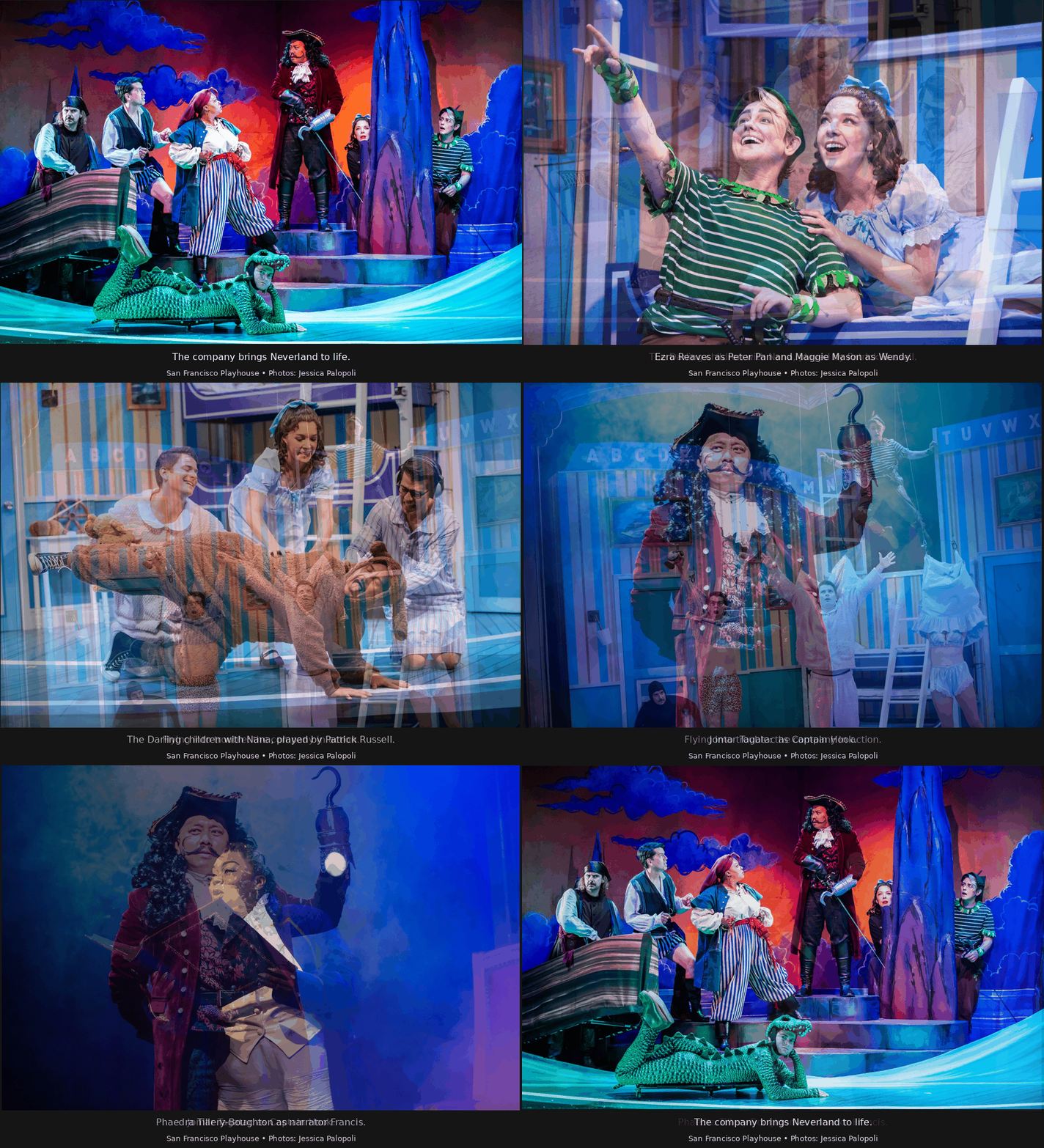
The company understands the essential rule of farce: Never play the joke. Play the disaster.
The physical comedy is superbly controlled.
Erin Rose Solorio’s choreography, Bridgette Loriaux’s flying work, Dani O’Dea’s fight and stunt direction, and Patrick Russell’s clowning expertise combine with Damilano’s direction to make catastrophe look spontaneous.
Actors fall, collide, fly and recover. Props misbehave. Technical cues become jokes.
Every apparent mistake has to be the right mistake.
The flying is especially funny. Instead of hiding the machinery and making Peter’s flight look effortless, this production turns getting him into the air — and back down again — into part of the comedy.
And then there is Cody Tellis Rutledge’s ingenious three-segment revolving set.
It becomes another member of the cast.
Doors, walls, levels and moving sections become part of the comedy as the set carries us through Neverland.
By the finale, it seems to take over the production.
It begins turning faster. Then faster. Then faster still.
Sitting in the audience, I began wondering just how far they were going to take it.
For a few wonderful moments, it seemed entirely possible that the set was going to spin the actors right off the stage and into our laps.
It is a wonderfully funny finish to an evening in which the cast, physical comedy and stagecraft work together with remarkable precision.
The more everything goes wrong, the funnier it gets.
Peter Pan Goes Wrong is fast, physical, inventive and wonderfully performed. It makes theatrical incompetence look effortless.
Go. Laugh. And enjoy watching everything go spectacularly wrong.
PETER PAN GOES WRONG
San Francisco Playhouse
By Henry Lewis, Jonathan Sayer and Henry Shields
Directed by Susi Damilano
Through November 28, 2026
Performance Schedule:
Tuesdays and Thursdays: 7:00 PM
Wednesdays: 2:00 PM & 7:00 PM
Fridays: 8:00 PM
Saturdays: 2:00 PM & 8:00 PM
Sundays: 2:00 PM
San Francisco Playhouse
450 Post Street
San Francisco, CA
Tickets: $52–$145
Recommended if you enjoy fast-paced farce, physical comedy and theatrical mayhem.