Monthly Archives

May 2014

Un-tranquil voyage in ‘pen/man/ship’

By Judy Richter

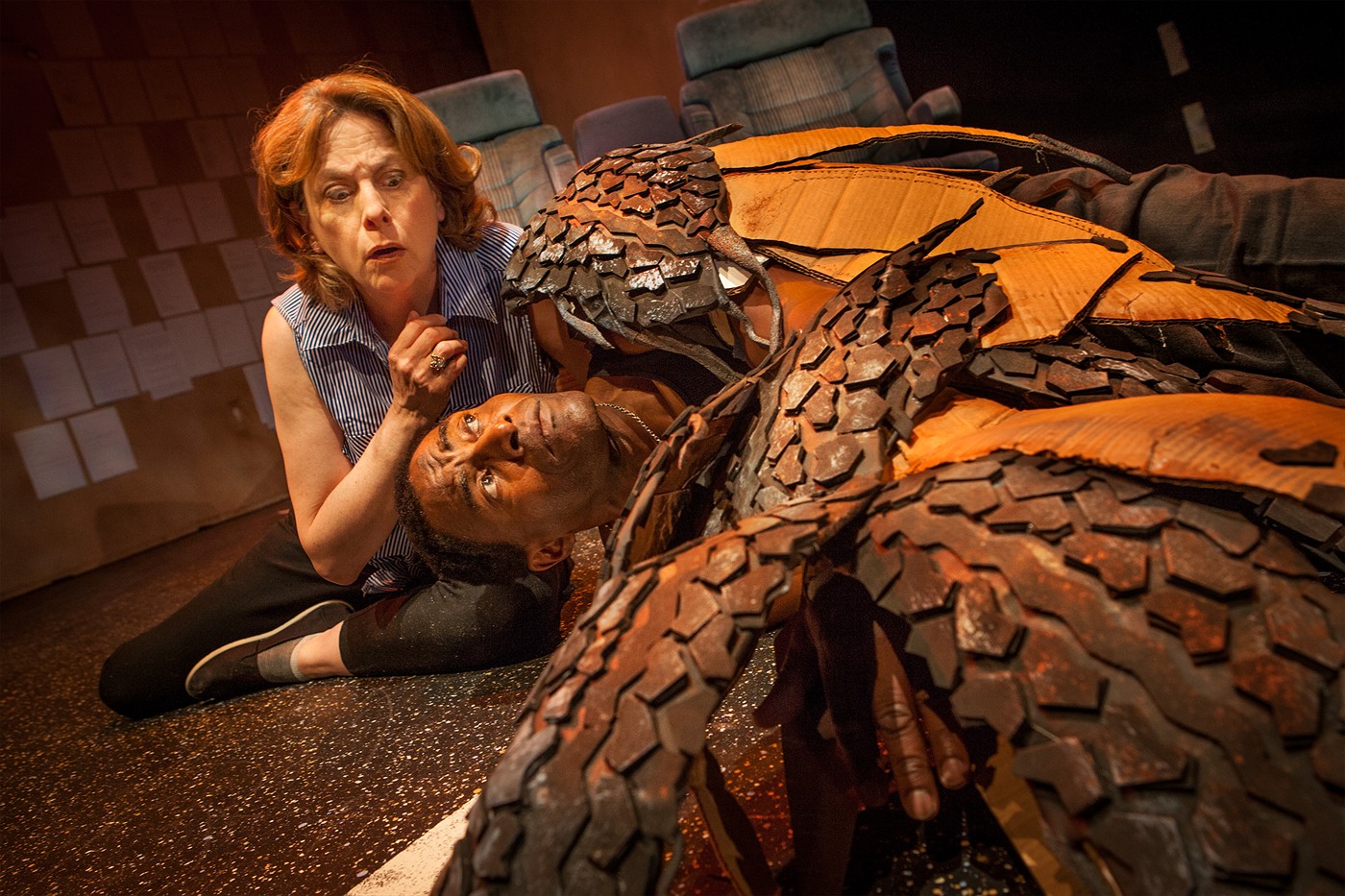
It’s 1896, and a former whaling ship is sailing from the United States to Liberia with an all-black crew in Christina Anderson’s “pen/man/ship,” being given its world premiere by Magic Theatre.

The only characters the audience meets are the three black passengers and a crew member. Chief among the passengers is Charles (Adrian Roberts), a land surveyor who has chartered the ship and hired the crew because he has a project awaiting him in the African nation. At first, he’s the only one who knows the true nature of the mission.

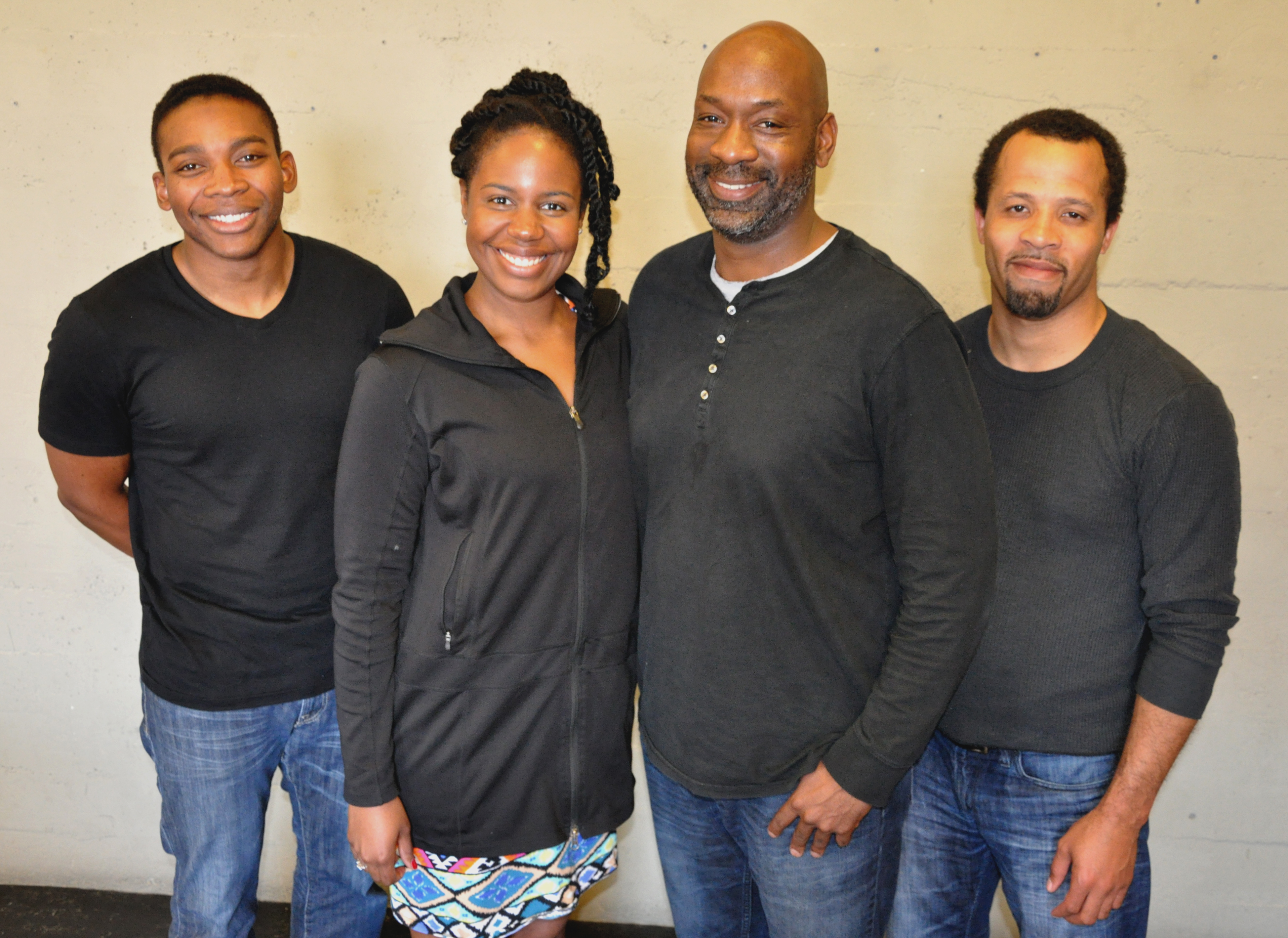
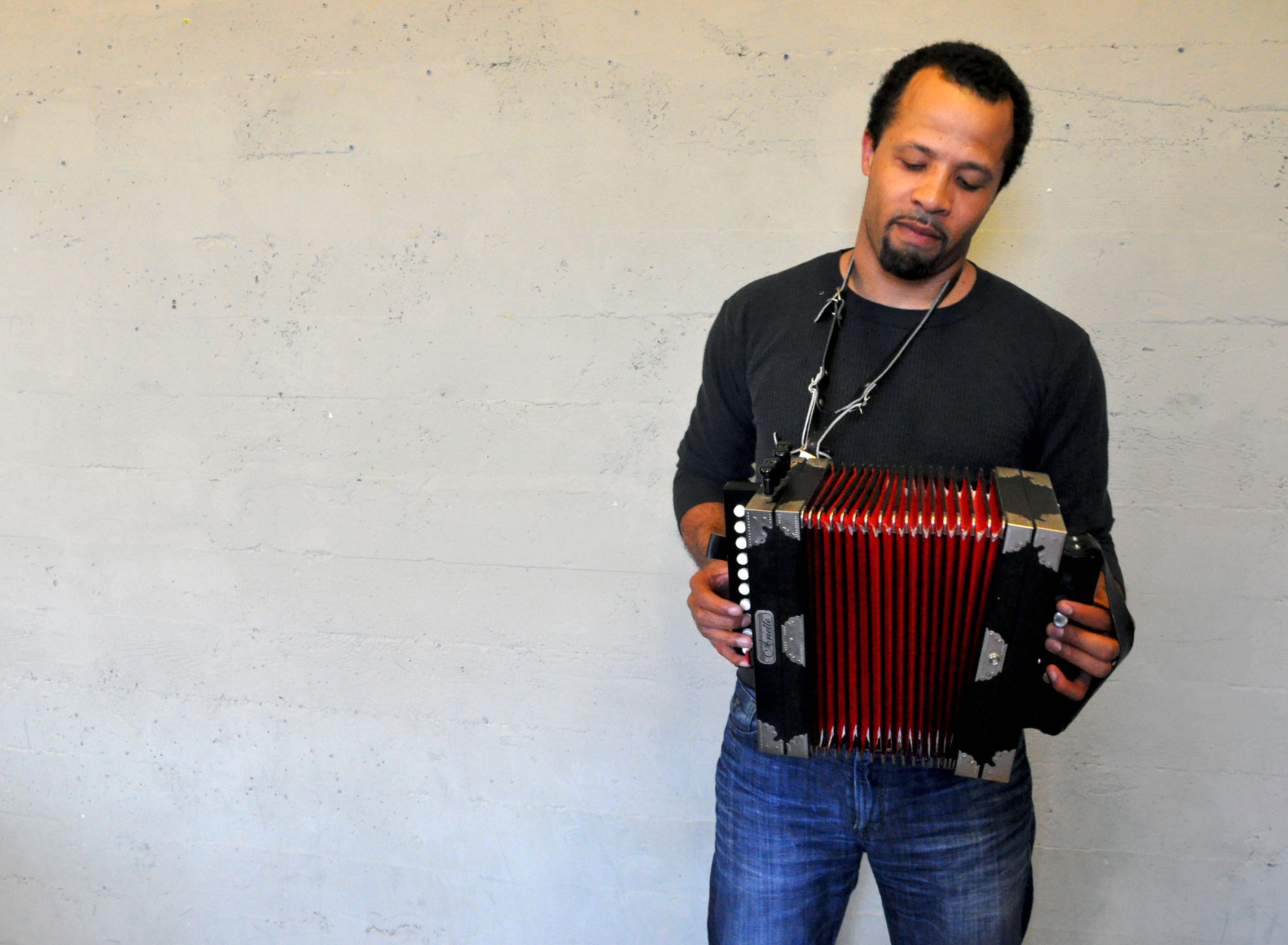
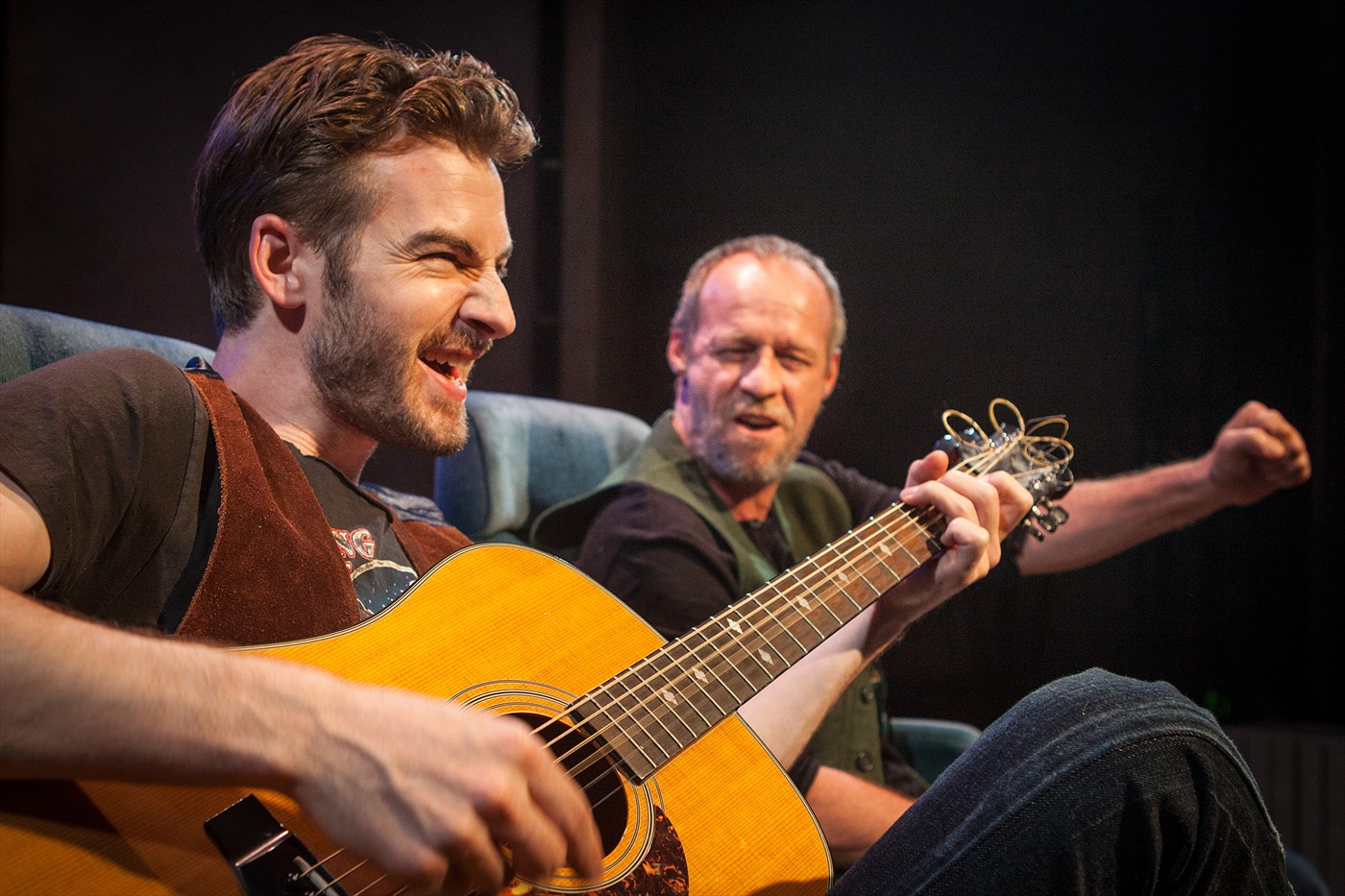
He is accompanied by his adult son, Jacob (Eddie Ray Jackson), who has brought along a woman friend, Ruby (Tangela Large). The crew member who befriends Charles is the accordion-playing Cecil (Tyee Tilghman).

Part of this psychological drama focuses on the love-hate relationship that Jacob has for his imperious, elitist father, who imbibes regularly in gin. The other part focuses on the astute Ruby and her increasingly contentious relationship with Charles and closer relationship to the crew, who are growing to dislike him.

The passage of time in this two-act play is depicted by the journal kept by the widowed Charles. Many scenes take place on the sabbath, which father and son have regularly observed with hymns and the study of Bible verses. Ruby is invited to join them, but she’s not terribly receptive, especially since Charles doesn’t trust her.

After the death of a crewman who supposedly attacked Charles, he refuses to tell the crew what happened. Consequently, Ruby orders the sailors to lower the sails, leaving the ship adrift on the ocean, until he agrees to talk to them.

Director Ryan Guzzo Purcell keeps the play moving fairly well despite its talkiness and relatively confined quarters (set by Angrette McCloskey). Still, it drags in spots. Likewise, the actors do well, but sometimes the characters reveal key information so off-handedly that some in the audience might not catch its implications.

The often-dark lighting is by Ray Oppenheimer with ocean sounds by Sara Huddleston. Costumes are by Antonia Gunnarson.

The play has undergone a long genesis of workshops at several venues, but it still could benefit from some tightening and clarifying.

It will continue at the Magic Theatre, Building D, FortMasonCenter, San Francisco, through June 15. For tickets and information, call (415) 441-8822 or visit www.magictheatre.org.


PEN/MAN/SHIP given a powerful world premiere at the Magic

By Kedar K. Adour

Eddie Ray Jackson*, Tangela Large, Adrian Roberts*, and Tyee Tilghman* in Christina Anderson’s world premiere of PEN/MAN/SHIP..

PEN/MAN/SHIP: Drama by Christina Anderson and directed by Ryan Guzzo Purcell. Magic Theatre, Fort Mason Center, 2 Marina Blvd., Building D, 3rd Floor, San Francisco, CA 94123. (Entrance to Fort Mason at the intersection of Marina Blvd and Buchanan St).  415-441-8822 or www.magictheatre.org. May 28 – June 15, 2014

 PEN/MAN/SHIP given a powerful world premiere at the Magic. [rating:3](3 of 5 Stars)

The Magic Theatre group has a well earned reputation for nurturing new playwrights. Amongst those who honed their skills there are (alphabetically) Luis Alfaro, Nilo Cruz, Rebecca Gilman, Taylor Mac, Michael McClure, Theresa Rebeck, Sam Shepard, Octavio Solis, Lloyd Suh,  Paula Vogel and Sharr White. Each has gone on to successful professional careers and Christina Anderson is well on her way to join that august group. That fact is supported by the powerful production being given its world premiere on Magic’s intimate thrust stage.

 However that power compressed into a one hour and 50 minute play that includes a 15 minute intermission does not translate to a completely satisfying evening. There are deficits in the construction that relies on exposition inserted late in the play to flesh out the background/motivation of the characters. The cast of four are all major to the plot with unseen characters lurking in the background conveying a dire threat of violence. That threat is magnified since all the action takes place aboard a claustrophobic former whaling ship symbolically named Turner with sounds of the sea and wind that erupts into a violent storm to end act one.

The title of the play is descriptive of the construction that requires Charles “the man” to “pen the daily actions aboard the “ship” in his log book. In doing so author Anderson uses him as her narrator speaking the words to the audience and having the others enter and participate in the action.

The time is 1896 and the US Supreme Court has upheld the doctrine of “separate but equal” law for whites and blacks. There is an American Colonization Society of Liberia movement to repatriate Blacks to Africa.  Widower Charles Boyd, a prominent black entrepreneur has organized sailing a ship with an all-black crew to make the voyage to Liberia. The reason for the voyage is hidden from the crew and when discovered creates a contentious void between Charles and his son Jacob. Charles has accepted the oversight of the voyage, including the selecting of a compliant Captain and considers the crew to be inferior to him. He hides his malevolence behind a façade of religious aphorism and insists upon honoring God through always setting aside the Sabbath for bible study and prayer.

Jacob has an ambivalent relationship with his father that is divided between filial love and desire to break free. He has brought along Ruby who is desirous of leaving America to start anew in Africa. Charles does not know what to think of Jacob and Ruby’s relationship since he has spent a fortune hiring lawyers to defend Jacob who was caught in a “brothel for faeres.”  From their first meeting Ruby and Charles are at loggerheads and Charles has a great unknown fear of her since she does not have a bible and in his mind women are inferior to men. She also perverts a passage from the Bible: “Let there be darkness in the light.”  The theme of light and dark and white and black permeates the entire play.

Tyee Tilghman* in Christina Anderson’s PEN/MAN/SHIP

The fourth character is self-deprecating Cecil, a crew member whom Charles befriends and becomes his eyes and ears on the plotting of the crew. He is addicted to his squeeze-box and provides music that is reflective of the stage action and is a bridge between scenes.

Ruby becomes the titular head of the crew when the Captain disappears and she gradually assumes leadership. Charles has an altercation with a young crewman who falls overboard and may or may not have been the instigator in the fight. The entire crew become malevolent and plan to kill Charles. Ruby’s intervention prevents the killing asking Charles to stand trial before the crew. Charles’ refusal leads to dire consequences with a cataclysmic ending to play.

Adrian Roberts is on stage for most of the play perfectly creating the dual nature of Charles moving from narrator to player, to instigator and victim.  Tyee Tilghman is at his best making you feel the insecurity of Cecil who cherishes the friendship of Charles. Eddie Ray Jackson as has the most difficult job of showing the dual personality suggested by the script. Tangela Large is the most dynamic member of the cast and gives a stunning, multifaceted performance as Ruby.

Cast: Jacob – Eddie Ray Jackson;  Ruby – Tangela Large; Charles – Adrian Roberts; Cecil – TyeeTilghman.

Creative Team: Lighting Design by Ray Oppenheimer; Scenic Design by Angrette McCloskey; Costume Design by Antonia Gunnarson; Sound Design by Sara Huddleston.  

Running time of one hour and 50 minutes with an intermission.

Kedar K. Adour, MD

Courtesy of www.theatreworldinternetmagazine.com


‘Incredibly good’ classical-jazz pianist will solo on campus

By Woody Weingarten

Pianist Kirill Gerstein literally carries a tune — and a piano music stand. Photo: Marco Borggreve.


OK, I’ll cop to it — I’ve been living in a constricted mind-tunnel of my own making.

Not that strange for a “retiree,” of course.

Many men just beyond my state of geezerhood have no time for anything fresh because they’re too busy shuffling off to a lab where some kid who can’t shave yet takes blood, or too busy sipping tea laced with aspartame with old ladies thrilled that somebody with different plumbing’s still breathing and will keep ‘em company, or too busy hoping they can dribble to an easy layup without inducing a stroke.

I have a radically different agenda, naturally, and it typically involves situating my butt in front of a computer.

Meeting deadline after deadline after deadline.

So I not frequently get overloaded writing reviews, concocting columns and desperately seeking not Susan or Madonna or Miley Cyrus but someone who’ll publish my book manuscript.

Truth is, when it comes to the entertainment world, I don’t recognize the names of three of every thousand performers anymore.

Until a week ago, to be honest, I’d never heard of pianist Kirill Gerstein.

But then I was urged to promote the pianist’s 8 p.m. June 5 concert with the San Francisco Symphony at the Green Music Center on the Sonoma State University campus — in advance.

So I am.

Why? Because I listened to some of his stuff on YouTube, and it’s incredibly good (more about that later).

The Sonoma concert will take place in the state-of-the-art Weill Hall, which, according to the symphony’s website, “boasts outstanding acoustics, artistic wood interiors, and stunning wine country views.”

Sounds good to me.

The 35-year-old Russian-born Gerstein will be the soloist for Beethoven’s “Piano Concerto No. 2,” with frequent San Francisco guest conductor Charles Dutoit, who’s the main man for the London Royal Philharmonic, leading the orchestra.

Shostakovich’s “Symphony No. 10,” composed after Stalin’s death in 1953, fills out the bill.

For those who prefer a more urban setting, three duplicative concerts will take place at Davies Symphony Hall in San Francisco at 8 p.m. June 4, 6 and 7.

Who’s this guy I’m just beginning to know?

Gerstein at 14 became the youngest student at Boston’s Berkelee College of Music, where he was a jazz prodigy. His classical interpretations, indeed, display moments when that energetic training shines through.

His newest album, “Imaginary Pictures: Mussorgsky, Schumann,” I’m told, will be released around the time of the concerts.

As for the YouTube excerpts, though he’s mostly in the background on “Summertime” as jazz stalwart Storm Large makes the tune her own, you certainly know Gerstein’s there.

And he’s utterly brilliant on “Ophelia’s Last Dance,” an introspective mash-up of classical and jazz, a nine-minute exercise composed specifically for him that blends tomorrow with yesterday and today — and adds a touch or two of humor.

Other YouTube pieces that gave me a glimpse into his excellence include the first movement of Rachmaninoff’s “3rd Piano Concert” and the original 1924 band version of George Gershwin’s “Rhapsody in Blue.”

Winners all.

Bob Dylan knew it decades before I did: The times they are a-changin’. And that’s a good thing.

Tickets to the June 4-7 San Francisco Symphony concerts with Kirill Gerstein run from $15 to $156. Information: and (866) 955-6040 and gmc.sonoma.edu, or www.sfsymphony.org and (415) 864-6000.

36 STORIES BY SAM SHEPARD brilliantly acted by Word for Word

By Kedar K. Adour

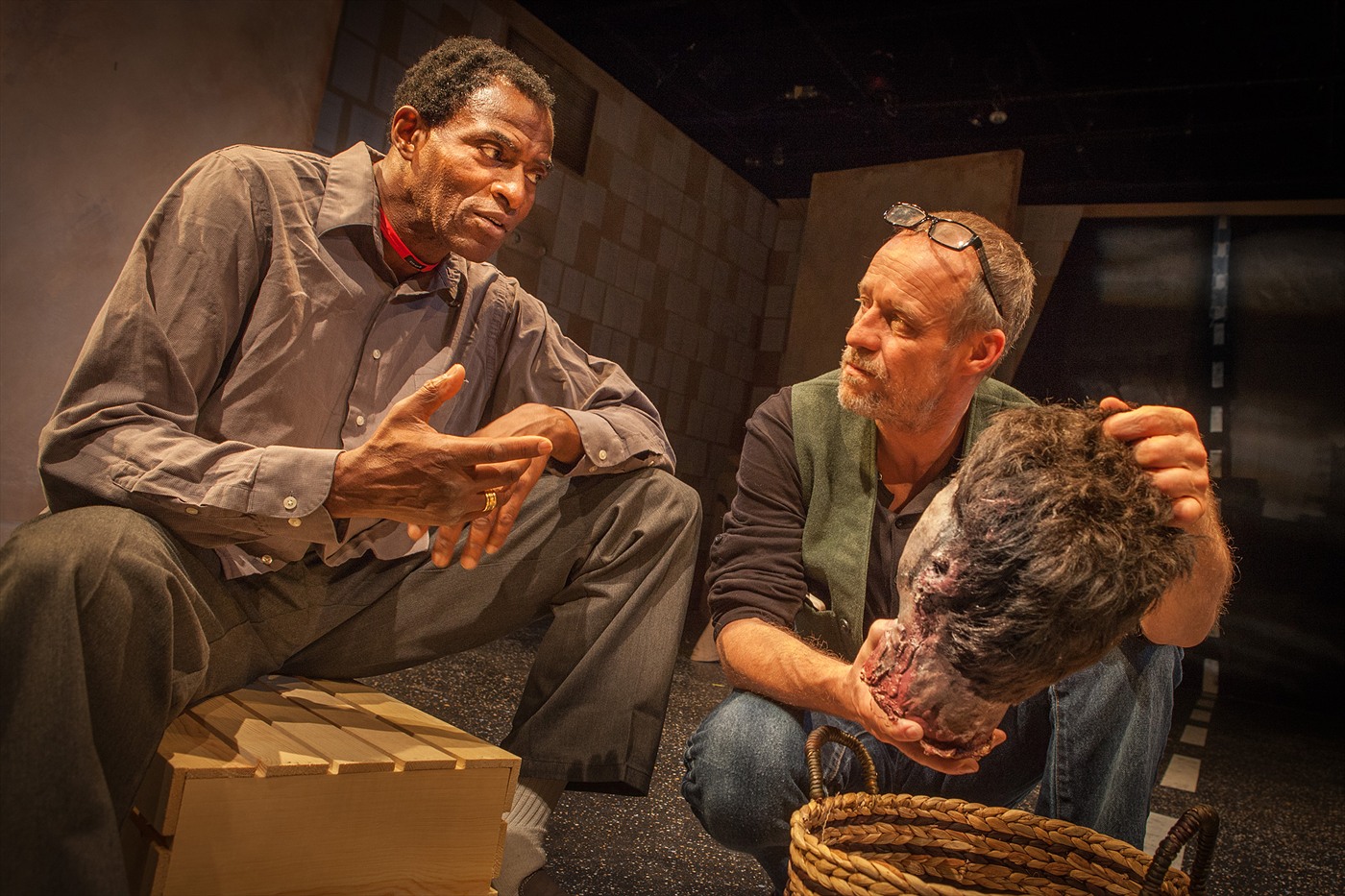
    The Writer (Rod Gnapp) has a philosophical discussion with the spirit of the severed head (Carl Lumbly).

Word for Word presents : “36 Stories by Sam Shepard” arranged for the Stage and Directed by Amy Kossow at Z Below, Z Space’s new second venue, at 470 Florida St. San Francisco. Tickets: 866.811.4111 or at www.zspace.org.  May 21-June 22, 2014.

36 STORIES BY SAM SHEPARD brilliantly acted by Word for Word. [rating:4](4 of 5 stars)

Word for Word have deviated from their usual format of bringing short stories to the stage “verbatim, assigning the narrative—he saids, she saids and descriptive text—to various characters, animals or even inanimate objects, all in the most revelatory and imaginative ways.” Under a commission from the Magic Theatre and as part of the “Sheparding America” festival celebrating the work of Sam Shepard, Amy Kossow selected snippets of prose from Shepard’s five books patching them together creating a fascinating mélange for the stage entitled 36 Stories by Sam Shepard.

The production is being staged in the intimate 88 seat Z Space Below venue and boasts a five member stellar cast of Rod Gnapp, Carl Lumbly, Delia MacDougall, JoAnne Winter, and Patrick Alparone. They are the Who’s Who of the local theatre scene and their performances could be taught as an example of what ensemble acting is all about. Four of the actors flawlessy morph into multiple characters with distinctive and memorable characteristics. The fifth character is The Writer played to perfection by Rod Gnapp who bookends the play writing on a portable typewriter and as he finishes each page tacks it to wall of the set.

That lone Writer is fashioned after Sam Shepard who traveled highways of the Great Southwest. Shepard was known to frequent Denny’s Restaurants and out of the way motels thus the scenes shift between Denny’s, the open road and motels. There are minimal changes of props allowing the story to move without interruption.

Early in the play an incongruous sign hung in one of the restaurants reads “Life is what happens when you’re making plans for doing something else.” This intrigues The Writer and he attempts without success to discover who the writer of the sign is. He continues his journey, writing as he goes along.

On that journey he comes across a severed head (Carl Lumbly) in a basket in a ditch by the side of the road. The Head wishes to be moved to a quieter place where he could rest for eternity. Along comes The Walking Man ( Patrick Alparone) who agrees to move The Head as requested but that trip is fraught with hardships and is almost abandoned.

Somewhere along his trip The Writer meets The Mercenary (Delia MacDougall) who is a bundle of sex leading to a seamy motel room scene that is intricately orchestrated but still is steamy.

 With the exception of the tale of The Head and its travels with The Walking Man there is no continuity of storyline but there are vignettes that will keep you guessing what is coming next.  The Waitress (JoAnne Winter) becomes

The Driver (JoAnne Winter) discovers an injured hawk (Carl Lumbly) on the highway

The Driver taking her mother’s ashes from the columbarium in a green bucket who encounters the remnants of a truck tire that becomes The Hawk (Lumbly) injured and stranded by the roadside. Patrick Alparone doubles as The Musician playing a guitar linking a number of the scenes.

The Writer (Rod Gnapp) is serenaded on his journey by The Musician (Patrick Alperone).


In the final scene Mac Dougal becomes The Writer’s mother and asks if all this travel is because he has writer’s block. If so:

“Now let me get this straight

You say

You’re tortured because you can’t write

Or

You can’t write because you’re tortured

Now lemme say one thing

Your despair is more boring

Than the Merv Griffin Show

Get off your tail and cook

Do time

Anything

But don’t burn mine

The ensemble actors take on the roles of inanimate objects who often speak with philosophical insight. There is a bit of Steven King in the writing but all in all the cast has complete control of the text receiving a standing ovation on opening night.

Running Time 90 minutes with no intermission.

CAST: Rod Gnapp The Writer; Delia MacDougall, The Mercenary / Dead Mother / Sally / Ensemble; JoAnne Winter, The Waitress / Driver / Writer’s Mother / Ensemble; Patrick. ALparone; The Musician / The Walking Man / Dicky / Ensemble;  Carl Lumbly, The Head / The Hawk / Ensemble.

PRODUCTION: Assistant Director Wendy Radford, Stage Manager Justin D. Schlegel, Assistant Stage Manager Allie Khori, Scenic Design Giulio Perrone, Lighting Design Jim Cave, Costume Design Christine Crook, Sound Design Drew Yerys, Properties Design Jacquelyn Scott, Movement Design Tracy Hazas, Mask Design John Daniel, Music Composition Patrick ALparone, Additional Music Paul Fiocchiaro, Peter O’Donoghue, and Spencer Evans and Technical Director Dave Gardner. Photography Mark Leialoha.

Kedar K. Adour, MD

Courtesy of www.theatreworldinternetmagazine.com


‘Raisin’ is still timely at Cal Shakes

By Judy Richter

t’s 1959, and three generations of the Younger family share a cramped, rundown apartment on Chicago’s predominantly black South Side.

Hope is scarce, but now the family has some in Lorraine Hansberry’s “A Raisin in the Sun,” presented by California Shakespeare Theater. The matriarch, Lena Younger (Margo Hall), receives a $10,000 check (big money in those days) from her late husband’s life insurance. It’s enough that maybe some dreams can come true.

Lena dreams of moving the family to a home of their own. Her college student daughter, Beneatha (Nemuna Ceesay), wants to become a doctor. Her son, Walter Lee (Marcus Henderson), wants to become rich by investing in a liquor store. His wife, Ruth (Ryan Nicole Peters), wants to revive their crumbling marriage and provide a better future for their 10-year-old son, Travis (Zion Richardson).

These dreams come in a racially divided society, one that has left Walter Lee, who works as a white man’s chauffeur, frustrated and angry. He takes out his anger on the women in his family, especially Ruth, and tries to escape through alcohol.

When Lena makes a down payment on a house in a predominantly white neighborhood, ClybournePark, a representative of its homeowner association, Karl Lindner (Liam Vincent), calls on them. In one of the highlights of this production directed by Patricia McGregor, the family’s politeness on the assumption that he is welcoming them to the neighborhood gradually turns to dismay and anger when they learn that the association will buy their house at a considerable sum to keep them out. They send him on his way.

In the meantime, Lena has given Walter Lee the $6,500 left after the down payment. She tells him to set aside $2,000 for Beneatha’s education and to put the rest into a checking account for himself. Instead, he gives all of the money to one of his partners in the liquor store plan, but the man disappears.

This play, which opens Cal Shakes’ 40th anniversary season, is historic in its own right because it was the first play by a black woman to be produced on Broadway. It also depicts a sorry chapter in American history that is still ongoing despite numerous advances in racial relations since 1959.

Director McGregor has elicited nicely nuanced performances, especially by Hall as the indomitable Lena and Peters as Walter’s long-suffering wife. Ceesay makes Beneatha an intelligent young woman who’s searching for more meaning in her life. Richardson is believable as young Travis. Beneatha’s two boyfriends and fellow students, the wealthy, pretentious George and politically astute Joseph from Nigeria, are well played by York Walker and Rotimi Agbabiaka (who hails from Nigeria), respectively. Vincent is suitably officious as Karl, the white neighborhood emissary who keeps referring to the family as “you people.”

Henderson’s performance as Walter Lee is problematic because he makes the character so agitated most of the time.

The set is by Dede M. Ayite with ambient lighting by Gabe Maxson and sound by Will McCandless. Costumes are by Katherine Nowacki.

The play’s title comes from “Harlem,” by black poet Langston Hughes, who wrote, “What happens to a dream deferred? Does it dry up like a raisin in the sun?”

In the case of the Younger family, it doesn’t, thanks to the hope evinced by the ending.

“A Raisin in the Sun” will continue at Cal Shakes’ outdoor Bruns Memorial Amphitheater, 100 California Shakespeare Theater Way(off Highway 24), Orinda, through June 15. For tickets and information, call (510) 548-9666 or visit www.calshakes.org.

If you’re a first-timer, be advised that evening performances can be quite chilly. Picnicking is OK, and there’s a café.


2014 Spring Fringe of Marin—Program II

By Flora Lynn Isaacson

 Ricky Montes as Jason and Micah Coate as Amelia in Let Me Go, in Program II at the Fringe of Marin

 [rating:4] (4/5 stars)

The Fringe of Marin now celebrates its 33rd season with some of the most innovative work of San Francisco Bay Area playwrights, directors and actors.

The Festival was established by Dr. Annette Lust in 1995, Professor Emerita at Dominican University. She ran the Festival until her death in February, 2013.  Last spring, Gina Pandiani, a 1985 Dominican graduate stepped in as Managing Director with Production Manager, Pamela Rand—and so the Festival continues on.

This review centers on Program II consisting of four plays and one solo performance.  Program II opened with Tuesdays in the Park with River Apple by C.J. Erlich and directed by Robin Schild, who has directed many plays for the Fringe over the years.  Mr. Schild has a flair for comedy in this satirical look at motherhood as four young mothers meet while watching their toddlers.

Claudia Rosa gives an amazing performance as Zsusanna, who is new to the city and the mother of 4-year-old River Apple.  New to full-time motherhood, she tries to juggle her various roles.  Ms. Rosa uses very expressive body language throughout. She is ably supported by three other young mothers..  Gigi Benson (Jessica) gives a very animated performance.  Colette Gunn plays Abby, a sympathetic role and Victoria Vann is Isham, who is very shy.  Micah Coate makes a sexy entrance as Lark, a nanny to the children.  This light satirical play was followed by The Next Big Thing by Robert Wanderman and directed by Pamela Rand.

The Next Big Thing is “vulture capitalism.”  When the owner’s hands are in the crapper, vulture sweeps in and swallows and turns it about.  Jeffrey Schmidt as Abe knows how to take the stage and gives a convincing performance along with Victoria Vann as Casey and Duncan Maddox as Bill.

Let Me Go, written by Shai Regan is next on the program. The play is very sensitively directed by Gary Green.  In this amazing play, Amelia, played by Micah Coate learns how to deal with posttraumatic stress with the help of her fiancée Jason played by Ricky Montes, after she sees him attacked.

The second half of the program opens with Jinshin Jiko written by Bridgette Dutta Portman and directed by Amy Crumpacker with Sheila Devitt as Assistant Director. This play takes place on a train. The expressions and body language of the passengers are brilliantly choreographed. Morgan, an uptight businesswoman (Chelsea Zephyr) is hysterical when the train is stalled and she has a presentation to make. She imagines A Japanese Woman, Yurei (Mimu Tsujimura) is attacking her.  The other people on the train are Sheila Devitt, a Dutch woman, Vonn Scott Bair, a Dutch man, RJ Castaneda, a Japanese man and Sam Tillis as Kenneth.

The final play of the program is a full-scale production, Little Moscow written by Aleks Merilo and directed by Greg Young starring Rick Roitinger as the Tailor.  This play employs a complete set of the shop of the tailor and projections on the back wall of places and people about which the Tailor speaks.  This is a real tour de force for Rick Roitinger as an aging, Russian immigrant tailor whose recollections of man’s crimes against humanity and a father’s love for his country conflict with his love for his daughter.

What a wealth of talent in Program II! The only fly in the ointment was the poor acoustics of Angelico Concert Hall at Dominican University. This could be improved with a sound system or the actors could have mikes as much of the dialog was lost.

The Spring Fringe of Marin Festival plays one more weekend at Angelico Concert Hall, Dominican University, 20 Olive Avenue, San Rafael, CA.

Program I plays Saturday-Sunday, May 31-June 1 at 2 p.m. Program II runs Friday-Saturday, May 30-31 at 7:30 p.m.

Flora Lynn Isaacson

Custom Made Theatre presents Arthur Miller’s The Crucible

By Linda Ayres-Frederick


Set in 17th century Salem, this classic story of individuals standing up against the corruption of their society was Miller’s allegory for the witch-hunts of the 1950’s House Un-American Activities Committee led by Senator Joe McCarthy. The Crucible shows the persecution and state-sponsored murder of twenty persons by their friends and neighbors for alleged affiliations with the supernatural world. It also shows how power in the wrong hands can be wielded and opposed in any community–an issue that remains to this day.

As a work of theatre, The Crucible is one of Miller’s best examples of his mastery of subtext. And while this production as a whole is not done in a style that demonstrates Miller’s genius, there are many elements that remain praiseworthy.

It is always difficult to know whether artistic choices are directorial. One in particular is the surprising lack of subtlety in the portrayal of Deputy Governor Danforth (Paul Jennings). A man in a position of power has no need to prove it by shouting angrily. There is nothing more frightening than such a man who benevolently imparts a despicable point of view.

Equally confusing is why if both Proctor (Peter Townley) and Goody Proctor (Megan Briggs) repeatedly mention the emotional chill in their home, she would greet her husband open-heartedly with a welcoming smile. In a society where dancing is considered a sin, casual touching and shouting strike false notes, and feel completely antithetical to the culture. 

The Crucible directed by Stuart Bousel also presents challenges in the trial scenes when the young girls demonstrate hysteria. This alternates with dialogue among the judges which dialogue unnecessarily gets completely lost. Picking up cues without talking over others can build in volume to a more dramatic effect.

In the majority of scenes, the ensemble works well together keeping the action apace with notable performances by Reverend John Hale (Nicholas Trengove), Goody Putnam (Melissa Clason), Ezekiel Cheever (Vince Faso), Rebecca Nurse (Carole Swann), Francis Nurse (Richard Wenzel) Mary Warren (Alisha Ehrlich) and Giles Corey (Ron Talbot). As always at CMT the sound design (Liz Ryder) is stellar. 

Even with these reservations, The Crucible is an American classic worth seeing. Thurs-Sat 8pm Sun 7pm thru June 15. Gough Street Playhouse 1620 Gough Street, SF www.custommade.org 

Linda Ayres-Frederick

A-ASC’s Much Ado About Nothing is Something to Write Home About!

By Linda Ayres-Frederick


Much Ado About Nothing at African-American Shakespeare Company is definitely noteworthy. Under the expertly imaginative hand of Artistic Director L. Peter Callender, this rich plot of twists and turns that explores courting and romance gains momentum from beginning to end. Set in post WWII, the music of Ella Fitgerald enriches the sharp Shakespearean comedy. Callender’s cast is fearless dealing with the serious tones of honor and shame that are interspersed between the more exuberant aspects of love.

Nowhere will you find a more delightfully sassy Beatrice (Leontyne Mbele-Mbong) who meets her match in Benedick (Ryan Vincent Anderson). Their sparring wit contrasts the innocent puppy dog love of Claudio (Twon Marcel) and his lovely young Hero (Danielle Doyle). The story of the two pairs of lovers is enhanced by an ensemble that features solid performances from Don Pedro (Kelvyn Mitchell), Don John (Jim Gessner) and Leonato (Dwight Dean Mahabir) to name a few.  Tom Segal’s Choreography and Maureen “Mo” Stones’s Costumes add their talents to give this Much Ado even more pizzazz.

AASC is this year’s worthy recipient of the Paine-Knickerbocker Award by the SF Bay Area Theatre Critics Circle. Named for the former theatre critic of The SF Chronicle, this Award is presented to an organization that has made a continuing contribution to Bay Area Theatre.

Much Ado About Nothing completes AASC’s 2013/14 Season. With such an array of talent, their next season promises to be equally exciting.  Located at Burial Clay Theatre in the African American Art & Culture Complex, 762 Fulton Street (near Webster) in SF, an added perk is the free parking next door. Tickets for the upcoming season will be available at the Box Office or Brown Paper Tickets 1-800-838-3006. www.african-americanshakes.org.


Linda Ayres-Frederick

The Ethereal, Exotic and Erotic in the Yogic Art of India

By Guest Review

The Ethereal, Exotic and Erotic in the Yogic Art of India

By Jenny Lenore Rosenbaum     jennyLenore8@gmail.com

Transcendence, awakening, enlightenment – grand, often intimidating terms that seek to express what is fundamentally ineffable: union with the Divine and the cosmos, which themselves are one. Among the most haunting works in the stunning exhibition, Yoga: The Art of Transformation, at the Asian Art Museum of San Francisco (through May 25) is a painting of an indigo-hued Vishnu Vishvarupa (from around 1800). His body girded with a golden robe, his four arms hold the symbols of lotus, scepter, shell and cosmic circle.

The deity’s blazing face and erect body embody and encompasses all of existence. One eye embraces the sun, the other cradles the moon. Hellish snakes and fires are inscribed on his legs while images of heavenly bliss fill his chest. The deity contains within himself all that exists, and his being infuses all – epitomizing the mystical attainment of oneness.

In over 100 works that span more than two millennia – from the 2nd to the 20th centuries — the exhibit reveals how artists of India sought to embody this inexpressible state, the one attained by Gautama Buddha when, after reaching Enlightenment, he defeated the suffering embedded in human existence. At the core, it is extraordinary that artists would be so brazen – or impassioned – to attempt to express, through form itself, what is essentially formless and invisible. Equally amazing is that they accomplished this using such a cornucopia of styles and iconographic elements.

It is intriguing to contrast Islam’s shunning of any human representation of the Divine — forbidden because the Source, all-knowing Allah, transcends such visualization and, in fact, would be defiled by it — with the irrepressible urge, in the Buddhist, Hindu and Jain traditions, to visualize spiritual empowerment in human form.

And it was yoga, in collaboration with meditation, that became the interfused, empowering vehicles for reaching nirvana. They became the exit strategy through which seekers could plot their escape route from the cycles of bodily degradation, mental torment and emotional vulnerability to which humans are prey.

In an article entitled, Eons Before the Yoga Mat Became Trendy, art historian Holland Cotter describes yoga, in its most rarified form, as “a shattering personal revolution.” The exhibit uncovers the myriad ways – both lush and austere – that artists of India managed to embrace such a shattering: the cracking open of the heart to allow the Divine to flood in. It is, indeed, the process of making oneself irresistible to the Divine — the quest that consumed yogis (spiritual evolved beings) and yoginis (female yogis).

The exhibit’s sheer breadth, diversity and complexity are riveting. It traverses far-flung eras and dives into vast facets of Indian culture beyond the spiritual and mystical – including the political, aesthetic and sociological realms. All of this is interwoven with cross-pollinating traditions: Hinduism, Buddhism, Jainism and Sufism. Precisely targeting the birth of yoga is elusive even to scholars, but many believe its origins go back 4,000 years. But precision dating fades in importance when one beholds the exhibit’s lavishly illustrated catalogue, illuminating key aspects of yogic art and the tapestry of its cultural context.

The works were assembled from museums and private collections in India, the U.S. and Europe. Originally conceived at the Arthur M. Sackler Gallery (of the Smithsonian Institution), curators there approached their counterparts at the Asian Art Museum of San Francisco, an institution that holds a magnificent treasury of Asian art, considered one of the world’s premier collections of the arts of India, Japan, China, Korea, Thailand, Burma, Cambodia, Indonesia and Java. The show, designed and materialized by Jeffrey Durham, Curator of Himalyan Art at the Asian Art Museum of San Francisco, and Qamar Adamjee, Associate Curator of Himalyan Art, will complete its run at the Cleveland Museum of Art (through September 7).

On a global level, no other exhibit has ever assembled an aesthetic record of yoga’s genesis, evolution and philosophical underpinnings. Tackling this subject represents nothing less than penetrating the heart of artistic expression in India, the most concentrated spiritual locus on earth. When this realization settles in, it becomes amazing that such an exhibit was not created earlier and that its itinerary includes only three venues.

So passionate has been the diamond-sharp focus of India’s spiritual seekers that their struggle for transformation became seized upon by artists, perhaps yogis themselves? One can only wonder. The spiritual quest, translated through the sensibilities of artists working in diverse media, is manifested in a torrent of masterpieces: sculptures (of both historic and divine yogis), paintings, a 15-foot scroll depicting the chakras (the network of spiritual energy centers within the body), opaque watercolors, ancient manuscripts and Islamic divination texts.

But let’s cut to the chase. Liberation from all that ravages the soul is far too much for most mortals. The knawing reality is that arriving at this state entails an unimaginable level of not simply effort but, more accurately, giftedness — or perhaps it’s “just” an irrepressible spiritual hunger. Those rare few who get there, arriving at the wondrous top of their game, have the ultimate payoff: the go-ahead to merge the drops of their singularity into a sea of sacredness that suffuses everything that is, was and will ever be. Or so the mystics whisper.

Greeting visitors upon entry is Three Aspects of the Absolute (opaque watercolors from an 1823 folio). It eloquently encapsulates what cannot actually be encapsulated: the stages of spiritual unfolding. The first panel, a shimmering field of undifferentiated gold, symbolizing the Absolute, gives way to the next — a Brahman yogi in a lotus position. In the final panel the yogi, in the same pose, has attained awakening amidst the cosmic sea.

As this exhibition abundantly reveals, getting to this apex can be expressed through sculptural figures that are chillingly serene, even austere – a deity standing in perfect equipoise, in imperturbable symmetry. Or, this fruition can be expressed through representations of yogis and yoginis encircled, in sometimes baroque renderings, by snakes, skulls, swords and shields. A demonic entourage seems to hover, suggesting the disquieting facets of the human condition, reminding us of the transient nature of life yet assuring us that death is but a portal to eternity.

Three larger than life size yoginis were reunited in this exhibition for the first time since they first adorned an open-air 10th-century temple. They exude a voluptuousness that, to a Western viewer, might be charged with eroticism. But to a Hindu of that era and later, the erotic dimension is eclipsed by their evocations of abundance, fertility, auspiciousness, and the sacred feminine, in all its aspects.

For the gurus, saints, sages, mystics, seers, deities, prophets and bodhissatvas (those who surrender their own eternal marination in non-duality to stay on earth, guiding suffering mankind), the process could mean diving, head first, immersing the chakras in self-mortifications and austerities – subjecting themselves to torturous heat and freezing, protracted fasting, striding upon nails, hanging from trees. The historic Buddha did it, then abandoned that path when an epiphany revealed the Middle Way – between the extreme of sensual indulgence and profound asceticism (part of the renunciation movement embraced by many yogis.)

Durham, a specialist in esoteric art history and visualization practice, speaks of being surprised to discover, in the course of co-curating the show, that the first visual depictions of asanas (Sanskrit for yogic postures) derived not from Buddhist or Sanskrit writings by Hindus, as scholars would expect, but rather from a text that emerged from the Sufi tradition (the most ancient and mystical strain of Islam). Called the Bahr al-Hayat (“Ocean of Life”), this 16th-century folio gave rise to a delicately rendered series of 10 paintings in the exhibition – adorned with calligraphic Persian script — showing the range of asana postures used by devotees.

Scholars have noticed that the depicted yogi bears a resemblance to Christ, perhaps resulting from the contemporaneous influence of Jesuit missionaries. One might speculate that the artist was drawing an analogy between Indian mystics and mystical elements of Christianity.

Also striking, Durham notes, is the fact that these asanas were not depicted in the folio until a full millennium and a half after the Indian sage, Patanjali, compiled the yoga sutras in the 2nd century A.D. A seminal figure in the yogic tradition, it was his text that systematically set forth the principles and precise means of self-liberation. The sage, considered more of a pragmatist than a mystic, makes clear that practitioners could attain not only clear minds – the fertile soil from which transcendence can blossom – but superhuman capacities such as immortality, the ability to journey to the past, and the capacity to fly.

In the exhibit is a striking Mughal era painting of a yogi soaring through the sky, with a flying princess in close pursuit. But she drops a ring into a pond below to entice the earthly king, cavorting in the water, with whom she is enamored. She straddles two worlds, as did many yogis who were courted by the political elite for their extraordinary powers.

Paradoxes abound in the quest to transcend body and mind: losing oneself in order to find oneself, becoming empty to be full, enduring mortification of the flesh as one avenue to ecstasy. The god Shiva is at once terrifying and soothing-ethereal. A curvaceous yogini offers a gentle smile but she has fangs and delicately holds a skull.

In the Mughal period of the 16th to 18th centuries, emperors, sultans and maharajas – who themselves had spiritual aspirations – held yogis in high esteem as gifted personages who could help them politically, militarily and engender prestige for their courts. This mutual respect and face-to-face contact between the politically powerful and the spiritually evolved was a rare instance of symbiosis between seemingly antithetical sectors. It evokes the role of the samurai in medieval Japan: their powerful ties to the imperial court, the influence of Buddhist philosophy and tea ceremony on samurai culture

During the British colonial period that followed the Mughal emperors, yogis were frequently perceived as barbaric creatures, freaks to be ridiculed. They also satisfied the British appetite for exoticism, an ardor for “the other” living on the far fringes of society. In the 19th-century, meticulously staged sepia studio photographs depicted them in self-mortifying poses, their visages forlorn. These images, suggesting, in more than subtle ways, intentions to humiliate, are a far cry from the august yogic presences that must have enraptured populations in eras past.

The final gallery brings yoga full circle, to its role in contemporary culture –.a potent tool, practiced by an estimated 16 million Americans and an untold number globally. Holistic spirit-mind-body benefits abound. Yoga came to have relevance and applications to everything under the sun — from heightened professional productivity to the unleashing of creative energies, enhanced interpersonal dynamics, sustained emotional balance, rejuvenated sexuality, and capacities to transcend grief, illness and death.

Indeed, in every facet of life, yoga has been promoted as a kind of antidote, par excellence, to the ravages of postmodern culture. Final images of the show are videos of some of yoga’s most revered contemporary practitioners, whose extreme asanas bear a resemblance to Cirque du Soleil contortionists, if somewhat less dionysian.

Having attained an undeniable charisma, yoga today rests solidly in the toolbox of self-help gurus. It has become a revered complement to traditional Western medicine as well as integrative (mind-body-spirit) medicine and modalities linked with the healing arts. Like practitioners from earlier centuries, teachers and students today still seek to unleash the powers of the subtle energetic body that underlies the anatomical body and engenders self-healing capacities. Durham elucidates a key relationship: “Yoga entered western medical discourse by mapping the subtle body onto the anatomical body.”

In the ways it has infiltrated popular culture, one can feel a degradation of yoga from eras past — when Shiva, Vishnu and the yoginis led practitioners on thrilling spiritual odysseys. But yoga remains a transformative art. It is at once diluted yet undiluted. While superficial — in its poignant reincarnations at elite spas and upscale health clubs — its sacred aura persists. If some strands of it are devolving, others are constantly enriched by the race memory of ancient lineages and the mastery of modern practitioners. Yoga’s nectar still seeps into the chakras, rejuvenating celebrants from Bali to Brazil.

Click here to download images from the Yoga exhibition. Also included is the Yoga image caption sheet.

END

The Asian Art Museum of San Francisco, in its inimitable way, offered an elaborate series of events to accompany the exhibition and strengthen its impact: lectures and demonstrations by master yoga teachers, panels by medical researchers and physicians influenced by yoga in their work on integrative medicine, performances by dancers and musicians whose creativity is infused with yogic practices and philosophy. At these events, abundant opportunities exist for the public and school children to interact with all the presenters.

On a daily basis, the Museum’s docents gave illuminating tours of the exhibition, based on three years studying Indian art, in its cultural and spiritual contexts. The rigors of their study included mentoring by Museum curators.

Few museums go to such lengths to transform historic art exhibits into extraordinary opportunities for personal transformation. The benefits are destined to reverberate through the intensely multi-cultural life of San Francisco, the Bay Area and beyond, richly marinating the chakras of bodily and geographic terrain for years to come.


The Intelligent Homosexual’s Guide to Capitalism and Socialism with a Key to the Scriptures is a stunning ‘kitchen-sink’ drama.

By Kedar K. Adour


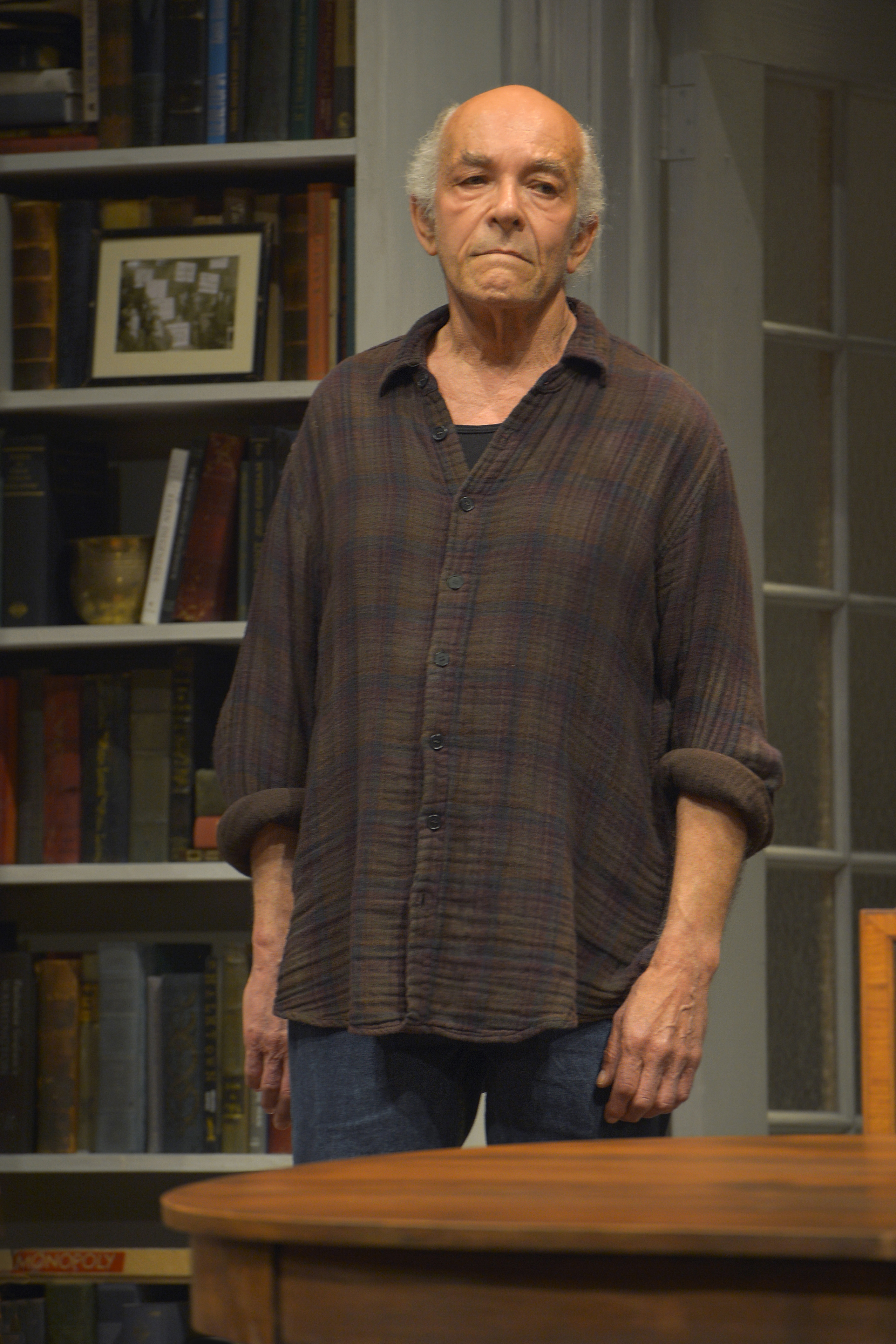
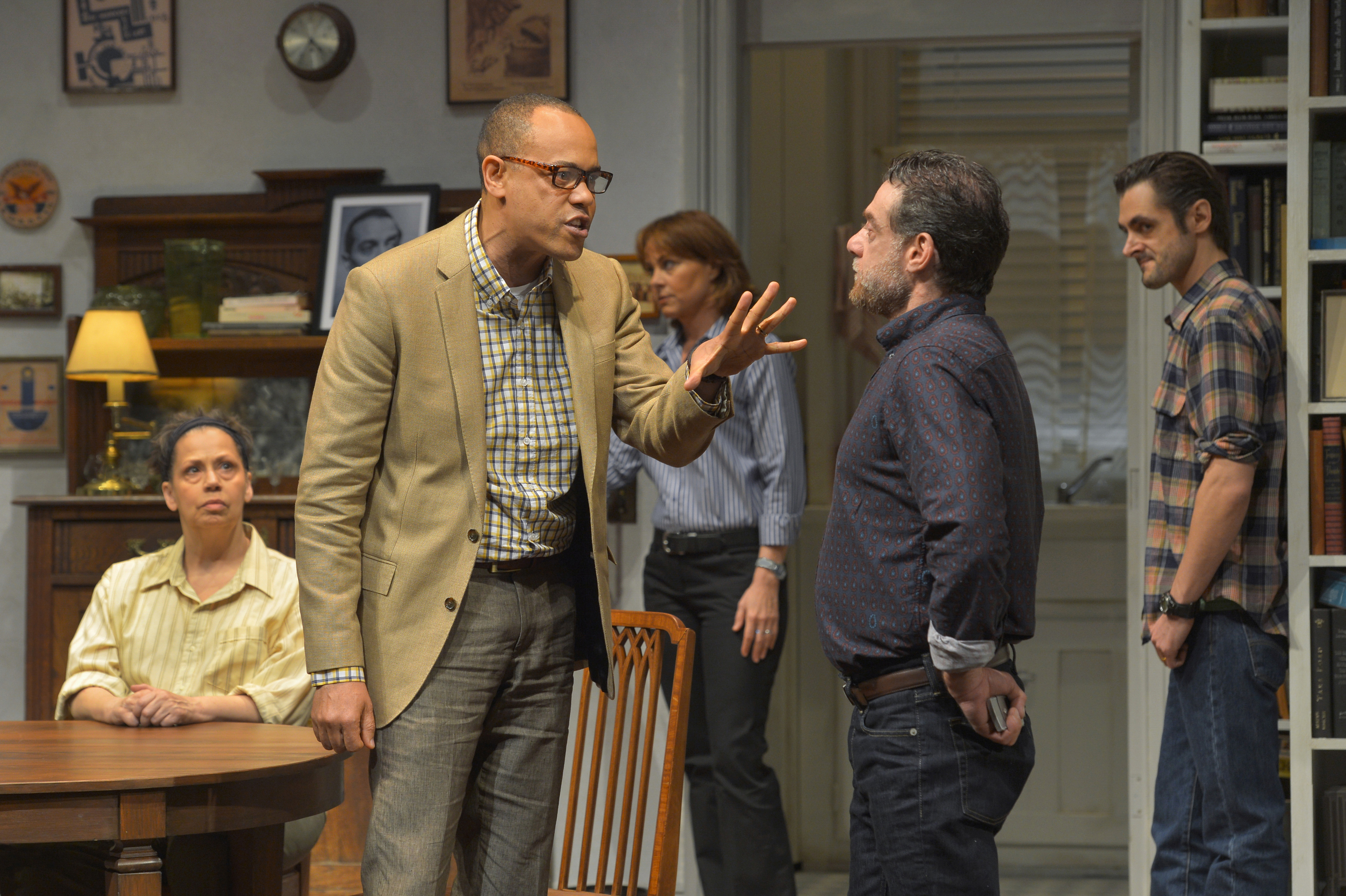
Emmy-nominated actor Mark Margolis (Gus) heads up the Marcantonio clan in the West Coast premiere of Tony Kushner’s The Intelligent Homosexual’s Guide to Capitalism and Socialism with a Key to the Scriptures, an epic family drama at Berkeley Rep. Photo courtesy of kevin berne.com

The Intelligent Homosexual’s Guide to Capitalism and Socialism with a Key to the Scriptures: Drama by Tony Kushner. Directed by Tony Taccone.Berkeley Repertory Theatre,Roda Theatre, 2025 Addison St., Berkeley. (510) 647-2949 or www.berkeleyrep.org   May 16-June 29,2014

West Coast premiere. [rating:3] (3 of 5 stars)

The Intelligent Homosexual’s Guide to Capitalism and Socialism with a Key to the Scriptures is a stunning ‘kitchen-sink’ drama.

In a recent interview of Tony Kushner by Chad Jones for the SF Chronicle, Kushner suggested that this play is his attempt to write a “well-made kitchen-sink drama.”  The term ‘kitchen-sink’ owes its derivation to a 1957 3-act play entitled The Kitchen that played in the Royal Court Theatre in London written by the noted Arnold Wesker. During the 50s and 60s London playwright’s, termed the angry young men,wrote plays about everyday working class characters. This included John Osborne who wrote Look Back in Anger (1956).

Wesker’s play is about the disintegration of a Communist Jewish family whose ideals are shattered as the world around them is radically changing. In that play the matriarch is the one with the strong Socialist convictions while the patriarch vacillates. Their son and daughter are mirror images of the parents.

It seems apparent that Tony Kushner has been influenced by The Kitchen. Even so, he is a unique writer with a plethora of theatrical awards including Pulitzer Prize and the seminal Tony Award winning Angels in America. The kitchen-sink influence extends to the play’s construction written in three acts with act one setting the premise(s), act two leading to a climactic confrontation and a third act denouement. The comparisons end there as five of Kushner’s characters are homosexuals. If is intended as an extension/update of his seminal Angels in America it is redundant and deficient. Never-the-less, even though it is pretentious to run for three hours and 45 minutes, he has created a unique powerful drama that is being given a stunning performance under Tony Taccone’s tight direction.

In Kushner’s play the family is Italian Catholic and the widowed elderly patriarch Gus (Mark Margolis) is disillusioned with his past and present life and wishes to commit suicide. He has unsuccessfully tried once, and now his family has arrived home to try to dissuade him from doing it again. In the past he was a Communist Union organizer on the waterfront and has been able to provide well for his family. Home is a New York City brownstone that is now worth millions of dollars.

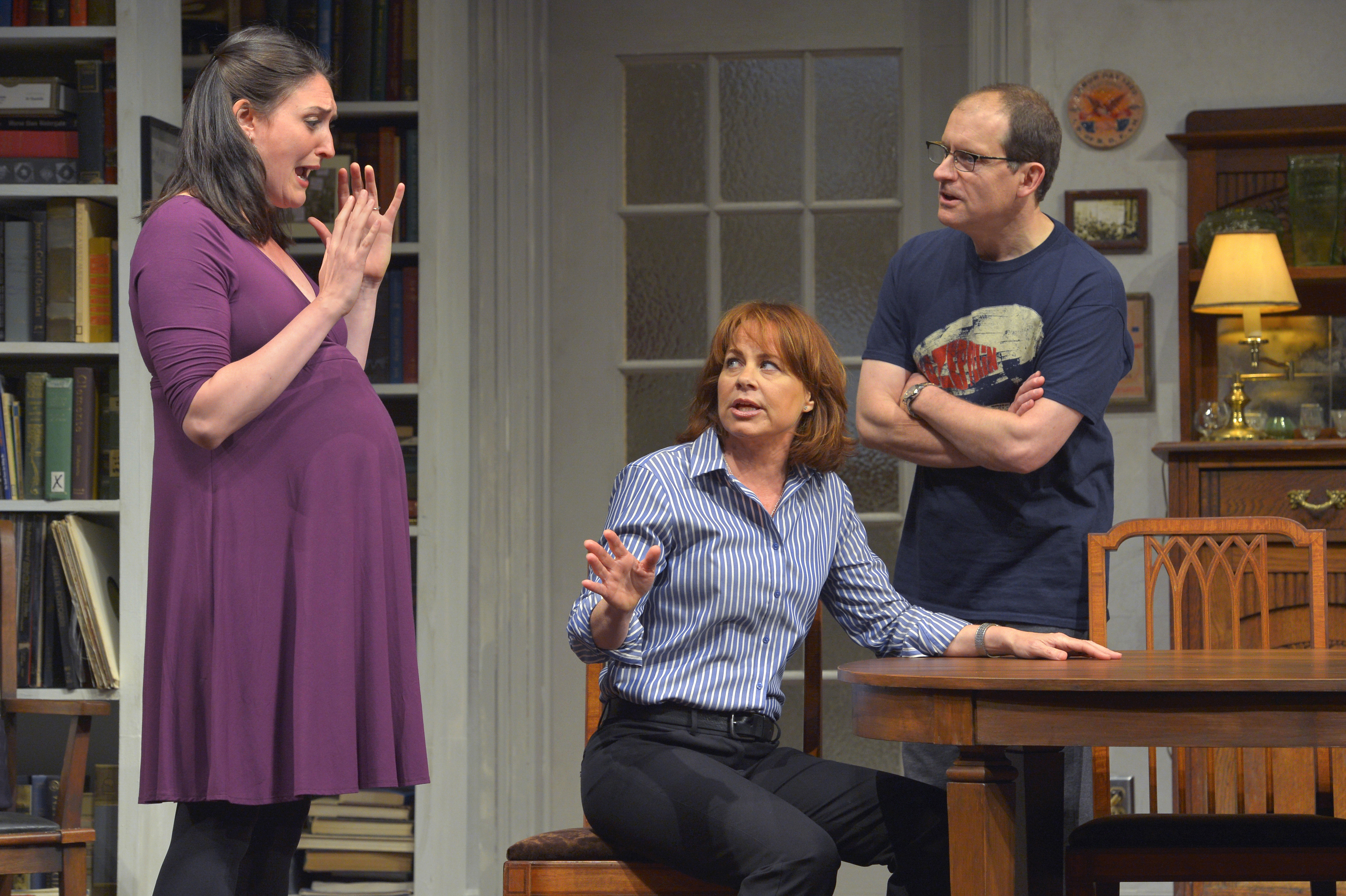
Gus’s has three children. The eldest boy Pill (Lou Liberatore)has failed to get his doctoral degree is married to Paul (Tyrone Mitchell Henderson). The daughter called Empty (Deidre Lovejoy), lives with her lover Maeve (Liz Wisan) who is 8 months pregnant presumably by artificial insemination. The decision to live as a lesbian apparently came late in life and her estranged husband Adam (Anthony Fusco) lives in the basement of the home. Vito (Joseph J. Parks), the younger son, is a blue-collar contractor and has strong belief in the capitalistic system. Aunt Clio (Randy Danson) is Gus’s sister is mostly a sounding board for the other characters and has been looking  after Gus. She is important to play because of her belief in Christian Science and has a copy of Mary Baker Eddy’s pamphlet “Science and Health with Key to the Scriptures.”Another major reference within the play is to George Bernard Shaw’s “The Intelligent Woman’s Guide to Socialism and Capitalism” as indicated by the grandiloquent title of Kushner’s play.

Liz Wisan (Maeve), Deirdre Lovejoy (Empty), and Anthony Fusco (Adam)

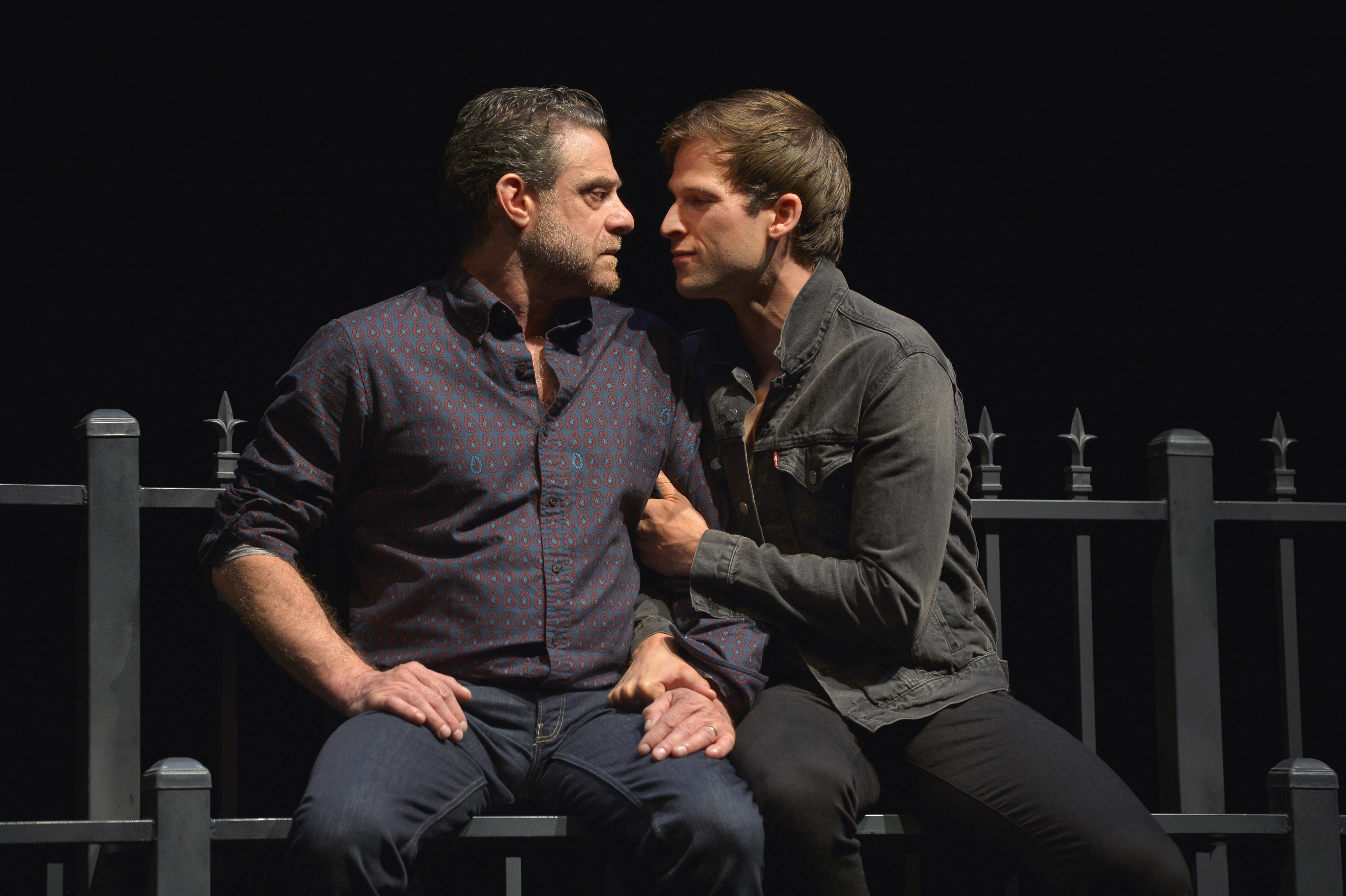
The pivotal non-member of the family is a street smart hustler Eli (Jordan Geiger) that Pill loves and has been paid thousands of dollars for his services thus threatening the marriage of Paul and Pill. His return to the stage in the final scene is both touching ambiguous.

Kushner is a master at amalgamating everyday action with weighty ideas and this play is further proof of his ability. However you may miss many of those intricacies since Kushner and Taccone allow extended scenes where the characters talk over each other creating pandemonium rather than understanding.

Individually and collectively the actors do great justice to Kushner’s dialog. Mark Margolis leads the way with his portrayal of Gus’s disillusionment that we later learn is infected with guilt. Tyrone Mitchell Henderson dominates the stage with his anger beginning with the first scene that extends deep into the play. Lou Liberatore  as the love smitten ineffectual Pill is at his best in a quiet scene with Margolis. Deidre Lovejoy has a difficulty creating therole of Empty probably because Kushner has not fully defined that character. Liz Wisan  as the very pregnant Maeve could not give a better performance.  Jordan Geiger under-plays Eli to perfection and earns his spot in the final scene of the play. Joseph J. Parks as the angry Vito is a bit excessive but necessary to

Lou Liberatore (Pill) and Jordan Geiger (Eli) portray lovers

create conflict.

Berkeley Rep has mounted Kushner’s opus (almost opus) on a fantastic two level set by Christopher Barecca that alone is worth a visit to the Rhoda Stage but not at the expense of the extended running time of three hours and 45 minutes.

CAST: Tina Chilip (Sooze), Randy Danson (Clio), Anthony Fusco (Adam), Jordan Geiger (Eli), Tyrone Mitchell Henderson (Paul), Lou Liberatore (Pill), Deirdre Lovejoy (Empty), Mark Margolis (Gus), Joseph J. Parks (Vito), Robynn Rodriguez (Shelle), and Liz Wisan (Maeve)

CREATIVE TEAM: Christopher Barecca (scenic designer), Meg Neville (costume designer), Alexander V. Nichols (lighting designer), Jake Rodriguez (sound designer), and Julie Wolf (Music Consultant).

Kedar K. Adour, MD

Courtesy of www.theatreworldinternetmagazine.com