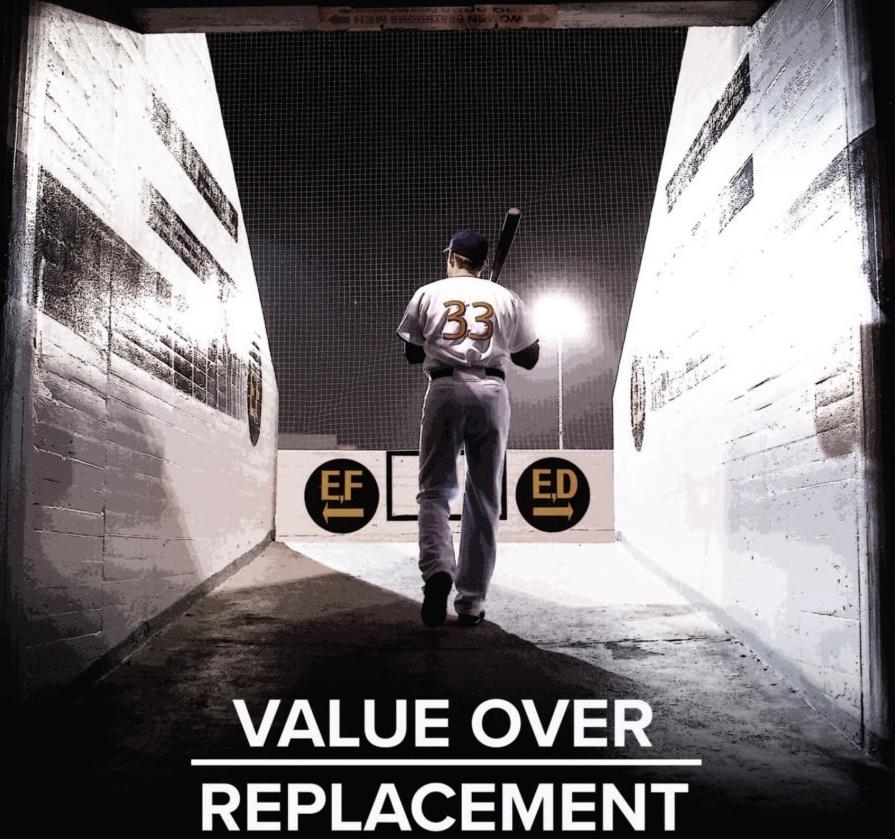
performance + consequence—and the stories we tell to justify both
Quiet, sharp observeations about ambition, ethics, and the uneasy realization that effort alone may not be enough.
Imagine a career spent just outside the spotlight—close enough to feel it, never close enough to own it. Now imagine the slow temptation to close that gap, not through persistence, but by bending the rules that define the game.
That’s the entry point. But this moves quickly past scandal into something more unsettling and equivocal: how we construct stories that allow us to live with our choices.
Story Line
Edward “Chip” Fuller is a former professional baseball player who never quite made it. Now a drive-time host on KSFP Sports Radio, he lives in the long shadow of what might have been.
When he learns his name will appear on a list of players linked to performance-enhancing drugs, the fallout doesn’t explode—it seeps in. Conversations with colleagues, listeners, and family begin to reshape the narrative.
As Chip revisits his past, the question shifts. It’s no longer just what happened, but how he explains it. Each version edges slightly closer to justification.
What emerges is not a confession, but a reckoning—one that stops short of resolution.
What’s in a Title?
Value over Replacement comes from a baseball metric: how much better a player is than a replaceable substitute. It’s a cold calculation—and that’s the point.
(Value Over Replacement Player is a complex baseball statistic that measures a player’s performance relative to an imagined “replacement player,” who is an average fielder and slightly below average hitter.)
Here, the idea lands beyond the field. Chip’s struggle isn’t just about performance; it’s about relevance. To fall short is to risk becoming interchangeable.
In that light, the temptation to enhance performance isn’t just about winning. It’s about proving you matter.

The Radio Booth: Performance as Identity
Particularly effective is Chip’s role on KSFP Sports Radio.
On-air, he is decisive, controlled, authoritative. The voice is confident because it has to be. Sports media doesn’t reward hesitation. Off-air, that certainty unravels.
Woody Harper as Chip Fuller makes that divide unmistakable. Behind the mic, his delivery is tight and assured; away from it, small fractures appear—hesitations, recalibrations, moments where the narrative slips. It’s a precise, controlled performance that reveals how much of Chip’s identity is constructed.
Across from him, David Kudler as Dan Drake anchors the world of the station. Practical, composed, and unshaken, he embodies the expectation of certainty. His steadiness sharpens the contrast as Chip begins to lose control of his own story.
The KSFP studio becomes a stage within the stage—where truth is shaped, repeated, and made to sound convincing. Until it isn’t.
Ambition rarely announces itself as compromise—it arrives as justification..
Ensemble Performances
This production is carried by a disciplined, well-balanced ensemble, led by a performance that understands the power of restraint.
Woody Harper as Chip Fuller anchors the play with quiet precision. Rather than pushing emotion outward, he lets it surface in fragments—pauses, hesitations, subtle shifts in tone. Confidence and doubt coexist, never fully resolving.
David Kudler as Dan Drake provides the essential counterweight. Grounded and direct, his presence gives the radio scenes their structure and tension.
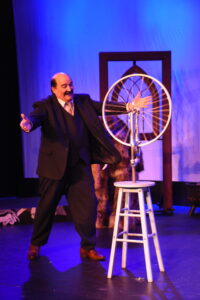
Production photos from Value Over Replacement
The supporting ensemble adds depth and clarification.
Rachel Ka’iulani Kennealy (Emily Fuller) brings emotional clarity and restraint, while Amelia Stafford (Alex Fuller) introduces a generational perspective that raises the stakes without overstating them.
Meanwhile, Eric Forst, David Schiller, and Jennifer Reimer move fluidly between roles, including younger counterparts that echo and reframe Chip’s story. These transitions reinforce the idea that identity is not fixed—it is revised over time.
Direction
Director Ken Sonkin keeps the production focused and controlled.
The staging is clean, pacing deliberate. Nothing is forced — sometimes almost to a fault, as a few moments feel like they’re waiting to crest but never quite do.
Unsettling Final Thoughts
Value Over Replacement doesn’t offer easy answers, and it’s stronger for it.
Instead, it shows how compromise rarely arrives as a single decision. It builds slowly, through small adjustments, reasonable explanations, and the quiet need to make sense of ourselves.
What lingers is not judgment, but awareness of how complex life choices can be. And the heretical conclusion that sometimes the contract with the devil is worth it.
Tickets Available Now
Ross Valley Players
The Barn Theatre, Ross
March 27 – April 12
Tickets: rossvalleyplayers.com
(707) 523-4185
Includes intermission