



Non-stop comedic chaos — brilliantly executed.
There is an old theatrical saying: The show must go on.
In Peter Pan Goes Wrong, that turns out to be less an inspirational thought than a threat.
The Cornley Drama Society sets out to perform Peter Pan. They have the actors, costumes, scenery and flying equipment. What they don’t seem to have is any reasonable chance of reaching the final curtain without disaster.
And that is exactly what makes it so funny.
Director Susi Damilano keeps the production moving at a terrific pace. Missed cues, rebellious props, disastrous flying and increasingly desperate performers pile one catastrophe upon another.
The ensemble commits completely to the madness. Ezra Reaves, as Jonathan playing Peter Pan, tackles Peter’s increasingly unreliable airborne adventures with wonderful determination. Jomar Tagatac, as Chris, president of the Cornley Drama Society, grows increasingly desperate to maintain control of a production that refuses to cooperate.
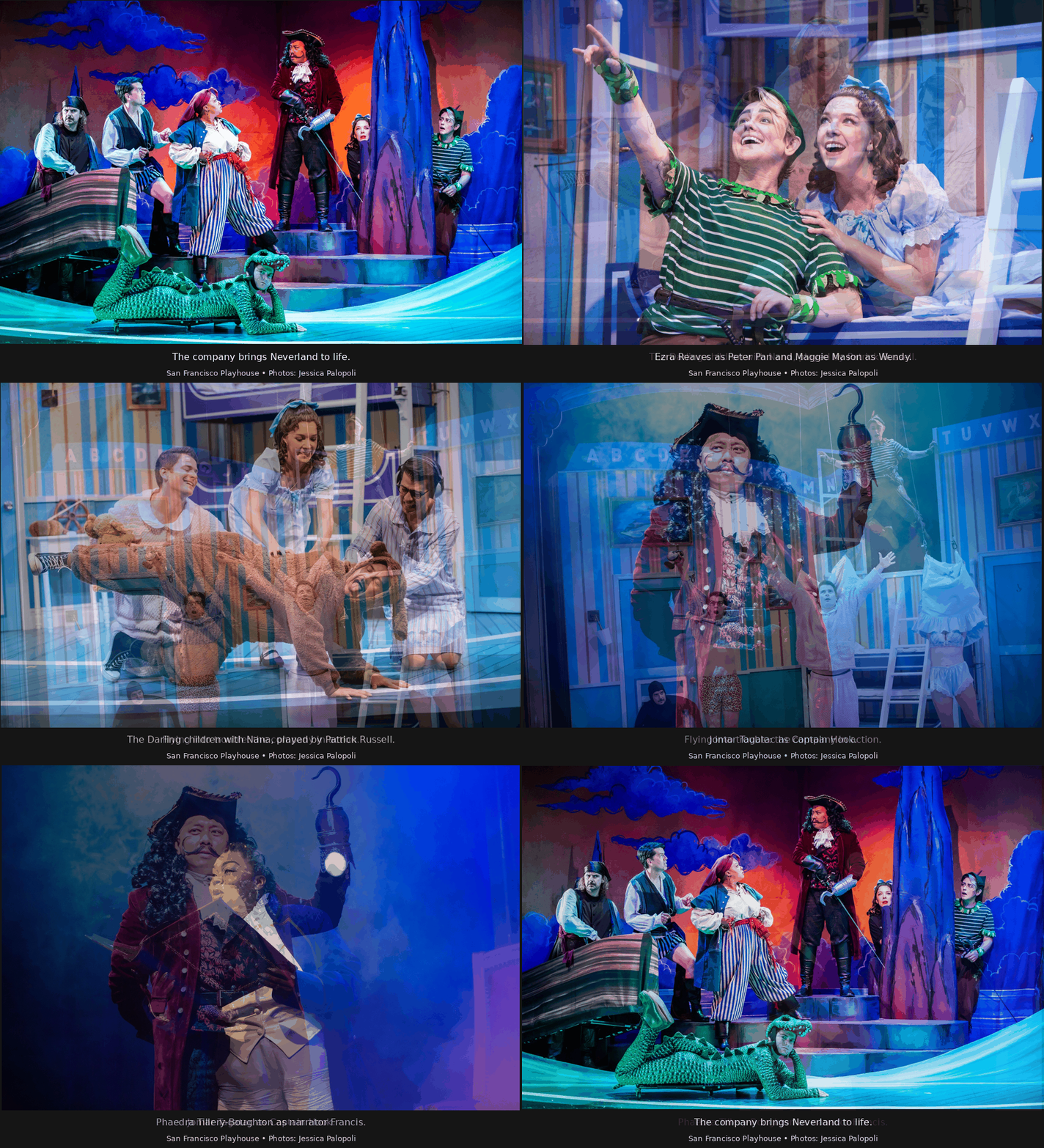
The company understands the essential rule of farce: Never play the joke. Play the disaster.
The physical comedy is superbly controlled.
Erin Rose Solorio’s choreography, Bridgette Loriaux’s flying work, Dani O’Dea’s fight and stunt direction, and Patrick Russell’s clowning expertise combine with Damilano’s direction to make catastrophe look spontaneous.
Actors fall, collide, fly and recover. Props misbehave. Technical cues become jokes.
Every apparent mistake has to be the right mistake.
The flying is especially funny. Instead of hiding the machinery and making Peter’s flight look effortless, this production turns getting him into the air — and back down again — into part of the comedy.
And then there is Cody Tellis Rutledge’s ingenious three-segment revolving set.
It becomes another member of the cast.
Doors, walls, levels and moving sections become part of the comedy as the set carries us through Neverland.
By the finale, it seems to take over the production.
It begins turning faster. Then faster. Then faster still.
Sitting in the audience, I began wondering just how far they were going to take it.
For a few wonderful moments, it seemed entirely possible that the set was going to spin the actors right off the stage and into our laps.
It is a wonderfully funny finish to an evening in which the cast, physical comedy and stagecraft work together with remarkable precision.
The more everything goes wrong, the funnier it gets.
Peter Pan Goes Wrong is fast, physical, inventive and wonderfully performed. It makes theatrical incompetence look effortless.
Go. Laugh. And enjoy watching everything go spectacularly wrong.
PETER PAN GOES WRONG
San Francisco Playhouse
By Henry Lewis, Jonathan Sayer and Henry Shields
Directed by Susi Damilano
Through November 28, 2026
Performance Schedule:
Tuesdays and Thursdays: 7:00 PM
Wednesdays: 2:00 PM & 7:00 PM
Fridays: 8:00 PM
Saturdays: 2:00 PM & 8:00 PM
Sundays: 2:00 PM
San Francisco Playhouse
450 Post Street
San Francisco, CA
Tickets: $52–$145
Recommended if you enjoy fast-paced farce, physical comedy and theatrical mayhem.



Addiction is serious. Recovery is hard. And, surprisingly, both can be very funny.
Sean Daniels’ The White Chip proves it. Sharp, candid, very funny and ultimately hopeful, Marin Theatre’s production finds comedy within a serious journey through addiction and recovery.
At the center is Steven McAlister, a successful theatre director whose life is increasingly overtaken by alcohol. Benjamin Clark gives Steven an appealing combination of participant, storyteller and straight man, guiding us through his increasingly chaotic life while Lyndsy Kail and Danny Scheie create the world around him.
And they are terrific.
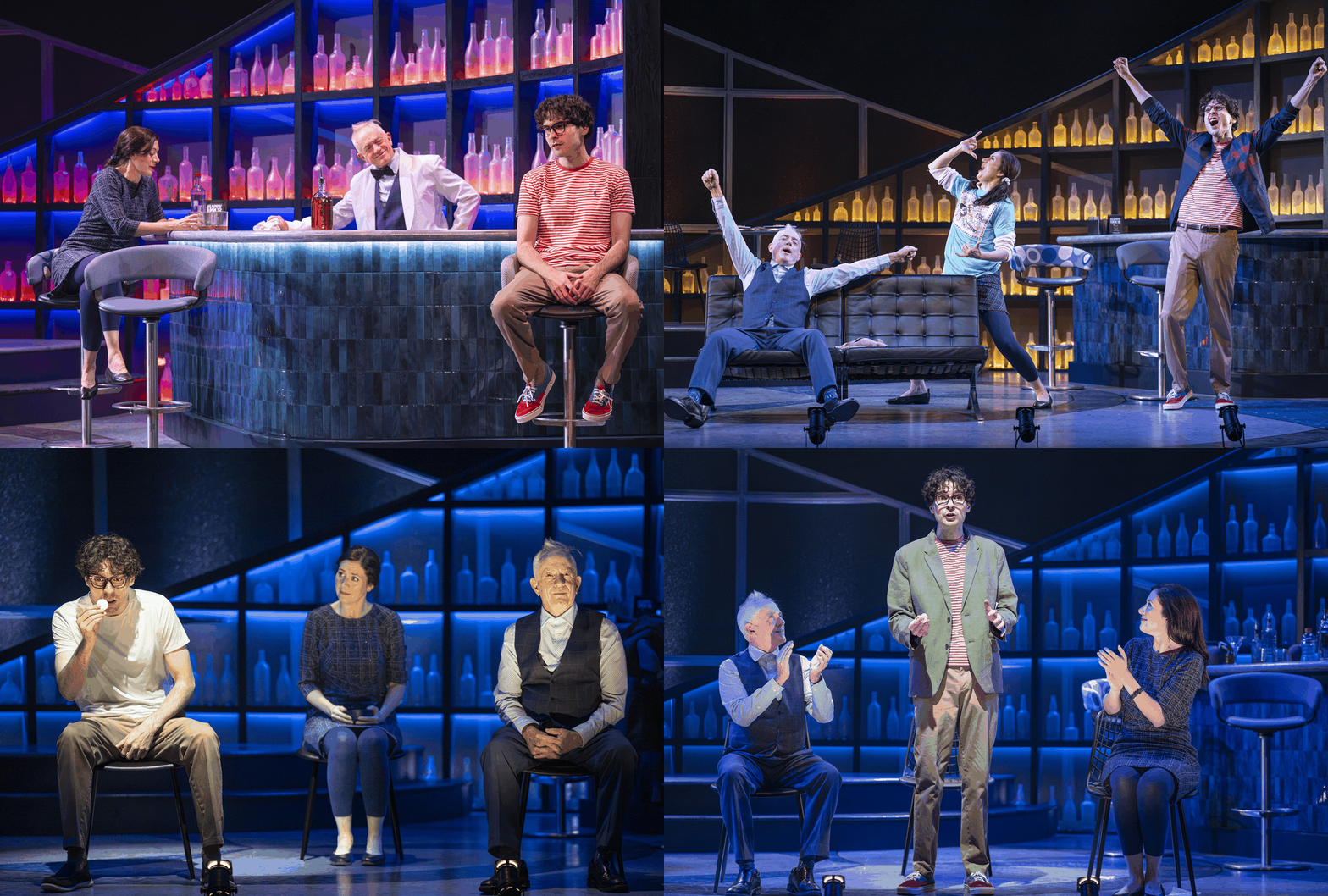
Benjamin Clark, Danny Scheie and Lyndsy Kail in The White Chip. Photos: David Allen / Marin Theatre.
Kail and Scheie portray a rapid succession of people, situations and even Steven’s states of mind. A change in voice, posture, expression or movement can instantly create another character. Their miming is especially effective—and frequently hilarious.
Clark anchors it all. His relatively straight delivery gives Kail and Scheie room for the comic fireworks while keeping Steven’s increasingly serious journey grounded.
The laughs are part of the truth.
What particularly impressed me was the stagecraft.
Much of The White Chip requires split-second coordination among actors, sound and lighting. A gesture, sound cue and lighting change have to hit at precisely the right moment. They do. Every time.
At times the production feels almost choreographed, with actors, sound and light working as a single unit. Steven’s memories, confusion and changing states of mind appear around him, then disappear just as quickly.
Director Lance Gardner keeps everything moving while preserving the human story underneath the theatrical invention. His connection to the material is personal—Gardner will celebrate 20 years of sobriety in 2027—and that understanding comes through without overwhelming Daniels’ comedy.
Daniels’ semi-autobiographical story captures one of addiction’s crueler tricks: Steven is smart, talented and remarkably good at explaining his drinking to himself. One drink makes sense. The next can be explained. Eventually the explanations become part of the problem.
Then comes the white chip. In Alcoholics Anonymous, it can mark 24 hours of sobriety—or simply the desire to stop drinking. For Daniels, that small chip becomes a powerful symbol of the possibility of change.
Sometimes changing your life starts with getting through today.
Clark gives us the man trying to do exactly that. Kail and Scheie brilliantly create the world around him. Gardner and his production team make that world appear and disappear with remarkable precision.
Excellent performances and outstanding stagecraft make The White Chip terrific theater.
Info & Tickets
The White Chip
Marin Theatre
397 Miller Avenue, Mill Valley, CA
Through September 20, 2026
Tickets: MarinTheatre.org
Box Office: 415-388-5208
A Greek island, a Sonoma summer night, three possible fathers, a wedding — and ABBA. What could possibly go wrong?
MAMMA MIA! arrives at Transcendence Theatre Company’s Field of Dreams with one enormous advantage.
We already know the music.
But knowing the songs isn’t enough. The trick is making us want to hear them all over again.
Transcendence does much more than that.
This is a virtually flawless production — terrific voices, exhilarating dancing, comedy, romance, heart and a company that seems to be having every bit as much fun as the audience.
From beginning to end, it works.
A Greek island may be the setting. Under the Sonoma sky, the Field of Dreams feels pretty close.
The Story
Sophie is about to be married on a Greek island. There’s only one problem.
She doesn’t know who her father is.
After discovering her mother Donna’s old diary, Sophie secretly invites three possibilities from Donna’s past to the wedding.
All three show up.
What follows is a joyful collision of old romances, new relationships, friendship, family — and ABBA.
The women provide the heart
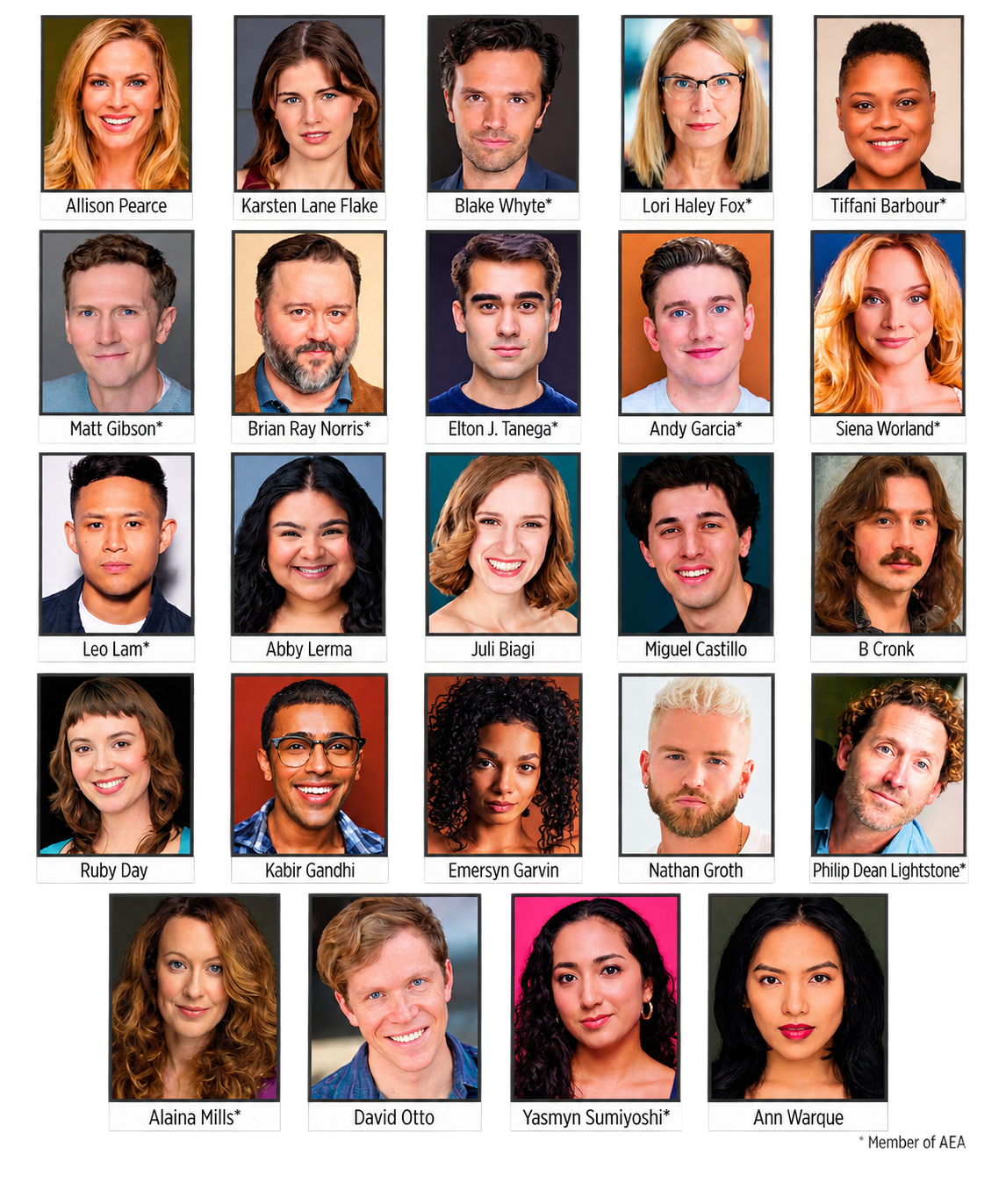
Allison Pearce gives Donna Sheridan strength, humor and vulnerability, while Karsten Lane Flake makes Sophie appealingly confident and uncertain at the same time.
Then Donna’s old friends arrive.
Tiffani Barbour brings glamour and terrific comic timing to Tanya, while Lori Haley Fox is a delight as Rosie.
Fox has a special connection to MAMMA MIA!: she was in the original London cast, later performed on Broadway and appeared in the movie.
That’s not merely a résumé credit.
That’s practically ABBA citizenship.

And the men are every bit as good
The three possible fathers aren’t merely there to provide the mystery.
They are terrific.
Each creates a distinct character, each finds the comedy without forcing it, and together they give the story much of its warmth.
There isn’t a weak link here.
The women provide the heart. The men provide the mystery. And this cast provides the magic.
Thank them for the music
Director Tony Gonzalez knows MAMMA MIA! from Broadway, touring and Las Vegas productions. Choreographer Monica Kapoor also performed in the Broadway production, and Music Director Susan Draus spent four years music-directing its Broadway National Tour.
That experience shows.
And then there are the songs.
“Dancing Queen,” “Super Trouper,” “SOS,” “Take a Chance on Me” and “The Winner Takes It All” are everything we want them to be.
But several numbers go beyond simply being good.
They stop the show.
“Money, Money, Money” is one. “Voulez-Vous” is another.
The combination of voices, choreography, musicians and sheer theatrical energy turns familiar songs into genuine production numbers.
The live band drives the score, while the ensemble fills the stage with infectious movement.
Soon feet are tapping.
Then shoulders.
And sometimes the audience simply erupts.
By the finale, sitting still seems almost unreasonable.
And apparently, neither was stopping.
After the finale brought the audience to its feet in a standing ovation, the entire cast came roaring back onto the stage.
Not simply for a curtain call.
For two more rousing, full-production numbers.
The energy went right back through the roof.
It was the perfect exclamation point on the evening.
The show was over. The celebration wasn’t.
Broadway meets Wine Country
And Transcendence has one advantage no ordinary theater can reproduce.
Sonoma.
You arrive early. You picnic. The sun begins to disappear. Then the lights come up and Broadway meets Wine Country under the summer sky.
But on this night, even that description seems inadequate.
The picnic, the setting, the music, the performances and the production all become part of one experience.
You’re not simply going to a show.
You’re having a total theatrical evening.
You don’t leave MAMMA MIA! quietly.
What it adds up to
Beneath all that ABBA is a warm story about mothers and daughters, fathers and children, old friends, old loves, and families that don’t always form the way we expect.
Transcendence wraps it in a production in which virtually everything works — the principals, the ensemble, the band, the choreography, the comedy, the staging and that incomparable Sonoma setting.
There are good productions.
There are terrific productions.
And every once in a while, everything comes together.
This is one of those times.
Sometimes theater challenges us.
Sometimes it simply reminds us how good it feels to laugh, sing along and enjoy the ride.
Take a chance on it.
How to see it / Get tickets
Transcendence Theatre Company
MAMMA MIA!
August 13–30, 2026
Thursdays through Sundays
Field of Dreams
Sonoma, California
Pre-Show Picnic: 5:00 PM
Performance: 7:00 PM
Tickets: $44–$165
Gold, Premium and General Reserved seating available
Tickets & Information:
TranscendenceTheatre.org
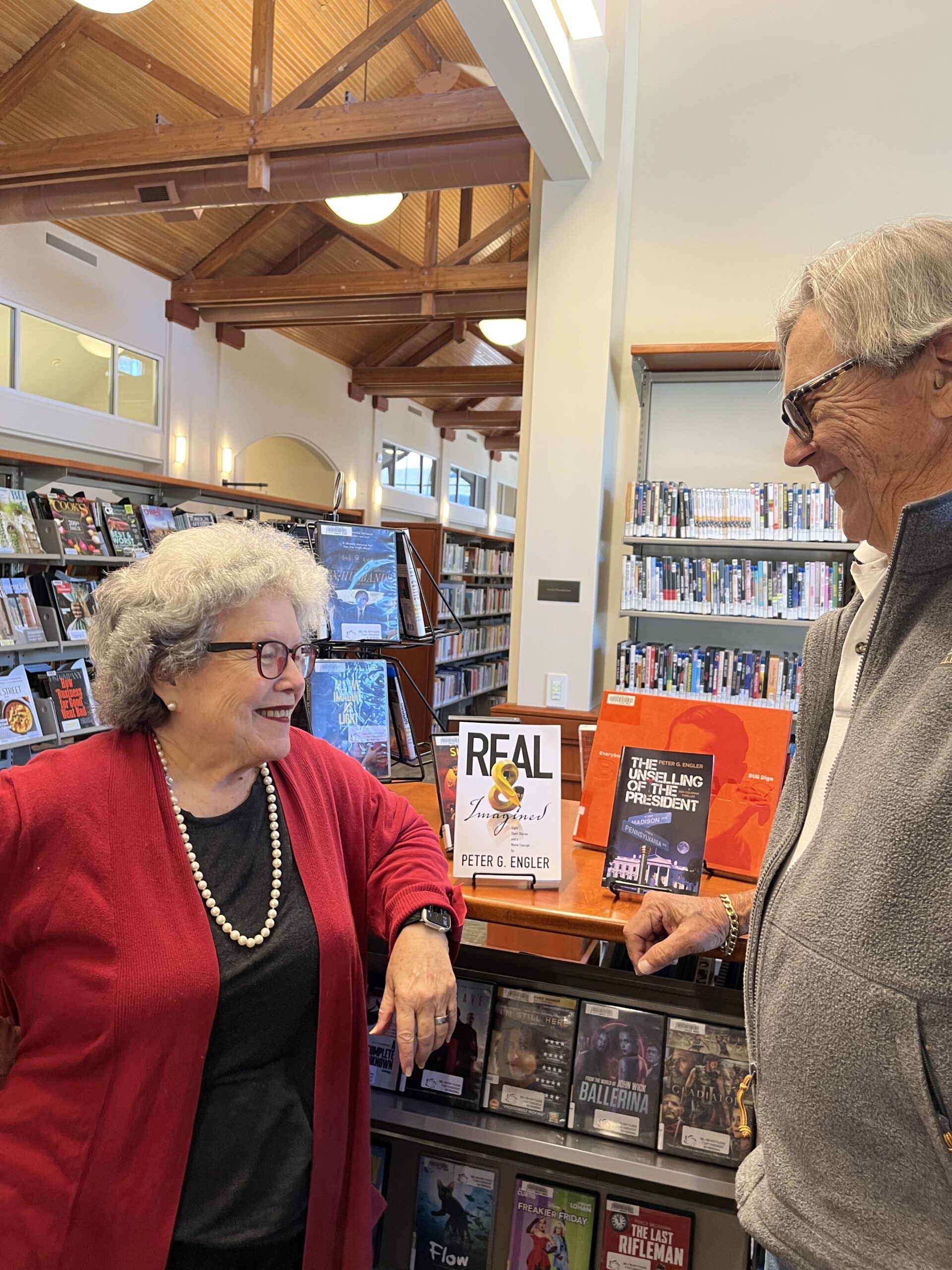 Peter Engler and The Wonderlady, Ruth Schwartz, chat in the Belvedere Tiburon library on April 2, 2026, with his books in the background. (Jennifer Bloom via Bay City News, software enhancement from low-resolution image)
By WOODY WEINGARTEN, Bay City News
IF RUTH SCHWARTZ GETS STUCK while midwifing a client’s manuscript on its way to becoming a book, she climbs into an alternate persona — The Wonderlady.
Before long, problem solved.
Playfully.
“But the real Wonderlady persona,” notes the smiling Novato resident, isn’t some creature with superpowers or a magic wand, it’s “the power of intention.” Her intention is to always find a solution to any publishing problem.
“If there’s something really off, I sit with it until I understand it … My overall philosophy is that everything is perfect just the way it is, but subject to … new possibilities, with the idea of making it even better.”

Her husband, Curt Kinkead, birthed the whimsical Wonderlady concept in 1992, after she’d found herself “embarrassed, frankly, to tell my parents about my not being able to pay my bills.” The next day, in the mail, she miraculously found a check from her father for the exact amount of money she was short. He, a real estate broker, had decided — apparently without knowing about her financial peril — to share a commission.
From that moment on,” she says, “Curt insisted that I had created money out of nothing, and if I could do that, I was clearly The Wonderlady. So, when ‘magical’ things happen, he says (they’re) due to The Wonderlady Effect.”
When polishing, detailing, or formatting a book that’ll be published and sell independently on Barnes & Noble, Amazon, and countless other sites, Schwartz prefers instead of magic to lean on a pair of reliable, grounded wingmen: decades-long expertise and a nose to the proverbial grindstone.
She nonetheless enjoys being mischievous. “Whenever I’ve pulled some rabbit out of a hat and clients say, ‘How did you do that?’ sometimes I tell them, sometimes I don’t.”
Working her wonders
The Wonderlady frequently smiles. In the flesh and on Zoom. Even when no one can see it. She’ll turn 81 in June. “At my age,” she says, “If it’s not fun, I don’t want to do it.”
Potential clients who check out her website are apt to soon lift her onto a book-shepherding or consulting pedestal. Susan Kirsch of Mill Valley is an example. Her new book, “Simply Go*d,” is to be the first of six. “I think Ruth is a Wonderlady,” she says, “because of her extensive knowledge of the publishing industry and because she’s a wonder for her clients. She’s a wonder for me by quickly having changed my thinking from writing one book to writing an entire series.”
All of it happens within the confines of a one-woman cottage industry with a little help from her friends, a stable of designers.
Now, because she’s so busy she’s had to turn away clients, she’s also started an advisory service, where she can “tell people how they can do things by themselves.” That, she says, will let her handle more clients simultaneously — and permanently shelve any plans to retire.

Generally, Schwartz’s clients are seniors, drawn to her because “both sides are older.” Some of her clients are “in their 90s. The youngest is in their 50s. People who are self-published are older because they have time and money.”
Word of mouth is her best sales tool. She contends that “95% are referrals or repeats, people who come back to me with multiple books.”
The Bay Area Independent Publishers Association, where she’s vice president and the person who regularly gives the most answers to questions and shares the most information during monthly Zoom meetings, is her biggest source of clients.
Peter G. Engler, who lives in Belvedere, was one of her first clients, when he was a novice author. His praise is glowing: “She was instrumental in my completing my novel, ‘The Unselling of a President,’ and we also worked together on my short-story book, my job seekers’ manual, and several table-top legacy books. She’s terrific to work with, very energetic, very knowledgeable.”
“If there’s something really off, I sit with it until I understand it … My overall philosophy is that everything is perfect just the way it is, but subject to … new possibilities, with the idea of making it even better.”
Ruth Schwartz, The Wonderlady
Much of Schwartz’s work is done via email. Because she can. And because it’s way less stressful.
Many her clients live in Marin, but she’s also finished assignments from all over the Bay Area, Chicago, Florida, Montana, and a smattering of other places.
Hungering to help others
Shepherding manuscripts is only a part of Schwartz’s busy life. Along with Kinkead, she founded Respecting Our Elders, a rescue food service she says has delivered to seniors and others of limited means “500 pounds of quality, edible food every day since the organization began in 2005, for a total of almost four million pounds.”

Hoping to spread their concept, they just finished an 82-page book that details their “different kind of model from food banks or other fresh food rescue organizations” — “The Best Solution to Hunger in America: How to Set Up and Run an All-Volunteer Community Food Rescue Organization.”
Kinkead, meanwhile, has taken about a quarter of a million people out to cruise boats to watch whales, paddled a canoe around the world, and published “Secrets and Pleasures,” which Schwartz describes as “an erotic novel with lots of sensual information to help people have better sex lives.”
Schwartz’s first job in the publishing industry was with the University of California Press, from ’68 to ’74. She later worked for Design Vectors, a graphic design and marketing firm that dealt with major corporations like Bank of America, PG&E, and Pacific Telephone. She didn’t consider becoming a book midwife until print-on-demand — through which an author can have a book published one copy at a time — came onto the scene and she thought it perfect for her as a freelancer.
Clearly, she was right. She’s absolutely loved “taking a lot of words and turning them into a finished book.” The first one she shepherded, in 2014 for Robert W. Bone, was a memoir about being canned — “Fire Bone!” Her current workload covers a wide berth: a memoir, young adult fiction, nonfiction, and spy novels.
Schwartz has enjoyed having enough clients to let her reject some potentials. “I had one who came to me with a diatribe,” she recalls. “He was so angry that it came out on every page … I told him that I just couldn’t work on his book, that this was not a good fit for me.”
Usually, however, the idea of helping authors through, and educating them about, the self-publishing process is sufficient. “It fulfills a passion for me,” she says.
Still, she wouldn’t turn down a real-life magic wand if somebody handed it to her, says the book midwife, admitting there are times “when I’ve said I wish I had one.”
This article was first published on LocalNewsMatters.org, a nonprofit site supported by Bay City News Foundation http://www.baycitynews.org/contact/.
Sherwood “Woody” Weingarten, a longtime voting member of the San Francisco Bay Area Theater Critics Circle and the author of four books, can be contacted by email at voodee@sbcglobal.net or on his websites, woodyweingarten.com and vitalitypress.com.

Energy is the operative word at Peace, a concert at Zellerbach Hall on Sunday. Photo by Stefan Meekers.
By WOODY WEINGARTEN
It was hard to believe that 16 singers from South Africa could sustain the amount of energy they expended Sunday.
Their arms kept flailing, their legs kept pumping, and their butts kept shaking in the first half of a concert titled Peace at Zellerbach Hall in Berkeley. Solo voices reverberated with gusto as the rest of the all-black, three-time Grammy-winning Soweto Gospel Choir harmonized behind them, their bright, colorful costumes undulating and rolling to rhythms so complex and fast they sometimes impeded audience toe-tapping.=
The packed crowd was nevertheless drawn into the songs, clapping and singing along and shouting approval, as well as offering an almost universal standing ovation at the end of the 95-minute concert. Support seemed loudest when freedom songs became political and angry and reminiscent of anti-apartheid struggles and rallies — and the choreography was highlighted by outstretched arms with fists.=
It was amazing that just two men — a keyboard artist and a percussionist — could supply sufficient musical sound to be a booming but flawless foundation for the vocals, which ranged from the melancholy sweetness of “You’ll Never Walk Alone” to screeching like birds and animals.

Colorful backdrop complements costumes of Soweto Gospel Choir. Photo by Stefan Meekers.
The second half of the pre-Christmas concert was a contrast — soft, spiritual, and spunky — featuring gospel standards, snippets of four carols, and then ending with the rousing Leonard Cohen classic, “Hallelujah.”
Being present for the 23 musical numbers, which are sung in six African languages plus English, meant having a vibrant experience that dragged a listener emotionally back to the heyday of Nelson Mandela and Dr. Martin Luther King. It also became impossible to ignore the fact that Donald J. Trump is currently allowing only whites to emigrate from South Africa.

Members of Soweto Gospel Choir are in sync. Photo by Stefan Meekers.
The choir, which was formed in 2002 “to celebrate the unique and inspirational power of African gospel music,” stands, in effect, as a tribute, to Soweto township, a suburb of the city of Johannesburg. The area became world famous in June of 1976 with the Soweto rebellion, when up to 20,000 school children protested the government’s policy supporting education in Afrikaans, “the language of the oppressor,” rather than the native tongue. Police opened fire on the students.
In a sense, the Soweto Gospel Choir is a living monument to those who were killed.
Upcoming vocal performances at Zellerbach Hall in Berkeley include the San Francisco Gay Men’s Chorus in a holiday spectacular Saturday, Dec. 20 and An Evening with Kelli O’Hara on Saturday, Jan. 31.
Sherwood “Woody” Weingarten, a longtime voting member of the San Francisco Bay Area Theater Critics Circle and the author of four books, can be contacted by email at voodee@sbcglobal.net or on his websites, https://woodyweingarten.com and https://vitalitypress.com.
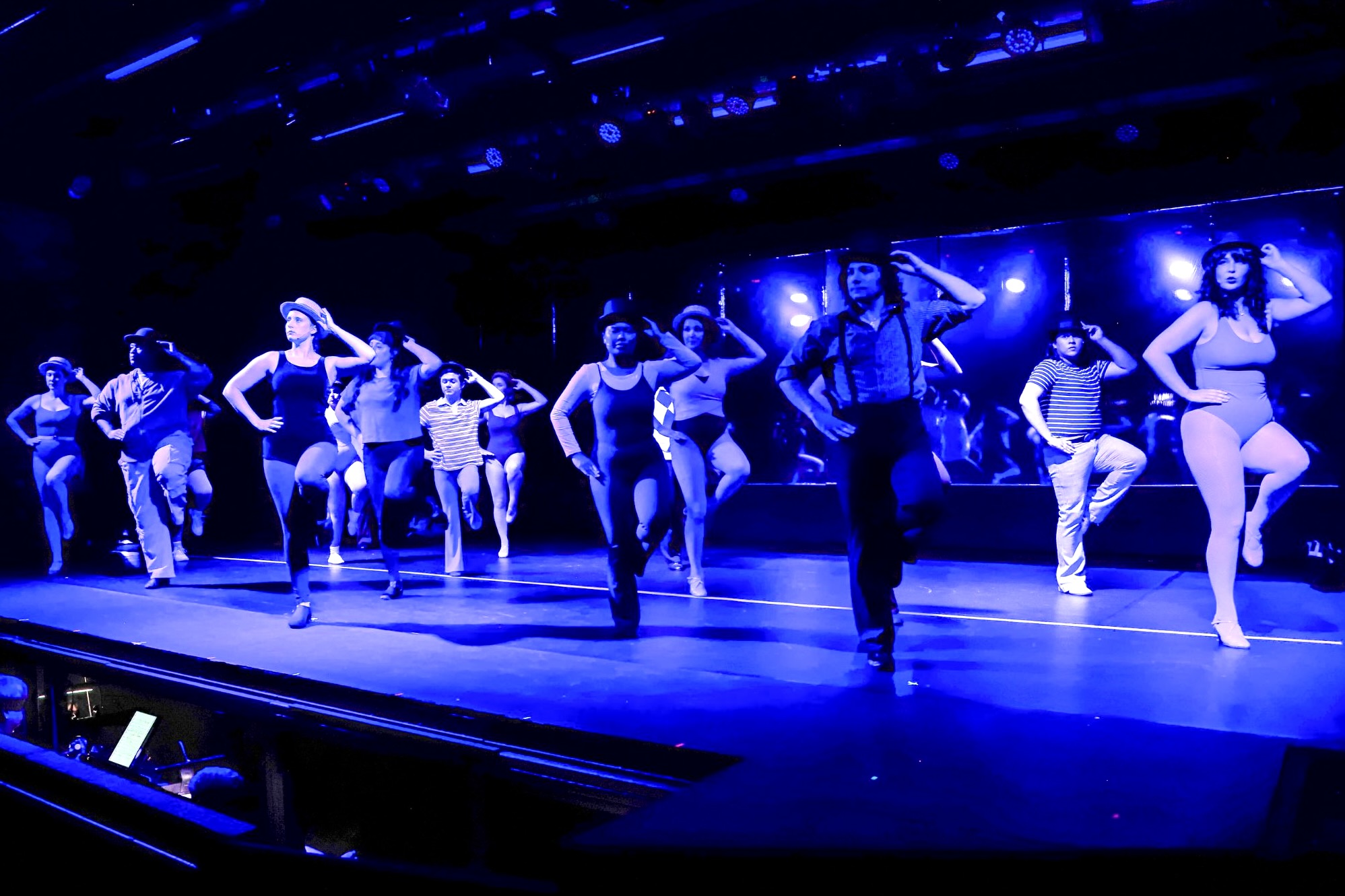
6th Street Playhouse’s “A Chorus Line” continues through Sept. 28 in Santa Rosa. (Photo by Eric Chazankin via Bay City News)
By Woody Weingarten, Bay City News
If you think the half-century-old dramatic musical “A Chorus Line” might be a little stale by now, think again.
The current 6th Street Playhouse production proves that the show, which goes behind the scenes at intense auditions for a musical, is as effervescent, touching and funny today as it was in its 1975 debut and record-breaking 8,137 Broadway performances that followed.
Bottom line: The Santa Rosa show, onstage through Sept. 28, is good entertainment for geezers and Gen-Zers alike.
Yes, parts of the storyline don’t have the same impact now, including some “big reveal” moments by characters whose backstories involve coming out of the closet or suffering abuse as a child.
But the classic tunes by Marvin Hamlisch and lyrics by Edward Kleban (the songs ar bouncy and/or heartbreaking) could fit the voices of Audra McDonald or Taylor Swift.
The large multi-ethnic cast of performers with varied body types does better than OK with vigorous unison singing and synchronized dancing. Choreographer Hannah Woolfenden nicely coordinates the diverse group.
Director Lorenzo Alviso makes sure the timing is near-perfect, emulating original triple-threat director Michael Bennett, who conceived and choreographed the Pulitzer Prize, Tony and Obie-winning show.
The two-hour show begins with the company messing up requisite dance steps for laughs and voicing anxiety about making the cut in “I Hope I Get It.” It’s quickly followed by “I Can Do That,” a tricky novelty number by Mike (Diego Rodriguez), who displays great dancing chops.
Tracy Hinman’s eye-catching costumes and Noah Hewitt’s mood-changing lighting choices are notable. The seven-piece band in the pit under the direction of Ginger Beavers successfully captures the characters’ moods, only occasionally playing a bit loud, muffling a vocal or two.

Monique Borses plays Cassie in 6th Street Playhouse’s “A Chorus Line.” (Photo by Eric Chazankin via Bay City News)
Special solos include “The Music and the Mirror” sung poignantly by Cassie (Monique Barses); “What I Did for Love” and “Nothing” by Diana (Reilly Milton); and the angst-filled “Dance: Ten; Looks: Three by Val (Anna Vorperian).
Kudos also go to Sashas Holton, an understudy, as Sheila.
Tajai Jaxon Britten is consistent as Zach, the troubled director who must select four males and four females, from twice that number who are trying out.
If there’s a flaw in the production, it’s that it’s difficult to keep track of the numerous characters, a carryover from the original book by James Kirkwood and Nicholas Dante.
Imperfections, however, shouldn’t keep patrons from thoroughly enjoying this classic show. It has the trademark tall, movable mirrors at the back of the stage; slapstick bits like the wannabe who relates his childhood difficulties hiding frequent erections; and, of course, the delightful tap, ballet and jazzy dancing that characterize every chorus line.
6th Street Playhouse’s “A Chorus Line” runs through Sept. 28 at 52 W. 6th St., Santa Rosa. Tickets are $33 to $55.95 at 6thstreetplayhouse.com.
This article was first published on LocalNewsMatters.org, a nonprofit site supported by Bay City News Foundation http://www.baycitynews.org/contact/.
Sherwood “Woody” Weingarten, a longtime voting member of the San Francisco Bay Area Theater Critics Circle and the author of four books, can be contacted by email at voodee@sbcglobal.net or on his websites, https://woodyweingarten.com and https://vitalitypress.com.
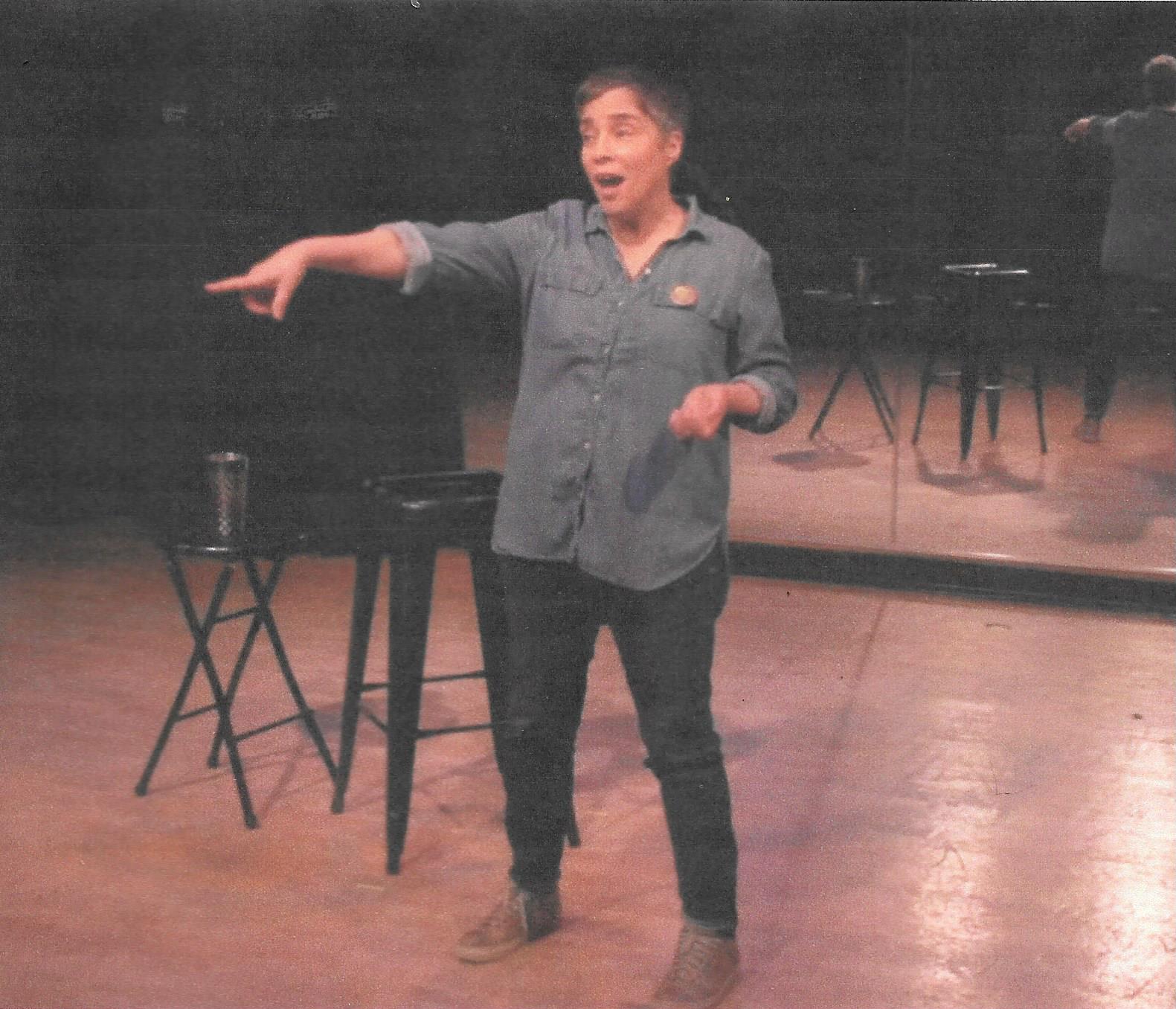 I hadn’t been to a live performance in a theater in over a year. Since I am totally vaxed and masked and meet the guidelines set by The Marsh, I decided to attend Marga Gomez’s Spanking Machine last night. Everyone obeyed the safety protocols throughout the performance.
Gomez is the perfect act to open at the Marsh to a live audience in over 18 months.
I’ve been following Ms. Gomez’ performances for decades. I believe I saw one of her earliest performances at Theater Rhinoceros. Even then, I thought she was unique and very funny. Also poignant and very physical in portraying various characters. Last time I saw her was at the Central Works theater in Berkeley. She was acting in King of Cuba by Cristina García, a full-length play in which she appeared as Fidel Castro. Since I hadn’t seen her in years, I wondered if I would recognize her. However, as soon as she came on stage in typical Castro military garb, I knew it was her. She has said that Spanking Machine would be her last solo performance. She wants to write for other actors. Hopefully she will appear in other people’s plays. Whatever she does, I’m sure she’ll be a huge success.
In Spanking Machine, Gomez as Gomez talks about friendship with Scotty the boy in the third grade of her Catholic school who became her best friend and the first boy she ever kissed which made them realize that they were both gay even at that young age. She knew it, but he didn’t- then. She relates their friendship as being very sweet, poignant and devilish in that they were bent on pranking big people. Spitting on them. Shooting them with water guns in subways, and doing other mean things children cook up to harass adults. They, of course, as kids, think they’re hysterically funny. However, if you misbehaved in class, you were threatened to be sent to the principal’s office to face the spanking machine. The children didn’t exactly know what this machine did but all feared it. Anyone who came back from suffering its effects did not want to talk about it for fear they would be sent back to face it again. It was a threat that hung over them all through their school years. Upstage on the set is a cardboard box with a black block letters on it that read: Spanking Machine. We think that we are going to actually see this device. But, of course, we don’t; however not seeing it, we can only imagine it as the traumatized children can.
She and Scotty lost contact with each other for 40 years until one day, she gets an email from him. Gomez, as Scotty, types out his email, verbalizing the text in the raspy asthmatic Cuban-accented voice she gives him.
Gomez creates her characters not so much physically- well, that too- but relies more on voice. He tells her he lives in Miami and invites her down for a visit. She somehow gets the impression that he’s very wealthy. Turns out differently as we find out during her stay in Miami. He now lives with his wife and mother-in-law- a Cuban thing- who do not appear in the piece. However, Margo gives us glimpses of their characters through her vocal delivery. To indicate different situations and physical locations, she announces a costume change and will change to a tropical blouse for her Miami visit, a bomber jacket when she becomes truly comfortable as- what she comes to realize- a dyke.
Gomez doesn’t shy away from speaking about the sexual abuse that she suffered not only from men but from women as well. She gives anecdotes about responding to an interesting man’s invitation and visits him in his apartment to see his collection of tropical fish only to hear him lock all the doors in his apartment. After managing to escape, she came away with a water-filled plastic bag of guppies when she was promised exotic tropical fish- one of the reason she agreed to visit him. One of her male abusers has an extensive ceramic collection which in a wonderful depiction she doesn’t hesitate to destroy in order to get him to release her. At one point she relates graphically how she was sexually abused. Thankfully, the necessary revelations about other bad stuff- sadistic treatment of brown kids by Irish nuns: Sister Kevin McGillicuddy (?) for one, for instance, are scattered among humorous anecdotes. Her only props are a table, a tall stool,a chair and a shopping bag containing a few items. Through her verbal delivery alone she allows us to magically see the scene.
Spanking Machine does not run smoothly. It has stops and starts. It as though she takes time to gather herself to talk about the trauma she has undergone throughout her life as a gay, dark-skinned Cuban, Catholic girl growing up in New York, whose only friend in the third grade was Scotty the first boy she ever kissed.
Marga Gomez’s one woman show Spanking Machine, is at The Marsh in San Francisco on Valencia Street between 21st and 22nd through October 23. Tickets and information can be found at the Marsh web site: TheMarsh.org

Best of Enemies
Directed by Robert Gordon and Morgan Neville
This is a rehash of the 1968 political conventions and the debates between William F. Buckley Jr. and Gore Vidal that were aired as part of ABC’s alleged news coverage. I vaguely remember watching some of these when I was about fourteen years old. These debates varied in length between about 8 and 22 minutes. They were not very long. I am quite sure I did not watch all of them, but I did watch the famous ninth debate when Buckley lost his temper and threatened to sock Gore Vidal in the face. I don’t remember too much else about this and at the time I was ignorant and had a very limited perspective on the country and what was happening to us as a nation. I remember checking Buckley’s book, Up From Liberalism, out of the library and carrying it around for some time. I didn’t read the whole thing. I started it, but Buckley is pompous and rather boring. I didn’t warm to Gore Vidal either. Vidal represented an iconoclasm and counterculture to which I had no exposure growing up in a small, backward, conservative town in Ohio. I like him much better now that I have become an iconoclast and counterculture figure myself. What I say here is not what I recall or influenced in any way by my own very vague memories of these events. It is based strictly on what was presented in the film.
This film is interesting and presents a clash of two strong intellectual personalities. They were both members of the east coast elite. Buckley was well-to-do and educated in his early years in England. Vidal’s family was military and political. I wish the film was a little better than it was. These two men had a deep visceral hatred for one another that lasted their entire lives. They represented polar opposites in values, lifestyle, and vision for the country. I didn’t really grasp the source of this rancorous hatred. I understand they are different, they have different points of view, etc. But difference does not entail that they must hate each other with such implacable animosity. They seemed to need each other as enemies. There was a peculiar bond of rivalry that they seemed to revel in. I think there was some mutual jealousy as well as morbid fascination. There was no foundation of good will or mutual respect.
Buckley was a grandiose, well defended person who hid behind this pose of intellectual superiority. Vidal detested this. He could see Buckley for what he was, namely, an authoritarian, narcissistic bigot, and he knew how to needle him. He knew how to get under his skin and expose that ugly, violent, spite and disdain for those he considered beneath himself, which was almost everybody. Vidal was not intimidated by Buckley’s intellect. In fact, he mocked it. Buckley wasn’t used to being challenged on his own turf, especially by someone for whom he had little more than contempt. The fact that Vidal was able to bring Buckley to the point where he completely lost it in a public forum was deeply wounding to him and he never recovered from it. But Vidal had been wounded long before, and throughout his life, by the narrow minded prejudices and righteous exclusion that Buckley embodied. However, Vidal was accustomed to being insulted and disdained for what he was and was much better prepared for the attacks from Buckley.
These so-called debates reflected a cultural and political divide in the United States that existed at the time, but which has deepened and intensified ever since. The election of 1968, and particularly the Democratic Convention in Chicago of that year, can be seen as the beginning of a long downward spiral in the United States, politically, culturally, economically, philosophically, and in terms of the media’s role in informing and educating the public. We are now living in the shadow of that long process of cultural and political degeneration. We have gone from William F. Buckley to Donald Trump. Gore Vidal is all but forgotten.
The subject of this film, I think, is rather difficult, because these two men were primarily writers, who expressed their ideas in books and long essays and arguments. A film does not and cannot capture all that has been laid down in pages and pages of print. So the portrait of these two men and their rivalry is somewhat truncated. Buckley, however, also had a presence in television and for that reason is probably better known. It takes a lot more effort to read a book, and I think Vidal’s reputation and legacy has been hampered by that, in contrast to Buckley.
The film is a good, intriguing introduction. I come away from it feeling more curious than informed. I think I might read Myra Breckenridge. It might give me better insight into Gore Vidal, who for me is the more remote of these two characters. Buckley is a much better known quantity, although the film gave me some curiosity about his later years, particularly the despair and depression he expressed in his late interview with Charlie Rose.
I wish the film had shown more of the debates themselves. The early debates were shown and the ninth debate, where the uproar occurred. But the tenth debate was skirted with only scant mention. It would have been interesting to see how they rebounded after that inglorious spectacle. I think this film will be of special interest to those who are preoccupied with politics or who are interested in journalism and the information media. Personally, I never watch television, except when I visit my dad. And I am always shocked at the degradation that has occurred both in news coverage and in the popular culture. This film is a measuring stick of that process of decline, like returning to the wilderness and seeing how much the glaciers have melted after many years. It does what it does about as well as it could, but I think it is necessary to read in order to understand who these two men were and what this confrontation of personalities was really all about.