All Posts By

Joe Cillo

TIME STANDS STILL

By Joe Cillo

TheatreWorks presents…..

TIME STANDS STILL

By

Donald Margulies

Directed by Leslie Martinson

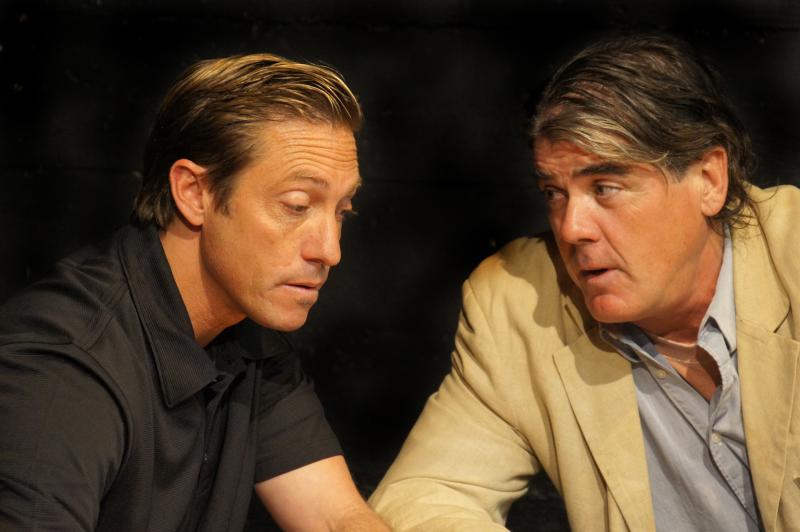
Starring Rebecca Dines, Mark Anderson Phillips, Rolf Saxon & Sarah Moser

Your only obligation in any lifetime

Is to be true to yourself. Richard Bach

This is a play about finding out who you really are.  “One of our greatest contemporary dramatists, Donald Margulies is a photojournalist of our lives, gifted with an extraordinary lens,” says TheatreWorks Artistic Director Robert Kelly.


In Time Stands Still, Margulies examines the conflict we all face in sorting out what we need to be as human beings and what we are actually doing with our lives.  Although the plot weaves many themes together, that of career, marriage, human need, and our obligation to ourselves and to society, the real story is the juxtaposition of the relationships of the two couples we see on stage.  The play “is very much about the choices and compromises we all make —in love, in work, and particular to this play, in war,” says Margulies.  “Ethical struggles touch on all aspects of life.”


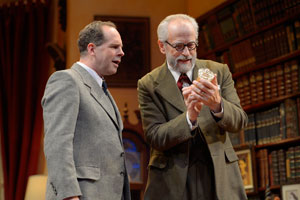
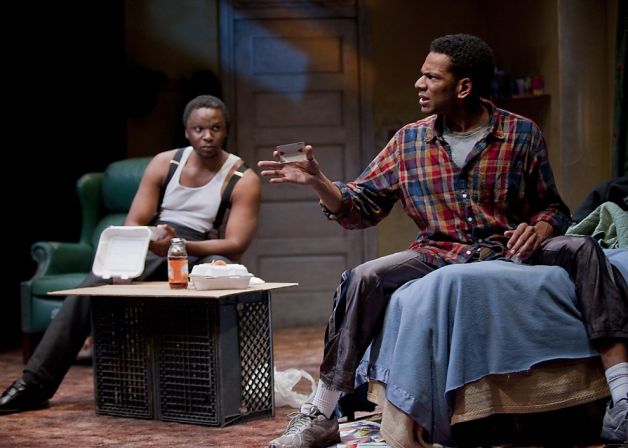
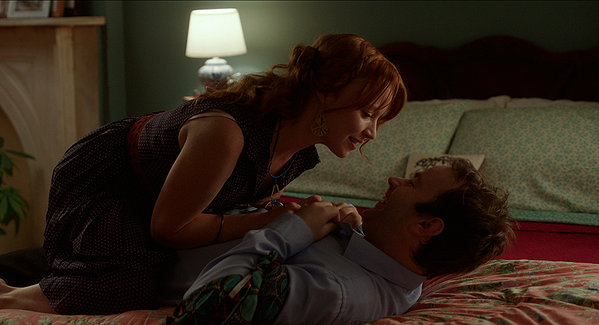
Rebecca Dines is Sarah, a photojournalist severely injured while recording the terror and slaughter in Iraq.  We meet her when her lover Jamie (Mark Anderson Phillips) is bringing her home, her leg and arm broken and her body a mass of abrasions.  Jamie went to a hospital in Germany to be with her as she fought for her life. “I had my fifteen minutes (to become famous)  and I spent it unconscious,” she says.


As she contemplates her career and her need to return to it, she says, “I live off the suffering of strangers.”


Jamie counters with, “You help them in ways you can’t see,” but the truth is that Sarah gets far more out being in the midst of combat than a good picture.  She is addicted to the danger and feeds off the violence she captures on film. ‘The women and men who put themselves in unimaginable situations to capture images and stories…aren’t simply doing it for the public good,” says Margulies.  “Their courage is immense, to be sure, but there is an unmistakable kind of thirst for it as well.”


Jamie is a journalist who uses words to record the horrors that Sarah photographs and he has had enough.  “We don’t have to do this,” he says to Sarah.  “I don’t want to watch children die.  I want to watch them live.”


The other couple, Richard (Rolf Saxon) and Mandy (Sarah Moser) is in direct contrast to the tormented, battle scarred main characters.  Richard was once Sarah’s lover and employer. He is a newsmagazine photo editor and is instrumental in creating a book of Sarah’s photographs and Jamie’s writing.  He is wildly in love with Mandy now, an idealistic, sweet and unbelievably naïve girl thrust into the company of three hard core liberal realists. Richard excuses her:  “She’s young,” he says but Sarah delivers the final put down”  “There’s young and there’s embryonic.” she says.


Mandy has brought Sarah balloons to cheer her up and she says, “Balloons have an amazing way of making you feel better.”


Although Sarah and Jamie obviously dismiss her as inconsequential, Sarah Moser has given Mandy an exquisite persona the audience cannot help but love.  She is obviously sincere and there is a great deal of wisdom in her innocence.  She tells Sarah, “I’m an event planner,” and Sarah counters with, “I’m in events, too.  War.”


But Mandy refuses to be diminished and she will not allow Sarah to believe her relationship with an older man is nothing but fluff and sex.    “People think I am Richard’s mid-life crisis,” she tells Sarah.  “But it is not that at all.  Whatever it was that brought us together was what brought us together.”


As the action develops, we see that Richard and Mandy have built a solid foundation for their relationship.  It is a fulfilling one for them both without a hint of the sugar-daddy/bimbo infatuation Jamie and Sarah assume created it.   All the actors in this production are superb, but I have to say that Moser and Saxon mesmerized me with the veracity of their portrayals.  They brought their characters to compassionate life without a hint of sentimentality.  When Mandy hears that Sarah has photographed a dying child, she is horrified that the older woman did nothing to help or save that child.  She cannot believe the cynicism she feels in the room and she says, “There is so much beauty in the world.  I wish you’d let yourself feel the joy.  Otherwise what’s the point?”


It might sound trite and it might be a one dimensional sentiment said by anyone else, but Moser transforms her lines into exquisite observations on what we can make of our destiny if we really want to see its potential instead of its loss.  When the two get married and have a baby, Mandy decides to stay home to rear it.  “You make me feel like less of a woman because I want to stay home with my baby,” she tells Sarah and Sarah understands, but she knows that isn’t the life she would choose.


It is when Jamie sees how happy Richard is that he realizes that he and Sarah can have something more…the happiness, the positive future, the security…if they will but give it a chance.  He tells Sarah: “When a couple has been together as long as we have and has seen what we’ve seen and done what we’ve done, it’s time to call it what it is…a marriage.”


And Sarah agrees…in principle…but she doesn’t take into consideration her own drive to do the thing she loves and her thirst for the action that feeds her. She justifies the value of her work to herself and to Mark.   “If it wasn’t for people like me, the ones with the cameras, who would know?  Who would care?“ she says and he realizes then that the relationship isn’t going to work for him.  “You need drama more than you need me,” he says.


Until the final scene, the plot held together beautifully for me.  Leslie Martinson is a superb director and the movement of the characters, the use of silence, the juxtaposition of innocence and cynicism is masterful.  Erik Flatmo’s scenic designs are right on the mark, accenting the action and never detracting from the action on stage.  Both Dines and Phillips occasionally had trouble convincing me that they were the real thing and often their chemistry on stage disturbed rather than enhanced the action. There was falseness to their intensity that did not ring true.   It was Saxon and Moser who charmed me throughout.  That said, the entire production is a must see on every level.  The script is truly wonderful and TheatreWorks has given us a theatrical masterpiece, beautifully presented. As an ensemble production, it excels.


Time Stands Still continues through Sept. 16. at the  Mountain View Center for the Performing Arts, 500 Castro St., Mountain View. Tickets  $23-$73.

More information: (650) 463-1960, www.theatreworks.org.


WHAT WE DO NOT TALK ABOUT

By Joe Cillo

WE WON’T ADMIT WE DID IT

I can remember when the air was clean

 And sex was dirty.

George Burns

When it comes to pre-marital sex, most of the people my age say one thing and do another.  There is no doubt that since the fifties, most people have sex before marriage.  But if you were born in the thirties, you will have a different mindset.  Sex was a danger for women, not a pleasure.  It could destroy a girl’s life forever.  For men it was a wild adventure fraught with the danger of venereal diseases that had no cure.


I was born in 1933.  When I was twelve years old, my mother sat me down and told me all about reproduction.  She discussed ovaries and fallopian tubes, penises and menstruation.  She never mentioned need or desire.  She did manage to convince me that any contact with anyone of the opposite sex including the dog, would destroy all my hopes for a decent future.  Gone my hope of a college education: “Smart girls don’t do it, Lynn Ruth,” said my mother.


Do what?  Menstruate? Ovulate?  She had never actually named this horrible act that would destroy me but she convinced me that I didn’t dare do it.   If I succumbed to temptation (and I have to say she didn’t make it sound very delectable) my hope of marriage would vanish.  “Men don’t want anything used,” said my mother.


That one really puzzled me.  I couldn’t think of one thing on my body that hadn’t been there ever since I could remember and I attributed the changes I was beginning to notice to eating too much chocolate or not getting enough sleep.


Today, you might think my mother was a demented alarmist, but remember she was talking to me in 1945. The pill did not exist.   Men did not use condoms.  Abortions were taboo and illegal.  You had that baby even if you were raped and most people blamed you instead of the rapist.   A venereal disease was virtually incurable and a stigma that haunted you for the rest of your life.


The girls I went to school with discussed love and sex continually, but they all agreed that it was way too dangerous to even consider such a thing before you had  the ring, the china and that piece of paper that locked the guy into supporting you ‘til death do you part.


I listened …indeed I believed.  I was a virgin when I married and I now know I was one of very few who actually held out until after the ceremony.  I believed that sex and love was the same thing.  I would no more have had sex with a stranger than I would have used his toothbrush and I assure you oral sex was not an option.  I did not know it existed.


Your parents were brought up with the same taboos that I had.  They didn’t always believe them and they didn’t always pay attention to the ridiculously rigid rules that limited me.  Like all parents, they brought up their children on the premise that they should do what they say not what they did.  It is as ludicrous for your father to tell you never to smoke pot when every kid who lived and breathed in the sixties tried it as it is for your mother to tell a daughter who knows about the pill, understands birth control and can take a morning after medication if all else fails that sexual intercourse will destroy her life.


To people of my generation, the danger of pregnancy was so immense it immediately erased any desire no matter how powerful.  That is why your mom told you to wait until you are married to have sex even though it is ten-to-one that she didn’t.  When you hear this kind of advice from my generation, you need to understand where it is coming from and why they believe they are saving you from pain and unhappiness.  You need to remember that they have not bought into the sexual revolution and deep down they still think sex is a dirty deed.


I am not sure if I would have been better off had I been more promiscuous.  I always believed that my first husband was the only one I had a right to sleep with…and I firmly believe that, for me, love must come first.  After two failed marriages and much heartbreak, I finally accepted that a marriage license was not the only permit for sexual intercourse, but I still held on the premise that I have to really care about a person before I drop my pants.


Most of us in my generation understand intellectually that this maxim only applies to them.  Times have changed and morals have loosened.  But when it comes to giving advice to your children or your nieces and nephews, it is a different story.  You want them to have extraordinary lives.  You don’t want them to suffer what you suffered.  Your head tells you sex is not the big deal it once was, but your heart wants to protect them from the hurt you suffered.  So it is that if you are a girl, your mother will tell you to keep your legs crossed to protect your virginity and if you are a boy, you will be told that girls who give you sex too easily are sluts.


You know it isn’t true and so do they.  Just don’t tell them you figured it out.


WE DO IT OUR WAY

By Joe Cillo

WE DO IT OUR WAY

Advice is like castor oil, easy to give, but dreadful to take.
Josh Billings

You are waiting for your mother on her front porch.  You watch her as she puts on her coat and grabs her purse.  She opens the door and smiles at you and then stops.  “I forgot my keys,” she says and disappears back into the house.  She returns to the door, opens it and says, “Oh dear! Fluffy!”


She disappears into the house and puts the dog in his cage.  She returns to the door, and then she pauses.  She goes into her closet to get her scarf.  She approaches the door and then she says, “Oh, Oh.  I can’t remember if I put money in my wallet.”


She checks her wallet and says, “Sorry, darling.  I didn’t mean to keep you waiting,” and   she pauses.  She goes back to her desk, takes out her check book and puts it in her purse.  She buttons her coat, shuts her purse gives the house one more look and beams at you.  “All ready!!!” she exclaims.


Then she stops.  “Did I leave the gas burner on?” she asks.


It is more than you can stand.  “Mother, why don’t you make a check list and tape it to the door?  Then you would be able to go right down that list and get everything ready before I get here.”


She looks at you and her eyes narrow.  “Why should I do that?” she says.  “My memory is perfect.  I know what I need to take with me when I leave the house.”


If you were smart, you would take her arm and help her down the steps without saying a word.  But you are human.  You had seen this ridiculous rigmarole every single time you take her shopping or to the doctor and it is just too much.  “Mother,” you say.  “I will make the list for you.  I have seen you do this at least a hundred times and it takes forever.  I got here fifteen minutes ago and now you are late for your appointment.”


You mother looks at you with fire in her eyes.  “You go on,” she says.  “I will call a cab.”


Why won’t she take your advice?


She won’t listen to you because she has spent a lifetime telling YOU what to do.  She has convinced herself that she knows better than you even though it is obvious now that she doesn’t.  To make matters worse, the next time you pick her up she is standing at the door completely organized.  She beams at you.  “Ellen was telling me how she had so many little things to think about before she left the house that she never got out.  So do you know what she does?”


You shake your head afraid to say anything and your mother nods wisely.  “She tapes a list to the front door and checks everything off. See?” and your mother points to a checklist taped to the side of the door.  “I thought that was such good idea that I did it myself.”


Your mother went to school with Ellen.  She was her bridesmaid.  The two of them exchanged advice about how to toilet train YOU and what to do when your dad got a wandering eye.  Your mother listens to Ellen and Ellen listens to her.  They have been on the same page for years.


Your father pays all his bills in person.  At the end of each month, he gets in the car and drives to the water company, the phone company payment center, the garbage collector and the gardener.  He writes his check right in front of them and waits for each of them to stamp ‘paid’ on the bill.  Some months this routine can take him two days to complete.  “I don’t trust the post office,” he said.  “They lose letters all the time.  I am not going to pay interest on a bill when I know I paid on time.”


“Dad,” you say.  “Your bank has an on line bill payment program.  I can show you how to use it and you could save all the money you spend on those personalized checks and all the time and gasoline you waste driving to all these companies by spending less than fifteen minutes at the desk.”


You father looks at you as if you had just suggested he run over an innocent child.  “I have been paying my bills this way for fifty years,” he says.  “I have a perfect credit rating.  I don’t owe one cent to anyone and I intend to keep it that way.”


You know better than to argue with that one.  You have been trying to pay off your credit card for five years now and your college loan is still years from being off the books.  Your car payments are overdue and you still haven’t managed to pay anything toward the principal on your mortgage.


Not two months after this conversation, your father takes you out for a beer and he says, “Son, have you heard about the new bill payment option at Chase Bank?  It is really simple.  My banker showed me how to do it in less than an hour.  Why I can even set up automatic payments and not have to worry.  I tell you, its amazing what these financial guys think of, isn’t it?”


And if you are smart, you will say, “It sure is!  How about another beer, dad?  This one is on me.”


No one likes to feel that they cannot handle their own business of living.  The last person in the world they think can tell them a more efficient way to operate is the child they brought into the world.  They spent a lifetime teaching you how to organize your life and they aren’t going to admit that you could have discovered an easier way to accomplish the same thing.  They take advice from people they think are experts and they listen to their friends.  When you think about it, your parents have underwear that is older than you are.  What right have you to tell them how to run their lives?


You will understand how they feel the day your five year old says “Daddy why are you trying to light that match in the wind?  It keeps blowing out.” and you say,” Listen Junior. You let daddy light this match his way and you go play with your scooter. “


Get it?

WHY GO ON LINE?

By Joe Cillo

WHY DO WE NEED A COMPUTER?

To err is human, but to really

Foul things up requires a computer.

Farmer’s Almanac, 1978)

Edna Jane was 90 years old when she bought her first computer.  Her family thought it was marvelous that she wanted to learn to communicate the way they did and they were very proud of her.  She signed up for computer classes and she took a cab to the computer store to learn about her new plaything twice a week for 8 weeks. When they gave her a certificate of completion, she felt very confident and knew she was ready to send e mails to her family.


She came home, booted up and promptly forgot her sign-in name.  She called her son who explained how to establish a new sign-in name and a password and told her to make note of it so she wouldn’t forget again.  However, Edna Jane has macular degeneration.  She wrote down the proper information but now she cannot find that piece of paper.


Every now and then, she dusts off the computer and tries to reboot again but she KNOWS it’s not going to work.  It never does.  Then, she picks up the phone to call her daughter in law, Susan.  “Would you mind ordering my groceries, darling?” she says.  I”I have the list right here….but I can’t seem to find it.”


“Never mind, Mother,” says Susan who has had this identical conversation every Monday since she married George.  “I have last week’s list.  I’ll take care of it.”


Every one of you has an Edna Jane in your family.  Your mother reads maps instead of googling a location.  Your father doesn’t know what a video game is.  He does crossword puzzles.  Your Aunt Lucy takes books out of the library and when she wants to see a film, she drives downtown to a movie theater.  Your Uncle Jeff uses a dictionary when he can’t spell a word.  What is wrong with these people?  Are they still in the dark ages?


When I was your age, I used a telephone to stay connected with my friends and the people in my workplace.  I used the library for research on topics I wanted to understand better. I typed the articles I wrote for newspapers and magazines on an electric typewriter.  When I proofread my stories, I cut out phrases with a scissors and taped them in a new paragraph.


I drove or walked to the grocery store to select the food I would eat and I wrote letters to people too far away to be in my immediate circle when I wanted to keep in touch.


I bought a computer in 1985.  It was my substitute for that typewriter.  Nothing else.


It wasn’t until 1989 that I became hooked on e mail to communicate and I was ahead of my time.  Most of my friends didn’t get into e mail until the mid-nineties.  The idea of using the computer for anything but communication and composition is still foreign to me.  I know people do it, but I do not.  I have begun to check out news on the computer but if a story looks interesting I always print it out to read.  I like to see words in ink on paper.


It must be very frustrating to buy your mom a computer and spend several hours showing her all the wonderful things she can do with it.  She smiles and says thank you and never boots it up again until you come over to ask her how she is doing. You are ready to bundle up the computer and give it to your neighbor’s kid, but that would accomplish nothing.  All it would do is confuse your mom who is trying very hard not to hurt your feelings.


The truth is she is more comfortable living her life the way she has been living it all these years.  She doesn’t NEED a new way to shop, communicate or entertain herself.   When you are used to accomplishing a task a particular way, you really don’t want to change.  It involves too much effort and way too much concentration.


Most computer savvy people order products on line.  It has been years since I have browsed in a book store, or even wandered into a department store.  I wouldn’t think of wasting an afternoon at  Macy’s when I could be outside walking my dogs or painting a picture in my studio.  What has astounded me is how many people in your generation now have decided they would rather SEE the dress on the rack or the pot in the culinary display before they actually purchase it.  That is the way I used to do it.  I am amazed at how many of my old fashioned ways are back in style.  I suspect you are beginning to see it our way.


I walked into the Apple Store and it was crowded with people of all ages playing with computers and I pads.   Every one of those shoppers could have saved money by purchasing their computer on line but they preferred to actually SEE what they were getting. I for one have ordered my last two computers on line.  It saved me hours of time.  And after all, compared to you, I don’t have that much time left.  I don’t want to waste it.


The increase in farmer’s markets is another example of the way computer shopping is beginning to lose its luster for you.  You like to chat with the farmers, squeeze those melons and inspect the lettuce for vermin before you buy.  You are willing to spend almost double for organic produce you can see and bring home yourself.  My generation doesn’t feel that way anymore.  The aging process has changed our minds.   The truth is, it has become an effort for us to leave the house these days.  We don’t see the way we should.   Our joints hurt and our energy level fades with the sun.  It is much easier for us to go on line and order our groceries, buy our underwear and find discount books.


Entertainment is a different story.  We like to go out to see a play or hear a symphony.  We like to play board games or bridge with real people sitting across from us. Computer games don’t tempt us at all.  We cannot understand why your generation is hooked on them  There is one young man who got so involved in the virtual games on his computer that he couldn‘t pull himself away for four days.  He didn’t sleep, he didn’t eat, and when he collapsed his parents took him to the emergency ward because he was dehydrated.


My generation would never do a thing like that.


The best way to explain our attitude about computers to you is to say, of course we use them, but for different things.   Our computers are only tools to make our lives easier.  Your computers set the tone of your day.  You might ask me why I don’t check out face book every morning to see what my friends are up to and I will say, “I if I want to know how they are, I telephone.”  It’s an age thing.


YOU PUSH OUR BUTTONS

By Joe Cillo

YOU ARE VERY RUDE

Young men think old men are fools;

but old men know young men are fools.
George Chapman

I was sitting in a closed booth in the ladies room when I heard “Hey what are you doing?” from the next booth.  I didn’t know who the voice belonged to but I didn’t want to be rude so I said, “I am going to the toilet.  What are you doing?”


The voice in came back with, “Sorry Joe.  Some idiot in the next booth is horning in on the conversation.  I’ll text you instead.”  The toilet flushed, I heard the door open and footsteps recede.


I was furious.  What right did that young lady have to criticize ME?  I wasn’t the one talking on the phone in an inappropriate place.  How could she be so inconsiderate?


That is the kind of reaction your generation cannot understand.  You were not brought up in a society that used phone booths for telephone conversations and didn’t carry instruments of communication into a rest room.


We were taught that it was rude to ignore someone who asked you a question.  And speaking of questions, how many times have I said to someone your age, “Isn’t this a nice day?” and you answer with another question.  “Are you kidding?  Don’t you see the fog?”  If I ask you to please pass the potatoes, I don’t want to hear, “Do you really want potatoes?”  I want you to give me the potatoes.  I said please, didn’t I?


It’s all about what we were taught by our parents.  The difference is that you have drifted a long way from what we taught you and we can’t understand it.   You changed our rules and we don’t like it.   We have lived through a lifetime of challenges and we think we have figured out how to solve them.  We watch you fussing over things like the clean air and dog waste and frankly, we think your generation is making a big deal over nothing.  We forget that our parents got annoyed with us when we didn’t do things their way, too. And we forget how hurt we felt when they snapped at us.


When I graduated from college I was absolutely certain I knew everything and my mother knew nothing at all.  I came home from school and said,”Okay Mother, get dressed.  I am taking you to the art museum to enlarge your horizons.”


My mother looked at me as if I had just told her to set fire to the house.  “You leave my horizons right where they are, Lynn Ruth.” she said.


And I thought, “Why is she so annoyed?  I wanted to give her a treat.”


I am almost 80 years old and when a clerk young enough to be my grandchild calls me by my first name, I am very insulted.  My head tells me that there is absolutely nothing wrong with addressing your elders by their first name, but my gut has told me this is rude for so many years that I don’t even think before I snap.  I would agree with you immediately that this is a silly formality.  But I cannot help snarling when you address me as Lynn Ruth. “Who do you think you are?” I’ll say and you will look at me as if I am brain dead.


Proper forms of address are hammered into us when we are young and we often use them without thinking. My generation always called younger people endearing names.  Whenever I see you, I will call you sweetheart.  It never occurred to me that this was demeaning or insulting until I read about a bank teller who was sued by its customers for calling them all darling.  I guess it works both ways.


I was taught that you stand up when someone older or frailer needs a seat.  This isn’t something young people in the United States do but in Britain it is as automatic as saying please and thank you. (Something else Americans don’t do much anymore.)  I was seated in the underground when I saw a mother standing with a three year old child in her arms.  I stood up.  She looked at me and was horrified.  No way was she going to take the seat of someone old enough to be her grandmother.  I tired to insist but she insisted louder until finally the guy across the aisle gave her his seat and I remained in mine.  The interesting thing was that we each were just a bit annoyed with the other.  We all like to think we are the ones acting correctly don’t we?


Then there are table manners.  When my generation sees someone eating without their hand in their lap, you can see the distaste as clearly on our faces as if we spit at you.  Now everyone my age and yours knows this is a trivial formality and good manners at the table are a cultural thing that really make very little difference in a culture as diverse as ours.  Still, when I see someone chewing with his mouth open, or reaching across me to grab a platter, I am miffed.  That person cannot figure what on earth he did that was offensive. And I am not going to tell him.


My generation was taught to be polite.


I for one am a lot happier when I am not furious and I don’t like anyone criticizing me, so I understand how you feel when we get annoyed with you.  The trick is to put yourself in our shoes.  When your mom reprimands you for something that seems ridiculous, remember that you love your habits as much as she loves hers.  You would be pretty upset if someone grabbed your cell phone and told you it was rude to text while waiting in line at the movies.  The good news is that when you are ninety, can’t hear a word anyone says and need a walker to get where you want to be, no one will care if you get angry at anything at all.   They will think you are adorable.   It’s just one more privilege of age.


WE HATE TO SPEND MONEY

By Joe Cillo

WHY ARE WE SO CHEAP?

I was brought up in an era when

Thrift was still considered a virtue.
Paul Getty

My generation saved their pennies.  They take pride in the ability to PAY for what they wanted.    They are aware of government services today that provide for people on low income, but they think everyone on welfare is either lazy or insane.  My generation believes taking care of yourself is a matter of integrity.  If our pensions don’t match our expenses, our solution is to trim the expenses and take advantage of savings we get from coupons and special offers. Charity is for the indigent.


How many times have you heard Aunt Sarah say, “It is disgusting how those people try to milk their unemployment benefits.  Why don’t they just go get a job?  When I was young, I didn’t ask the government for money.  If I wanted a new dress, I baby sat and washed dishes until I earned the money to get it.”


Don’t even try to tell her that “those people” paid into the unemployment fund or got a back injury that made them unfit for work.”  She will shake her head and say, something like “If they weren’t so lazy, they could find something to do.  I did.”


It has to look ridiculous to people of your generation when your parents won’t drive because the cost of gasoline is almost $4.00 unless you remember that $4 when they began to notice money had the spending power of almost $65.  You have to admit you, too would think twice before spending $65 for a gallon of gas.


Every generation has the same issue with the one before.  I can still remember my sister infuriated with my father because he spent all her inheritance caring for my mother at home while she had cancer.  She couldn’t seem to understand that it was HIS money and he earned it.  Yet, this same man who seemed so extravagant to my sister had three cars in the garage that no one ever drove.  He refused to sell them or give them away.  “I never know when I just might want to drive again,” he explained.


My father was 87 years old, had Alzheimer’s and couldn’t see.


I love the story of my friend Andrew, who actually MARRIED a woman when he was 70, only because she was so good at clipping coupons.  “She is saving me at least $40 a week,” he said.  “That kind of woman is one in a million.”


What  neither he nor his bride understood was that they really didn’t need all that toilet paper, cleanser and car wax they were buying with those coupons.  They may have saved $40, but they spend over $80 on products they would never use.  “You never know when a carton of air freshener will come in handy,” said Andrew.


It isn’t that we are cheap….it is that we are afraid of outlasting our money and we don’t like to ask our children to help us.  WE controlled the purse strings for THEM for too many years.  Losing control of your spending power is not just humiliating…it is terrifying.  You no longer have the confidence that you can handle the kinds of tragedy every older person dreads:  a surgery, an unexpected fall; a stock market collapse.


Think of it this way.  Would you ask your fourteen year old to lend you $25 from his paper route money because you had maxed out your credit card and needed to buy groceries?  Of course you wouldn’t.  Instead, you would go to the “reduced for quick sale” and buy something you could disguise with enough ketchup be palatable.  No one wants to ask their children for money.  It is embarrassing.


However, there are times when the concept of frugality can be carried to a ludicrous extreme.   It is the people who really don’t NEED to hoard money who are so hard to understand.  Mary Ellen is 93 years old and receives life insurance payments from the death of her husband John, money from his physician’s pension and social security.  When she heard that the United States government was thinking of reducing its social security payments to people with incomes over a million dollars a year, she was livid.  “Sam paid into that fund his whole working life,” she sad.  “He EARNED that money.”


That is how we think.  If you work for something, the payment you receive belongs to you and no one else.  It isn’t that we are not charitable. It is just that we believe the money you earn is as much yours as your house, your closet full of clothes and your automobile. The government certainly would not say to Mary Ellen, “Your income is so large we are going to take away your Mercedes Benz,” would it?  To my generation, that is just as outrageous an idea as reducing promised payments on a pension fund we had invested in with our own money.


It is the way we are cheap that your generation cannot understand.  My friend Grace will travel thirty miles out of her way to save seven cents on a gallon of gasoline, and then drop $100 dollars at the nearest casino on the chance that she will hit a jackpot no one has figured out for thirty years.   I can’t justify it to you except to say that Grace makes as much sense to me as you do when you spend hundreds of dollars to play games on your cell phone but will drive blocks out of your way to avoid putting money in a parking meter.


So when your parents insist celebrating their anniversary at Denny’s because they have a coupon that gives them one dollar off Tuesday’s at four, don’t tell them the food has so much fat and additives it will kill them.  Don’t even hint that they both could afford to go to a real restaurant with table cloths and candle light.  Just think to yourself, ”When I get to be their age, I want to have the right to spend what I have earned, any way I like.”


What is frugal to one generation is nonsense to the next.  It is no use telling your Uncle George that spending $10 on a cab makes a lot more sense than a thousand dollars on a new fender because he drove without his glasses.    He won’t hear you anyway.

WHAT DID YOU SAY?

By Joe Cillo

I CAN’T HEAR YOU


Hear only the things you should hear – be deaf to others.
Ford Frick

I know it drives you crazy.  You walk into your parents’ home and the television is so loud you can hear it across the street.


You call Aunt Bertha and she cannot make out one word you are saying. You ask “How are you?” and she says, “But I LIKE Jews.” By the time you repeat “How is your sciatica?” twenty times, you don’t care anymore.


The guy in line behind you sneezes and you say, “Do you have a cold?”  He says “I KNOW I’m old; you don’t have to remind me.”


Why on earth don’t these people wear their hearing aids?


I cannot speak for every older person who discovers he isn’t hearing the way he once did, but I can speak for myself.  Perhaps my story will explain why we buy those hearing aids, try them for a week and then put them in a bureau drawer.


Nine years ago, I noticed that I confused numbers and I would give ridiculous answers to people’s questions. My friend tried on a new dress and said, “How do I look?” and I said,” I haven’t read anything good either.”  When my dentist told me I had a cavity I thought he said I suffered from depravity.  There is a lovely 8 year old child who tells me long involved stories every time she visits and I can honestly say I have never heard a world she has said…ever.


You get the picture.


It took four years of wandering through quiet streets and standing outside silent playgrounds to convince me that I needed some kind of device to clarify what was being said.  The evening I appeared at River Dance in my nightgown because I thought it was a sleepover, I knew drastic action was in order.  .  Something expensive would have to be done or I would wander around in a cloud of silence while the rest of the world got all the news.


It was time to go explore the world of hearing aids.  I discovered that the way the establishment gets back at decaying seniors for all those discounts and free services the ARARP managed to get for them is to charge triple or quadruple their own cost for eye glasses and hearing aids.  For some strange reason, our government doesn’t think hearing and seeing are necessary to live the good life.  Most people over seventy are living on pensions that are a fraction of the income they once enjoyed. They think twice before buying anything in three figures.  They experience a dangerous surge of blood pressure when the cost of anything is four figures.  I am one of those people.


I shopped and compared prices for several months until I found cheapest hearing aids I thought would do the job.  They cost $5000 for the pair.  The audiologist explained that if I got only one hearing aid, I would be lopsided.   Did she say I was misguided?   I wasn’t exactly sure, but I got her message.  It was $5000 to hear again or silence.


I had heard stories of seemingly sensible people who bought hearing aids, worn them for a week and shoved them in a bureau drawer and I said (with great conviction)  “I am not spending $5000 for something I don’t use.  Not me.”


The lovely girl who tested me said these hearing aids were state of the art and I believed her.   When I was in her office, I managed to make out a couple of the words she said after she inserted the aids, but after all I hadn’t heard 40% of the sounds around me for so many years. It would take me a bit of time to recognize them again. I knew if I worked at it “BLGHXBL!!”  would once again sound like the “hello” I once recognized when I was young.


My first hurdle was trying to get the things in my ear.  It seemed easy enough with the audiologist helping me but when I got home, I simply couldn’t figure out which one went where.  There is a funny angle to the ear canal and I have always been really bad at getting things in narrow passages.  I can’t get keys in locks.  I could never manage tampons.  I pulled on my ear lobe and pushed and said a dirty word, but the device kept landing in the sink.


However, I was not throwing $5000 dollars down the drain even though I almost sent one of the hearing aids there.   When I finally managed to shove both of them in my ears without piercing my eardrum, I sat down to eat  and I was horrified.   I had never heard my teeth make so much clatter.  They sounded like a thundering herd of cattle coming home for dinner.  I could hear myself swallow. I heard my stomach attempting to digest and I actually jumped when my stomach growled. The problem was that I still couldn’t hear anything my dinner partner was saying.


So I went back to the audiologist for some adjustments.  She fiddled, she adjusted, she tested and out I went to try again.  I wore these aids another 12 hours when I heard THE loudest ring I had ever heard in my life and realized it was a warning that the battery needed changing.  I was in a movie theater at the time (still not hearing what the characters were saying) so I couldn’t take them out to change the batteries.  Five minutes later, the ring was so loud and insistent, the person next to me screamed ( I heard THAT)  and then…silence.


I came home, shoved the hearing aids in the bureau drawer and refused to even look at them until two years later when I said to myself.  “Remember the days when you actually heard what the cashier said instead of fainting when you saw the receipt?  Give those things one more try.”


And I did.  I finally caught on to the three adjustments I had to make for noise levels.  I still didn’t feel like I was getting the aids in right, but at least they didn’t fall out of my ear.  This was progress.  I must have visited the audiologist at least twenty times in the next two months determined not to throw away $5000 dollars and even more determined to hear words.


And then I gave up.  No matter how many times they were adjusted, no matter how many times I tried, I still couldn’t hear what I really wanted to hear:  conversation.


It is now five years later.  I REALLY can’t hear what is going on.  I know I must take the plunge and try to get a hearing aid that works and I know technology has advanced.  In the past few years, I have gone to several other audiologists all of whom tell me that the devices I bought are third rate and theirs (which cost $7000-$10,000) are far more sophisticated.  When they see me turn pale and clutch my heart, they say, “But why not try these once more?”…and I always do …and I still don’t hear words. ….just strange noises that don’t make sense.


Now anyone that has a hearing aid that wears it will tell you they are not perfect devices.  Everyone has a different kind of hearing loss and mine evidently is unique to medical science.  I have to say though I have never heard anyone ever tell me they LOVE their hearing aid until this past month.


I don’t want to strain to hear every word that said to me.  I don’t want my voice to sound so loud people step back when I speak.  None of us do.  I don’t like asking you to repeat every sentence you say two or three times.  It is embarrassing.  But I would be willing to bet 99% of the deaf people who drive you mad because they won’t help themselves had exactly the same experience I had.  Sitting in the drawer, covered with dust is an expensive mistake they really tried to wear. My generation hates to throw money away.


So now you know.  We don’t wear our hearing aids because we just can’t make them work.


WE LOVE THE WORK ETHIC

By Joe Cillo

WHAT’S SO GREAT ABOUT WORKING 9-5?


I don’t mind coming to work,

but that eight hour wait to go home is a bitch.

Anonymous


I have always believed that everyone needs a job.  When I hear dire reports on diminishing jobs I think, “How will these people support themselves?”


I think there is nothing like steady job with benefits to give your life a solid foundation.  Old values are so comfortable that I for one feel guilty when I chuck them in the wastebasket.  I want to meet the parent who doesn’t say to his college graduate, ”When do you start work?”


I figured out that a job didn’t mean happiness in the sixties and I can still remember how frightened I was to dare to forge ahead doing what I loved instead of reporting to an office five grueling days a week.  I decided I wanted to write stories about interesting people and I did just that.  I mailed them out to magazines every day.  Some were accepted and some were not.  I did a bit of baby sitting, tried my hand at dog walking, but always, I came back to the typewriter (what we used in those days) and did what I loved best: write. My parents thought I had committed a sin.  I couldn’t have embarrassed them more if I had stood nude on a busy corner with a sign saying “Available.”  And I agreed with them.  I felt I was being immoral to love designing my days to suit only myself.


If you think that attitude went the way of vinyl records, you are wrong.  When my friends Richard and Susan got married five years ago, Richard’s parents were horrified.  “You don’t have a JOB,” they said. “ How can you support a wife?”


I know in my head that there are many ways to support yourself that don’t involve a long commute and a desk in one office for forty years. I know hundreds of people who support themselves with a series of part time jobs or do low level work to feed themselves while they do what they love in the evening.   Henry has a degree in nuclear engineering and he is working at a coffee house so he can write his book.  Sean quit his teaching job because he couldn’t stand being confined in a classroom with 30 unwilling students.  Now he gardens for a living.  Paul cooks gourmet meals for busy work people and delivers them ready to eat at dinner time.  None of them are rich and all of them are happy….but if one of them were my kid, I would nag them to death.  “What will you do when the money runs out?” I’d say.


I see unhappy men my age who spent so much time working for someone else that they didn’t prepare for a life where they could do what they loved instead of what earned a steady wage.  My friend Tony retired from the business community when he was 65.  He decided that he had enough savings set aside that he could afford to pursue a life in the arts.  He became a successful playwright and in his spare time, (which he has now) he sings with his church choir.  He takes time to go on hiking trails with his wife and he is a happy man.  Yet, when his son was out of a job, he was beside himself with worry.  “How will he take care of his wife and three children?”  he said.


It want until I reminded him of how happy he was that he realized he was sentencing his son to the same frustration that he had endured for forty years.  It is another one of those cases of telling you “do what I say, don’t do what I do.”  All of us are concerned for our children’s future.  We all know that the proverb ‘a bird in the hand is worth two in the bush’ can sentence our children to a life of thankless drudgery.  But we also know that food and shelter take money and no one wants to think of their children living in poverty.  That wasn’t part of the dream we had for them.


I know that no job ends when you leave the office.  I see young people on their computers in coffee shops and on the bus.  The work day never seems to end.  People these days don’t want to  work in one place for one person for forty years just to get a gold watch and a pension. Fulfillment.  Growth.  Experimenting.  That is what your generation is about these days and I think it is wonderful.  Now that I am of a certain age, I want in on the excitement you have every day.  Why not?


There are so many things I want to do before I die.  I want to run outside draped in a shower curtain and sing to the stars. I want to climb a flag pole sprayed with glitter singing “wish on a star.”  I want to wear flowers in my hair and do cartwheels on the pier.  If you join me, I will break dance in the middle of the freeway.


The difference is no one sends me on a guilt trip or says, “Why don’t you get a job?”


My parents are dead.


YOU CAN’T CONVINCE US

By Joe Cillo

WHY ARE WE SO STUBBORN?

Why do you hit your head against the wall?

Because it feels so good when I stop.

I see so many people my age struggling to carry packages they could put in a trolley if they would only spend the money to buy one or staggering up set of stairs when the escalator is right there across the hall. I know there is a better way.  But just you try to TELL them that.


Do not even consider “Mother, if you would walk on the side of the street, you wouldn’t block everyone hurrying to the office” because it isn’t going to work.  Your mother knows that she keeps her balance better in the middle of the sidewalk and avoiding a broken shoulder is a lot more important to her than her social responsibility not to impede the pedestrians on their way to something she already did years ago….and if she wants to wear her bedroom slippers with that horrid coat…so what?  SHE is retired.


Just try telling your Dad that if he would have purchased power steering on that huge gas eating clunker he drives, he could parallel park in seconds and not keep smashing his front headlight.    He is going to give you that look you hate and say, “I bought this car used ten years ago and I paid cash for it.   I know how it works and it doesn’t give me any surprises.  If it takes me 40 minutes to park it, that isn’t MY problem….


I like familiar things.  I don’t have to learn how to use them.  Silly as it may seem, I don’t like a dishwasher.  It feels better to me to wash each dish and know it is clean.  It is the same with the car I drive.  I can still remember when I bought my Toyota Matrix.  It was bigger than my ancient Valiant, more fuel efficient and had a great CD player. The first year I drove it, I smashed the right fender so many times the auto repair shop recognized my voice when I called. I hit the wall of the garage twice and I drove in the middle of the road for at least 6 months before I figured out that there was plenty of room on the right.  My old car soaked up gas like a drunkard, didn’t have power steering and when it rained water flooded the back seat.  But I never hit anything with it.  It was familiar. You cannot get me to admit that it wasn’t the king of all cars.  I loved it.  I understood it.  And it understood me.


That is how it is with older people. We cling to what we used to do because that is comfortable and feels safe.  Take credit cards.  When I was a kid they didn’t exist.  I paid for everything with cash.  The idea of shoving a piece of plastic into the wall and getting money was as ridiculous to me as looking up at the clouds and expecting it to rain silver coins.  Now I cannot imagine living or traveling without my credit card but I know a lot of my friends who never use them.  They like to see the cash, pay with it and get the receipt for the same reason they like to watch your face when they talk to you before they give you an answer.  It might not make sense to you, but it does to them.


There is a couple across the street in their mid eighties who live in a three story house. Bob has sciatica and Sarah has Multiple Sclerosis.  They both are in so much pain, they had to crawl up the stairs to get to their bedroom.  Finally, after years of coaxing and talking and convincing, they allowed their children to buy them a stair-master so they could both ride upstairs in seconds instead of the half hour they both took, each helping the other.  You guessed it.  The stair-master has been sitting for five years now, in pristine condition at the bottom of the stairs and my neighbors struggle up the stairs to the bedroom they have slept in for almost 60 years.


I know just what you are thinking.  Why don’t they move the bed downstairs to the living room?  I asked them that and Sarah looked at me as if I had suggested she dance naked in the street.  “I love my living room just the way it is.  I remember when we redecorated it in 2000 and it took me forever to get used to where everything was.  I sure don’t want to go through that again.”


Will and Deborah will celebrate their golden anniversary this year.  It will be a sad celebration because Will’s Cerebral Palsy has gotten so much worse and he is in the early stages of Alzheimer’s.  Their children have been begging them to have a care giver in to help Deborah cook meals, bathe Will and get him into bed but she is adamant.  “I don’t want strangers walking around my house,” she told her daughter.  “They all have butterfingers..”


About three months after she said this, she called her daughter and said, ”I just took Will to the doctor and he had the best idea!!! He told me about an agency that will send someone out to bathe Will and get him into bed.  Isn’t that a wonderful idea?”


Her daughter had the wisdom to say, “I think so too!” and not, ”Why wouldn’t you listen to ME when I told you the same thing?” The truth is that if we are going to change our minds, we have to hear a reason from what we think is an expert.  That expert is never our children.  Ever.


So next time you say to your mom, “Why don’t you order those groceries on line?” don’t expect her to say ”What a good idea!”  I will give you odds that her response would be “I like to pick out my own vegetables and fruit.  Those delivery people don’t care.  All they want to do is make money.”


The older we get, the more we do the things we want, not the things we should.  We have earned that freedom and you will too, eventually.  I make my own rules and take my own advice.  When I ushered at The Opera, I seated a 95 year old lady and when I went back to help the next patron, she moved two rows closer.  I came back down the aisle to seat someone in the seat she had moved into and I said, “Mrs. Stoneham, that isn’t your seat. “ She looked up at me her mouth a straight determined line.   “I LIKE it here,” she said.


That is what we are about.  We are going to do what we like and the only way you are going to understand it is when you are 95, sitting in a theater in the seat you want.  The usher might have moved you when you were 60 but when you are 95, you’ve earned the right to sit wherever you like.


WE LOVE TO TALK

By Joe Cillo

WHY DO WE TALK SO MUCH?

If someone would teach the younger generation how to talk,

And their elders to listen, the generation gap would not exist.

Lynn Ruth

People my age talk a lot.  We do it because words are what we are comfortable using to express ourselves.  When we hear it, we can figure it out. You people communicate differently and I think that is great.  I saw a young couple standing together outside a movie theater sending messages to each other on their I-Pads.  They nodded wisely as if they were exchanging very special secrets.    I can’t do that.  I have to use my vocal cords to communicate.  Besides I don’t want to send anyone pictures of what I just did an hour ago. I was on the can.


I was in the grocery store and the clerk smiled as he was taught to do and said without looking at me, “How are you today?” and I actually told him.


I discussed how hard it was to get out of bed in the morning because of my sciatica, why my shoes didn’t fit because of the heat, the new place I found to shop for vitamins, and my problem with the neighbor’s dog.  When I finished, I looked at him expectantly and he said.  “83.43.  Cash or charge?”


When I was your age, I was really careful about everything I said. I didn’t want to hurt anyone’s feelings and I wanted them to love me. Now, I am of a certain age and the brakes are off. Censorship went the way of continence.


Being blunt can really mess you up if you are looking for a date.  Not long ago, I enrolled in a new dating service in the states called Table for 6.  The idea is that if you get six people together around one table sharing ideas and talking to one another you will find the love of your life.  I went to one of their events and sat there with five strangers from my generation.  The talk never stopped because that is what we love to do.  One guy discussed his new dentures, the other his hiking trip in the Arctic.  A woman who looked 106 told about her face lift and another talked about her kid with Turrets.  “He shouts obscenities EVERYWHERE,” she said. “Just yesterday I was buying a screwdriver and some fertilizer when Percy shouted I WANT TO SEE THE MONEY SHOT!’

“I was humiliated.”


When the evening was over, we all knew all about each other and we knew we never wanted to see any of these boring people again.


I looked over at the next table. It was filled with 6 people in their thirties.  Everyone there was absolutely silent except for the clink of their wine glasses and the sound of their forks picking up their stroganoff.  Each had his I Pad in his hand and now and then one would tap his neighbor on the shoulder and point to a picture or hold it to her ear to listen to a song.  At the end of their meal, while everyone at my table went his separate way, the 6 of them paired off holding hands and staring lovingly into each others eyes.


My generation likes to hear the words you say, even though we don’t really hear that well.  Our eyes are shot and we forget how to end the sentence we just began.  I went to the funeral of my friend’s husband and she was standing by the coffin talking a mile a minute to the corpse.  “I TOLD you not to take that aspirin,” she said.  “But you never listen…and now look at you! Dressed in a suit you never wore on your way to God knows where with a mortgage that is sky high and a house underwater…”

“Millie,” I whispered “He can’t hear you anymore….”

“He couldn’t hear me when he was alive, either,” she said.  “But now he can’t walk away.”


The truth is talk was our style of communication even though I have to admit we really don’t say much that is memorable.    I think we want you to know we are still alive and we want to convince ourselves that we matter to you because believe me, you matter to us.  You are the ones who will care for us when we fall apart.  The thing is, when you can’t hear, your sight is blurred and your arthritis is killing you, it feels good to talk about it. The more you chatter the less you notice the pain.


I have tried your way of communicating and sometimes it works really well.  When I have a headache I would rather text my buddy to complain, but on the other hand, there is no way any computer message can ever make me feel as good as someone’s hand on my forehead saying.  “Let me put some ice on your head and make it better.”


Everyone has their own way of getting their point across and all of us need to feel we are heard.  I don’t mind reading what you say to my computer, but sometimes, when you aren’t running from one business meeting to a mixer or a concert, I would really love it if you’d answer the telephone.