All Posts By

Joe Cillo

Mt. Zion

By Mill Valley Film Festival
[rating=3]

Art House & International | Drama
New Zealand, 2013, English, Maori, 93 minutes, color

description
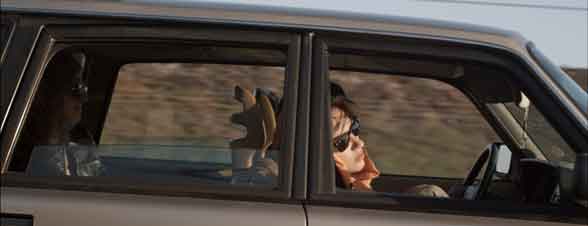
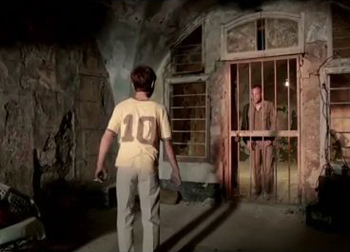
Turei’s family are hard-working potato farm workers in rural New Zealand. A talented musician, Turei dreams of his band being the support act for Bob Marley’s 1979 tour. But it’s a dream that challenges the traditions and values of his upbringing and sets him at odds with his family – particularly his father, a true man of the land.


contributors
cast Stan Walker, Temuera Morrison, Miriama Smith, Ngawai Herewini, Troy Kingi, David Wikaira-Paul
director Tearepa Kahi
producer Quinton Hita
screenwriter Tearepa Kahi
cinematographer Tearepa Kahi
editors Paul Maxwell, Tearepa Kahi

summary review
Interesting insight into rural Auckland in the late 1970’s. Terrific music and the ceremonial welcome dances are the only highlights of this film, because the dialog is unintelligible. The decision to have Maori dialog with no subtitles is a disaster – you can’t understand what is going on, particularly where the scenes are all talk. Needs to be-done with subtitles.

ratings
script/story [rating=6]
acting [rating=6]
cinematography [rating=7]
technical quality [rating=1]
afterglow [rating=1]
[rating=0]
Overall [rating=4]

trailer
http://www.youtube.com/watch?v=X_Na-eWY4IY

see imDB info here
Mt. Zion


ownerBuilt

By Mill Valley Film Festival
[rating=1]

Animation | Theatercast | Documentary  | History
US, 2013, English, 49 minutes, color

description
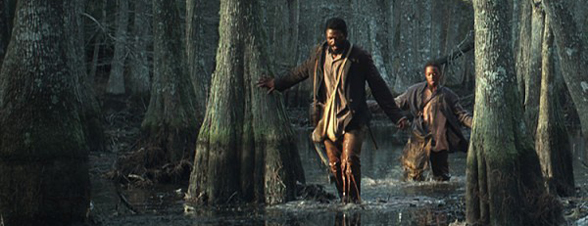
Aural performance remade into an animated movie. combining theater, animation and storytelling. Based on actual accounts of events occurring on New Orleans’ Danziger Bridge September 4, 2005. Storyteller/narrator Noel reanimates the events of the past through a staged performance of Hurricane Katrina’s devastating effects on his home and community. Katrina and the ensuing aftermath destroyed Noel’s community, neighborhood and home. But he is rebuilding, and as he rebuilds, he tries to evoke the memories of what was, through the enlistment of his personal archives. His memories are complicated by the tragic Danziger Bridge events. As Noel reflects back on what has been lost, the story he tells about his neighborhood is affected by the story of innocent people attempting to cross a bridge in search of safe haven, and for Noel their plight clarifies the questions that arose in the aftermath of Katrina.


contributors
director Lawrence Andrews
producer Lawrence Andrews
screenwriter Lawrence Andrews
cinematographer Lawrence Andrews
editor Lawrence Andrews

summary review
An earnest effort to recast an oral performance into a movie format. Animation crude, visuals muddled, references obscure, sound murky. Doesn’t work.

ratings
script/story [rating=4]
animation [rating=1]
cinematography [rating=1]
technical quality [rating=1]
afterglow [rating=0]
[rating=0]
Overall [rating=1]

 
video

see imDB info here
ownerBuilt


Collapse

By Mill Valley Film Festival
[rating=2]

Dance | Drama | Allegory
US, 2013, English, 97 minutes, black & white

description
After 15 years away, Thorson (played by Russell Murphy, former San Francisco Ballet principal dancer) returns to the ballet company where audiences once flocked to see him. He has choreographed a ballet for troubled times but it’s not going to be easy to finance new work with funds for the arts drying up. As his original scheme collapses and he loses heart, a new experience, both transcendent and terrifying, seizes him.


contributors
director Rob Nilsson
cast Russell Murphy, William Martin, Anita Paciotti, Michelle Anton Allen, Dan da Silva
producers Rob Nilsson, Michelle Anton Allen
screenwriter Rob Nilsson
cinematographer Deniz Demirer
editors Stuart Sloan, Drow Millar, Deniz Demirer, Gustavo Ochoa

summary review
Interesting technically with its black and white, noire approach, extreme angles and close-ups. Becomes a mish-mash of pretentious avant images and muddled ending. A failed effort.

ratings
script/story [rating=3]
acting [rating=6]
cinematography [rating=8]
technical quality [rating=8]
afterglow [rating=1]
[rating=0]
Overall [rating=2]


trailer

Zaytoun

By Mill Valley Film Festival
[rating=6]

Adventure | Drama | Thriller War
UK, Israel, Hebrew, Arabic, 2012, English, 110 minutes, color

description
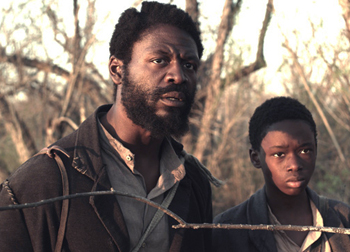
Beirut, 1982. During the 1982 Lebanon War, an Israeli fighter pilot, Yoni, is shot down over Beirut and captured by the Palestine Liberation Organization. Fahed, a precocious young Palestinian refugee who is angered by the death of his father in an Israeli air attack, agrees to help Yoni escape and lead him out of the city if Yoni will get him over the border and back to his family’s ancestral village. As they embark on a hazardous road trip across the war-ravaged country, Yoni and Fahed move from suspicion and mutual antagonism to a tentative camaraderie as they make their way closer to the place they both call home.


contributors
cast Stephen Dorff, Abdallah El Akal,  Ali Suliman
director Eran Riklis
producers Fred Ritzenberg, Gareth Unwin
screenwriter Nadir Rizq
cinematographer Dan Laustsen
editor Herve Schneid

summary review
The film starts out strong but devolves fairly rapidly into a sentimental, road buddy tale. Not possible as reality so best to enjoy it as a feel-good, fable of enemies growing to endure/like love each other.

ratings
script/story [rating=4]
acting [rating=8]
cinematography [rating=8]
technical quality [rating=8]
afterglow [rating=4]
[rating=0]
Overall [rating=6]


trailer

see imDB info here

Zaytoun


Beside Still Waters

By Mill Valley Film Festival
[rating=5]

Drama , US, 2013, English, 76 minutes, color

description
Daniel Thatcher, a young romantic, recently lost both parents in a car accident. No friends came to the funeral: now he’s losing the family home. The weekend before he moves out, Daniel hosts a memorial celebration and insists his friends attend. He also invites his ex-girlfriend, Olivia, hoping to rekindle their old romance. Things quickly take a turn for the worse as no one shares Daniel’s good old days nostalgia. And when Olivia finally arrives, she brings her new fiancé. As the night progresses, the house brings out the adolescence in everyone. What follows is an evening full of drinking and dancing. Laughter and secrets. Sex, drugs, mischief and regret.

Next day everyone faces the revelations of the night before, including Daniel, who finally confronts his friends about their absence at his parents’ funeral. Again, Daniel finds himself alone and brokenhearted. He has to let go of the past, to mourn, forgive. In doing so, Daniel begins to see that the flaws in the people he loves intertwine with their beauty. As everyone leaves the house for the last time, childhood memories come flooding back, and Daniel is left with the hope that the friendships of his past will become the family of his future.


contributors
director Chris Lowell
cast Beck Bennett, Will Brill, Brett Dalton, Erin Darke, Ryan Eggold, Jessy Hodges, Britt Lower, Reid Scott
producers Jason Potash, Paul Finkel, Chris Lowell, Mohit Narang, Steven Gorel
screenwriter Chris Lowell, Mohit Narang
cinematographer Tim Naylor
editor Nick Houy

summary review
The stage is set for an interesting exploration of ongoing friendship over time but the players and characterizations do not ring true. Might he better and more interesting as a sitcom.

ratings
script/story [rating=5]
acting [rating=7]
cinematography [rating=8]
technical quality [rating=8]
afterglow [rating=3]
[rating=0]
Overall [rating=5]


http://www.youtube.com/watch?v=lUPf64iVs24

imDB info here
Beside Still Waters


An Abundance of Autumn Shows to Enjoy in SF

By Linda Ayres-Frederick

 By Linda Ayres-Frederick

The fall is here and with it the new season of theatre to enjoy from new work to older chestnuts interpreted afresh.

In the mood for a rock-musical? The Tony and Pulitzer Prize-winning Next to Normal plays at Gough Street Playhouse produced by Custom Made Theatre with a cast that brings out the best in both script and lyrics. CMT’s Artistic Director Brian Katz keeps the pace moving on Erik LaDue’s cleverly functional set, remarkably lit by Maxx Kurzunski. Stellar performances abound in the challenging emotional life of the Goodman family that Tom Kitt (Music) and Brian Yorkey (Book & Lyrics) examine. A tale of how one suburban family copes with mental illness (specifically bi-polar disorder) encompasses each family member’s coping mechanisms plus the doctors and friend involved. Life itself is the antagonist who has dealt the challenge. With Musical direction by Armando Fox assisted by Mark Dietrich, actor/singers  Lisa-Marie Newton, Danny Gould, LaMont Ridgell, Mackenzie Cala, Jordon Bridges and Perry Aliado all rise to the occasion. Next to Normal plays Thurs – Sat at 8pm Sundays at 7pm through Oct 27, 1620 Gough (at Bush) SF 94109. Up next: the West Coast Premiere of Peter/Wendy opening Nov. 19. Tickets:  www.custommade.org or info@custommade.org.

 Bay One Acts Festival 2013 has two programs playing at The Tides Theatre. Featuring the work of Bay Area Playwrights, Program One’s six plays include work of Tracy Held Potter, Sam Leichter, Daniel Hollowy, Bennett Fisher, William Bivins and a devised piece based on T.S. Eliot’s Love Song of Alfred J. Prufock by Allison Combs. Program Two (which this reviewer saw) features work by seven other playwrights. Nancy Cooper Frank’s Inexpressibly Blue takes on perennial cheer versus the darker view of aging while Ignacio Zulueta’s 3 Sisters Watching Three Sisters cleverly mirrors the Chekhov classic. Jeff Carter’s Pinteresque Break of Day shows two maternally dependent brothers faced with the challenge of what to do with their mother’s recent remains.  Daniel Hirsch’s Shooter examines the psyches of three now incarcerated perpetrators of shootings.  Lauren Gunderson’s Two Pigeons Talk Politics humorously gives two birds’ eyes views of the human dilemma.  In Michael Phillis’ Babes two Moms try their damnedest to remain politically correct giving their infant son his first lesson on procreation. Megan Cohen’s My Year takes us through the surprise party for a very reluctant Birthday celebrant.

Kudos to BOA for offering their audience different voices, perspectives and journeys that resonate no matter what time or place they are set in. For tickets and schedule playing through Oct 5 at 533 Sutter Street, SF  www.bayoneacts.org or www.brownpapertickets.com

The Magic Theatre’s revival of Sam Shepard’s Buried Child is worth the trip to Ft. Mason just to see Rod Gnapp as patriarch Dodge, Denise Balthrop Cassidy as wife Halie and Lawrence Radecker’s Father Dewis. Family secrets are revealed in this dark American classic that premiered here in 1978. Loretta Greco directs. Plays through Oct 13. www.magictheatre.org

 Coming up:

 Free Reading: Sunday, Oct 6, 7pm. Joy Cutler’s hilarious new play Pardon My Invasion at the Phoenix Theatre, 414 Mason Street, (at Geary) SF. Strong Language Advisory. www.phoenixtheatresf.org.

NEW EMPLOYMENT IDEA FOR WOMEN OF A CERTAIN AGE

By Uncategorized

Sugar Grannies?

Older women are like French bread.
The crust is tough, but soft in the middle.
Lynn Ruth

Teaching is such a poorly paid profession that many young educators have joined a dating website called Sugar Babies.  This is a service that pairs young women with older men for “companionship.”  They charge an average of $3000 a visit. Personally, having gone out with several very old men myself, I think they are giving themselves away.  Do they realize what they are getting into?  Once they discover that chronic erectile dysfunction, loss of memory and incontinence are but the tip of the iceberg, they will realize that the current fee is cheap at the price.

It seems to me that there is a neglected market here.  Why can’t older women do the same in reverse?  I am all for creating a website for Sugar Grannies to offer their services to younger men.  The benefits are so obvious.  There isn’t a young man in the world who can figure out how to romance a partner properly on his own.  The only person who can teach him these days is his father….and you know how unlikely it is that a daddy has any technique.  The older a man is, the more his strategy was get ‘em drunk, give ‘em a roofie or pay for a quickie. By the time he is settled and locked into a relationship, he thinks the best way to get laid is to remember to take out the trash.

The truth is that every young Lothario needs an impartial coach, and what safer, better teacher than a woman of a certain age?  Think of the advantages: no worries about becoming an unexpected father; no inconvenient time of the month; no problem if she gets possessive…she’ll kick off in a year or two anyway.

Every woman knows that young men in their twenties make marvelous raw material for women like me.  Think of it!  A dowager can teach him patience; she can show him what foreplay really means; she can encourage him when he is done before she has begun.  Sadly by the time men hit thirty, they are no longer good candidates. They get locked into nasty habits like never bathing, smoking too much pot and wanking in the shower)

I believe a service like this could well become a necessary prerequisite for a relationship of any kind. Every woman should insist that her partner-to-be enroll in a 6-month training period with an older woman to learn the ropes of a romantic communication and mutual satisfaction.  A course like this is far more important than a prenuptial agreement.  The truth is, if you get a young man trained soon enough, you won’t need a pre-nupt agreement.  He will be properly housebroken and ready to love.  In short, with proper discipline and good reinforcement, an older woman can transform any little devil into a keeper.

And let’s not forget the advantages to the national economy.  Women over 70 will no longer need government assistance.  After all, $3000 a night can buy a lot of oatmeal and the AARP takes care of the rest.


Kyd’s Play Strictly for Grownups

By Joe Cillo

Celebrating its “four-and-twentieth” season, Marin Shakespeare Company has reached even farther into theatrical history and come up with a pre-Shakespearean hit, Thomas Kyd’s “The Spanish Tragedy.”
Kyd’s play was packing playhouses by the time Shakespeare arrived in London, and “Spanish Tragedy” was revived over and over, even after The Bard began producing his own work. He certainly would have seen it at least once, and dramatic evidence suggests he borrowed from it here and there.
Shakespeare’s “Hamlet,” for instance, is rooted in the young prince’s vow to avenge his father’s death, a vow inspired by the father’s angry ghost. In “The “Spanish Tragedy,” it is the father who’s bent on getting revenge for his murdered son. Revenge is a character that lingers onstage in company with the ghost of another murder victim. (Revenge looks and sounds not at all as you might expect.)
The ghost’s former love — now a bereaved young woman — could almost stand in for Ophelia, and “Tragedy’s” smarmy, sneaky young nobleman could double for Iago, the villain in “Othello.” To top off the resemblances, Kyd even scripted a play-within-a-play as payback for the guilty parties, and as in Shakespearean plays to follow, the bodies begin to pile up.
Director Leslie Schisgall Currier has revived this gory old favorite, set it in a multi-level castle and cut it down to a manageable two hours and forty minutes’ playing time. The action begins with a tolling bell and a long funeral march of white-masked mourners. The deceased follows the march, describing the foul deeds that have made him a ghost. Ghost stays visible throughout the play, accompanied by Revenge.
The Duke of Castille, the King’s brother, describes the battle and shows off its most famous prisoner, Balthazar, Prince of Portugal. Horatio has helped apprehend him, though the Duke’s son, Lorenzo, claims that he was the real nabber. Lorenzo’s sister, Bellimperia, captures Balthazar’s attention, and in no time, speculations begin that a marriage between the two would cement peace between their nations. The young lady, however, had been the sweetheart of Don Andrea, now the Ghost pacing the battlements. She is not available, though her servant vows that the lady’s affections have recently turned to Horatio. This information enrages Balthazar; Horatio’s too much in his way.
But despite all the royalty represented onstage, the most complex character in “The Spanish Tragedy” is the judge, Hieronimo. When he finds his beloved son murdered, Hieronomo’s reaction is similar to King Lear’s over the corpse of his daughter, Cordelia. Justice now equals revenge.
In this large, outdoor performance space, trained voices enhance the show. Julian Lopez-Morillas is superb as Hieronomo, commanding the stage with a big voice and big emotions. Scott Coopwood, as the Duke of Castille has a similar presence, as does Jack Powell as the Viceroy of Portugal. Both Elena Wright in the role of Bellimperia and Jessica Powell as Hieronimo’s wife, Isabella, have roles with heavy vocal demands. Erik Johnson plays the ill-fated Horatio, and in three widely varying roles, Steve Price, who grew up on the Peninsula, portrays a Portuguese nobleman, a petitioner and a hangman. In a last-minute substitution on opening night, Liam Hughes took over the role of Balthazar. Twenty-five additional cast members round out this generously-sized production.
“The Spanish Tragedy” will play at the Forest Meadows Amphitheatre on the Dominican University campus until August 11 and in repertory with “A Comedy of Errors” after July 27. Friday, Saturday and Sunday evening performances are at 8 PM, with Sunday matinees at 4 PM. For tickets, directions and more information, call 499-4488.
As with all outdoor performances, dress for the weather and bring extra layers as the theatre gets cooler after dark. Picnics are welcome.

OMG! I HAVE TURNED INTO THE MAIN COURSE

By Joe Cillo

YOU ARE WHAT YOU EAT, LIKE IT OR NOT

Everything you see I owe to spaghetti.
― Sophia Loren

First, it was horsemeat.  We thought we were eating succulent bits of beef but to our horror, we discovered we were shoving Dobbin into our lasagna.  Worse, we have been devouring him topped with cheese, tomato and soupçon of lettuce in our burgers.  We were horrified.  Tesco, a major seller of deceptive equine products ran full page ads apologizing for misleading their customers, insisting they had no idea that they were mislabeling their products.

The rest of the world scoffs at English fastidiousness. “So what?” they say in at least 358 different languages.   The French adore horsemeat…in fact they hint that is why they are so romantic in bed, in contrast to the British who apologize before they even mange to get started.  The Irish add a wine sauce to anything and once tasted don’t give a damn.

But horsemeat in our dinners is not the worst of it.  Oh, no.

Now that we have managed to come to terms with the brutal fact that the glorious winner of Epsom Downs faces a future in our goulash, we have another gastronomic hurdle to cross.  Sixty percent of the tuna we buy to fill our children’s lunch boxes and add flavor to our casseroles is not tuna at all.  It is escolar, an oily fish that causes diarrhea.  That is why so many of us have that irresistible urge to relieve ourselves after indulging in those cute canapés topped with a pimento.  And you thought it was the conversation.

The fact is that most restaurants serve escolar and tell us it is albacore tuna. No wonder we cannot figure out why that delicious Salad Niçoise sent us to the loo within moments of savoring it flavor. It wasn’t that drink you had to wash it down.  It was tacky escolar putting on airs.

Everyone knows that we are what we eat.  It is now apparent that when we feed our children stew, they could easily be neighing for their supper in a matter of weeks.  What is far more frightening, that tuna fish sandwich that every child cannot resist could very well send him swimming in the Atlantic never to return.  It has already happened in my family.

My Aunt Gert swears that the reason her daughter Penny became an Olympic swimmer was that she ate nothing but tuna fish for SEVEN years.  She stopped eating it that unforgettable day when she cramped up just as she was approaching the finish line in Rome in 1960.  She blamed her loss on nerves, but we know better.  It wasn’t the pasta either.

My mother’s staple casserole was tuna fish mixed with cream of mushroom soup topped with crumbled crisps. She served it at every party.  We never understood why everyone who ate it got the “flu” the next day.  We thought it was Ohio weather.

The moral of this shocking tale is that if you want to win the big fight, eat a bull and if you think you are gay, eat fruit.

WHISTLING THEN AND NOW

By Joe Cillo

WHISTLE POWER

Whistle and dance the shimmy
You will find your audience.
Anonymous

Robert Smith has been arrested several times for whistling on the streets of Portland Oregon. Residents said he was disturbing their peace.  The court listened to shop owners, pedestrians and outraged mothers’ complaints and last February, decided that Smith was free to whistle as long as he didn’t stand still.  Now, Robert Smith walks throughout downtown Portland, whistling a penetrating, tuneless melody so loud you can hear him blocks away.   “I get more self-worth out of whistling. I do it every day — weather permitting,” he said. “I’m not out here to be the best whistler in the world. I’m just trying to make people smile.”

I think that is a lovely attitude, one that all of us should think about adopting.  Whistling is a delightful way to spread joy, catch someone’s attention and call the dog.  My sister could whistle before she could say a sentence.  She, like Robert Smith, used to love to whistle while she walked.  The difference is that my sister was a fat, adorable three year old who toddled happily in the neighborhood; Smith is a grown man; a construction worker, who should have better things to do with his time.

However, the end results for both of them are the same.  When neighbors saw my sister wandering through Birkhead Place, they would call my mother and say, ”Ida, your kid ran away again.”

That served to alert my mother and give my sister the attention she wanted. She too had no intentions of being the best whistler in Toledo, Ohio.  She wanted her mother.  My sister’s whistling often took her out of our gated community and into the main thoroughfare.

One summer day, in 1944, my sister wandered out of the house whistling and attracted a mangy dog who fell madly in love with her unique melody.  The dog followed her down the street, past manicured lawns and budding maple trees, across busy intersections and crowded parking lots until at last, a policeman noticed the tiny, dimpled whistler followed by a large, flea infested hound.

He stopped my sister and said, as kind policemen did in the days before they carried guns and a chip on their shoulder, ”Darling where are you going?”

My sister, who had not mastered speech as well as she had her tuneful art, said, ”Dog!” and she smiled at the policeman expecting him to tell her she was a brilliant child because she said a complete word.  At this very moment, my mother dashed into the street her apron strings flying behind her yelling, ”Marsha Dee!!! STOP!!!”

The policeman stopped.  Pedestrians stopped   My sister kept walking and whistling her way past the drugstore toward the bakery.  She pointed to the dog.  “We hunnry.” she announced.

The policeman went into the bakery, bought a bag of cookies: He gave one to my sister and one to the dog.  “Say thank you,” my mother said to my sister.  The dog barked, my mother popped a tranquilizer and the policeman continued his beat.

The moral of this story is: There was a time when a whistle got you a cookie, but now-a-days, all you get is a citation.”