All Posts By

Joe Cillo

Once

By Joseph Cillo No Comments


A guitar. A glance. A pub ceiling lit by hanging whiskey bottles.

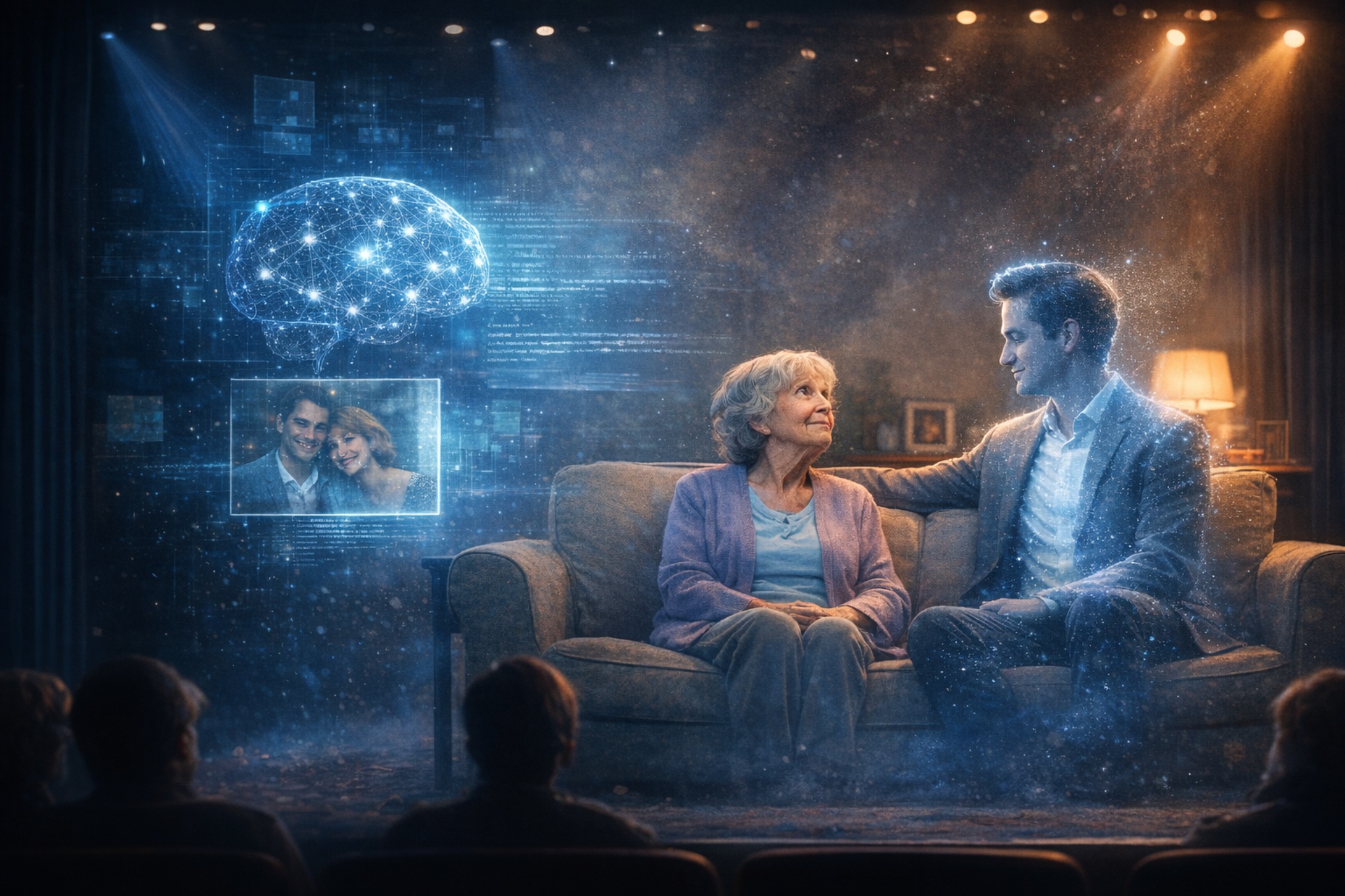
When I walked into Berkeley Playhouse, I looked up before I looked at the stage.

Whiskey bottles hung from the ceiling, catching the light like amber constellations. Below them, musicians were already in place — tuning, testing, beginning. The room didn’t feel like it was about to start. It felt like it had already begun.

Then a guitar line slipped into the air. I felt myself lean forward.

Guy repairs vacuum cleaners by day and sings on Dublin streets by night. His songs carry the echo of a recent heartbreak. He performs them as though he’s still deciding how much of himself to reveal.

Then Girl hears him. She doesn’t applaud politely — she listens.

She sits at the piano and complements his melody — completing phrases he leaves suspended, filling emotional spaces he hasn’t quite dared to name. I could feel the shift the moment her notes joined his.

In Once, music isn’t background. It’s oxygen.

What begins as encouragement becomes collaboration.

They rehearse. A violin joins. A drum answers. One musician becomes several. A band forms right in front of us. Together they prepare for a recording session in London — an opportunity that feels both exciting and fragile.

As the music deepens, so does their connection — layered, restrained, unmistakable.

Both carry responsibilities. Both sense possibility.

That tension hums beneath every harmony.

Midway through a duet, I stopped observing and simply listened. The theater felt suspended — two voices aligning, two lives quietly pivoting.

No spectacle. Just something true.

From Indie Film to Stage

This story began as the 2007 film written and directed by John Carney, starring musicians Glen Hansard and Markéta Irglová. The song “Falling Slowly” went on to win the Academy Award.

The stage adaptation, with a book by Enda Walsh, carried that intimacy to Broadway and won 8 Tony Awards, including Best Musical.

What remains constant is the heartbeat: music as turning point.

Why This Production Works

Director Josh Marx lets the story breathe. Music Director Michael Patrick Wiles keeps the sound alive and immediate. Choreographer Erin Rose Solorio shapes movement that feels discovered rather than arranged.

What struck me particularly was the ensemble.

This is a large cast of musician-actors — and they are uniformly strong at both. They don’t switch between “acting” and “playing.” They live in both simultaneously. A character delivers a line and flows directly into a fiddle phrase. Someone crosses the stage and becomes percussion. Storytelling and musicianship move as one.

That dual fluency elevates the evening. Energy circulates constantly. Transitions feel organic, almost inevitable.

Sitting beneath those hanging whiskey bottles, I felt surrounded by collaboration — not theatrical display, but shared creation.

Some connections arrive quietly — and rearrange everything.

By the final moments, I wasn’t watching a romance conclude. I was watching two people step into clarity — shaped by the music they created together.

I walked out feeling as though I’d been allowed to witness something private.

A song can open a door. What you do next is the story..


How to See It / Get Tickets

Julia Morgan Theater
2640 College Ave
Berkeley, CA

February 20 – March 15
Approx. 2 hours 30 minutes (including intermission)

Tickets: $19–$66
Box Office: (510) 845-8542
berkeleyplayhouse.org

Reserve early for immersive seating and weekend performances.


Joe Cillo banner

Authorship & Creative Statement

Each review is created through my proprietary FocusLens℠ method—an original editorial process shaped by firsthand experience, critical insight, and structured narrative design. Original photography, graphics, director quotes, and animated elements are incorporated to enhance reader engagement and visual impact. State-of-the-art scaffolding systems support organization and phrasing, but every sentence and decision reflects my own voice and judgment. These are not AI-generated reviews—they are authored, shaped, and published by me.

MButterfly

By Joseph Cillo No Comments


A seduction built on illusion — and the cost of believing it.

M. Butterfly at San Francisco Playhouse begins with elegance and ends somewhere far more exposed.

A French diplomat in Beijing meets a Chinese opera singer of striking poise. The early encounters feel refined, almost ceremonial. Words are measured. Gestures restrained. Desire moves politely at first.

Then something deeper takes hold.

What unfolds becomes a meditation on longing — on the stories we construct about who we are and how powerfully we want them confirmed.

Love, illusion, politics, self-mythology — the play absorbs all of it and reshapes it for the stage.


Illusion doesn’t announce itself. It arrives dressed as destiny.

Historical Context: The Real Case Behind The Play

The drama draws from the real-life relationship between French diplomat Bernard Boursicot and Beijing opera performer Shi Pei Pu.
Their decades-long affair and later espionage trial revealed layers of deception, belief, and identity performance that stunned international observers.

Fascinating dynamic
Dean Linnard portrays Rene Gallimard with finely calibrated restraint. His transformation happens gradually. Shoulders square. Confidence grows. The character’s romantic self-image expands with each encounter. Linnard allows us to see a man quietly rehearsing his own importance.

Opposite him, Edric Young gives Song Liling a composed, watchful elegance. The performance feels deliberate and controlled without ever feeling distant. A glance lingers just long enough. A phrase lands softly, then settles. Young sustains a layered presence — alluring, intelligent, and fully aware — that keeps tension alive even in stillness.

Their dynamic anchors the evening.

Desire shapes perception — and perception reshapes truth.

Mesmerizing experience
Directed by Bridgette Loriaux, the production leans into physical storytelling. Movement and proximity carry meaning. The choreography of intimacy feels intentional, reflecting Loriaux’s movement background and steady hand.

This is grown-up theater.

Two nude scenes unfold with composure and dramatic clarity. They underscore vulnerability rather than provoke reaction. Illusion gives way to exposure — literal and emotional. The staging treats these moments with gravity and discipline, reinforcing the play’s central inquiry into identity and belief.

Scenes breathe. Silence carries weight. Political tension and personal longing weave tightly together. By the final revelation, the room grows quiet in a way that feels earned.


When illusion falls away, what remains is the story we chose to believe.

Involving production
San Francisco Playhouse delivers a disciplined staging centered on performance. Lighting and scenic design frame intimacy and interrogation with clarity. The ensemble supports the central arc with tonal balance, moving fluidly between romantic suggestion and political reckoning.

The pacing builds deliberately, almost imperceptibly at first, until the emotional stakes stand fully revealed.

What it adds up to
M. Butterfly explores ego, desire, and belief with unsettling precision. Its power lies in watching how a cherished narrative gathers strength — how repetition becomes conviction, how conviction becomes identity.

This production leans into that progression. It draws you in gently, almost courteously, and then begins removing layers. By the end, what remains feels stark and human.

You leave carrying more than plot. You carry the recognition that illusion rarely feels false while you’re inside it. It feels persuasive. It feels flattering. It feels like love.

Illusion persuades. Belief commits. Reality waits.

How to see it / Get tickets
San Francisco Playhouse
450 Post Street, San Francisco

February 5 – March 14

Tickets: $52–$145
sfplayhouse.org
415-677-9596

Approximately 2 hours, 35 minutes, including one 15-minute intermission


Joe Cillo banner

Authorship & Creative Statement

Each review is created through my proprietary FocusLens℠ method—an original editorial process shaped by firsthand experience, critical insight, and structured narrative design. Original photography, graphics, director quotes, and animated elements are incorporated to enhance reader engagement and visual impact. State-of-the-art scaffolding systems support organization and phrasing, but every sentence and decision reflects my own voice and judgment. These are not AI-generated reviews—they are authored, shaped, and published by me.

Let the Wind Sweep Through, a Conference of Birds

By Joseph Cillo


And now for something very different:
a shared, immersive journey of movement, sound and attention

Let the Wind Sweep Through transports us into a shared, immersive world shaped by movement, sound, and collective attention. From the opening moments, the experience gathers us physically and emotionally, inviting us to stay present as the evening unfolds around us.

What You’re Seeing

Inspired by *The Conference of Birds*, the 12th-century Sufi poem by Attar of Nishapur, this production approaches theatre as spiritual exploration. The ancient story of seekers traveling together toward understanding finds contemporary expression through physical theatre, aerial movement, puppetry, and live music—experienced through the body and the senses.

The performance stage establishes immediacy right away. With seating on 3 sides, the audience surrounds the action, creating an immersive, up-close environment. Performers move within feet of us, close enough for breath, focus, and intention to register. The room itself participates, shaping how attention flows and how connection forms.

Aerials start the show. From the opening lift, the vertical movement establishes a connective spine for the evening. The aerial work returns throughout the performance, offering lift, suspension, and continuity as individual moments link into a single, flowing journey.

Aerials initiate the action and carry us forward.

Movement is the primary language. The ensemble shifts between solo gestures and flock-like formations, shaping patterns that suggest searching, alignment and shared momentum. Repetition builds rhythm and familiarity, allowing meaning to accumulate through motion and presence. Puppetry and visual motifs add texture and discovery, keeping the experience fluid and alive.

The live music is perfectly matched to this unusual theatrical setting. In such close proximity, sound shapes the room alongside movement. The music breathes with the performers and with us, guiding pace and atmosphere while remaining fully integrated into the action.

A 10-minute intermission arrives as a natural pause. The break offers time to reflect and reset before the journey continues, supporting the thoughtful pacing of the evening and the sense of shared travel.

What I enjoyed most was how welcoming the experience felt. Rooted in Sufi spiritual ideas of seeking, surrender, and collective journey, the production stays grounded in the present moment. Each audience member connects through sensation, movement and shared awareness, carrying away what resonates most strongly.

The evening unfolds as a lived experience. Attention sharpens. Time loosens. Shared focus in the room actively shapes what unfolds.

Let the Wind Sweep Through shows how theatre comes alive when it leans into connection—between performers, audience, music and space—carrying us together through an experience shaped by presence, openness and intention.

The evening unfolds as a shared journey.

How to See It / Get Tickets

Marin Shakespeare Theatre, San Rafael
514 Fourth Street, San Rafael, CA 94901

February 6–15
• Fridays & Saturdays at 7:00 pm
• Sundays at 2:00 pm

Approximately 100 minutes, including one 10-minute intermission

Tickets: Suggested donation (pay-what-you-can)
Advance reservations and full details:
https://www.purplepass.com/events/342236-let-the-wind-sweep-through%3A-a-conference-of-birds-feb-6th-2026

3-sided, immersive staging with close audience proximity
Wheelchair-accessible venue; gender-neutral restrooms.


Joe Cillo banner

Authorship & Creative Statement

Each review is created through my proprietary FocusLens℠ method—an original editorial process shaped by firsthand experience, critical insight, and structured narrative design. Original photography, graphics, director quotes, and animated elements are incorporated to enhance reader engagement and visual impact. State-of-the-art scaffolding systems support organization and phrasing, but every sentence and decision reflects my own voice and judgment. These are not AI-generated reviews—they are authored, shaped, and published by me.

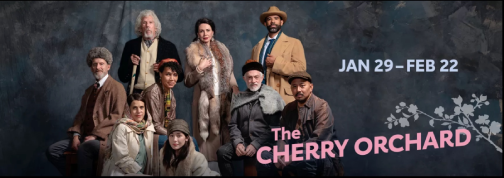
The Cherry Orchard

By Joseph Cillo


Chekhov in Many Fine Suits

Some productions wear their professionalism like a good suit. This one wears all the suits in the closet at once — and somehow moves comfortably in them.

From the opening moments, this play makes a decision: nothing stays unused. If theater has ever done it, this show does it. Pratfalls happen. Magic appears. Ventriloquism enters the room. Puppets join the action. There is dancing — with people and stick figures. Actors speak directly to the audience, move through the aisles, disappear, reappear, and treat the stage less like a boundary than a suggestion.

At times, the action veers toward vaudeville, flirting with the feeling of a one-ring circus that decides to stay put. And yet nothing feels sloppy or indulgent.

Every element lands cleanly.

Each moment arrives with precision. Timing holds. Execution stays exact. The production operates at full capacity and never loses control. Admiration becomes unavoidable, even when it doesn’t seem to be the point.

Plot
The story follows Liubóv Ranyévskaya, a landowner who returns to her family estate after years away to find it on the brink of financial collapse. The house and its surrounding cherry orchard are burdened by debt and scheduled for auction unless money can be raised quickly.

Lopákhin, the son of a former peasant who now holds the practical power in the situation, proposes a direct solution: cut down the orchard and develop the land. His plan would save the estate and secure everyone’s future — but only by destroying the place that defines their past.

Ranyévskaya, her brother Gáyev, her daughters, and the household staff resist. They reminisce, argue, delay, and distract themselves with conversations that circle the problem without confronting it. Hope persists without a plan. Time continues without mercy.

When the auction arrives, the decision is no longer theirs to make. The estate changes hands. The orchard’s fate is sealed. What ends is not only ownership of land, but a way of living that depends on avoiding hard choices.

Production
What the production makes unmistakable is how long people can keep talking while nothing changes. Scenes move briskly. Conversations cycle back on themselves in slightly altered forms. Plans are discussed again and again without being acted on. The energy stays high. The jokes keep coming. The situation remains unresolved.

Forward motion belongs to the play itself, not to the characters inside it.

The ensemble works as a single, responsive unit. Performances feel coordinated without feeling mechanical. As Lopákhin, Lance Gardner brings calm authority and emotional clarity. He understands exactly what needs to happen — and exactly why no one wants to do it. Liz Sklar’s Ranyévskaya radiates charm edged with unease. Anthony Fusco, Rosie Hallett, Anna Takayo, and the rest of the cast handle physical comedy, direct address, and tonal shifts with assurance. Nothing looks accidental, even when it appears spontaneous.

Technically, the production runs seamlessly. The scenery is terrific — elegant, flexible, and quietly expressive — giving the action room to sprawl without losing focus. The costumes are wonderful: sharply observed, character-specific, and visually rich without tipping into excess. Together, they allow the production to be as busy as it wants to be while remaining grounded in a coherent world. The overall effect is one of confident mastery.

Final Reflection
This Cherry Orchard entertains, impresses and surprises. It stays bold, busy and alert. It keeps us engaged and constantly aware of the machinery of theater — all of it operating at full speed.

Here is Chekhov dressed in many fine suits — impeccably tailored — worn with confidence.

To See
Marin Theatre

397 Miller Avenue, Mill Valley, CA

January 29 – February 22

Approximately 2 hours, including one intermission

Tickets: $38–$89
Tickets and information: MarinTheatre.org
Box Office: 415-388-5208


Joe Cillo banner

Authorship & Creative Statement

Each review is created through my proprietary FocusLens℠ method—an original editorial process shaped by firsthand experience, critical insight, and structured narrative design. Original photography, graphics, director quotes, and animated elements are incorporated to enhance reader engagement and visual impact. State-of-the-art scaffolding systems support organization and phrasing, but every sentence and decision reflects my own voice and judgment. These are not AI-generated reviews—they are authored, shaped, and published by me.

The Skin of Our Teeth

By Joseph Cillo


A Successful Bafflement

Some plays explain themselves. The Skin of Our Teeth does not.

Instead, it invites us into a state of purposeful uncertainty — and this production understands that invitation fully.

I left the theater amused, impressed and unmistakably baffled. That reaction turns out not to be a shortcoming, but a measure of success. The play doesn’t ask to be solved. It asks to be experienced. This staging leans into that distinction with confidence, coordination, and care.

Confusing, yet compelling — exactly as intended.

About the play: historical & Critical Context

Written in 1942, in the midst of World War II, The Skin of Our Teeth emerged at a moment when the survival of civilization itself felt anything but assured. Rather than respond with realism or straightforward allegory, Wilder broke theatrical rules outright — collapsing time, mixing eras, and allowing characters to step outside the action.

The play’s originality was immediately apparent. Critics were divided, sometimes sharply, but few denied its ambition. In 1943, the play received the Pulitzer Prize for Drama, affirming its importance even as it confounded expectations. That tension — admiration paired with bewilderment — has followed the play ever since.

Confusion here is not accidental. Wilder suggests that humanity endures not through clarity or order, but through persistence, memory, and the stubborn willingness to begin again.

The Plot
At the center is the Antrobus family — George and Maggie, their children, and household help — not meant as realistic individuals so much as stand-ins for humanity itself. Over three acts, they survive an Ice Age, catastrophic flood, and the aftermath of a devastating war.

Realism is deliberately ignored. Dinosaurs and mammoths share space with modern conveniences. Characters address us directly. Scenes collapse, restart and loop back on themselves. Time doesn’t progress so much as repeat. What remains constant is the question Wilder keeps returning to: after each disaster, do we rebuild — and why?

Photo credit: Marilyn Izdebski

The Experience
This production embraces Wilder’s controlled chaos with assurance. Rather than apologizing for the play’s strangeness, it trusts us to stay alert and engaged. The fourth wall is porous, the tone shifts quickly, and humor arrives in both broad gestures and quiet asides.

Notably, the play itself anticipates audience confusion. Characters openly question the action, complain about the play they are in, and force scenes to restart, making bafflement part of the design rather than a byproduct of it.

What makes this staging especially effective is how well it handles scale. With a large cast, the production remains well coordinated and clear, even as the play ricochets between eras and theatrical modes. Group scenes are disciplined, allowing disorder to read as intentional rather than cluttered.

A large, confident production that embraces deliberate disorder.

The Production
Technical elements support storytelling throughout. Projections are used effectively, helping orient us as time and place shift, reinforcing the play’s collision of eras without overwhelming the action.

Costuming and props are strong, clearly defining character and tone while grounding the production visually. These elements give us something solid to hold onto in a play that resists narrative stability.

Pacing and transitions are handled with care. Even at its most unruly, the production maintains momentum, striking a difficult balance between freedom and control.

The production keeps a steady visual and emotional hand. Staging is clean and purposeful, giving the actors room to work and the story space to breathe. Scenes move along with easy confidence. The lighting knows exactly what it’s there to do — handled with care and restraint, shaping mood and momentum, then stepping aside before anyone feels the need to notice.

What It Adds Up To
Ultimately, this production succeeds because it refuses to tidy itself up. It leaves questions unanswered. Meaning accumulates rather than resolves. History falters, resets and continues.

Wilder even allows the play to argue with itself — and with us — before choosing, once again, to go on.

That lingering bafflement isn’t a flaw. It’s the point. Civilization wobbles. Language fails. History repeats. And yet — somehow — we persist.

NTC delivers a Skin of Our Teeth that earns its disorientation honestly. It is lively, well executed, and quietly affirming — a reminder that humanity doesn’t endure because it understands everything, but because it keeps going, by the skin of its teeth.

Something very different — you’ve been warned.

TO SEE

Novato Theater Company
5420 Nave Drive, Novato, CA 94949

Dates:
January 22 – February 15, 2026

Performance Times:
Fridays at 7:30 pm
Saturdays January 24, 31 & February 14 at 7:30 pm
Saturday February 7 at 2:00 pm
Sundays at 2:00 pm

Tickets:
www.novatotheatercompany.org

Box Office:
(415) 883-4498


Joe Cillo banner

Authorship & Creative Statement

Each review is created through my proprietary FocusLens℠ method—an original editorial process shaped by firsthand experience, critical insight, and structured narrative design. Original photography, graphics, director quotes, and animated elements are incorporated to enhance reader engagement and visual impact. State-of-the-art scaffolding systems support organization and phrasing, but every sentence and decision reflects my own voice and judgment. These are not AI-generated reviews—they are authored, shaped, and published by me.

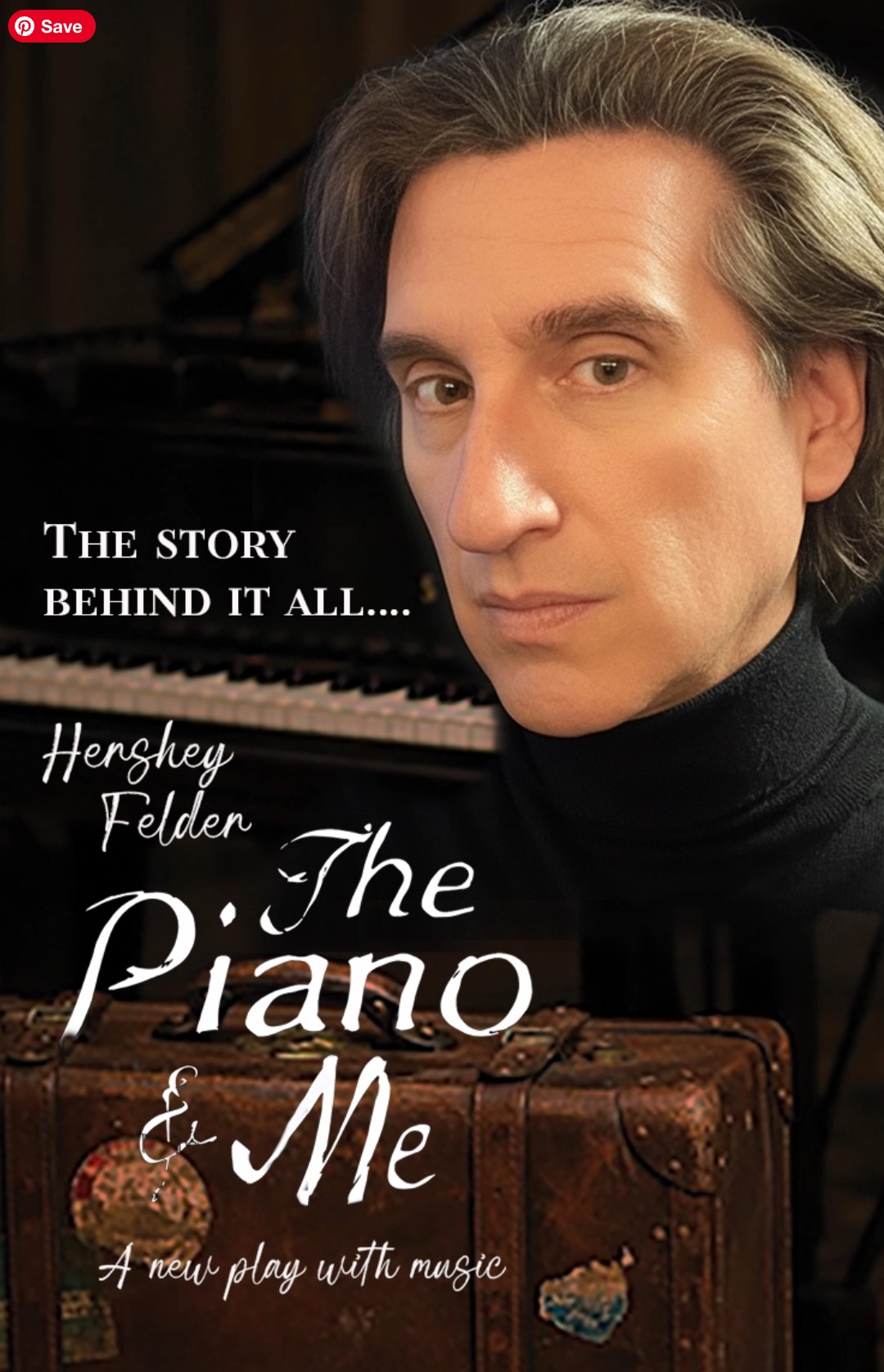
Hershey Felder: The Piano and Me

By Joseph Cillo


Master Music Storyteller in Full Flow

The Piano and Me is built around storytelling — intelligent, personal, and absorbing — that flows naturally into music of the highest order.

Hershey Felder guides us through a life shaped by composers, history, and memory, letting stories lead and allowing the piano to arrive exactly when it matters. The result is a salon elevated to the concert hall: ideas, insight, and world-class music woven into a single, seamless experience that rewards close attention.

Felder arrives at this piece after decades of inhabiting great composers onstage, a journey that has made him a familiar and trusted figure for audiences at TheatreWorks Silicon Valley. In this world premiere, that accumulated experience turns inward. The result offers context for the artistry audiences already know, revealing how music, memory, identity and history move together across a life.

Hershey Felder has the room — and keeps it.

Here, Felder emerges as a master raconteur — a modern salonier — guiding the room through stories about composers, Jewish identity, inheritance and survival. The storytelling is conversational yet deliberate, shaped by wit, insight, and a respect for our attention. Ideas arrive clearly, connect naturally and continue to resonate as the evening unfolds.

At key moments, Felder turns to the piano and the narrative continues in sound. Bach, Mozart, Beethoven, Chopin, Liszt, Rachmaninoff, Bartók, and others appear as companions rather than set pieces. The playing is fluent, expressive, and grounded in long familiarity.

Storytelling sets the course — the piano carries it forward.

What gives The Piano and Me its distinctive power is the way these elements are interwoven. Spoken word and music move seamlessly together, creating a steady rhythm of listening and reflection. We remain fully engaged, following the thread as it unfolds with ease and confidence.

Background projected visuals contribute with equal care. Images of a young Hershey, his mother, and the shadowed presence of Auschwitz arrive precisely, deepen the emotional register, then step aside. Each image adds resonance and allows space for reflection, strengthening the experience without drawing focus away from it.

A master raconteur and modern salonier — guides the evening through music, memory and meaning.

Humor threads throughout — dry, knowing, lightly worn — balancing the weight of the themes with warmth and humanity. The tone remains open and generous, guided by curiosity and trust in our shared attention.

Staging supports the evening beautifully. Lighting, sound, and projections frame the performance with restraint and clarity. The Mountain View Center for the Performing Arts provides an ideal setting for this kind of listening theatre — intimate enough to feel personal, expansive enough for the piano to breathe.

By the end, our lasting impression comes from time spent inside a focused and alert mind. The Piano and Me leaves us engaged, enriched, and glad to have followed where the evening led.

Very highly recommended.


How to Get Tickets

Hershey Felder: The Piano and Me
📍 Mountain View Center for the Performing Arts, 500 Castro Street, Mountain View
📅 January 17 – February 8, 2026
🎟️ Tickets: $34–$115
🌐 theatreworks.org
📞 877-662-8978


Joe Cillo banner

Authorship & Creative Statement

Each review is created through my proprietary FocusLens℠ method—an original editorial process shaped by firsthand experience, critical insight, and structured narrative design. Original photography, graphics, director quotes, and animated elements are incorporated to enhance reader engagement and visual impact. State-of-the-art scaffolding systems support organization and phrasing, but every sentence and decision reflects my own voice and judgment. These are not AI-generated reviews—they are authored, shaped, and published by me.

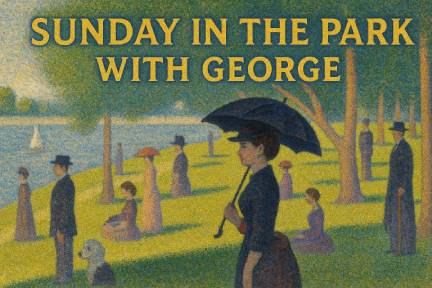
Sunday in the Park with George

By Joseph Cillo


Theatrical Tour de Force

From the opening hush to the final chords, Shotgun Players’ Sunday in the Park with George unfolds as a fully realized theatrical experience. The production gathers itself with intention — moment by moment, layer by layer — the way a painting slowly sharpens into view. Characters step forward, the music warms, the design begins to breathe, and suddenly the whole world onstage has taken shape around you.

What You’re Seeing: A Brief History Behind the Painting & the Musical

Georges Seurat painted A Sunday Afternoon on the Island of La Grande Jatte in 1884–86, using a revolutionary technique of tiny dots of pure color placed side by side so the viewer’s eye—not the brush—would blend them. This meticulous pointillist method demanded precision, patience, and an almost architectural approach to art.

Stephen Sondheim and James Lapine built their musical on that idea: Act I imagines Seurat creating the painting; Act II jumps a century forward to a modern artist wrestling with innovation, technology, and the pressure to make something meaningful.

Shotgun Players’ production echoes this lineage—crafted detail by detail, moment by moment—much like Seurat building an image from countless deliberate choices.

What rises from this steady build is performance with purpose, music with lift, and staging that doesn’t simply present the material but animates it. This Sunday moves with confidence and clarity — a tour de force assembled through detail, rhythm, and heart.

The story spans two eras: Georges Seurat creating his masterpiece in 1884, and a modern artist navigating the pressures of contemporary creation. Across time, the musical traces what it takes to make something that lasts.

A Sunday worth spending — tender, attentive, and beautifully crafted.

A George Worth Watching — and a Dot Who Brings the Spark
Kevin Singer, gives George an interior pulse — a man who sees the world in pieces, then tries to assemble a whole out of the fragments. His stillness draws focus; his concentration shapes the stage.

Marah Sotelo’s Dot brings the momentum. Her wit, warmth, and grounded immediacy infuse Act I with emotional clarity. She makes every scene count.

Kevin Singer and Marah Sotelo deliver a George and Dot you genuinely care about.

Together, their dynamic creates the kind of tension that feels lived rather than staged — two lives moving at different tempos, brushing past and circling back.

An Ensemble That Colors the World
The ensemble fills in the world with well-placed strokes. Lucy Swinson, William Broshnan, Laura Domingo, Kevin Rebulián, and Alex Rodriguez each contribute beats that land cleanly — flashes of character, humor, and rhythm that animate the park and give the stage its texture.

This production paints with intention — every detail earns its place.

Their collective work creates a picture in motion.

Music That Lifts the Story
David Möschler leads a small orchestra that plays with warmth, shape, and balance. The music fits the contours of the storytelling, supporting the performers while giving the score room to breathe.

One of the best-sounding small-theater Sondheim ensembles in the Bay Area.

The sound has presence without weight — a musical world fully in sync with the dramatic one.

Design That Draws You In
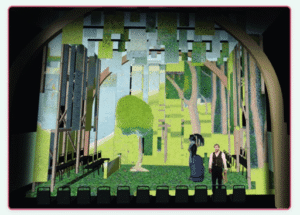
Nina Ball’s scenic design, Sophia Craven’s lighting, and Madeline Berger’s costumes work together to guide the eye naturally. The space shifts like the brushstrokes of a living canvas: soft hues, quiet transitions, clean silhouettes.

The design choices expand the world without calling attention to themselves.

A Unique Feature: Onstage Seating

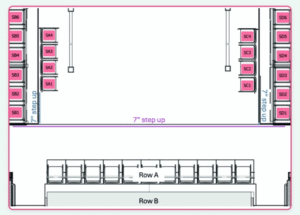
Shotgun Players onstage seating diagram. Audience members may sit within Seurat’s landscape.

The onstage seating option deepens the experience. Audience members sit inside the perimeter of the painting, giving certain scenes a front-row intimacy and others a surprising sense of shared space. This proximity reinforces the production’s theme of stepping into the act of creation itself.

Act II: A Shift in Time That Finds Its Mark
The move to the modern era in Act II lands with clarity and lift. Imri Tate brings humor and heart as Marie, and the production handles the shift in style and tempo with a sure hand.

A production that listens as much as it sings

Connections across the century emerge naturally, through tone and rhythm rather than explanation.

A Production in Conversation With Its Audience
Susannah Martin’s direction leans into relationships — the small gestures, the pauses, the glances that say what words don’t. The production’s strength comes from this attention: scenes breathe, characters listen, and the larger themes grow organically from the smallest moments.

Sondheim, distilled and alive.

The result is a story that feels fully inhabited rather than interpreted.

Final Thoughts
Sunday in the Park with George endures because its questions endure:
What does it take to make something true?
What does it cost?
And what remains after the work is done?

Shotgun Players leans into those questions with a balance of clarity and heart. The production builds its world with care, lets emotion rise on its own timing, and trusts the final image to speak plainly.

When the last words arrive —
White. A blank page or canvas… so many possibilities.
— the moment feels earned.

Quiet boldness, beautifully executed.

A vivid, resonant, and fully realized production.
A Sunday worth spending.


TO SEE

Shotgun Players
The Ashby Stage
, 1901 Ashby Ave., Berkeley

Dates: Now through January 25, 2026
Run time: Approx. 2 hours 50 minutes, including intermission

Tickets:
shotgunplayers.org/show/sunday

Box Office: (510) 841-6500

Accessibility: Onstage seating available.
ASL-interpreted and audio-described performances listed on the show page.


Joe Cillo banner

Authorship & Creative Statement

Each review is created through my proprietary FocusLens℠ method—an original editorial process shaped by firsthand experience, critical insight, and structured narrative design. Original photography, graphics, director quotes, and animated elements are incorporated to enhance reader engagement and visual impact. State-of-the-art scaffolding systems support organization and phrasing, but every sentence and decision reflects my own voice and judgment. These are not AI-generated reviews—they are authored, shaped, and published by me.

Wait Until Dark

By Joseph Cillo


This taut, atmospheric thriller grips from first shadow to final blackout.

A gripping, meticulously crafted production of Frederick Knott’s classic thriller that has held audiences breathless for decades. Under the steady, sure-handed direction of Carl Jordan, this staging leans into the story’s psychological tension and delivers the kind of slow-burn suspense that only live theatre can conjure. It’s smart, sharp, and performed with an immediacy that keeps you leaning forward from start to finish.


Story Line
Set in a modest Greenwich Village apartment in the 1960s, the story follows Susy Hendrix, a recently blinded woman who becomes entangled in a dangerous criminal scheme involving a doll stuffed with contraband. As three con men manipulate their way into her home under false identities, Susy must piece together the truth using her instincts, her wits, and her heightened awareness of sound.

The play’s signature twist — plunging the stage into complete darkness as Susy turns the tables — remains one of the great theatrical coups of the last century. And here, RVP executes it with precision that lands exactly as intended: a collective audience gasp, followed by stillness you can feel.


On Stage
Tina Traboulsi gives a standout performance as Susy Hendrix, grounding the role with subtlety, stamina, and a deep emotional thread. She builds the character moment by moment — listening, feeling the room, and recalibrating her world through sound — creating an authenticity that drives the entire production.

Tina Traboulsi builds Susy’s world through sound, instinct, and sheer will.

Opposite her, David Yen is chillingly effective as Roat, the mastermind criminal whose calm, predatory presence gives the play its edge. Without raising his voice, he conveys danger with the smallest turns of phrase.

David Yen’s Roat is cool as a straight razor and twice as dangerous.

David Abrams (Mike) and Rob Garcia (Carlino) offer strong contrasts as the uneasy criminal pair — one smooth and sympathetic, the other blunt and opportunistic — giving the production texture and momentum. Young actors Coco Brown and Diora Silin alternate as Gloria, bringing spark and attitude to a role that is vital to Susy’s evolution.

Photo Credit: Robin Jackson

Themes & Takeaway
At its core, Wait Until Dark remains compelling because it’s not just about suspense — it’s about unexpected courage. Susy’s shift from vulnerability to active, strategic control underscores the story’s belief that strength can emerge in darkness, both literal and emotional.

This is why we go to live theatre — tension you can feel in your bones.

In an era dominated by digital effects, this production is a refreshing reminder that timing, presence, and craft still create the most memorable thrills.

Technical Brilliance
Tom O’Brien’s apartment set creates a fully realized home that becomes the battleground for the escalating tension. Frank Sarubbi’s lighting design sculpts the atmosphere with precision — gradually dimming the world until shadows become characters in their own right. Billie Cox’s sound design enriches Susy’s sensory universe, while Valera Coble’s costumes and Dhyanis’s props complete a cohesive visual environment. Nic Moore’s fight choreography ensures the climactic struggle feels both believable and intense.

When the lights go out, the entire house seems to stop breathing.

Director Carl Jordan weaves these artistic elements together with confident pacing, creating a production that honors the original play while giving it fresh vitality.

Final Notes
The Barn Theatre — tucked into the Marin Art & Garden Center — is an ideal venue for this production. Intimate, well-tuned acoustically, and responsive to silence, it heightens every moment of tension.

A confident, razor-sharp opener to RVP’s 96th season.

Dates, Locations, Tickets
November 14 – December 14, 2025

Performances
Thursdays–Saturdays at 7:30 p.m.
Sundays at 2:00 p.m.
(No shows November 27–28; special 2:00 p.m. matinee on Saturday, November 29)

The Barn Theatre
Marin Art & Garden Center
30 Sir Francis Drake Blvd, Ross

Tickets
Starting at $30
Available at: rossvalleyplayers.com


Joe Cillo banner

Authorship & Creative Statement

Each review is created through my proprietary FocusLens℠ method—an original editorial process shaped by firsthand experience, critical insight, and structured narrative design. Original photography, graphics, director quotes, and animated elements are incorporated to enhance reader engagement and visual impact. State-of-the-art scaffolding systems support organization and phrasing, but every sentence and decision reflects my own voice and judgment. These are not AI-generated reviews—they are authored, shaped, and published by me.

Annie

By Joseph Cillo


Annie and Sandy

Hope, humor, and heart light up the stage.

A Joyous and Heartfelt Kick-Off to the Holiday Season

Berkeley Playhouse opens its holiday season with a bright and beautifully staged production that reminds us why this story continues to resonate across generations. Directed and choreographed by Megan McGrath, the show balances heart, humor, and a professional polish that brings Broadway energy to the Julia Morgan stage.


Story Line


Annie cast photo

Annie, Daddy Warbucks, Miss Hannigan, and Sandy the dog star in this heartwarming holiday production.

Set in Depression-era New York, the musical follows Annie, an irrepressible orphan who refuses to give up hope of finding her parents. Her optimism catches the attention of billionaire Oliver “Daddy” Warbucks, whose generosity transforms not only Annie’s life but his own. Filled with classic songs — “It’s the Hard Knock Life,” “Easy Street,” and the timeless “Tomorrow”Annie celebrates courage, love, and belonging.


On Stage

The Annie I saw, Emma Jilizian, delivered a standout performance — confident, natural, and filled with charm. She commands the stage with an ease that makes you forget her age. The role is shared with Cara Impallomeni, another talented young performer alternating as Annie on select nights, continuing Berkeley Playhouse’s long tradition of nurturing exceptional youth talent.

Brendan Simon gives Warbucks both authority and warmth, Melinda Meeng adds grace and poise as his secretary Grace Farrell, and Sarah Bylsma steals every scene as Miss Hannigan — delightfully over-the-top but never cartoonish. The production bursts with charm, laughter, and the timeless message that courage and kindness can change lives.

The musical direction by Daniel Alley and choreography by Hannah Martinez-Crow give the show a professional rhythm and energy. Set design, lighting, and costumes evoke the period beautifully, shifting from the shadowy orphanage to the gleam of Warbucks’s mansion with cinematic ease.


Cast Highlights


Annie full cast

Photo Credit: Berkeley Playhouse

This is a large and impressive company. Liam Cody and Maia Campbell bring humor and flair to Rooster and Lily, while Adam Saville adds warmth as President Roosevelt. The ensemble works together with precision and joy, and the alternating youth casts perform with remarkable confidence.

Add in Mac and Penny, the two well-trained dogs alternating as Sandy, and you have a cast of 38 performers — 36 actors and two four-legged scene-stealers.

I went in expecting a cute, good-hearted show — and was completely surprised by the professional quality of the performances and production. The precision of the choreography, the clarity of the vocals, and the level of ensemble discipline are all exceptional. With nearly 40 performers on stage, there are a lot of moving parts here — and it all works!

Berkeley Playhouse consistently brings heart, talent, and high production standards to its stage — and this Annie is a perfect example.


Themes & Takeaway

Beyond the laughs and music, this Annie shines because it feels genuine. It’s about optimism, kindness, and the belief that family can be found in unexpected places. The story may be set in the 1930s, but its message — that hope endures — feels especially welcome now.

Annie reminds us that even in hard times, love and optimism can light the way.

Audiences of all ages will leave the theater smiling, humming “Tomorrow,” and maybe feeling just a little lighter.


Musical Highlights

The show runs two and a half hours with intermission and moves quickly from start to finish. Familiar songs like “Maybe,” “Easy Street,” “You’re Never Fully Dressed Without a Smile,” and “A New Deal for Christmas” are performed with freshness and style. The orchestra, under Daniel Alley’s direction, gives the score warmth and momentum without overpowering the singers.

Full Song List

▼ click to see

ACT I
Overture — Orchestra
Maybe — Annie, Orphans
Hard Knock Life — Annie, Orphans
Hard Knock Life (Reprise) — Orphans
Tomorrow — Annie
Hooverville — Ensemble
Little Girls — Miss Hannigan
Little Girls (Reprise) — Miss Hannigan
I Think I’m Gonna Like It Here — Grace, Annie, Ensemble
N.Y.C. — Warbucks, Grace, Annie, Star-to-Be, Ensemble
Easy Street — Rooster, Miss Hannigan, Lily
Why Should I Change a Thing? — Warbucks
You Won’t Be an Orphan for Long — Grace, Warbucks, Ensemble
Maybe (Reprise) — Annie

ACT II
Entr’acte — Annie, Orchestra
You’re Never Fully Dressed Without a Smile — Bert Healy, Boylan Sisters
You’re Never Fully Dressed Without a Smile (Reprise) — Orphans
Easy Street (Reprise) — Rooster, Miss Hannigan, Lily
Tomorrow (Cabinet Reprise) — Annie, Roosevelt, Warbucks, Cabinet
Something Was Missing — Warbucks
I Don’t Need Anything But You — Warbucks, Annie, Ensemble
Same Effect on Everyone — Annie
A New Deal for Christmas — Company
Bows — Company


Performances
November 7 – December 21, 2025
Fridays – Sundays + select weekday evenings

Berkeley Playhouse
Julia Morgan Theater
2640 College Avenue, Berkeley, CA 94704

Tickets
$29 (previews) • $19 – $55 (regular) + $3.95 vendor fee per ticket
Group rates available for 10 or more people.
Prices subject to change without notice.

Purchase
(510) 845-8542 ext. 351
www.berkeleyplayhouse.org


An outstanding production that blends heart, humor, and Broadway-level professionalism — a treat for all ages.

Joe Cillo banner

Authorship & Creative Statement

Each review is created through my proprietary FocusLens℠ method—an original editorial process shaped by firsthand experience, critical insight, and structured narrative design. Original photography, graphics, director quotes, and animated elements are incorporated to enhance reader engagement and visual impact. State-of-the-art scaffolding systems support organization and phrasing, but every sentence and decision reflects my own voice and judgment. These are not AI-generated reviews—they are authored, shaped, and published by me.

Dada Teen Musical: The Play

By Joseph Cillo


Teen Angst Meets Creative Chaos


Absurdity as Art

What begins as an ordinary day in a high-school classroom soon explodes into a Dadaist free-for-all — absurd, tuneful, and unexpectedly revealing.
Central Works’ latest world premiere is a hilarious, sharp-edged swirl of rebellion, chaos, and truth.

Set in the manic world of high-school overachievers and art-school dreamers, it turns teenage turmoil into a full-blown Dada experiment — where nonsense becomes the only honest language left.


The Setup
A prep-school rebellion collides with the art of nonsense.

Overachiever Annabel hatches a plan to impress Harvard by directing a “Dadaist homage” to The Sound of Music.
She enlists Tyler, the school’s charismatic con artist, and Mariah, a shy bassist chasing authenticity, while Mr. Dorfman, their frazzled math-and-drama teacher, tries to keep order.
As ambition curdles into chaos, scams pile up, morals bend, and Dada itself becomes both the joke and the truth.


What Is Dada?
Born in 1916 Zurich, the Dada movement rejected logic, reason, and artistic rules. It celebrated chaos, chance, and humor as acts of creative rebellion — a protest against a world that had stopped making sense.

Cast Highlights
Jacob Henrie-Naffaa (Tyler) steals scenes as a fast-talking manipulator who says anything to get his way. His energy is relentless and perfectly amoral — the classic hustler who thrives in confusion. At times, his delivery fires so fast that a breath or two more would help the humor fully land. Still, his bravado and control anchor the show’s manic heartbeat.

Zoe Chien (Annabel) gives ambition a comic edge. Her Harvard-bound intensity drives much of the farce, and her eventual unraveling — capped by a howling rejection — hits both funny and sad.
Chanel Tilghman (Mariah) is the quiet soul of the story. Her final solo performance — literally playing her own song — is both moving and defiant, the evening’s truest moment of art emerging from chaos.
Alan Coyne (Mr. Dorfman) grounds the madness with weary wit. His slide from moral compromise to collapse mirrors the adults’ world the teens are rebelling against, giving the satire its human cost.


Director Highlight
Gary Graves directs with precision and abandon — a combination only Central Works can pull off.

He keeps the tone wild but the storytelling tight, letting absurdity and honesty co-exist.
Scenes spiral from classroom realism into bursts of absurdist theater, and the cast rides the chaos with fearless control.
Graves’s direction finds truth inside the nonsense, and laughter where it hurts a little to laugh.


Very Up-Close Theater


Central Works’ 49-seat City Club space turns this production into full-contact theater.
Tyler literally jumps into the front rows. Annabel snatches her handbag from the railing beside my seat. The audience joins chants, cheers, and call-and-response moments that blur the line between viewer and participant.

It’s not just immersive — it’s contagious. You feel pulled into their reckless, hilarious experiment, as if you’ve become part of the Dada performance yourself.

Adding to the mayhem, Tyler even handed out his own “official” promo flyer for a spin-off show, The Itch of the Sound of Oklahoma — “a professional, Dadaist, musical romp through the Old West featuring never-seen-before Dadaist Crocodiles.”

It’s a riotous parody of self-promotion, a perfect in-joke made tangible.


Delicious Uncertainty / Takeaway
By the end, all facades collapse. Annabel’s Harvard dreams implode, Tyler’s scams crash, and Mr. Dorfman loses both job and conscience. Only Mariah remains — standing alone, bass in hand, singing her own song. It’s absurd, touching, and oddly inspiring: in a world of pretense, authenticity wins by simply existing.


Observation & Suggestion
The show’s pacing is breathless — a strength that occasionally outruns itself. A few half-beats of pause between comic volleys could sharpen the humor and let its satire resonate.

And those recurring “Curve the Line” hats? They’re such an instantly iconic gag that they practically beg to become merch — wearable proof that Dada still sells.


Go see it — you’ll be surprised — maybe even enlightened.

Catch It In Berkeley
Dada Teen Musical: The Play runs through November 17, 2025
at the historic Berkeley City Club, 2315 Durant Avenue, Berkeley, CA.

Performances: Thursday & Friday at 8 pm, Saturday at 7 pm, Sunday at 5 pm.
Tickets: $25–$35 (sliding scale) with Pay-What-You-Can preview opening weekend.
For tickets and info, visit centralworks.org or call 510-558-1381
Runtime: approximately 90 minutes with one intermission.
Masks recommended; available at the box office.


Authorship & Creative Statement

Each review is created through my proprietary FocusLens℠ method—an original editorial process shaped by firsthand experience, critical insight, and structured narrative design. Original photography, graphics, director quotes, and animated elements are incorporated to enhance reader engagement and visual impact. State-of-the-art scaffolding systems support organization and phrasing, but every sentence and decision reflects my own voice and judgment. These are not AI-generated reviews—they are authored, shaped, and published by me.